With talk of snap elections in the air, a new survey found that 70 percent of Israelis would want a right-wing or center-right government to come to power.
The latest monthly Peace Index, which was published Tuesday by the Israel Democracy Institute and Tel Aviv University, showed that only 24 percent of the country would prefer a left-wing or center-left government to be elected. The survey included 500 Jewish and 100 Arab adults and had a 4.1 percent margin of error.
“The rate of support for anything that is not right wing or right of center is so small that [the survey results] don’t seem to have to do with any particular party, but just a particular outlook,” Tamar Hermann, an editor of the Peace Index, told JTA.
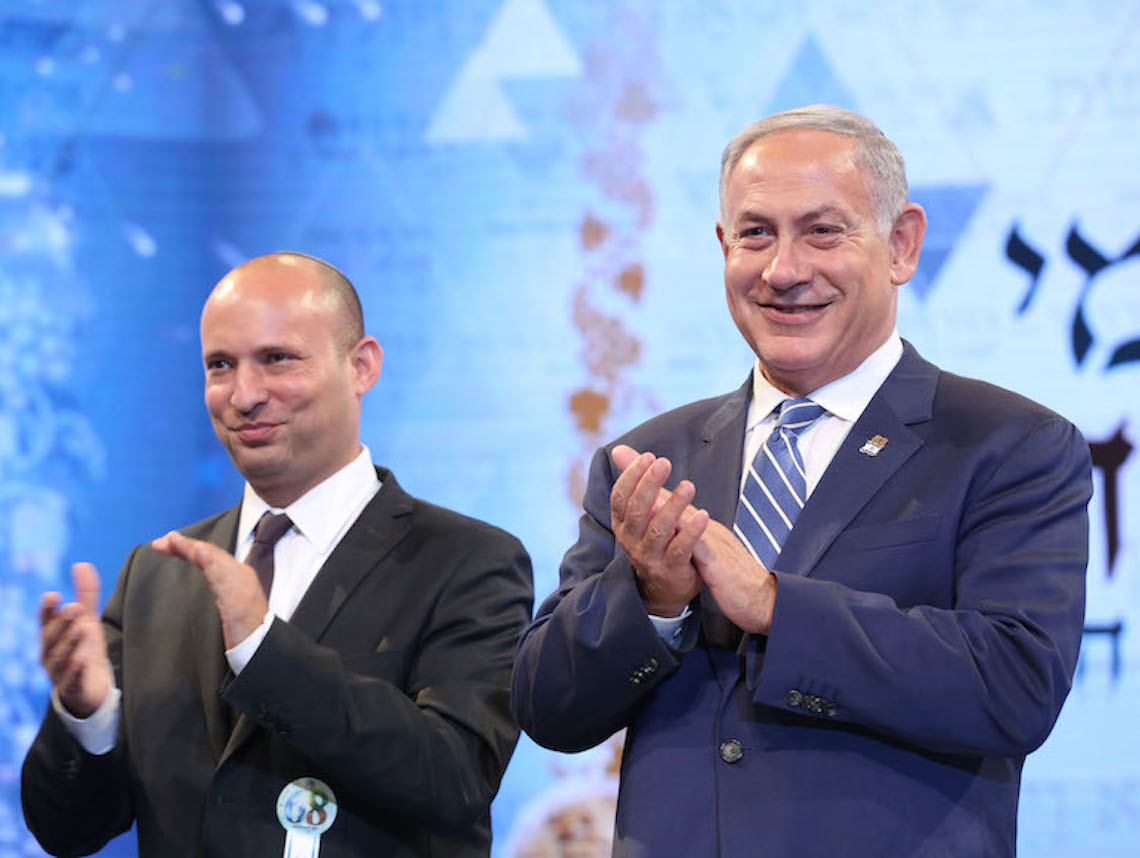
Prime Minister Benjamin Netanyahu’s staunchly right-wing government has looked shaky in recent weeks. A coalition crisis over public broadcasting was narrowly averted last week, and Netanyahu remains under investigation for corruption.
But even many Israelis who would like to see a left-leaning government take over do not expect to see it happen, the survey found. Fully 81 percent of Jews said they think a right-wing or center-right government would come out of elections in the near future, compared to just 8 percent who predicted a left wing or center-left government.
Among Arab Israelis, 58 percent said they would want a left-wing government, but only 10 percent predicted it would happen.
A series of polls in recent months have shown Yair Lapid, the head of the centrist Yesh Atid party, challenging Netanyahu for the premiership in snap elections. Known to read the public mood, Lapid last week said he would try to form a national unity government if given the opportunity.
Public support for the political status quo may reflect relative optimism about the country’s security situation, which half of Jews deemed good or very good, according to the Peace Index. Some 35 percent said it was “so-so,” and just 14 percent rated it bad or very bad. Diplomatically, 32 percent of Jews said things were good or very good, 38 percent said they were so-so and 26 percent said they were bad or very bad.
The survey also found that Israelis generally are not worried about President Donald Trump’s invitation of Palestinian Authority President Mahmoud Abbas to the White House. Some 75 percent of Jews and 88 percent of Arabs in Israel said they do not see this as a negative development. Trump also has invited Jordan’s King Abdullah II and Egyptian President Abdel-Fattah el-Sisi to the White House as part of an apparent attempt to restart Israeli-Palestinian peace talks.
The government last week enacted new restrictions on settlement building in the West Bank in what Netanyahu said was a goodwill gesture to Trump. Right-wing leaders have largely backed him or restrained their criticism.