It almost seems like normal life. Things seem to be calming down, or at least continuing in a slower pace. Here in Sderot, there are less rocket attacks. Yesterday there were only two Tzeva Adom (Color Red) alerts in Sderot. (Not unusual for daily life here.) We are hearing fewer planes overhead and less explosions coming from Gaza.
The international press seems to be gone, but the Israeli photographers are still here, sitting in Coffee To Go with their long lenses and laptops, waiting to rush to the scene of the last qassam hit.
The other day, I actually went out to see where one had landed. We heard the impact from inside our bomb shelter, and it was really close—about four blocks away. Two friends were visiting and they wanted to see the scene. The qassam had struck the porch of an apartment, right across from one of Sderot’s largest schools. I filmed the wreckage and a mob of crazed press people who were trying to cross the police lines. I think I’m the only one who films the press.
I thanked my friends for the opportunity – because I just usually don’t rush to the site. I used to when I first got here. But its become such a part of life…how much footage of that stuff do I actually need? And something about being a resident makes it taboo. It feels like I’m exploiting someone’s misery. It’s a small town. What if I show up and I know the person whose house was hit? Or they’re friends of my in-laws? It’s embarrassing. Avi has always said that the thing he fears the most, is to be standing there in your broken house and pajamas on the 8 O’clock news.
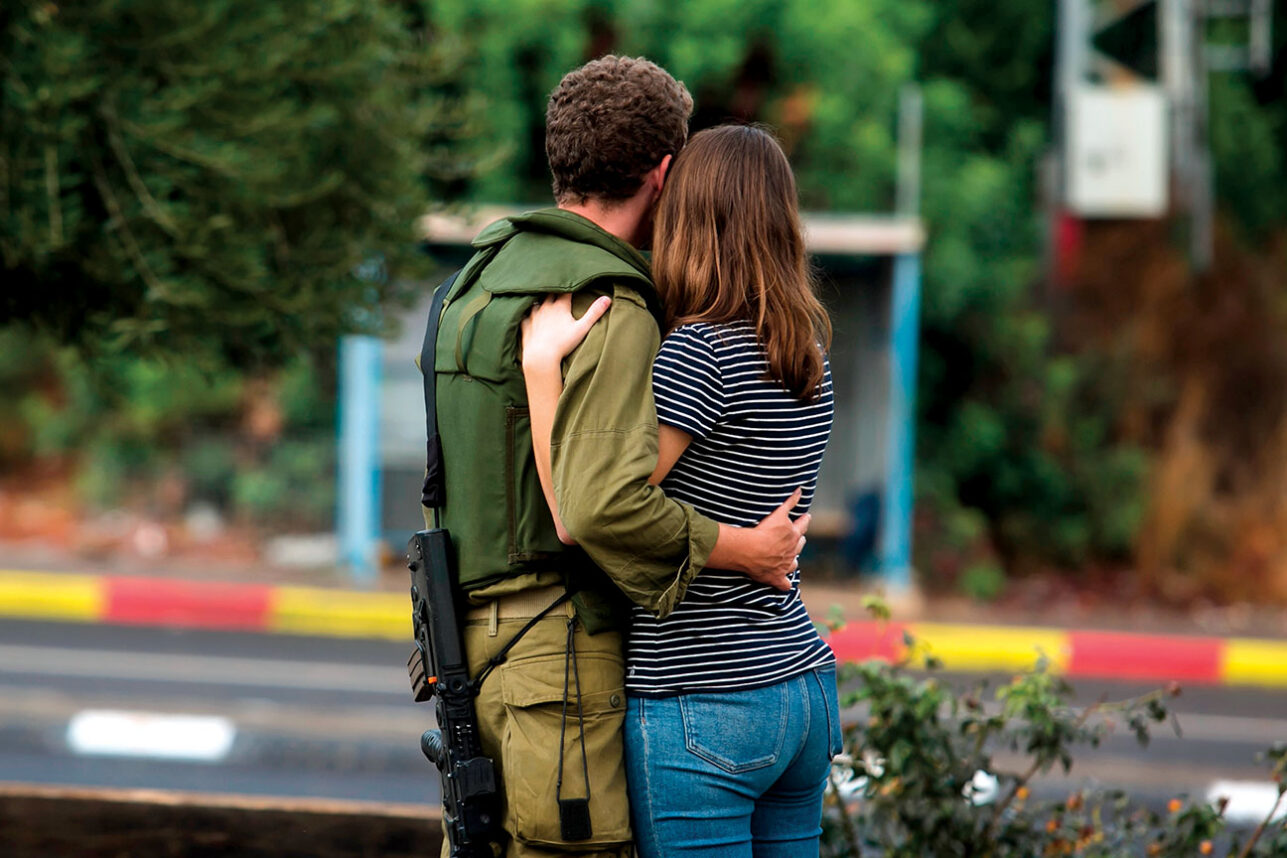
People are trying to get back to work, but the feeling of war remains with us in strange ways. Solidarity is displayed around the country. And though there are demonstrations in Tel Aviv against the war, most of the country has come together in a way I haven’t seen before. We drove to Jerusalem a few days ago. Signs and posters of all shapes and sizes were tied to fences along the road: “A strong homefront brings victory,” and all kinds of hand-written notes cheering on the soldiers. The slogan for this war, apparently repeated from a soldier’s interview on TV is: “Don’t worry Mom, we’re going to kick their ass.”
There are other unusual reminders that this isn’t normal life: an advertisement from a major grocery store chain offers free delivery to people in the South. When I make a call from my cell phone, a message says, “special rate,” before the call goes through. Apparently Cellcom gives a discount to people calling from the war zone.
This is the first time I’ve been in Israel during a war. During Lebanon two years ago, I watched from the safe distance of my Los Angeles apartment – worried, upset, scanning the op/ed pages daily to monitor American reaction. It’s totally different to be here.
The amount of information coming to us on a daily basis is enormous. I am sure these stories don’t get to the American public at large, and make it much harder to relate to the battle this country is fighting.
Of course we see images from Gaza – women who’ve returned to their homes to find nothing left. People with nothing to eat. Wounded children. Dead bodies. My heart breaks to see this—these are the images going to the rest of the world as well.
But what you probably don’t see gives the conflict a whole other dimension—taking it from black and white to many shades of grey: IDF surveillance footage of rockets being fired from a Mosque and a school; the family of an Israeli Druze soldier that was killed – the mother crying for her son, the father saying that it was his son’s duty to serve his country. (Important to know—soldiers volunteer to be in combat units.) We see soldiers’ funerals on TV, and see reports on the amazing way they trained for the war – in a full-scale model of Gaza city that the IDF built on a base in the Negev.
Last night Channel 2 featured an incredible story of a woman from Gaza who had come into Israel a few weeks before the war to receive treatment for her baby, at Barzilai hospital in Ashkelon. The news crew filmed her with the hospital staff amidst air raid sirens as Grads were coming over the border towards Ashkelon, then cut to the rest of her family and husband, trying to take shelter as they heard Israeli planes overhead from their home in Jabaliya.
We also get tons of information about what the IDF has found – huge tunnel systems – not just to Egypt, but leading into Israel. Stashes of weapons. A gigantic anti-aircraft gun in an apartment. Rumors go around too –—like the one about the fourteen year old child in Gaza with explosives strapped to him, sent blow himself up near IDF soldiers. Instead, he supposedly approached them with his hands in the air, begging for help. He didn’t want to die. Or the absolutely appalling footage of small children being dragged around Gaza streets by Hamas fighters to be used as human shields in the middle of a fire-fight. Can this actually be real?
It’s impossible to sit here, and not ponder the complexity of it all. It’s hard not to wonder about the future of two peoples on the opposite sides of this border, just one mile away from where I write.