fbpx

July 22, 2026

Table for Five: Va’etchanan

One verse, five voices. Edited by Nina Litvak and Salvador Litvak, the Accidental Talmudist

Do not add to the word which I command you, nor diminish from it, to observe the commandments of the Lord your God which I command you.

– Deuteronomy 4:2


Dr. Rena Selya Cohen

Archivist, Cedars-Sinai; Past President of BDJ

Throughout the book of Devarim, we sense a palpable anxiety from Moshe about what would happen to the people and to the Torah after he was gone. In this verse, we see Moshe struggling with balancing his love of the Jewish people and the precious gift they have received from Hashem with his real fears about how they would behave once he was no longer there to guide them.

The idea of commandedness appears three times in this verse. The commandments are Hashem’s but the medium was Moshe, the one who conveyed Hashem’s message with love and dedication. Commandments are Moshe’s legacy, his eternal impact on our thoughts and behaviors, and he must have been terrified that without his guidance, the Children of Israel would lose their moral compass and stray from Hashem’s careful instructions. In cautioning us not to add or subtract from the Torah, Moshe was protecting Hashem’s commandments from what 19th-century commentator Rav Samson Raphael Hirsch called “arbitrariness … any subjective, capricious addition or omission. …” Moshe was painfully aware of the hazards of adding to the mitzvot, even with the best of intentions: he saw first-hand what happened to his nephews Nadav and Avihu when they brought their own fire to the dedication of the Mishkan, and one could argue that his sin of hitting the rock instead of talking to it was also an example of adding to one of Hashem’s commandments. Commandments need boundaries even as they constrain our behavior.


Rabbi Shlomo Seidenfeld

Scholar-in-Residence for Aish/JMI, Freelance Rabbi

Everyone’s looking for the secret sauce. The insider intel for living a vibrant and fulfilling life. Everything we crave is motivated by this search. Every profession. Every relationship. Every possession. Every vacation. In short, everything we seek out is fueled by this quest. To be sure, some people’s search is motivated by a deep need for validation and is driven by insecurities and vanities. But even then, ultimately, what those and all souls crave is a life that is meaningful. So the big question is where’s the sauce and how do I sign up?

For Jews, the Torah and the Jewish tradition of Missionhood is the secret sauce. And like all tantalizing recipes its flavor is complicated, nuanced and zesty. As per the language in our verse, the “Word” of the Torah is divinely designed and calibrated to satiate and empower us in our eternal quest to infuse our lives with the light of higher purpose. The divine ingredients for this recipe are the mitzvot, whose observance guides us towards living the lives we seek.

But there’s a catch. In order to fully access and experience the quest-nourishing and life-enhancing wisdom, you have to follow the recipe. Each mitzvah is a unique flavor that contributes to the sauce. If we add to the recipe or diminish it, no matter how well intentioned our revisions are, the holistic recipe is altered. The secret sauce is no secret! We just need to trust the chef to fully enjoy its taste and impact. Shabbat Shalom


Gila Muskin Block

Executive Director, Yesh Tikva

In this pasuk the Torah teaches “You shall not add to the word that I command you, nor shall you diminish from it.” Rashi explains that we are commanded to observe mitzvot exactly as God instructed, not by adding or taking away from them. Rav Hirsch deepens this idea, teaching that every mitzvah is a communication from God. To add to it or subtract from it is to alter the message itself. Even with the best intentions, we risk replacing divine wisdom with our own. Professionally, I am trained to view life through the lens of supporting people in struggle. When I read these interpretations, they reminded me of a lesson that extends far beyond mitzvot: ask people what they need and then listen.

I often hear that people hesitate to show up for someone in pain because they are afraid of saying or doing the wrong thing. Yet the Torah suggests that listening itself is an act of humility. It requires us to hear another person’s words without reshaping them through our own assumptions, experiences, or desire to fix the situation. Perhaps this is one of the lessons we can derive from “do not add and do not subtract.” Whether we are receiving God’s commandments or listening to another person, our first responsibility is to hear what is actually being said. Often, the greatest gift we can offer is not advice or solutions, but rather our presence and willingness to listen.


Rabbi Ilana Grinblat

Ahavat Torah

When my son, Jeremy, was an infant, I remember holding his tiny foot in the palm of my hand, and wondering: how will these feet ever fit in in my husband’s shoes? Now, 22 years later, he and my husband share the same shoe size. The transformation that takes place over a couple decades is remarkable. Jeremy hasn’t added or subtracted from himself, but he has grown. Still his soul – his essence – is unchanged. He has become physically stronger and more capable, but his smile and his inner spark remain the same.

So too with Torah. As Rabbi Harold Kushner of blessed memory explained: Torah is a living organism, constantly shedding dead cells and growing new ones, changing and adapting to new and unprecedented circumstances. Extending the implications of a law to meet today’s needs is not a case of adding or subtracting.

In reflecting on America’s 250th birthday, we can trace how the idea of liberty in the Constitution was originally applied only to white men who owned property and has since been expanded to include us all. Likewise, when we apply Torah more justly in our world, we’re not adding to Torah but only ensuring that its core principle – that each person is created in the image of God – extends to everyone. In this way, we are fulfilling the subsequent verse: “And you shall cling to Adonai, your God, living, all of you, today.”


Sari Abrams

Early Childhood and Parenting Educator

The two halves of this verse are in tension. If Moshe expects the people to “observe the commandments of the Lord,” is it logical for him to expect they will neither “add to” nor “diminish from” them? Would it be possible for the people to observe them precisely as they were divinely presented, when over time they would invariably find themselves in changing circumstances? Obviously this isn’t Moshe’s intent (as the Talmudic rabbis also clearly understood.)

Rather, in his instruction in the first half of the verse, Moshe teaches us that even in changing circumstances, God’s commandments must be our center of gravity, the blueprint for our lives. We are to exercise humility, accepting the basic structures of the commandments while not presuming to read God’s mind. Then, in the second half of the verse, Moshe instructs us to take responsibility for ensuring we can observe the commandments at all times, in all places and in all situations.

This verse provides the framework for a religious observance that is true to God’s word, while remaining vibrant and relevant. It forces us to ask the question: how do we adapt and construct halacha in concert with historical, moral, and social developments, while staying true to God’s laws and commands as given to us in the Torah? How do we remain the people who stood at Sinai declaring “we will do and we will listen” while also standing in places around the globe, thousands of years later?

Table for Five: Va’etchanan Read More »
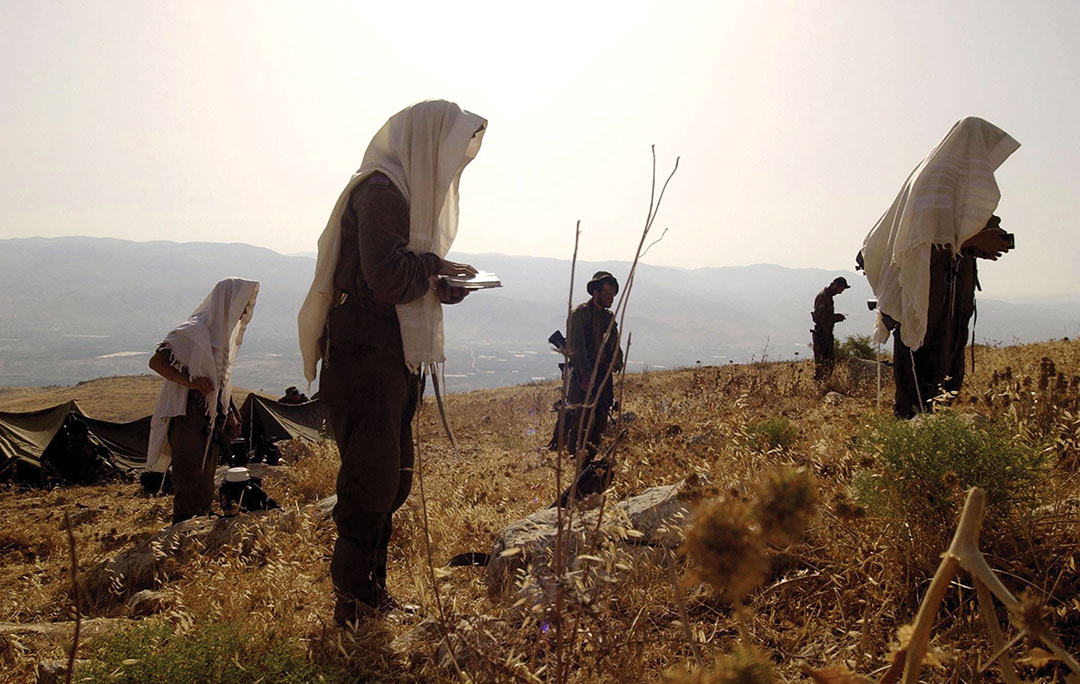
The Haredi Soldiers Caught Between Faith, Family and Country

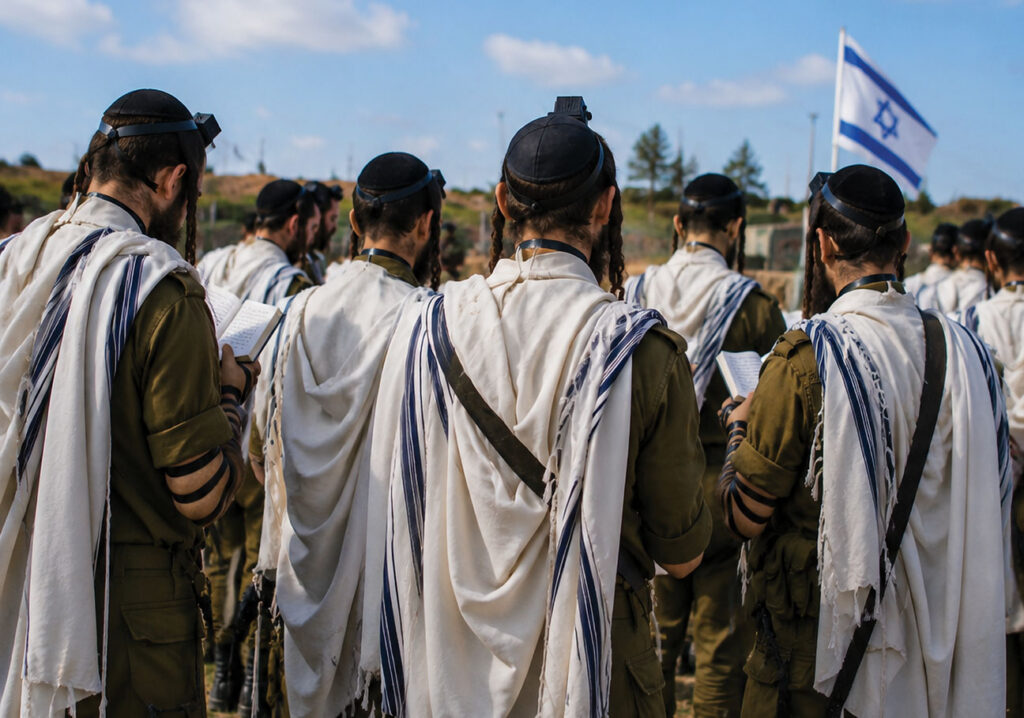
At 18, Jonathan S. made a decision that cost him almost everything. Raised in a Haredi home in Jerusalem, with eight brothers and sisters, he enlisted in the IDF to the Haredi Nahal Battalion unit. Driven by a sense of Zionism and a desire to contribute to his country, he enlisted out of a desire to contribute to the country, despite knowing the consequences. The decision came with a devastating price: his family cut ties with him, and the community he had known his entire life ostracized him.

“People don’t always realize what you’re giving up,” Jonathan said. “For some, it’s not just about joining the army. It can mean losing your parents, your siblings, your friends, your entire community. It also reduces your chances of getting a good shidduch. You have to be incredibly strong to go through something like that.”

The decision also meant serving without the family support system most young soldiers rely on. He was identified as a lone soldier by the IDF and received assistance with rent for a place where he could go on his time off, but he missed his parents and siblings dearly. One day, he decided to go back home and knocked on the door.

“My mom didn’t open it. I called out, ‘It’s me, Jonathan, please open the door.’ I heard my siblings inside, but no one dared opening it. I stood there for a few minutes and kept knocking until I heard my mother say, ‘Go away, you aren’t welcome here.”

Those were the last words he heard his mom tell him. He hasn’t been back since.

When he completed his three years of military service, the difficulties only intensified. The financial assistance he had received as a lone soldier ended abruptly, and he had no home to return to. “While all my friends went back home, I had no place to go back to. Suddenly I needed to figure out what to do and how to survive.”

Now, 12 years later, married and a father to two small children, he said he understands why many Haredi young men hesitate before taking the same step. The fear is not necessarily serving in the army, being uncomfortable or even risking their lives. It’s the fear of having their families and communities turn their backs on them.

For decades, the question of Haredi enlistment remained one of Israel’s most sensitive and unresolved conflicts. Most ultra-Orthodox men were able to avoid military service through an arrangement where full-time yeshiva students are exempted from the draft. What began as a limited exception after Israel’s founding is now a widespread practice, with tens of thousands of Haredi men remaining outside the military system.

(Photo by Abir Sultan/IDF via Getty Images)

The debate intensified dramatically after the Oct. 7, 2023 attacks and the war that followed.  As the IDF struggled with manpower shortages and reservists were called for repeated, lengthy deployments, often leaving behind families and jobs, many Israelis questioned why one sector of society remained largely exempt from service. For them, the issue became a matter of equality and shared responsibility.   

For many Israelis, the exemptions came to symbolize a profound inequality. While most Jewish Israelis are drafted at age 18 and return for reserve duty throughout adulthood, most ultra-Orthodox men continued their Torah studies, married and raised families while remaining outside the military system.

Within the Haredi community, however, the court’s decision represented a threat to a way of life built around Torah study. Once the blanket exemption was no longer recognized, young men who did not enlist risked facing financial consequences, including losing certain government benefits like discounts in purchasing a home and subsidized daycare and lower taxes. They also risked being arrested for failing to comply with enlistment order. The prospect of enforcement triggered massive demonstrations by Haredi leaders and their supporters, who argued that the state was attempting to force a fundamental change in their religious and communal identity.

For 18-year-old Shlomo Simcha, the son of a rabbi who made Aliyah from the United States, the decision to enlist was ultimately clear. The events of Oct. 7 only reinforced his belief that he wanted to serve his country.

While he supports greater Haredi participation in the IDF, Shlomo does not believe the government’s current approach is effective. He argues that forcing enlistment may actually deepen resistance within the community.

“I think the way the government is handling it is the wrong way,” he said. “There should be a system where people can serve but forcing them is pushing them further away. After Oct. 7, many of my friends wanted to join. But when the law became the focus, it pushed them away,” he said. “The more pressure you put on people, the more extreme some of them become.”

Yitzchak Yaakov Auerbach, 24, from Jerusalem, was born and raised in a Haredi home. He served in a combat unit and since the outbreak of the war with Hamas, he has spent 500 days as a reservist, both in Gaza and Lebanon as part of the 98th Division.

Yitzchak, who is soon to be married, said that most of his friends didn’t enlist. They continued studying in yeshiva, and some had gotten married while he was serving. However, he doesn’t feel like his life or career was held back as a result and he understands those who choose not to enlist themselves. “It’s just not culturally acceptable in our community. They haven’t even thought about enlisting.”

Yitzchak and Shlomo are two of the Haredi soldiers The Journal spoke with. They said they were proud of their service and believe it gave them valuable tools for life. While they believe that serving in the army should be mandatory, they understand the deep concerns that prevent many young Haredi men from enlisting.

To understand why so many Haredim continue to resist military service, one must first understand the world they come from. For them enlisting is not simply a personal decision or a matter of obeying the law. It can mean risking everything they have ever known — their family, their friends, their community and, in some cases, even their home.

Among young Haredi men, the transition from yeshiva life to the military represents a dramatic change, not only in their daily routine but from the entire environment they have been raised in. From a young age, their lives often revolve around Torah study, prayer and a close-knit religious community with strict social and religious boundaries. Many have little interaction with secular society, and some have limited interaction with women outside their immediate families.

Their concerns are not necessarily about serving the country itself, but about whether they can maintain their religious identity within the military environment. The IDF has created dedicated Haredi service tracks, designed to accommodate religious requirements, including kosher standards, prayer schedules and the ability to observe Shabbat. These arrangements allow Haredi soldiers to serve in a variety of roles, including combat positions for those who choose them, as well as technological, intelligence, administrative and other positions.

Still, for those coming from a community where military service has traditionally been discouraged, the challenge is not only practical but social. Enlisting can mean stepping outside the path expected of them by their families, rabbis and peers — and for some, risking their place within the community they have always known.

David, 26, was raised in Bnei Brak by Orthodox parents who later divorced. Growing up in a Haredi environment, he never knew a single Haredi man who had served in the IDF. Still, from childhood, he pictured himself one day wearing an Israeli army uniform. He knew that making that dream a reality would mean going against the wishes of both parents and the expectations of the community in which he was raised.

“Both of my parents were completely against it, but I was very determined,” he said. The transition proved difficult. After several months of basic training, he struggled emotionally. “I didn’t know what I was getting into,” he said. “There was no one to prepare me.”

Things changed after he transferred to become a combat instructor, a role in which he said he finally found his place. A few months into his service, he was introduced to the Michael Levin Lone Soldier Center by another lone soldier. Soon afterward, he moved into one of the organization’s homes in Jerusalem, where he found the support system he had been missing.

“It was the smartest decision I made during my service,” he said. “The atmosphere, the friendships, the people — they gave me everything I needed.”

Even after completing his military service, he continued living at the center for several months. He later returned there as a counselor to help other lone soldiers facing the same challenges he once did.

For young men who lose their families after enlisting, organizations such as the Michael Levin Lone Soldier Center often become a lifeline. The nonprofit supports approximately 3,500 lone soldiers each year, providing guidance beginning a year before enlistment and continuing for up to five years after discharge. It also operates six residential homes in Jerusalem, Petah Tikva and Herzliya, offering more than 100 lone soldiers not only a roof over their heads but also a sense of belonging. According to the organization, many of the Israeli-born lone soldiers it assists come from Haredi backgrounds and were left without family support after choosing to serve. For them, the center becomes far more than temporary housing — it provides Shabbat meals, counseling, practical assistance and, perhaps most importantly, a community that replaces the one many were forced to leave behind.

After weeks of protests, demonstrations and growing pressure from the ultra-Orthodox political parties, their efforts ultimately succeeded. On July 14, Israel’s parliament approved legislation that effectively preserves the exemption of most ultra-Orthodox men from military service, a move that became one of the most controversial political decisions during the war.

The Knesset approved two measures: one freezing the arrests of ultra-Orthodox men who had failed to report for military service, and another recognizing Torah study as a “foundational value” of the state. Together, the measures represented a major concession by Prime Minister Benjamin Netanyahu’s coalition to the Haredi parties, which had long demanded formal protection of their community’s exemption from the draft.

The decision came at a time when the IDF was facing severe manpower shortages after nearly three years of war in Gaza, Lebanon and against Iran. Each year, approximately 13,000 ultra-Orthodox men reach draft age, but fewer than 10% enlist, according to figures presented to a Knesset committee.

Israel’s military chief of staff, Lt. Gen. Eyal Zamir, warned that the legislation was “clearly and unequivocally inconsistent” with the army’s needs, saying it was unacceptable for the military to grant mass exemptions while demanding unprecedented sacrifices from its soldiers.

Political analysts also viewed the decision as part of Netanyahu’s effort to maintain the support of the ultra-Orthodox parties ahead of upcoming elections. “Netanyahu is trying to ensure that Haredim are going to negotiate only with him after the next elections,” said Shlomit Ravitsky Tur-Paz, head of the Religion and State program at the Israel Democracy Institute.

For Haredi leaders and their supporters, however, the legislation represented a victory in protecting their religious identity and preserving a way of life centered around Torah study. They argued that government attempts to force enlistment threatened the foundations of their community.

We reached out to Jonathan again following the recent developments and asked for his reaction. He said he was disappointed by the decision, believing that both the IDF and young men in the Haredi community could benefit from their service.

“I think it’s a shame,” Jonathan said. “There are many who would like to contribute, but they grow up in a very sheltered environment, and sometimes they don’t even have the opportunity to consider another path. There is so much to gain and learn from serving in the military. If only the ultra-Orthodox community was open to that, I’m sure many men would have been happy to serve.”

Jonathan hopes that whatever solution Israel ultimately reaches, people on both sides will better understand the realities facing Haredi young men.

David, who also paid a personal price for enlisting, said he is troubled by the growing hostility he sees between secular and Haredi Israelis. “I’m Orthodox, and I served in the army,” he said. “Sometimes I feel people put all Haredim into the same box. There are many of us who do serve, and there are secular Israelis who never served, yet you don’t see demonstrations against them.”

Rather than deepening the divide, David hopes the debate will encourage greater understanding between the two communities. “I wish there were more dialogue between Haredim and secular Israelis,” he said. “I hope that, over time, we’ll see more Haredi young men choosing to enlist, not because they’re forced to, but because they want to.”

The Haredi Soldiers Caught Between Faith, Family and Country Read More »

Why Are Jews Not Suing Mamdani for Slander and Defamation?

“Benjamin Netanyahu is a war criminal, the architect of a horrific genocide against the Palestinian people,” New York City Mayor Zohran Mamdani said in his much-discussed speech this week.

We’ve gotten so used to hearing such calumnies from the socialist mayor we’ve almost come to expect them.

When we try to fight back, we mostly yell and complain.

“We are tired of the Mayor employing rhetoric that repeatedly ignores reality and incorrectly places one-sided blame for the current conflict on Israel,” the American Jewish Committee said in a typical communal response. “His words carry consequences…they legitimize the unique demonization of Israel that has resulted in real violence against the Jewish community…we again implore you to stop putting a target on the back of the Jewish community.”

Powerful words, yes, but not very effective.

Mamdani has been escalating his attacks against Israel precisely because he knows there’s no price to pay. If anything, it helps him politically.

It is the Jews who are paying the biggest price.

So, why are we letting Mamdani off the hook? Why are we not suing him for slander and defamation?

A sharp lawyer can nail him on just this one lie: Benjamin Netanyahu is a war criminal. He might even show malicious intent by arguing Mamdani knew it was a lie, given that the mayor kept referring in his speech to the International Criminal Court, which only accused Netanyahu of war crimes.

In Mamdani’s own world of justice, he knows there’s a galaxy of difference between “you’re a criminal” and “you’re accused of a crime.”

In his all-day deposition of Mamdani, I would imagine the lawyer would have a field day with other Mamdani lies, such as Israel “starving Palestinians” and “targeting neonatal hospitals and maternity care centers.”

The mother of all lies, of course, is genocide, which, legally, revolves around intent.

As Seth Mandel writes in Commentary, “The course of the war, in which the IDF was discovered to have caused among the lowest civilian-to-combatant casualty ratios in the history of urban warfare, demolishes such nonsense.”

“There was never a genocide in Gaza,” war expert John Spencer writes on X. “The opposite actually, one side (Israel) vaccinating, feeding, helping with all services (medical, drinking water, power) while taking extraordinary steps to protect civilians in the worst urban warfare scenario arguably ever seen and the other side (Hamas) doing everything it can to get civilians killed, stealing food, targeting civilians that do not do their demands.”

I’m not saying we can win the case; defamation cases are notoriously hard to prosecute.

But just as Mamdani has become expert at tormenting Jews with his sinister bashing of Israel, I’m sure we can find a few killer lawyers who can torment him right back.

At the very least, the case would provide a global stage to debunk the genocide lie that is devastating world Jewry.

As we enter the somber hours of Tisha b’Av and begin mourning our ancient losses, it’s as good a time as any to say “enough” to our losses.

If not us, who?

Why Are Jews Not Suing Mamdani for Slander and Defamation? Read More »

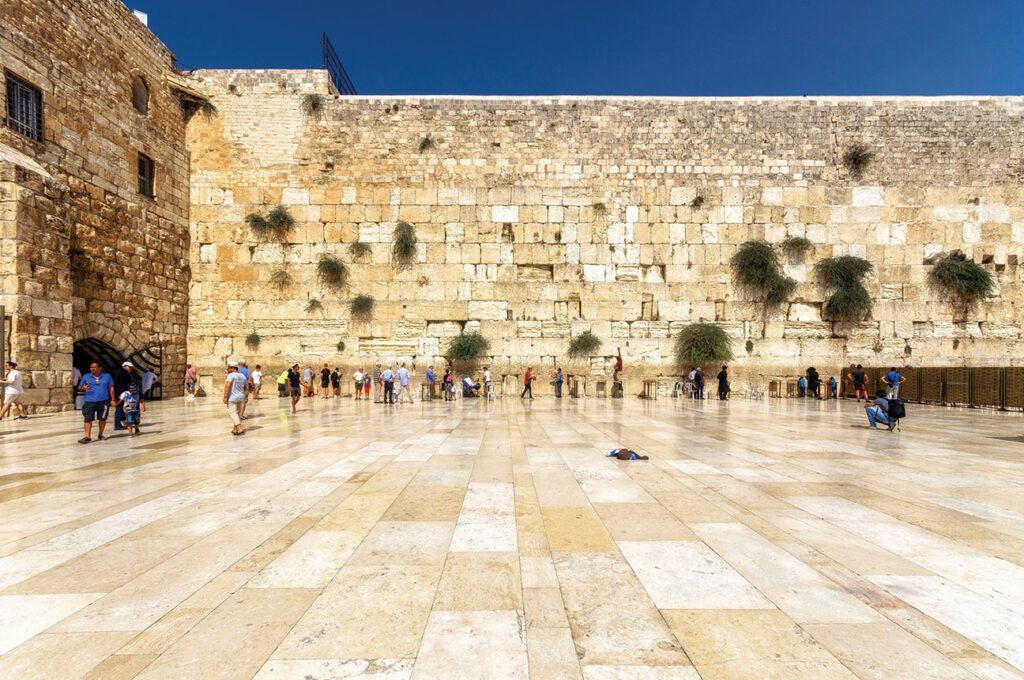
The Empty Plaza and the Eternal Bond

“Many people today believe,” Guy Rogers observes in his “For the Freedom of Zion: The Great Revolt of Jews against Romans, 66–74 CE,” “that the fate of humanity itself will be decided at the site of the destroyed Temple. Visitors to the Western Wall today are immediately aware that they are visiting not just another tourist site; they are at an active religious shrine and are witnesses to expressions of piety that are sometimes intended to have consequences for all of humanity.”

This Tisha b’Av, as we mourn over the Temple once more, it is an occasion to consider what resonance the remnants of the Temple structure hold for us today.

Ruminating on contemporary synagogues in light of the role of the ancient Sanctuary in Jerusalem, the late British chief rabbi Lord Jonathan Sacks observed in his book “Community of Faith” that in our tradition, “the largest place of prayer is not a synagogue at all. It is the open space in front of the Kotel Hamaaravi, the Western Wall, symbol and vestige of the Temple that twice stood and was twice destroyed. Since then, for the most part, Jews have not tried to rival its splendour. They built synagogues, battei knesset, houses of worship. But often they were small, modest and unspectacular.”

In considering why this might be, Rabbi Sacks raises multiple possibilities. The first is the lack of communal funds necessary to construct elaborate structures. The second – related to the first – was centuries of subjugation and persecution in Christian and Muslim countries, which precluded the building of sanctuaries that might rival those of the other faiths. Additionally, it might have been “simply that experience had taught them that, during the long night of exile, no place of residence was secure.”

While there might be truth in all of these historical considerations, Rabbi Sacks concludes that the most compelling factor was that: “After the destruction of the Second Temple Jews lived by an ancient and fundamental insight, that God does not live in buildings but in the human heart. When He commanded the Israelites to construct the tabernacle, He said, ‘They shall make Me a sanctuary that I may dwell in their midst’ (Exodus 25:8) – in their midst, not its midst. The Shekhinah, God’s indwelling presence, was in a people not a place. The traces of His spirit are to be found in human lives. What in other faiths was achieved through architecture – visible symbols of the order and majesty of creation – was achieved in Judaism through the life of the holy community, constructed according to the plans of the Torah. The rabbis carved, polished and engraved its teachings as if they were the stones of a great edifice, and so they were, but it was a living one built out of words and deeds.”

That is to say that the empty space of the Western Wall plaza is, in essence, a call for each of us to commit not to complex structures, but to community and covenant.

“Through families, associations and communities,” he continued, “a civilization passes on its values from one generation to the next in the most vivid and comprehensible way, through patterns of behavior learned and internalized until they become, in Alexis de Tocqueville’s phrase, ‘habits of the heart.’”

That which the Roman conquerors thought they had accomplished – destroying the connection between the Jewish people and their God through the Temple – was no victory at all.

As Rogers puts it in “For the Freedom of Zion,” “What Titus, Vespasian and Domitian failed to understand was that the divine presence lived on in something that was much harder to destroy: a book that ancient Jews believed had been written by God himself.” It is the study of that book, the recitation of prayers drawn from it, and the performance of its many commandments that the unbreakable bricks of Jewish living have been built. These no enemy can destroy, no empire can conquer.

Synagogue attendance is, no doubt, a vital element of Jewish observance. Along with it comes the reminder of the emptiness of the Wall’s plaza – that the eternal vitality of the Jewish people emerges from God’s Word as reflected in our words, deeds and hearts, as our sinews and souls connect heaven to earth.


Rabbi Dr. Stuart Halpern is Senior Adviser to the Provost of Yeshiva University and Deputy Director of Y.U.’s Straus Center for Torah and Western Thought. His books include the newly released “Jewish Roots of American Liberty,” “The Promise of Liberty: A Passover Haggada,” “Esther in America,” “Gleanings: Reflections on Ruth” and “Proclaim Liberty Throughout the Land: The Hebrew Bible in the United States.”

The Empty Plaza and the Eternal Bond Read More »

Rosner’s Domain | A Leftist (Not) by Choice?

Explaining the Israeli election, that’s a core mission for us in the coming months, until Election Day, Oct. 27 (when it will become the time to explain the even more complicated Israeli coalition building). Today, we focus on a problem the coalition has – a problem with the main opponent currently facing it.

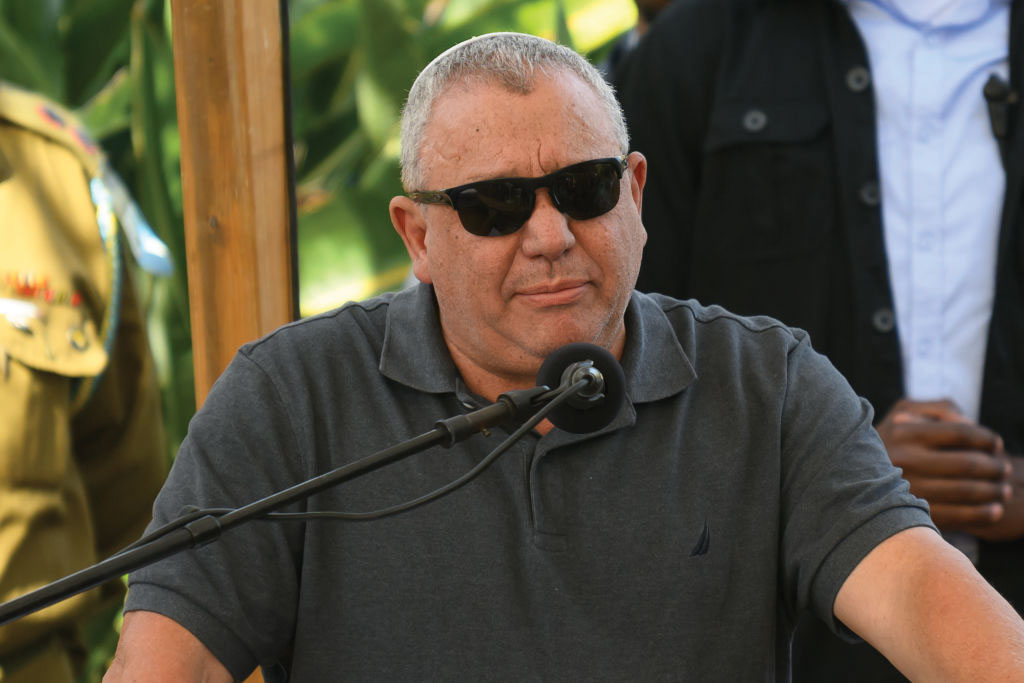
Gadi Eisenkot is a leader with very few traits that Israelis dislike. And this includes most coalition voters. When asked what they have to say about him, they mostly say good things. When asked what is bad about him, they find it hard to answer. What can they say – that he is a populist? Unpatriotic? Inexperienced? An extremist? It is hard to find a negative image that sticks to him. Thus, only one tool remains in their quiver of arrows: Gadi is a “leftist.” He is a good man, a dedicated man, a serious man, but what can you do, he is a leftist. Or, as Minister Amichai Chikli put it, he is a worthy political rival but a distinct man of the left.

Is he actually a leftist? Let us use the Eisenkot question to discuss the title “leftist” and its meaning in the Israeli context. Who is even a leftist? We can start with simple data, from which we learn that there are almost no leftists in Israel. The percentage of Jews in Israel who describe themselves as left-wing supporters stands at 5% on a good day. Even if you add supporters of the center-left, you will not reach a fifth of the Jewish population. The case of Arab citizens is more complex; they connect less with this scale, and when they do, it expresses different things. In other words, to assume Gadi is a leftist, one must assume he stands in a group comprising one-in-20 of all Jews, or perhaps one-in-five. He would be standing on an edge where very few actually stand.

Let us move forward. Perhaps it is not self-definition that determines where a person stands, but rather political positions. We then must ask: What is the position that turns an Israeli into a leftist? You might say it is support for a Palestinian state. But then we have to ask “support for it when” – now, or in some unforeseeable future? If we are talking about right now, again, there is no more than a handful of leftists in Israel. If it is about an unknown future, this too does not necessarily allow Eisenkot to be branded a leftist. The percentage of Jews who agree with the statement that Israel should try to reach a peace agreement with moderate Palestinians and allow the establishment of a Palestinian state that will live in peace alongside the State of Israel stands at 13%. This is a position held by most of those who call themselves left, less than half of those who call themselves center-left, and a fifth of those who call themselves centrists.

What other positions might define someone as a leftist? We have data on what defines Israelis as right-wing. In the eyes of the right itself, opposition to a Palestinian state is the most important clause. The next one in line is support for judicial reform. If so, one could argue that a leftist is not someone who supports a Palestinian state, because right now there are very few of those, but rather someone who does not support the judicial reform. Naturally, such a definition creates the opposite difficulty. If we go by the Palestinian state metric, it turns out there are too few leftists, meaning Eisenkot — who is not exactly a twig — must be squeezed into a very narrow drawer to call him a leftist. Conversely, if we go by opposition to the reform, the drawer will be large and comfortable enough, but then it would turn out there are more leftists than right-wingers in Israel, which is, of course, unthinkable.

What have we learned so far? Coalition supporters want to define Eisenkot as a leftist because leftist is a title most Israelis do not want their Prime Minister to hold. But this definition has inherent limitations.

So, what remains? What remains is the option to call Eisenkot a leftist without a convincing argument – a leftist in the sense of “he is not in favor of our coalition.” In this way, Avigdor Liberman is a leftist, Naftali Bennett is a leftist, Yoaz Hendel is a leftist, Matan Kahana is a leftist, and Ayelet Shaked is a leftist. All these right-wingers are leftists. In effect, this means that Israelis have been stripped of the right to determine for themselves whether they are leftists or not, and they have also been stripped of the ability to understand which positions characterize a leftist. If you want to rely on a high authority, this approach is similar to the position of the philosopher Isaiah Berlin regarding the question of “Who is a Jew?” When Berlin was asked by David Ben-Gurion, as part of a comprehensive inquiry he conducted via correspondence with the great minds of the Jewish people, who he considered a Jew, Berlin replied that there is a simple criterion: A Jew is whoever his neighbors, primarily his non-Jewish neighbors, consider to be a Jew. 

Something I wrote in Hebrew

One more on left/right and our election:

Between the moderate-right and the center-right – that is the spot. From there to the right, the proportion of those who want a coalition similar to today’s begins to soar. From there to the left, the proportion of those who believe that a “more liberal state” is the decisive challenge …  there is an attempt – mainly by the coalition – to paint a political landscape in which a battle is being waged between “right” and “left.” But the much more accurate picture of the landscape is the one in which we see a battle of right versus right. Of a right that wants a rerun of the current government, and a right that wants a different version of governance.

A week’s numbers

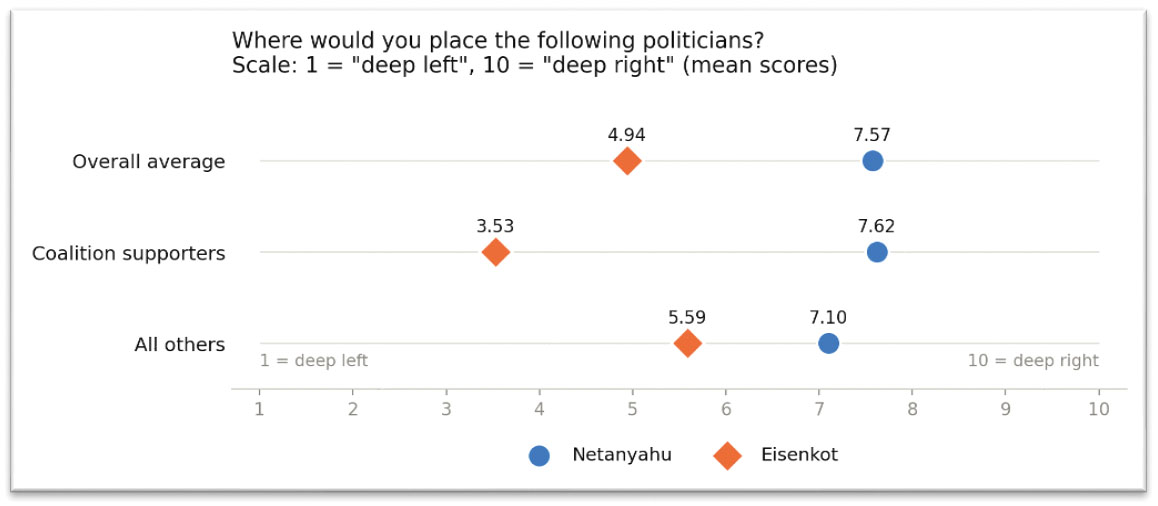
Where is Eizenkot on the Left-Right scale (see left hand column)? Here’s one possible answer:

A reader’s response

Jen Lewis writes: “I hope Israel finally gets a better government. We can’t defend a country with Netanyahu and his cronies at the top.” My response: Just curious — can you defend the U.S. with you-know-who on top?   


Shmuel Rosner is senior political editor. For more analysis of Israeli and international politics, visit Rosner’s Domain at jewishjournal.com/rosnersdomain.

Rosner’s Domain | A Leftist (Not) by Choice? Read More »

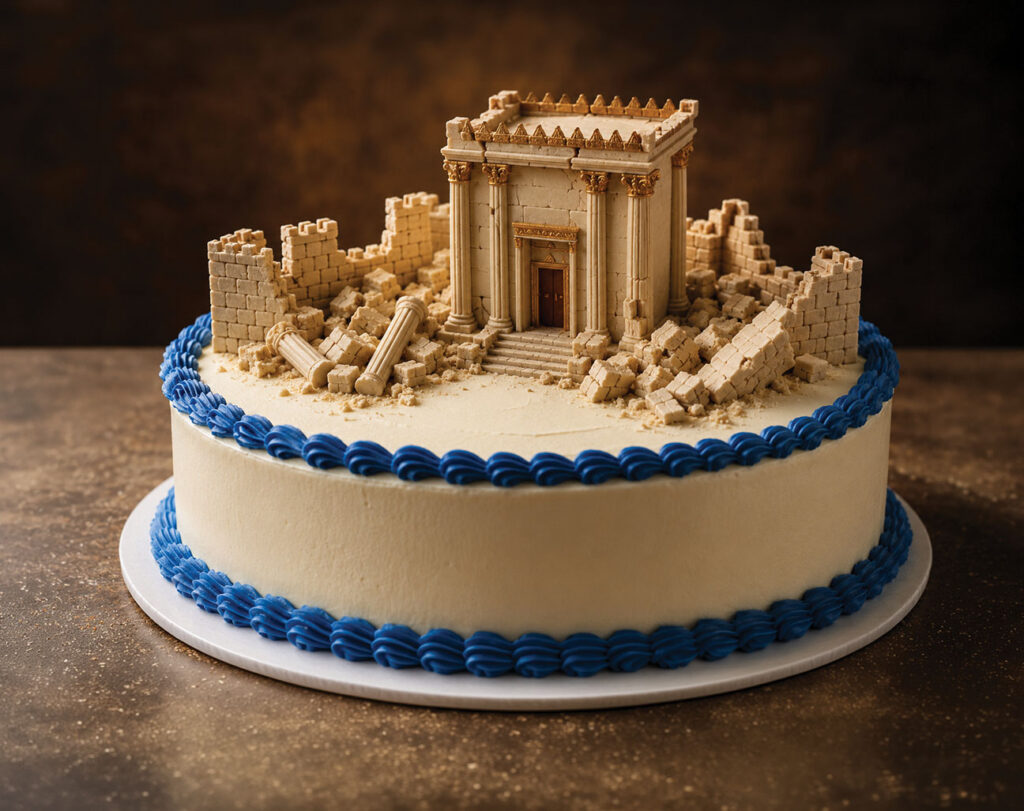
Love for the Sake of Love: A Lesson from Tisha b’Av

The Talmud says that “Because of Kamtza and Bar Kamtza, Yerushalayim was destroyed” (Gittin 55b). Famously, a man threw a party and invited his enemy Bar Kamtza, when he had meant to invite his friend, Kamtza. Because of the name mixup, the host of the party was furious and kicked out Bar Kamtza. Bar Kamtza offered to pay the host for his food or to even pay for the whole party if the host would just let him stay. But the host refused. Bar Kamtza was kicked out, and the rabbis who saw this happen did nothing to stop it. In rage about his embarrassment, Bar Kamtza went straight to the Roman emperor and informed on the Jews, saying they were rebelling. This was the beginning of the end for us. It might have seemed like a passing moment without consequences, but we live with this sin today. And our tradition pinpoints this story as our downfall. Why? Because instead of being loving, accessible and empathetic, the laypeople and the rabbis were exclusionary, callous, cruel and had baseless hatred.

This is the theme of the 3 weeks, 9 days, and Tisha b’Av. The current season in our Jewish calendar when we mourn the destruction of the Temples and the suffering of our people throughout history. It is a time when we take responsibility for our own baseless hatred (sinat chinam) and the evil we contribute to in this world. And yet, especially when we experience modern-day suffering and hatred against us, it can be all the more complex to internalize the mournful and redemptive work that our calendar instructs. For the one who struggles with this, what can be said?

Rabbi Mel Gottlieb, a friend and colleague from Los Angeles who notably founded AJRCA, an interdenominational Jewish learning institute, writes in his sefer, “Torah Travels”: “A path of redemption for sinat chinam, [baseless hatred] is the path of Rav Abraham Isaac HaCohen Kook, of the Chafetz Chaim, of the Ibn Ezra, of the Netziv. They all say that the antidote to sinat chinam is ahavat chinam; hatred for no good reason must be replaced by loving for the sake of love.” Rabbi Gottlieb quotes a teaching of Rav Kook from Middot haRayah: 1, 2: “The heart must be filled with love for all. The love of all creation comes first, then comes the love for all humankind. It is Israel’s destiny to serve this holy task of abundant love for all. And it is to be expressed in practical actions, by pursuing the welfare of those we are bidden to love and to seek their advancement. It must embrace every single individual regardless of differences … It is essential to understand the characteristics and lifestyles of different groups and nations to know how to base our love of humanity on foundations that will readily translate themselves into action.

The narrow-mindedness that leads one to view whatever is outside a particular nation as defiling, is a phase of darkness that undermines the effort to reach that state of spiritual development whose dawn is awaited by every sensitive spirit.”

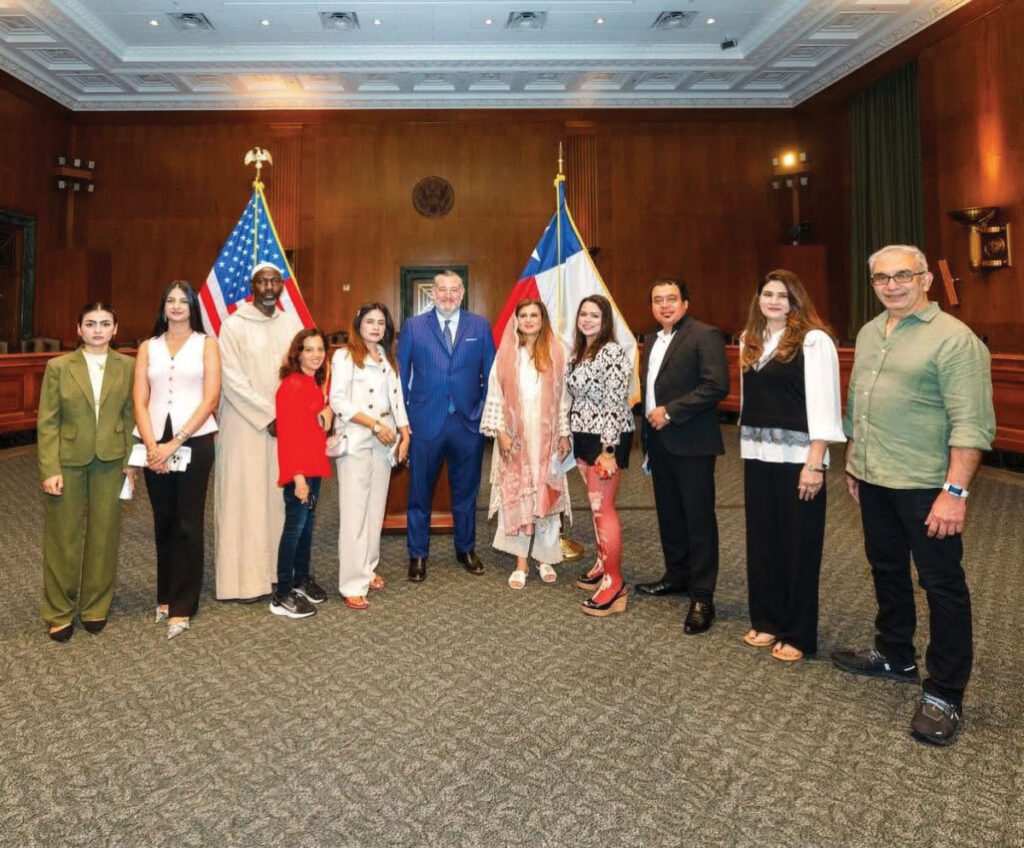
Last week, I moderated a panel of interfaith leaders fighting antisemtism and supporting Israel as part of the American Muslim and Multifaith Women’s Empowerment Council’s conference. I have had a long friendship of over 12 years with Anila Ali – its leader who is also spearheading the anti-BDS Muslim opposition to Mamdani. I had the privilege to join the conference on behalf of Gratz College and Neshama: Association of Jewish Chaplains, who were both among the many supportive cosponsors.

This year’s conference had an added depth that somehow exceeded last year’s inaugural gathering. It came from direct testimonies from Muslims, Christians and multifaith leaders who had been raised with sinat chinam for Jews (some hating Israel and celebrating terrorists as martyrs) who were now courageously supporting Israel and the Jewish people. Over the past six months to 2.5 years, they had been led on trips to Israel by AMMWEC, Anila Ali, Sheikh Musa Drammeh, Zebunnesa Zeba Zubair and fellow courageous Muslim and interfaith leaders.

Who was there? A social media influencer who grew up glorifying Muslim martyrs. A Palestinian Christian priest who sought asylum in America after he publicly supported Israel. An Arab journalist who was shocked at how welcomed his Pakistani passport was at Ben Gurion Airport (knowing that his passport explicitly prohibits Israelis to enter into his country). Reflecting on his experience of Shabbat in Israel, this same journalist commented, “I must have been a Jew in another life.”

What stayed with me was the humility they each had in sharing how their hearts and minds completely changed. They went from believing the baseless hatred that antisemitism has taught throughout history, to loving Jews and Israel so much, that here they were in Washington, D.C., going against everything they knew, at their own peril, to share their testimony of the goodness they discovered and the evil they were rejecting. They were proud religious Muslims, Christians, Sikhs and others who embodied Yeshayahu’s words that we read on Shabbat Chazon: “Learn to do good, seek justice, strengthen the robbed, perform justice for the orphan, plead the case of the widow” (Isaiah 1:17).

I, along with the diverse Jews and Israelis in the room, felt surrounded by what I can only describe as ahavat chinam. It was an ahavat chinam that was transformed from sinat chinam, the same love Rav Kook and the Gemara challenge us to embody at this time of year. What was amazing is that over and over again, the speakers identified it as a love they were imitating from our tradition, inspired by the model of Avraham Avinu.

Representing Pakistan in a speech given in Urdu, the Honorable Imam Sajjad Ahmed Tanoli said, “Today as the world faces the challenges of hatred, prejudice, and religious extremism, we must revive the legacy of Prophet Abraham, peace be upon him: a legacy rooted in monotheism, but also in ethics, justice, peace and service to humanity…We support peace, justice, mutual respect, and positive dialogue for all people.” My hope is that in knowing such love exists, we can more readily give it to other Jews and all of humanity. It’s the love we are called to cultivate, during the Nine Days, and always. It is the antidote to the Bar Kamtza story.

In 2026, few of us look for ahavat chinam amongst our Muslim neighbors. And I cannot think of a more extreme and apt example than what I witnessed.


Rabbanit Alissa Thomas-Newborn, BCC is the Director of Spiritual Care Studies at Gratz College, a chaplain at NewYork-Presbyterian Columbia University Irving Medical Center and Morgan Stanley Children’s Hospital of New York, and the rabbanit of Congregation Netivot Shalom in Teaneck, NJ.

Love for the Sake of Love: A Lesson from Tisha b’Av Read More »

Life, Love and Tisha b’Av

Life and I have a complicated relationship. He doesn’t always show up the way I want. Neither do I. He is an unreliable lover, the kind who brutally wounds you and then has the chutzpah to become beautiful and make you chase after him again.

Any bona fide therapist would flag this relationship as codependent, emotionally unstable, and even toxic; she would recommend a treatment plan and refer me to someone out of network.

Even the Gemara wrestled with this. For two and a half years, the sages debated: to be born, or better not to have been born at all. They concluded: better not to have been born, and yet, since we are already here, we must examine what we make of life.

Unlike the sages, I was given no time to debate, no opportunity to object. I was forcibly invited into this relationship.

As if life needed one more complication, my anniversary with life, my birthday, usually falls somewhere inside the Three Weeks, that narrow corridor of Jewish time when celebration starts to feel suspicious. The calendar sits low and says: not now. Remember the house.

And there it is, the Three Weeks and my birthday-dread, counting down beside each other. The calendar anxious. So am I.

I dread that celebrating life becomes my responsibility. I get impatient with the detailed planning. By the time I’ve put in all the effort, the day is already gone.

And I also dread wanting too much and pretending I don’t.

How big should this birthday be, anyway? I am not getting any younger. Surely by now I’ve earned cheerful Botox to lift my heavy heart and smooth out the dread.

Do I really need strangers in a restaurant to sing me happy birthday as proof that this day matters? Should I let the lavish dress, the dinner and the spa carry the weight of the whole year?

If I am honest, what I really want is to stop performing my own birthday.

This year, my birthday does not merely fall inside the Three Weeks. At sundown, it walks straight into Tisha b’Av. Mourning collides with celebration.

Tisha b’Av is the black hole at the heart of the Jewish calendar, where exile, ruin, and catastrophe collapse into one day.

Tisha b’Av does not stay in the past. It keeps finding us: The spies came back from the Promised Land with fear instead of faith. The First Temple burned. The Second Temple fell. Beitar collapsed. Jerusalem was razed. England expelled its Jews. Spain uprooted one of the greatest Jewish civilizations ever built. The deportations from the Warsaw Ghetto to Treblinka began.

The day accumulates. Every generation adds to it.

Then, on July 22, my mother added me to the calendar.

Life turned my birthday into an oxymoron, sending me to the floor without music or dancing and somehow still expecting me to celebrate. No wine. No dinner.

Just a hurried card slipped under the door: “Happy Tisha b’Av birthday. In the ruins. Deal with it. Love, Life.”

How is a woman in love supposed to deal with a Tisha b’Av birthday?

By Jewish law, ordinary life yields to mourning. We fast. Beyond the fast: no bathing, no leather shoes, no oils or creams, no joyful Torah learning. Even love is asked to keep its distance.

Every Jew carries the day differently. I don’t know what kind of Jew I am according to whom. But when it comes to Tisha b’Av, I am the reluctant Jew, unable to fully enter the day, unable to escape it.

This is the hardest part to look at: the Second Temple fell because of baseless hatred. That fact feels like a finger pressed into my own eye. Rome may have set the fire, but the first cracks had already formed within. Can a people mourn a house it helped break from the inside?

Generation after generation, the grief passed down like a house key to a home no longer standing.

Two thousand years is a long time. No wonder it is easy to under-feel. And yet, there is something during this time that constricts. A heaviness in the air. A stillness that knows.

“What does the destruction of the Temple from 2,000 years ago have to do with you?” Life asks.

Nothing.

Except that another one of my birthdays fell on Tisha b’Av:

The summer of 1980. The last birthday I ever celebrated with my whole extended family. During the Iranian revolution, we left for Paris first, calling it a vacation.

Time passed. We kept waiting, hoping the situation would calm down.

It never did.

We didn’t know, standing there with three suitcases, that we were already leaving. The door we walked out of would not open from the other side, not for us.

After making home in three countries, I began to understand that exile is not a geographical matter. Exile is being locked out of a beloved house. It is the ache of a home, a person, a version of yourself — gone.

For a long time, I mistook my love of travel for curiosity. But I am not only chasing the new. I am searching for the old hiding inside it, a street I have never walked that somehow knows me, a meal that tastes like someone I lost, a stranger who feels like a hug from home.

Travel, I understand now, is longing in motion. I am searching the world for traces of a home I can no longer return to.

Through the years, longing became more than a visitor. It moved in, deeper and deeper, until it became my permanent home.

Perhaps that is why I feel something wordless before the Western Wall.

It is not only a wall. It is a remnant. A survivor. The last visible witness of what used to be whole. It is a magnetic, unexplainable pull, felt even by people who do not know what they believe. People come from everywhere to press their hands and their tears against the stone with folded prayers, private griefs, and impossible requests.

At the Kotel, we stop pretending that loss does not live inside us. We mourn this ruin because the Temple was never just stone. It is a lost home. As if the spirit of what that building represented bypassed our minds and went straight into the nervous system.

That wall, massive, broken, yet defiantly upright, is my relationship with life made visible. And perhaps that is why, as my birthday draws closer, the old argument between us begins again.

Life leans back and nudges:

“What are you doing for your birthday?”

“What are you doing for my birthday?” But I hold my tongue.

“Nothing. Surprises are your department.”

My nothing is not humility. I argue with him all night: Whatever you give me, it is not enough.

I want him to celebrate me, every day, not just once a year. I want him to notice me when I am not asking to be noticed, in an unplanned hour, in an ordinary corner.

But that is not what you get when life is your lover. Life has no shame, no regret; he disappears without warning and returns without apology, as though he has done nothing wrong. Then he expects forgiveness.

Because I am chronically romantic, which I call a gift and he calls a disability, I forgive him. But I still want him to show up gallant, bouquet in hand, some shy proof that he has been looking forward to seeing me.

And this is our dance: when we argue, he is deaf to my love language and I am blind to his, a tango that tangles before the music even begins.

I test him by doing nothing. By waiting. By closing the curtains on a beautiful morning and letting him prove himself.

He tests me differently.

His Tisha b’Av birthday-in-the-ruins card is not because he is stingy.

He wants to know what kind of lover I am.

He asks me to sit low, take off my shoes, and stay present in the thick of it. Not only on Tisha b’Av, but on the days that arrive without warning, the ones that quietly undo me.

Will I follow him when I cannot yet see where he is leading me, into the moonless nights? Into the mud and the chaos? Into the ugly and the uninvited? Will I sit with him on the floor in old stained pajamas when he cannot give me what I want—or simply says no?

It’s not fair. Haven’t we had enough? Who needs more betrayal, more abandonment, another death of something we thought would always live?

Some days are so cruel they split us open: a phone call. A diagnosis. A child. A mother. A country. A door that will not open again. A pain that feels like an amputated limb, an absence we will keep reaching for.

Sometimes what he asks of me is more than I know how to bear.

On those days, he is not my lover. He is my enemy. My body becomes a war zone. I want revenge. I want to throw the vase of flowers at him. I want to shatter his silence, pound on his chest until his cruel heart gives way, until he feels, if only for one unbearable moment, what it is like to keep breaking the person who keeps choosing you.

Life is not faithful in the way I want. And yet, when I am most furious, he comes closer, puts his hand on my shoulder, as if we are still together. Even in the ruins, he knows where to stand so the light catches his stubborn face at the right angle. Half coming, half going, as though he prefers to be misunderstood. He taps his foot, whistles, and says nothing.

Life has never been fair. Just persuasive.

Even in disguise, he is persuasive; hiding behind common clothes, while I am distracted waiting for his grand entrance, he hands me a peach that bruises in my hand.

He becomes the smile of a newborn, an elderly couple holding hands and walking very slow.

He gifts me the long, unstoppable laughter with a childhood friend who calls after decades, at the end of a lost Wednesday.

He wears the ocean, walks through the forest, climbs the mountain — because despair cannot have the last word.

And sometimes I am stunned by the impossible coincidences that whisper: I see you. I haven’t forgotten.

He does all of that.

And more.

Just enough to make it impossible for me to leave.

Maybe this is just another one of his tests, not whether I can forgive him, but whether I can see him whole. Neither the ruins nor the peaches get to call themselves the whole story.

Because behind the curtain of longing is a hidden truth: we can only grieve what was profoundly real. Loss is not proof that life has turned against us. Paradoxically, it is proof that life was here — of what mattered, of what was loved.

Perhaps the only way I know not to leave my lover is to live more like him, to keep returning, to create where there has been destruction, to try to become whole inside the ruins.

Every year, before my birthday, I open my private ledger: an honest accounting of all the reasons to stay. This is my way of celebrating — remembering the places, the people and the person I was before I believed wholeness could end.

And here I am. Still.

Fifty-five ways not to leave your lover …  and counting.


Hilla Gohary Kerendian is an Israeli-Iranian American essayist whose work explores Jewish identity, memory, and the human heart. She writes Change of Heart Stories on Substack.

Life, Love and Tisha b’Av Read More »

Accidental Pilgrim: My Moroccan Adventure

There are moments you’ll never forget: like the first time you display Jewish pride in an Arab country, the first time you purchase a bar of soap made from donkey’s milk, or the first time you see a Muslim lady with full Islamic face covering taking a selfie.

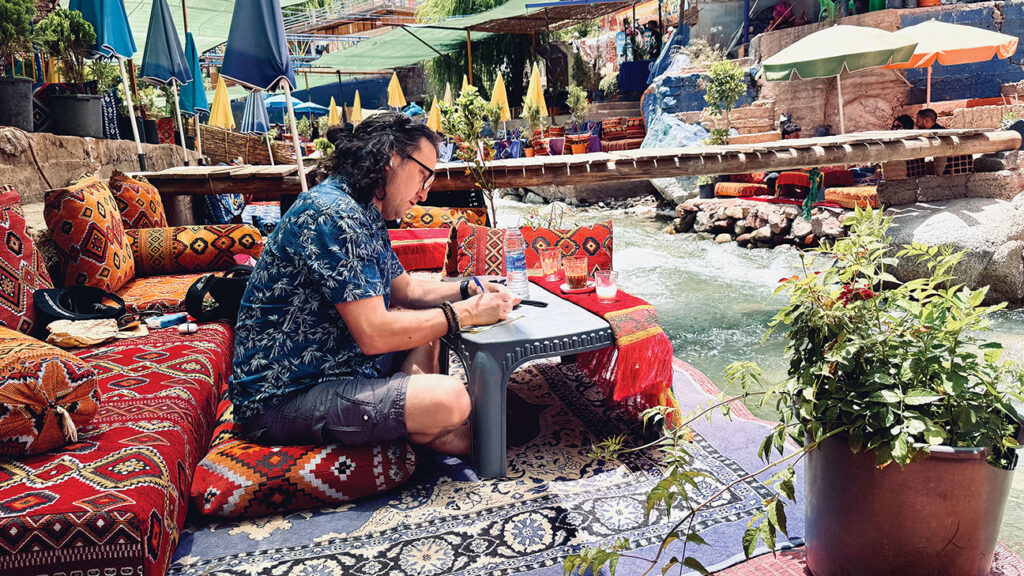
I had to move out of my place in England for a couple of weeks to make room for visiting relatives, and figured out that instead of renting a hotel in North London, it would be cheaper to get Airbnbs in Morocco. My plan was to find a modest spot for remote working and writing, and do a little sightseeing in the afternoons. I certainly was not looking for an extraordinary Jewish experience that was rich, plentiful, eye-opening and sparked a new love affair with this North African land.

As soon as I’d booked the flights, 48 hours before leaving, my concern was how safe it is to travel as a Jew. It’s been an intense few months in England with barefaced antisemitism, hence mixed feelings about visiting a Muslim country.

The first dilemma was whether I should brazenly wear my kippah, or cover my head with a baseball cap. I traveled with a cap I bought at the NOVA music festival exhibition in New York. It’s a more subtle show of Jewish pride.

My cover was blown by the Uber driver who was taking me to see the historic Slat Al-Zamir synagogue in Marrakech. “You’re Jewish?” he asked. I nodded. “We love Jews! We have so much Jewish history here! You know the Mellah was built for the Jews?” The Mellah was the Jewish residential area — the Moroccan equivalent of the Eastern-European ghetto but without the pogroms.

I removed my NOVA cap and asked him, was it safe for me to show my kippah? He smiled warmly. “Of course!” My heart warmed.

Morocco was refreshingly different from Los Angeles or London, like being suddenly satiated by a glass of water when you didn’t realize you were thirsty. There were few tattoos on display, tourists dressed modestly, almost nobody had pet dogs with inane references to their “fur babies,” and there was no canine residue strewn on sidewalks. There were no Pride flags, no over-Botoxed foreheads, nobody was drunk on the streets, and almost nobody was taking selfies, except for the lady in the niqab. I wonder what she asked her friend since her head garment only had a small gap for vision – “Do my eyes look good in this?”

My dear friend Olivia Schwartz, co-founder of L.A.’s legendary Chai Center, says that “Jewish tourism is grave-hopping,” and after visiting Marrakech’s elegant Slat Al-Azama shul, I stopped at the historic nearby cemetery. It was Friday afternoon, and erev Shabbat is a propitious time to visit the graves of distinguished dead Rabbis. I just didn’t realize quite how many distinguished dead rabbis were buried there. It was extraordinarily moving to be the only person visiting a plethora of Torah giants.

I don’t know how it’s possible to absolutely love the Moroccan kabbalistic tradition without realizing you absolutely love the Moroccan kabbalistic tradition, but somehow I’d managed it. One of my all-time favorite Torah commentators is the Ohr HaChaim HaKadosh, “the Holy Light of Life.” His name was Rabbi Chaim Ibn Attar, he lived and taught in Jerusalem, and was born in Salé, Morocco. The Ohr HaChaim Torah commentary brings extraordinary mystical insights to answer “simple” questions about the text, and his insights are profound.

Another notable local was Rabbi Abraham Azoulai whose masterwork was the “Chesed L’Avraham” (“Kindness of Abraham”), although some say the grave is really a memorial because his final resting place is in Israel.

Marrakech cemetery is split into separate sections for rabbis, children and adults, and many of the rabbis names are lost or forgotten because their teachings were never printed. The reason for this was that the printing press had not made it to Morocco during their lifetime. The Ohr HaChaim was an exception; he was traveling to Israel via Italy, and his teachings were published in Livorno, which allowed his wisdom to survive and thrive.

The part that pierced my heart was this question: quite how many other manuscripts had been lost to history? Everyone handwrote their teachings and mystical insights, but the majority of those writings didn’t survive. We say that Torah is a tree of life, but what happens when some of those branches just disappear?

On Shabbat I went to Beth-El, the community’s primary functioning synagogue, and it was primarily an older crowd. Most people looked disengaged, but when the prayers began every word of every prayer was said out loud, and nearly every person knew those words by heart. I’ve never seen anything like it. Stepping out of my western Ashkenazic bubble, I was thrust into the world of elderly Moroccan Sephardim. This was Jewish literacy par excellence, a testimony to the rigorous Jewish education of their youth.

Just when I thought I was beginning to understand the Moroccan Jewish experience, I came to understand quite how little I understood. Meanwhile, just when I thought “they love Jews over here,” I faced some anti-Jewish prejudice with a twist.

As I was buying a bottle of water at a late-night mini-market, the shopkeeper saw my kippah and said, “You’re from Israel!” “No, I’m from England, but I’m Jewish.” “You’re from Israel!” he replied. “No, I’m from England.” We repeated this exchange a few times, until he said “We like Jews here, but not Israel. I am pro-Palestinian. Netanyahu is a monster.”

I used Google Translate to explain Hamas’ pogrom on Oct. 7, 2023, and he looked surprised. This didn’t feel like conscious Jew-hatred, but someone who had absorbed what he heard on the news. Local TV channels include the Palestine and Egyptian channels, and it feels unfair to blame people for believing propaganda they have been fed for years. The dichotomy is that genuine affection toward Jews coexists with deeply negative views of Israel.

Then there was the day that Achmed insisted I went to shul. Achmed was an older taxi driver who was taking me to my next Airbnb in the lower Atlas mountains. “Synagogue!” he exclaimed. “You see it!” Here, in the heart of the indigenous Berber communities, there was the Rabbi Salomon Bel-Hench synagogue, in the village of Setti Fadma on the mountains of Ourika Valley. The synagogue was in pristine condition, and the centerpiece of the sanctuary was the grave of Rabbi Hench. He was highly respected as a local tzaddik, this was a once-thriving Jewish community, and his grave is still visited on his hilula (date of his passing). I had just been trying to get to my next rental apartment for remote working, but once again it led to an accidental and highly meaningful pilgrimage.

One thing that struck me was how remote synagogues were so well maintained even though Jews had not lived in the area for a long time. As a Moroccan friend in Israel explained the phenomenon: “Imagine you’re living in America but your father was bar mitzvah’d at the shul in [pick your city in Morocco]. It’s your heritage and your family synagogue. You want your son to have his bar mitzvah there. The expat Jews pay the locals to keep their shul in fine form, ready to be used at any point.”

I continued to experience pro-Jewish warmth from local Muslims. I was looking for a shirt in a souk and mentioned to the owner that I’m Jewish, and how the locals had given a very positive reception. He responded with, “There are no Jews here, no Muslims and no Christians. Here we are all one people.” I bought the shirt from him.

That quote turned out to be part of the bedrock of contemporary Moroccan psyche. When the Vichy French authorities demanded that Morocco hand over its Jews in 1940, which would almost certainly have led to their deaths in the Holocaust, Sultan Mohammed V famously responded “There are no Jews in Morocco. There are only Moroccan subjects.” Similarly, he is attributed to have said “Moroccan Jews are my subjects, and it is my duty to protect them against aggression.”

The politics of Jewish residency became complex. The Sultan protected the Jews, but also forbade them to support Zionism because of its war with Arab nations. There were anti-Jewish riots in the Moroccan towns of Oujda and Jerada, 47 Jews were killed and Sydney Jewish News described it as a “pogrom.” In 1961, after Morocco’s independence from France, King Hassan II came to a special arrangement with Israel to allow more Jews to leave the country, under Operation Yachin, which led to 97,000 Jews emigrating. Over the last 70 years, Morocco’s Jewish community of 300,000 people has been reduced to fewer than 3,000.

A question I repeatedly asked myself during the trip was, why I had heard so little about Moroccan history in all my years of Jewish education? Why is the focus almost entirely on Eastern European Hassidic teaching – which I love – and barely mentioning this other great Diaspora center of learning in Morocco?

My final week was in the coastal town of Essaouira, which was a major trading port for centuries. Its position on the Atlantic coast, paired with reliable trade winds, made it a natural crossroads for traveling merchants. It also once housed over 30 synagogues.

I faced another “accident,” discovering that my final Airbnb was a five-minute walk from the resting place of the tzaddik Rabbi Chaim Pinto, along with other righteous rabbis. He’s also got a great final resting place, located immediately on the beachfront.

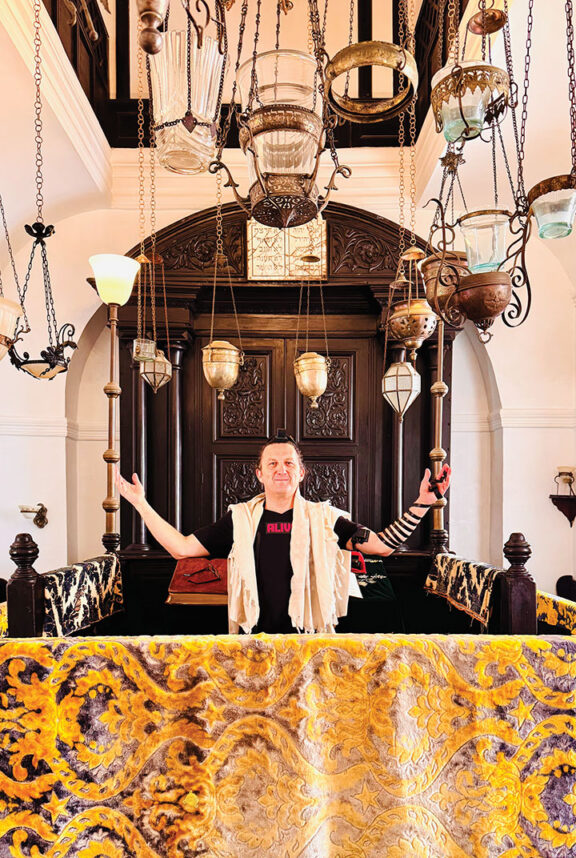
Essaouira’s Jewish focal point is Bayt Dakira, a beautiful synagogue preserved within a museum-cum-cultural-center. I decided to pray there on my own one morning, and ended up giving an ad hoc Judaism 101 question-and-answer session for visiting groups of tourists. Whilst there I also met Tarik Ottmani, the local mayor, and an older man who introduced himself as “Andre.” I made the connection a couple of days later and realised it was André Azoulay, who has served as senior advisor to the last two kings of Morocco, and is one of the only influential Jewish figures in the Arab world.

Marcus J Freed at Bayt Dakira in Essouaria, Morocco

The final accidental pilgrimage was whilst wandering through the souk with no plan but a gut feeling to just walk forward. I noticed a tiny store which had classic items of aged Judaica including large mezuzot that looked like they had come from synagogues. The elderly shopkeeper told me that there was a synagogue next door, and pointed out the tiny plaque. Needless to say, the next morning prior to leaving for the airport, I was given a private tour of the Rabbi David Bel-Hazzan synagogue, no bigger than 10 x 25 feet, and kept in pristine condition.

Eventually, it was time to leave. I had dreaded the anti-Israel activism in Morocco, but my expectations were turned on their head. Maybe I’ve been reconditioned since spending so much time in England recently with its growing antisemitism. I didn’t see any Palestinian flags at all, and the only hint was some pro-Palestinian stickers in a left-wing feminist coffee shop called The Sisterhood in Essaouira’s Mellah. Their coffee was more palatable than their politics.

There are still unresolved questions. Does Morocco have genuine warmth toward Jews, or is it a way to reignite lucrative Jewish tourism? Does it even matter? Their ongoing efforts to protect Jewish heritage, maintain synagogues and cemeteries, their preservation of Hebraic culture – what difference the intention if everyone benefits?

It’s impossible to say that Morocco is “pro-Jewish” or “anti-Israel.” Both truths exist simultaneously, and it is one of the most welcoming places in the Muslim countries.

I went to Morocco looking for a place to write, and left with newfound love of the country, its people, and the desire to get back there as soon as possible.


Marcus J Freed is an actor, writer and founder of the Jewish Filmmakers Network. @marcusjfreed, www.marcusisalive.com.

Accidental Pilgrim: My Moroccan Adventure Read More »

Hitting New Lows

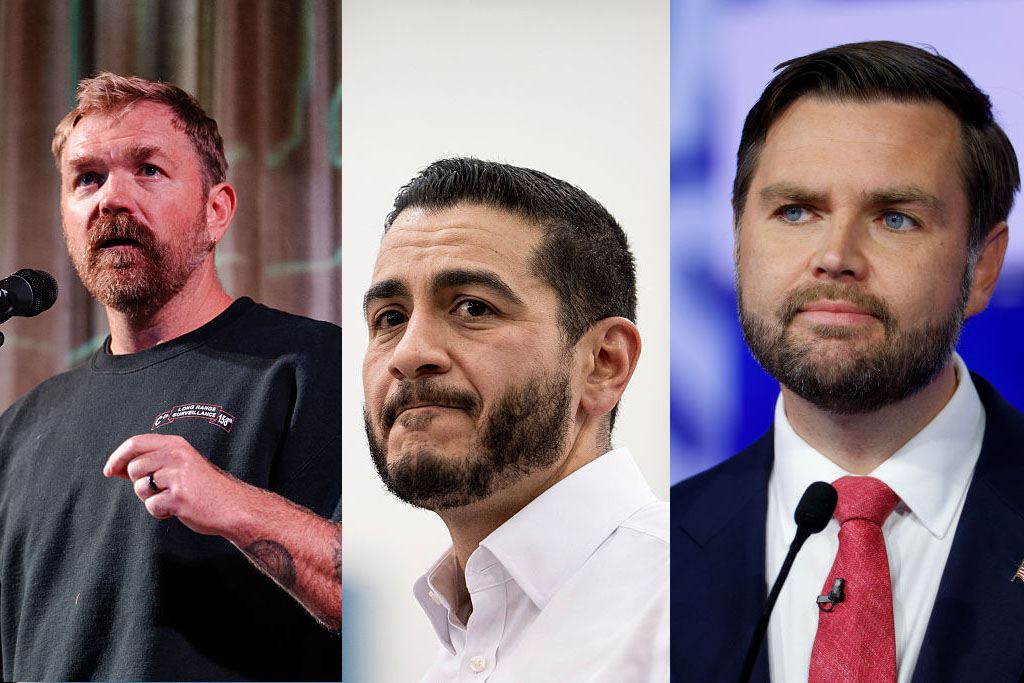
Graham Platner has a Nazi tattoo on his chest. Abdul El-Sayed’s antisemitism is not as visible, but it is just as obvious.

Not too long ago, these two men represented the prospect of a potentially frightening future for the Democratic Party. Today, Platner is a malodorous memory, a disgraced former Senate candidate from Maine who will soon be the answer to a difficult and unpleasant trivia question. If the Democratic Party, the United States Senate and the people of the state of Michigan are fortunate, in two weeks time El-Sayed will join Platner on the sidelines and each of these entities will move forward with a markedly lower level of prejudice and anti-Jewish hatred in their ranks.

Platner’s campaign was derailed not because of the Totenkopf skull-and-crossbones insignia of Hitler’s elite SS paramilitary force that he had proudly affixed to his chest but the allegations of sexual assault levied against him by several women. By contrast, El-Sayed is not facing charges of criminal behavior. But also unlike Platner, whose antagonism toward Israel and Jews appears to have been a somewhat superficial populist appeal to a particularly noxious strain of fashionable progressivism, El-Sayed has spent a great deal of time thinking about Israel and the Middle East. The results are disturbing.

Earlier this year, El-Sayed stated that the Israeli government is “evil,” drawing a moral equivalence between a state whose people were attacked, kidnapped, tortured and murdered on Oct. 7, 2023, and the terrorist group responsible for those atrocities. Asked in the same interview if he thinks Israel is as evil as Hamas, El-Sayed said: “Yes. Killing tens of thousands of people makes you pretty damn evil,” he said. “It’s not how evil is this one versus that one: Hamas evil, Israeli government evil. You can say both.”

Asked whether he believed Israel has a right to exist, he refused to answer.

“The question of Israel’s existence is not a question,” he told the interviewer. “I’m not going to play this gotcha game about whether or not it has a right to exist. The question, ultimately, is about whether or not we want a politics that dignifies equal rights.”

El-Sayed’s hatred carries over into the communities he hopes to represent in the Senate. Following a terror attack on a Michigan synagogue, El-Sayed argued that the attack was an understandable response to Israeli military strikes in Lebanon. “Hurt people hurt people,” he said glibly and coldly.

The Democratic establishment is in an understandable panic about what El-Sayed winning the upcoming primary would mean. They recognize that he could lose what has been a Democratic seat since 1978, or that a victory in November would allow him to become the voice of the ugliest type of antisemitism with a national platform for the next six years. The campaign of El-Sayed’s opponent, the centrist and underwhelming Haley Stevens, is currently outspending him by an astronomical 12-1 margin. If she does not win the August 4 primary, the pro-Israel wing of the party will take a devastating hit.

(Back in Maine, Platner will be replaced by an ideologically indistinguishable successor. Former state legislator and logger Troy Jackson has posted on social media that “Anybody with eyes and a heart knows the Israeli government is committing genocide in Gaza.” But at least he does not have any Nazi tattoos.)

Then there is JD Vance, who continues his unflagging efforts to remind us that such objectionable sentiments are not the sole province of either party. When we last checked on the vice president, he was engaged in his own brand of moral equivalency, comparing Israel and the Palestinians to a chicken and an egg.

Last week, Vance discussed ties between convicted sex offender Jeffrey Epstein and Israeli national intelligence. He also accused Israel’s government of surreptitiously undermining his failed efforts to end the U.S. war with Iran. Vance regurgitated some of the most repulsive slurs against the Jewish people, implied illicit influence by powerful and nebulous Semitic agents and proved that maligning Jews can be a bipartisan exercise for politicians who see political benefit in such execrable behavior.

Jews, it seems, can’t stop hitting new lows.


Dan Schnur is the U.S. Politics Editor for the Jewish Journal. He teaches courses in politics, communications, and leadership at UC Berkeley, USC and Pepperdine. He hosts the monthly webinar “The Dan Schnur Political Report” for the Los Angeles World Affairs Council & Town Hall. Follow Dan’s work at www.danschnurpolitics.com

Hitting New Lows Read More »

What the Changing Narrative Around Israel Reveals About the Fragmentation of the West

I’ve been accused of being Jewish-centric — that is, of seeing the world through the narrow prism of the Jewish narrative I inherited as a birthright. My wife once called me “the Spike Lee of the Jewish world.” Just as he has often viewed America through the lens of his Black experience, I tend to see things through my Jewish one. She was right, as she is about most things, and the charge leveled by others is at least partly true.

Since Oct. 7, 2023, my writing about Israel has been almost incessant. (My hands now know instinctively how to type the date.) And just when it seems I have nothing more to add, I’ll hear a sentence, read an article, or witness something seemingly unrelated that keeps me awake at night. By morning, it has begun arranging itself into words.

This morning’s thought is broader than Israel, though. It began with a simple realization:

Institutions, and institutionally accepted ideas, have their lifespan.

We often mistake what is familiar for what is permanent. Longevity masquerades as inevitability. Yet history reminds us that institutions, alliances, assumptions, and even moral consensus all have expiration dates. Most often they weaken gradually, almost imperceptibly. Then, seemingly overnight, they collapse.

For my entire life, one assumption felt like solid ground: that America’s relationship with Israel — and more broadly, the West’s commitment to Israel’s security — was durable enough to survive almost anything. Political disagreements came and went. Governments changed. But the foundation itself appeared immovable.

I no longer believe that.

This isn’t simply because of a particular Israeli government, nor because of a single American administration. Those things matter, but they’re not the deeper story. The deeper story is cultural. Long before politics changes, culture changes. Long before legislation changes, people’s instincts change. Eventually politics codifies what culture has already accepted.

I’m in Seattle as I write this. In many parts of the city I see signs calling attention to homelessness, unaffordable housing and economic inequality. These are real problems deserving serious attention. Yet on many of those same signs appears a keffiyeh, or the words “Globalize the Intifada.”

One issue has nothing to do with the other. And yet, somehow, they have become inseparable. That, I think, is the point.

For a plurality of Americans, left and right, the Jewish state has become a pariah, a symbol — not merely of a nation thousands of miles away, but of an entire moral narrative. Increasingly, whether the issue is housing, colonialism, policing, capitalism, climate change or immigration, Israel finds itself cast as the universal defendant.

Seattle is hardly unique. New York. Minneapolis. Ann Arbor. Denver. Much of academia. Publishing. Cultural institutions. What begins in these places rarely stays there. Culture has a way of flowing downstream until politics eventually discovers it has been standing in a different river altogether.

Some point to Netanyahu, Ben-Gvir, or Smotrich as explanations for this shift. Certainly those polarizing figures influence perceptions. But I suspect that for many people who have come to see Israel as a pariah state, those names are almost incidental. They didn’t arrive at their conclusions through years of studying Israeli politics. They absorbed them through culture. Culture almost always precedes analysis.

Ask how many of the loudest voices can explain Israel’s electoral system, its coalition politics, the history of the Mandate, or the repeated rejection of partition by Arab leadership. You will find that many cannot. Their conclusions arrived first. The supporting arguments came later.

A recent Harvard CAPS/Harris Poll asked respondents: “In the Israel-Hamas conflict, do you support more Israel or more Hamas?” Among 18–24-year-olds, one survey found support split at 52% for Israel and 48% for Hamas. A later Harvard/Harris survey reported that 60% of Gen Z respondents supported Hamas over Israel.

We tend to view historical collapses as sudden shocks. But as the fall of the Soviet Union proved, institutions usually decay from the inside out for decades before the final façade crumbles. A house of cards doesn’t wobble dramatically before it falls; it simply reaches the point where one more card is enough to bring it crashing down. I believe we are approaching a similar moment in the bipartisan American consensus surrounding Israel. The indicators, if I’m reading them correctly, are already visible — in the signage, on college campuses and in the reflexive absorption of Israel into a kind of universal grievance.

Israel isn’t the cause of that strain. Yet it’s one of the places where the strain is most visible. Anti-Israelism has become a kind of cultural and political loyalty test that has almost nothing to do with the actual policy questions at stake. If the postwar liberal order is fragmenting, the story of Israel is a symptom of that fragmentation, not its cause.

But there’s a larger question underneath that one. Classical liberalism — pluralism, open debate and the presumption that people who disagree with you are still owed a hearing — is itself under strain, and not only from one side of the political spectrum. It’s being tested by a culture increasingly impatient with dissent itself. And when societies grow impatient with dissent, Jews have rarely remained untouched by the change.

The Jewish people have often been the canary in the coal mine. History knows this story well.

Perhaps I’m wrong about all of this. I hope I am. But if I’m right, then wishing for the old consensus to return won’t be enough. So what do we do? Retreat? Stop speaking? Become quieter about our Judaism? Less public in our support for Israel? Hardly.

If anything, just the opposite.

It means becoming more serious and less sanguine. It means becoming more deeply and observably Jewish, not less. It means mastering not just the history that validates our convictions, but the narratives others use to challenge them. We must know our own story so deeply that we can discuss its imperfections honestly without ever surrendering its legitimacy.

Above all, it means recognizing that we are living through the end of assumptions many of us believed were permanent.

A well-known songwriter once reminded us that “the times they are a-changin’.” The line has been true for 60 years, which is exactly why it’s so easy to stop hearing it. What’s different now isn’t the truth of it. It’s the pace.

Institutions rarely announce their ending. They simply reach the moment when what once seemed unimaginable becomes ordinary.

I leave you with this: Am Yisrael Chai. The People of Israel live.

It is more than a slogan. It is a declaration that the Jewish people have endured for nearly 4,000 years, endure today, and, God willing, will continue to endure — from strength to strength, into the future.


Peter Himmelman is a Grammy and Emmy nominated performer, songwriter, film composer, visual artist and award-winning author.

What the Changing Narrative Around Israel Reveals About the Fragmentation of the West Read More »