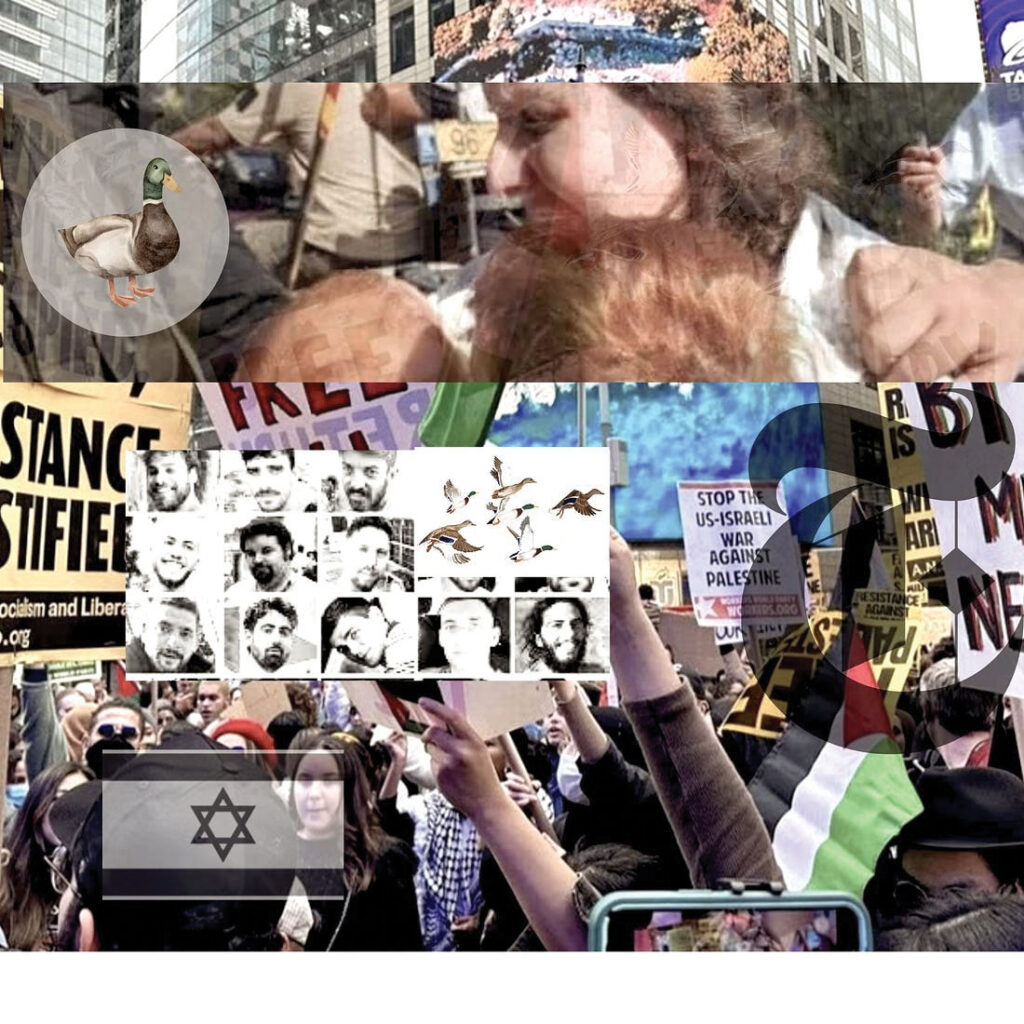
2 + 2 = a mallard duck is something else entirely.
It’s not just wrong. It’s absurd. A category error. A proposition so detached from ordinary reasoning that rational argument becomes impossible. Increasingly, when discussions turn to Israel, I find we are not dealing in mistaken arithmetic.
We are dealing with ducks.
Legitimate criticism of Israel is not absurd. Scrutiny is not absurd. Nations at war should be scrutinized. Civilian suffering deserves attention. Military decisions deserve examination. None of this is strange.
The question is where scrutiny ends and something else begins.
Take, for example, the recent Nicholas Kristof piece in The New York Times concerning alleged systematic abuse of Palestinian detainees by Israelis. The allegations were grotesque. Almost surreal. Tailor-made for anti-Zionist voices on both the left and right.
The New York Times, among the most powerful journalistic institutions on earth, elevated extraordinary claims, including allegations involving the use of dogs in sexual torture, relying heavily upon anonymous testimony, advocacy organizations, and assertions of corroboration unavailable for public inspection.
Trust us, we’re professionals.
That was, in essence, the request.
Then came the timing.
Kristof’s op-ed appeared just before renewed attention gathered around years of evidence concerning Hamas’ sexual atrocities on October 7 — testimony, forensic evidence, video documentation, legal analysis — and the publication of the exhaustive and deeply disturbing “Silenced No More.”
The arithmetic felt strange.
Not because allegations against Israelis should be exempt from reporting. But because standards appear strangely elastic. And elasticity is a dangerous variable in moral arithmetic.
The same elasticity appears elsewhere.
Genocide is among the gravest accusations human beings possess. The word implies not merely destruction, death, or terrible war, but intent toward annihilation.
Yet certainty arrives quickly while inconvenient facts drift toward the margins: mass polio vaccination campaigns coordinated during active conflict; hundreds of thousands of doses administered; thousands of aid trucks entering Gaza despite fierce disputes over adequacy, looting, and distribution; warnings preceding some strikes via leaflets, phone calls, text messages, and evacuation orders.
None of these facts absolves. They simply resist simplification. Contradictory evidence should complicate certainty, yet certainty often appears untouched.
Again, the arithmetic morphs into something indiscernible.
Then there is the larger, more vexing puzzle. A nation of roughly ten million people, more than three-quarters of them Jewish, commands extraordinary fixation from international institutions, campuses, activist movements, diplomatic bodies, and media ecosystems. Year after year, the United Nations directs disproportionate condemnation toward Israel compared with states whose abuses are neither hypothetical nor disputed.
China.
Iran.
North Korea.
Syria.
Russia.
The pattern persists.
One may explain it. One may defend it. Still, the disproportionality itself becomes difficult not to notice: the endless resolutions, the encampments, the chants, the masks, the certainty, the obsession.
Alongside these things come reports of Jews murdered, synagogues and Jewish schools firebombed, Jewish students excluded from spaces, intimidated, harassed in the streets and on trains, or told — explicitly or implicitly — that Jewish identity itself has become suspect. Protests against Israel flare up across the globe, many with blatantly anti-Jewish rhetoric, and some with violent motives and manifestations.
Peaceful protest is legitimate. Intimidation is not. Yet distinctions blur with astonishing speed.
One need not be Jewish to ask:
Why this place?
Why these people?
Why always here?
It is possible, of course, that the seven million Jews in Israel and seven million others worldwide possess a uniquely diabolical genius for wrongdoing unmatched in human history.
Or perhaps we are dealing, once again, with the same old absurdist math problem.
The strangest thing is not criticism of Israel.
The strangest thing is the instability of standards — the peculiar way arithmetic shifts, the speed with which contradictions become irrelevant, the confidence with which certainty arrives before inquiry.
At some point, enough impossible equations accumulate.
And one stops arguing numbers.
One begins, instead, to notice ducks.
Peter Himmelman is a Grammy and Emmy nominated performer, songwriter, film composer, visual artist and award-winning author.
Every time we think the lies against Israel couldn’t be more flat-out crazy, we’re proven wrong. Now it’s the Israeli-rape-dog charge: a lurid phantasmagoria that any reasonable person must know cannot be true, but which The New York Times saw fit to print in the opinion section, under the byline of one of its most respected columnists. There’s an unnerving, out-of-body sense of having traveled through the looking-glass, emerging into a bygone age of mass delusion. Circa-1930 Germany seems chillingly accessible, but it also feels like we’re reliving a much more primitive age—times we’ve read about but find hard to believe really happened, when townsfolk literally believed that Jews were fork-tongued devils. It seems impossible that the world has gone this stark raving mad, so we’re forced to question our own sanity.
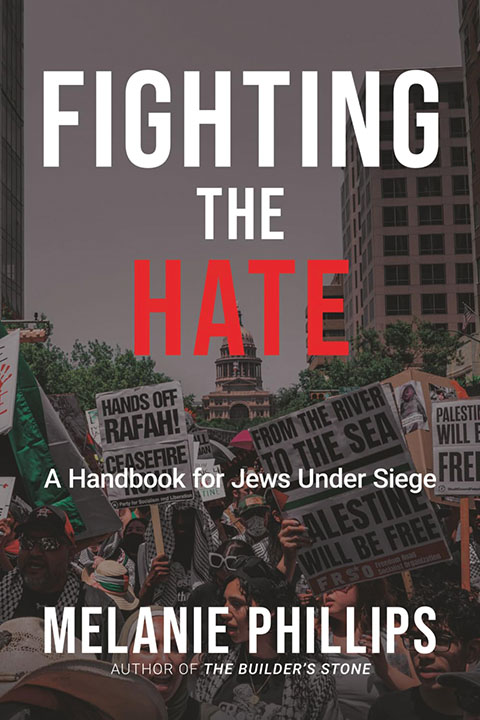
Melanie Phillips has written an essential book for anyone struggling to wrap their minds around the tsunami of euphoric Jew-hatred that has engulfed the globe since Oct. 7, 2023. Beyond reassuring the reader that they are neither crazy nor alone, it is short, punchy and practical, providing (as promised in the subtitle) a “Handbook for Jews Under Siege.” If you’re shocked, saddened and scared about today’s skyrocketing antisemitism, but have no idea what to do about it — read Phillips’ book. She offers intelligent, creative suggestions for turning the libels around. Her techniques probably won’t set off an immediate flashbulb moment in the Jew-hater’s mind, but they might, as she puts it, let in a chink of light. And they give Israel’s supporters the satisfaction of choosing their ground, rather than endlessly engaging in Whack-a-Mole.
Phillips’ tips give Israel’s supporters the satisfaction of choosing their ground, rather than endlessly engaging in Whack-a-Mole.
“Stop playing defense” is easy advice to give, but hard to actually do. We’re wired to assume that other people are rational, and assume that if we respond to their outlandish charges calmly, deploying our side’s incontrovertible facts, surely they must see the merits of our argument. Phillips calls this attitude an unfortunate failure to grasp the range and depth of the moral and intellectual rot. “Diaspora Jews need to understand what too many of them have either failed to notice or seek to deny” — she writes — “the collapse of education and the ability to think, the denial of objective truth and its replacement by subjective emotion, the substitution of power for conscience and morality, and the embrace of unhinged anti-Jewish, Muslim narratives that have capitalized on the implosion of rationality and conscience in the West.”
That “Muslim narratives” is going to trip up some readers, but Phillips comes by her views through experience. Born in London, she began her career in the ‘70s as a liberal journalist with The Guardian, that bastion of reputable British liberal opinion. It must have felt like a perfect fit for Phillips, who’d grown up seeing the fight against oppression as essential to Jewish values.
But her progressive colleagues made her acutely aware that as a Zionist, she was a bad leftist, and implicitly a bad person. The “Baby killer!” days may not have been mainstream yet, but they were wafting in the corridors of the Guardian pressroom. By the late ‘90s, remaining in its hostile climate had become impossible. She left The Guardian and its sister paper, The Observer, penning a memoir years later about her experience, “Guardian Angel: My Journey from Leftism to Sanity.”
After the Second Intifada, she wrote the books that now seem damningly prescient — damningly, because they were ignored, or furiously rejected, by the mainstream liberal establishment and so many of us. If general introspection and action had followed the publication of “Londonistan” (2006) — which argued that the U.K. had become a hub for Islamic extremism – London might not be such a hellscape for Jews today. Instead she was declared an Islamophobe, a bigot and a right-winger, a term progressives consider self-evidently synonymous with “evil.” And yet the U.K.’s steady drip-drip-flood of fetid Islamic and progressive Jew-hatred shows she was right.
She kept sounding the alarm with books like “The World Turned Upside Down” (2010) and last year’s “The Builder’s Stone: How Jews and Christians Built the West — and Why Only They Can Save It,” which I reviewed for The Journal. “Fighting the Hate” briefly repeats some of the points found in her other works, laying out the context for the surge of Jew-hatred. “The period following the Oct. 7 atrocities revealed that a fundamental boundary line in the West has now been broken,” she writes. “The West has lost its moral compass. That’s a large part of the reason it has picked on Israel and the Jews — the people who created the moral codes of the West — and their Jewish state that embodies the principles it now forgets, denies or seeks to obliterate.”
But more than analysis, this book is a guide to action, and Phillips’ advice is genuinely clever. Her punchline is epitomized in one subhead title: “Don’t Get Emotional, Get Smart.”
For instance, justified and tempting though it may be, do not respond to anti-Israel slander with “You’re an antisemite,” or more roundabout variations like “That view reflects centuries of Jew-hatred.” Jews often feel they must say it, because it is true, and that should be reason enough. But it won’t get them anywhere. Dyed-in-the-wool Jew-haters will swat the charge away; others, who don’t understand that their vicious tropes are antisemitic, will likely respond with all the thoughtfulness of a Doberman Pinscher. In our upside-down world, it’s widely believed that Zionists “weaponize” the charge of antisemitism, as part of their mission to defend the murderous state of Israel. As Phillips writes, “one could well say that this charge is itself antisemitic, but that isn’t very constructive or realistic either. The fact is that when the ‘a-word’ is used, it shuts down discourse, leaving issues not only unaddressed but overlaid with a resentment that the word was deployed at all.” Worst of all — and this really is the rub — it leaves the Jew more frustrated, isolated and defeated than ever.
So don’t do that. Instead, Phillips counsels, “treat the barb or the troubling behavior not so much as an affront but as an opportunity. Use it to respond with what you want to put out there. Turn it around so that you take the initiative and place in front of your antagonist some information they’re not expecting and will never have heard before.”
Wield what you know about your antagonist’s beliefs and values. Are they progressive or conservative, Christian or Muslim, gay or a passionate feminist? Craft your response accordingly. Try to plant the idea that what they’re doing or saying violates their own principles.
Wield what you know about your antagonist’s beliefs and values. Are they progressive or conservative, Christian or Muslim, gay or a passionate feminist? Craft your response accordingly. Try to plant the idea that what they’re doing or saying violates their own principles.
“Wow,” you might say to someone wearing a Palestine pin. “I’m surprised you’re wearing a terrorist symbol. I thought you supported dialogue and peace …?” The pin-wearer will probably retort that the symbol is the flag of Palestine, not any terrorist organization. Phillips suggests responding with some historical facts that connect the symbol to Arab and Palestinian terrorism, and chances are the pin-wearer won’t seem open to your speech. But you will have deposited a carefully chosen seed.
As she writes:
“Israel’s supporters need to move from their implicit protest, ‘Why are you being so unfair to us?’ to the implicit charge, ‘You are betraying everything you claim to stand for.’ If their armor is to be dented, the enemies of Israel and the Jews have to be challenged on their own grounds of justice and conscience and be revealed as standing for everything they claim to despise.”
Along the way, surprise them, Phillips writes. Intrigue them. Tell them something they don’t know, in a way that flatters their intelligence. Maybe even make them laugh. (For example: “It’s the Hamas-run health ministry who claim 70,000 Palestinians were killed in Gaza. In fact, that’s the total death rate during the war. So amazingly, it means no one died of natural causes during that period! You’ve got to hand it to the Israelis. They’ve cured natural death!”) Lower your expectations about what might be achieved in the moment. The antizionist isn’t going to burst out, “Oh, I get it — the IDF is the most moral army in the world!” (although speaking from experience: they may think exactly that one day). If you get a look of stupefaction and an “Oh, I didn’t know that” — you’ve won.
An effective fight can only begin once you’ve got your head around “the epic, near-unbelievable extent to which the public has been systematically lied to, manipulated and duped.” This means not only recognizing that the anti-Israel media campaign du jour relies on falsehoods spread by Hamas, but understanding how the truth of the conflict has been turned on its head over many years.
Like the instinctive belief in the other person’s rationality, we tend to assume that the other side’s grievances are totally legitimate. Wanting to be moral people, we assume our share of blame. But sometimes that laudable impulse is exploited by forces more deep-down malicious and irrational than we’re prepared to accept. So it is when it comes to the conflict between Israel and the Palestinians — the latter being in itself a dubious term, manufactured in the 20th century by Arabs from throughout the Middle East, as part of the violent campaign to expel the Jews from the Jewish homeland.
But going there means being that kind of Zionist: the hard-nosed kind who call a spade a spade. It means understanding that the story itself is built on a series of falsehoods — many of which are accepted as conventional wisdom even by Israel’s supporters.
“For decades, the Jewish world allowed its enemies to frame the narrative,” Phillips writes. “They hijacked language and weaponized the West’s post-truth, post-moral culture to push their agenda that Israel and the Jews were on the wrong side of everything that was good and just because of their ‘oppression’ of the Palestinian Arabs and ‘occupation’ of their land.” By allegedly denying the Palestinians their own state, “Israel came to be perceived as the enemy of humanity itself. The Palestinians were the big issue. The Arab and Muslim world couldn’t reconcile itself to the West because their plight remained unresolved. Israel was the big problem.”
Phillips calls this narrative “the Big Lie.” The Palestinian story of displacement and suffering tugs at the heartstrings. A tale of the apparent underdog, it sounds righteous and inspiring. Puncturing the myth requires digging below the surface, and dealing in hard, sometimes tedious facts.
Jews largely know about the many times Palestinians rejected Israel’s serious offers of a state in the West Bank and Gaza — everything the Palestinians supposedly wanted. What’s less widely known, or fully appreciated, is how the roots of this mess were laid especially in the last century, in a familiar combination of Arab terrorism and Great Power appeasement. “Fighting the Hate” provides a helpful primer in this history.
As Phillips explains, the right of the Jewish people to restore their ancient homeland in the land of Israel was established by the Great Powers at the San Remo conference of 1920 and the League of Nations in the 1922 Mandate for Palestine. Those terms have never been rescinded, no matter what haters claim about the Jewish presence being “illegal.” In 1921, Britain handed three-quarters of Palestine to the Hashemite dynasty to form Transjordan — a move Phillips calls the original two-state solution. The Palestinians have already been granted a state — today’s Jordan — and it happened well before the Holocaust or the birth of Israel.
Britain was supposed to begin the legal process for the Jews to settle in the remaining teensy portion of Palestine. However, after the Arabs initiated a terror campaign against Britain and the Jews, a not-so-funny thing happened: Britain effectively rewarded them. In 1936 they offered the Arabs a slice of the remaining Palestine, to create an Arab state alongside the Jewish one. The Arabs refused, as they’ve refused every subsequent offer of a state alongside Israel. From the beginning, the Jews have accepted every offer of a two-state solution, no matter how unfavorable the terms; the Arabs — today’s Palestinians — have consistently refused. They will accept nothing short of the elimination of Israel.
So much for the myth that “The Jews stole the Palestinians’ land from them to create the State of Israel.”
But no potted history can do justice to this vexedly complicated region, and Phillips emphasizes that readers should completely trust no one. More than that, she writes, don’t completely trust yourself. Know about confirmation bias, where you instinctively believe information that confirms what you already think. Realize that not everyone on your side is reliable or correct. No one is infallible.
British public commentator Melanie Phillips talks to the panel during a discussion on Day 2 of The National Conservatism Conference at the Claridge on April 17, 2024 in Brussels, Belgium. (Photo by Thierry Monasse/Getty Images)
A final chapter addresses particular challenges, such as Family and Friends; Students and Faculty on Campus; the Left-Wing Ideologue; the American Isolationist. Phillips’ background as a former leftist makes her especially spot-on addressing “The Agonized ‘Progressive’” — the “conflicted Jews” who have seen the implosion of everything they thought was axiomatically right. She understands the powerful forces keeping their minds closed: the paralyzing terror of becoming ‘right wing,’ and the fear of losing all their left wing friends if they start acknowledging the truth about Israel. While that may sadly happen, she writes, these former progressives will learn the truth about their friends’ claims to being moral. And they’ll make new friends among people who aren’t necessarily right wing at all — just decent and sane.As she remarks: “Trust me on this. I’ve been there, done that, got the T-shirt.”
Melanie Phillips spoke inconvenient truths when virtually no one else was willing, or able, to do so. “Fighting the Hate” is a gift from a brilliant intellect to her people, and it should be received with gratitude for this unique woman’s clarity and grit. Schools would be well advised to use it, as part of educating the next generation and steeling them in struggle. As she writes: “Giving up is not an option.”
Kathleen Hayes is the author of ”Antisemitism and the Left: A Memoir.”
We have reached an awkwardphase of the ceasefire when it is no longer clear if we are coming or going. All triumphalist press releases stopped working. A tense anticipation is our daily diet. And in the meantime, one has to look at the ledger and attempt a cold, unsentimental assessment. For the past few weeks, I’ve been chatting with policy makers, reading briefs. What follows is a synthesis of their best judgment as I understand it. The cynical framing is almost inevitable, as other obvious choices would include despair, or panic.
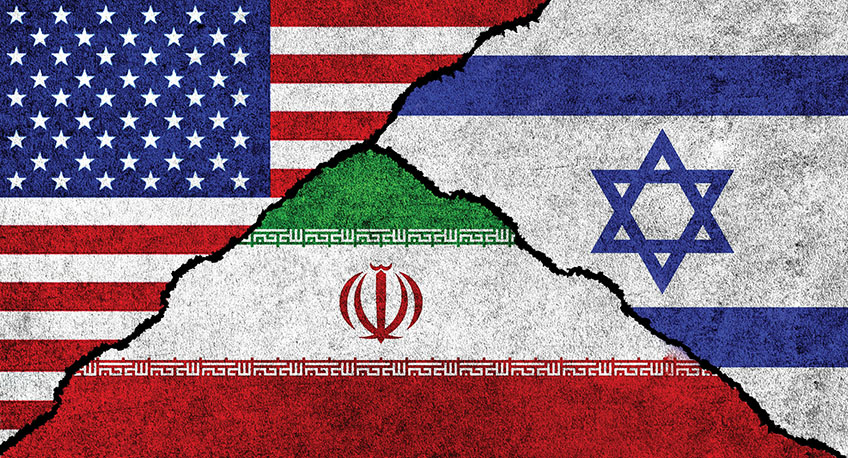
A military enterprise requires objectives. Preferably – clear objectives. The war with Iran had three, not all clear: changing the regime in Tehran was the most ambitious and yet undeclared objective; permanently destroying Iran’s nuclear capabilities was a second objective, and remains Israel’s main target; destroying Iran’s conventional teeth, including missiles, proxies, terror networks, was a third goal, but not one that would merit a sense of great victory.
Decapitating Ali Khamenei in the opening salvo of the war was a sure sign that installing a new management – regime change – was an objective. Stories about a plan involving Kurdish proxies invading Iran fit perfectly with Trump’s characteristic boasting that the war would be wrapped up in a few days. Of course, “creating the conditions for regime change” sounds somewhat less definitive than simply saying “we aim for regime change.” But if a war was launched to create such conditions – namely, conditions that presumably did not exist prior to the war – it would not be unfair to say that yes – a change was an objective.
It would also not be unfair to say that thus far such objective remains elusive. A democratic awakening did not materialize. Tehran responded to the campaign of bombs and assasination first with what seemed like panic, then with an impressive, if disappointing, stabilization. Mojtaba Khamenei was tapped to succeed his father. The system kept functioning. The people did not feel safe enough, bold enough, desperate enough, to risk anything akin to revolution.
Was there a plan for bringing about a revolution, or more a hope than a plan? Whatever the case, if Iran had its regime changed, it was changed from an Islamic theocracy to a militarized dictatorship run by the Revolutionary Guard. The regime seems stable. It seems adaptable. In fact, Trump and Netanyahu deserve some credit for realizing quickly that there’s a need for them to tone down the expectation for dramatic achievement such as the one supposedly achieved in Venezuela.
Did they give up on what they were hoping to achieve? I suspect not. I suspect that they still entertain a yearning for what currently seems beyond their ability to manipulate future outcomes. An acerbic commentator wrote last week something along the lines of: “The ‘conditions’ for a coup exist in half a dozen Middle Eastern capitals on any given Tuesday.”
Well, why not Iran?
Getting off the high horse of revolution, the picture of the nuclear front is sobering. Last June, a limited 12-day operation halted Iran’s momentum of nuclear production. This March, the bombings didn’t have much to add on the nuclear front. Iran retained its coveted 450 kilograms of highly enriched uranium (60%). They seem to be able to keep building their underground safehaven enrichment facility. They retain their know-how. They retain their ambition.
More than one commentator noticed Netanyahu’s admission on “60 Minutes”: “It doesn’t mean they cannot produce a device … if they planned …arsenal … that’s gone.” Namely, while the war – or two wars – may have delayed their ability to stock mass inventory, it still left Iran with a capability to build a first “device” –the euphemism for a bomb. If bombing is renewed before or after this column gets published, the elimination of the “device” would be Israel’s main target, and also main theme of prayer for the guiding God that holds the key to Trump’s psyche.
As for Iran’s conventional power – intelligence reports show that the majority of Iran’s ballistic launchers are already operational. So yes, the meager Iranian airforce is gone. Iran’s barely existing naval force is not completely gone. To be honest: no one truly cares. Neither Iran’s leaders, nor Iran’s enemies. Iran relied on asymmetric tools as its main strategic assets, and its missiles, drones, mines proved efficient enough to halt an attack by the world’s superpower. Tehran is capable of choking global shipping and threatening the world’s supply of oil. Twenty-five percent of global energy passes through the Strait of Hormuz. Launching a war without an operational answer to Iran’s simple and predictable use of its least costly option is proof that Trump never thought the regime would make it as far.
So what can the U.S. and Israel do now? By the time you’re reading this column, maybe the leaders have decided to have another go at using hard power. In fact, that’s their only viable choice – as the alternative is almost a guarantee that Iran would expedite its plan for completing a “device” (wouldn’t you not rush it, if you’re sitting in their place?). And then what? Best-case scenario is a delayed regime change, or, as a temporary remedy, a forced evacuation of nuclear material out of Iran. Worst-case scenario is a delicate status quo of postponement. That’s also euphemism for a threat of a bomb more acute than at any point in the past.
Something I wrote in Hebrew
Writing about Likud 2022 voters who now say they’d vote for the opposition, I wrote this:
Those who leave Likud for the center differ in very many ways from the Likud supporters who have remained loyal to the party. They are less satisfied with the budget, they are less enthusiastic about ideas of annexation in Judea and Samaria, they support civil marriage and they are less connected to the core of the “fully-right” camp. They are not that numerous, but in a close election, their departure – if it holds – could carry immense significance. If all the defectors do not return, Likud’s 32 seats will shrink, perhaps to 25. Some will vote for Otzma or Shas, which might not change the overall picture. However, about a quarter have left for centrist parties, undecided status, or the opposition. This amounts to around eight seats that could absolutely decide an election. In either direction.
A week’s numbers
How dangerous to the world is global warming? Here’s what Israelis think (JPPI numbers).
A reader’s response
A. Rosenthal writes: “You must finish Iran before Trump is leaving office.” My response: Grand strategy is the alignment of a state’s capabilities (means) with its core interests (ends). Israel’s “ends” are clear, its “means” is something to wonder about.
Shmuel Rosner is senior political editor. For more analysis of Israeli and international politics, visit Rosner’s Domain at jewishjournal.com/rosnersdomain.
This week, we stood outside The New York Times because the paper of record had printed a story that the Israeli government is now suing the paper for, as a blood libel. Nicholas Kristof’s opinion column accused Israeli soldiers of systematically raping Palestinian prisoners, including the lurid claim that guards used dogs to rape detainees. His sourcing leaned heavily on a monitoring group whose leadership has been photographed with senior Hamas officials. The column ran on Monday. The next day, the Israeli Civil Commission on Oct. 7 Crimes by Hamas Against Women and Children released a 300-page report documenting thirteen distinct patterns of rape, sexual torture, and mutilation perpetrated against Israeli women, men and children. The Times has not acknowledged the report, and has not retracted Kristof’s story.
About 200 of us gathered on a Manhattan sidewalk on Thursday. We chanted, “Stop the libels, stop the hate.” Some carried signs that said “J’accuse” next to The Times’ logo, because we are not the first generation of Jews to watch a paper of record manufacture a case against us.
I want to say something specific about what an organic protest looks like, because I have organized them and stood in them. Six years ago I helped lead the rallies to reopen New York City schools. Parents arrived with their own handmade signs. Nobody handed us a script, bused us in or paid us. You could tell because the signs all said different things, and the people holding them looked like the parents at your kid’s school; they were the parents at your kid’s school.
Compare that to what we have been watching for two years now in the streets of Western capitals. Matching preprinted placards stacked on the curb. Coordinated chants on cue. Paid organizers. A Hezbollah flag flying over a Jewish neighborhood in Brooklyn this past Monday. This is not grassroots. It is a rent-a-cause that has taken over the Western hemisphere, and it is funded.
Now look at the New York Magazine feature this week, written as a eulogy for Ben Shapiro and the Daily Wire. The piece tracked so closely with a Washington Post takedown from five days earlier that the Post’s Drew Harwell placed the stories two ledes side by side and posted them on X. New York Magazine quietly issued a credit at the bottom of the page hours later. Now read the actual numbers before you accept the obituary. According to Barrett Media’s tally of the Social Blade data, Shapiro’s YouTube channel is down roughly 200,000 subscribers over the year off a base of 7.2 million, which works out to about a 2% decline. Views are down 34% year over year, a long way from the 85% figure that went viral on X. Layoffs at the Daily Wire did happen. Candace Owens claimed they were 60% of staff. Sources at the company put the real number much lower. The Daily Wire is not dying. The mainstream media wants you to believe it is. The same outlets writing the eulogy for the loudest pro-Israel voice in conservative media are the same outlets running cover for what is happening to Jews across the Five Eyes countries right now. Look up the U.K. Look up Australia. Look up New Zealand. Look up Canada. Then tell me this is only an American problem.
We have seen this movie before. Jay Bhattacharya, now the director of the National Institutes of Health, named it: the illusion of consensus. Six years ago, Bhattacharya, Martin Kulldorff and Sunetra Gupta signed the Great Barrington Declaration arguing for focused protection of the vulnerable against COVID instead of total societal lockdown. They were applying the existing, evidence-based pandemic playbook. Within four days, NIH Director Francis Collins emailed Anthony Fauci dismissing them as “three fringe epidemiologists,” and demanding “a quick and devastating published takedown” of their premises. The legacy press carried it out. Most Americans never heard the names of the dissenting epidemiologists until they had already been primed to distrust them. A consensus was never formed; a blackout was rebranded as one.
The Biden administration was writing the style guide. The teachers’ unions were marking up the good actors and the bad actors. The legacy press repeated both. Our kids paid. Six years on, we still have not reckoned with what was done to a generation of American children in the name of a manufactured agreement.
The same machinery is running again right now, pushing Jew-hatred and antizionism.Deciding what the public is allowed to think. Tarring the dissenters. Blacking out the inconvenient experts. Flooding the zone with matching signs and matching chants and calling it a movement. Printing the libel on the opinion page of the paper of record. Writing the eulogy for anyone with a microphone who pushed back.
This is not a moment for new laws. We have laws. We have a country. We have the First Amendment. What we need now is to stop falling for the trick. The information sphere is wider than it was six years ago, and the burden has shifted to all of us, Jewish and not. Read past the headline. Pull the primary document. Check the actual numbers. Notice when every protester on the block is holding the same sign. We are being manipulated, by the same people, with the same playbook. We did not stop it the first time. There is no excuse for sitting through it twice.
Natalya Murakhver is a documentary filmmaker, co-founder of Restore Childhood, and director of “15 DAYS: The Real Story of America’s Pandemic School Closures.” Follow Natalya’s work at https://restorechildhood.substack.com/.
This past November, I received a call inviting me to teach a class, “Zionist Ideas,” at Loyola Marymount University.
I often speak from the pulpit about the lack of Zionism on the college campus.
I created the Sinai Temple Israel Center Rabbinical School Fellowship in 2021, working closely with rabbinical students across all denominations in exploring the many facets of Zionism.
Yet, I feared stepping into the college classroom. I lacked the stamina to fight with college students who sought to cancel “the Z word.”
Fortunately, my intuition won, and I became a Professor of Zionist Ideas.
We studied the original thinkers of political, labor, cultural, religious, revisionist and Diaspora Zionism.
As we read from Gil Troy’s “The Zionist Ideas,” we heard from speakers engaging with these ideas in real time – prominent rabbis, leading Christian pastors, Israelis in AI, exiled Gazans speaking out against Hamas, IDF veterans and Hollywood producers engaged in telling Israel’s story.
To begin, we did not define Zionism.
Instead, we defined home.
On the first class, I asked the students which definition they connected with most.
Home-
1. Where you were born.
2. Where you find spiritual connection.
3. Where you live.
4. Where you collectively connect to a people.
We studied Yossi Klein Halevi’s “Letters to My Palestinian Neighbor,” distinguishing between longing for a home, and needing a home.
This was not a class on Israel-Palestine.
This was a class on Zionism — its many definitions, and the people involved in defining it.
After we defined Zionism — the right for the Jewish people to self-determination in their ancient homeland — a student raised his hand and asked, “What would be the problem with that?”
We created a space for open conversation and debate and, ultimately, a love of Zionism in all its forms.
Zionist thinker by Zionist thinker, we explored Israel’s Declaration of Independence, Theodor Herzl and Golda Meir, Ruth Wisse and Elie Wiesel, Rav Kook and Yeshayahu Leibowitz. We examined the Jewish narrative of hope that created a miracle never seen before while acknowledging the beauty and the warts that are present together.
Over the semester, Zionist ideas became a reality. We asked ourselves what would Herzl say about Tucker Carlson’s interview with Ambassador Mike Huckabee?
What would Ben-Gurion say to LeBron James at the NBA All Star game when he told the press that he heard good things about Israel? What would Jabotinsky say to Javier Bardem’s call to Free Palestine at the Oscars? What would Golda Meir say about the outbreak of the current Iran-U.S.-Israel war?
How can a college student who has only heard the word “Zionism” on social media as evil answer these questions?
There is only one way: learn, ask questions and receive answers.
We concluded the semester with a one-question oral final. “Why did you take this class?”
A Persian Muslim student who spends her summers in Iran and witnessed the ballistic missiles flying over her head to Israel last summer, recently found out her grandfather was born Jewish and adopted by a Muslim family. She wanted to rediscover her roots.
A student with a Jewish father and Japanese mother learned about the Law of Return and now feels compelled to be part of the Zionist conversation.
An Israeli student who has lived most of her life in the United States explained she never knew so many forms of Zionism existed and she was now comfortable talking to her friends instead of hiding her identity.
A Hindu student whose family contributed humanitarian aid to Gaza last summer, who traveled to Israel and had no knowledge or understanding of where he was now wants to be philanthropically involved with Zionist causes.
American Jewish students who had Hebrew school educations and could say “Am Yisrael Chai” but could not tell you the difference between Tel Aviv or Jerusalem, were ready to become active Jews on the college campus.
A Russian Jew whose parents were denied Jewish upbringings under Soviet rule, told me he is a proud Oct. 8 Jew.
Students began questioning the Tik Tok reels they were learning from, and asking questions of clarity and curiosity.
During the final exam, I had the same fear as when I started; perhaps this class confirmed their preconceived notions of what they had known of Zionism.
To my delight, I found the exact opposite.
Not one student told me Zionism must be thrown away.
Not one student defined Zionism as a colonial, apartheid, genocide state.
Instead, each student spoke intelligently about the achievements and challenges of the Zionism that they connected with most.
While the final exam tested the student’s comprehension of Zionism, I also learned lessons that are worth sharing.
1. Over half the class had never heard of Zionism before this class. If they did, social media told them Zionism was bad for the world. Forget trying to identify Yitzhak Rabin and Menachem Begin. They had to define the word “Zionism.” Unpacking an 18-second reel took an entire semester.
2. Jewish students are unaware of their own history and afraid to engage in Zionist conversations for fear of not knowing the facts. They did not have the facts to decipher truth from untruth.This class gave them the confidence to be part of the conversation.
3. We live in our own bubbles. I am grateful to serve a community that takes great pride in all the complexities of Israel and Zionism. The college campus is a different bubble. When students are given a space to learn with vulnerability, humility, and honest conversations, challenges can become opportunities. We do no service “preaching to the choir.” We must leave our comfort zones, ask difficult questions, and through it all demonstrate a love for our people and the land.
4. Small impacts make significant differences. One Southeast Asian student told me at the final he had an apology. Growing up, the media portrayed the Jews as evil. After a semester studying together, he said how much he appreciated Achad Ha’am’s cultural Zionism, how a people for thousands of years could maintain their hope to return home. He is going to graduate and return home to a place with no Jews but he will now have a story to tell about a people he now knows and admires.
The semester has concluded but a fire burns inside me.
We must applaud Loyola Marymount University.
In a moment where it is easy to skip the difficult conversations, LMU created the conversation, inspired young minds to learn and, ultimately, to teach.
In a world where encampments, boycotts and student government protests of released hostages make headlines, we must focus on students who want to learn, engage and become bridge builders.
As Hillel asked, “If not now, when?”
The time is now.
Zionist rabbis around the country must partner with great Jesuit universities to offer Zionist Ideas as a core curriculum option.
We must share our love and Zionism expertise, as we can shape the next generation on the college campus.
I am so glad I answered that call to teach those students starving to learn. There are no more excuses.
Let all who are hungry come and eat.
Let the rabbis feed them.
Am Yisrael Chai.
Rabbi Erez Sherman is Senior Rabbi of Sinai Temple.
How would you describe the art of dancing? Are the moves in sequence or the intention behind the action enough? When we’re in the moment, the action we describe simply feels good or fun. Dancing, working, playing, even something sublime like loving, are called participles in the English language. From the root word referring to something participatory, providing meaning to one’s actions is a relational experience. The act doesn’t mean much unless you can demonstrate it in a way that helps you connect to someone else.
There’s an indescribable quality of being that defies all language when you want to connect with another through dance, art, speech, love. It is transcendent, meaning the experience moves beyond the action itself and the connection is elevated. This is what we call in Judaism Kedusha, or holiness.We also call whatever participles described meaningfully and powerfully this way as being spiritual.
Some of us grow uncomfortable when using a word like spiritual or spirituality. We tend to dismiss the potential for a transcendent experience if the action doesn’t reinforce an immediate and positive response.The irony of the spiritual, but not religious person is that the act of defining a spiritual experience becomes tedious. Speaking of spirituality as a reward for witnessing a beautiful act of nature or receiving the benefit of another’s genuine kindness without consistent practice and commitment reduces the encounter to something functional and sterile. It becomes transactional.
Our current concept of spiritual leadership is similarly challenged. We look to our leaders to provide a concrete, verifiable experience that is too often measured in rates of satisfaction. “That bar mitzvah blessing was so moving.” “That sermon was truly thought provoking.” “That musical rendition of the prayers moved me to tears.” Where we look for a relationship, we find our likes and tastes becoming the language of connection, rather than the act itself.
A generation ago, Rabbi Abraham Joshua Heschel outlined the spiritual dilemma of modernity. His observations are no less acute today than when he diagnosed them in 1953. He said, “Spiritual issues cannot be solved by administrative techniques. The issue is not how to fill buildings but how to inspire hearts … how to inspire souls to enter an hour of spiritual concentration in the presence of God.”
To be spiritual is to be connected. To be connected is to experience the ways of being, like dancing and loving, as they are shared with others. To share an experience with another in which you both experience something transcendent is what spiritual leaders are called to help others create. Being seen by the other in the act of playing, working, struggling, even achieving is a fundamental desire. It feels amazing to be seen, and can be confusing if it isn’t connected to some greater purpose. Dancing to entertain is beautiful. Rhythmically dancing with a partner is holy. The experience is transformational. And when we want to define it as good or fun, it is enduring. The good feelings change us. The fun is life affirming.
Spiritual leadership as it ought to be is best defined as the art of facilitating transformation, or the experience of moving from the immediate to encounter what feels like something timeless. This art form is not the domain of charismatic personalities alone. Excellent communication skills are a necessary prerequisite, and the desire to help others communicate well is the singular purpose of a spiritual leader. The leader asks, “Might we be able to better communicate in ways that transcend this complicated moment?”
Excellent communication begins by seeing the person as they are and honoring the place where they stand, recognizing that the goal is to transform you both in the connection. Whatever is shared between leader and seeker isn’t pedantic or instructive; it’s supportive and uplifting. More than the intentional act of seeing others and being seen, spiritual leaders offer a vocabulary, often a reflection in text or music or even silence, to help create a connection. This is what the great 20th-century theologian, Mordecai Kaplan, identified as behaving in his triad of religious identity: “belonging, behaving and believing.” Behavior with purpose and a vocabulary to communicate that purpose leads to transcendent connection. This is what effective spiritual leaders model – a path to belief where we all can be transformed, where we all can grow.
It has been the mission of the Academy for Jewish Religion California (AJRCA) to cultivate the voice of the spiritual leader so they may help us transform our world. We recognize that individual seekers, communities of families, and the broader organizational ecosystem of the Jewish world need compassionate, wise and skillful translators of tradition to help us connect with each other and grow together. As the world around us continues to transform in stunning and awe-inspiring ways, our future leaders will be competent and caring guides for us to communicate our experiences with wisdom and compassion.
Jews and Judaism have lovingly and painstakingly carried the burden of this sacred connection for millenia. It is built into the name we use to describe the Infinite One. YHVH is the quintessential participle of timeless and eternal connection. It embodies what was, what is and what will be in one compact, holy and transcendent word. Everything that lives has the capacity to be spiritual in any given moment, as the Psalmist praises, “Kol HaNeshama Tehalel Yah” “Let all that breathes give praise” Our leaders are those who model the way.
Since 1945, there has been a consensus that the Holocaust was the ultimate act of antisemitism. However, recently, it may have to be reassessed as to what constitutes the “Ultimate Act.” If successful, history may find that the disarming of Israel while fighting a constant war on seven fronts since Oct. 7, 2023, may turn out to be the Ultimate Act. Despite that many Democrats are pushing this effort forward with complicity from Jewish members of Congress.
I was recently confronted with this issue when a long-time friend (a staunch Democrat and supporter of Israel) sent me a column from Foreign Affairs by Raphael BenLevi, “America Should Be Israel’s Partner, Not Its Patron.” In response to the column he stated, “It’s time for the U.S. to stop subsidizing (directly paying for) arms for Israel. Israel can pay for them by themselves (if they follow U.S. law when using them).”
For a long time, I have written and espoused that Israel should gradually reduce the amount of money received to subsidize their government whether for military or nonmilitary purposes. My argument has been that Israel is one of the most advanced societies in the world with an extremely high per capita income (in the top 20). It is also one of the few countries that has arms sales to the United States. It is one of our very strongest allies who never asks our military to shoulder the burden they are doing themselves. Discontinuing the payments would alleviate one of the arguments made by the antisemites about our government subsidizing Jews.
What concerns me is the caveat “as long as they follow U.S. law when using them.”What does that really mean? We make sales of armaments to over 100 countries throughout the world. We sell 42% of all international armaments. People have objected to armament sales to certain countries (Saudi Arabia or Turkey, for example), but they have not spoken of the sales exactly in that manner.
When countries buy armaments through the Foreign Military Sales program, they sign a Letter of Offer and Acceptance (LOA). The buyer must use the weapons for the stated purposes, which is typically for internal security or self-defense. Nor can they resell the weapons without U.S. approval.
There are agencies of the Departments of Defense and State that enforce the agreements.
The countries restricted from buying U.S. weapons are the likely suspects: Cuba, Russia, China, North Korea, Iran, Syria and Venezuela. Others may have partial restrictions and/or be under U.N. embargo. The antisemites are looking to add Israel to that list.
If there are sales agreements, we can wonder if there are agreements when there are grants. The answer is yes, there are, and those rules are tighter than when they are sold to a country. Since Israel is being provided some of these weapons through American-funded programs, they are already under stricter scrutiny than they would be if they paid for them.
Why is Israel being questioned when they are already spending massive sums on their own defense? Before the massacre of 0ct 7, 2023, they were spending 5.4% of their budget on defense. That number has grown to between 17-20% of their budget since that date. That is between $37-46 billion per year.
Not only are they paying their fair share, but the Israelis are also providing unique benefits. They have adapted American F-35 fighter planes in significant ways that have enhanced operations. The U.S. is adopting many of these enhancements and treating Israeli usage as a “live-fire laboratory” that is allowing the manufacturers to improve operational status for America’s F-35.
With 100 countries in the world buying or obtaining U.S. military armaments, does anyone really believe they are all being used for righteous purposes? Both India and Pakistan are using U.S. goods in their perpetual border dispute. Obviously, neither are using them for defensive purposes. No one is talking about those countries using them in compliance with U. S. law.
Which leads to the question, Why now question the legality of usage? Because it is about Israel and the Jews. This is another way to attack Israel and put them under a unique microscope. Then, when asked why the activists are requiring this proviso, they will fall back on the fact that they are simply asking Israel to comply with the same rules as everyone else. But they will not be following the same rules because every act that Israel takes will be scrutinized while the acts of others will be ignored.
There are currently two pieces of legislation (in addition to joint resolutions) that are aimed toward stripping Israel of American military arms. Every military action Israel takes is under interpretation for legality. That is despite them battling a multi-front attack.
Without U.S. arms and support, Israel’s defensive capabilities will be significantly limited and open to attacks that would make Oct. 7 look like a minor skirmish. A defenseless Israel is the ultimate goal of this unique treatment by their enemies in America. While for the most part the Germans hid their mass slaughtering of Jews, this would be out in the open with aid from useful idiots.
That is why it would be the ultimate act of antisemitism.
Bruce L. Bialosky is a former member of the U.S. Holocaust Memorial Council.