fbpx

November 25, 2025

Ramah Lights Up Sinai Temple, JNF-USA Global Conference

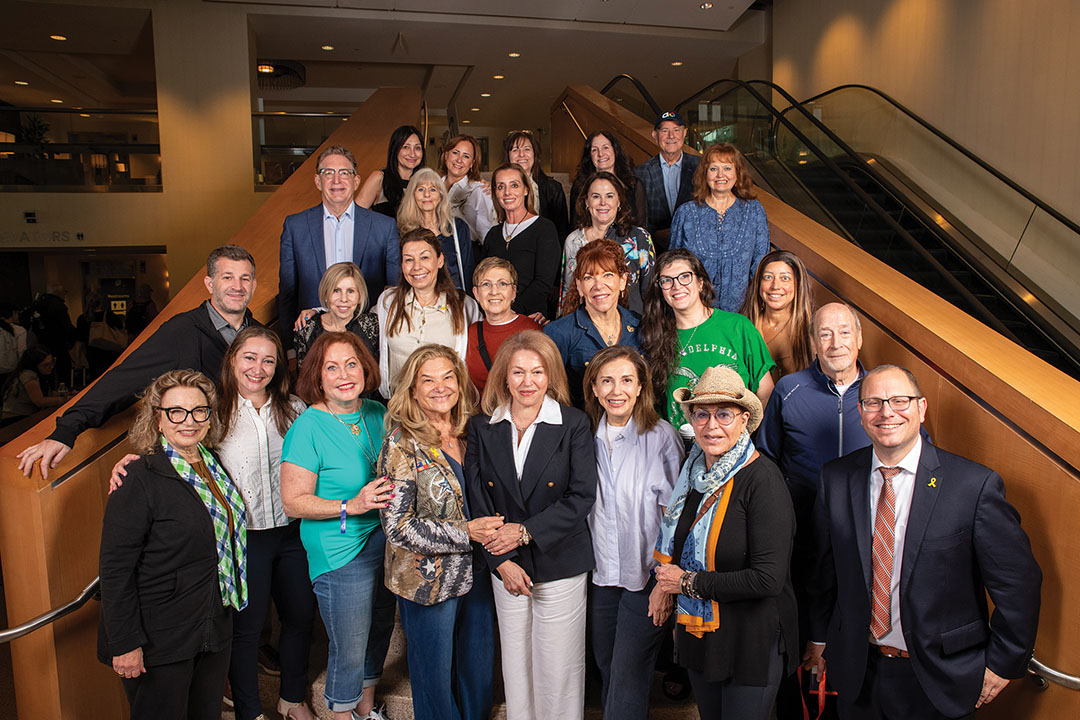
Camp Ramah in California drew a full house on Nov. 16 as more than 500 Ramahniks gathered at Sinai Temple for its annual Celebration Gala. Guests mingled over cocktails before heading into an upbeat program honoring several standout figures in the Ramah community.

Janine Winkler Lowy, joined by her children, SimonetteJacqueline, Benjamin and Caroline, was feted for her philanthropic leadership and longtime commitment to expanding Ramah’s scholarship reach. State Assemblymember Jesse Gabriel, a Ramah alumnus and co-chair of the California Legislative Jewish Caucus, received warm applause for his statewide work combating antisemitism, while Oren Gabriel was recognized for a Ramah journey that’s taken him from camper to staff member to devoted board leader. The Gabriel brothers received the Judith Weinstock Alumni Leadership Award.

Honorees Jesse and Oren Gabriel. Courtesy of Camp Ramah in California

Attendees also heard from Talia Bodner and Bali Lavine, two 2025 Ramah staff members who spoke about how camp helped them become pro-Israel advocates while enrolled at Columbia University and Tulane University, respectively.

The festive evening celebrated Ramah’s enduring impact—and raised vital support to ensure its signature “Journey for a Lifetime” continues inspiring generations of campers.


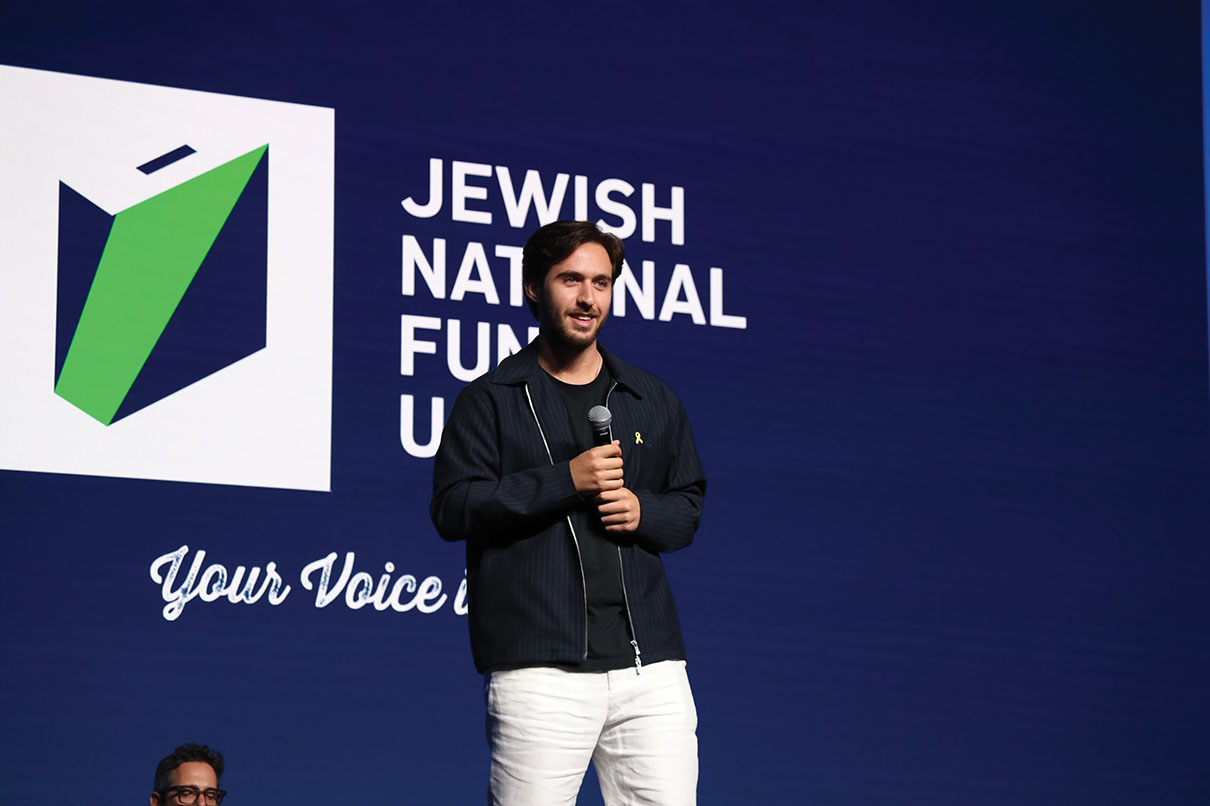
A delegation from Greater Los Angeles attended the recent Jewish National Fund-USA 2025 Global Conference for Israel in Hollywood, Florida.
Photo by FaneFoto.com

A delegation from Los Angeles was among the nearly 3,000 attendees who united for Israel’s future in Hollywood, Florida, from Oct. 23-26, at Jewish National Fund-USA’s (JNF-USA) Global Conference for Israel. This four-day event celebrated resilience, Zionist pride and the enduring connection between the Jewish community and the land and people of Israel.

The sold-out conference — one of the largest Zionist events of its kind in the world — brought together local community members, as well as philanthropists, college students, young professionals, rabbis, mayors from Israel’s North and South, social media influencers, and global allies of the people of Israel for a gathering of inspiration, education, and impact.

“At a time when Israel and the Jewish people face unprecedented challenges, our voices rose together in solidarity, purpose, and hope,” JNF-USA CEO Russell Robinson said. “This was not just a conference — it was a movement. Together, we are building Israel’s future, from the Negev and Galilee to every corner of the Jewish world.”

“As a first-time attendee, I found the Jewish National Fund-USA Global Conference for Israel to be an incredibly important and meaningful experience,” Michele Lieberman said. “It brought together people who share a deep love for Israel and a commitment to celebrating Zionism and Jewish identity. I was moved by the powerful speakers, thoughtful discussions, and the genuine sense of solidarity that filled the room. I left feeling proud, hopeful, and inspired — unified with like-minded peers who stand with Israel. The conference was a powerful opportunity to help find my voice to educate, connect, and advocate.”

Released Hamas hostage Omer Shem Tov addresses nearly 3,000 people at the 2025 Global Conference for Israel opening plenary, saying, “My name is Omer Shem Tov, and I am a free man!”

Ramah Lights Up Sinai Temple, JNF-USA Global Conference Read More »

Rabbis of LA | Rabbi Weiner and Cedars-Sinai: A ‘Temporary’ Job That’s Lasted 18 Years and Counting

Ask any boy or girl what they want to be when they grow up, and becoming the spiritual care director of a large hospital would not make the list — especially after they discover how remarkably demanding the position is.

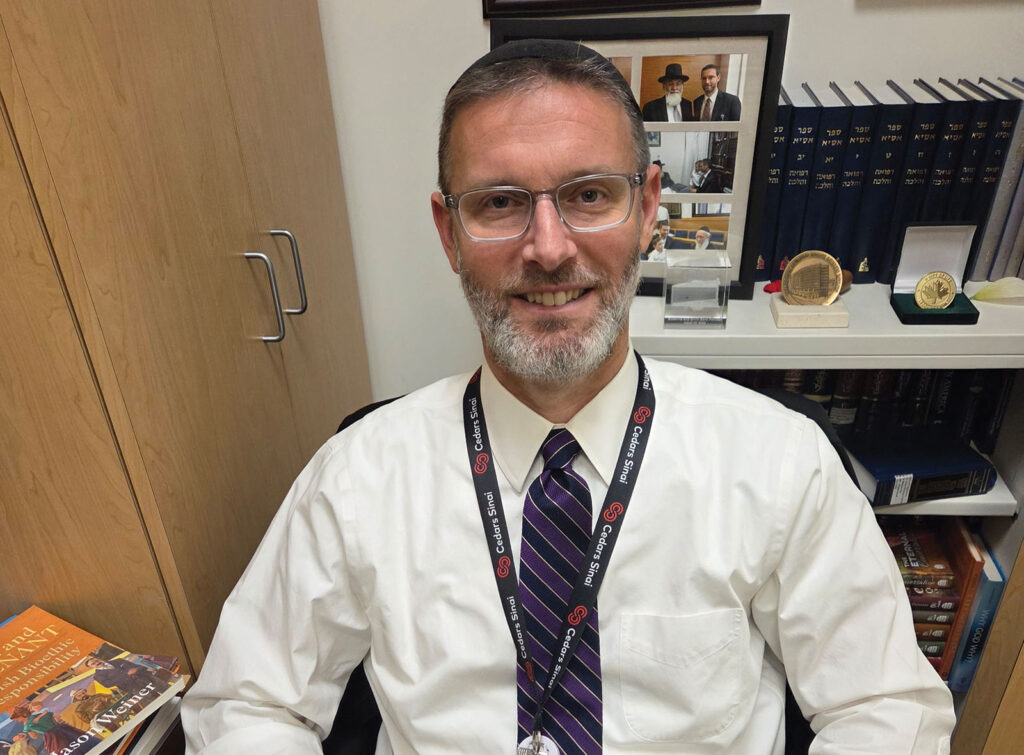
In 2007, Rabbi Dr. Jason Weiner joined Cedars-Sinai Medical Center as the temporary spiritual care director for the ailing Rabbi Levi Meier.  Rabbi Weiner was professionally happy as an assistant at Young Israel of Century City, but it wasn’t to be. Eighteen years on, he may be the busiest, happiest, most contented rav in Los Angeles. Leading a staff of 15 employees and 10 interns training to be chaplains, he described their basic responsibility: “In a hospital where we recognize how important it is to care for people’s physical well-being – that is why they are in the hospital – we know that healing also is about the spiritual, emotional, psychological and relational.”

His duties are wider than you might suspect. They span “not just the patient but also the staff, to make sure the staff is cared for — someone to look after their well-being.” The rabbi cited some examples of staff needs. The first is obvious,” he said. “The religious things, whether holidays or specific rituals. Then there are things people from various religious backgrounds want to be able to observe.  There are holidays, specific rituals, certain dietary regulations. For people from a variety of backgrounds, those are the obvious. Also there are considerations like spirituality that people want to observe when they are in the hospital.”

There are also wider needs. Among them are the emotional struggles patients of all kinds have while staying in the hospital – “encountering deaths, especially tragic deaths. Then there is trying to understand theological questions they may have, things they are asked to do that may gave them certain moral traumas. They can be struggling against their moral values – whether that means keeping someone alive whom they think is suffering or whether that means allowing them to die when they think they have a chance to live. Patients feel burdened by it. They want somebody to talk to about it and help them put it in perspective, help them understand what they are experiencing.”

You might go to the hospital to visit an ailing friend or family. But Cedars-Sinai Medical Center has 49,634 admissions, 127,626 emergency visits and 1,897,179 outpatient visits annually.

Rabbi Weiner supervises all of the chaplains. He described it this way: “I make sure our department is integrated into the hospital, that we are getting referrals, that everyone knows how to reach us, that our chaplains are working to capacity and not burning themselves out, that they are constantly innovating and coming up with new programs, ideas and ways of integrating into the hospital, that they are working together as a team and that we are responding to the changing needs of the hospital, like trying to be abreast of what’s happening in the hospital in ways that we can be most helpful and relevant to the hospital.”

Rabbi Weiner identified what he loves about the job. First is the diversity. “You encounter every walk of life, every type of human, lifecycle, life struggle. Everything you can imagine happens in a hospital. So there’s a broad diversity of issues. It’s like the frontlines of life and death. It really is important. It makes a difference. People genuinely are in need. They’re struggling. There are some institutions you could analogize to country clubs. Nothing wrong with country clubs. They are wonderful. But they are at times for a certain demographic. Sometimes there are barriers. Not everyone always feels welcome.” 

A hospital, the rabbi explained, is the opposite. The hospital “is a place where everyone ends up sometimes. Maybe they don’t want to be. But there are no barriers to entry. Everyone is going to be here.” He cited “a great saying by my predecessor, Rabbi Levi Meier. He used to say ‘The hospital is where the temporarily well take care of the temporarily not well.’ It’s so true. It’s like being on the frontlines of life and death.” 

His staff has an opportunity “to help people when they are most in need. Also, from an ethics perspective, my personal interest, there are such incredible advances happening, such ability to prolong life and advance life that also have potential unintended consequences, harms that can be caused while trying to be at the forefront of assuring that things are done in a responsible, careful, beneficial manner for as many people as possible.” Rabbi Weiner finds his work fascinating “because it’s always changing. Always new developments that shock and amaze.”

The rabbi, who speaks in a soft, comforting tone, sounded refreshingly wide-eyed, as if it were his first day. “Cedars is one of the top research hospitals in the country,” he said.  “A 10-story research tower is going up in addition to the other research towers already here. The idea here is that this should not be just a university where people are doing research. It should be integrated with patient care. You have people who care for patients, doing research and patients are receiving experiential treatments. It’s all integrated into trying to help people thrive.”

When he first arrived in 2007, “nothing” about joining Cedars appealed to Rabbi Weiner. He said Rabbi Elazar Muskin, “my boss at Young Israel,” volunteered me to just help out while Rabbi Meier was sick. I came reluctantly because I didn’t think I had the skills.” 

When he started, he hoped his stint would be brief. But over time, he “totally fell in love with it.” What changed his mind? “Synagogue work is great,” said Rabbi Weiner, “but there is the diversity of people that a synagogue does not have, a certain demographic. Here you encounter every walk of life that you can imagine, really from the extremes, the poorest, most vulnerable people and the wealthiest, most famous people.”

Fast Takes with Rabbi Weiner

Jewish Journal: What is your favorite Shabbat moment?

Rabbi Weiner: Blessing my (five) children Friday night before dinner.

J.J.: Do you have an unmet challenge in your professional or personal life?

Rabbi Weiner: There always is the challenge of becoming a better, kinder, more patient human being.

J.J.: Has your perception of Israel changed over the years?

Rabbi Weiner: I have a deeper appreciation of the struggles and challenges of Israel.

Rabbis of LA | Rabbi Weiner and Cedars-Sinai: A ‘Temporary’ Job That’s Lasted 18 Years and Counting Read More »

A Portrait of Heartbreak and Compassion After the Wreckage of War in ‘Dog’

One Jewish tradition that is not much talked about nowadays is our attitude toward the dog.

“He who rears dogs,” the Mishnah teaches, “is like one who rears swine.” The same contempt for the canine survived in the shtetls of Eastern Europe: “You are a dog with ears” was among the harshest of Yiddish insults. Not until the birth of modern Zionism, in fact, did the dog come to be regarded among Jews as an animal to be treated with respect and affection.

“Help us reclaim the dog for our people,” declared Rudolphina Menzel, a Jewish scientist from Austria who regarded the dogs of Palestine as “tools that built the country no less than the plow, the tractor, the gun and the water tower.”

The point is made in “Dog,” a novel by Yishay Ishi Ron, translated from the Hebrew by Yardenne Greenspan and published by Soncata Press. It’s the tale of an IDF officer who survived the fighting in Gaza only to suffer the invisible wounds of combat trauma, drug addiction and post-traumatic stress after he returns to Tel Aviv. His family is in crisis, and he is facing an accusation of murder. When we meet him, he is literally a broken man. 

“I remember the moment everything broke in great detail: the fragrance of Tel Aviv at nighttime, black and sweet, the burning flavor of whiskey,” muses the author’s alter ego, whom we know only by his nickname, Geller. “The night was perfect, apart from the ways in which it reminded me of Gaza. That night, a bomb went off in my head — though it was too small to fit all those killed, on our side and theirs. … There were no stretchers or uniforms or commands, no rations or smelly canteens or roll call. There was only fear, footsteps, and a dead dog inextricably linked together.” 

The dead dog was a casualty of the fighting in Shejaiya, a quarter in the Old City of Gaza, but now it is Geller himself whose life is threatened. Until now, he has medicated himself with heroin, and he is reduced to begging to feed his habit. The breakdown – the bomb that goes off in his head – compels him to confront his demons with the assistance of the titular Dog. Like so many other canines and humans, Geller and Dog are bonded in a way that is more intimate and enduring than most human relationships, and they are destined to save each other’s lives. Their story is told with searing candor and, at the same time, the deepest compassion, an epic of suffering and redemption at a human (and canine) scale.

The author allows us to glimpse the thoughts and experiences that are wholly invisible to those who follow the fighting only in the news. “Soldiers and junkies — both need lots of pockets in which to hide small things,” Geller muses. “I remember telling my soldiers it’s better to be killed than taken hostage. If there is a hostage swap, our government will be willing to give up a thousand of their terrorists for each one of our soldiers, and we mustn’t give them a thousand.” He is tattooed with the figure of a flying tiger, the symbol of his commando unit: “The other teams had pins on their uniforms,” he explains, “but we had the tiger right under our skin. When he suffers his breakdown, he tries to remove the tattoo with a shaving razor. “For the first time since childhood, I cried loud bellowing wails from the bottom of my navel. I cried and cried and didn’t know why.”

At certain moments, the flashbacks are so raw that we recoil in horror, as when Geller recalls how a fellow soldier named Yehoram was killed by a sniper in Gaza: “[A] warm stream of blood emerged between broken bones, and little bits of Yehoram’s brain began to leak out through the cracks like red shakshuka with specks of egg white.” And yet we are also allowed to see something elevated and even exalted in the same scene: “I picked him up and his eyes looked at mine and in spite of the darkness I could see what one can only see in the wide-open eyes of someone who has taken a bullet to the head — a great, black, endless astonishment.”

A moment later, we are back in the here and now, but the author’s prose is no less astonishing.

“Yehoram vanishes in the image of Dog, Gaza is gone from Tel Aviv, a long line of cars honk behind me, I’m on my knees in the middle of the road, as if begging for my life, as if praying to God, and all around me people are talking and consulting and telling people what happened and how it happened, and I’m busy picking up the pieces of my personality from the asphalt and putting them back together again, as careful as a tightrope walker, and I let the paramedics put me on a stretcher and slip me into the ambulance; I close my eyes, and dream of shooting up.”

Geller earns his nickname from his comrades-in-arms because of his obsession with the magician Uri Geller. But it is the author who works a kind of magic when, remarkably, we encounter Dog in two incarnations, one in Tel Aviv and other in Gaza, where “Dog is an Arab, Dog is a terrorist, Dog is Hamas.”

Here we come across the single most challenging passage in the book – Geller’s notion that all of the Arab casualties in Gaza, and not just the Hamas terrorists, are somehow responsible for their own deaths. “I started crying over Yehoram and the other dead soldiers and those damn Arabs we were forced to kill when we flattened their homes with D9s and blew them up with missiles and ruined their messed-up lives,” rants Geller. And yet, at the same time, the author allows Geller to mourn the death of the Hamas version of Dog, a heartbreaking but also uplifting moment, a teaching moment.

“And most of all I cried for Dog. I remembered his eyes, a deep black surrounded by yellowish brown. They were the kindest eyes I’d ever seen. They contained a watery glitter, and innocence, and all they wanted was some help, something to eat or drink, or just comfort, because that place was scary. … [I]nstead of helping him, instead of petting him and rubbing his belly and scratching behind his ears, Yuval cocked his Glock and shot him in the head, that son of a bitch, and then kicked him too, as if a bullet to the head wasn’t enough.” 


Jonathan Kirsch, author and publishing attorney, is a book reviewer for The Jewish Journal.

A Portrait of Heartbreak and Compassion After the Wreckage of War in ‘Dog’ Read More »

At Sinai Temple, Shmuel Rosner Highlights Jewish ‘Potential to Create a Better World’

Shmuel Rosner, a Tel-Aviv based columnist and the Israel political editor at the Journal, spent this past Shabbat at Sinai Temple, where he discussed his new book, “Why Am I a Jew?” Appearing during Saturday morning services, he offered his answer in plain and simple terms: 

“Why am I a Jew?” Rosner said from the bimah. “Three minutes aren’t nearly enough to lay out all the reasons, but here is one: not to betray our human potential to create a better world.”

Rosner spoke on Nov. 22, appearing first during services, then in discussion with Sinai Emeritus Rabbi David Wolpe during an “enhanced kiddush.” 

During his talk with Wolpe, Rosner weighed in on the post-Oct. 7 upsurge in antisemitism, admitting he was less than optimistic about the Jewish community’s ability to change the beliefs of the antisemitic and anti-Zionist — but we must try, he said. 

Because the conversation fell on Shabbat, Rosner said he preferred to not go into politics. Nevertheless, he discussed the rise of anti-Zionism and what was and wasn’t acceptable discourse. He said he was open to having debates with those who are critical of Israel and the Israeli government’s policies — in the pages of The Journal, for instance, Rosner frequently critiques the judgment of Israeli Prime Minister Benjamin Netanyahu — yet Rosner draws the line at outright opposition to Israel’s existence as a nation-state.

Those who object to Israel’s existence on the grounds of it being a nation-state conveniently ignore other contemporary examples of nation-states — so what is one left to conclude other than that criticism comes from a place of antisemitism, Rosner argued.

The friendly, hourlong discussion between Wolpe and Rosner — people snacked on bagels and cookies as the two spoke — allowed for questions from the crowd, and there were many. Mostly, those gathered in a hall adjacent to Sinai’s main sanctuary wanted to know how to respond, in the current contentious climate, to those whose criticisms of Israel are so clearly coming from a place of antisemitism, whether in high schools or college campuses, in social situations or workplaces or even on the street. 

Rosner suggested people be steadfast in their support for Israel, using the facts as their greatest weapon. 

When another audience member asked about the prevalence of antisemitism and anti-Zionism in the Muslim world, the speakers aimed to provide historical context for how that reality came to be. 

Before the kiddush, Rosner was joined by Sinai Co-Senior Rabbis Erez Sherman and Nicole Guzik. Rosner expressed gratitude for the opportunity to join the Westwood-based Conservative community in their Shabbat worship, especially at a moment when two Sinai families were celebrating their respective sons’ bar mitzvahs.

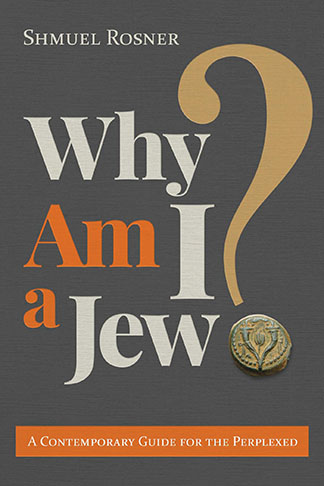
The paperback edition of his book —  “Why Am I a Jew? A Contemporary Guide for the Perplexed” — was published earlier this month. The work wrestles with questions facing Jews in the 21st century while highlighting Jewish resilience in the face of seemingly endless peril and adversity. Its chapter titles include “What Is Judaism?” and “Why Do They Hate Us?” — the latter “chapter as painfully relevant today as ever,” Rosner said.

And in a post-Oct. 7 world where antisemitism appears everywhere, everyone gathered in the Sinai sanctuary on Saturday understood Rosner’s sentiment all too well.

Rosner is senior political editor and a weekly columnist for The Journal, offering his analytic take on events unfolding in Israel in his column, “Rosner’s Domain.” He’s also a longtime senior fellow at The Jewish People Policy Institute, an Israel-based think tank.

At Sinai Temple, Shmuel Rosner Highlights Jewish ‘Potential to Create a Better World’ Read More »

Reinventing Thanksgiving Leftovers

You had a wonderful Thanksgiving feast. Beautiful turkey, delicious stuffing, scrumptious sides. Now what? Some might say that one of the best parts of Thanksgiving is the leftovers.

Dawn Lerman, nutritionist and the author of “My Fat Dad: A Memoir of Food, Love and Family, With Recipes” is an expert at giving leftovers new life. “Growing up, the day after Thanksgiving, my dad and I turned our kitchen into a creative lab,” Lerman told The Journal. “I transformed our classic recipes into healthy leftovers, and my forever-dieting, 450-pound ad-man dad rebranded them as ‘healthy indulgences.’”

These recipes have all the festivity and none of the guilt.

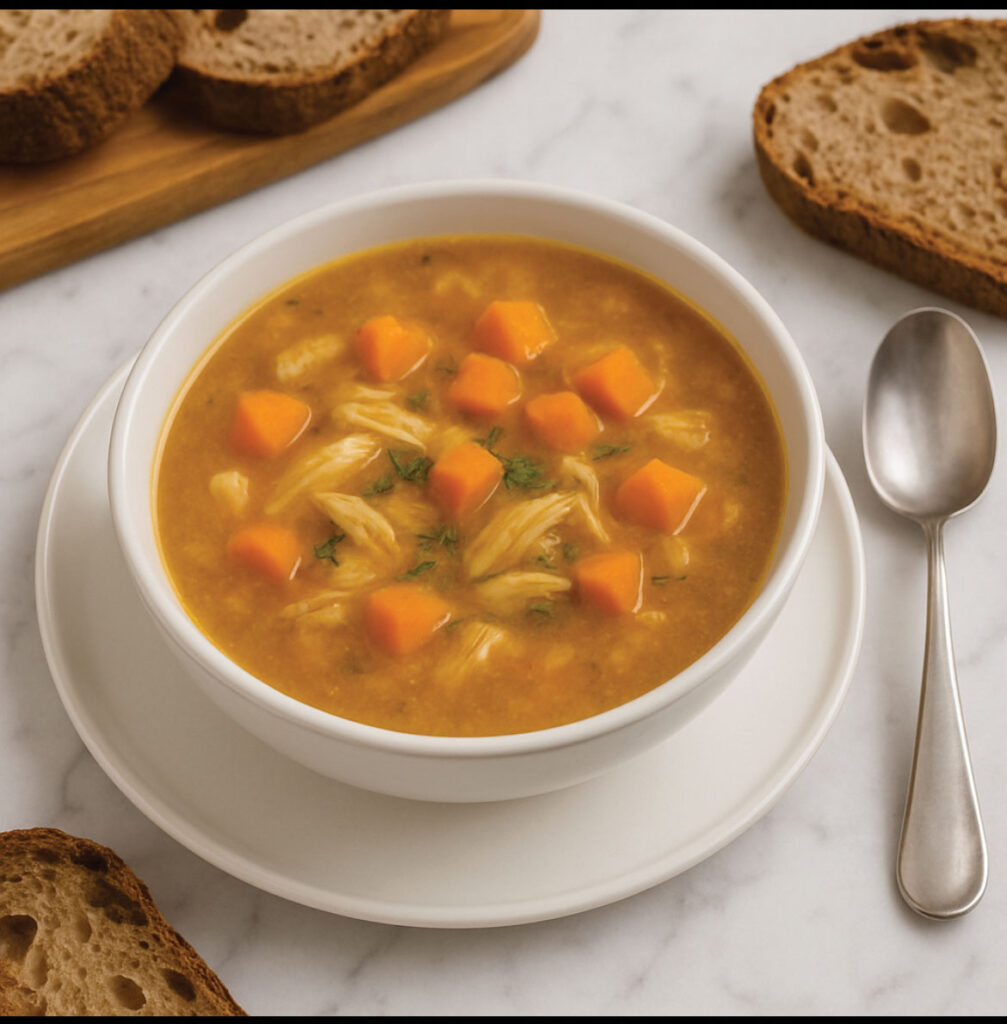
Turkey Sweet Potato Soup

Nothing says holiday season like a hearty, protein- and fiber-rich soup.

32 ounces chicken broth

2 cups leftover turkey, shredded

2 cups roasted sweet potatoes

1 onion, chopped

2 garlic cloves

Dill

Thyme

Salt and pepper

1. Sauté onion and garlic. 

2. Add to a soup pot, along with broth, turkey, sweet potatoes, dill and thyme. Add salt and pepper to taste. 

3. Simmer for 10 to 15 minutes.

4. Blend partially or fully.

5. Enjoy!

Turkey Lettuce Wraps

These wraps make a great diet substitute for a sandwich.

Serves 2 to 3

2 cups shredded turkey

½ cup non-dairy Greek yogurt

1 – 2 Tbsp chopped mint

1 Tbsp lemon or lime juice

1 – 2 Tbsp fresh herbs (parsley, cilantro or dill)

Salt and pepper, to taste

8 – 10 large romaine lettuce leaves

1. Warm the turkey with a splash of broth (optional).

2. In a small bowl, mix the non-dairy yogurt with mint, lemon or lime juice and herbs.

3. Spoon the turkey into the romaine leaves and drizzle with the yogurt-herb mixture.

Roasted Beet Hummus

This is one of those delicious sides that looks gourmet and decadent, but is secretly healthy. 

Serves 4 to 6

1½ – 2 cups leftover roasted beets, chopped

1 (15-oz) can chickpeas, drained

3 Tbsp tahini

1 – 2 cloves garlic

2 – 3 Tbsp lemon juice

2 – 3 Tbsp olive oil

½ – 1 tsp salt

1. Blend everything together using a food processor.

2. Adjust lemon juice, oil and salt to taste.

Broccoli Salad

The best salads are crunchy and sweet, just like this one.

Serves 4

3 cups chopped leftover broccoli, lightly steamed and cooled

1/3 cup dried cranberries

¼ cup nuts (almonds, pecans, or pistachios)

2 scallions, sliced (optional)

Dressing:

½ cup Greek yogurt or mayo

1½ Tbsp lemon juice

1 – 2 tsp honey

¼ – ½ tsp salt

A few pinches of pepper

1 tsp Dijon mustard

1 tsp apple cider vinegar

1. Combine the broccoli, cranberries, nuts and scallions in a bowl.

2. In a separate bowl, whisk together the yogurt or mayo, lemon juice, honey, salt, pepper, Dijon mustard and apple cider vinegar until smooth.

3. Toss the salad with the dressing and chill before serving.

Sweet Potato Pancakes

These are light, fluffy and secretly nutritious.

Serves: 2–3 (about 8 small pancakes)

2 large eggs

1 cup mashed sweet potatoes

½ cup flour or 1/3 cup almond flour

1 tsp vanilla

1 tsp cinnamon

Pinch of salt

Butter or coconut oil for the skillet

1. Whisk the eggs. Then add the mashed sweet potatoes, flour, vanilla, cinnamon and salt. Mix well.

2. Heat a skillet with a little butter or coconut oil.

3. Spoon the pancake batter into the pan and cook 2–3 minutes per side.

Cranberry Yogurt Parfait

A wonderful guilt-free dessert, this parfait doubles as a light breakfast.

Serves 1

1 cup Greek yogurt

½ cup leftover cranberry sauce

¼ – 1/3 cup granola

A handful of fresh cranberries

Monk fruit sugar

1. Layer yogurt, cranberry sauce and granola in a glass or dish.

2. Optional: Warm a handful of fresh cranberries and water with a little monk fruit sugar in a pot till soft. Spoon on top.

3. Serve immediately.

Reinventing Thanksgiving Leftovers Read More »

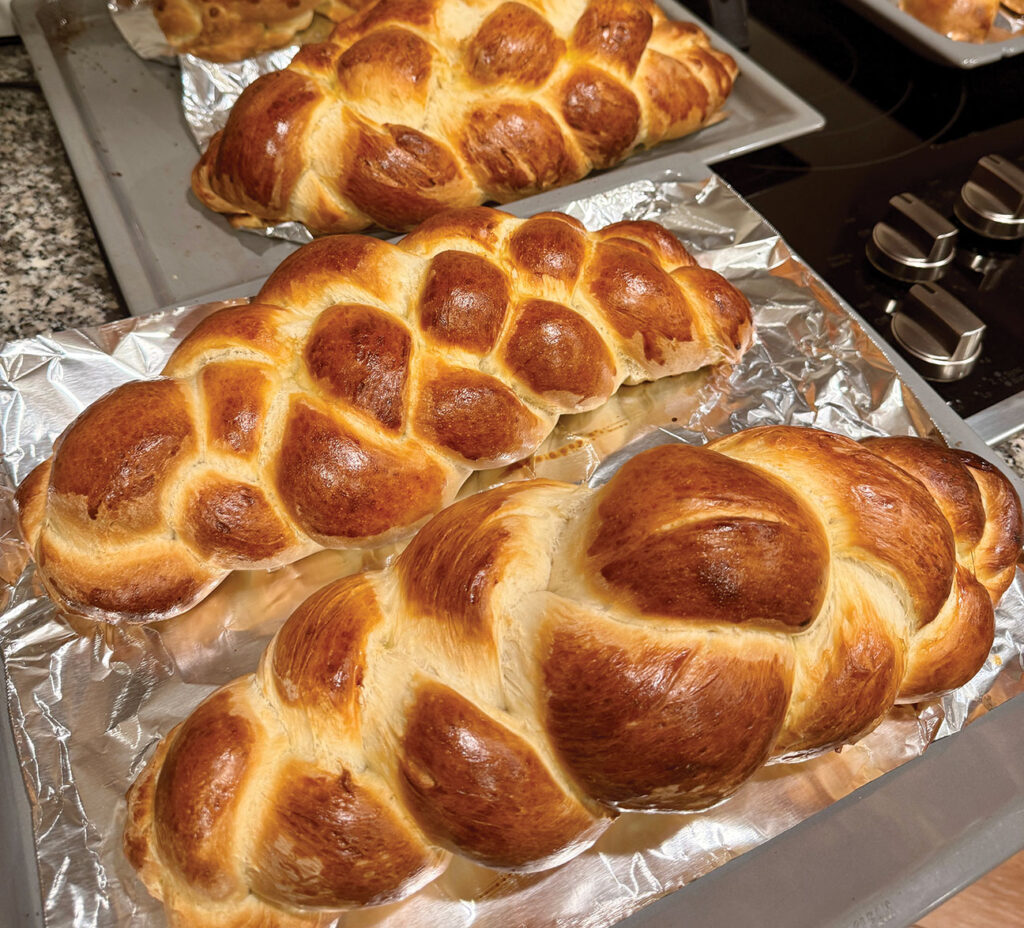
Light Heavenly Challah and a White Chocolate Babka

It began as an experimental baking project when I was a busy young mother with three young children and adorable little nieces and nephews. 

As pre-schoolers, every Friday my boys brought home miniature loaves of homemade challah from school. Those challahs tasted so good that I was determined to replicate the recipe. 

Over these many years of baking challah, I learned the best tricks and techniques to achieve the perfect plush, airy loaf. 

Baking challah is therapeutic and satisfying and I’m especially grateful for the spiritual opportunity to do the mitzvah of ha’frashat challah. Every week, I take that moment to pray for my husband, my children and my extended family. 

Eating warm homemade challah on Friday nights with all the traditional Moroccan dips on the table with family and friends gathered around is joyous and a pleasure I don’t take for granted. 

Some of my tips include using yeast imported from Israel (available at the kosher market), as well as being extra careful that when I proof my yeast, I use warm water (not cold and not too hot). A successful proof is when the yeast is foamy. I use high gluten flour, which gives the loaves a lofty rise and the perfect crumb.

I use a mixer, which is much easier, but if you don’t have a mixer, kneading the dough by hand is very satisfying, an excellent workout and also results in fabulous challah. 

What I never realized until now is that all those years ago the dough for those baby loaves that arrived home every Friday was lovingly prepared by Lillian Douek. 

—Rachel 

Upon our arrival in Los Angeles many, many years ago, the first person that both my mother and I became friends with was Lillian Douek. Many people in the community know Lillian as the best art teacher at Hillel Hebrew Academy. She is also one of the kindest, most talented, most creative and most beautiful women I know. 

Over the years, we shared every family simcha and many Shabbat meals. She taught all four of my children and, luckily for me, I used to sit in her classroom watching her thrill her students with her art projects. My home is still filled with the paintings that my kids created with her guidance. 

For years, my girls attended Lillian‘s summer camp and the yummiest part was the delicious freshly baked challah they would bring home every Friday. It was so good that my girls would beg me to use Lillian’s recipe to bake more loaves for Shabbat. Those moments of creating flour filled messes in the kitchen are wonderful memories for me. 

Recently I asked Lillian if I could share her recipe with the readers of the Jewish Journal. With her ever abundant generosity, she graciously agreed. 

(If you’re not a baker or you’re just too busy with these short Fridays, Lillian’s challah is available for purchase at La Brea Bagels on Beverly Boulevard.)

Wishing you the blessing of long friendships and perfectly sweet and airy, golden brown braided challah. 

—Sharon 

Lillian’s Challah Recipe 

4 Tbsp active dry yeast

4 1/2 cups warm water

2 Tbsp sugar

5 lbs high gluten bread flour

1 cup sugar

2 Tbsp salt

3 large eggs

1 cup vegetable or avocado oil

Egg Wash

1 egg and 1 Tbsp honey, beaten

Topping suggestions — sesame seeds, poppy seeds, everything but the bagel mix or chocolate chips 

Combine yeast, warm water and sugar in a glass bowl. Cover with plastic wrap and set aside to proof for 5-10 minutes.

In the bowl of a stand mixer, combine the flour with the sugar, then add the eggs, honey, oil, and the proofed yeast mixture to the dough and mix at a slow speed, adding the salt while mixing, until all the ingredients are well incorporated. 

Increase the speed to medium for 10 minutes. 

Transfer the dough to a lightly floured surface and lightly knead by hand until the dough feels soft and smooth. 

Place the dough in a large bowl, cover with plastic wrap and a towel. Set aside to rise in a warm spot for one hour.

Preheat the oven to 350°F.

Place the dough on a lightly floured surface and separate the dough into equal strands and begin braiding the challah. 

Place braided challah on a baking tray lined with parchment paper, then cover with a towel and let rise for 45 minutes. 

Brush the tops of the challah with the egg wash, then sprinkle with selected toppings. 

Bake in the oven for 45 minutes or until golden brown. 

Enjoy! 


Take Challah and recite the blessing (below)

Separate the dough into sections and braid into challah. Allow each challah to rise 15 minutes.

Brush with egg wash, sprinkle with toppings and bake for about 45-55 minutes, until challah is golden brown.

Allow challah to cool completely before storing.

Note: It is a mitzvah to make the blessing of Hafrashat Challah when baking 5 pounds of bread dough.

Transliteration: Baruch ata Adonai Elo-hainu Melech Ha’olam asher kid’shanu b’mitzvotav v’tziva’anu l’hafrish challah.

Translation: Blessed are You, L-rd our G-d, King of the Universe, who has sanctified us with His commandments and commanded us to separate challah. 

Separate a small ball of dough, approximately one ounce, and say: “This is challah.”

Burn the challah by wrapping it in a piece of silver foil and placing in the oven.


Pistachio and Cardamom White Chocolate Babka

1 lb challah dough 

Filling 

4 Tbsp vegan butter

1/2 cup brown sugar

2 tsp ground cardamom

1 tsp cinnamon 

Pinch of sea salt 

1/3 cup pistachio pieces

1 Tbsp olive oil 

1 Tbsp brown sugar 

Sugar glaze 

1/3 cup sugar

1/4 cup water 

1 cup white chocolate chips

1/3 cup pistachio pieces 

Preheat oven to 350°F.

Line a greased baking loaf pan with parchment paper and set aside. 

In a small bowl, mix the butter, brown sugar, cardamom, cinnamon and salt until well combined. 

On a lightly floured surface, roll out the dough into a thin rectangle. Spread the butter mixture to coat the dough, then sprinkle evenly with the pistachios. 

Roll the dough into a long strand, then cut it down the middle. Twist the two strands, then place into the prepared loaf pan. Brush the top of the babka with olive oil and sprinkle with brown sugar. 

Bake the babka on the middle rack for 30 to 40 minutes, until golden brown. 

While the babka is baking, prepare the sugar glaze by combining the sugar and water in a small saucepan over medium heat. When the mixture comes to a simmer, remove from the heat and pour over the hot babka. 

Allow the babka to cool, then drizzle with melted white chocolate and sprinkle with the remaining pistachio pieces. 

Serve warm. 

Leftover babka should be stored in an airtight container for 4-5 days.


Sharon Gomperts and Rachel Emquies Sheff have been friends since high school. The Sephardic Spice Girls project has grown from their collaboration on events for the Sephardic Educational Center in Jerusalem. Follow them
on Instagram @sephardicspicegirls and on Facebook at Sephardic Spice SEC Food. Website sephardicspicegirls.com/full-recipes.

Light Heavenly Challah and a White Chocolate Babka Read More »

Table for Five: Vayetzei

One verse, five voices. Edited by Nina Litvak and Salvador Litvak, the Accidental Talmudist

Then God remembered Rachel, and God listened to her and opened her womb. She conceived and bore a son, and said, ‘God has taken away my disgrace.‘

– Gen. 30:22-23


Kylie Ora Lobell

Author of the forthcoming Jewish conversion memoir, “Choosing to be Chosen: From Being an Atheist Non-Jew to an Orthodox Jew” (Wicked Son)

Rachel was supposed to marry Jacob, and Leah was supposed to marry Esau. However, Esau chose a path of wickedness, so Leah cried out to Hashem that she wouldn’t have to marry him. She married Jacob instead, after Rachel agreed to it. Rachel and Jacob were each other’s true loves, but Rachel was a good sister who sacrificed what she wanted. According to Sara Blau of Chabad.org, Rachel also sacrificed her place in the Cave of Machpelah, where Leah and Jacob are buried. She agreed to be buried on the side of the road so that she could comfort the Jews who were exiled following the destruction of the Temple. It is because of her sacrifice that all the Jewish people will return to Israel one day, when Moshiach comes and the Temple is rebuilt. 

Today, we are all about comfort and avoiding sacrifice. What I’ve noticed is that when I sacrifice my own comfort – when I go out of my way to do something for others or goes against my ego – I am rewarded. I hate fasting. I do it anyway! Traditional prayer often bores me, but I wake up and try my hardest to say my morning prayers. I’d much rather listen to a gossipy political podcast than a Torah class – but every day, I tune into Rabbi David Bassous’ incredible Torah podcast. When I sacrifice, I’m quieting my animal soul and letting my Godly soul take the lead, just like Rachel did. Let’s all strive to be more like our powerful matriarch and do the same.


Rabbi Benjamin Blech

Professor of Talmud, Yeshiva University

When Rachel finally conceived … she said, ‘God has taken away my disgrace’” (Gen. 30:23). Rachel’s joy was not only personal; it affirmed a divine calling. In Jewish life, creation is the greatest form of imitatio Dei: God creates a world; we partner by creating a future — most tangibly through children and the mitzvah of “pru u’rvu.” Her shame lifted because her life now extended beyond herself. 

By contrast, today many young Americans — Gen Z prominently among them — express hesitation about ever having children. Pew Research Center reports that the share of U.S. adults under 50 without children who say they’re unlikely ever to have kids rose from 37% to 47% between 2018 and 2023. Financial and cultural reasons top the list. Other polling focused on Gen Z and millennials finds nearly one in four childless young adults plan to remain child-free, often citing costs and the state of the world. 

Judaism does not dismiss the burdens of parenting; it elevates them. Creating and raising a child is the most everyday way to echo God’s creative act — bringing new image-bearers into being, nurturing wisdom and kindness and linking past to future. When a generation refuses that task, it negates a central command and frays the covenantal chain. If “Z” chose barrenness as an ideal, then — like the letter itself — it would be the end of the line. Rachel teaches the opposite ethic: to welcome life despite fear, to see the home as a small sanctuary and to measure dignity not by convenience but by continuity. Her gratitude is a timeless rebuke to fashionable despair — and a summons to choose creation.


Rabbi Elazar Bergman

Author of the newly released “The Daven Better Handbook”

Our matriarch Rachel, affectionately known here in Jerusalem as Mama Rachel, is an analog for the Oral Torah, i.e., Talmud and Jewish law, Midrash etc. The wisdom of the Oral Torah is the beauty for which she is known (Genesis 29:17) because everyone considers Wisdom, and its study, beautiful. 

But even more important than the study of glorious Wisdom is doing the wise deeds born from it (Avot 1:17). One who thinks, even mistakenly, that this study itself is primary, HaShem forbid, is tantamount to being a heretic, a full-fledged villain. Without good deeds, the Torah is worthless, even poisonous. 

What HaShem “remembers” about Mama Rachel is her selfless deed. In order to spare her sister Leah shame, she relinquished her future as Mrs. Jacob and allowed her sister Leah that privilege. (Mama Rachel did this by divulging the secret wedding-night signals Jacob had entrusted to her to Leah.) 

Such a sacrifice, a deed so costly and magnanimous, produces a Joseph. Joseph was a tzaddik whose private service of HaShem, chastity, propelled him to become a leader, teacher and role model. A tzaddik like that inspires others to do the good deeds they can do. He helps them, us, avoid the shame of a life barren of good deeds. Good Shabbos!


Rabbi Barry J Chesler

Schechter School of Long Island

One can only imagine the growing frustration and diminished self-worth as Rachel watches her sister, her handmaid, and her sister’s handmaid give birth to 11 children while she remains childless. Only after all of these children are born does “God remember her … heed her and open her womb.” When a son is born, she declares, “God has removed my disgrace.” 

Rashi tells us that God remembered how Rachel gave Leah the signs which would confirm her identity so that Leah could actually be married first. This act of magnanimity on Rachel’s part, together with Rachel’s despair that her continued infertility will lead Jacob to divorce her, and she would end up with Esau, identified as Esau the Wicked, prompts God to open her womb. Once her son is born, Rachel declares that God has now removed my disgrace. While the Torah seems to suggest that the disgrace is infertility, Rashi suggests that it is the possibility that Rachel will be divorced and end up with Esau that is the disgrace. 

For us, living in different times and different lands, the pshat, the plain meaning, seems closer to our truth. Rachel comes to remind us that validation and sense of self comes from within, not from without. In the parsha, Jacob’s professions of love cannot offset Rachel’s infertility; by contrast, Leah’s children at least partially offset the deficiencies in her relationship with Jacob. With both women, that validation is confirmed by God. So may it be with us.


Rabbi Gershon Schusterman

Author, “Why God Why?”

Of the four matriarchs, Jews relate most personally to Rachel. The Torah’s stories about her challenges and triumphs are more elaborate and personal than those of the other matriarchs. Her final chapter was her untimely death as she gave birth to the 12th of Jacob’s sons and her burial at a roadside in Bethlehem and not in the shrine with the other patriarchs and their wives, facts which naturally evoked our pathos and empathy. 

When Rachel is finally blessed with a child after many years, she expresses her joy as no longer being “disgraced.” We can understand her pain for not having given birth to a child. But why would she have felt disgraced, when she knew that she was Jacob’s beloved? 

The Midrash gives the following insight: In earlier biblical times there was a common practice of marrying two wives: one to bear children and one to serve as the perennially beautiful “trophy wife,” for which purpose she was intentionally sterilized. Rachel, being beautiful and childless, was so considered. 

The Torah asserts that “Rachel was beautiful of form and of appearance,” which the Midrash reads as alluding to character and spiritual qualities. While shallow women might revel in the fun that might accompany their skin-deep attractiveness, not Rachel. She was a paragon of kindness and virtue in a crass and deceitful society. To her, being valued for merely her physical beauty was demeaning and disgracing. Now that she has given birth, “God has taken away my disgrace.”

Table for Five: Vayetzei Read More »

Rosner’s Domain | Moving Rightward, Again?

What happened to us Israelis in the war? A lot of things happened. Some will fade with time, some will stay for a while and some might be with us for a very long time. One way to trace the change is by listening to what Israelis say about themselves. Not what politicians claim about “the public,” not what commentators assume, but what real people report when someone calls and asks them to place themselves on a political map.

Last week we reported that Israel became more traditional. Today we look at ideology, where the story is slightly different. When it comes to ideology, there is no need for a familiar “on the one hand” (most Israelis became more traditional) and “on the other hand” (seculars became less traditional). On the question of left and right everybody is moving in the same direction. To the right.

We should be precise about what we measured. We asked people to tell us where they were politically before the war, and where they place themselves today. This is not a measure of concrete movement over time but a measure of felt movement. Israelis say: “I moved to the right.” Did they really? That will require other data sets. But the very fact that they feel they have moved is meaningful.

When an Israeli says “I shifted to the right,” he or she is sending us a message: I became more suspicious of peace processes, more skeptical of concessions, more demanding about security guarantees. “I moved right” is another way of saying: don’t expect from me the same positions I expressed before the war. My situation changed; my stance changed.

To capture this movement, we used an unusually detailed scale. Not the classic five definitions – left, center-left, center, center-right, right – but nine rungs, from “deep left” to “deep right.” Why? Because many people feel a slight shift that is not strong enough to justify jumping from “center” to “right.” On a coarser five-point scale they will stay where they are. On a nine-point scale, they can inch from “center” to “right close to center,” or from “right” to “deep right” — and we can see it.

And this is, in fact, what we see: not dramatic leaps from “left” to “right,” but small, consistent steps to the right. A notch here, a notch there. From “left close to center” to “center.” From “center-right” to “moderate right.” From “right” to “deep right.” In most cases, it’s one step on the ladder. But it happens almost everywhere, in almost every group.

Take one example from the table behind the survey (the table is on the right-hand column). Among Israelis who say that before the war they were “right close to center,” only a bit more than a third — 36% — say they are still “right close to center” today. The rest moved. Some of them moved left or to the center, but many more moved right: 29% now define themselves as “moderate right,” 17% as “right,” and 7% as “deep right.” Add these up, and you get a clear result: 53% of this group shifted to the right. A majority of those who were already somewhat right-wing moved further right.

Once you understand how the table works, it becomes easy to see the pattern. For most starting points on the ideological scale, there are more people moving right than left. In many groups the main move is just one step, but it is almost always in the same direction. The “deep right” has nowhere to go, so it mostly stays put. The center and the center-left still exist, but many within them report a gentle drift rightward. The “deep left” is so small in the sample that we cannot say anything statistically meaningful about it — which is, in itself, a kind of result.

This is similar to what happened to Israelis 25 years ago. A Palestinian campaign of violence – the Second Intifada – leads to a change in attitudes among those under attack. After the Second Intifada, Israel became significantly more right-wing on diplomatic issues and never truly swung back. The “peace camp” of the 1990s evaporated in the 2000s.

Of course, there is still an Israeli camp that calls itself “center” or “center-left,” but it is no longer defined primarily by its stance toward the Palestinians. On that front, much of this camp accepts what used to be called “right-wing positions”: deep suspicion of Palestinian intentions, insistence on strong security control, skepticism about a final-status agreement. A country that has lived through another round of trauma, and that now sees itself – and its political place on the map – somewhat further to the right than before. The coming campaigns are likely to be fought less over Oslo and more over the Supreme Court, over ultra-Orthodox conscription, over corruption and governance.

Something I wrote in Hebrew

What happened in Lebanon — Israel’s targeted killing of Hezbollah’s military chief of staff Haytham Ali Tabatabai — is more proof that Gaza is far from being solved:

Here is the question for the commanders of the future international force in Gaza. Will you open fire when you see armed Hamas operatives facing you? Will you open fire when you discover someone transferring ammunition shipments? Will you open fire when you encounter resistance to the execution of your missions? This seems to me like a rhetorical question. It is clear they will not open fire, and therefore it is quite clear that the international force supposedly meant to transform Gaza is nothing more than an illusion sold to the natives in exchange for an agreement to stop fighting.

A week’s numbers

To understand these numbers (from JPPI), read column above…


A reader’s response

Maya E. asks: “Do Israelis follow the resurgence on antisemitism in America?” My response: They follow, but don’t necessarily understand. Antisemitism isn’t a feature of Israeli lives. 


Shmuel Rosner is senior political editor. For more analysis of Israeli and international politics, visit Rosner’s Domain at jewishjournal.com/rosnersdomain.

Rosner’s Domain | Moving Rightward, Again? Read More »

Understanding What We’re For in Four Words

Americans are traditionally self-absorbed, focused on their lives and, at best, domestic politics. That’s why it’s stunning to see how much coverage, fury and focus, there has been for two years on Israel in Gaza.

It’s not casual. It’s not coincidental. Manipulative, well-funded networks have cultivated this Israel-obsession and Palestinian-romanticization. Now, useful idiots in media, academia, certain political circles and even parts of the Jewish community, stoke it, as it is magnified mindlessly online.

America seems filled with laptop warriors who never fired a gun and cannot tell friend from foe, arrogantly making long-distance military calls about IDF strategy.  Meanwhile, suddenly foreign-policy-oriented armchair moralists throw lightning bolts of condemnation at Israel, having ignored their own country’s behavior in Iraq and Afghanistan.

Amid this barrage, too many Jews have become overly apologetic about Israel. Too many judge Israel’s Prime Minister Benjamin Netanyahu harshly. They forget. Despite many flaws, he freed 168 hostages and vanquished multiple enemies in merely two years.

I get it. The media mania imprisons us in the weeds, stuck arguing about Bibi, his most reprehensible allies and Hamas’ latest mind-game. But never forget: Hamas’ Iranian-funded Oct. 7 massacre imposed this existential war for survival on Israel.  Ultimately, this is a continuing war against anti-Zionism, Antisemitism and Jew-Hatred — and for Zionism.

Oct. 7 marks the latest, bloodiest, chapter in Palestinian exterminationists’ decades-long war against Zionism. Read their charters, speeches, and sermons. They’ve framed their “struggle” as an all-or-nothing, do-or-die fight to eliminate the “Zionist entity.” They’re the ones who repeatedly rejected compromise since the 1940s, and keep improvising various ways to kill Jews, from Olympian massacres to flying kites to marauding masses. They’re the ones who taught misguided “progressives” to misread Zionism as “settler-colonialism,” brand Israel the perennial oppressor, and make “Zio” the ultimate curse-word. Yet Israelis are the obstacle to peace?

Outrageously, Palestinian extremists worldwide infused their anti-Zionism with old fashioned antisemitism, drawing from history’s poisoned reservoir of anti-Jewish images. They yell “itbach al-yahud,” slaughter the Jew, while killing Israelis, and punish “the Jews” by targeting synagogues globally not just Israeli army bases.

They’ve made Jew-hating a full-time, comprehensive, vision-distorting, soul-curdling obsession. When Zohran Mamdani, who kept doubling down on his anti-Zionism during his campaign, years ago said, “We have to make clear that when the boot of the NYPD is on your neck, it’s been laced by the IDF….,” he showed how that fixation defines him. While maligning New York’s police officers, Mamdani made the classic anti-Semite’s move, blaming Jews for every problem.  Medieval anti-Semites obsessed about the individual Jew; today, Mamdani anti-Semites, oops, I meant modern anti-Semites, obsess about Israel, the Jewish state, as fueling all evils.

Elegant, saccharine-sweet, human-rights-talking, Progressive policy-championing Zio-bashers like Mamdani are classic anti-Semites. They make Jews defensive. Somehow, Jews feel compelled to prove that anti-Zionists are anti-Semites, although the burden of proof should be on the bashers to prove they’re NOT bigots. Spewing venom, spouting conspiracy theories, priming bullies, they insist they’d never hurt a fly. That’s why I distinguish in my latest e-book, “The Essential Guide to Zionism, Anti-Zionism, Antisemitism and Jew-Hatred,” between antisemitic theorists – and actual Jew-haters.

Riled up by lovely, dissembling anti-Semites, Jew-haters lack finesse. They just menace Jews, hitting Jews eating sushi in Beverly Grove, firebombing Montreal’s Congregation Beth Tikvah, drawing swastikas on Brooklyn’s Magen David Yeshivah, celebrating Oct. 7 in Sydney by yelling “Gas the Jews.”

This advances the Palestinian strategy. Unable to defeat Israel militarily, they want to rob Israel, Jews and Israel-supporters of our joy – and legitimacy. Just as Palestinian terrorists picked “soft” civilian targets in the 1970s, Palestinian propagandists target gullible audiences today.  Their sanctimony cyclone with disproportionate coverage and outrageous accusations, stirring black word clouds of genocide … starvation … occupation … settler-colonialism … oppression, puts Israel perennially on the docket – and its supporters in a defensive crouch.  These days, too much pro-Israel discourse comes from the “No, we’re not wife-beaters” school of rhetoric.

That’s where Zionism comes in – actually, saves the day. Zionism resets this conversation to nowhere. It transcends the defensiveness, refuting the accusations in deeds not words, with joy not anguish, victories not defeatism. Zionism’s peoplehood platform unites Jews worldwide.  Accentuating the eternals – identity, history, community, continuity, survival – it diminishes Jews’ self-sabotaging over-emphasis on the passing politics of this moment.

Zionism takes Israel off probation, celebrating Jews’ historic commitment to one another, our people, state and land — our intertwined fate. It repudiates those who would never leave America no matter who is president, but only support Israel contingent on good behavior and leaders they deem acceptable.

Zionism, which has long been counter-cultural, is doubly transgressive today. Zionism rejects the Israel conversation’s hyper-politicization. It challenges Jews – especially too many rabbis – to build conversations, pride, vision, solidarity, around Judaism’s forever-fundamentals not today’s controversies or their frustrations with Israel. And this Identity Zionism roots Jews in a centrifugal reality spinning around our tradition, our land, our people, our state. That superpower resists modern Western culture’s centripetal force, spinning everyone into ever more individualistic and fragmented affinities, thereby undermining our loyalties to others, to the collective.

Beyond these abstractions, Zionism has three exemplary proofs that it works and remains compelling. First, the Jewish people. Consider how much stronger, prouder, freer every Jew is thanks to Zionism. Zionism helped free Jews from oppression in Muslim lands, Ethiopia, the Soviet Union, while giving Jews everywhere extra springs in their steps. Second, Israel. Look what the state’s accomplished in 77 years, its many contributions to humanity, the Jewish people, and its citizens. Finally, remember where we were on Oct. 7, how young Israelis defeated the enemy on multiple fronts and how many Jews and non-Jews rallied to support Israel, countering Palestinian antisemitic anti-Zionism worldwide.

Since Simchat Torah, whenever I speak, I end by inviting audiences to rise. I toast one fallen Israeli hero since Oct. 7, saying the prayer over the wine. Then, I lead everyone in saying “the shehecheiyanu prayer,” thanking God for sustaining us and bringing us to this day.

There’s more work to do. The haters still hate. But, thanks to Zionism, we won – and will continue winning, while teaching the West about self-defense, self-reliance and self-respect.


Gil Troy is an American presidential historian and Zionist activist born in Queens, living in Jerusalem. Last year he published, “To Resist the Academic Intifada: Letters to My Students on Defending the Zionist Dream” and “The Essential Guide to October 7th and its Aftermath.” His latest E-book, “The Essential Guide to Zionism, Anti-Zionism, Antisemitism and Jew-hatred” was just published and can be downloaded on the JPPI  Jewish People Policy Institute – Website. 

Understanding What We’re For in Four Words Read More »

‘We Were Hoping You’d Do It for Free’: A Children’s Songwriter on Art, Joy and Getting Paid

“We were hoping you’d do it for free.”

I’ve heard that sentence many times in my 33 years as a Jewish children’s singer and songwriter. 

I often think back to “Chicken Soup,” my very first children’s song, inspired by my Bubbie, my sweet grandmother, giving me a matzah ball for the first time. I remember the work the song took — making it both funny and moving, finding a melodic hook that worked, then workshopping it with kids at my Jewish camp and seeing how happy it made them. 

I remember meeting with the costume designer, creating the chicken wings — large, soft, wearable — and the chicken heads — easy to slip on and visually striking. I pictured how I wanted it to work onstage: one costume on an adult, one on a kid, me saying, “You flap when I say these lyrics: ‘Chicken soup in a metal pot, chicken soup, Bubbie said it was a gift from God’ — and bawk a little. When the chorus ends, stand happily until I get back to the chorus again. Then flap again!”

And I love the performances. The laughter. Kids, parents, grandparents. The joy in the room. 

I am lucky to have a profession I love. The gratitude I feel knowing I created something that brings people together, makes them smile, pulls up memories of their own bubbies, is infinite. 

And then those words. The ones that land like a little sting every time.

“We were hoping you’d do it for free because…”

• “Robbo, it’s exposure.”

• “It’s for the children.”

• “Because it’s music.”

• “It’s fun!”

Sometimes I do perform for free — at hospitals, nursing homes and for places I know are truly struggling. I’m grateful I can give that way.

But often, it’s not that.

It’s Jewish organizations — really, the people representing them — asking:

“Can you donate it? Can you bring your costumes, props, sound equipment, material, energy, joy and passion and just, you know… give it to us?”

I’ve had friends who love my work ask me this, talking about “exposure” as if it were currency I could spend on my mortgage, or a guarantee that someone else will hire me next time — for pay.

 Recently, a perfectly nice, friendly woman asked me to perform. I presented my fee, and she replied with the line: “We were hoping you’d do it for free.”

I said, “No, I get paid to do my work. If you don’t want to meet my fee, no problem.”

She met it. 

A few days later, I happened to be in a room full of artists doing an improv show for an organ donation organization. I told them what had happened. They exploded:

“Ugh, you too?”

“They think they can do what we do—that it’s easy.”

I asked if they thought I should say something to her. They all said yes.

So I did. Gently. I said, “May I suggest that you not ask artists to do their work for free? We put a lot into what we do.”

Her answer honestly took my breath away. She seemed genuinely puzzled.

She said, “If I can get it for nothing …  shouldn’t I ask?”

Many of you might think she has a valid point — this will save money for your nonprofit or your school. But would you ask a teacher to tutor your child for free, an Uber driver to drive you to the airport for free, or your dentist to fill a cavity for free?

I took a breath and said, still kindly, “That’s what I’m trying to say. I submit to you that you should never ask an artist to work for ‘nothing.’”  

She paused for a long moment and finally said, “Ohhhhh.”

Yes. “Ohhhhh.”

The thing about artists is that we love our work. Our passion is so deep that we cannot help ourselves — we must create. It’s hard for us to say no when we know that the impact of our work will be meaningful. Please don’t make us tell you that our work is valuable — if you are asking me to perform, you already know it is, so come to us honestly and fairly. Most artists, including me, will work within your budget, but please don’t lowball us. It’s painful and directly affects our livelihood and that of our families.

 I will never forget the girl using a walker who came up to me after a show and said, “Your show made my life better.”

I wept in the car. I am, in many ways, the luckiest man alive.

If I could pay for my life with warm feelings like that little girl gave me, I would. In a second. But I can’t. Sometimes I need tires. And shelter. And food.

So when you say, “We were hoping you’d do it for free,” it puts us in a painful spot. Honestly, I’d love to be able to perform for free every time.

But I can’t.

So please — understand what goes into giving you a good show. Understand the years, the craft, the preparation, the heart.

And don’t ask.  


Robb “Robbo” Zelonky is an award-winning children’s singer, songwriter, and songleader with five children’s albums on Apple Music and Spotify. He has performed at the White House three times and co-headlined with Arlo Guthrie. He has been the beloved songleader and drama director at Camp JCA Shalom for over 30 years and now enjoys summers singing with the children of former campers.

‘We Were Hoping You’d Do It for Free’: A Children’s Songwriter on Art, Joy and Getting Paid Read More »