fbpx

June 11, 2025

Josh Hammer: Defending Israel on the Right

This past election season, many Jews who formerly belonged to the Democratic party switched over and voted for Trump. They saw that far leftists, who were eroding their party, were leading protests against Israel and engaging in antisemitism on college campuses and city streets – and they took to the ballot box to speak their mind.

However, in recent days, the right has had its own share of infighting over funding foreign aid to Israel and the crackdown on antisemitic speech. Those on the far right and the far left have found something to bond over: their hatred of Israel and the Jewish people. Conservative political commentator as well as Newsweek’s senior editor at large Josh Hammer has been actively working on the right to combat this troubling trend.

“I increasingly see a lot of people online who are trying to convince younger Christians to abandon the Jewish people and any idea of an alliance between the U.S. and the state of Israel,” he told the Journal.

That’s what compelled Hammer to write his new book, “Israel and Civilization: The Fate of the Jewish Nation and the Destiny of the West.” In it, he argues that the fate of Western civilization depends on Israel.

“My number one audience for my book is Christian Americans,” he said. “That is my bread and butter target audience. There are a lot of folks who are trying to separate Jews and Christians, the two Biblical religions, from one another.”

“There are a lot of folks who are trying to separate Jews and Christians, the two Biblical religions, from one another.”

While Hammer recognizes the strong Evangelical support for Israel from older generations, he believes that younger Christians are becoming more distant. He’s trying to reverse that troubling trend.

“If you look at polling on younger generation of Christians, they are not as enthusiastic about the state of Israel as their parents were, but they are not hostile,” he said. “There are no strong feelings either way. I try to remind them we have way more in common than we have differences.”

On the fringes, Hammer, who is active on social media – specifically, X – has seen that theologically driven antisemitism is popping up again and again.

“Charlie Kirk is a great defender of the Jews, but the fact that he’s getting questions on the Talmud from students on college campuses is deeply disturbing,” he said. “Theologically driven antisemitism is the scariest form of antisemitism. It’s small for now and ahistorical for the U.S. God willing, it will be tampered.”

For Hammer, a former attorney who worked at Kirkland & Ellis, the issue is deeply personal. Three months after October 7, he traveled to Israel and visited Kfar Aza, where Hamas murdered and kidnapped dozens of residents.

In the introduction to “Israel and Civilization,” he writes, “Entire rows of homes looked like they had been blown up with bombs. There were stray bullet holes everywhere. Mattresses, doorframes, kitchen utensils, and children’s toys were strewn about all over. The Israel Defense Forces had marked the homes according to who was either murdered or taken hostage. The accompanying photos of the young men and women—as with those we saw later that day in Re’im, site of the ill-fated Nova music festival—stared back at me, piercing my soul. These were young people—they had so much still to live for.”

After witnessing so much death and destruction, Hammer then came across a group of men singing and playing guitar. “I walked toward the sound, and lo and behold, there were two Haredi (‘ultra-Orthodox,’ in the tendentious words of most Western media) Jewish men strumming along and singing cheery tunes,” he writes. “Perhaps even more impressive, they were smiling while doing so.”

Hammer joined in, swaying back and forth with other members of his group. He reflects, “I’m not sure that I could have dreamed up a more perfect encapsulation of the Jewish people and the Jewish spirit. In that moment, I was reminded of the comforting words of Psalm 23: ‘Though I walk in the valley of the shadow of death, I will fear no evil, for You are with me; Your rod and Your staff—they will com- fort me.’ And above all, I thought of one of our people’s refrains, three words that have defined our very essence amid countless oppressors’ attempts to kill us throughout the generations: Am Yisrael Chai—the people of Israel live.”

The author, who describes himself as a baal teshuva, makes a very strong argument in the book that eretz Yisrael, the land of Israel, is completely inseparable from the Jewish peoplehood and nationhood. It is his goal to show the world this very fact – and to continue to be a proud and outspoken advocate for his people.

“The reason I quit the practice of law was to focus on what I do now because I care, above all else, about preserving and recovering the American experiment and defending the Jewish people and the Jewish state. These are the two things that drive me each and every day. Not a day goes by where I don’t think about advancing the things I truly care about.”

Josh Hammer: Defending Israel on the Right Read More »
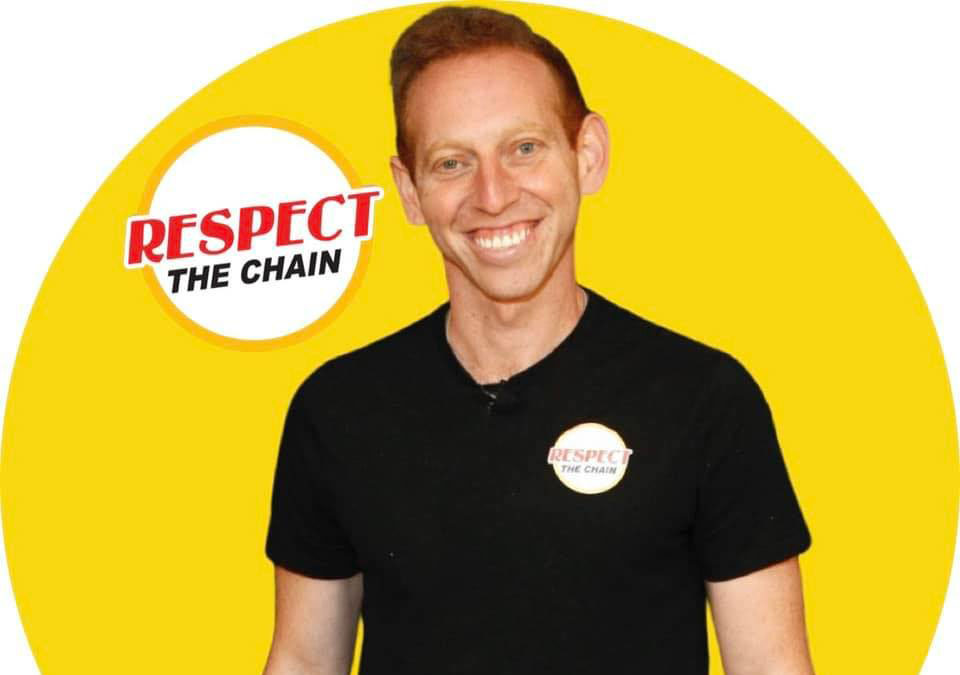
Sam E. Goldberg: Respect the Chain, Restaurants and Ratatouille

You have to really love food to create a food show. You also need to have a unique and personal take.

Sam E. Goldberg is the creator and host of “Respect the Chain,” a pop culture travel food show that dives into the stories behind America’s most iconic restaurant chains and the people – like Goldberg – who love them.

“Whether it’s Moe’s versus Chipotle, ketchup versus mustard, everybody’s got an opinion and everybody’s educated enough to discuss it,” Goldberg, who is team ketchup, told the Journal. “I put ketchup on my rice, I put ketchup on my eggs, I put ketchup on everything.”

An attorney who specializes in real estate law, Goldberg launched “Respect the Chain” about five years ago, during the pandemic. All the courts were shut down and he always wanted to host a food show, so he decided to give it a try.

“I started going to restaurants, ordering food and filming in my car,” Goldberg said. Once the restaurants started re-opening, he started filming in their kitchens, talking to chefs and trying new menu items. From the get-go, it was a lot of fun.

“It’s really a nice balance because, when you’re doing law, it’s extremely serious,” Goldberg said. “‘Respect the Chain’ is fun, it’s upbeat, you’re sharing passions.”

Goldberg is based in New York City, but loves traveling and exploring chain restaurants throughout the country and around the world.

“I love going to a chain … I like knowing that if I’m in Hawaii and I go to the Cheesecake Factory, it’s gonna taste the same as it does in New York,” he said. “So my friends would … never want to go to a chain restaurant; they’d say, ‘Sam, we can do better than that,” but my opinion was, ‘If it’s a chain restaurant, that means it’s good.’”

Goldberg always said to them, “Why don’t you respect the chain?” Hence, the title and concept for his show.

“My two top favorites are Cheesecake Factory and Panda Express,” he said. “If I’m traveling … you can’t do much better than an orange chicken, and then, the Cheesecake Factory is just a place [of] nostalgia.”

Cheesecake Factory was his high school and college haunt. Another favorite. Planet Hollywood, also evokes memories from his youth.

“For my bachelor party, I went to Orlando and I made everybody go to Planet Hollywood with me,” he said. “We all ordered the Captain Crunch chicken fingers.”

Goldberg also enjoys international chains, and seeing how they do things differently than their US versions: this applies to promotions, as well as the food they serve.

“Even McDonald’s Happy Meals are different from ours,” he said. Spain, for example, did an adult Happy Meal with “Friends” action figures as the toys.

Plus, there’s a trend on TikTok, um, where people who are traveling internationally, run to McDonald’s and KFC and film themselves going through the entire menu.

“Ironically enough, the menu items outside of America always seem better,” he said.

A recent “new” discovery for Goldberg is “Ratatouille,” the dish and the movie about the rat in Paris who becomes a chef, when he was at Disney World earlier this year.  Afterward, he got his mom’s recipe, which is below.

Growing up a Jewish New Yorker, Goldberg said a love of food is in his DNA. He’s a fan of New York delis – obviously – and he likes to share his Jewishness through his show. It’s especially important, since he remembers being a kid, wondering: where is all the Jewish stuff in the media?

“We had the Adam Sandler song, we had that one “Rugrats” episode for Passover, but that was pretty much it,” he said. “During the holidays, I always try to do Jewish episodes … If I’ve got a platform, I’m going to make sure everybody sees some Jewish content.”

When asked his favorite Jewish food, Goldberg again goes with a standard: matzo ball soup. He is also a fan of the pastrami Ruben at Katz’s deli. His bagel preference is a toasted raisin bagel with cream cheese. Nice, simple and easy.

“That’s why I like the chain restaurants, because you have a taste [and] you get to get that taste wherever you go,” he said.

Goldberg calls himself a creature of habit. And through his show, he makes being a creature of habit very entertaining.

Follow @RespectTheChain on TikTok, Instagram, Facebook and YouTube.

For the full conversation, listen to the podcast:

Watch the interview:

Ratatouille

Diana Sklarova/Getty Images

1 eggplant, sliced

1 zucchini, sliced

1 red bell pepper, diced

1 yellow bell pepper, diced

4 large ripe tomatoes, sliced

1 onion, chopped

3 tablespoons olive oil

1  large can crushed tomatoes

1 teaspoon salt

½ teaspoon black pepper

1 teaspoon dried thyme

1 teaspoon dried oregano

Garnish: Fresh basil leaves

In a large frying pan over medium heat, separately saute the eggplant, zucchini, peppers, onions and tomatoes in olive oil until they soften. While you can saute them together, it is better to do it separately, since they soften at different times.

Preheat the oven to 400°F (200°C).

In a small bowl, combine the crushed tomatoes, sauteed onion, salt, pepper, thyme and oregano. Mix  and then spread it evenly across the bottom of a baking dish.

In a circular pattern, alternate the eggplant, zucchini, bell peppers and tomatoes over the tomato base

Drizzle remaining olive oil over the top. Cover with foil or lid and bake for 30 minutes. Remove cover and bake an additional 15–20 minutes until vegetables are soft and edges are lightly caramelized.

Garnish with fresh basil and serve.


Debra Eckerling is a writer for the Jewish Journal and the host of “Taste Buds with Deb.Subscribe on YouTube or your favorite podcast platform. Email Debra: tastebuds@jewishjournal.com.

Sam E. Goldberg: Respect the Chain, Restaurants and Ratatouille Read More »

The Magic of Rebbe Meir Baal Haness

My husband Daniel and I were frantically searching our yard, looking for our Russian tortoise Hershel. 

Hershel had escaped before, just like our other tortoise, Mr. Tenenbaum. Tortoises, slow as they are, are actually incredible escape artists and also incredibly hard to find. They are small and blend into everything. I spent many a night in my early tortoise-owning years taking out a flashlight and looking under every car and plant within a three-block radius of my home in search of my little guys.  

But this time, Daniel and I had been prepared. We made sure there were no openings in our yard. We had a three-layer fencing system because we’d learned our lesson from previous escapes. 

Where was our tortoise? 

“Maybe someone stole him,” Daniel said, as we looked behind our trash cans for the third time that day.

“Come on,” I said. “Why would anyone steal a tortoise?”

We then knocked on our Israeli neighbor’s door and told her about our situation.

“Did you say the Rabbi Meir Baal Haness prayer for lost things?” she asked us.

“What’s that?” we said in unison.

“You say this prayer in honor of the rabbi, and you will find what you need. And remember to make a donation. Just Google him.”

We did, and lo and behold, we found the Rabbi Meir Baal Haness website. He was a disciple of Rabbi Akiva in the time of the Mishnah and the second most frequently mentioned sage in the text. The prayer you say when you lose something includes the lines, “God of [Rabbi] Meir, answer me! God of [Rabbi] Meir, answer me! God of [Rabbi] Meir, answer me!” You then donate money on the website, and that money is given to the needy. Hopefully, it works, and you find what you’re looking for.

Daniel and I both said the prayer and donated $18. We walked back to our house and looked again for Hershel, but no luck.

“We tried,” I said, dejected.

Just a few minutes later, I went back outside again and there was Hershel: right on the patio, where we’d looked a thousand times. 

“Daniel!” I yelled, excitedly. “It worked!” 

We both jumped for joy and thanked Hashem for helping us.

We would continue to use this prayer many times. 

Once, Daniel was out of town, and I was home with my two-year-old, who was getting into all the cabinets and moving things around. I couldn’t find my car keys one morning to take her to daycare. I started panicking, since I had no one else to drive her and I had to get to work. 

I searched every drawer and cabinet, looked under the bed and sofa and in between cushions, and even went outside to see if my keys had fallen somewhere. I was sweating profusely, crying, receiving texts from her teacher asking me when she was coming, work emails pouring into my inbox, and meanwhile, in the midst of all this, my daughter was yelling and continuing to turn things upside down. 

I then went on my local Jewish moms WhatsApp group, typed in, “Can anyone please help me drop my daughter at daycare?” and an angel of a mom came over in 12 minutes. With her help, I got my daughter to school two hours late. As I was leaving her car and thanking her, the mom put her hand on my shoulder and said, “It’ll be OK sweetie. Did you say the Rabbi Meir Baal Haness prayer?” 

“No, but I will,” I said, remembering it. “Thank you.”

I went on the website, found the prayer, recited it, and gave charity. 

I found my keys 15 minutes later. My daughter had put them under our dogs’ plastic water bowl. 

This last event was my biggest challenge yet: this past May, I was supposed to travel to the east coast to visit family. We planned our trip months ago. Daniel and our three kids were going to leave in a week, and, as luck would have it, Daniel’s driver’s license had expired. He promptly got a new temporary one, but the real one wouldn’t be sent in time for the flight. 

“We’ll just find my passport,” he said. “Then I can fly.”  

We moved to a new place nine months ago, and I thought I’d put all our passports in a certain drawer. I went through that drawer and nope, they weren’t there. 

I spent the next four days tearing apart our house, saying the prayer, and emailing the woman at the Rabbi Meir Baal Haness organization about our situation. She was so sweet – she kept checking in on me to see if I’d found the passports yet. 

“No luck,” I told her. “But I’m not giving up hope.”

I prayed so hard from week. I pleaded with Hashem. Our trip was coming up in three days, and stil, there was no sign of the passports. I asked my rabbi and our friends to pray for us.

One hour before Shabbat, I said to Daniel, “I have a feeling the passports are in the garage.”

We started going through random bags in the garage as I told him, “I am not giving up hope. I refuse. We will find our passports.”

After 40 minutes of looking, I zipped open some free canvas bag I’d gotten at an event, and there they were: all our passports, including Daniel’s.

I screamed my head off, “Thank you Hashem!” so the entire neighborhood could hear. I sent an overenthusiastic email to the woman at the Rabbi Meir Baal Haness organization thanking her. And you can bet I made a big donation. 

Miracles happen every day, but we have to be active participants in them. That’s what these trials and tribulations taught me: Never give up. Put in your effort, your hishtadlut. 

But at the same time, always have faith and trust. Then, you just might find what you’re looking for.


Kylie Ora Lobell is an award-winning writer and inspiring public speaker. You can find her on X @KylieOraLobell or Instagram @KylieOraWriter.

The Magic of Rebbe Meir Baal Haness Read More »

Hershey Felder Delivers a Night of Music, Memories, and Stories

The Los Angeles Jewish Film Festival, in partnership with Temple of the Arts and the Saban Theatre, hosted a special Memorial Day event that drew over 800. Acclaimed artist Hershey Felder performed his ‘Great American Songbook Sing-Along’ in a one-night-only appearance.

Felder knows his audience well and selected songs they grew up with — timeless classics like “Summertime” from “Porgy and Bess,” “Moon River” from “Breakfast at Tiffany’s and “What a Wonderful World” which was first recorded in 1967 by Louis Armstrong.

The audience, many in their 70s and 80s, sang along, often from memory, even when the lyrics weren’t projected on the big screen. The music transported them back in time to an era when melodies carried a magical, heartfelt charm.

Between songs, Felder shared stories behind the music and its composers — most of them Jewish — whose work remains beloved and instantly recognizable nearly a century after they were written.

He performed the music of some of the greatest American composers, including Irving Berlin, Leonard Bernstein, Stephen Sondheim and George and Ira Gershwin. Felder had a particularly special connection to George Gershwin, whom he portrayed in his acclaimed one-man show “George Gershwin Alone,” which he has performed over 3,000 times. The Gershwin heirs granted Felder access to the Gershwin Collection at the Library of Congress, allowing him to authentically capture Gershwin’s life and music.

Felder recounted how he was inspired to create his earlier show “Sing! A Musical Journey” after hearing a remarkable story from Holocaust survivor Helmuth Spryczer. As a 12-year-old in Auschwitz, Spryczer was forced to whistle “Rhapsody in Blue” for Nazi guards — he credits his familiarity with the piece, learned from records played by his parents in Berlin, with helping him survive.

Although the Gershwin estate initially hesitated to associate Gershwin’s music with the Holocaust, this powerful story became the emotional catalyst that ultimately gained their trust — leading to full permission for Felder’s portrayal of Gershwin on stage.

Felder is a great story teller and he loves collecting stories about his favorite composers and how they came up with their unforgettable songs or music compositions.

One such story was about Irving Berlin, who was born in Russia and immigrated to the United States in 1893. His family fled brutal pogroms and antisemitism, arriving in New York City when Berlin was about five years old. The family, struggling financially, settled on the Lower East Side. Berlin once complained to his mother about how difficult their lives were in the new country. In response, his mother told him how lucky they were to live in America and said, “God bless America.”

Years later, those words became the emotional foundation for God Bless America.” He originally wrote the song in 1918 while serving in the U.S. Army during World War I, but shelved it. He later revised it in 1938, as the world once again stood on the brink of war and it became the stirring patriotic anthem we know today.

Felder also prepared a special surprise to for the audience after telling them about his childhood crush.

“We were watching ‘The Sound of Music’ and I fell-in-love with the youngest Von Trapp children, Gretl. I immediately announced that I’m going to marry her,” Felder, who was a young boy at the time, said. Many years later, he received a text from a fan who wanted to meet him in Venice where he was staying.

The fan arrived to Venice with her husband but got completely lost in the canals. She called Felder who quickly went out to meet her and was surprised to discover it was Gretl Von Trapp — only grown up now. Actress Kym Karath and her husband became good friends with Felder.

Karath, now 66 years old, then came on stage to the delight of the audience. She joined Felder and the crowd in singing “Edelweiss,” one of the musical’s most beloved songs.

Felder, who resides in Florence, Italy, with his wife, Kim Campbell, former Prime Minister of Canada, told the audience that he recently suggested the idea of hosting a special screening to celebrate the 60th anniversary of “The Sound of Music.” After sharing the concept with Karath, she reached out to her fellow “Von Trapp” siblings, who quickly agreed to participate. Several of the original cast members are expected to attend, including Angela Cartwright (Brigitta), Debbie Turner (Marta), Nicholas Hammond (Friedrich), and Duane Chase (Kurt). The screening will be followed by a conversation with the former child actors.

The event is set to take place on July 5 at the historic Teatro Niccolini in Florence.

At the end of the enchanting evening, filled with stories and song, Felder shared his most personal story of all. His mother, Eva Surek Felder, was diagnosed with breast cancer in 1976.

“When they told her she had only six months to live, she said, ‘Over my dead body I won’t be at my son’s Bar Mitzvah,’” Felder recalled. True to her word, she lived to see him turn 13. “Right after, she began to decline. For the next eight months, until she passed, I was by her side. I played for her, we talked, we watched movies,” he said.

“She died on March 12, 1982 — six years to the day after her mastectomy,” Felder continued. “Just before she passed, she said, ‘Son, I know you want to be a musician and play for an audience, but when you do, from time to time, sing with them — and I’ll be there.’”

Felder’s voice cracked and his eyes filled with tears as he began to play the song his mother sang to him before she died:

Somewhere over the rainbow

Way up high

There’s a land that I heard of

Once in a lullaby…

Hershey Felder Delivers a Night of Music, Memories, and Stories Read More »

‘God Shall Be One’ — Pondering Judaism’s Perspective on Other Religions

When the Third Temple is built in Jerusalem, should there be a mosque next door? May gentiles keep Shabbat? And should Jews teach Torah to members of different faiths? In a new book, three Israeli scholars weigh in.

“God Shall Be One: Reenvisioning Judaism’s Approach to Other Religions,” co-written by Rabbi Dr. Yakov Nagen, Rabbi Sarel Rosenblatt, and Dr. Assaf Malach, is a product of Ohr Torah Interfaith Center. In the remarkably rich and highly readable volume, these scholars present a diverse array of traditional opinions regarding Judaism’s interactions with differing belief systems.

How to consider other religions from a Jewish perspective is, of course, no simple matter. The Bible is clear that Jews are God’s chosen people, and Christianity and Islam “seemingly co-opted [our] holiest text for their own ends,” the authors write. But some biblical sources seem to indicate validity to non-Jewish religious expression. Isaiah, for example, envisions a future era in which belief in one God is expressed through diversity, in which “Israel shall be the third with Egypt and Assyria, a blessing in the midst of the earth, which the Lord of Hosts conferred saying ‘Blessed be My people Egypt, My handiwork Assyria, and Israel My inheritance.’”

Post-biblical sources offer similarly complex teachings on the matter. One Talmudic dictum suggests that “a gentile who studies Torah is like the High Priest” while another Talmudic teaching forbids non-Jews from studying it. Additionally, the ancient Jewish sages believed that while of course non-Jews didn’t need to observe the Torah’s commandments, they did have to abide by certain baseline moral rules, known as the Noahide Laws.

Throughout the Common Era, murderous persecution of Jews by members of other faiths precluded feelings of fellowship toward their practitioners. Being objects of hatred and constantly accused of heresy hardly inspires one to seek frameworks for interreligious camaraderie. Starting in the Middle Ages, however, despite ongoing persecution, some major Jewish authorities offered suggestions for seeing positivity in the religious practices and beliefs of non-Jews.

Maimonides, the 12th-century Egyptian scholar, believed Christianity and Islam existed to pave the way for the Messianic Era through the knowledge of God they spread throughout the world. The 14th-century French sage Rabbi Menachem ben Solomon HaMeiri suggested that negative Talmudic teachings about other religions referred exclusively to pagans, not to those who believed in a transcendent God who taught moral behavior.

Fast forward a few centuries, and the 18th-century German Rabbi Jacob Emden and the 20th-century French-Israeli thinker Rabbi Yehuda Leon Ashkenazi viewed Christian and Islamic biblical texts, the book summarizes, as “not a threat, a distortion of the Truth, or the product of copyright infringement, but rather adjustments necessary for the national or ethnic character of their believers.” For the former Chief Rabbi of England, Lord Jonathan Sacks, “the multiplicity of faiths is not a tragedy but the gift of God, who is closer to us than we are to ourselves and yet lives in lives quite different from ours.” It is important, Rabbi Sacks stressed, to recognize “God’s image in someone who is not in my image, God’s voice when it speaks in someone else’s language.”

For the former Chief Rabbi of England, Lord Jonathan Sacks, “the multiplicity of faiths is not a tragedy but the gift of God, who is closer to us than we are to ourselves and yet lives in lives quite different from ours.” It is important, Rabbi Sacks stressed, to recognize “God’s image in someone who is not in my image, God’s voice when it speaks in someone else’s language.”

Still, caution is to be exercised in one’s interactions across faiths. The late 20th-century theologian Rabbi Joseph Soloveitchik, in a seminal essay titled “Confrontation,” ruled against interfaith dialogue, unless the topic of discussion was of universal concern. Humanitarian and cultural concerns were kosher to discuss, he felt. But not debating specific interpretations of chapter and verse.

The co-authors also weigh in with their personal perspectives. Rabbi Nagen believes that, in light of Isaiah’s articulation of God’s wish that “My house will be a house of prayer for all nations,” when the Messiah comes and the Temple is rebuilt, “this mountain must become a hub that connects the spokes of Judaism and Islam (and of other religions) … What better location than the Temple Mount and the Al-Aqsa Mosque is there to effect this unification?” 

With regard to Shabbat, the writers suggest a more exclusivist approach. After all, Nagen notes, “Shabbat carries special meaning for Jewish identity and separates Jews from the nations of the world … Shabbat is therefore part of the unique covenant between God and the Jewish people.”

The book ends with a pun on the pivotal verse in the Book of Esther. In the 14th verse of the fourth chapter, Mordecai asks the Jewish queen “And who knows but that you have come to your royal position for such a time as this?” The authors, emphasizing the key role the state of Israel can play in bridging faiths by spreading the Torah’s teachings worldwide, end by asking “Will fraternity between different religious communities around the world help us come together to overcome the hatred and racism and the bloodshed they lead to? Will Judaism and Torah scholars be a light for the nations and a blessing for all the tribes of humanity?” They answer with a rousing affirmation. “Action in this arena is neither a privilege nor an option,” they write. “It is part and parcel of who we are and our purpose in this world. Perhaps it is for this very reason that we have regained our national power on the world stage.”


Rabbi Dr. Stuart Halpern is Senior Adviser to the Provost of Yeshiva University and Deputy Director of Y.U.’s Straus Center for Torah and Western Thought. His books include “The Promise of Liberty: A Passover Haggada,” which examines the Exodus story’s impact on the United States, “Esther in America,” “Gleanings: Reflections on Ruth” and “Proclaim Liberty Throughout the Land: The Hebrew Bible in the United States.”

‘God Shall Be One’ — Pondering Judaism’s Perspective on Other Religions Read More »

Greta’s Shameful Libel

In The Brothers Karamazov, Dostoevsky’s classic novel of good and evil, we meet Father Ferapont—an old ascetic monk at the same monastery where Alyosha Dostoevsky is a novice.

Ferapont is a “great faster and keeper of silence” who is “brief, curt, strange, and almost always rude.”

Rather than associating with the other monks, he prefers solitude. And while throngs of pious townspeople come daily to seek wisdom and blessings from the monastery’s resident elder, Father Ferapont keeps a careful distance.

This is because he sees things that the other monks cannot.

For instance, as he tells a visitor, on a recent visit to the superior, he saw a devil sitting on a monk’s chest, “hiding under his cassock, with only his little horns sticking out.”

Another monk had a devil “peeking out of his pocket, looking shifty-eyed.”

Yet another monk had a devil “living inside him, in his unclean belly” and there was a fourth monk with a devil “hanging on his neck, clinging to him, and he was carrying him around without even seeing him.”

Where others saw holy men in their robes, Father Ferapont saw corruption and wickedness in the form of grubby, writhing demons. No wonder people thought of him as a killjoy and a crank.

To be Jewish these days is to find oneself in the unfortunate position of Father Ferapont—a witness to evils that those around us cannot—or will not—see.

The rest of the world looks at Swedish activist Greta Thunberg and sees a plucky, youthful heroine—someone utterly dedicated to being “on the right side of history” and fearless in her pursuit of a better world.

Jews see something different.

Shortly before being intercepted by Israel’s navy as she attempted to breach a military blockade with aid for Gazans, Thunberg recorded an appeal to the world:

“If you see this video, we have been intercepted and kidnapped in international waters by the Israeli occupational forces.”

The photos of the confrontation that ensued told a different story. Rather than being kidnapped, the activists aboard the “Freedom Flotilla” were given food and water before being towed to Ashdod and given comped flights back to Europe, excepting those who refused to consent to deportation, who will remain in Israeli custody for few more days.

As for the meager aid they had brought for the people of Gaza, they were assured that it would be transferred to a recognized aid distribution center.

This isn’t what a kidnapping looks like, and anyone who is confused about this is welcome to see for themselves—Hamas was considerate enough to hit “record” on their phones when they massacred their way through southern Israel in October of 2023, dragging hundreds of individuals—men, women, and children—back to Gaza with them.

Some of those individuals, like Hersh Goldberg-Polin, will never return because he was executed by his captors when they discovered that the IDF was drawing near. Others, like Shiri Bibas’ two young children Ariel and Kfir, were killed “by hand” by their captors for reasons that we’ll never know, and would never understand even if we did.

Among those that have survived this kidnapping, some have been returned to Israel, while others still languish in captivity—their fates uncertain.

Greta’s fate was easier to predict—a safe trip home and a hero’s welcome.

And while she continues to claim that she was kidnapped, her mother need not count off the days with numbers scrawled in sharpie on scraps of masking tape. Her father need not take to the streets with a sign beseeching the world to bring her home.

The activists who remain in Israel are calling on the world to demand their release, as if they aren’t the ones who have refused to consent to their own release. This is absurd, but it’s working.

For a lie about Israel to take hold, it need not be convincing. It simply needs to be said. And now that Greta has claimed to be a victim of kidnapping, this libel is going viral on social media—gobbled up and repeated by credulous Israel haters.

The Jewish world has been through quite a lot in the past two years. By all accounts, I ought to be desensitized by now, but Greta’s choice of words struck me, shocked me, filled me with rage, and very nearly pushed me to tears.

I wasn’t alone. Pro-Israel influencer Elica Lebon was also knocked off-center by Greta’s statement. “I have said that nothing surprises me anymore,” she said on Instagram, “but sometimes I stand corrected.”

Perhaps the reason we’re shocked is the fact that this act of cruelty and callousness—playacting “kidnapped” while Israeli hostages still sit in dank Hamas tunnels—was uttered by someone who much of the world regards as a saintly paragon of moral leadership.

If I were not Jewish, I would likely think of her this way as well. As a gay liberal from New England, I would associate her with the fight against climate change and I would regard her work with the Freedom Flotilla in a positive light. If I heard that she had been kidnapped by the Israelis, I would have no reason to disbelieve her.

And it’s not just Greta.

The rest of the world hears the term Red Cross and thinks of virtuous nurses providing care in wartime. Jews, on the other hand, have been forced to confront the shameful antisemitic history of the Red Cross—a legacy which continues to this day. It wasn’t long ago that they shamed hostage families for being inadequately focused on the wellbeing of Palestinians in their activism to rescue their kidnapped loved ones.

The rest of the world hears of UNRWA and imagines an aid organization, educating and feeding the beleaguered Palestinians of Gaza. Jews, on the other hand, know that UNRWA staffers have been systematically involved in Hamas’ crimes against humanity at every level, including participation in the October 7th invasion and holding Israeli hostages in their homes.

The rest of the world thinks of the UN as the great safeguard of postwar cooperation and peace. Jews see something different—a corrupt organization that has been captured by bad actors and repurposed as a tool of diplomatic and legal warfare against the world’s only Jewish state.

To sound the alarm on evils that no one around you can see—or that no one around you is interested in seeing—is a demoralizing enterprise. Greta’s bitter libel will spread while columns like this one will likely be read only by my fellow Jews. No wonder Father Ferapont kept to himself. No wonder he was perpetually in a foul mood.

But it is not the Jewish way to sit around and obsess over demons. Our path is not one of asceticism or retreat from the world, but rather to engage with the world and bless it.

On days like these, this feels like a difficult ask. It is. But while it is not on us to master this work, neither are we free to desist from it.


Matthew Schultz is a Jewish Journal columnist and rabbinical student at Hebrew College. He is the author of the essay collection “What Came Before” (Tupelo, 2020) and lives in Boston and Jerusalem.  

Greta’s Shameful Libel Read More »

Carville, Jews and Money

Democratic strategist James Carville would not appreciate being compared to Republican president Richard Nixon. But apparently Carville and Nixon have at least one thing in common: antisemitic views concerning Jews and money.

In a June 4 podcast, Carville railed against really wealthy Jewish fundraisers” who have told him they will no longer make donations to Columbia University, because of the rising antisemitism there. But according to Carville, the real reason for the Jewish donors’ position is quite different. He said he has admonished them, “No, you just want your [expletive] tax cut now’.”

Apparently Carville believes those Jewish donors support the Trump administration’s actions against Columbia because the president is proposing tax cuts from which they would benefit. Carville did not present any evidence to support his claim.

Fifty-four years ago, President Nixon expressed somewhat similar sentiments about Jews and money. In tape-recorded White House conversations in 1971, Nixon instructed his senior aides to have the Internal Revenue Service investigate “big Jewish contributors” to the Democratic Party.

The “rich Jews” were “stealing in every direction,” Nixon asserted, evidently assuming that since those Democratic donors were Jews, they must be cheating on their taxes or engaging in some other financial misbehavior.

Ugly claims about Jews and money became widespread in the Middle Ages. Employment restrictions that were imposed on Jews in Europe forced some of them to become money lenders; antisemitic borrowers who failed to repay their loans then found Jews to be convenient scapegoats. Shakespeare solidified the stereotype with his notorious depiction of the Jewish money lender Shylock, who demanded a “pound of flesh” from a client who defaulted on a loan.

Bigotry has never been limited by borders. Antisemitic slurs about Shylocks and Jewish financial practices long ago spread far beyond Europe and the United States. In recent decades, they have been featured prominently in the propaganda arsenal of the Palestinian Authority.

Raymonda Tawil,  Yasir Arafat’s longtime adviser (and mother-in-law) once claimed that Israel’s tax policies in Arab-populated regions reflect “the Jewish money-lender’s mentality.”

On official PA Television in 2014, self-described journalist Akram Attalah claimed that Israel was using its search for three kidnapped teenagers as an excuse to harm Arabs. “Israel is a state that seizes opportunities in the style of Shylock, and it knows how to seize opportunities,” Atallah said.

Mahmoud al-Assadi, who is currently the PA’s consul general in Saudi Arabia, likewise has invoked the Bard to attack the Jews. In an op-ed circulated by Fatah, the PA’s ruling faction, in 2018, al-Assadi wrote: “The greatest playwright, William Shakespeare, correctly described the deceitful, greedy, trickster, extortionist, and lowly character of the Jews in the story The Merchant of Venice in the 16th century.”

Yahya Rabbah, a regular columnist for the official PA daily newspaper Al-Hayat Al-Jadida, has suggested a more convoluted connection between Shylock and Israel. After comparing Prime Minister Benjamin Netanyahu’s agreements with his political allies to the bargaining tactics of Shylock, Rabbah wrote that “there is one essential difference [between Netanyahu and Shylock], which is that the modern Shylock doesn’t lend to anyone, but rather owes everyone—without exception—his ability to survive.”

In the PA’s eyes, however, it is not Netanyahu alone who resembles Shylock, but all Jews, as PA chairman Mahmoud Abbas made clear in an infamous speech two years ago.

Addressing the 11th session of Fatah’s Revolutionary Council, on August 24, 2023, Abbas offered this antisemitic history lesson: They say that Hitler killed the Jews for being Jews and that Europe hated the Jews because they were Jews. Not true. [Europeans were hostile to  Jews] because of their role in society, which had to do with usury, money, and so on and so forth.”

(Translations courtesy of Palestinian Media Watch and MEMRI.)

While separated by continents, decades and political philosophies, Abbas, Carville, and Nixon nevertheless are linked by common gutter sentiments about Jews—and by the failure of their political allies to take them to task for their bigotry.


Dr. Medoff is founding director of The David S. Wyman Institute for Holocaust Studies and author of more than 20 books about Jewish history and the Holocaust. His book The Road to October 7: Hamas, the Holocaust, and the Eternal War Against the Jews will be published on October 1, 2025, by The Jewish Publication Society / University of Nebraska Press.

Carville, Jews and Money Read More »

“A Kind of Jew They Didn’t Know Existed”

If you’ve ever wondered what it was like to work as a Jewish district attorney in Soviet Ukraine during the post-Stalinist era, now’s your chance to find out. Marat Grinberg, a scholar of Russian and Jewish literature, culture and film at Reed College, has expertly translated the memoirs of his grandfather, Mikhail Goldis (1926-2020), who worked as a district attorney and detective in Ukraine for three decades and wrote his memoirs in the U.S. in the early 1990s.

The book is comprised of chapters devoted to different cases that Goldis is expected either to solve or preside over. In most instances his voice is technical; he plays the part of an observer rather than a critic. It’s clinical in some instances rather than passionate, but every scene to which he bears witness and every conversation in which he engages is worthy of attention. Each story is quickly engaging and often makes a profound or revelatory comment on the nature of being Jewish not only in the Soviet Union but also in the world in general.

It’s an interesting position to be in: a Jewish district attorney in Soviet Ukraine, a place known not for elevating Jews to important positions, but for massacring them at worst or suppressing Jewish life at best over the centuries. The history of the region is littered with instances of mass casualties of Jews and examples of repression. During the Cossack-Polish war of the mid 1600s, thousands of Jews were killed or taken captive. In 1821 there were anti-Jewish riots in Odesa—the beginning of anti-Jewish pogroms that would become a normal part of life in the region. During World War II over one million Soviet Jews were killed mostly in Ukraine because they resided in the Pale of Settlement, where they had been conveniently gathered by Catherine the Great in 1791. And the suppression of Jewish life and rampant antisemitism in the Soviet Union is well known. It’s no surprise that between the 1950s and early 1990s the majority of Jews left for places like Israel and the U.S.

But here, in this context, we have Mikhail Goldis: a Jew in a position of (somewhat) power. We learn, consequently, what it was like for a Jewish man to navigate the institution of Soviet authority. In some cases, it is not Goldis himself who demonstrates this but the object of his surveillance.

In Chapter 8, “A Mistaken Object,” Goldis describes a collective complaint that he investigates. Twelve contractors—a group of criminals—building a cement plant claim the foreman, Nikolai Rozbam (a Jew, despite the notably non-Jewish first name), assaulted one of their men, “beat him savagely and relentlessly.” The examination confirms that the victim was indeed beaten in this way. With no preliminary investigation, criminal proceedings against Rozbam are begun. Goldis, who knew Rozbam previously, remembers that he would often get in drunken fights, but can’t help but “admire his bravery, youthful exuberance, and athletic appearance.”

The admiration is prescient. It turns out that the contractors had attempted to force Rozbam to cheat the system and thereby raise their wages. When Rozbam refused, one of the contractors said: “Guys! He’s just a Jew! … Just an ordinary little Yid. We can break him in two seconds. These Yids are cowards—they’re like bunnies. I’ve seen them.” They devise a plan to threaten him with violence if he won’t do as they asked. But Rozbam ultimately outsmarts them and agrees to fight one of the men, knowing that he will emerge the victor. The two fight in the cellar and when Rozbam drops the men’s “defeated idol at their feet,” he follows it with, “The lunch break is over.”

The story reveals what we have known all along: there is always another version of the story. A man who has a history of drunken fights is not necessarily the perpetrator of this fight, though he is in fact the victor. But it is Goldis’s insight on the outcome that is most crucial: “They chose a Jew as their object because they thought Jews were weak. That’s the lie their environment had fed them their whole lives. But they tangled with someone very different—a kind of Jew they didn’t know existed. One who was strong in body and spirit; a man with pride and guts.”

But they tangled with someone very different—a kind of Jew they didn’t know existed. One who was strong in body and spirit; a man with pride and guts.”

What remains unsaid here is what echoes most loudly: Jews are not weak. But it is not so much a statement as an aspiration. At the end of the previous chapter, which incudes a man accused of antisemitism (an accusation that was an “imperialist slander” given that the official position of the government was that there was no antisemitism in the Soviet Union) and a “proud Jewish kid who had defended his human dignity,” Goldis asks, “But what about me? How many times was I humiliated and dishonored just for being a Jew? And did I hit them in their hateful mugs? Did I say ‘How dare you!’ to any of them? Thank you, my fellow Jew, for giving me this lesson.”

Goldis may be in a position of modest authority, but while as a detective in the district attorney’s office he is entitled to a phone at home, “like many other privileges, [he] never got one.” And despite his success in his profession, he is at one point summoned to see his boss, who says that he has received a directive from the regional party committee to remove Goldis from his position because he is a Jew. They were “administering their policy of frenzied antisemitism.” He ultimately keeps his position, but the message is clear. It’s no wonder that his observations of tough Jews seem to impact him to such a degree.

As is the case with many Jews who lived within the Soviet regime, Goldis’s identity was complex: Soviet, Russian, Ukrainian, and Jewish. His parents were party members but still spoke Yiddish in private: a rebellion to say the least. But they also rebelled against their rebellion by rejecting the traditions of Judaism. Mikhail Goldis was named after Mikhail Frunze, who was a Bolshevik civil war hero. His grandmother would “walk through her neighborhood on Yom Kippur waving a pork sausage in protest.” It would seem that a history of contradictions is what coalesces in the memoirs of Goldis. He grew up at a sugar plant where there were few Jews, and consequently did not speak Yiddish himself. Perhaps he was more “intimately familiar with Ukrainian rural life,” and language, which was a benefit to him during his career as a detective and district attorney.

Previous to his career, he fought in battle and was wounded in 1944 near the Lithuanian city of Siauliai. In the hospital where he recovered, he experienced antisemitism for the first time. He began to sing along with the other soldiers, Russian and Ukrainian songs, and the nurse snapped at him: “You cannot be singing our songs. You’re a Jew.” As Goldis notes, antisemitism in the Red Army was not uncommon. It was the rule rather than the exception.

I can’t help but think continually of the idea of “a kind of Jew they didn’t know existed.” Many of Goldis’s stories are set in the early 1960s, before the Six-Day War of 1967, in which Israel proved that Jews are not weak, that they are “strong in body and spirit,” and that they have “pride and guts.” But some of his stories are set after this war of proof, in a time when it should no longer be necessary to prove such things. And yet it was, it is. But the paradox is this: When the Jewish people, long criticized for being weak, shed their weakness and vulnerability in exchange for strength and force, they continue to be criticized. It is an inescapable accusation. I think, after all is said and done, that I would prefer to be “a kind of Jew they didn’t know existed.”

“A Kind of Jew They Didn’t Know Existed” Read More »

Brotherhood, Belonging, and Becoming: Why Jewish Men Need a Retreat Now

Several months ago I was going through a rough patch, wrestling with the grief of lost love, resting anxiety that I’ve had most of my life, feelings of low self-worth, and guilt over parenting failures. Talk about a cocktail of stress and emotion! To make it worse, I fell into an old personal trap of trying to figure it out on my own. Despite isolation being a comforting habit, I knew that it wasn’t going to help me move past my problems. But then I got a text message from a friend. It was simple and from the moment I received it I knew it was communicated sincerely. He wrote, “How are you doing, brother?” and that changed everything for the better.

Too many men in the Jewish community are quietly holding it all together—shouldering responsibilities, showing up for others, and suppressing the very feelings that make them human. They’re partners, fathers, sons, caretakers, providers and leaders. But rarely are they offered the space to be vulnerable, to reflect, to rest, and to reconnect with themselves and each other. A men’s retreat is not a luxury—it’s a lifeline. And for the Jewish men of Southern California, that lifeline is long overdue.

The need for emotional support, deep friendship, and spiritual grounding among men is more urgent than ever. According to a 2021 report by the Survey Center on American Life, friendship among American men has been declining steadily for decades, with 15% of men saying they have no close friends at all—a fivefold increase since 1990. The U.S. Surgeon General’s 2023 Advisory on the Healing Effects of Social Connection named loneliness as one of the most serious public health threats of our time. And while loneliness doesn’t discriminate by gender, men are statistically less likely to seek help or even admit they are struggling.

The consequences ripple outward. When men are isolated, emotionally overwhelmed, or cut off from meaningful relationships, it doesn’t only affect them. It affects their partners, their children, their coworkers and their communities. Families suffer when fathers and husbands are silently burdened. Communities suffer when men are disconnected from their emotional and spiritual lives. In an era of rising antisemitism and uncertainty, Jewish men also need spaces to process fear, strengthen identity, and build spiritual resilience. When the world feels unstable, the strength we build in each other becomes a powerful act of resistance.

That’s where a Jewish community men’s retreat comes in—not as a break from real life, but as a return to it. A return to wholeness, to connection, and to purpose.

Rooted in the wisdom of Jewish tradition and the latest understandings of men’s mental health and emotional development, a retreat offers something men desperately need but rarely receive: space. Space to be honest. Space to be still. Space to be with other men in meaningful conversation, prayer, movement and study. Jewish life teaches that we are not meant to walk alone. “Aseh lecha rav, u’kneh lecha chaver”—Make for yourself a teacher and acquire for yourself a friend (Pirkei Avot 1:6). Whether through the rituals of hevruta (study partners), mentorship or communal learning, Jewish masculinity has always found strength in sacred relationships.

Imagine a weekend where men gather in the natural beauty of Southern California to breathe, to talk, to reflect. Where they leave behind their to-do lists and expectations and come together not to compete, but to connect. Imagine sessions on fatherhood, grief, partnership, aging, vulnerability and joy. Imagine soulful Shabbat dinners, spirited song, and quiet time for walking, reflecting and rediscovering what it means to be a Jewish man in today’s world.

Imagine a weekend where men gather in the natural beauty of Southern California to breathe, to talk, to reflect.

The benefits of such a retreat aren’t just personal—they’re generational. When men learn to open their hearts and build deeper relationships, their families thrive. Children get fathers who are more emotionally available. Partners get men who are more grounded, present and honest. Communities gain leaders who embody Jewish values not only in action, but also in intention and empathy.

This vision is at the heart of a new men’s retreat being planned for the Southern California Jewish community—an initiative supported by the Federation of Jewish Men’s Clubs (FJMC), which is approaching its 100th anniversary. As it enters its second century, the FJMC is embracing a bold, contemporary mission: to help Jewish men lead fuller, more connected lives. Not just as members of clubs, but as fathers, brothers, seekers and spiritual leaders in their own right.

The retreat is part of a wider movement—reclaiming Jewish masculinity as something emotionally alive, spiritually attuned, and deeply relational. In an age when masculinity is either vilified or left unexamined, the Jewish tradition offers something more grounded and enduring: a model of responsibility, humility, compassion, and resilience. When Jewish men gather in a supportive community, they don’t just change themselves. They change the world around them.

This retreat is an invitation: to breathe, to belong and to become. Brothers, I hope you will join me. Click here to register for the retreat.


Rabbi Noam Raucher leads the Federation of Jewish Men’s Clubs as Executive Director, cultivating a brotherhood grounded in Jewish values, emotional openness, and ethical leadership. His work explores what it means to be a Jewish man today.

Brotherhood, Belonging, and Becoming: Why Jewish Men Need a Retreat Now Read More »

The Jerusalem Declaration on Antisemitism (JDA) and the One-Sided Perception of Palestinians

It is generally known that the creators of this definition of antisemitism called “The Jerusalem Declaration on Antisemitism” (JDA) are part of the global left and have friends and supporters in Germany, for example at the Center for Antisemitism Research in Berlin. Israeli researcher Gerald Steinberg as early as 2023 emphasized that the JDA absolves Nazi comparisons and anti-Zionism from antisemitism. This was easy to see when the President of the Technical University of Berlin liked a picture of Israeli Prime Minister Netanyahu with a swastika painted on it on X in 2024. This was followed by a conversation with the antisemitism officer at TU Berlin. What it was about remains unclear, but the liking cannot have been the topic, as the ZfA in Berlin is the main player in promoting JDA in Germany and does not shy away from putting polarizing and questionable narratives into the world, such as “A declared love of Israel often goes hand in hand with Islamophobia” or that “Free Palestine” depends on the context and can also be read as a free Palestine with equal rights for everyone between the river and the sea.

This is not only simply wrong, but also demonstrates very well how little knowledge of Palestinian history or exchange with critical Palestinians there is. Free Palestine is clearly the desire of the majority of Palestinians—from an Islamic as well as a pan-Arab perspective—for a Palestine in which a Jewish state does not exist, which is denied any right to exist or historical connection to the land.

The JDA cannot be viewed in isolation from other activist initiatives that have been promoted in recent years by Holocaust and genocide research, Jewish Studies or antisemitism research and that claim to argue from a pro-Palestinian perspective.

There is the “catechism debate,” also known as Historikerstreit 2.0, initiated by Australian genocide researcher A. Dirk Moses, who in his concept of “permanent security” (in short: an anti-Western concept that uses the instruments of war crimes, crimes against humanity and genocide to guarantee security at the expense of the global South) invokes the protective assertions made in court by SS-Gruppenführer and commander of Einsatzgruppe D, Otto Ohlendorf. German courts already rejected this line of argumentation in the first Einsatzgruppen trial in Würzburg in 1950 (!) because it is what it is: a protective claim that distracts from enforcing a murderous ideology.

Then there was “Elephant in the Room,” published in the summer of 2023, which is well-intentioned and positive in terms of the idea, especially against the backdrop of a far-right government in Israel. However, here too the state of Israel is criticized unilaterally and seen as the reason why there is no peace between the Jordan River and the Mediterranean Sea. At the same time, the so-called “We Want to Live” protests took place in Gaza, demonstrations against Hamas that, unlike this petition, received no media attention whatsoever.

And then, precisely from this circle of activist researchers who see themselves as critical, comes the prayerful repetition of opinions whose deeply anti-Israeli argumentative core briefly states (my summary) that the dominant memory of the Holocaust clouds the view of other mass crimes in history; antisemitism is a form of racism (it is not); the dominant memory of the Holocaust is “responsible” for the fact that colonial crimes, especially during the first German genocide in German South-West Africa (now Namibia), have no place in the German discourse of remembrance. The assumed solution is therefore a “multidirectional remembrance” (as suggested by scholar Michael Rothberg), which actually does what has already been part of everyday life at the grassroots level in memorial sites or memorial initiatives for many years, but has perhaps not yet reached parts of the ivory tower. Furthermore, the JDA ensures that Gaza can be compared to the Warsaw ghetto or a concentration camp, which is a blatant refusal to engage with Gaza, where a two-tier society exists in which membership with Hamas determines one’s social advancement and future opportunities. Moreover, it deeply ignores the fact that antisemitism was the root cause of the Holocaust.

“Pro-Palestinian” encampments at universities and colleges worldwide—often glorifications of terror—have been set up out of “concern” for Palestinians (Federal Press Conference in May 2024), although it has been clear for more than a year that these are also specifically funded by the Islamic Republic of Iran. And if it were not for the pervasiveness of collective guilt in Germany, Germans would also claim that the war with Gaza is a genocide. The fact that this is the first genocide in history in which the victims have the capacity to end the suffering at any time (release hostages, lay down arms and surrender unconditionally), does not interfere with this view. It is always inherent in this positioning to attack recognized scientific definitions, but not really to improve them. And it is actually the founding of the state of Israel that is the problem, because it led to the Nakba. This is why the “Genocide and Holocaust Studies Crisis Network” is a new activist network among academics that is promoting these empirically unsubstantiated positions and new definitions, including in a predominantly ahistorical step, defining the Nakba as a mass crime without taking into account the historical genesis of this term and its definition in Palestinian society. It is not difficult to recognize the signature of an Israeli, anti-Zionist perspective here, which prefers to see Israel dissolved as a Jewish state rather than Palestinians as subjects of history. In addition, this view also propagates the thesis of the “victims of the victims,” that simplicist historical perspective of the “decades-long shared history of violence between the two peoples.” The ethnic cleansing in Arab countries, where almost no Jews live today, in the course of the founding of the state of Israel is always ignored.

Inherent in all these “new” definitions, perspectives and explanations are two things. First, they are dependent on the Holocaust, because without it the theses and theories are not publicly effective. They downplay or redefine antisemitism.

Second, they do not perceive Palestinians as actors in history, but see them one-sidedly as helpless victims without agency. Meanwhile, it is the same circle of antisemitism, Holocaust and genocide researchers who speak of a genocide or a scholasticide in Gaza, but not only uncritically take any information published by Hamas, but also adopt a simplistic view of Palestinians that is not progressive, but has for decades unilaterally defined Palestinian terror as legitimate resistance and has zero criticism of Palestinian leadership, decisions, mistakes and political statements. This defines the state of Israel as the root of all evil in the Middle East, and also does not do justice to Palestinians. Even the massacres of Oct. 7, 2023 in southern Israel, which are almost identical to those perpetrated by the Islamic State, are reinterpreted, like so much that now calls itself “progressive”: In the words of Omer Bartov, “The despicable attack by Hamas must be seen as an attempt to draw attention to the plight of the Palestinians.” Criticism of this view is defamed, ignored, blocked or deleted.

Since Oct. 7, however, Palestinian activists in the diaspora have also been speaking out. Despite the danger to life including that of their families, they are taking a third path beyond polarizing narratives instead of the “resistance narrative.” They speak about the torture, murders, abuse and oppression of civilians in Gaza by Hamas and its supporters, which are ignored by aforementioned academics who are progressive in their self-perception. These critical Palestinian positions, which are aimed at peace, are only slowly finding their way into the political discourse, as they contradict the common, one-sided narrative in the Middle East (“Israel is always to blame”).

Why are there such low to zero expectations of Palestinians? And why are Palestinians critical of Hamas not included in the pro-Palestinian discourse? In March 2025, Hamza Abu Howidy, peace activist from Gaza (fled in August 2023) was a guest in Berlin-Pankow, as always only possible under police protection. Together with Israeli Shay Dashevsky, he is fighting for new perspectives.

Why are there such low to zero expectations of Palestinians? And why are Palestinians critical of Hamas not included in the pro-Palestinian discourse?

Abu Howidy asked the understandable question of why he had to hide when hatred of Israel and glorification of terror are the order of the day on the streets outside. There was no answer. Another example is Ahmed Al Khatib from Gaza, who lives in the U.S. and founded “Realign for Palestine,” a forward-looking initiative, despite his own family losses in the war in Gaza. He belongs to a self-critical generation of Palestinians who want to take a new path. This generation questions a discourse that has dominated Palestinian society and the diaspora for decades, and whose rule is always: “Israel is always to blame.” Unlike the initiators of the JDA, they want to criticize Palestine and therefore do not have to defame or demonize the state of Israel. They also do not want to dissolve or destroy it, but are denigrated as “Zionists” precisely because of this. There are more of them. Another example is the medical doctor and political scientist Huthifa Al Mashhadani, director of the German-Arab School in Berlin and chairman of the German-Arab Council. He advocates peace with Israel and is threatened and vilified for this.

They are all breaking their silence in favor of a new discourse that does not manifest the Middle East conflict, but offers no solutions other than those that correspond to anti-Zionist Israelis, who are the only ones who are so readily heard in Germany because of their one-sided criticism of Israel. These anti-Zionist positions have so far refused to discuss or include critical Palestinian perspectives in the discourse.

This was shown by the recent example of the philosopher Omri Böhm. Israeli, Jewish anti-Zionists are welcome guests in Germany, as is the historian Amos Goldberg or the political scientist Bashir Bashir, as well as the dominant voice of Holocaust researcher Omer Bartov when it comes to the alleged genocide in Gaza.

The critical Palestinian-Arab and Arab voices clearly show that there is no need for a “Jerusalem Declaration” that supposedly wants to combat antisemitism (which only ever comes from the right, according to them) but at the same time opens the door to it. These critical Palestinian and Arab voices do not defame Palestinians one-sidedly, as is popular among some (Israeli) anti-Zionists with a connection to Israel. Rather, they criticize Israel without resorting to antisemitic slurs and stereotypes.

Aren’t they the real progressives, as they build bridges between decades of polarizing discourse?


Dr. Verena Buser is an associate researcher of the Holocaust Studies Program at Western Galilee College, Israel and lives in Berlin.

The Jerusalem Declaration on Antisemitism (JDA) and the One-Sided Perception of Palestinians Read More »