
When the Third Temple is built in Jerusalem, should there be a mosque next door? May gentiles keep Shabbat? And should Jews teach Torah to members of different faiths? In a new book, three Israeli scholars weigh in.
“God Shall Be One: Reenvisioning Judaism’s Approach to Other Religions,” co-written by Rabbi Dr. Yakov Nagen, Rabbi Sarel Rosenblatt, and Dr. Assaf Malach, is a product of Ohr Torah Interfaith Center. In the remarkably rich and highly readable volume, these scholars present a diverse array of traditional opinions regarding Judaism’s interactions with differing belief systems.
How to consider other religions from a Jewish perspective is, of course, no simple matter. The Bible is clear that Jews are God’s chosen people, and Christianity and Islam “seemingly co-opted [our] holiest text for their own ends,” the authors write. But some biblical sources seem to indicate validity to non-Jewish religious expression. Isaiah, for example, envisions a future era in which belief in one God is expressed through diversity, in which “Israel shall be the third with Egypt and Assyria, a blessing in the midst of the earth, which the Lord of Hosts conferred saying ‘Blessed be My people Egypt, My handiwork Assyria, and Israel My inheritance.’”
Post-biblical sources offer similarly complex teachings on the matter. One Talmudic dictum suggests that “a gentile who studies Torah is like the High Priest” while another Talmudic teaching forbids non-Jews from studying it. Additionally, the ancient Jewish sages believed that while of course non-Jews didn’t need to observe the Torah’s commandments, they did have to abide by certain baseline moral rules, known as the Noahide Laws.
Throughout the Common Era, murderous persecution of Jews by members of other faiths precluded feelings of fellowship toward their practitioners. Being objects of hatred and constantly accused of heresy hardly inspires one to seek frameworks for interreligious camaraderie. Starting in the Middle Ages, however, despite ongoing persecution, some major Jewish authorities offered suggestions for seeing positivity in the religious practices and beliefs of non-Jews.
Maimonides, the 12th-century Egyptian scholar, believed Christianity and Islam existed to pave the way for the Messianic Era through the knowledge of God they spread throughout the world. The 14th-century French sage Rabbi Menachem ben Solomon HaMeiri suggested that negative Talmudic teachings about other religions referred exclusively to pagans, not to those who believed in a transcendent God who taught moral behavior.
Fast forward a few centuries, and the 18th-century German Rabbi Jacob Emden and the 20th-century French-Israeli thinker Rabbi Yehuda Leon Ashkenazi viewed Christian and Islamic biblical texts, the book summarizes, as “not a threat, a distortion of the Truth, or the product of copyright infringement, but rather adjustments necessary for the national or ethnic character of their believers.” For the former Chief Rabbi of England, Lord Jonathan Sacks, “the multiplicity of faiths is not a tragedy but the gift of God, who is closer to us than we are to ourselves and yet lives in lives quite different from ours.” It is important, Rabbi Sacks stressed, to recognize “God’s image in someone who is not in my image, God’s voice when it speaks in someone else’s language.”
For the former Chief Rabbi of England, Lord Jonathan Sacks, “the multiplicity of faiths is not a tragedy but the gift of God, who is closer to us than we are to ourselves and yet lives in lives quite different from ours.” It is important, Rabbi Sacks stressed, to recognize “God’s image in someone who is not in my image, God’s voice when it speaks in someone else’s language.”
Still, caution is to be exercised in one’s interactions across faiths. The late 20th-century theologian Rabbi Joseph Soloveitchik, in a seminal essay titled “Confrontation,” ruled against interfaith dialogue, unless the topic of discussion was of universal concern. Humanitarian and cultural concerns were kosher to discuss, he felt. But not debating specific interpretations of chapter and verse.
The co-authors also weigh in with their personal perspectives. Rabbi Nagen believes that, in light of Isaiah’s articulation of God’s wish that “My house will be a house of prayer for all nations,” when the Messiah comes and the Temple is rebuilt, “this mountain must become a hub that connects the spokes of Judaism and Islam (and of other religions) … What better location than the Temple Mount and the Al-Aqsa Mosque is there to effect this unification?”
With regard to Shabbat, the writers suggest a more exclusivist approach. After all, Nagen notes, “Shabbat carries special meaning for Jewish identity and separates Jews from the nations of the world … Shabbat is therefore part of the unique covenant between God and the Jewish people.”
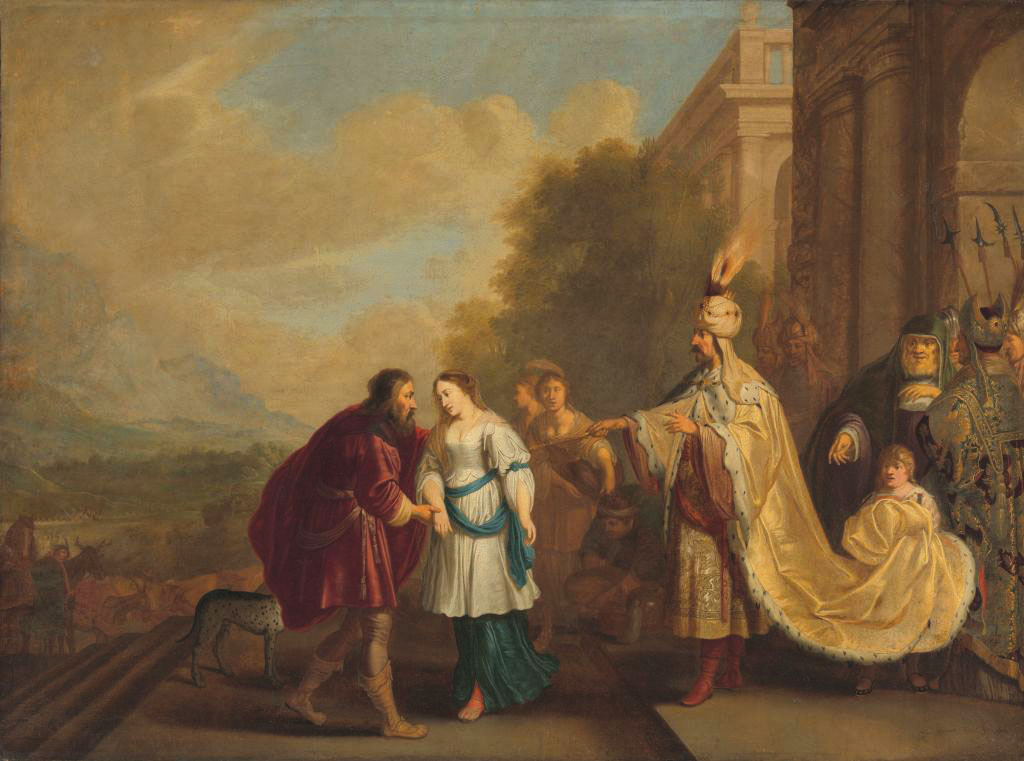
The book ends with a pun on the pivotal verse in the Book of Esther. In the 14th verse of the fourth chapter, Mordecai asks the Jewish queen “And who knows but that you have come to your royal position for such a time as this?” The authors, emphasizing the key role the state of Israel can play in bridging faiths by spreading the Torah’s teachings worldwide, end by asking “Will fraternity between different religious communities around the world help us come together to overcome the hatred and racism and the bloodshed they lead to? Will Judaism and Torah scholars be a light for the nations and a blessing for all the tribes of humanity?” They answer with a rousing affirmation. “Action in this arena is neither a privilege nor an option,” they write. “It is part and parcel of who we are and our purpose in this world. Perhaps it is for this very reason that we have regained our national power on the world stage.”
Rabbi Dr. Stuart Halpern is Senior Adviser to the Provost of Yeshiva University and Deputy Director of Y.U.’s Straus Center for Torah and Western Thought. His books include “The Promise of Liberty: A Passover Haggada,” which examines the Exodus story’s impact on the United States, “Esther in America,” “Gleanings: Reflections on Ruth” and “Proclaim Liberty Throughout the Land: The Hebrew Bible in the United States.”