fbpx

April 30, 2025

Table for Five: Tazria-Metzora

One verse, five voices. Edited by Nina Litvak and Salvador Litvak, the Accidental Talmudist

And the Lord spoke to Moses, saying, This shall be the law of the person afflicted with tzara’ath, on the day of his cleansing: He shall be brought
to the kohen.

– Lev. 14:1-2


Rabbi Cheryl Peretz

Vice Dean, Ziegler School of Rabbinic Studies, AJU

With proper medical treatment, leprosy is curable. In biblical times, however, treatment lay in the hands of the priest. Following diagnosis, the priest inspected and performed elaborate sacrificial and purification rituals using birds, blood and oils with no mention of medicine or prevention. 

Rabbinic lore likens “metzora” (leper) to its associated Hebrew words “motzi shem ra” (one with a bad name). With the example of Miriam who is stricken with a skin disease after gossiping about her brothers and their wives, the rabbis say leprosy is a supernatural phenomenon afflicting those who engage in slanderous talk. 

Rabbi Israel Salanter offers deeper insight in the juxtaposition of this discussion with what came before. There, the Torah details the animals and birds that may or may not be eaten. The laws of the leper immediately follow to remind us to be as scrupulous about what comes out of our mouths as we are about what goes into them. He cautions against having more concern about not eating nonkosher food than about “eating up” a person through gossip or evil speech. 

As Jews, we elevate the primal needs for nutrition and for connecting others as opportunities to encounter God. To be a good Jew means observing ritual and living side by side in love and unity and to understand that we reach our highest aspirations in dance between ritual and ethics. Anything less is dangerous to our body and spirit, a malady whose remedies ae well beyond what medicine can provide. 


Rabbi Bentzion Kravitz 

Founder and Jerusalem Director, JewsforJudaism.org

Words can inspire and educate, but they can also cause deep emotional harm. As King Solomon said, “The tongue has the power of life and death” (Proverbs 18:21). Recognizing this, the Torah warns us to avoid falsehood and slander (Exodus 23:7; Leviticus 19:16), and refers to harmful speech as “lashon hara”—“evil tongue.” 

Rabbi Yosei ben Zimra (Arakhin 15b) connects lashon hara to tzara’at, a spiritual affliction sometimes mistranslated as leprosy. Unlike a natural disease, tzara’at was a divine sign of moral failing, often linked to improper speech, manifesting as a white blemish on the skin to prompt reflection and repentance. 

Since tzara’at causes a person (called a metzora) to be banished from the community while undergoing a purification process, this painful and embarrassing judgment, which ostracizes an individual, can be pronounced only by someone whose decisions are driven by compassion. Kohanim are predisposed to love and kindness, because they inherited these predispositions from Aaron, the first High Priest, who our sages say exemplified the motto, “Loving peace and pursuing peace, and loving people and drawing them to the Torah” (Ethics of the Fathers 1:12). Today, we encounter many Jews who have separated themselves from the community, whether by choice or due to outside influences, including cult and missionary activity. We can learn an important lesson from the Kohen/metzora relationship. We must try to assist those who are “outside the community” with compassion, drawing them close to the Torah by demonstrating its warmth, truth, and spiritual beauty.


Rabbi Lori Shapiro 

Rabbi/Artistic Director/Open Temple

Rabbi S.R. Hirsch comments that tzara’ath could not be a bodily disease, as “the Talmud teaches that if the symptoms of tzara’ath appear on a newlywed or during a festival season, the Kohen does not examine the affliction or declare it to be tamei (impure).” Rather, tza’arah is a physical manifestation of a spiritual malaise. Rabbis of an apodictic nature suggest that the malady is a punishment for transgressions; a corrective of moral transgression. Considering new theories in modern medicine, is this relationship between transgression and bodily punishment an outrageous theological assertion? 

Bessel van der Kolk’s “The Body Keeps the Score” suggests otherwise: trauma, and even our smallest actions, affect the body, brain, nervous system and impacts our body’s homeostasis, resulting in chronic stress responses that increase our cortisol and adrenaline. A suppressed immune system can disrupt our healing process, increasing inflammation and risk of related auto-immune diseases. 

Our “glymphatic system” works as the brain’s “waste removal,” flushing toxins and stress chemicals, supporting the body’s ability to cleanse. Van der Kolk describes cerebrospinal fluid washing through the brain tissue for cleansing. Timeless healing modalities such as meditation, yoga, and prayer and more newfangled ones like biofeedback and glymphatic massage – a form of massage using brain scans, deep lymphatic drainage, cupping and heat – move the body and brain into cleansing mode. 

Torah is a blueprint for life; and the rabbi’s assertion of tz’arah not as a communicative disease, but as a spiritual ailment, indeed, keeps the score.


Nina Litvak

Screenwriter, Accidental Talmudist Co-Creator

The law of the metzora, a member of the Israelite camp suffering a skin condition known as tzara’at (often mistranslated as leprosy) seems unsettling to modern sensibilities. Someone with this unsightly rash must be isolated, shaved (including head, beard and even eyebrows), and undergo an elaborate process of purification and sacrifices. A rash is annoying enough without making the sufferer undergo what may feel like a lengthy and humiliating punishment. Isn’t this blaming the victim?

Our Sages teach that tzara’at is the physical manifestation of a spiritual malady. Specifically, it is punishment for speaking lashon hara (evil speech), just as Miriam was struck with the condition after speaking negatively about Moses. King Solomon says in Ecclesiastes, “let not your mouth bring guilt on your flesh;” this refers to the sin of badmouthing fellow Jews. These days God no longer rebukes us in such a direct way as tzara’at affliction because we do not enjoy as close a connection with the Holy One as we did in the time of the Temple, when this law was in effect. But the lesson of the metzora is no less relevant than it ever was. There are still Jews speaking negatively about fellow Jews, causing a ripple effect that hurts us all. May we finally learn the lesson of the metzora and take great care to guard our speech. As Shimon ben Gamliel says, “All my days I grew up among the sages, and I have found nothing better for a person than silence.”


Abe Mezrich

Author, “Words for a Dazzling Firmament” / abemezrich.substack.com 

The Law is that the unclean can be cleansed. The Law is new beginnings, second chances. The Law is the path home, though we’ve sent you away. The Law is the holy man ready to greet you with outstretched arms. “We want you here,” the holy man says. “You are one of us. You were always one of us.”

Table for Five: Tazria-Metzora Read More »

Israel and the Future of Civilization

When a new Douglas Murray book comes out, I always opt for the audiobook. His formidable intellect, cutting wit, and plummy English accent — tinged with just the right amount of disdain — combine for a singularly enjoyable listening experience.

But in his latest book, “On Democracies and Death Cults: Israel and the Future of Civilization,” Murray sounds different than he used to. His speech is slower and more deliberate — lacking some of the verve and archness of his previous recordings. Something in Murray has changed.

I noticed it again when listening to the viral debate between Murray and anti-Israel comedian Dave Smith on Joe Rogan’s podcast. I wanted Murray to eviscerate Smith, and indeed there were many opportunities for him to do so. Smith displayed obtuseness about the conflict and made bizarre ahistorical comments about Israel’s first Prime Minister. An energetic debater who knows his stuff — as Murray clearly does — should have been able to win this one handily. 

Instead, Murray seemed unable to do much of anything other than point out that Smith had never “been there” — that, despite all his posturing, he’d never set foot in Israel or the Palestinian territories. It was a fair point, but one that didn’t land with Rogan’s audience. The moment felt strangely flat — underwhelming from a man known for his rhetorical precision.

To understand what happened on that episode of Rogan, and to understand why Murray sounds different these days, one must read the new book to its conclusion. “On Democracies and Death Cults” is a work of reportage. Murray’s reporting began on Oct. 7, when he woke up — as we all did — to news of Hamas’ massacres unfolding in southern Israel. The next day, he saw the first vigorous eruptions of anti-Israel sentiment that would soon engulf much of the country, and he began documenting and trying to understand.

“Hundreds of people were gathered in Times Square. … Some came with homemade signs. One headscarf-covered woman was smiling gleefully, waving a sign that said ‘Zionist nightmares. 10/6/73 Egyptians. 10/7/23 Palestinians. #Long Live Intifada.’ As I photographed her with my phone she punched the air and screamed with joy.”

A significant portion of the book explores this baffling global response to Israel’s war: the reflexive blame, the charges of genocide, the legal campaigns in international courts, and the rise of a global protest movement that laid bare just how fully Western liberals have aligned themselves with Islamist militant groups.

A significant portion of the book explores the baffling global response to Israel’s war: the reflexive blame, the charges of genocide, the legal campaigns in international courts, and the rise of a global protest movement that laid bare just how fully Western liberals have aligned themselves with Islamist militant groups.

Many people have been confused by the sight of college students and various blue-haired progressives donning keffiyehs and chanting Hamas slogans, but for Murray, who has spent years reporting on anti-Western ideologies within the American and British left, this is the culmination of processes that have been going on for years. 

He dissects phenomena like “Queers for Palestine” with more insight than perhaps anyone else. While the group is often dismissed with mockery — likened to “Chickens for KFC” — Murray rightly understands that the alliance between the radical left and Islamist movements is not incoherent, but ideologically consistent.

“The fact that … Western organizations such as ‘Queers for Palestine’ can support groups that would kill them is often described as ‘cognitive dissonance,’ but that is not accurate. Such groups are not ‘confused.’ They are simply betraying a completely different agenda. For them the most important thing is to support the revolutionary left and the overthrow of Western liberal democracy. Supporting armed Islamic movements that rape and murder and execute is a necessary condition to achieve this goal.”

Understanding this ideological alignment is one thing. Witnessing its consequences firsthand is another.

Shortly after Oct. 7, in London, Murray attended a private screening for journalists of the video footage documenting the atrocities of that day. “I would see many such videos,” he writes, “from people who had been at the Nova party, from relatives who showed me the last moments in the lives of their loved ones, and from the organizations like Hatzalah whose brave Jewish, Muslim, and Druze volunteers had all driven toward the disaster that day. But none of it compared with the impact of that first, bludgeoning viewing of portions of the massacre.”

“It takes a lot to silence a roomful of British journalists,” Murray continues, “but three-quarters of an hour of this did it. I left with an old friend of mine from the British media, a journalist in his 70s who has seen his share of war. It took a long while for either of us to find any words as we walked along the gray, leaf-covered streets of London. Eventually he did manage to say something. ‘Bastards,’ he said. ‘Bastards,’ I agreed.”

Soon after, Murray traveled to Israel. Though not Jewish himself, he has long been a defender of Israel and has made many trips to the region to report on the conflict. 

Once there, Murray spoke to soldiers, doctors and the families of the hostages. He met with Prime Minister Netanyahu and nearly every other member of Israel’s government. He even visited a prison and sat down across from one of the Oct. 7 terrorists himself. “I suppose that you look at people like this in the hope that you might see something in them. What is it? Remorse? Evil? I spent hours in the prison that day, and although I saw people I knew from the atrocity videos, there was nothing to learn from them. They had decided to live their lives with one ambition — to take away life.” 

Murray visited the rocket-pounded towns of Israel’s north and the burnt-out kibbutzim of the south. He walked through Hamas tunnels and traversed the ruined streets of Rafah. He even sat in the chair where Yahya Sinwar took his last breath and tried to imagine what the terrorist mastermind could have possibly been thinking in his final moments. 

In other words, he was there, bearing witness to acts of incredible bravery and heroism as well as stomach-turning displays of barbarity and callousness. And this is why, on Joe Rogan’s show, all he could say to Dave Smith was “You’ve never been there,” which was an infinitely more stinging indictment than the Wikipedia-educated comedian could grasp. 

Bearing witness is not easy. I have assiduously avoided seeing any video footage of Hamas’ massacres. To even read the details of that day is incredibly difficult, and as I worked my way through Murray’s book, I was surprised by the visceral effect that it had on me — the way that a year-and-a-half’s worth of pain and fear and outrage swelled up in me as I read.  

As I worked my way through Murray’s book, I was surprised by the visceral effect that it had on me — the way that a year-and-a-half’s worth of pain and fear and outrage swelled up in me as I read. 

But something else swelled in me too — pride. At a time when even large parts of the Jewish community look at Israel and respond with shame, condemnation and distance, Murray sees something else entirely. He sees the best in the Israeli people — and he documents it. 

For instance, Murray tells the story of Ben Shimoni. On Oct. 7, “Ben managed to escape the party, taking four other terrified partygoers with him in his car. He drove them to safety in Beersheba, 30 minutes away. Then he headed back to the site of the party. On that trip he managed to save another group of five young people and also took them to safety. Each time, his passengers begged him not to go back into the firefight. But he had a mission. On the third attempt, carrying three more survivors in his car, the terrorists caught him …”

This is not to say that Murray has no harsh words for the Jewish state. But unlike those who criticize Israel for defending itself, Murray’s critique is that Israel hasn’t defended itself enough. “How,” he asks again and again, even posing the question to Netanyahu, “did this happen?” Who dropped the ball? And why? And how can it be assured that it never happens again?

At the book’s end, Murray reflects on the very shift in tone I had picked up on in his delivery. “Throughout this year of war I often felt this strange disjunct,” he writes. “Friends and family occasionally remarked that I had changed. Readers sometimes noticed it too.

“And as the year went on readers started noting to me that I seemed to have lost some of my usual pessimism. I noticed it myself, and there was a reason for it: I was seeing answered a question that had always troubled me. What we would do if we came to a time of trial like our forebears did?” 

Something Murray returns to throughout the book is the gulf “between the realm of war and the realm of peace.” Living between these realms as a journalist, Murray comes to a startling realization. War, for all of its terrible tragedy, can have a clarifying effect — making humans understand at once what is truly important in life. 

It’s just as true that peace can be deranging. On his trips to America and Britain, Murray observed fractious, materialist, petty societies. “Is this really the highest moment of human achievement and peace, I wondered.”

In Israel, on the other hand, embattled by “death cults” on all sides, he saw a people that had been forced to understand what life, commitment, service, community and citizenship were really about. 

Jewish-American historian Salo Baron coined the idea of “the lachrymose conception of Jewish history,” the idea that Jewish history has been nothing but a series of unfolding tragedies. This was something Baron railed against, pointing out that the Jews had also known moments of prosperity and success throughout the centuries.  

Since Oct. 7, this “lachrymose” way of looking at things has reared its head. Aside from the scale of the tragedy itself, there is the ongoing catastrophe of the hostages, 24 of whom are still waiting to be rescued from Hamas captivity. On top of that, there are ongoing security threats to Israel, rising antisemitism around the world, and an anti-Zionist movement that continues to grow in size and legitimacy. 

For many Jews, it feels that the walls are closing in, that there is more to fear than to celebrate, that there are no blessings to count. 

Douglas Murray doesn’t flinch from these harsh realities. And yet, he emerges from it all not broken, but transformed — uplifted by what he saw in Israel, and more confident in its future than in that of his own homelands, Britain and the United States.

This, more than anything, is why you should read this book. Murray reminds us of what is still worth celebrating, still worth taking pride in, still worth believing in.

We can celebrate the fact that we have endured.

We can take pride in how we’ve met the challenges of this past year—with resilience, clarity, and courage.

And we can trust the people of Israel. On Oct.7, the army failed and the government failed — but the people rose. Confronted with a death cult, they chose life.

Matthew Schultz is a Jewish Journal columnist and rabbinical student at Hebrew College. He is the author of the essay collection “What Came Before” (Tupelo, 2020) and lives in Boston and Jerusalem.  


Excerpts from ‘On Democracies and Death Cults’

In the year that followed Oct. 7, I saw protests in a bewildering array of cities. I saw crowds protesting against Israel in snow-covered Toronto and icy Vancouver, in Sydney and Melbourne, in Johannesburg and Cape Town. Everywhere the same thought came to my mind: What has it got to do with you? Why does this one conflict matter so much? Of all the conflicts going on around the world, from Syria to Myanmar, from Sudan to Ukraine, why was this the one that it seemed people from around the world had chosen to immerse themselves in, to throw themselves into, and not against the invaders but against the victim?

In city after city across the West, Jewish communities and others put up posters of the kidnapped Israelis. And in city after city, they were torn down. In almost no place outside of Israel did these posters stay up. Cities in which a poster of a missing dog would be left up with reverence seemed to have a colossal problem with allowing posters of missing Israelis to be put up in the same way. In East London, among many other places, people — often young women — jubilantly and exultantly ripped away at the posters. In Dublin, members of the Bibas family, among other hostage families, went on a visit to the Irish government to plead for the plight of their family members. At the age of just eight months, Kfir Bibas was the youngest hostage stolen into Gaza by Hamas on Oct. 7. One of his family members described getting out onto the streets of Dublin for their visit and seeing a poster of his by then one-year-old relative. The poster had been ripped through, as if there was anything that a one-year-old could have done to make himself a culprit or undeserving of sympathy. But this was the way of the protests outside of Israel. While Israelis protested daily for the return of the hostages, Western populations seemed to consider even recognizing the plight of these people as an affront — a terrible provocation that must be repelled.

Why did this happen? Why did the world’s sympathy seem to be not with the victims of the massacres but with the perpetrators? Why had the whole world seemingly got this conflict so completely upside down?

Most curious of all — and perhaps more extreme than anywhere else — was the response in the U.S., where there were street protests against Israel from the moment that Oct. 7 happened. Like Britain, Sweden, Australia and Canada, these protests sprang up on the streets of major cities. But one of the most curious things about the response in America was that the focal point for the anti-Israel protests turned out to be not among Islamist rabble-rousers on the streets, but at nearly every elite educational institution in the country. If the protests in Britain seemed to be taking place from the bottom up, those in America seemed to be coming from the top down, and not least at its most expensive, elite, and historic schools.

On Oct. 7 itself a number of prominent professors at the most storied American universities gave their immediate takes on X. As the massacre was going on and news of civilians being murdered was already out, Yale University professor Zareena Grewal issued a tweet saying, “Settlers are not civilians. This is not hard.” In another post she wrote: “My heart is in my throat. Prayers for Palestinians. Israel is a murderous, genocidal settler state and Palestinians have every right to resist through armed struggle, solidarity #FreePalestine.”

Taking to the same platform on the day of the seventh, Albany Law School professor Nina Farnia wrote, “Long live the Palestinian resistance & people of Gaza, tearing down the walls of colonialism and apartheid. As the Biden admin builds more walls at U.S. borders, the people of the world are rising up and tearing walls down. The Palestinians are a beacon to us all.”

Shortly after this, Professor Danny Shaw of City University of New York posted his view: “These Zionists are straight Babylon swine. We need to protest their neighborhoods. Where is your humanity? Why are you racist arrogant bullies? You think you are better than others? Zionism is beyond a mental illness; it’s genocidal disease. #Israel #Gaza #Gaza_Genocide.” Cornell University history professor Russell Rickford was filmed at an anti-Israel rally praising Hamas’ massacre and telling the crowd, “It was exhilarating. It was exhilarating, it was energizing. And if they weren’t exhilarated by this challenge to the monopoly of violence, the shifting of the violence of power, then they would not be human. I was exhilarated.”


It struck me then as it had many times over the previous year, that everything was the wrong way around. Young people at institutions across the West were judging the actions of their contemporaries in Israel. They were throwing slur after slur at them and reigniting every blood libel of the past in a modern guise. Yet it was their contemporaries in Israel who were the ones they should have looked to not as a scapegoat but as an example. Whatever the years ahead hold for the West, I know that Canada, Britain, Europe, Australia and America should be so lucky as to produce a generation of people like Israel has.

Finally, I also realized that I had found the answer to a question I had mulled over for almost a quarter of a century. All my adult life I had heard the taunt of the jihadists. “We love death more than you love life.” I had heard it from al-Qaeda, from Hamas, from ISIS. From Europe to Afghanistan several of my friends and colleagues had heard such war cries in their last moments. And it had always seemed to me not just a necrophiliac utterance but one that appeared almost impossible to counter. How could anyone overcome a movement — a people — who welcomed death, who gloried in death, who worshipped death? Was it not inevitable that against such a force, a feeble and sybaritic West could not possibly win? 

That is what I feared for many years. Yet this year I saw an answer to it. Of all the soldiers I saw in war, none took delight in their task. They could feel victorious on occasion, proud to have completed a mission and gotten their unit out alive. But from the south of Gaza to the south of Lebanon and the West Bank, none take a joy or pleasure in the task they have to do. They did it not because they loved death but exactly because they love life. They fought for life. For the survival of their families, their nation, and their people. Even the most secular of them knew that the lifestyle most of us take for granted cannot be taken so. They know that you won’t have the ability to party in Tel Aviv, fall in love, grow a family, or live a meaningful life unless they are willing to fight for it.

“Choose life” is one of the most important commandments of the Jewish people. It is also one of the fundamental values of the West. They, and all of us, can win in spite of the enemy loving death. Because there is nothing wrong with loving life so much. It is the basis on which civilization can win.

Murray, Douglas. On Democracies and Death Cults: Israel and the Future of Civilization. (HarperCollins. Kindle Edition.)

Israel and the Future of Civilization Read More »

When the Annual Blurs with the Daily

Official days of national remembrance or celebration come with a dual demand: they call for emotion, and they call for ritual. Think of Passover, the holiday we celebrated not long ago. There is the emotion — joy, family warmth, spiritual elevation, or perhaps worry about burnt food and hidden chametz. And there is the ritual — the seder night, with its four cups of wine, its recitation of the Haggadah, its hiding of the afikoman. Ideally, the emotion and the ritual work in harmony: we feel uplifted because the ritual draws out our emotions, and our emotions enrich the ritual. But often, they are separate. One can perform the seder without feeling a thing. One can feel inspired without following every ritual step.

Sages and scholars have long debated the question of “kavanah” — intent — in prayer. Must one truly feel what one recites? Is prayer without focus and intent still prayer? The consensus is nuanced: intent is necessary to fulfill the mitzvah fully, but even without it, the act itself must still be performed. Obligation to utter the words does not vanish because the heart is distracted.

This framework is useful as Israel confront this year’s cycle of national remembrance days and celebration: Yom HaShoah, Yom HaZikaron and Yom HaAtzmaut. It is not an easy year to mark these days. Leave aside, for a moment, the political battles that rage with disturbing intensity. Leave aside the tasteless exploitation of national ceremonies for factional gain. Even without all that noise, there remains a deeper, more troubling difficulty.

Holidays and memorials are powerful because they break routine. Ordinary days are for work; Shabbat is different. Whoever maintains a weekday routine but ensures their Shabbat is special (each in their own way) fulfills the duty to make Shabbat … well, special. The seder night is also special. It is marked only once a year (or twice – for those who do not live in Israel). There is a special ritual — and there is a special feeling. If every week were seder night, it would feel less special. If every day were seder night, it would not feel special at all.

Similarly, Memorial Days — Holocaust Remembrance Day, Memorial Day for Fallen Soldiers — are special because they come once a year. They are marked with ceremonies held only once a year. The piercing siren, the lighting of the memorial candle. There are national ceremonies and there are personal or community ceremonies (“Zikaron Basalon,” where people gather in small groups in living rooms to hear from witnesses about the Holocaust, is a fascinating Israeli cultural innovation). There is symbolic action, and there is a special feeling.

And yet, this year — as was the case last year — it is hard to feel that break from routine. For the past year-and-a-half, Israel has lived in a near-constant state of mourning, remembrance and resilience. The grief is daily. The ceremonies are daily. People wear yellow ribbons on lapels to remember the hostages. Mourning families are interviewed on television on a daily basis. Empty chairs in public squares remind us of missing Israelis. The siren that should stop the nation in its tracks once a year now competes with the reality of frequent siren alarms because of missiles from Yemen. In a recent survey, 67% of Israeli Jews said their dominant feelings in the past year were sadness, worry, anger, or despair. Against such a backdrop, what room remains for the “special” sadness that memorial days are meant to evoke?

Still, we can — and must — fulfill the rituals. Light the candle. Stand when there’s siren. Attend the memorial gathering. Recite Yizkor or El Malei Rachamim. Whether we manage to feel something new and different is another question. In some ways, it is easier to feel it this year: sadness is already close to the surface. In other ways, it is harder to feel it: when every day is tinged with mourning, it is difficult to summon a deeper, distinctive sadness for a specific day.

What, then, is the right response? Like in prayer, the answer is both simple and demanding: do the deed. Carry out the ritual. Feel if you can — but act even if you cannot. The structure must be maintained even when the spirit falters.

This is not an excuse for cynicism. It is an acknowledgment of reality. Ritual is a tool: it shapes community, enforces memory, and protects continuity. Emotion is a blessing when it comes, but it cannot be the sole foundation. Without ritual, emotion flickers and dies. Without ritual, memory becomes vulnerable to forgetting.

And so, on these memory days, we carry on. We bow our heads. We say the prayers. We listen to the names read aloud. We watch the bereaved families light their candles. We do it for the dead. We do it for ourselves. We do it for the future.

Even — perhaps especially — when our hearts are tired.

Because tired hearts still remember. Tired hearts still need rituals. Tired hearts still need to stand still, even if only for a minute, in the middle of a storm that never seems to end.

Something I wrote in Hebrew

When the PM asks “Why didn’t they wake me up?” – it’s a smoke screen. He is saying: the attack is not my fault, had they called, it would have been prevented. Here’s what I wrote:

“Why didn’t they wake me up at night?” This is a question that the prime minister often uses … The answer to the question of why they weren’t woken up at night is quite simple: They didn’t wake them up – because they didn’t understand the seriousness of the event. Period. Nothing more, nothing less. They didn’t understand the seriousness of the event, which is of course serious, but doesn’t add anything to what has already been said: poor political judgment, poor intelligence collection and analysis, poor operational assessments. Layer upon layer.

A week’s numbers

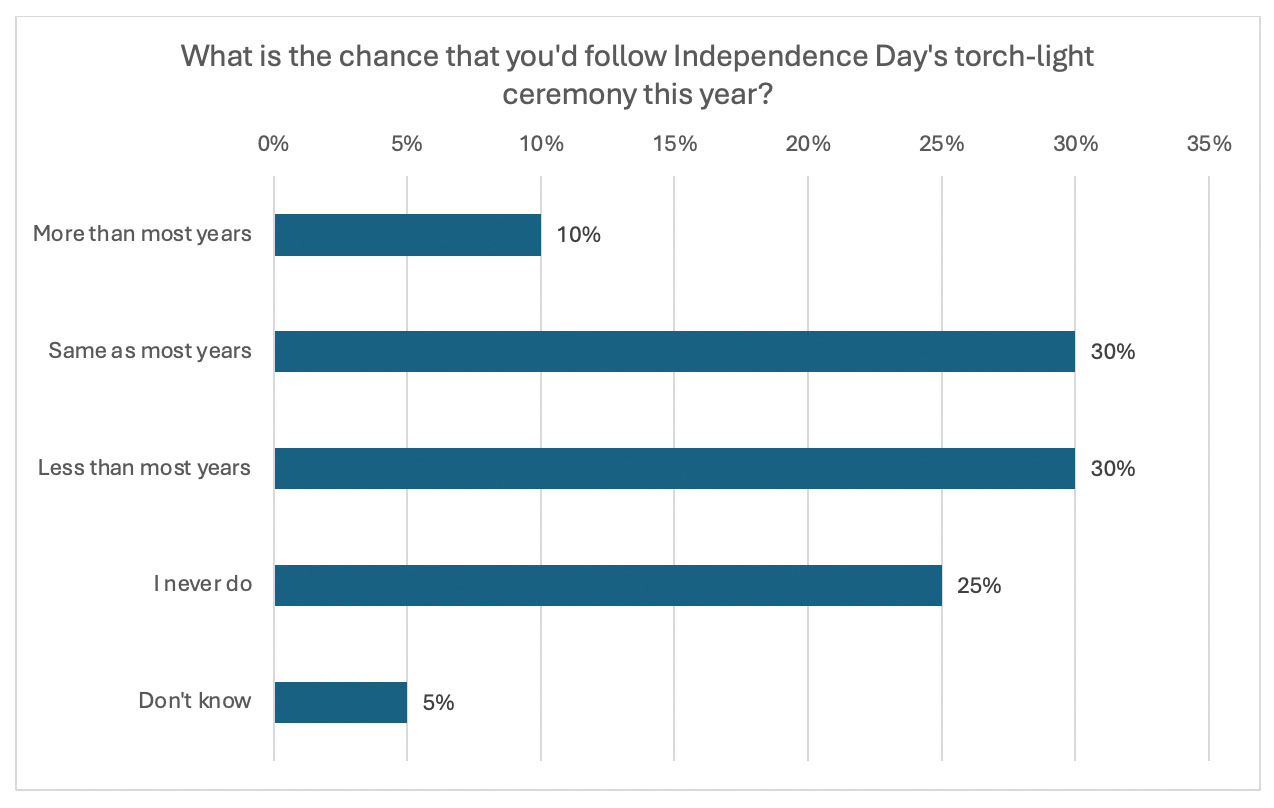
The traditional Independence Day torch-lighting ceremony has become a focus of political controversy. According to a JPPI survey conducted a few weeks ago, while right-wing voters remain loyal to the ceremony and even increase their attendance, center-left and left-wing voters are moving away from it. Another victim of politization and polarization. 


A reader’s response

Chaya Goldberg writes: “You should have more faith that Israel will come out of the war stronger.” My response: Please, teach me how to have such faith. I’d like to have it.


Shmuel Rosner is senior political editor. For more analysis of Israeli and international politics, visit Rosner’s Domain at jewishjournal.com/rosnersdomain.

When the Annual Blurs with the Daily Read More »

The Zionist Spirit Behind the Shabbat Tune Switch

It’s the weekly tonal shift that somehow still catches many synagogue-goers by surprise. I’m speaking of course of the tune-switch that the Friday night hazan pulls for the last few stanzas of “Lecha Dodi,” everyone’s favorite shul showstopper. 

Where did this quirky cantorial custom come from and how did it become so popular?

In his learned Hebrew-language tome “Seder Ba-Siddur,” the Israeli scholar Shlomo Barak notes that like so much else in Jewish practice, the details are subject to debate. 

Some communities switch melodies at the fifth stanza, which begins “Hitoriri hitoriri,” “awaken, awaken,” and contains the line “arise, arise, speak a song.” It’s possible, comes the suggestion, that the line is a hint to the prayer leader that he should mix in a new song [i.e. tune] to revitalize enthusiasm for the congregation singing along to the hymn.

Others give a more thematic explanation. The first four stanzas describe despair – with lines like “enough dwelling in the valley of tears” and “arise from the dust.” In the fifth, the content reflects a more redemptive resonance — “the Glory of God has been revealed,” “your God will rejoice with you.”

Another possible support for the switch at this juncture is that it marks a natural break in the acrostic. The first letters of the prayer’s initial eight stanzas spell out Shlomo HaLevi, Lecha Dodi’s 16th century Kabbalistic composer. The fifth stanza starts the second part of his name.

The contemporary rabbi Ari Enkin has noted that the earliest sources that mention the tune switching are from Frankfurt am Main. There it is recorded they would switch at “Awaken, awaken,” but then switch back to the first tune for the “Lecha Dodi”’s last stanza, “Bo’i be-shalom,” “Come in peace,” a practice that has lost its popularity.

In fact, the most widespread iteration today is to switch at the sixth stanza, “lo teivoshi,” “do not be ashamed,” not the fifth.

Why? Well, no one quite knows. 

Some posit that it’s a way to refocus a congregation whose collective mind might have wandered during the lengthy prayers and jar them into noticing what part the prayer-leader is up to. But of course, that could by right come at any point, and is not tied specifically to the sixth stanza.

The journalist and part-time musician Yair Rosenberg once interviewed the renowned musicologist Velvel Pasternak about this exact question. Pasternak’s response was: 

“I spent a year researching this … got all kinds of explanations. The only one that was plausible was given to me by the Pittsburgher Rebbe of blessed memory. He said in Yiddish: ‘Shoyn genug genidzet mit dem ershtn nigun’ [they got tired of the first tune]. This is most probably the correct reason.”

Rosenberg himself, in turn, writing for The Atlantic, suggested a historical impetus. He notes that the lyrics of the sixth verse “Do not be ashamed, do not be despondent, why are you downcast, why be confounded? In you, the poor of my nation will find shelter, the city [Jerusalem] shall be rebuilt on its foundations” can be read as a somber sliver of comfort or an uplifting affirmation of hope amidst centuries of persecution. 

“‘Do not be ashamed,’” Rosenberg notes, “wasn’t just recited in synagogues; it was mumbled in concentration camps, while fleeing expulsions, and in the aftermath of pogroms. I can only imagine the strength it took for these Jews to stand up each Friday night and tell themselves not to despair, and insist that they still had a future to claim. But they did.”

Perhaps then, the current custom arose as a folk custom, which, like so many other traditional practices, has attained the status of law. The shift from the fifth stanza to the sixth emerged as internal psychological and spiritual affirmation — “do not be ashamed, do not be despondent” recited by countless persecuted Jews, oppressed by hate-filled enemies across the globe. The line became the natural place not to lament but to sing anew, as these congregations expressed their confidence that they would eventually have reason to rejoice with God, in a city whose dust would be brushed off, rebuilt on its foundation. The time for such rejoicing was indeed claimed, of course, 77 years ago, when the State of Israel was reborn.


Rabbi Dr. Stuart Halpern is Senior Adviser to the Provost of Yeshiva University and Deputy Director of Y.U.’s Straus Center for Torah and Western Thought. His books include “The Promise of Liberty: A Passover Haggada,” which examines the Exodus story’s impact on the United States, “Esther in America,” “Gleanings: Reflections on Ruth” and “Proclaim Liberty Throughout the Land: The Hebrew Bible in the United States.”

The Zionist Spirit Behind the Shabbat Tune Switch Read More »

Art or Ammunition? The Dangerous Weaponization of Culture in the Israeli-Palestinian Conflict

On Oct. 7, 2023, thousands of music lovers gathered in the south of Israel to dance, to celebrate, to feel free. The Nova Festival was meant to be a euphoric celebration of music and life. But that night, joy turned to terror. In a meticulously planned massacre, Hamas terrorists descended upon the crowd, murdering 378 civilians and kidnapping 44 others. Within seconds, a rave became a grave.

Fast forward to April 19, 2025. Nearly 8,000 miles away, festival goers at Coachella were dancing under the same sky their Israeli counterparts did months earlier. But instead of celebrating music’s power to connect, Irish band Kneecap projected anti-Israel messages above the stage. Other performers such as Green Day followed suit, co-opting their platforms to broadcast political hate. It was a jarring juxtaposition: two festivals meant to celebrate music and humanity, both violently hijacked in different ways.

Culture, once our universal language and long considered a bridge between peoples, has become, in too many cases, a bully pulpit. What was once a conduit for exchange is now increasingly weaponized to divide. Music, art, and performance — once used to transcend borders — now, at the whim of ill-informed artists, reinforces them.

As a former cultural attaché for the State of Israel, I can confirm these protests masked as artistic activism are not unique — they are part of a longstanding pattern. For years, I witnessed the quiet, persistent efforts to exclude Israeli voices from the global stage. I watched institutions grapple with whether to host Israeli performers or screen Israeli films, fearful of backlash. The BDS movement has sought for decades to isolate Israeli artists; and even before the State of Israel was born, economic boycotts of “Zionist goods” were championed by the Arab League.

Artists from around the world have refused to perform in Israel, not because of personal convictions necessarily, but because of pressure — because it’s safer to conform than to be curious. Because if they came, they might discover that Israel is not the apartheid state it’s accused of being. They might meet Arab Israelis in the audience, Druze musicians on stage, or Palestinians working behind the scenes. And that truth would threaten a powerful narrative.

Today, Israel faces petitions calling for its removal from cultural events like Eurovision. These efforts purport to be political statements, but in practice, they corrode the very function of culture itself: to foster connection, not exclusion.

Let’s be honest: No other country with a questionable human rights record is treated this way. Not China. Not Russia. Not Iran. Only Israel. When Jews are uniquely targeted for exclusion, we know from history what we’re witnessing.

We also know from history what happens when culture is misappropriated. In Nazi Germany, propaganda art dehumanized entire populations. Today, the silencing of Israeli artists and the open glorification of Hamas by fringe performers are part of a dangerous cultural regression.

History offers us a better way. In the 1970s, American table tennis players visited China in what became known as “ping-pong diplomacy.” That cultural exchange helped thaw decades of Cold War hostility. Imagine what could happen if we invested in that kind of dialogue today.

This year, in a poetic moment of resistance, Yuval Raphael — a survivor of the Nova Festival — will take the stage and represent Israel at the 2025 Eurovision competition. It is an act of defiance, of resilience, and most of all, of dignity. Art, at its highest form, must heal. Must tell the truth. Must connect. Art should not be a battleground. It should be common ground — and Yuval is paving the way.

This year, in a poetic moment of resistance, Yuval Raphael — a survivor of the Nova Festival — will take the stage and represent Israel at the 2025 Eurovision competition. It is an act of defiance, of resilience, and most of all, of dignity.

When artists choose to wield their influence responsibly— when they use their platform not to incite, but to illuminate — that’s when culture becomes revolutionary. That’s when it becomes peace-building. That’s when it becomes powerful.

The world doesn’t need another angry chant or another projection of hate on a concert stage. The world needs more voices calling for bridges. The artists, like Yuval Raphael, who will be brave enough to create in pursuit of connection, will not only shape culture with their moral courage, they will shape the course of history. 


Margaux Chetrit is a writer, public speaker and entrepreneur.  She is a former parliamentary intern in Israel’s Knesset.  From 2008-2015, she served as director of cultural affairs at the Consulate General of Israel in Montreal.

Art or Ammunition? The Dangerous Weaponization of Culture in the Israeli-Palestinian Conflict Read More »

Why Diaspora Jews Are Counting on Us

Sometimes it takes a trip to the other side of the world to teach us an important lesson about what we have right here at home. My husband Jamie and I had the good fortune to travel to Australia in March. Our son Jack is spending a semester abroad in Sydney. We had never been “Down Under” and took the opportunity to explore Australia. We spent two weeks traveling around the country from the outback to its rugged coastlines. Wherever we went, no matter how remote our destination, we befriended fellow Jews and Israelis. A yellow ribbon pin or orange kippah served as icebreakers and turned strangers into family.

We spent our final Shabbat in Sydney, where we enjoyed meals with families who welcomed Jack and provided him with a Jewish home away from home. We’d heard about the antisemitism in Australia and worried whether we were safe walking to our Friday night dinner. One driver, noticing Jamie’s kippah, honked his horn at us, rolled down his window and shouted, “Good Shabbos!” We relaxed as we walked our destination with the beautiful city lights of Sydney’s harbor behind us. 

Sydney was experiencing a heat wave at the end of its summer season and the next day was a sweltering one. Walking to Shabbat lunch was not quite as magical as the previous night. We arrived to meet the family hosting us for the first time drenched in sweat. Nevertheless, they opened their home and shared their beautiful Shabbat table and meal with us and their 25 closest friends and family for the next five hours. Shabbat ended late and none of us were in a hurry. We discussed the antisemitism in Australia and how it affected them personally and their communities. They all seemed to have family in Israel, kids who have served in the IDF (one guest had just returned from fighting in Gaza). Many of them expressed concerns for their futures in Australia, saying they have their “bags packed” and are ready to make aliyah if the situation deteriorates further. 

They were fascinated by our involvement with pro-Israel politics and lamented that even if the 100,000 Jews in Australia could organize to promote a strong Australia/Israel relationship, they are too few and Australia isn’t a strong force on the world stage. They felt vulnerable and powerless. As they saw it, the only Jews who have agency today are American and Israeli Jews. Israel has the IDF and America has a representative democracy in which American Jews can advocate for a strong U.S.-Israel alliance. For all other diaspora Jews, Israel is their only place of refuge but if she is not strong, they could be just as vulnerable. Because of this, they follow U.S. politics very closely. They know about all the contentious races in which pro-Israel candidates take on detractors. They listen to Dan Senor’s podcast, “Call Me Back,” and refresh their pages on The Times of Israel website as often as we do. 

When the sun started to set and we prepared to depart, thanking them for their Shabbat hospitality, they were the ones expressing gratitude, for our hard work with AIPAC. They said how grateful they are that Israel is not alone as she faces threats on seven fronts following the greatest massacre of Jews since the Holocaust. They were as horrified as we were by the surge in antisemitic, pro-Hamas rallies that spread across the globe on Oct. 8, but equally comforted by the U.S. aircraft carriers that pulled into the Mediterranean Sea shortly thereafter. Their gratitude came from a place of deep understanding that Israel cannot face the myriad threats alone and America, only America, has the power to protect the one Jewish state.

Jamie and I have been involved with pro-Israel political activism for over two decades. When people ask me why I devote so much time to strengthening the U.S.-Israel relationship I say it’s simple. Israel was a refuge for my mother and her family after the Jews were kicked out of their home in Baghdad. She served in the IDF, as did every member of her family. I am proud to be American, but I have never lost my sense of responsibility that comes with that privilege. I went to college at 18, not to the military. I didn’t have to enlist my three sons into the army. I don’t stay up all night when I cannot reach them on their cell phones. The way we are blessed to contribute to the survival of our people as American Jews is by fighting on the front lines on Capitol Hill. 

On that long flight home from Sydney, despite my years of experience as a pro-Israel activist, I felt a tremendous weight that I had never felt before. Spending Shabbat with my fellow Jews in Sydney made me realize that I wasn’t just fighting for Israel, or for the security of Jews here in America. Jews around the world who have felt powerless since Oct. 7 are counting on us, too. There are so few of us and so much work to be done. Anti-Israel voices are growing louder across every corner of society. From college campuses to music festivals, sports arenas and even the homes of Jewish leaders, efforts to intimidate and silence Jews are relentless and deeply alarming. Our representatives in Congress are feeling it too. Our enemies will never tire of finding new ways to try to destroy us, as they have relentlessly sought to do throughout our history. We may be cursed by our enemies but we are also so very blessed to be a part of such a remarkable and resilient people. Feeling the true sense of belonging to the larger Jewish family, I pledged to work even harder when I got home.

Spending Shabbat with my fellow Jews in Sydney made me realize that I wasn’t just fighting for Israel, or for the security of Jews here in America. Jews around the world who have felt powerless since Oct. 7 are counting on us, too.

As I write this, Jamie just landed in Krakow to participate in the March of the Living. Before Oct. 7, I truly believed that the horrors of Auschwitz were relegated to the black-and-white pages of history. Not because the world learned the lessons of the Holocaust — but because the Jews of that generation fought, sacrificed, and secured their right to self-determination in the land of Israel. On Oct. 7, Israel’s sense of security was shattered. On Oct. 8, the rest of world Jewry felt it, too. It is our turn to stand up, speak up and fight. Every American Jew should recognize the profound privilege — and responsibility — of using our voices to ensure that America continues to stand strongly and proudly with Israel, because only America has the power to guarantee that the world’s one Jewish state has the support it needs to defend itself and prevail.


Talia Resin is a leader in pro-Israel advocacy and a Wexner Heritage fellow. She and her husband Jamie live in Los Angeles and are dedicated to ensuring a strong U.S.-Israel alliance.

Why Diaspora Jews Are Counting on Us Read More »

Why Hasbara Failed: We Fought the PR War, Not the Real One

“If you know neither the enemy nor yourself, you will succumb in every battle.”

—Sun Tzu, “The Art of War”

That’s the quote. The one we should’ve etched into the walls of every Federation office, every campus Israel group, every well-funded “Hasbara” initiative. Instead, we plastered graphics, hashtags, and slogans onto social media like band-aids over an open wound, not realizing we never addressed the infection. The Hasbara movement — modern Israel advocacy as it’s been constructed in the West — has failed. It wasn’t loud enough, not because it lacked money, but because it fought the wrong war. It treated antisemitism like a branding issue. It treated Zionism like a marketing campaign. And it treated Jewish identity like an afterthought.

Worse still, it ignored the central battlefield altogether: context.

We trained students to recite talking points without ever giving them the historical, spiritual, or even geopolitical foundations to understand the story they were trying to tell. We taught them to defend a country they could barely locate on an emotional map — and worse, we taught them to ignore the Palestinian narrative entirely, as if ignoring someone else’s story makes yours stronger. The Hasbara class doesn’t know the Jewish people. And it certainly doesn’t see the enemy. Nor, to its peril, does it understand the weight and power of the Palestinian story — not in truth or falsehood, but in resonance. While our enemies teach history — distorted, yes, but deep, emotional, generational history — our advocates memorize tweets. While the world radicalizes against the Jewish State with ideological fervor, we teach 19-year-olds to repeat, “Israel has a right to exist.” How revolutionary. How original. How utterly meaningless in the face of those who believe your very existence is a colonial crime.

This is the tragedy: we trained kids to explain checkpoints without explaining Herzl. We taught them to debate apartheid without introducing them to Ahad Ha’am, Rabbi Kook, or the Book of Joshua. We armed them with casualty charts, not courage. With U.N. resolutions, not roots. With talking points, not Torah. Hasbara failed because it tried to outsource pride. Because it assumed the average young Jew could fight for Israel while remaining estranged from Hebrew, from Zion, from the soul of their people. Because it traded the moral complexity of the conflict for the false clarity of press releases.

We never taught them to understand the Palestinian grievance — not to justify it, but to comprehend its potency. And by doing so, we robbed them of the ability to explain why our return is not a negation of another people’s story, but the reclamation of our own.

Identity is not built in PR firms. It’s built in language, in memory, in rootedness. And so, this moment demands something entirely different: a revolution of Jewish education. A renaissance of context. A return to knowing who we are, not just what we’re defending. We don’t need more content creators to explain why Israel is right. We need Jewish children who know why they are Jewish. We don’t need another “crisis comms” playbook. We need people who speak Hebrew, dream in Zion, and learn how to walk into a room not begging for understanding but embodying truth.

We don’t need another “crisis comms” playbook. We need people who speak Hebrew, dream in Zion, and learn how to walk into a room not begging for understanding but embodying truth.

Hasbara is dead. Let it be. Now, let us rise, arm in arm with our prophets, warriors, poets, and ancestors who dreamed of home. Let us teach our children to fight not with slogans but with their souls. Let us build Jews who know themselves so deeply, so intimately, that no enemy’s propaganda can pierce the armor of their inheritance. Because only when we know ourselves—and yes, when we understand the story of the other — will we finally begin to win.


Adam Scott Bellos is CEO of the Israel Innovation Fund and author of “Never Again Is Not Enough: Why Hebraization Is the Only Way to Save the Diaspora.”

Why Hasbara Failed: We Fought the PR War, Not the Real One Read More »

As Israel Burns, a Lesson on the Unbearable Burden of Jew-Hatred

As I watch Israel burn at the beginning of Yom HaAtzmaut, a day that celebrates Israel’s independence and unleashes joy throughout the country, it struck me that Jew-haters can be quite intentional.

When Hamas massacred 1200 Israelis on October 7, 2023, they chose the happiest day of the religious calendar, Simchat Torah.

Regarding the fires, we know that Hamas and other terror groups have incited arson attacks on Israel in recent days, and an arrest has already been made. As reported in Times of Israel, “The arrest coincided with calls made by Palestinians on social media to carry out arson attacks on Israel during the country’s Independence Day.”

“It’s a terror attack on Israel,” Eli Beer, president of the United Hatzalah emergency response organization, told The Media Line, with Beer noting that “fires were started in 20 separate locations.” A security source also confirmed to The Media Line that “a terrorist act was likely behind the fires, adding that several people had been arrested.”

In other words, it’s hardly a coincidence that these fires are raging on the happiest day of the Zionist calendar: Yom HaAtzmaut. Israel’s enemies, evidently, don’t just hate Jews when they’re alive; they also hate them when they’re happy.

When we reflect on such hate, it’s important not to overlook its ugly dimensions. Jews are so focused on taking responsibility we tend to look at our own actions to explain everything. What did we do to deserve this animosity? What can we do to live in peace with those who hate us?

As valuable as those questions can be, at certain moments they deserve a time-out. This is one of those moments– a moment to engage in candid reflection on the deepest emotions of our deepest enemies.

The emotion behind I hate these people so much I can burn their families alive and rape daughters and murder babies in front of their parents is more than hate.

The emotion behind I hate these people so much I’d be happy to see their whole country burn on their day of celebration is more than hate.

Remember the glee of the Hamas murderers of Oct. 7 as they savaged innocent human beings at the Nova festival? Remember the video clips proudly displaying human atrocities on a scale we’ve never seen?

As Israel burns today, is there any doubt that the Jew-haters holding Israeli hostages in Gaza are in a frenzy of joy at Israel’s misery? Of course not.

Until we recognize the depth of contempt for Jews among the Islamic terrorists who dream of nothing else than total Jewish annihilation, we’ll get sucked in by the dumbest deals and most naive pipe dreams.

You can be the biggest lover of peace and biggest hater of war and still conclude that the only way to deal with those who want to annihilate you is to stand strong and resolute and convey a clear message: We know how much you despise us because we’re Jews. We don’t trust anything you say. We only have one thing to tell you: You will never ever destroy us.

At a time when few things are black and white, it behooves us to recognize the exceptions. The contempt for Jews among those who want to annihilate Israel is black and white. The sooner we recognize this terribly inconvenient truth, the better we will be able to fight it.

The horrific fires burning through Israel on the nation’s day of joy is a reminder from our enemies that these ugly emotions are not going away. This is what they’re telling us, in black and white: As long as Jews are alive and happy, we will never leave them alone.

It’s up to us to let them know that as long as they feel that way, we will never leave them alone.

In the meantime, it’s reassuring to receive this message from a friend in Israel: “We’re partying like there’s no tomorrow.”

As Israel Burns, a Lesson on the Unbearable Burden of Jew-Hatred Read More »

Hope, High Seas, and Heartfelt Moments: Niver’s April News

April News 2025 Niver’s Newsletter 184

April Adventures: Gratitude, Growth, and New Horizons

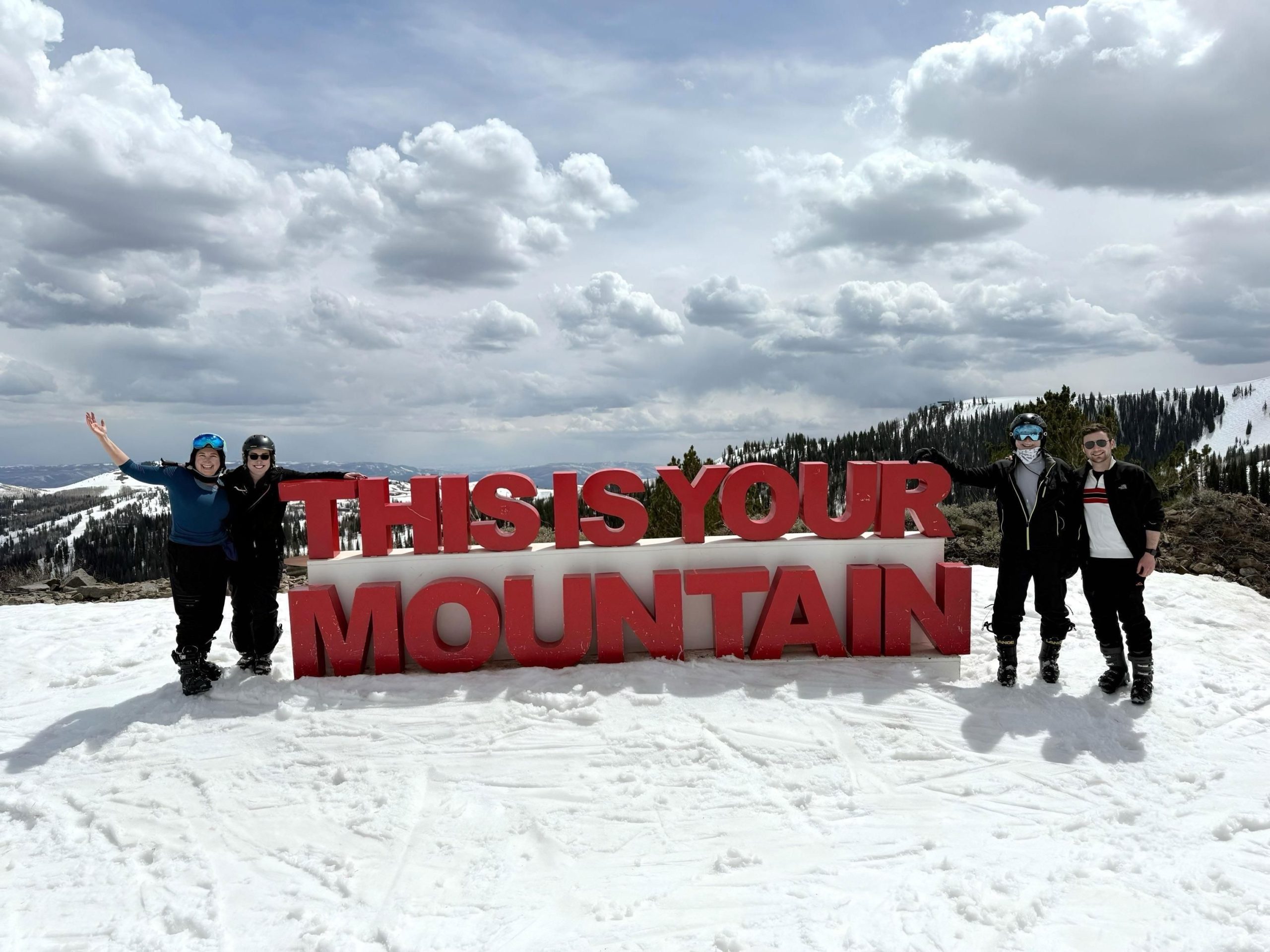
April has been a month filled with gratitude, celebration, and big dreams for the future. After 19 months, my memoir BRAVE-ish became the #5 Most Wished For and reached #10 in its travel category—a milestone that fills me with immense gratitude and amazement. I’m especially thankful for time spent with family, celebrating my mom’s birthday skiing in Park City, and gathering for Passover, the Jewish holiday about freedom from narrow places, a powerful reminder to always hold onto hope—for ourselves, for each other, and for the safe return of the 59 hostages still held in Gaza.

Professionally, April brought the chance to dream even bigger at SeaTrade Cruise Global in Miami Beach, soaking up sunshine and strategy with cruise lines, destinations, and travel innovators from around the world. From brainstorming bucket-list adventures to exploring what’s next for new ships, ports, and itineraries, the energy was electric—from meetings by day to mingling by night at the SLS, Gale, and The Betsy.

View this post on Instagram

A post shared by Lisa Niver ✈️ (@lisaniver)

One highlight was sailing on MSC’s newest ship, packed with incredible entertainment and an unforgettable stop at their private island—I brought my college friend Heather with me and she loved her very first cruise! I wrapped up the month celebrating travel dreams in motion at the newly renovated Sonesta Los Angeles Airport Hotel, the perfect spot close to LAX to toast new beginnings.

Here’s to freedom, family, and the future—on land and at sea.

Sea Trade 2025 Miami

MSC World America: Let’s Holiday on the media preview cruise April 9-12, 2025

Happy Birthday Mom

Celebrating my mom’s birthday at Sammy’s Bistro in Park City. From spring skiing to the warmest welcome at dinner — complete with birthday singing and the most unforgettable carrot cake — we felt the love. So grateful for these moments, this family, and the chance to celebrate together.

Skiing Park City April 2025 with my family!

Celebrating with Spring Skiing

Where to stay and play at LAX? Sonesta Los Angeles Airport Hotel

ANTARCTICA with Quark Expeditions: now over 60 videos

RECENT ARTICLES:

RECENT INTERVIEWS:

Media in Minutes:Chasing Adventure: Travel Journalist Lisa Niver’s Global Odyssey” Thank you to Angela Tuell and Communications Redefined for this amazing interview!

Authority Magazine: Travel Journalist Lisa Niver: Second Chapters; How I Reinvented Myself In The Second Chapter Of My Life

Woman’s World: Best Travel Deals at Costco. Thank you Anna Traver for including me in your Woman’s World article, “How to Book Your Next Vacation Through Costco—The Best Travel Deals and Perks Explained.

Learn more about my events: click here and my articles here

I have events nearly every month–hope to see you at a live event soon–and you can invite me to speak at your conference, library, bookstore, book club live or on ZOOM!

Want to travel more? I have a Travel Writer 101 class on Udemy. CLICK here for a coupon to take my class for FREE!

I have students in 9 countries so far: Australia, Canada, India, Italy, New Zealand, Philippines, Portugal, Thailand, USA! Join us on the adventure of travel writing!

THANK YOU for watching my award-winning podcast, Make Your Own Map: Are YOU ready to be BRAVE? It has now been seen and heard in 58 countries on 7 continents. Five newest countries watching: Argentina, Austria, Belgium, Chile and Ukraine. Welcome!!

Have you heard my recent podcast episodes?

Soaring Above the Ice: Helicopter Adventures with Quark Expeditions’ Sarah Zaubi

Kayaking with Kelly in Antarctica on Quark Ultramarine

Exploring Antarctica’s Penguins with Quark Expeditions

WATCH my podcast, “MAKE YOUR OWN MAP: ” on Spotify, Apple Music, Amazon Music, YouTube PodcastGoogle Podcasts, Audacy, Audible, Anchor, PandoraiHeart Radio

WHERE CAN YOU FIND MY TRAVEL VIDEOS?

Here is the link to my video channel on YouTube where I have over 2.3 Million views on YouTube! (now at: 2,370,000).

Thank you for your support! Are you one of my 4,580 subscribers? I hope you will join me and subscribe! For more We Said Go Travel articles, TV segments, videos and social media: CLICK HERE

Find me on social media with over 150,000 followers. Please follow me on social @LisaNiver TikTok, X  Instagram, FacebookPinterestYouTube, LinkedIn, BlueSky and at LisaNiver.com.

EPIC JOURNEY Crossing the Antarctic Circle with Quark Expeditions. Click here to see my Antarctica videos !

Do you LOVE my book BRAVE-ish? PLEASE WRITE A REVIEW!! Click here to go directly to rate or review BRAVE-ish on Amazon (now at 61 reviews. Help me get to 75) You can find my book on Amazon, Barnes & Noble, Simon & Schuster, Post Hill Press, Target, Walmart, BookShop, BAM! and wherever you get your audiobooks!

People always ask me where is it best to buy my book. I recommend you go into or call your favorite local book store and ask them to order it for you and pick it up IN THE STORE! You never know what other treasures you will find. Any bookstore can order my book because my publisher is Post Hill Press and it is distributed by Simon and Schuster. My book is now in the library on Quark Ultramarine and in the store at Dubray bookstore on Grafton in Dublin, Ireland! Brave-ish is available all over the globe!

You can also find me now on SUBSTACK!

Hope, High Seas, and Heartfelt Moments: Niver’s April News Read More »

Campus Watch April 30, 2025

Anti-Israel Protesters Scrap Encampment Plan at Columbia

Anti-Israel protesters scrapped their plans to build another encampment at Columbia University on April 24 after the university issued a statement saying it has a zero-tolerance policy against encampments on campus.

The university said in an April 23 statement that it had “been made aware of possible plans to establish encampments on Columbia’s campuses” and that such encampments are barred under university policy. It added that if encampments were to be established on campus, then the university would immediately remove them and order participants to disperse. “Individuals who refuse to disperse will be identified and sanctions, including potential removal from campus and possible arrest, may be applied.” According to The Washington Free Beacon, the anti-Israel student groups “pushed protesters to join unrest elsewhere in New York” instead.

Columbia Janitors Sue Anti-Israel Protesters Over Being Held Hostage in Hamilton Hall

The janitors at Columbia University who were held hostage during the April 2024 occupation of Hamilton Hall by anti-Israel protesters filed a lawsuit against their alleged captors on April 25.

The Free Press reported that the two janitors have been identified as Mario Torres and Lester Wilson and The Louis Brandeis Center for Human Rights Under Law and Torridon Law filed the lawsuit on their behalf. The lawsuit alleges that the protesters demanded that they both leave the building and when they initially refused, the protesters became violent toward them and wouldn’t let them leave. The lawsuit states that one of the protesters shoved Torres and threatened to bring “20 guys up here to f— you up.” Protesters also allegedly derided Torres as a “Jew-lover” and “Zionist.” In Wilson’s case, “masked individuals began shoving him and ramming furniture into him,” per the lawsuit. Both men have dealt with injuries and post-traumatic stress disorder and have been unable to return to work as a result.

Report: Qatar Is the Largest Foreign Donor to U.S. Universities

A new report from the Network Contagion Research Institute (NCRI) found that Qatar is the largest source of foreign funding to United States universities since 1986, when reporting first started.

According to The Free Press, the NCRI report determined that Qatar has funneled $6.3 billion into American universities, with more than $2 billion pouring in between 2021-24. The second largest source of foreign funding has been China at $5.6 billion, $2.3 billion of which came in 2021-24. The Free Press noted that a 2024 NCRI study concluded that there is “a strong correlation between universities that receive foreign funding from authoritarian countries and a rise in antisemitic incidents.”

Sen. Cruz Urges Princeton to Fire Prof Who Used to Be Iranian Official

Sen. Ted Cruz (R-TX) urged Princeton University, his alma mater, to fire a professor on campus who used to work as a high-level official in the Iranian regime.

The professor in question is Seyed Hossein Mousavian, a Middle East Security and Nuclear Policy Specialist at Princeton University’s Woodrow Wilson School of Public and International Affairs. Mousavian previously worked as the Iranian diplomat to Germany from 1990-97, spokesman to Iran in negotiations of its nuclear program in 2003-5 and headed the Iranian National Security Council’s Foreign Relations Committee from 1997-2005. According to Fox News, “Mousavian has declined to renounce his support for Hamas, Hezbollah and Iran’s fatwa (religious decree) to assassinate the British-American writer Salman Rushdie” and attended Iranian Major General Qassem Soleimani’s funeral in 2020.

“Mousavian is closely linked to the Iranian regime and to the regime’s campaigns of terrorism and murder,” Cruz said in a statement to Fox News. “His presence at Princeton makes students feel justifiably afraid for their safety. Princeton’s decision to keep employing him shows they care less about their students, and more about providing a platform for pro-regime and anti-American propaganda. That kind of reckless institutional ideological bias is exactly why the Trump administration is reassessing federal funding for Princeton.”

UPDATE: Mousavian responded to Cruz in a post on X offering to hold a public debate on the matter and if not, to read his work that focuses on “establishing peace between Iran and the United States.” He added that he was arrested and imprisoned in Iran in 2007 and was forced to leave in 2009; consequently, he hasn’t been able to travel to Iran “in the past four years.” Cruz replied on X that he doesn’t want to be in a “room with people linked to Iranian terrorists who have murdered dozens of dissidents. Your books are unreadable, and the only debate you should be having is with DHS agents, at the end of which you should be deported.”

Two Individuals Face Criminal Charges from 2024 UCLA Protests

Los Angeles City Attorney Hydee Feldstein-Soto announced on April 25 that two individuals are being charged with criminal activity stemming from the spring 2024 protests related to the ongoing war in the Gaza Strip at UCLA.

The two individuals have been identified as Edan On and Matthew Katz; On is being charged with battery and assault with a deadly weapon and Katz is being charged with battery, false imprisonment and resisting arrest. The Los Angeles Times identified On as being a pro-Israel protester. Another individual, David Fischel, is being sent to city attorney hearings, which the Times described as being “informal proceedings conducted as an alternative to a misdemeanor criminal prosecution,” over his alleged conduct at the UCLA protests. Two others, Ali Abuamouneh and Karla Maria Aguilar, are also being sent to those hearings over their alleged conduct during protests at USC.

Feldstein-Soto’s office said in a statement that it had received more than 300 referrals from the arrests made at protests on both campuses, but “most of these cases were declined for evidentiary reasons or due to a university’s failure or inability to assist in identification or other information needed for prosecution.”

Campus Watch April 30, 2025 Read More »