fbpx

March 27, 2025

UC Davis Dissolves Law Student Association After It Proposed a BDS Resolution

Recently, the Law Student Association (LSA) at UC Davis passed a resolution endorsing the Boycott, Divestment, Sanctions (BDS) movement. The goal was to prevent LSA funding for companies listed by the BDS National Committee; a flyer announced that there would be “NO FUNDING IF YOUR EVENT HAS THE FOLLOWING” and proceeded to list several major companies like McDonald’s, Burger King, Coca-Cola, Starbucks and Wix.

The week of March 17, UC Davis administrators informed LSA leaders that implementing the resolution would violate university policies. They warned of possible direct intervention, including taking control of the LSA’s finances or enforcing corrective actions. LSA did not retract its stance. On March 24, UC Davis School of Law Dean Jessica Berg announced that UC Davis had unrecognized LSA, and the school had taken over the group’s $40,000 in funding.

If LSA had enacted their pro-BDS policy, it would have potentially conflicted with California’s AB 2844, which prohibits economic discrimination targeting individuals or businesses based on national origin—in this case, Israelis.

The resolution stated “the people of Palestine have had their lives, livelihoods, and autonomy systematically targeted and dismantled by the settler-colonial state of Israel for over 75 years of ongoing occupation… This illegal occupation constitutes apartheid as defined by the International Convention on the Suppression and Punishment of the Crime of Apartheid.”

Sarah* (not her real name), a second-year law school student, said that the LSA, in its attempt to implement the BDS resolution, has “no interest in representing Jewish and Israeli students. It is an intimidation tactic that shuts down dialogue. In law school, we are taught that no issue has one correct answer. Rather, we must engage with all perspectives to come to the most just conclusion. Targeting people from one ethnicity, religion, or national origin and shutting down engagement with institutions of one country is blatant discrimination. No other protected group has been singled out by LSA this way.”

The 10-page resolution went on to state that, “The illegal blockade of Gaza is a systematic infringement upon freedom and dignity and a grave example of the settler state’s physical entrapment, with over 2 million Palestinians subjected to collective punishment since 2007” and “Palestinian liberation requires an end to the Israeli occupation and the right to return for all Palestinians.”

Previously, on October 24, 2023, just a few weeks after the October 7 massacre of Israelis by Hamas, the LSA board released a statement that condemned the “genocide of Palestinians, uplifting basic needs and human rights, and upholding international law against apartheid and occupation.”

Sarah, who started law school at UC Davis less than two months before October 7, said, “My entire law school experience has been shrouded in antisemitism because of it. I find it difficult to connect with my peers because upon mentioning that I’m Jewish, I’m met immediately with questions about my stances on the Israeli-Palestinian conflict.”

According to Sarah, the anti-Israel protests on campus have called for the destruction of the Jewish state, and people chanted that the October 7 massacre was an act of “justified resistance.”

“Classmates of mine have made callous social media posts stating that Jews are lying about the extent of October 7, including the hostages’ treatment,” she said. “I have been made to feel that if I talk about the two hostages whom I know – including my friend who was executed by Hamas in an underground tunnel – then I am a bigot redirecting focus from Palestinians’ pain. Jewish and Israeli students are generally silenced and intimidated by our peers and educators.”

UC Davis has had its fair share of issues with antisemitism on campus since October 7. As an assistant professor who worked there encouraged people to dox “Zionist journalists” and said, “they can fear their bosses, but they should fear us more” after claiming they had “houses w[ith] addresses, kids in school.” Students for Justice in Palestine (SJP) held an event where a student read a poem that stated, “May Israel’s demise be so glorious and so complete.” The U.S. Department of Education’s Office for Civil Rights opened a Title VI investigation into the school in December of 2023.

Recently, after a Students for Justice in Palestine protest at UC Davis, Chancellor Gary S. May wrote on March 21, “I want to state as strongly as possible that we will not tolerate hatred against any individual or group, or any activities directed at any individual or group in ways that violate UC policy… No one should ever fear coming to campus to learn or work. No student, faculty, or staff member should make any other Aggie feel unwelcome.”

Sarah said she feels, “somewhat supported by the administration. The law school has historically taken a passive stance, relaying counseling services resources for students struggling to cope in the wake of ‘world events.’ I don’t feel like that’s sufficient enough.”

In light of the dismissal of LSA, however, Sarah said, “I was comforted by Chancellor May’s decision to suspend LSA and recommend that the law school take over the funding allocation function of LSA. This decision shows that UC Davis as a whole will not tolerate discrimination.”

UC Davis Dissolves Law Student Association After It Proposed a BDS Resolution Read More »
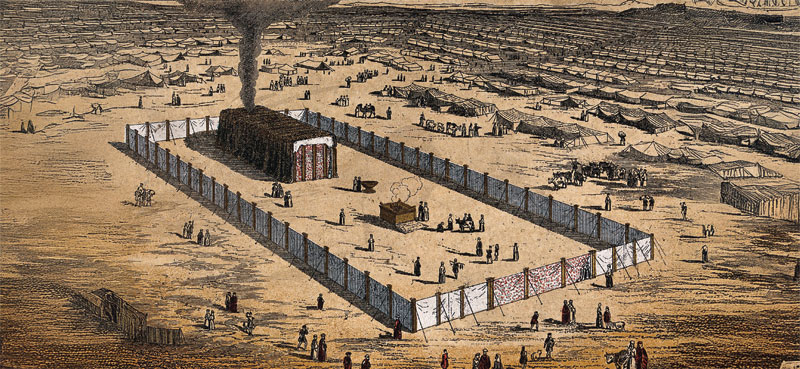
Smokey Presence – A poem for Parsha Pekudei

The cloud covered the Tent of Meeting, and the glory of God filled the Tabernacle. ~ Exodus 40:34

I bought a cocktail smoker recently.
It is a pleasure to drink unadulterated whiskey
and a different pleasure to have one
infused with the smoke of acacia wood
or, more likely, oak.

You place the smoker over the glass
fill its basket with bits of holy wood
light it and then place its cover so
the smoke seeps below into the glass
and your whiskey becomes something else.

It’s like a little Tabernacle where the
whiskey is the holy of holies and the smoke
is the glory of God. While the smoke is present
I can do nothing but wait like the Israelites did
when that Cloud was present.

When the smoke clears, I can continue
on this journey, like the Israelites continued on theirs
until they reached our promised land
at the end of three books from now.
There is a whole Presence I swish on my tongue.

It takes me to a place where, sometimes, I want to be.
Where it is Purim again and I remember how easy
it is to be somewhere I shouldn’t. Ever since the desert
I’ve been looking for smoke and fire. I need that direction
if I am to be strong and strengthened.


Rick Lupert, a poet, songleader and graphic designer, is the author of 28 books including “God Wrestler: A Poem for Every Torah Portion.” Visit him at www.JewishPoetry.net

Smokey Presence – A poem for Parsha Pekudei Read More »

USHMM Tribute Dinner, Hamakom Names Full-Time Cantor, Spec Labs Concert

Longtime Jewish communal professional Anita Friedman was honored by the United States Holocaust Memorial Museum (USHMM) during the museum’s 2025 Western Region Tribute dinner, held at the Beverly Wilshire, A Four Seasons Hotel, on March 19. 

“‘Never again’,” Friedman said, accepting her award, “means never again being in a position of not being able to protect ourselves.”

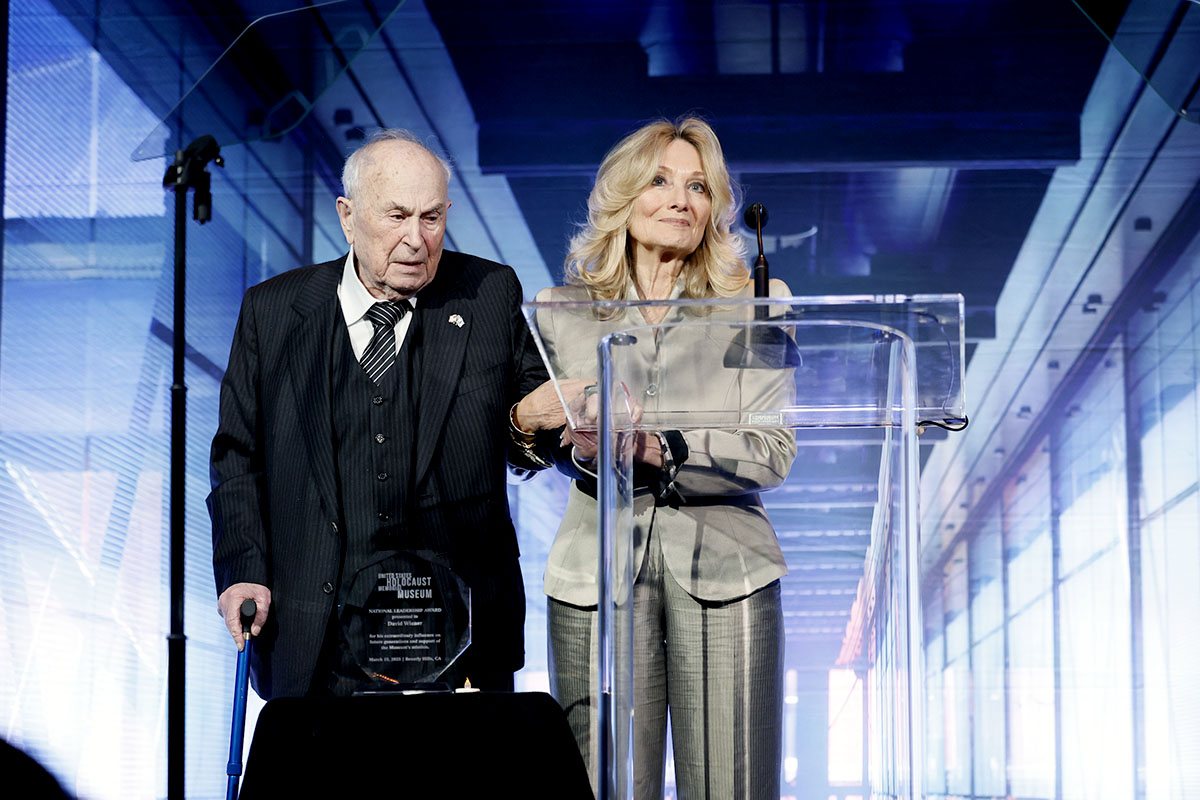
Friedman, executive director of Jewish Family and Children’s Services in the San Francisco Bay Area, was feted alongside 99-year-old Holocaust survivor David Wiener.

The crowd of hundreds of guests, gathered in the hotel’s banquet room, included nearly 30 Holocaust survivors, including a 102-year-old survivor.

Friedman, a co-chair of the Governor’s Council for Holocaust and Genocide Education, was recently involved in the publication of a comprehensive statewide study that evaluated how widely Holocaust and genocide education was being taught in California’s public schools. State laws mandate that Holocaust education be taught in schools. But just 26% of California schools that responded to the survey have incorporated Holocaust and genocide education into their classrooms, the study found.

At the Beverly Wilshire, Friedman addressed the study’s findings, saying teachers want to be able to provide their students with an education about the Holocaust and other genocides.

“The problem is it hasn’t been offered in a systematic way,” she said. 

Additional speakers included Rebecca Erbelding, a historian at USHMM. Erbelding discussed her experience receiving a mysterious photo album filled with old images depicting German soldiers and Nazi party members enjoying leisurely activities while supervising the genocidal operations of the Auschwitz concentration camp. As a historian and archivist at USHMM, Erbelding worked to determine the identities of those pictured in the photo album.

Her efforts are the basis of the real-life detective story in the critically acclaimed play, “Here There are Blueberries,” which is currently enjoying a theatrical run at The Wallis in Beverly Hills and was a 2024 Pulitzer Prize finalist. 

Erbelding was joined onstage by surprise guests Moises Kaufman and Amanda Gronich, the show’s playwrights. 

“It would be wonderful if this play felt like a footnote in history,” Gronich said, “but the events of the Holocaust pose an ongoing and urgent concern for all of us.” 

The dinner’s co-chairs Sam Lauter and Susan Lowenberg also were in attendance along with a group of students from Harvard-Westlake School. 

USHMM honoree and Holocaust Survivor David Wiener is joined by Carol Stulberg, senior advisor for leadership giving at USHMM’s western region. Stulberg was one of the evening’s award presenters. Courtesy of United States Holocaust Memorial Museum

Bringing the evening to its poignant conclusion, the students joined Wiener onstage as he was receiving his honor. Instructing everyone in the banquet room to switch on small electric candles that had been placed on the tables, the students made a pledge to Wiener to carry on his legacy and ensure future generations knew all he’d endured to survive the Shoah.

Melvin Robert, an entertainment anchor and reporter at “KTLA Morning News,” emceed the program.


Cantor Jenni Asher. Courtesy of Hamakom

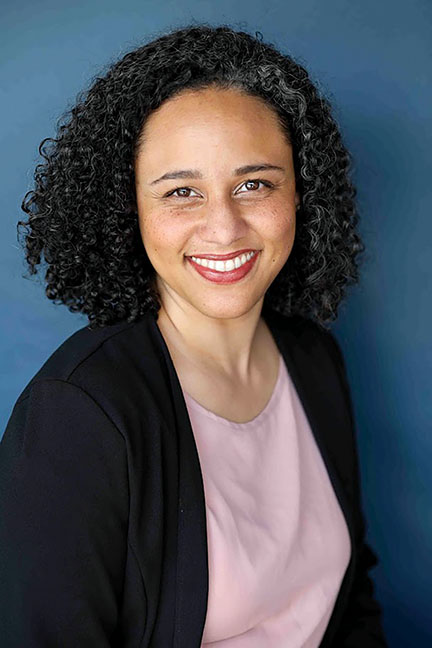
Jenni Asher has been named the full-time cantor at Hamakom, effective July 2025, following her ordination as a hazzan from the Academy for Jewish Religion, California.

“We are blessed to have Cantor Asher guiding us on Hamakom’s journey,” the synagogue’s board president, Paula Russell, said, “and we look forward to the inspiration and beauty she will continue to bring to our community.”

For the past two years, Asher has served as a cantorial soloist at the Conservative synagogue in West Hills, leading the congregation’s musical Zamru Shabbat service and bringing her energy to the synagogue’s adult and youth choirs, among other responsibilities.

A multi-instrumentalist, Asher holds a bachelor’s degree in violin performance from the Royal Academy of Music in London and a master’s degree in music leadership from the Guildhall School of Music and Drama. 

As full-time cantor, she will be tasked with developing Hamakom’s culture and art programming while overseeing music for religious services and leading the community’s choirs.

Hamakom is inviting the community to attend its next Zamru Shabbat, held on Friday, April 4, which will be led by Asher.


On March 14, under the musical direction of Spectrum Laboratory co-founder Garth Herberg, the Spec Labs Neurotribe — a rock band comprised entirely of musicians on the autism spectrum — performed original up-tempo tunes and ballads for a packed house of new devotees, longtime fans, friends and family.

The concert, dubbed “A March Jamboree,” was held at the Scribble Community in Los Angeles.

The evening, according to those involved with the performance, had an inclusive atmosphere that seemed exactly in step with the moral teachings of Judaism.

A “March Jamboree” concert features a performer from Spec Labs’ Neurotribe. Courtesy of Spec Labs

USHMM Tribute Dinner, Hamakom Names Full-Time Cantor, Spec Labs Concert Read More »

On the Huckabee Nomination

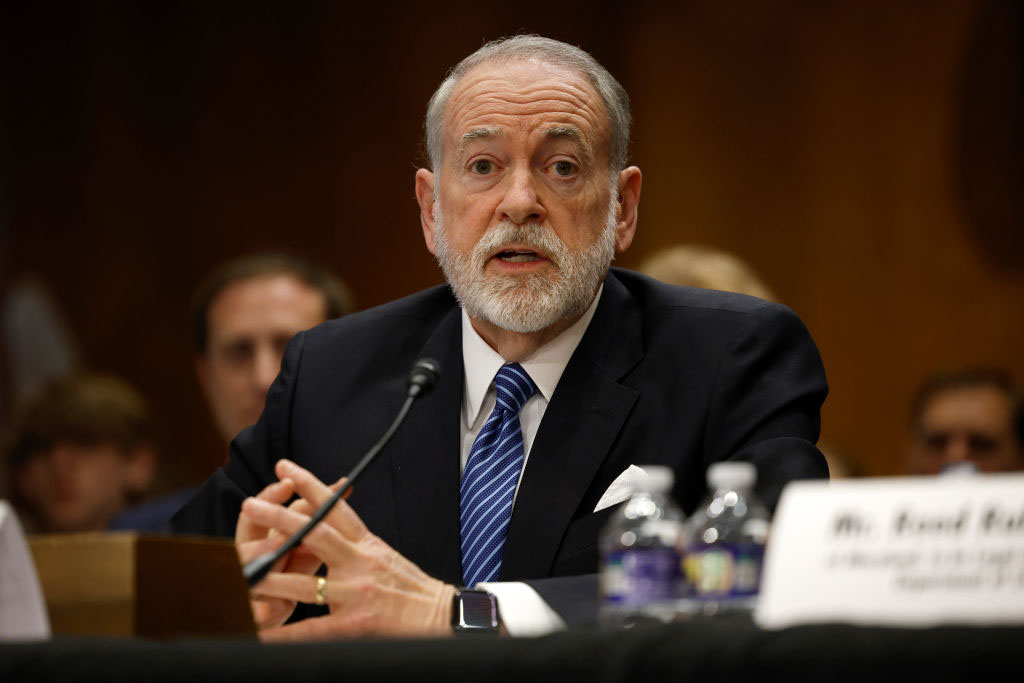
The nomination of former Arkansas governor Mike Huckabee to the next United States ambassador to Israel has generated controversy and negative response from some unexpected sources, including certain groups purporting to speak for America’s Jews.  The head of the Religious Action Center for Reform Judaism, claiming to speak for 2,000 Reform rabbis, recently sent a letter to all 100 U.S. Senators urging them to oppose the nomination of Governor Mike Huckabee as U.S. Ambassador to Israel.

As the head of the Zionist Rabbinic Coalition (ZRC), a centrist, consensus driven non-partisan coalition which represents over 1,000 rabbis from all denominations across the United States, including many Reform rabbis, I could not disagree more.

Governor Huckabee has been a frequent visitor to Israel who possesses a deep love for the country and its people.  He has a solid record as a staunch Zionist who understands the importance and benefits of a close relationship between the United States and Israel.  Whether in public service, as a TV commentator or as a private citizen, he has been steadfast in expressing his genuine devotion, commitment and love for Israel and the Jewish people.    His statements are not superficial or perfunctory, but display a deep understanding of the history and geopolitics of the region, as well as the Jewish people’s historic and ancient biblical connection to the land of Israel.  Additionally, he has expressed appreciation of the unique security challenges and threats it faces.

And for these qualities Rabbi Pesner, on behalf of the Reform movement questions his qualifications and appropriateness to be Ambassador to Israel?!

We dare not hold his religious beliefs against him.  That Governor Huckabee is a believing Christian who feels passionately about the Bible and the Jewish people’s right to their ancestral homeland should not be a disqualifying factor to be ambassador to Israel.

Governor Huckabee has the acumen and overwhelming qualifications to execute America’s priorities in the Middle East as its next Ambassador which include, the immediate release of all hostages, removal of Hamas from Gaza, elimination of Iran’s terrorist proxies in the region, ensuring Iran never obtains a nuclear weapon, dismantling of UNRWA, cessation of US tax dollars to fund the Palestinian Authority support for terrorists, strengthening and growing the groundbreaking Abraham Accords that will make the Middle East and our allies in the region prosper, and deradicalizing Palestinians during Gaza’s reconstruction.  Governor Huckabee recognizes and will work to thwart the threat posed by those who have given safe haven to Hamas, such as Turkish President Recep Erdogan and Qatar, whose use of its oil wealth to subsidize Al Jazeera and to spread and normalize extremist Islamist ideology jeopardizes our free institutions and national security.

To sum up where he stands – he opposes policies which undermine American and Israeli interests and security.  Who would those who oppose Huckabee prefer to have as ambassador:  someone who does not believe in the special relationship between our two countries?!

Hamas’ attack on Israel on October 7, 2023 was not just an attack against Israel, but against American western values.  Antisemites seized the opportunity to launch unprecedented attacks on Jews on college campuses, urban centers and countless settings in America and around the world.  The situation merits the kind of unequivocal support for Israel and Jews that Governor Huckabee has displayed.

We are confident that as ambassador Gov Huckabee will advocate for Israel’s security needs.  We believe we should embrace those allies who stand with us and be grateful that one who supports the Jewish state will be our ambassador.

At this pivotal time in Jewish life, the Zionist Rabbinic Coalition supports the nomination as ambassador to Israel of Mike Huckabee, a strong leader who will work to strengthen the partnership between our two countries and who will work for security and peace in Israel and in the region.


Rabbi Weinblatt is the chairman of the Zionist Rabbinic Coalition, a non-profit comprised of 1,000 rabbis of all denominations committed to Israel and Zionism. 


On the Huckabee Nomination Read More »

A Bisl Torah~Waiting Versus Walking

There is an odd dance we play: Waiting versus Walking. Think of the street light warnings; some patiently wait until it is safe to cross the street, looking both ways and looking yet again before timidly stepping onto the asphalt. Others walk—fast, sometimes quickly looking around, but mostly barreling into the street—reminding those around they should be the ones watching out for you.

Moses teaches us to hear God’s voice in determining which gait to take. As he helps to put the finishing touches on the Mishkan, the Tabernacle that travels with the Israelites as they wander in the desert, he pauses. Instead of entering the Mishkan, there is a cloud of God resting upon it, preventing Moses from walking through. The Midrash seems confused by Moses’ actions. This was a man that put inhibitions aside and spoke out against Pharaoh. Moses was the same figure that raised his staff and with God’s glory, helped to split the Sea of Reeds. And this was the figure that defended the Children of Israel and begged God to give them a second chance after the debacle with the Golden Calf. What was Moses waiting for?

The Midrash reconciles his actions. Moses was waiting for God to call him forward. This is a wise lesson for all. Sometimes, we are meant to race through open doors to opportunities yearning to be taken. And other times, a brief pause is warranted. The hardest part is discerning God’s voice and distilling God’s message. But just like the cloud resting on the Mishkan in your life, so, too, is God’s presence is palpable. Try waiting a little. Or try walking quicker. Either way, God will find you, welcome you in, and guide your path.

Shabbat Shalom


Rabbi Nicole Guzik is senior rabbi at Sinai Temple. She can be reached at her Facebook page at Rabbi Nicole Guzik or on Instagram @rabbiguzik. For more writings, visit Rabbi Guzik’s blog section from Sinai Temple’s website.

A Bisl Torah~Waiting Versus Walking Read More »

Eylon Levy: The Lone Israeli Soldier in the Israel-Hamas 2023 Misinformation War

In the age of data and technology, wars are fought not just on the battlefield but also on various forms of media – using information or misinformation, as the case may be.

No one understands this better than Eylon Levy, former spokesperson for Israel, founder of the Israeli Citizen Spokespersons’ Office (ICSO) and host of the ‘State of a Nation’ podcast. A graduate of Oxford and Cambridge, Levy finds himself wearing prized titles such as “Israel’s Defender: The Unstoppable Spokesperson”, “the voice of Israel”, described as “an eloquent, glib, and annoying know-it-all”, all at a young age of 33. 

But his best description perhaps comes as a soldier for Israel, who could be found vehemently defending his country against onslaughts of misinformation and even slander in the wake of the Israel-Hamas war after the October 7th tragedy.

At one point, his unflinching refusal to bow down even cost him his job, when he was suspended by the Israeli government for responding to UK Foreign Secretary David Cameron’s post ‘urging Israel’ “to allow more [aid] trucks into Gaza”.

But just like the spirit of the country he stands for, this man remained resolute and unshakeable. Therefore, even after six months of defending Israel through the peak of the war on every possible TV channel, show and platform, when Levy was asked to leave he decided to found the Citizen Spokespersons’ Office, to ensure that the voice of Israel withstands the cacophonous flux in favour of Palestine that was coming from virtually all corners of the world, including the United Nations.

Levy’s Homecoming to Israel

Levy, who is in his 30s, was born in the UK and made ‘aliyah’ in 2014 – 20 minutes after Operation Protective Edge. 

“I got on a flight while the war was still raging, and landed twenty minutes after the ceasefire came into effect. Twelve hours later, I was already at the enlistment bureau ready to sign up for the army,” he said.

As fate would have it, while in that first war in 2014 he was fighting from the forefront on the ground, in the war of 2023, he was still fighting from the forefront – only on screens the world over.

He agrees that at the time if he had known that “10 years later they would be in another, bigger war with Hamas in Gaza, clearly that would not have been encouraging,” but remains steadfast in his stand that his move to Israel was born out of a desire to do something meaningful for Israel and the Jewish people.

Israel’s Lone Soldier in the Misinformation War

It was no unknown fact that at the time Eylon was brought on board, Israel struggled – especially due to the English language barrier – to put forth its side before the world media.

In fact, hardly a week after Eylon’s suspension, Prime Minister Netanyahu was quoted as saying that there are just no people around who could put together even two words in English.

In the backdrop, Eylon was a golden find for Israel. He quickly emerged as the lone soldier in the misinformation war against his country and could be found speaking on channels ranging from Britain’s BBC to India’s Citti Media.

And in speaking for Israel, he found his calling – and it was perhaps the passion with which he did his job that not only brought him international recognition as “the voice of Israel” but also helped positively shape Israel’s point of view before the world at a crucial time in the Israel-Hamas war, helping Israel not just stay afloat in the misinformation war, but even hit Hamas where it would hurt.

For instance, when the world was told, and repeatedly so that  Israel was bombing ‘hospitals’ and ‘schools’, it was the voice of this soldier that informed the world that Israel was fighting against one of the most complex urban battlefields in the world – with Hamas building tunnels facilitating terrorism underneath these sheltered areas.

In fact he famously said once, “If the World Health Organization cannot bring itself to condemn a terrorist army for fighting a war under a hospital, what is the point of the World Health Organization?” 

At a time when propaganda machineries working full-time told the world that Israel was killing ‘civilians’, it was Eylon who informed the world about the Hamas strategy to not just use human shields, but glorify human sacrifices, describing it as a “terrorist army (that) wages war from under and behind civilians.”

At a time when Hamas had diverse voices speaking the same words, emboldening their claims – whether true or false – people like Eylon gave words to, and amplified, Israel’s side of the story for the world.

ICSO’s Contribution to the War

Despite his achievements in his short tenure at the Prime Minister’s Office, Eylon was not satisfied with the completion of the task at hand, and decided to take his fight a step further.

“Israel is the only country in the world that finds itself constantly under attack, having to explain and justify itself all the time to everyone. And therefore, we’ve decided on a brand new concept of citizen spokespeople (…) We’re citizen spokespeople, ordinary people, people who have normal jobs will go on camera to defend our country, to the world.”

Thus, to fight the “wave of misinformation and vicious propaganda” that shrouded nearly every debate around Israel, Eylon trained ICSO “to fight for global public opinion to stand by Israel’s side as it fought to free the hostages and bring Hamas to justice.”

ICSO started doing live briefings every day on all social media platforms to break down the news, get down into the details, and equip Israel’s supporters with the tools they needed to make the case for Israel. 

By giving people the tools they needed to fight for, and become Israel’s voice, ICSO essentially created and continues to create thousands of more soldiers just like Eylon to fight the information war and speak as private citizens.

ICSO continued fighting the war for “Israel’s legitimacy and its right to fight against the enemies threatening it with extermination(…) holding on to hostages”, long after the battle on the ground had stopped. 

Thus, today, as Hamas terrorism-survivors return home to Israel, and Israel fights for the return of the rest, one needs to remember the contribution of these soldiers too.

Eylon’s Plans for Gen-Z and the Israeli Diaspora

Explaining the importance of the information war, Eylon realistically explained, “Just look at the numbers – there are 15 million of us, not all of whom are on our side, and two billion Muslims who are very consistent with their messaging, so of course the odds are stacked against us. It’s not a fair fight.”

He added, “…you see this with the United Nations as well, where the only thing that these countries can agree on is that they don’t like Israel. So they gang up on Israel because it gives them a way to cooperate and show how committed they are to multilateralism.”

To protect Israel on these fronts, Eylon has time and again emphasized on the importance of bringing together the Jews, including the Jewish diaspora and Gen-Z. 

“If the kids your age can be in a tank fighting Hamas, you can go on campus and face the Hamas fangirls”, he beckons to the Jewish youth.

Evidently, from mobilizing support for the Israeli cause in Australia, to breaking down Zionism for Gen-Z, Eylon’s vision is clearly far-sighted and if we can follow through, it no doubt promises several victories for Israel and the Jews.

Levy can be followed on X and Instagram @EylonALevy. The Israeli Citizen Spokespersons’ Office can be found on Instagram, X, Facebook, LinkedIn and YouTube.

Eylon Levy: The Lone Israeli Soldier in the Israel-Hamas 2023 Misinformation War Read More »

A Moment in Time: “The BIG Picture”

Dear all,

I’ve just finished an incredible few days in Chicago, where the Central Conference of American Rabbis (CCAR) held our annual convention. I was honored to serve on the committee this year.

At times I was so focused on my specific responsibilities that I didn’t realize just how impactful the entire convention would be.

But eventually, my eyes opened to the big picture.

And that’s when I saw the smiles.

And that’s when I heard the wisdom.

And that’s when I felt the resonating energy.

After the convention, I went to the top of the Hancock Tower. The city was magnificent and bold.

Yes – when I got back down to the ground level, there was traffic and shmutz.

But for that moment in time, up there in the Tower, I experienced something extraordinary. And that is the image captured in my soul.

I hope you can do the same. Make the opportunity each day to step away and look at the big picture. There is brilliance out there! Go and harness it!

With love and shalom,

Rabbi Zach Shapiro

A Moment in Time: “The BIG Picture” Read More »

Strength and Solidarity at 35th Chabad-Lubavitch Women’s Conference

Nechama Esther Diskin had recently lost her home in the Palisades fires. As she prepared to fly to New York for the largest Jewish women’s leadership summit, she wasn’t sure how she was going to manage it.

Then, one of the Chabad women she confided in reassured her, saying, “What’s the problem? Prepare a wish list and the community will cover it.”

Encouraged, Diskin wrote down a list of essentials she had lost in the fire, including a suitcase, clothes, shoes and other necessities.

“The next morning, I woke up, and a lady from Tribeca brought the entire wish list,” said Diskin. “It was amazing.”

The five-day conference, which was held between Feb. 19-23, was the 35th annual International Conference of Chabad-Lubavitch Women Emissaries, Kinus Hashluchos. The international conference brings together shluchas from all over the world; shlucha refers to a female emissary sent to a community to promote Jewish education and outreach).

Diskin’s parents, Zisi and Zushe Cunin, serve as the executive director and co-director of Chabad in Pacific Palisades. Her mother has been attending the conference since 1994. Back then, there were only about 200 women. Today, that number has grown to 4,000 women leaders who arrive in New York from over 100 countries and all 50 U.S. states. Because the event falls on a Saturday, hundreds of families in the Crown Heights area graciously opened their homes to host the visiting women.

Courtesy of Chabad-Lubavitch

This year, the experience was especially moving for Diskin, who not only lost her home but also witnessed so many others in her community lose theirs.

“There were also those whose houses weren’t burned but couldn’t stay there and had to be evacuated,” said Diskin. “Various Chabad centers adopted families from our Hebrew school and sent them care packages with sweatshirts, books and rain boots. They arranged Shabbat package deliveries, birthday cakes—one Chabad even hosted a bar mitzvah,” said Diskin. “It was non-stop and incredibly heartwarming.”

Diskin said that 80% of the families in her community had lost their homes. Some had left for Orange County, some moved to Florida and some stayed in town but aren’t sure when they’ll get to move back.

The conference was a tribute to the legacy of Rebbetzin Chaya Mushka Schneerson, the wife of the Rebbe, Rabbi Menachem M. Schneerson. It was timed to coincide with the anniversary of her passing on 22 Shevat, which this year fell on Thursday, Feb. 20.

On Thursday morning, the emissaries visited the Ohel in Queens, N.Y., the resting place of the Rebbe, and the nearby grave of the Rebbetzin, praying for their families, communities and humanity while carrying countless prayer requests from around the world.

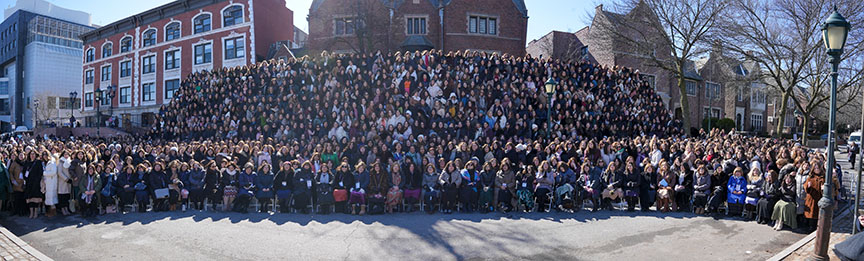
Friday morning featured the iconic “class picture” in front of 770 Eastern Parkway, Chabad-Lubavitch headquarters in Brooklyn, N.Y. Braving the cold, thousands of women stood together in a display of Jewish leadership and unity.

The conference culminated in Sunday’s gala banquet at the New Jersey Convention and Expo Center, centered on this year’s theme: “connection”—the bonds uniting Jewish people with each other and their Creator.

The conference featured numerous workshops and sessions, organized into specialized tracks for shluchas serving college campuses, working with teens and addressing mental health. The women engaged in brainstorming and exchanging ideas and experiences with one another. These sessions were presented in English, French, Hebrew and other languages, reflecting the diverse countries these shluchas call home.

A branch of Hasidic Judaism, the Chabad movement was founded in the late 18th century and traces its origins to Belarus. Under the leadership of the Rebbe, who led the organization from 1950 until his passing in 1994, Chabad expanded significantly, becoming one of the most dynamic Jewish organizations in the world.

In 1953, the Rebbe founded the Lubavitcher Women’s Organization to inspire and empower women to actively participate in Chabad’s mission. Though he expressed reservations about modern feminism, his approach distinguished Chabad within Orthodox Judaism, as women assumed leadership roles, established organizations and strengthened communities, according to conference attendees.

Today, Chabad consists of thousands of emissaries worldwide, with centers in 111 countries. Unlike most synagogues, it operates without a paid membership system, aiming to connect with every Jew—regardless of religious observance—wherever they are.

Some Chabad emissaries live in countries or cities without a large Jewish community or none at all. But wherever Chabad emissaries are stationed, the local Jewish community or Jewish travelers know they have a place to go to if they need to celebrate Rosh Hashana, Passover, Shabbat, or if they are simply lost and need help. The Passover seder in Nepal, for example, is known as the biggest seder in the world. It’s organized annually in Kathmandu and has hosted over 1,000 guests in some years, primarily Israeli backpackers, travelers and locals. The event is a massive logistical operation, requiring the transport of kosher food and supplies to the remote location.

For the shluchas, the conference serves as a great opportunity to connect with other women and hear firsthand about their experiences. Diskin said she found comfort talking with the shluchas from Ukraine who had to deal with the impact of the war with Russia.

“They’ve been through this and understood what we as a community are going through. It’s challenging times, but we know the Rebbe is watching us. We are on this mission to spread more light and things are going to be good in the future.”

“It’s challenging times, but we know the Rebbe is watching us.”

For many of these women, the annual conference serves as a family reunion. “My mother lives in New York and every Shabbat morning, during the Kinus, she invites everyone to her home,” said Cunin. “I get to meet new family members, like the wives of my cousins who had gotten married. It’s a very special time for all of us.”

Cunin’s grandmothers were also shluchas and so are the second and third generations. “To see so many women coming together and showing support for one another is really incredible,” said Cunin.

Her daughter agrees: “This conference gave us a lot of strength, to be able to come together like this—just the feeling that you are part of a bigger force. It was very meaningful.”

Strength and Solidarity at 35th Chabad-Lubavitch Women’s Conference Read More »

Samuel Beckett Wanted No Trilogy Like the Quintilogy of the Torah

Samuel Beckett wrote
to his English publishers
regarding Molloy, Malone Dies and The Unnameable,
“I beseech you, please, no trilogy,”
as if he did not want the novels
to be like a table
that, when
standing on just three legs, is unstable,
in contrast to five volumes of the Torah, a quintilogy

whose stability is reinforced
by Onkelos’s Aramaic translation of all five volumes
attributed to Moses,
foreshadowing Beckett’s
transnational fluent translation
of all his works from French to English,
including Waiting for Godot — Godot’s absence
this bard supposes
recalling God’s, transforming into waiting actors
all the Jewish nation.

At this year’s sedarim I’ll wonder whether
arami in Arami oved avi” implies
that my forefathers spoke Aramaic,
as I trill midrashically, like Beckett,
when he translated God to Godot ….
than our unidentified forefathers
less archaic.


Deut. 26:5 states:

וְעָנִ֨יתָ וְאָמַרְתָּ֜ לִפְנֵ֣י ׀ יְהֹוָ֣ה אֱלֹהֶ֗יךָ אֲרַמִּי֙ אֹבֵ֣ד אָבִ֔ ׃

And You shall then recite as follows before your God: “Arami oved avi, My father was a fugitive Aramean.”

In “Go on, go on, go on:  Samuel Beckett’s three influential novels from the 1950s, reissued,”  TLS, 3/14/25, Cal Revely-Calder, writes, reviewing the reissue of Samuel Beckett’s three influential novels from the 1950s, Molloy, Malone Dies and The Unnamable:

We’re listening to voices. They last for three books. First book: it’s a man, en route to see his mother; he heads into the country, becomes decrepit, and fails. Then it’s another man, on a mission to find the first; he has no more success. Second book: it’s a man in a bed, writing until he dies, which we’re led to believe he does. (The prose trails off suggestively, though that isn’t exactly proof. As Wittgenstein noted, “death is not an event in life”.) Third book: whoever it is, they open with “keep going” and end with “I’ll go on”. Make of that what you will….

“Not ‘trilogy’, I beseech you.” So Beckett wrote to John Calder, his English publisher, on hearing in 1958 of a plan to collect them as one beneath that name. He didn’t mind their being put “between the same boards” – in another letter he called them, opaquely, a “unity” – but he refused the sequential link. It was the sort of objection he made; compare, say, his refusal to approve all-female productions of Godot. But he was overruled more often than posterity might have you believe, and in 1959 an Olympia Press edition appeared, covered in avocado green and subtitled “A Trilogy”. (He translated them all himself, bar a little aid from a young man, Patrick Bowles, with Molloy.) In French, by contrast, Les Éditions de Minuit has held the line, keeping them separate. And this month, in Britain, Faber is republishing them equally separately in English, to mark seventy years since the English appearance of Molloy. Ignore the publicity bumf, which speaks of “the iconic trilogy of novels by the Nobel Prize-winning legend, relaunched for a new generation”: the new books are standalone paperbacks, well designed and set, and at no point in the introductions by Colm Toíbín, Claire-Louise Bennett and Eimear McBride does the word “trilogy” ring out. (Those introductions are mostly interesting and stylistically various, though there are a couple of historical errors – an erratic date, an omitted name – and, more meaningfully to my mind, it would have been nice to hear from further afield: Lydia Davis, perhaps, or Éric Chevillard. Neither short fiction nor French literature, to both of which Beckett means much, is too well read in the anglosphere.)


Gershon Hepner is a poet who has written over 25,000 poems on subjects ranging from music to literature, politics to Torah. He grew up in England and moved to Los Angeles in 1976. Using his varied interests and experiences, he has authored dozens of papers in medical and academic journals, and authored “Legal Friction: Law, Narrative, and Identity Politics in Biblical Israel.” He can be reached at gershonhepner@gmail.com.

Samuel Beckett Wanted No Trilogy Like the Quintilogy of the Torah Read More »

Sean Kanan: Bad Boy Hot Sauce, Gratitude and Pasta

Sean Kanan is an author, actor, Emmy-award winning producer, and founder of Bad Boy Hot Sauce. He’s also the guest for the 100th episode of Taste Buds with Deb!

Kanan’s first role in Hollywood was as bad-boy Mike Barnes in “Karate Kid III,” a role he reprised on the fifth and sixth seasons of “Cobra Kai” on Netflix.

“Martial arts has always been an important part of my life since I was probably about 14, 15 years old,” Kanan told The Journal. “The tenets of martial arts are something that I try to embody every day: courage, honesty, humility. … I look at my life as being very holistic and everything that I do, even though  it may seem like they’re very different pursuits, they’re all interconnected.”

Kanan, who has portrayed Deacon Sharpe on CBS’s “The Bold and the Beautiful” since 2000, refers to all he does with affection and gratitude.

“The first thing I do when I wake up is … thank my creator for five things,” Kanan said. “I just believe that when you’re living in gratitude, you’re living in abundance, and when you’re living in abundance, you’re not living in scarcity.”

The law of vibration says that you match what you put out into the universe, and it impacts you, whether or not you believe in it.

It doesn’t mean that you’re not working like hell to achieve more, but [when] you’re in the present, you’re appreciative for what you have [and] not thinking about the future of what you need,” he said. “When you use words like ‘I want,’ ‘I need,’ ‘I wish’ and ‘I hope,’ it really is putting you in a place of scarcity … so if you’re putting out a vibration of scarcity, you get more of it.”

His books are on brand — his latest is the series: “Way of the Cobra,” “Welcome to the Kumite” and “Way of the Cobra Couples,” co-written by his wife, Michele Vega, as is his new food venture, Bad Boy Hot Sauce. Flavors are Cobra Venom, Mango Madness and Red Pepper Punch.

“Bad boy Mike Barnes, bad boy karate, Bad Boy Hot Sauce,” he said. “It seemed like there was a good synergy there, and it’s been really fun.”

Kanan, who has always been a foodie, wanted to get into the food industry. His first book was called, “The Modern Gentleman: Cooking and Entertaining with Sean Kanan.” He shares a recipe from it, Pappardelle Gemelli, below.

“Paul Newman’s one of my favorite actors, and I am incredibly inspired by Newman’s Own, which is his brand, where he gives 100% of his proceeds away to charity,” he said. “I don’t do that yet, because I’m still building this company, but my goal is to have Bad Boy Eats, which is the parent company … eventually become an engine to provide the financial wherewithal for me to pursue a lot of philanthropic efforts.”

Kanan said he always felt that food is an amazing conduit to connection.

“You break bread with somebody and have a great meal, [then] authenticity tends to come out: walls get dropped, commonalities get brought to the forefront,” he said. “I’ve always recognized that food has that power.”

When Kanan was in college he didn’t have enough money to take dates out to fancy restaurants, so he started cooking for them.

“I still find it really therapeutic; you get the steam coming up and I put some music on,” he said. “It’s a way of … focusing on one thing, shutting out the outside world and [creating] a great meal [that I] get to share with people I care about.”

Food is also great for finding commonalities, especially living in such a fractured world.

“It is so easy to find differences, and I think the one thing we probably can all agree on is every group … has wonderful foods,” he said.

Trying different foods is a great form of cultural exchange. Even better, is also dining with someone who is from a different background.

“You see people’s eyes light up when they talk about the food from their culture,” he said.

Some of Kanan’s favorite Jewish foods include brisket, kugel and latkes. He even loves gefilte fish.

“My great-grandfather used to make his own horseradish,” Kanan said. “Unfortunately, Jewish food is not the healthiest, but it’s delicious: matzah ball soup, kreplach soup; mushroom barley is actually my favorite of the soups one would order at a Jewish deli.”

Learn more about Sean Kanan, at SeanKanan.actor and badboyeats.com. Follow @sean.kanan on Instagram and @seankanan on X.

Watch Sean Kanan’s TEDx on how to be the hero of your own story.

For the full conversation, listen to the podcast:

Watch the interview:

Pappardelle Gemelli

Serves 4

Prep time: 30 minutes

I lb pappardelle

I cup of canned artichokes diced

2 cloves of fresh garlic peeled/chopped Fresh grated Parmesan to taste

1/4 cup chopped Italian parsley

2 tsp crushed red pepper flakes Extra virgin olive oil

2 Tbsp Sea Salt

2 sausage links (chicken, turkey or duck)

Fill a large pot with 5 quarts of cold water. Add sea salt and then bring to a boil. Cook pasta al dente. This should take between 9-I2 minutes once the water has come to a boil. While the water is boiling, grill sausage links. This can be done in about 8-I0 minutes with an electric grill. Once sausage has been cooked, slice into 4-inch pieces and set aside. Just as the sausage is about to finish, sauté artichokes in two tablespoons of olive oil adding garlic after a minute. Sauté for another two minutes over medium heat. Add sausage and artichokes into pasta. Drizzle with olive oil then add red pepper flakes. Toss ingredients together delicately so as not to tear the pasta. Serve in individual bowls with chopped parsley to garnish and Parmesan cheese to taste.

Cheats: Rigatoni or any other big noodle works well too. You can cut down on the pepper flakes if you want it less spicy. Fresh pasta is always best, but box pasta will work too as long as you don’t overcook it.

Gluten-free: Use wide rice noodles instead of pappardelle.

Reprinted from “The Modern Gentleman: Cooking and Entertaining” with Sean Kanan.


Debra Eckerling is a writer for the Jewish Journal and the host of “Taste Buds with Deb.Subscribe on YouTube or your favorite podcast platform. Email Debra: tastebuds@jewishjournal.com.

Sean Kanan: Bad Boy Hot Sauce, Gratitude and Pasta Read More »