fbpx

February 20, 2025

Santa Ana School District Suspends Ethnic Studies Classes in Settlement with Jewish Orgs

The Santa Ana Unified School District (SAUSD) has agreed to a settlement with multiple Jewish organizations in which the district will suspend its ethnic studies courses until they’ve received public input and been rewritten.

The lawsuit was initially filed in Sept. 2023 by the Anti-Defamation League (ADL), American Jewish Committee (AJC), the Louis Brandeis Center for Human Rights Under Law and the Covington & Burling law firm.

“As part of the settlement, SAUSD will cease instruction of Ethnic Studies World Geography, Ethnic Studies World Histories, and Ethnic Studies: Perspectives, Identities, and Social Justice until the courses are redesigned with the opportunity for public input in accordance with California’s open meeting laws,” a press release from the Brandeis Center announcing the settlement stated. “The courses contained false and damaging narratives about Israel and the Jewish people. Antisemitic content will be removed from Ethnic Studies World Histories so that the course can continue being taught for the remainder of this school year only.”

“SAUSD will cease instruction of Ethnic Studies World Geography, Ethnic Studies World Histories, and Ethnic Studies: Perspectives, Identities, and Social Justice until the courses are redesigned with the opportunity for public input in accordance with California’s open meeting laws,” – Brandeis Center Press Release

Journalist Joseph Hammond noted in a Sept. 2023 article for The Journal that a draft for the Ethnic Studies World History course recommended teachers use sociologist’s Michael Mann’s book “The Dark Side of Democracy: Explaining Ethnic Cleansing,” which depicts Israel as “the main contemporary example of settler-conquerors. For half a century, Israelis have been cleansing the occupied territories of native Arabs, most murderously in the late 1940s.” The outline for the course also included an editorial from the anti-Israel outlet Middle East Monitor accusing Israel of ethnic cleansing, according to Hammond.

The lawsuit had alleged that the SAUSD Ethnic Studies Steering Committee discussed about how to deal with “the Jewish question” in response to the Jewish community’s concerns about the curriculum and that committee members referred to Jews as “oppressors” who benefit from “white privilege.” Senior officials on the committee also discussed the possibility of approving ethnic studies courses during Jewish holidays when the Jewish community could not weigh in. As part of the settlement, the district will be dissolving the committee altogether.

The lawsuit also accused the district of circumventing state law requiring that the curricula to be publicly available and open for public comment.

“Antisemitism has no place in our communities – and especially not in our schools. Here, Santa Ana, CA’s past Board & Committee members knew that antisemitism was infecting their curriculum process, and intentionally excluded the public from it,” ADL Vice President, National Litigation James Pasch said in a statement. “Open meeting laws exist to prevent exactly what unfolded in Santa Ana. This case sends a message – not just in Santa Ana, but from coast-to-coast – that if school leaders proceed with implementing antisemitic curriculum and material in violation of the law, we will use the courts to protect the community.”

“Ethnic studies should never become a vehicle for sneaking dangerous, anti-Semitic materials into our schools,” Brandeis Center Vice Chair L. Rachel Lerman said in a statement.  “That is the law, plain and simple, and we’re glad to have stopped this in Santa Ana schools. Unfortunately, this dangerous and deceitful behavior is being attempted in other school districts as well. This should serve as a cautionary tale.  We are watching those jurisdictions and will not hesitate to address similar violations of the law. School boards must operate in the light of day, and not ‘under the radar’ as SAUSD described its own conduct.”

 “It has been our privilege to provide legal support to this effort,” StandWithUs CEO and Co-Founder Roz Rothstein said in a statement. “This lawsuit allowed us to uncover serious issues with the SAUSD’s implementation of California’s ethnic studies laws, leading to the critical results of ensuring that antisemitic material will no longer be included in these courses and improving the district’s process for adopting such future courses.”

Santa Ana School District Suspends Ethnic Studies Classes in Settlement with Jewish Orgs Read More »


Erase the Lines – A poem for Parsha Mishpatim

I will set your borders from the Sea of Reeds to the Philistine Sea, and from the desert to the Euphrates River, for I will deliver the inhabitants of the land into your hands, and you will drive them out from before you. ~ Exodus 23:31

This is not our finest moment
going into a land and removing its inhabitants
so that land will be our land

especially when, thousands of years later
we are arguing that certain land
is our land.

Borders are ridiculous.
To say on one side of a line
you get free Band-Aids

but on the other side bandaids cost
a thousand dollars and you need an ID card
is ridiculous.

To say on one side of a line
food is plentiful, just bring your mouths
and your credit cards and we’ll hook you up

but on the other side food is not a given
and people wonder when there will be
food again is ridiculous.

I like going to the places
across these lines we’ve fabricated
where people have done things

to experience them and taste them
and gaze upon them, so I’m okay with
things being different but you’ll never

catch me building a wall, or
calling for a wall or telling anyone they
need to stay on their side of a wall.

So tear down the walls, erase the lines
remove the word border from the lexicon
and free Band-Aids for everyone.


Rick Lupert, a poet, songleader and graphic designer, is the author of 28 books including “God Wrestler: A Poem for Every Torah Portion.” Visit him at www.JewishPoetry.net

Erase the Lines – A poem for Parsha Mishpatim Read More »

Screaming Our Outrage at Hamas Cruelty

A Jewish mother and her two children are kidnapped and murdered, and a cheering mob in Gaza celebrates their caskets, placed neatly on a public stage.

Let that truth sink in.

Even the toughest critics of Israel could not ignore seeing the caskets of Shiri Bibas and her two boys Ariel (5) and Kfir (1), as well as that of peace activist Oded Lifshitz, paraded by Hamas terrorists.

In recent weeks, Jews have recoiled in horror as Hamas has unapologetically exposed the torture and starvation it has inflicted on Israeli hostages, while publicly humiliating them with a kind of perverted pride.

Among Jews of all stripes, the reaction has been a mix of rage and outrage.

But for 350 liberal rabbis, whom I have no doubt are also sickened by Hamas cruelty, it was another outrage that merited a full-page ad in The New York Times: President Trump’s plan to rebuild Gaza. The ad, which ran on Feb. 13 while Hamas cruelty was in plain sight, read: “Trump has called for the removal of all Palestinians from Gaza. Jewish people say NO to ethnic cleansing!”

There was no mention of the Oct. 7 Hamas massacre of 1200 Israelis, or that Palestinians were living in misery under the thumb of Hamas, or that, one way or another, a solution must eventually be found to improve Palestinian lives.

Suddenly, rabbis who pride themselves on recognizing complexity became narrow, context-free, one-sided bashers on behalf of Palestinians.

Ironically, the biggest thing missing from the ad was something that demands little context or complexity: raw cruelty.

The cruelty exhibited by Hamas has been astonishing not just because of the cruelty itself but because of the glee that accompanies it. It’s one thing to be cruel; it’s quite another to flaunt it to the world.

And yet, as Rachel O’Donoghue reported in JPost, “Mainstream media outlets barely acknowledged the sheer depravity of Thursday morning’s spectacle, offering only the most muted references to the macabre show.”

She adds: “Not a single major news outlet thought it relevant to report that Hamas had invited families to watch—and that they eagerly did, gathering with music and celebration. Not a single journalist spoke of the carnivalesque atmosphere.”

If Jews must convey anything to the world right now, it is to demand unequivocal condemnation of this depravity.

So, if any of the 350 rabbis who defended Palestinians in that New York Times ad are reading this, here is a suggestion: Given that you are surely outraged by Hamas cruelty, why don’t you run another ad, this one on behalf of your people, with a message like this:

“Hamas has celebrated its cruelty with Israeli hostages. Jewish people say NO to such depravity and YES to its global condemnation!”

Yes, defending your people is also a Jewish value.

Update: It was announced later that the caskets included the bodies of the two Bibas children but not that of the mother, Shiri Bibas.

Screaming Our Outrage at Hamas Cruelty Read More »

A Bisl Torah~5 Years Later

This week marks the fifth yahrzeit of my friend and colleague, Rabbi Fred Elias. To mark this milestone, I reunited with several classmates at the Jewish Theological Seminary for a morning of memorializing, reflection, and learning.

Fred stood out as a classmate that was kind, generous with his time and heart, steady, reliable, nonjudgmental, and compassionate. He was witty, silly, and someone that was dedicated to his study of Torah. He was a mensch—through and through.

Our beloved rabbinical school class dean, Rabbi Bill Lebeau, taught a text from Pirke Avot 6:1. The piece explains that when a person learns Torah for the mere sake of learning Torah, the person becomes an emissary for Torah itself. And the text explains that this student of Torah “…makes him like a fountain that only grows in strength and like a river that never ceases its flowing.” Rabbi Lebeau reminded us that this was both Fred in his life and continues well after. Rabbi Lebeau taught, “Fred’s influence is renewed even after his death for those that continue to drink from fountains and rivers of wisdom, and kindness, that flowed from him in his lifetime.”

Today, Fred’s presence was palpable; I could feel his Torah wash over our class: A rabbi from beyond the grave, renewing his classmates with vigor, passion for teaching, and a reminder to continue pursuing our individual and collective callings. His fountain of goodness, embodied within the Torah he gifted the world, flowed back into each of his classmates. His river of kindness, encompassed within the mitzvot and thousands of people he touched, reinvigorated his colleagues’ desires to better the world.

He so very much wanted to live longer, be with his family, and continue spreading the light of Torah to his students and community. Fred, your classmates will do this for you.

In your memory, we hope to make you proud.

Shabbat Shalom


Rabbi Nicole Guzik is senior rabbi at Sinai Temple. She can be reached at her Facebook page at Rabbi Nicole Guzik or on Instagram @rabbiguzik. For more writings, visit Rabbi Guzik’s blog section from Sinai Temple’s website.

A Bisl Torah~5 Years Later Read More »

A Moment in Time: “I See You”

Dear all,

There are so many who are having trouble navigating life in this particular moment in time. And so, I want you to know….

I see you.

If you are feeling vulnerable, I see you.

If you are afraid, I am here.

If you are LGBTQ, and are uncertain if you have a place, welcome home.

If you are struggling, I embrace you.

If you are a refugee, we have a sanctuary for you.

If you don’t have an anchor, I will help ground you.

If you are in darkness, remember that you still have holy light in your soul.

I can see your light, because it is beautiful.

With love and shalom,

Rabbi Zach Shapiro

A Moment in Time: “I See You” Read More »

Completely Unknown He Moans

Regarding “A Complete Unknown”
I now compose this verse,
discussing Bob, whose famous choice
poetically perverse

to accompany his voice,
electrically induced
to amplify its feral sound
unnaturally — seduced

more than by Jewish faith he found
irrelevant to his persona
that changed Inconstantly, like times
which blew his music—moaner

in the wind, as in his famous
song when young. A winner
of Stockholm’s prize Bob won like Seamus
Heaney, though no sinner

for using electricity, forbidden
to Jews on Sabbath. Though Jewish,
most Torah laws that have been written
Bob treated as less than truish,

     while with pure Jewish ungentility

     his voice has the facility

     to project affability

     with ingenuous agility,

not ever gentle, one that scrapes
the skin, it’s said, like sandpaper,
not shifting from true Jewish shapes
Jews’ rule to love your neighbor,

while with the rough voice that he owns
he sings half-truths,
and moans.


Inspired by “Hit and myth A new film on the early days of Bob Dylan, “the most fecund empty vessel who ever did live,” TLS, 1/31/25, in which  Toby Lichtig writes:

On the one hand, this is indeed the story of a young folk (and Elvis Presley) enthusiast from Saint Louis County, Minnesota, who rocks up in New York with a guitar and a whole load of chutzpah and proceeds very quickly to become Bob Dylan; on the other, it is the story of an artist who has remained, to his public and – in the public imagination – to those around him, wilfully unknowable, mercurial, mutable, prodigious, dissembling, disappointing, the most fecund empty vessel who ever did live. Focusing on the four extraordinarily productive years between 1961 and 1965 when Dylan went from being Woody Guthrie’s heir to a feedback-emitting “Judas” (another overblown legend), Mangold’s movie is more mythopic than biopic – and highly entertaining for it.,,,,,

If Robert Zimmerman was born to be Bob Dylan, Timothée Chalamet was born to play him. Several other actors have given it a go, including a full six in Todd Haynes’s experimental capitulation to the singer’s shapeshifting, I’m Not There (2007), but I suspect it will be Chalamet who will be remembered over time. He looks the part – reedy, tousled, prettily inscrutable, as smooth as a mossless stone; he knows how to suck on a cigarette and blow on a harmonica and wield a guitar and sneer at the men in suits. And he mostly sounds the part, capturing, in speech, the throwaway drawl, the Midwest snicker, and, in song, the “voice like sand and glue” (see David Bowie), “as if sandpaper could sing” (see Joyce Carol Oates). And if he is sometimes in danger of overdoing it, that seems fair enough: so was Bob.


Gershon Hepner is a poet who has written over 25,000 poems on subjects ranging from music to literature, politics to Torah. He grew up in England and moved to Los Angeles in 1976. Using his varied interests and experiences, he has authored dozens of papers in medical and academic journals, and authored “Legal Friction: Law, Narrative, and Identity Politics in Biblical Israel.” He can be reached at gershonhepner@gmail.com.

Completely Unknown He Moans Read More »

Print Issue: The Hostage and the Robot | Feb 21, 2025

CLICK HERE FOR FULLSCREEN VERSION

Print Issue: The Hostage and the Robot | Feb 21, 2025 Read More »

Sephardic Torah from the Holy Land | Shalom from a Broken Soul

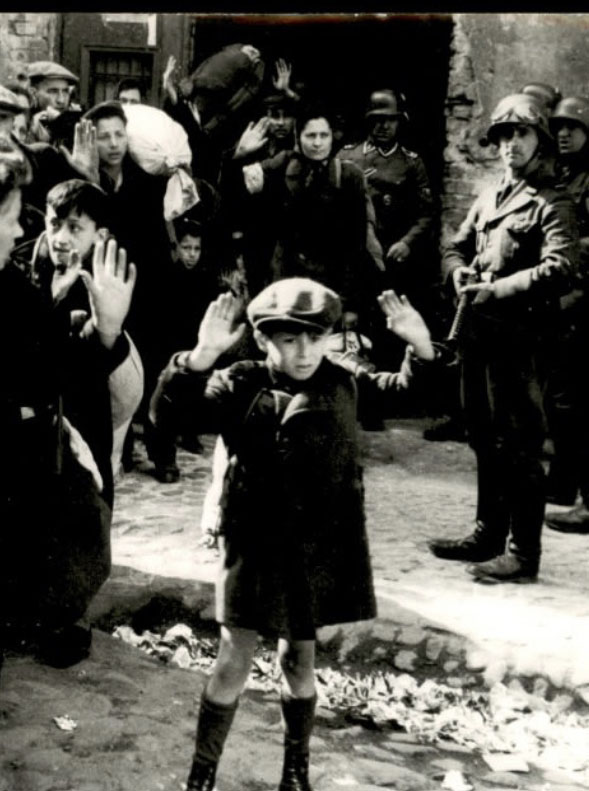
When the dust settles from this long war and extended nightmare that began 500 days ago, it is this photo that will forever remind us of the tragedy and trauma of this period in our history. The fear and pain in this photo will never heal…much like we’ve never really healed from the fear and pain etched in a hauntingly similar photo from another traumatic period in our history.


Rabbi Daniel Bouskila is the international director of the Sephardic Educational Center.

Sephardic Torah from the Holy Land | Shalom from a Broken Soul Read More »

Rabbis of LA | Rabbi Sharon Brous’ Journey, Part 2: ‘I Fell in Love with Talmud’

For more than a dozen years, Rabbi Sharon Brous, the founder and leader of the unique synagogue Ikar (Hebrew for “the heart of the matter”)  has been considered one of the most influential rabbis, and last year her first book, “The Amen Effect,” became a national best-seller. But as we reported last week in Part 1, when she was a student in New York City, she was frustrated in her search for a synagogue where she could feel “engaged.” Raised secularly, she became curious about Judaism as an undergrad at Columbia. Each Friday night for months, she and her boyfriend David Light — who later became her husband — would visit a different Upper West Side shul searching for one where she felt at home. Every visit ended in tears.

But after attending a service at B’nai Jeshurun,  she cried “because my soul had been awakened in this space. I said to David afterward, ‘I need to go to Jerusalem and learn. I have to put together the pieces of my Jewish foundation that I missed growing up. And I have to understand what my grandparents rejected.’”

Her Reconstructionist grandparents had a “very rich” Jewish identity. But they were not religious. Rabbi Brous wanted to understand why. They had made choices that worked for them. “But by the time it got to my generation, I felt as if I didn’t understand the context. I didn’t have the basic literacy to know that this is what they knew, chose, rejected. ‘I wanted to know everything so I could make my own choices,” she said.

The pair left for Jerusalem. She enrolled at Hebrew University. “I dove into the learning,” she said. She was excited about academic inquiry, critical thinking, asking hard questions, deep research.. “I started to learn Gemara (Talmud) at the university. I fell in love with Talmud. This was a big part of my religious transformation. I was a deep learner. I wanted to be a civil rights attorney. When I started learning Talmud,” she said, “all of those synapses were ignited.  I felt a deep spiritual connection, not just an intellectual one.” But there was one part of her learning that left her unsatisfied. “I had a real awareness my voice was not reflected on the pages in the Talmud,” she said, “that these rabbis I was falling in love with, I was starting to understand them as people, and their ideas, and to see them not just as individual quotes and arguments, but to see the humanity of these rabbis. “I also realized there was so much they weren’t sharing because they couldn’t share, couldn’t know, a woman’s experience.”

The deeper Rabbi Brous probed, the more she found she could not ignore.

“I saw how powerful and moving were the voices in the text,” she said. But she saw “this aching need to give voice to some of what was not reflected in the text. Those are the voices of women, queer people, disabled people, people out of the mainstream.”

The future rabbi stood at a crossroads. “I had a choice,” she said. “Either I could flee because this was a tradition written by men for men, handed down over the generations from one man to the next, or I could fight to make space for my voice and others that had been marginalized to be a part of this tradition. It was as much my inheritance as my brother’s. I felt I was going to stick around and fight.”

Her future husband witnessed the journey. “David says part of our falling-in-love story is I am having my Jewish journey and awakening,” Rabbi Brous said. “I don’t even know the words of Kiddush, the long version. We stayed up all night and he taught me the words.”  For his part, David thought: “I lucked out because I found the one woman in the world who thought it was sexy I knew the words to the long version of Kiddush.”

For Brous, “the moment of recognition that I not only wanted to be a student of Torah but a rabbi happened that semester. I was in an Aish HaTorah discovery program in the Old City. 

“I realized — it was an epiphany, a moment of a real crystallizing of things that had been swimming in my heart – the agents of social change that I most admired in the world, the people who had the deepest humanity, who were fighting to lift up the humanity of those who suffered most and were the most vulnerable, were people of faith. They were people driven by a faith narrative.”

“I realized the agents of social change that I most admired in the world, the people who had the deepest humanity, who were fighting to lift up the humanity of those who suffered most and were the most vulnerable, were people of faith. They were people driven by a faith narrative.”

She realized that the Exodus is the “core story we are obsessed with. It is at the heart of my sense of what is broken in the world: poverty, racism, extremism and violence — and also at the heart of what our work is and what needs to be done.”

The thought brought her to tears. “Four Haredi guys see me crying and come over.  ‘What’s wrong?’ they asked. “I said, ‘I am going to become a rabbi.’ I saw blood drain from their faces. One guy said, ‘You should be a rebbetzin.’ I said, ‘I don’t want to marry a rabbi. I want to be a rabbi.’” That, she said, was the first step of her journey. 

At her intellectual core, “every person is created with three innate dignities: the dignity of inestimable worth, every person is infinitely valuable, the dignity of equality, which is the fundamental incompatibility of racism and religion, and the dignity of uniqueness. There never will be another person exactly like you.”

That led her to the epiphany that formed the initial spark for Ikar. “What if we could create a new kind of communal gathering that would honor that human yearning and allow our ancient wisdom to speak in that context?”

Fast Takes with Rabbi Brous

Jewish Journal: Is there a single moment you most frequently recall?

Rabbi Brous: I remember everything about the moment in Jerusalem at the Aish weekend.

JJ: Any unmet goals?

RB: Of course. My dream is a world of love and justice.

JJ: What superpower would you like to have?

RB: I would like to be able to soften people’s hearts so we can see each other in the fullness of humanity.

Rabbis of LA | Rabbi Sharon Brous’ Journey, Part 2: ‘I Fell in Love with Talmud’ Read More »

New Exhibit at Holocaust Museum Depicts 20th-Century Germany Through Collage

“Die Plage,” a monumental new art exhibition at Holocaust Museum Los Angeles, is an artistic exploration tracing German history throughout the first half of the 20th century — from the Weimar Republic that was established after the end of World War I through the atrocities of the Holocaust during World War II.  

Created by the late avantgarde artist Harley Gaber, “Die Plage” — German for “The Plague” — consists of collaged photographs, including archival images from Germany that Gaber photocopied and manipulated using razor blades and scissors. His images show Bauhaus architecture; uniformed Nazi soldiers; worked-up German crowds at rallies; and Jewish victims of Nazi crimes.

Gaber has reworked, resized and recontextualized the images. The result is an intense and reimagined history offering themes that continue to resonate today — specifically, the ease in which an individual can be swept up in the sociopolitical currents of the time.

Gaber has reworked, resized and recontextualized the images. The result is an intense and reimagined history offering themes that continue to resonate today — specifically, the ease in which an individual can be swept up in the sociopolitical currents of the time.

“We are all collages — we’re different people with different experiences,” Jordanna Gessler, chief impact officer at Holocaust Museum LA, told The Journal. “So, the exhibition is also examining the idea of a collage and how Gaber used collage as an artform.”

On Feb. 6, “Die Plage” opened at Holocaust Museum Los Angeles. 

Gaber was born in 1943 in Chicago. He was raised in an unobservant Jewish family and was influenced by Buddhism. Before turning to the visual arts, he was an acclaimed minimalist composer. His compositions from this period in his career, including the groundbreaking album, “The Winds Rise in the North,” incorporated Eastern religion and philosophy.

In 1978, Gaber moved from New York City to La Jolla, California and gave up music composition to focus on collage-making. His eventual work on “Die Plage” utterly consumed him. Though he had no personal or familial connection to the Holocaust, he was inspired by multiple trips to Germany in which he explored archives and historical sites and visited former concentration camps. 

“Die Plage” was Gaber’s largest undertaking. Beginning in 1993, he spent 10 years creating the canvases for the installation, laboring over each image, often throwing away pieces out of frustration. In 2002, he completed the mammoth project.

Adding to the tragedy surrounding Gaber was his decision in 2011 to take his own life. He was 68 at the time. 

Chicagoan Dan Epstein, who knew Gaber from growing up together, recalled the unexpected phone call he received from Gaber when the artist informed him of his plans to take his life. He told Epstein to grab a pencil and proceeded to give instructions to Epstein on how to retrieve the canvases from a storage space in Oregon that comprised “Die Plage.”

On Feb. 6, a panel discussion with Epstein and several others marked the exhibit’s launch at Holocaust Museum LA. Two of the people on the panel — Epstein, founder and president of the Chicago-based Dan J. Epstein Family Foundation, and Mark Breitenberg, an arts educator — knew Gaber. They described him as having an artist’s temperment — challenging, depressive, often broke and living hand-to-mouth. 

They also described him as an “iconoclast.”

Exhibit curator Melissa Martens Yaverbaum and Judy Margles, director emerita of the Oregon Jewish Museum and Center for Holocaust Education, rounded out the panel. Approximately 100 community members — including Gaber’s brother, Steve; his former girlfriend, Christina Ankofska; Holocaust survivor Erika Fabian and Holocaust Museum LA CEO Beth Kean—were in attendance.

Margles, who retired from her role at the Oregon Jewish Museum and Center for Holocaust Education and served as a consultant on bringing the work to Los Angeles, said the themes of Gaber’s photo montages continue to resonate in today’s climate.

“No matter where we are in history, I think there will be relevance for Harley’s work,” she said. Referencing those who argue the Holocaust didn’t happen, “People are trying to erase these memories,” she said, emphasizing the importance of Gaber’s work.

After the panel, as a crowd of people made their way through the exhibit, the musical group, Bauman Trio, performed. 

A live music group was appropriate. In a nod to Gaber’s extensive musical background, the monumental work of “Die Plage” is understood to be divided into four distinct movements. Blank white canvases appear alongside canvases filled with collaged, photo-montaged images. They are intended to serve as visual “pauses,” just as the rests in a composition offers a brief pause.

The entire work has about 4,200 canvases. But on display at the at the museum in Pan Pacific Park are 600 of these canvases. They cover six walls and are arranged in grid-like formations, per Gaber’s original design and intention. Among the canvases are images showing the 1936 Summer Olympics in Berlin. 

With the approach of the Summer Olympics in Los Angeles, Holocaust Museum LA felt these were important and timely to include, Gessler told the Journal.

The exhibit also has items from Gaber’s life, including family photographs and sheet music from his musical scores. There’s also video showing the artist at work. 

For Epstein, president of the family Foundation that manages Gaber’s body of work, seeing people view Gaber’s artwork at Holocaust Museum LA was particularly gratifying. He’s made it his mission for as many people to see Gaber’s “Die Plage” as possible.

“My foundation owns this, and my goal is to find a home for it, a permanent home that will honor it, exhibit it and research it,” Epstein said. “It’s not financial. I just want ‘Die Plage’ to find its place in the 21st century and to be well known and be respected.”

“Die Plage” remains on display through June 30. For information on how to view the exhibition, visit holocaustmuseumla.org/die-plage 

New Exhibit at Holocaust Museum Depicts 20th-Century Germany Through Collage Read More »