fbpx

December 18, 2024

Campus Watch December 18, 2024

UMich DEI Official Fired Over Alleged Antisemitic Comments

Rachel Dawson has been fired from her position as director of the University of Michigan’s Office of Academic Multicultural Initiatives following allegations that she made antisemitic remarks, her attorney told The New York Times.

Dawson is accused of telling two professors during a diversity conference in Philadelphia that her office doesn’t work with Jewish students because they’re “wealthy and privileged” and have no DNA connection to Israel; she is also accused of saying that “wealthy Jews” control the university. Dawson has denied making these remarks and her attorney, Amanda Ghannam, told the Times that they plan on suing the school over Dawson’s termination. A spokesperson for the university told the Times that the school cannot comment on personnel matters.

Anti-Israel Protester Punches Columbia Jewish Student

An anti-Israel protester punched a Jewish student at Columbia University in the face during a Dec. 9 protest just outside the university.

According to the New York Post, the student, 22-year-old Jonathan Lederer, showed up to the anti-Israel protest with his brother while holding an Israeli flag. Lederer told the Post that a mob of anti-Israel protesters surrounded him and accused him of being a Nazi and baby killer and that “Jews have no history in the land. You stole our land.” One of them took Lederer’s flag; when Lederer and his brother followed the protester and implored that he give them back their flag, the protester turned around and punched Lederer on the right side of his face, Lederer claimed.

A university spokesperson told the Post that it is investigating the incident and that the assailant doesn’t seem to be a student at the university. “We want to be absolutely clear that any act of violence against a member of our community is unacceptable,” the spokesperson said.

Columbia Prof Called PFLP Hijackings “Spectacular”

Columbia English Professor Joseph Slaughter, who is also a member of the university’s Committee on the Rules of University Conduct, referred to airplane hijackings by the Popular Front of the Liberation of Palestine (PFLP) terror group as “spectacular” in an Oct. 9 lecture.

The Washington Free Beacon reported that Slaughter’s lecture featured footage of a PFLP hijacking from the 1970s and that Slaughter called the footage “pretty spectacular.” “Nobody dies except one of the hijackers,” Slaughter said in the lecture. “What’s remarkable about the historical footage from this thing is the way that the PFLP hijackers are helping people off the airplane and taking them over to tables to eat. This is a national liberation imaginary that is just so different from the moment that we are living in.” However, the Free Beacon noted that “when terrorists seized one of the planes, hijacker Patrick Arguello attempted to detonate a grenade that failed to explode. He then shot a steward before an air marshal returned fire, killing him” and that the PFLP terrorists held 56 Jewish hostages “for weeks.”

Slaughter denied glorifying the hijackings, telling the Free Beacon that he was simply trying to “historicize the role that such violence (in the form of airline hijackings) played in transforming the international discourse of human rights in the 1970s.”

GMU SJP Suspended After Hamas, Hezbollah Flags Found in Leaders’ Home

George Mason University (GMU) suspended the campus Students for Justice in Palestine (SJP) chapter after a November police raid of the chapter leaders’ home found reportedly found Hamas and Hezbollah flags, firearms and ammunition and foreign passports.

According to the Free Beacon, what triggered the raid was police suspicions that Jenna and Noor Chanaa, who are sisters, led a group of students who vandalized the university’s student center with anti-Israel graffiti. The Free Beacon cited court documents in which police say they found “pro-terror material” that included the Hamas and Hezbollah flags, as well as signs stating “death to America” and “death to Jews.” Noor is the current co-president of the GMU SJP chapter and Jena was the prior chapter president. The chapter is current under an interim suspension and the Chanaa sisters are both barred from campus for four years.

Rice University Students Reject Anti-Israel Resolutions

Rice University students rejected three anti-Israel resolutions in a campuswide vote.

The Rice Thresher reported that the rejected resolutions called for the university to divest with companies that conduct business with Israel, issue a statement condemning Israel’s “genocide” in the Gaza Strip and committing to support “anti-colonial scholarship.” The resolutions all failed to reach the two-thirds threshold of the student vote to pass, though each of them received a majority of the student vote. A resolution calling for the university to disclose its investments did pass.

Campus Watch December 18, 2024 Read More »
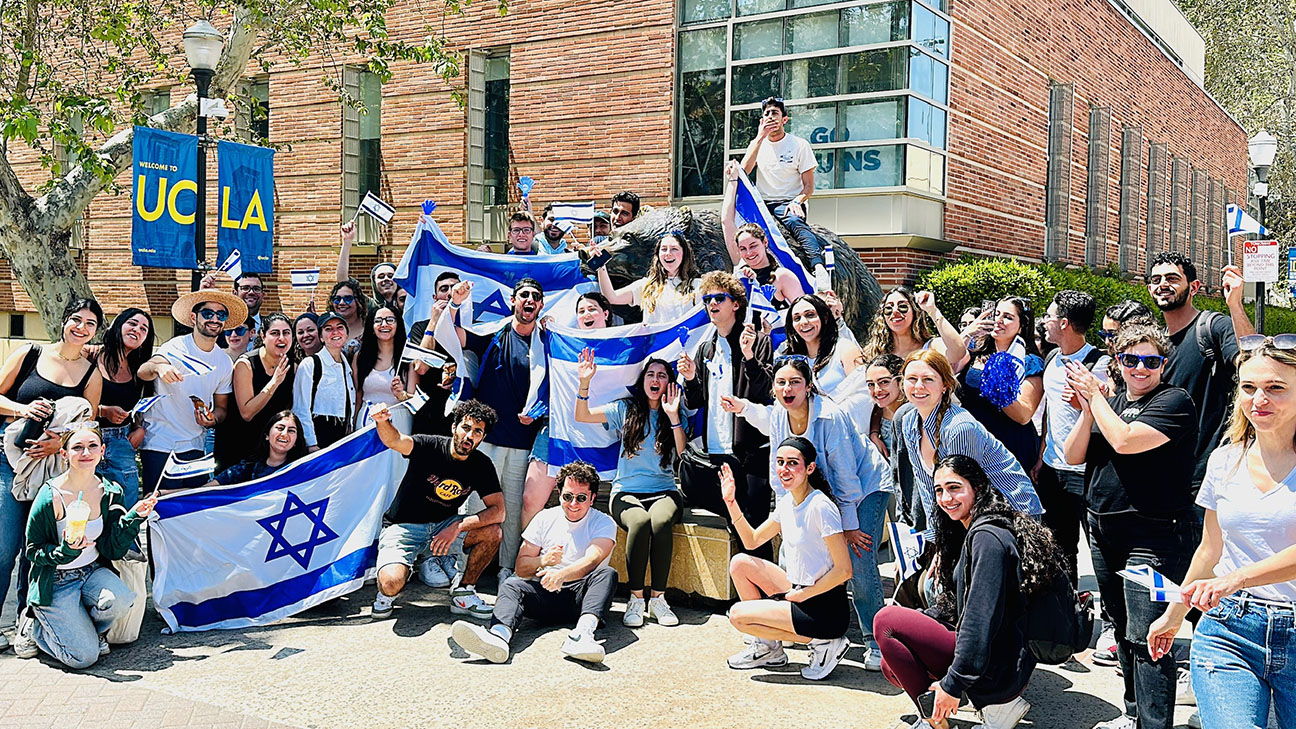
Jewish Community Foundation LA Awards $4.3 Million in Grants

The Jewish Community Foundation of Los Angeles (JCFLA) recently awarded $4.3 million in grants to 87 organizations. 

In Los Angeles, $2 million in grants from JCFLA are being awarded to 58 Jewish nonprofits to “enhance healthier workplaces and staff wellbeing, address antisemitism and strengthen a Jewish social safety net for vulnerable people,” a JCFLA statement says.

The L.A.-based recipients of the grants represent a mix of larger, legacy organizations, such as Simon Wiesenthal Center, Beit T’Shuvah, Jewish Family Service of LA and Bet Tzedek, as well as newer and more modestly sized initiatives, including Pico Union Project, Fuente Latina, JIMENA and Our Big Kitchen Los Angeles.

Our Big Kitchen Los Angeles
Courtesy of Jewish Community Foundation of Los Angeles

Additional local recipients of the grants include Chabad at USC, Hillel at UCLA, JQ International, Jews of Color Initiative, Aish LA, Nova Music Festival Exhibition, StandWithUs, Holocaust Museum LA, Jewish Big Brothers Big Sisters LA, Chai Lifeline West Coast, Creative Community for Peace and Moishe House.

Hillel at UCLA Courtesy of Jewish Community Foundation of Los Angeles

In Israel, another $2 million in JCFLA grants are being allocated to 29 nonprofits addressing critical needs in the aftermath of Oct. 7, including mental health and resilience, social cohesion and support for at-risk children and youth.

The awarding of the grants signals how the foundation has shifted gears from an approach of allocating larger grants benefiting a smaller pool of organizations to one involving the giving of smaller grants supporting a wider range of organizations, Naomi Strongin, vice president of JCFLA’s Center for Designed Philanthropy, told the Journal in a recent Zoom interview.

During previous grant cycles, the organization provided multiyear grants up to $300,000 under the auspices of its Cutting Edge Grants program. Such a grant had the capacity to change the course of a recipient organization. While the grants provided in this latest cycle were “healthy,” they were not intended to be “transformative,” according to JFCLA leadership.

JFCLA staff described this latest cycle of giving as a “broad-reaching grants initiative.”

For the Los Angeles organizations, the allocations included general operating grants, in amounts ranging from $50,000-$80,000, along with human capital grants, ranging from $10,000-$40,000. The latter was designed to support staff wellbeing as well as professional development at each of the recipient organizations.

In Israel, the grants awarded to each organization were slightly higher, ranging from $75,000-$100,000.

In 2023, the foundation managed $1.4 billion in assets entrusted to it by 1,400 client families and distributed $177 million in grants, JFCLA Marketing and Communications Manager Janet Keller told the Journal.

The foundation is a manager of charitable assets and the self-described “leader in planned giving solutions for Greater Los Angeles Jewish philanthropists.” The organization, founded in 1954, is currently celebrating its 70th year serving the Los Angeles Jewish community.

The foundation announced these new grants this past September. They follow 55 security grants that JCFLA distributed in July to enhance the physical safety of local Jewish nonprofits, thus totaling more than 140 grants that the foundation allocated over the second half of 2024.

“This $4.3 million of support to a record 87 nonprofits underscores our enduring commitment to strengthen our local Jewish community and the people of Israel,” JCFLA CEO Rabbi Aaron Lerner said in a statement. “In the past, we focused on supporting a smaller group of nonprofits with bigger grants. However, in light of the challenging times we’re living in, broadening our recipient pool to include a wider spectrum of organizations will better meet the pressing needs of our community. As we celebrate 70 years of service, we remain steadfast in our support of essential programs that foster resilience, unity, and well-being.”

Jewish Community Foundation LA Awards $4.3 Million in Grants Read More »

Slightly Odd, Weirdly Magical: the Jews

In a topsy turvy world, antisemitism has burgeoned, incidents of Jew hatred have exploded over the past two years, and a pervasive sense of being threatened, demonized, and caricatured haunts many of us. It is precisely at such times that we resist the temptation to catastrophize. We must mobilize to fight the hate and distortions, yes. But we also would do well to remember the many ways we Jews continue to enjoy a unique and positive role in America, and to use that asset for the benefit of all.

A story from a couple years ago will help drive the point home. Most years, the ordination of the Ziegler ordination is held on a Monday night. But the only thing more powerful than this unbroken tradition is my daughter, Shira, who that year graduated from Ithaca College, which you know is in upstate New York. A piece of advice to Los Angeles parents, if you want to be sure that your children move home after college: send them somewhere very, very cold and very, very rural. 

But here’s what I want to share with you about Ithaca College and its graduation ceremony. There are not a lot of our people there, if you know what I mean. Like there’s basically no landsmen, no MOTs. At that graduation ceremony, I saw only one kippah, and that was only when I took aerial selfies. Of course, being a Jew in a place where there are not many Jews leads people to respond to you in unusual and piquant ways. 

Like, for instance, at a gathering of the women’s crew team on which my daughter is a coxswain, (that’s the person who shouts at everybody else).  She turned a lifelong character default into a valuable leadership asset. Somebody from across the room saw my kippah and felt the need to tell me that they’ve always loved the Jewish people. In fact, they assured me, they teach in a school, and every year in December they make a point of bringing one of those candelabra. And they teach people about Hanukkah as well as Christmas because it’s so important that we should all love each other, isn’t it? 

And it is. 

But my favorite moment of the graduation ceremony came about as a result of the College honoring with an honorary doctorate, the remarkable playwright Tony Kushner. 

He was given five minutes to speak, and he stuck to his deadline. His talk was brilliant and brief. At the reception afterwards, someone came over to me and told me that they were 79-years-old and they had never heard a better graduation speech. And I said, “yeah, it was pretty good.” They looked at me with some confusion, then told me their name. So I responded with my own, “Brad Artson.” And he brushed it off, now with some annoyance. 

Then he proceeded to tell me that he’s a great admirer of my plays. 

Now, I’m a rabbi, so my job is to let people believe what they want. So I just responded by noting that the concept of that angel with wings was a stroke of luck. 

But here’s the serious lesson I learned from my time in upstate New York: We Jews are a strange and exotic creature. We are odd, we are unusual, we are slightly magical, and we are wonderful. This gentleman came up to me with genuine affection and admiration for us. (He just couldn’t tell us apart).

The question that his assessment of us raises is what is the appropriate set of values and practices to cultivate a Judaism that is also strange, slightly weird, magical and wonderful. That is where our strength and vitality remain. It is where they have always been found.

There are some voices out in the world, Jewish and Gentile, who try to force us to cower in fear, to hide behind a Judaism of boxes and walls, a Judaism on retreat, a defensive sort of Judaism in which we put our energy into trying to minimize our losses. 

But that’s not the Judaism that those sincere and well-meaning people looked at me and saw. They saw weird, and wonderful, and magical. So, my invitation to us all is: can we rise to give them what they want? Can we live a Judaism that is open and bold and boundary-crossing and brave and world- shattering and world-shaping? 

Can we offer the world a Judaism that does not cower in fear, that does not assume a defensive posture, but proudly speaks to the world because we have wisdom, community, and vision that the world still needs?

Can we offer the world a Judaism that does not cower in fear, that does not assume a defensive posture, but proudly speaks to the world because we have wisdom, community, and vision that the world still needs?

We are not alone. The model exists in our own Scripture. I think of Joseph in Egypt being that expansive Jew. Imagine the stories he was told! And he was one shrewd visionary who achieved some remarkable breakthroughs. I think of our Queen Esther and how she was able to mobilize our people and to bring allies to the table to fight an unjust decree. 

And I think of the greatest of them all, our Rabbi Moses, who wandered in diaspora his entire life saying the corrupt power of pharaohs always will crumble, so long as we are willing to march out and to split seas. The example of Moses reminds us, don’t stand too close to the palace. Don’t become attached to the glory and the pomp. It will fall. But we, a people wandering, pledged to a God we do not see with our eyes, but intuit with our hearts, graced with an ancient text of love, justice, and yearning, we will see the empires rise and crumble and rise and crumble and will outlast them.  But only if we are true to who we are meant to be.

I think of the values that move us in the world and that I hope move you as well. “Some trust in chariots, some in horses, but we devote ourselves to the Holy One, our God. “

I think again of Joseph. “Now therefore, let Pharaoh select someone discreet and wise. And Pharaoh said to his servants, can we find such a one as this, a person in whom the Spirit of God resides?” Discreet and wise and filled with the Spirit of God, that is who we are called to be. That is who we are invited to be. That is what the world expects us to be. We betray ourselves and our friends when we allow ourselves to be made into a tinsel Pharaoh, into some cheap version of Empire, when we hide behind the convenient illusions of coercion, injustice, or domination. 

We become a poor version of something we are not. We are the grateful heirs of thousands of years of diaspora living. We celebrate with our brothers and sisters the resurgence of Jewish life in the Land of Israel, and its work to attain a just settlement for Israelis and for Palestinians for democracy and for security in our land. Israel is at the center of our souls, but we are here. And we must turn to our roots, to those great models of diaspora life, 

• Who knew enough to rely on wisdom and not coercion. 

• Who were able to rely on resilience rather than retribution. 

• Who excelled in learning and in compassion. 

• Whose patience was one of limitless depth of faith and of hope. 

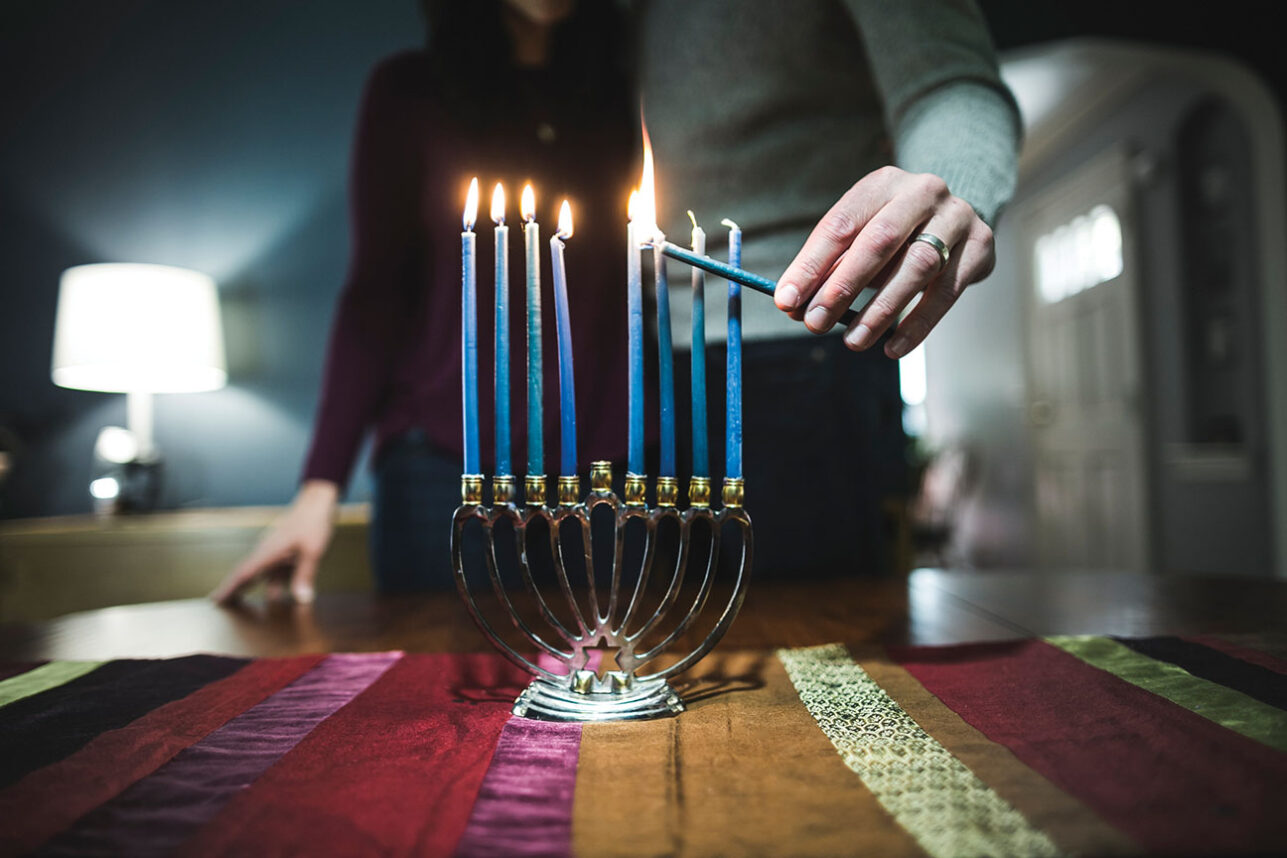
As we approach the days of Hannukah, the holiday of sharing our Light, I bless each of us that we should resolve to represent to the world a Torah that is a source of wisdom not only for our own but for all peoples. A tradition that is a source of justice, not only for our tribe, but for all tribes and for the tribeless. I bless us that we should be a source and a channel for holiness, both for those with faith and those whose faith has been wounded and damaged and left behind. 

The Good Brigade/Getty Images

And finally, I invite you to live the vision of our prophet Isaiah, to become truly “a beacon to the nations,” so that in the Judaism we breathe and live and walk, the world will know through us greater light, greater justice, and greater peace.


Rabbi Dr Bradley Artson, a Contributing Writer to the Jewish Journal, is the Abner and Roslyn Dean of the Ziegler School of Rabbinic Studies and Vice President of American Jewish University. He is also Rabbinic Leader for the Abraham Joshua Heschel Seminar, training Conservative/Masorti Rabbis for Europe.

Slightly Odd, Weirdly Magical: the Jews Read More »

The New ‘Différend’: How Bernard-Henri Lévy’s Campus Tour Clarified the Stakes

In the late 20th century, French philosopher Jean-François Lyotard introduced the concept of “différend,” describing disputes in which one party’s grievances cannot be expressed within the dominant framework, rendering them voiceless. Today, this concept has been grotesquely distorted in academia, where foreign actors like Iran and Qatar exploit the language of oppression to advance a destructive agenda. Cloaked in the guise of “decolonization,” their propaganda redefines Israel as the ultimate oppressor, eroding the liberal values that sustain the free world.

But this distortion does more than target Israel — it threatens the very fabric of Western society. The propaganda flooding campuses doesn’t remain confined to antisemitism. It spills over into a broader assault on intellectual integrity, liberty, and democratic principles. The ideology of hate is contagious, diffusing through academia and society, destabilizing discourse, and eroding the moral clarity that underpins the West.

Clarity Amid the Chaos: Bernard-Henri Lévy’s Campus Tour

Bernard-Henri Lévy, the French philosopher whose unwavering advocacy for human rights has spanned more than five decades, including campaigns for oppressed Muslim minorities and Kurds facing genocide, recently embarked on a tour of American campuses. Armed not with rhetoric but with piercing clarity, his message, encapsulated in his latest book, “Israel Alone,” and reiterated in his campus talks, was a much-needed antidote to the intellectual fog clouding academia.

Lévy’s body of work offers a roadmap for understanding and confronting the challenges facing both Israel and the broader democratic world. From “Who Killed Daniel Pearl?,” in which Lévy follows the footsteps of the murdered Wall Street Journal reporter to unravel the global consequences of Islamist extremism, to “The Genius of Judaism,” a profound exploration of Jewish values, Lévy has consistently demonstrated a commitment to truth and moral clarity. His writings, such as “The Empire and the Five Kings,” expose the decline of Western influence and the rise of authoritarian forces, while “American Vertigo” reflects on America’s role as a beacon of democracy. Each book serves as a chapter in a larger conversation about freedom, liberal values and the resilience of democracies in the face of authoritarianism. “Israel Alone” continues this tradition, positioning Israel as not just a geopolitical entity but defending Zionism as a noble idea central to the fight for justice and truth in an age of propaganda and disinformation.

In “Israel Alone,” Lévy offers a stirring defense of Israel as a unique moral project, born out of the ashes of Jewish persecution. Lévy situates Israel’s struggle within a broader historical narrative of resilience and survival, challenging readers to confront uncomfortable truths about antisemitism and its modern manifestations. Lévy emphasizes that defending Israel is not merely about good strategy and smart geopolitics. Rather Israel embodies a democratic and free society fighting for universal values. “Go read the book,” Lévy urged students, offering them a lens to see Judaism and Zionism not as caricatures painted by their detractors but as traditions that have enriched humanity.

Lévy situates Israel’s struggle within a broader historical narrative of resilience and survival, challenging readers to confront uncomfortable truths about antisemitism and its modern manifestations.

Lévy’s approach is not one of deflection or defensiveness. Instead, he reframes the conversation by injecting beauty, truth and depth into the narrative about Israel and Judaism. His arguments, from both “The Genius of Judaism” — a poetic exploration of the spiritual, moral and intellectual contributions of Jewish values — and “Israel Alone,” help the public to find the words, pride and intellectual weapons to better navigate the rampant antisemitism.

This emphasis on the beauty of Judaism and Zionism is precisely what today’s propaganda seeks to erase. Lévy reminds us that the battle for Israel is not merely political — it is existential. It is about preserving the dignity of people and the values they represent justice, freedom and a commitment to ethical responsibility.

Campus Propaganda: A Calculated Assault on the West

On campuses, where the next generation of leaders is forged, the language of “oppression” and “decolonization” has been weaponized. Terms like “colonizer” and “apartheid” are wielded not as tools of inquiry but as instruments of silencing and division. This lexicon reduces Israel — and by extension, Judaism and Zionism — to symbols of moral failure, stripping them of their nuance, history and humanity.

Lévy’s campus tour shed light on the profound danger of this trend. He described a battlefield where one side seeks to erase the other, not through debate but through domination. Students, eager to champion “social justice,” are fed a false narrative that replaces critical thinking with ideological conformity. Professors who challenge this orthodoxy face ostracism, and Jewish students are vilified, isolated and targeted.

This hate does not stay confined to antisemitism. It is a harbinger of a broader societal change that undermines the very values the West holds dear. The collapse of intellectual integrity in academia reflects a larger cultural shift — a decay of reason, dialogue and the shared pursuit of truth.

A Dangerous Distraction

Lévy also underscored the deliberate nature of the fixation on Israel. This obsession is not a spontaneous moral awakening but a calculated distraction orchestrated by authoritarian regimes. By directing outrage toward Israel, regimes like Iran, Qatar and Russia deflect attention from their own atrocities — imprisoning journalists, executing dissidents, exporting terror and attacking democratic countries.

These forces understand the power of the oppressor-oppressed narrative to destabilize liberal democracies. By infiltrating academia with their propaganda, they aim to weaken the moral and intellectual foundations of the free world. Students are enlisted as unwitting foot soldiers in a campaign that ultimately undermines their own freedoms.

Reclaiming the Narrative

Lévy’s message is both a warning and a call to action. He reminds us that the beauty of Judaism and the moral clarity of Zionism must not be lost to the noise of propaganda. We must confront the distortion head-on, exposing its origins and its funding. More importantly, we must offer a counternarrative that celebrates the values of Judaism, Zionism, and liberal democracy.

This is not merely a defense of Israel or the Jewish people — it is a defense of the West. The survival of intellectual freedom, human rights and democratic principles depends on our ability to resist the forces that seek to tear them down. As Lévy’s campus tour so powerfully demonstrated, clarity, courage and truth are our strongest weapons in this fight. Let us wield them wisely.


Sagit Sade Attia is the National Senior Director of Academic Action at the IAC, a former litigator before the Israeli Supreme Court and a lifelong advocate for justice and equity, who created the SHIELD Support Center to empower students and faculty while combating antisemitism in academia; SHIELD@israeliamerican.org

The New ‘Différend’: How Bernard-Henri Lévy’s Campus Tour Clarified the Stakes Read More »

Native Tribes and Lost Jews

Ever since Joseph, coat torn, was tossed into that fateful pit by his brothers in the book of Genesis, the Twelve Tribes of Israel have never fully reconciled. Benjamin, Naftali, Issachar, Judah and Co.’s descendants squabbled over subsequent biblical books, leading to a divided Israelite kingdom shortly after the reign of King Solomon. Ten of the tribes were exiled by the Assyrians during the 8th century BCE and lost to assimilation within the vast empire. Only two – Judah and Benjamin – remained as identifiably Israelite over subsequent centuries.

Tradition believed that should those lost Ten Tribes be found, the reunification would signal the start of the Messianic Era. 

A long-forgotten theory, unmentioned in the latest debate over Christopher Columbus’ Jewish origins, is that with the discovery of the Americas, the hope quickly emerged that the New World’s Natives might in fact be these long-vanished Jews. 

In 1650 in Spanish and two years later in English, the popular Amsterdam-based Rabbi Menasseh ben Israel published his book “Mikveh Yisrael” (“The Hope of Israel”). It reflected the Messianic hopes swirling in his time, spurred in the Dutch Republic as Ashkenazi Jews reunited there with their once-distant Iberian Sephardic coreligionists. As Lipika Pelham has written, ben Israel’s community, inspired by the coming together of those who had been apart for centuries, believed that “perhaps the Jewish wandering, the aspiration of the previous Diasporas, had reached its completion. The next and final step would be the Jews’ return to the land of their ancestors.” In “Mikveh Yisrael,” ben Israel cites the findings of a crypto-Jew named Antonio de Montezinos, whom he had met. The itinerant Portuguese-born Montezinos claimed to have bumped into members of the tribe of Reuben in the northern Andes, in modern-day Colombia after escaping the Inquisition in 1639. In his travelogue, he recounted how these Natives could recite the Shema prayer in Hebrew and told him, much to his surprise, “‘Our Fathers are Abraham, Isaac, and Jacob’ … then they joined Reuben adding another finger to the former three” that they had lifted up in counting off their biblical-era ancestors.

Enthralled by this discovery, Rabbi ben Israel saw prophetic potential. After all, he claimed, once Jews settled in the corners of the world, the Messiah would swiftly arrive, based on the verse in Deuteronomy, “Then the Lord will scatter you among all the nations, from one end of the earth to the other.” Ben Israel even used this argument to encourage the Lord Protector of the British Commonwealth Oliver Cromwell to allow the exiled Jews back into England. After all, England, “land of the angles,” was believed to be one such corner of the globe. The country’s name in French translates to Angleterre – end of the land.

Ben Israel wasn’t alone in his belief, as the Americas had sparked millennial expectations in Christianity as well. As the historian Elizabeth Fenton has documented in her “Old Canaan in a New World,” the Puritan Edward Winslow, in his 1649 work “The Glorious Progress of the Gospel Amongst the Indians in New England,” saw his community’s role in spreading their faith to the Natives as helping them return to their biblical roots. 

Roughly a decade later, the English Presbyterian minister Thomas Thorowgood published a similarly-minded tract, “Jews in America; or Probabilities, that those Indians are Judaical.” It was inspired by Rabbi ben Israel’s writings. He listed, among other purported commonalities: “They constantly anoint their heads, as did the Jews … They delight exceedingly in dancing … eate no swines flesh tis hateful to them as it was among the Jewes” (sic) and “The Indian women are easily delivered of their children, without Midwives, as those in Exod. 1.19,” a reference to Shiphrah and Puah’s explanation to Pharaoh as to why they hadn’t killed Jewish male babies in the delivery room. Alas, the Judaic origins of the Natives weren’t necessarily to their credit. “The Jews were a sinful people,” Thorowgood wrote, “the Indians were and are transcendent sufferers.” It would be, in his opinion, Christianity that would redeem them.

The Hebraic Indian theory was considered by Thomas Jefferson in a letter to John Adams.  Jefferson mentioned that he had read a work by the historian James Adair that “believed all the Indians of America to be descended from the Jews: the same laws, usages, rites & ceremonies, the same sacrifices, priests, prophets, fasts and festivals, almost the same religion, and that they all spoke Hebrew.” Jefferson cautioned, however, “his book contains a great deal of real instruction on its subject, only requiring the reader to be constantly on his guard against the wonderful obliquities of his theory.” 

Adair’s book, “The History of the American Indians,” had been published in 1775, based on the recommendation by Benjamin Franklin to the publisher. Its support for the Judaic origins of the Indians included claims such as the Natives calling God “Yohewah,” which sounds like the ineffable name of the Jewish God, and the “Cheerake” (sic) observing the biblical law of offering cities of refuge to accidental murders “so inviolably; as to allow their beloved town the privilege of protecting a wilful murtherer.” Adair also noted what struck him as observance of the “Mosaic laws of uncleanliness,” with women separating themselves from their husbands for a certain period every month, and “their frequent bathing, or dipping themselves or their children in rivers, even in the severest weather,” which, in his opinion, “seems to be as truly Jewish, as the other rites and ceremonies which have been mentioned.”

The theory was taken so seriously that the Founding Father Dr. Benjamin Rush, a signer of the Declaration of Independence, acting as a medical advisor to the expedition of Captain Meriwether Lewis and Lieutenant William Clark in 1803, supplied the adventurers with a list of exploratory questions, including “What Affinity between [Native American] religious Ceremonies and those of the Jews?”

Other Christians saw in the Native tribes not lost Israelites but to-be-defeated Canaanites, from whom the Children of Israel had conquered the Promised Land. In a representative example, Yale College president and Congregationalist minister Timothy Dwight IV, in his 1785 poem “The Conquest of Canaan,” described the mission of the Christian Americans to subdue the native pagan peoples through the biblical prism of Israel’s defeat of the also-pagan Canaan.

Nineteenth century America’s most famous Jew held firm to his hope that the Hebraic Indian theory was true. In 1837 the former diplomat, popular playwright and journalist Mordecai Manuel Noah published “Discourses on the Evidences of the American Indians Being the Descendants of Lost Tribes of Israel.” In it he listed as supporting evidence “their belief in one God,” “the computation of time by their ceremonies of the new moon,” “their divisions of the year in four seasons, answering to the Jewish festivals of the feast of flowers, the day of atonement, the feast of the tabernacle, and other religious holydays,” “the erection of a temple after the manner of our temple, and having an ark of the covenant, and also the erection of altars,” and “the division of the nation into tribes with a chief or grand sachem at their head.”  

Nineteenth century America’s most famous Jew held firm to his hope that the Hebraic Indian theory was true. 

Noah concluded: “… in their daily prayers and sacrifices, in their festivals, in their burials, in the employment of mourners, and in their general belief, I see a close analogy and intimate connection, with all the ceremonies and laws which are observed by the Jewish people; making a due allowance for what has been lost, and misunderstood, in the course of upwards of 2000 years.” 

A few years earlier, Noah, embracing America’s emergence as a land premised on biblical covenants, had attempted to build a homeland for the Jews in upstate New York. He invited the nascent Jewish community to join, alongside their coreligionists in Europe, who, Noah believed, would come to escape European antisemitism. They would be joined by, naturally, the Native Americans. In language echoing ben Israel’s two centuries before, he proclaimed, “If, as I have reason to believe, our lost brethren were the Ancestors of the Indians of the American Continent, the inscrutable decrees of the Almighty have been fulfilled in spreading unity and omnipotence in every corner of the globe.” If all these scattered Jews could come together on his island near Buffalo, “what joy to our people, what glory to our God, how clearly the prophecies have been fulfilled … how providential our deliverance.” Alas, nothing came of Noah’s initiative, and Jewish national renewal would have to wait until 1948.

By the second half of the 19th century, as the U.S. hurtled towards the Civil War, national interests had swayed from pondering the potential ancient origins of the land’s original settlers. The whereabouts of Israel’s Ten Tribes settled back into the sands of history. But at least for a time, Americans had believed that Naftali and Issachar’s descendants could be found right next door.


Rabbi Dr. Stuart Halpern is Senior Adviser to the Provost of Yeshiva University and Deputy Director of Y.U.’s Straus Center for Torah and Western Thought. His books include “The Promise of Liberty: A Passover Haggada,” which examines the Exodus story’s impact on the United States, “Esther in America,” “Gleanings: Reflections on Ruth” and “Proclaim Liberty Throughout the Land: The Hebrew Bible in the United States.”

Native Tribes and Lost Jews Read More »

Newsom on Hot Seat

The unanticipated consequences of the Hamas terrorist attacks on Israel last October have not just remade the face of the Middle East, but they have upended American politics and culture as well. Incidents of antisemitism in this country have skyrocketed over the past 14 months, protests against the Gaza War have roiled college campuses across the country, and it can be argued that divisions among progressive voters on these issues may have contributed to Kamala Harris’ defeat in last month’s presidential election.

The debate over the war has also unveiled the broader and longer-term challenges that the Jewish community will face in this country for the foreseeable future. Many of us had assumed that antisemitism had been banished to the darkest corners of our society and that the threat that had stalked the Jewish people for most of our existence was – while not completely extinguished – no longer the type of danger to us that it has been in the past. We were wrong. 

Virulent antisemitism is sometimes disguised as progressive anti-Zionism and on other occasions is hidden by broader nationalism and prejudice from the right. But the marginalization and demonization of Jews, while it has never gone away, is back with a vengeance. This is a fight that we will confront in our politics, but also in our schools and our synagogues, in our neighborhoods and our communities. 

In addition to the adversities that continually arise for us on the international stage, a less visible but critically important battle will take place early next month. Though likely to be overshadowed by ongoing conflicts in Damascus and Dublin and other global outposts, our fight will move to Sacramento, where the state legislature will convene in January and Governor Gavin Newsom will present his budget proposal for the next fiscal year. Three years ago, Newsom signed legislation mandating that the state’s public high schools offer an ethnic studies class beginning in the 2025-26 school year. With that start date coming up fast, language in the bill that was largely overlooked at the time has become critically important, and Newsom and the legislature will need to resolve necessary questions before the class can be taught – and how it will be taught – when the state’s public schools reconvene next August.

The original ethnic studies legislation that was debated in the State Capitol included numerous alarming examples of blatant anti-Semitism as well as a pronounced pro-Palestinian bias in its recommended materials. 

The original ethnic studies legislation that was debated in the State Capitol included numerous alarming examples of blatant antisemitism as well as a pronounced pro-Palestinian bias in its recommended materials. After a long and courageous fight led by the legislative Jewish caucus, the bill that Newsom signed explicitly warned against the use of these discriminatory materials and provided “guardrails” to ensure that ethnic studies classes provided an even-handed overview of the relevant communities that will be part of the curriculum, including Jews.

However, the bill stated that the classes would only be offered “upon appropriation.” In other words, the legislature and governor would need to include funding in the state budget to pay for the creation and implementation of this new mandate. But no money has been allocated, and the first day of class is less than nine months away. There has been some disagreement over precisely how much money will be needed to establish the ethnic studies course, but neither the governor’s office nor the state Department of Finance has offered any indication as to whether funding will be included in Newsom’s budget in January.

Complicating matters further has been the evolution of a “liberated” ethnic studies curriculum, which includes many of the antisemitic and pro-Palestinian material that Newsom has warned against. It’s unclear whether the lack of prescribed funding in the budget will allow the objectionable material to be taught. Nor is there any indication whether other revisions to the original bill can be implemented, which could either strengthen or weaken the anti-discriminatory provisions.

In the first days of the new year, Newsom will be able to answer these questions and tell us whether and how the state’s public schoolchildren will be taught about the Jewish people and our faith. We’ll let you know what he says.


Dan Schnur is the U.S. Politics Editor for the Jewish Journal. He teaches courses in politics, communications, and leadership at UC Berkeley, USC and Pepperdine. He hosts the monthly webinar “The Dan Schnur Political Report” for the Los Angeles World Affairs Council & Town Hall. Follow Dan’s work at www.danschnurpolitics.com.

Newsom on Hot Seat Read More »

Today’s Headlines Hold Teachable Moments for American Children

Journalists write for adults. Find me a 12-year-old who reads The Washington Post daily and I will gently nudge her in the direction of a playground so she can still access childhood moments before she’s old enough to vote. 

The average American teenager consumes news from social media, especially TikTok. According to Pew Research, 63% of teens today report using TikTok, while four out of 10 adults under 30 receive their news from the platform. In case you’re wondering, 3% of Americans ages 65 and older regularly consume news from TikTok.

If you pay close attention, these statistics reveal more than just how American youth receive their news today; one must also wonder whether this affects how young Americans may be developing their values.

Adults are discussing some of the biggest headlines today and expressing shock, confusion and, in some cases, repulsion. But these headlines hold within them profoundly teachable moments that adult news consumers, especially parents and relatives, should discuss with young Americans who are old enough to understand, and to hopefully incorporate the meanings of such lessons in their own young lives. 

News of major events will almost always trickle down to children, and when they process such news to scan for big takeaways, they can either approach parents and caretakers or turn to the internet and social media. The latter is hardly a comforting thought. 

Here are some teachable moments for adults in America to discuss with younger generations (I recommend no younger than 12 years old), based on today’s most ubiquitous headlines:

Despite What the Internet Says, Never Glorify a Killer

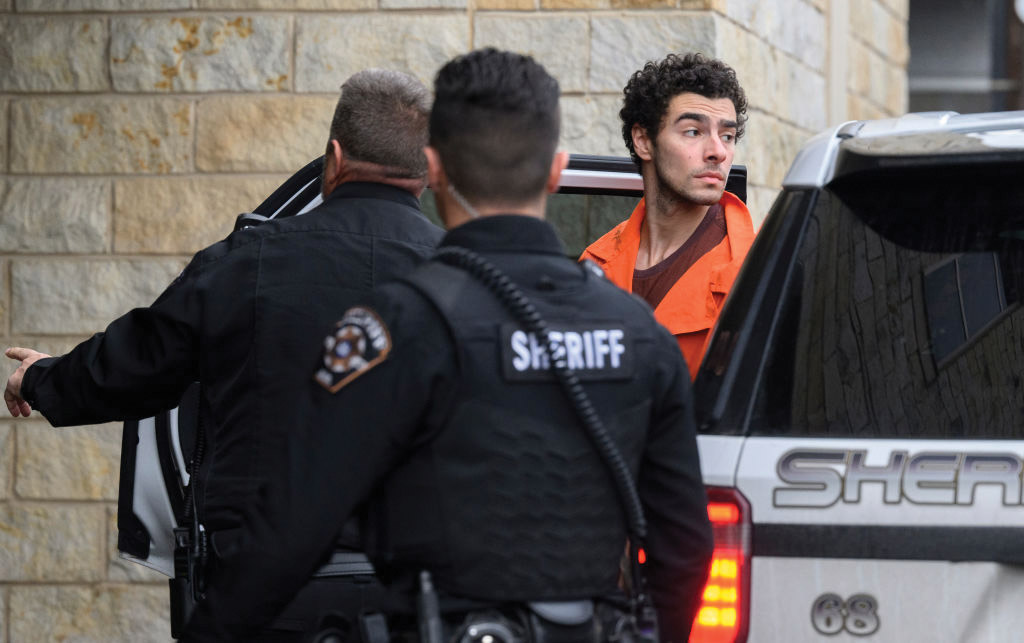
I have a suspicion that older American adults are horrified by Luigi Mangione, the 26-year-old app developer charged with the murder of UnitedHealthcare CEO Brian Thompson. The average young American? Perhaps not so much. 

People have performed ballads for Mangione on TikTok. Others have dedicated playlists to him on Spotify. In New York City, there were Mangione look-alike contests. On social media, he was called “The Adjuster.” When his identity became known, his X account gained hundreds of thousands of followers and there were immediate hashtags of “Free Luigi.” Mangione merchandise is being sold on Amazon and Etsy. And now, a Mangione legal defense online fundraiser has raised tens of thousands of dollars. 

The fandom of an alleged killer who turned a wife into a widow and rendered two children fatherless (weeks before Christmas, at that) merits its own column. For now, I leave that to other writers, including the editorial board at The Wall Street Journal, who recently wrote, “It’s a dreadful sign of the times that Mr. Mangione is being celebrated in too many places as a worthy avenger instead of an (allegedly) deranged killer. But that is how our culture has degraded — egged on for political purposes or audience ratings by many who know better.”

For now, I am more interested in what the average young American, especially teens, will take away from this repulsive fandom. Parents and caretakers must sit down with older kids and ask them two questions regarding Luigi Mangione: What types of reactions are you seeing to Mangione on your phone or device, and how is he being described? And what do you think/do you agree with how many people are portraying him in a positive light? (Regardless of the answer, adults must unequivocally denounce this fandom and make it extremely clear that Mangione is not a hero, but a murderer. No excuses.)

Older kids are owed an honest discussion about the often-maddening state of healthcare in this country. But I hold passive parents who allow social media to form their kids’ burgeoning values about when and how murder is justifiable accountable for every single future Mangione, Ted Kaczynski and or any other “misunderstood” lunatic who may find glory on the mainstream internet after deciding he is going to violently liberate America from social and economic injustice.

For American Jews, it is especially worth noting that the deeply misguided values that are enabling some Americans to excuse Mangione’s evil act at best, or defend it at worst, are the same values that now make it acceptable for people to justify the murder of Jews and Israelis. Would we be surprised if someone wearing a “Free Luigi” tote bag or face mask (both available on Amazon) also sported a “Free Sinwar” T-shirt if the terrorist mastermind had been captured and held in an Israeli prison this year, instead of killed in Gaza?

The deeply misguided values that are enabling some Americans to excuse Mangione’s evil act at best, or defend it at worst, are the same values that now make it acceptable for people to justify the murder of Jews and Israelis.

Our country is currently facing a watershed moment of vital significance: Either the next generation of Americans processes the murder of Brian Thompson with the ambiguous messaging of “murder is okay if …” or it understands through a strictly binary lens that healthcare and the power of executives are complicated matters, but murder is not. 

The Highly Accomplished Time Bomb

Speaking of Mangione, young Americans should understand that he belonged to a well-to-do family that owns a country club, a conservative radio station, and more than a dozen home and assisted living facilities in Maryland. Mangione was valedictorian at his 2016 graduation from a prestigious all-boys prep school. He attended an Ivy League school (University of Pennsylvania), where he obtained both a bachelor’s and a master’s degree in computer science. 

Why would any of this matter to a teenager? It’s simple: More youth in this country need to understand that accomplishments do not equate emotional stability or mental health. America needs another murderous valedictorian from an affluent, power-wielding Baltimore family as much as it needs another teenage mass shooter from a struggling family in which parental supervision was lacking.

Fly High and Burn Fast

The life-saving lesson that accomplishments and power do not render someone a better or more well-adjusted person may also be found in last week’s bombshell news that Tal and Oren Alexander, two prominent real estate brokers, and their brother, have been arrested and charged with running a sex trafficking scheme since 2010. Of course, parents should decide whether to discuss this story at all with their older teenagers because it involves sex and rape. But it still holds invaluable lessons, especially for those in their 20s who are dreaming of success without leaving space for morality. 

The Alexanders and their brother Alon are being charged with baiting, drugging and sexually assaulting multiple women. According to federal prosecutors, they worked together and collaborated with other men “to repeatedly and violently drug, sexually assault, and rape dozens of victims” in cities such as New York and Miami. 

But I bet they posted great Instagram reels about their glamorous lives. 

According to CNN, “authorities say they used their wealth and status as elite brokers to lure women whom they promised travel, luxury rooms at high end hotels, and access to events.” The men used those events and trips to repeatedly rape women and, authorities said, they sometimes offered their victims travel or concert tickets after they assaulted them. 

Here is a teachable moment, especially for the young men and teenage boys in this country: Money and power are not endgames. Your well-curated social media presence doesn’t matter if you commit evil acts in your day-to-day life. Crimes will always catch up with you. Oh, and rape is immoral and evil, and you should never rape a person — period. You should also never rape someone, then offer them concert tickets. From where did these brothers form their values regarding money, power and women? 

For at least four decades, boys in this country have been led to believe that sex and champagne on private yachts or glamorous vacations, whether you’re a music mogul or a real estate developer, is a dream to be chased relentlessly and at the exclusion of all ethical behavior. How much more potent is the dream of that yacht or those fabulous vacations today, when everything is photographed for validation on social media?

Is Bashar al-Assad a Type of Middle Eastern Cheese?

And finally, as part of an honest discussion of the world’s top headlines and teachable moments, it might be good to help younger Americans identify Syria on a map. Or to help them learn that all power is fragile, even that of dictators, and more importantly, that the fall of one evil actor is never the guarantee of the arrival of a better one. 

I also hope more young Americans who take even a few minutes to learn about Syria today understand that the safety of Americans and American troops should always remain the priority of this country in dealing with foreign turmoil. Perhaps that will ensure that future generations of American leaders actually take the issue of American hostages abroad more seriously. But for now, whether they watch a TikTok video or speak to a parent, I will be content if even a quarter of teens in this country know on which continent Syria is even located.


Tabby Refael is an award-winning writer, speaker and weekly columnist for The Jewish Journal of Greater Los Angeles. Follow her on X and Instagram @TabbyRefael.

Today’s Headlines Hold Teachable Moments for American Children Read More »

Latke Recipes and Recommendations with Eitan Bernath, Joan Nathan and Beth Ricanati

Holidays are all about uniting friends, old and new. What better way to honor Hanukkah than to bring together three previous Taste Buds with Deb guests for a conversation about food and family traditions.

Authors Eitan Bernath (“Eitan Eats the World”), Joan Nathan (“My Life in Recipes,” “A Sweet Year” and many others) and Beth Ricanati (“Braided: A Journey of A Thousand Challahs”) shared some of their favorite recipes, along with tips for holiday entertaining without the stress.

As with any good Hanukkah conversation, there were a lot of specific latke recommendations.

“I make a lot of latkes, different kinds of latkes,” Nathan told the Journal.

She makes apple latkes, zucchini latkes and potato latkes, which everyone seems to like best.

“What I’ll do is I’ll make them in the morning – I don’t refrigerate them – and then I’ll just heat them up in the oven. because there’s nothing worse than watching somebody make latkes in a lot of oil: you want to eat them, and they can never keep up.”

The apple latke recipe from Nathan’s “A Sweet Year,” which is designed for adults and kids to cook together, is below.

“Honestly, my latke trick is just maybe set a number that you’re going to eat while you’re frying them and try to stick to it,” Bernath told the Journal.

Bernath also suggests, after taking your latkes out of the oil, to put them on a wire rack, rather than a paper plate. to maintain their crispiness.

That tip works for all kinds of latkes, including brussel sprout latkes, which is one of Bernath’s favorites.

“It gets much more soft on the inside than you would think, and you have that crispy exterior with that really nice, powerful miso flavor,” Bernath said. “Then my other favorite on a classic potato latke are I do nacho latkes, inspired by Irish nachos, where, I’ll top them with some cheddar cheese, put them back in the oven to melt the cheese and top with a little dollop of sour cream, some thinly sliced scallions and a pickled jalapeno.”

The recipe for Bernath’s brussel sprouts latkes is below.

Ricanati, who specializes in challah – and focuses on making menorah-shaped challah for hanukkah – outsources her latkes.

“I take the latkes from Trader Joe’s and make really fun [latke] boards with all kinds of toppings,” Ricanati told the Journal.

A latke board is a re-imagined cheese board. Instead of different cheeses and dried fruits and crackers, you can put loads of different latkes arranged with a variety of sweet and savory toppings.

“My preferences are lox and capers, creme fraiche and salmon roe or traditional apple sauce,” she said.

Really, though, anything goes!

“It’s an opportunity to create fun and tasty pairings with yummy latkes,” Ricanati said. “Enjoy them as you play a rousing game of dreidel, while the menorah shines brightly.

Learn more at EitanBernath.com, JoanNathan.com and BethRicanatiMD.com.

For the full conversation, listen to the podcast:

Apple Latkes from Joan Nathan’s “A Sweet Year”

Makes 8 to 10 pancakes

2 or 3 Granny Smith, Honeycrisp, or other flavorful apples, peeled

1 lemon

2 large eggs

½ teaspoon salt

1 teaspoon vanilla extract

1 tablespoon granulated sugar

2 tablespoons unbleached all-purpose flour

1 teaspoon baking powder

½ teaspoon ground cinnamon

Dash of ground nutmeg

2 to 3 tablespoons unsalted butter

Sour cream, Greek yogurt, or crème fraîche, for serving

Berries, for serving

Confectioners’ sugar, for sprinkling

Child with Adult: Using the large holes of a box grater, or using a food processor, grate the apples; squeeze them to remove some of the juice. Put the apples back in the food processor or transfer to a mixing bowl. Zest the lemon with a Microplane; then cut the lemon into two pieces with a sharp knife, and squeeze the juice of one half over the grated apples.

Child: In another bowl, carefully break and whisk the eggs; stir in the salt, vanilla, granulated sugar, flour, baking powder, cinnamon, and nutmeg. Do not overbeat. Then fold in the apples.

Child with Adult: Heat the frying pan, and swirl the butter around its surface. Then, using a ¼-cup measure, spread some batter to make one 3- or 4-inch pancake. Repeat, filling the skillet with no more than four pancakes at a time, and cook them on one side for 3 to 4 minutes, until golden and bubbling and brown around the edges. Flip with a spatula, and cook until golden on the other side. Drain them on paper towels, and serve them with a dollop of sour cream, Greek yogurt, or crème fraîche, fresh berries, and a sprinkle of confectioners’ sugar.

Note: You can also substitute all kinds of berries or even chocolate chips for the apples. Mmm good!

From “A Sweet Year” © 2024 by Joan Nathan. Excerpted by permission of Alfred A. Knopf, a division of Penguin Random House LLC. All rights reserved. No part of this excerpt may be reproduced or reprinted without permission in writing from the publisher.

Brussels Sprout Latkes


Eitan Bernath’s Brussels Sprout Latkes with Miso Dipping Sauce

Prep Time: 25 minutes, Cook Time: 20 minutes, Yield: 8

This recipe is perfect for make ahead, especially during a busy holiday cooking marathon. Everything can be mixed the day before, refrigerated, and then the latkes can be scooped and fried when you’re ready to eat. Let the dipping sauce come to room temperature for the best flavor!

For the Latkes

1 pound Brussels sprouts, thinly sliced or shredded on mandoline

2 large eggs, well beaten

¾ cup all-purpose flour

¼ cup rice vinegar

2 tablespoons white miso paste

2 tablespoons honey

2 teaspoons kosher salt, plus more for garnish

½ teaspoon sesame oil

½ teaspoon red chili pepper flakes

¼ teaspoon freshly ground pepper

Vegetable oil, for frying


For the Miso Dipping Sauce

¼ cup white miso

2 tablespoons rice vinegar

1 tablespoon honey

1 tablespoon soy sauce

1 teaspoon sriracha

½ teaspoon sesame oil

Directions


For the Latkes: In a medium bowl, mix Brussels sprouts, egg, flour, rice vinegar, white miso paste, honey, salt, sesame oil, red chili pepper flakes and pepper until fully combined.

In a large sauté pan, heat ¼ inch oil over medium-high heat. Using a ⅓ measuring cup, scoop and tightly pack the mixture into a measuring cup.Form into 3-inch patties, about ½ inch thick, and fry 4 latkes for 2-3 minutes on each side, or until deeply golden brown.

Transfer to a racked baking sheet, and repeat until all latkes have been cooked. Set aside.

For the Miso Dipping Sauce: In a small bowl, whisk together all ingredients until fully combined.

Serve latkes hot, with dipping sauce.


Debra Eckerling is a writer for the Jewish Journal and the host of “Taste Buds with Deb.Subscribe on YouTube or your favorite podcast platform. Email Debra: tastebuds@jewishjournal.com.

Latke Recipes and Recommendations with Eitan Bernath, Joan Nathan and Beth Ricanati Read More »

Los Angeles Times Music Critic Hits the Wrong Note With Israel

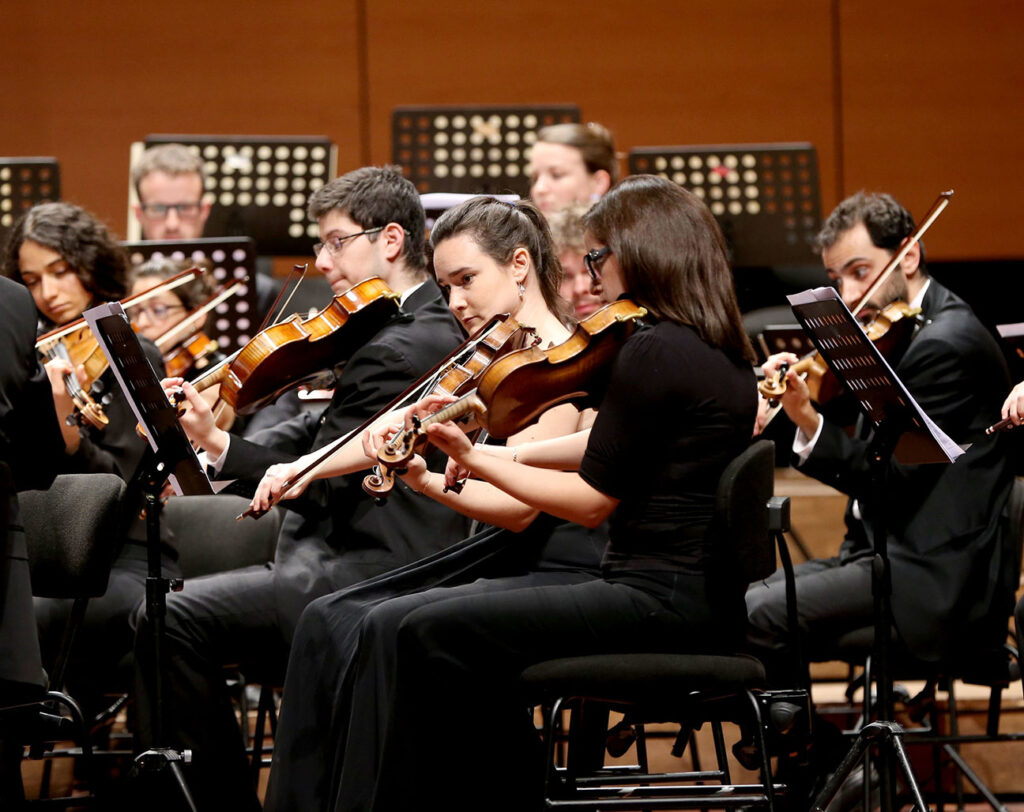
Los Angeles Times music critic Mark Swed recently hailed the West-Eastern Divan Orchestra, composed of young players from Israel and Arab countries, specifically because it is one of three youth “orchestras with a big mission.”

Indeed, that mission of universal humanity was tested like never before on Oct. 7, 2023, when Hamas carried out the most devastating slaughter of Jews since the Holocaust, with thousands of terrorists from the Gaza Strip rampaging in southern Israel, murdering, raping, kidnapping, maiming and looting, targeting men, women, children and the elderly.

“There is no justification for Hamas’ barbaric terrorist acts against civilians, including children and babies,” wrote Daniel Barenboim, co-founder of the West-Eastern Divan Orchestra, shortly after the Oct. 7 atrocities. “Our musicians of the West-Eastern Divan, our students in the Barenboim-Said Academy, they are almost all directly affected. Many of the musicians live in the region, and the others also have many ties to their homeland.”

Reeling from the Oct. 7 events, Barenboim reaffirmed that “any moral equation we might draw up, must have as its core this basic understanding: there are people on both sides. Humanity is universal and the recognition of this truth on both sides is the only way. The suffering of innocent people on either side is absolutely unbearable.” He continued, “The images of the devastating terrorist attacks by Hamas break our hearts.”

Swed, however, failed to grasp the orchestra’s big mission. While the orchestra mourned and memorialized the Oct. 7 victims, the admiring Los Angeles Times reviewer engaged in a type of Oct. 7 denial.

In his appreciative review of the Divan orchestra’s fall tour, Swed completely erased the suffering of innocent Israelis, including the victims of the Oct. 7 brutality, plus countless others killed, wounded or displaced by drone and rocket attacks in Israel emanating from Lebanon, Gaza, Iraq, Yemen and Iran over the last year.

Thus, Swed selectively reported, as if there is no war in Israel: “With the war in Gaza and Lebanon, this year proved the most difficult by far for the organization.”

The war in Gaza and Lebanon did not stop at Israel’s borders. To the contrary, there is war in Gaza because on Oct. 7, 2023 masses of Hamas terrorists and others crossed the Gaza border with Israel and slaughtered Israelis civilians in their homes and at a music festival. Likewise, war reached Lebanon because on Oct. 8, 2023, Hezbollah began firing rockets over its border with Israel, initiating a relentless assault on Israel’s northern communities, and later expanding its offensive to the center of the country.

Israelis have suffered more than 1800 fatalities, most of them civilians, in this war. Most were killed within Israeli borders, including in their homes and while at a dance party. Hundreds of youth enjoying music were slaughtered at the Nova music festival, a massacre that presumably warrants some kind of acknowledgement from a Los Angeles Times music critic directly addressing violence in the region within the context of music.

In this war that Israel did not start, more than 27,000 rockets and deadly drones have been fired at Israel—in the north, in the south, and in the center—from Lebanon, from Gaza, from Iraq, from Yemen and from Iran. In this war plaguing Israel’s home front, 143,00 citizens have been internally displaced, 250 people were kidnapped and 99 hostages remain in captivity, and 300,000 reservists were called up.

Though CAMERA reached out to the Los Angeles Times concerning the egregious omission of the devastating war in Israel, editors have yet to clarify that the war started in Israel on Oct. 7, 2023, and is still ongoing in Jewish state, with rockets and drones from Gaza and Yemen targeting Israel in recent days.

In covering up the war in Israel, Swed not only disdains the orchestra’s big mission to embrace “people on both sides.” He also tramples his own newspaper’s stated mission to “inform, engage and empower.”


Tamar Sternthal is the director of the Israel office of Committee for Accuracy in Middle East Reporting and Analysis (CAMERA).

Los Angeles Times Music Critic Hits the Wrong Note With Israel Read More »

Todd Komarnicki, Writer Director of ‘Bonhoeffer’: ‘This Topic Chose Me.’

Todd Komarnicki has produced hit comedies (“Elf” and “Meet Dave”) written movies based on true stories (“Sully,” starring Tom Hanks as the heroic pilot, and “The Professor and the Madman” about the creation of the Oxford English Dictionary) and thrillers (“Perfect Strangers”), and directed literary adaptations (“Resistance,” based on Anita Shreve’s novel), but “Bonhoeffer,” about the German pastor who spoke out against Hitler and the Nazis, is the first time he has the “Produced, Written and Directed by” credit.

Komarnicki, who has also published two novels, spoke to the Journal about why Bonhoeffer came out against Hitler so early, the story’s contemporary echo and his disappointment in critics he says are attempting to link the film  to the far right.

Todd Komarnicki, the writer, producer and director of “Bonhoeffer.” Photo by Claudine Williams

The interview has been edited for brevity

AZ: Why do you think Bonhoeffer was one of the few to speak out early against Hitler when few others would?

Todd Komarnicki : I think what happened to Dietrich is that New York opened his eyes to a whole new world. When he saw racism in Harlem, or outside of Harlem, he was shocked alive. That and the fact that his conscious was awoken by a sort of living faith, caused him to stand up right away. The rise of the Reich was impossible to fathom. He went to New York and came back to a Germany he didn’t recognize.

JJ: How long have you been working on the film and why did you choose this topic?

TK: This topic chose me, 100%. I started writing the screenplay about six years ago, it was finished in 2019, and we made the film in 2023. I keep talking about this amazing poem called “The Hound of Heaven.” The story is a man is being chased through the woods and he is terrified. At the end of the poem, he turns around and it was God chasing him just to tell him he loved him. Dietrich’s story did the same to me. It chased me down until I saw what it was. It was so cinematic, it had to be told.

JJ: After the film, a statement is on screen about the church not doing enough to stop Hitler, a photo of a pro-Israel supporter,  and a checklist of where Jews not currently safe. Why did you do that?

TK: The rise of antisemitism is so disturbing and the movie needed to remind us “Never Again” and to stand up for each other.

JJ: What do you think Bonhoeffer would say about Oct. 7, a Chabad rabbi killed in the UAE and antisemitism where some Jews in Germany are afraid to wear their yarmulkes, as well as in other parts of the world in including America?

TK: He would be broken-hearted and going on every street corner preaching the truth — that this is madness, and it has to stop. It’s so easy to casually hate. Even as Dietrich’s father says in the movie, there was a lot of blame and all of it fell on Jews and communists. People want a scapegoat. It’s easy to say it must be the fault of the Jews. It is insane and evil and has to be fought.

JJ: Do you think the church should be doing more now to speak out against antisemitism and if so, how should it be done?

TK: A hundred percent. I think it’s how you live your life, your everyday conversations, who you give money to, but it’s also speaking out loud. I’m not on social media. I stay away from the darkness that’s out there. There have been attacks on the film that it is philosemitic. This movie is made by a person who loves the Jewish people and always will.

JJ: I read that you were an atheist, and you became a believer in Christianity. How did that happen?

TK: I grew up going to church, but it never really landed for me. I was an atheist. When I went to college, I chose otherwise and went all into the dark. Multiple things turned me around, including the love of my parents. I went back to this Bible that I had as a kid, I put it on my lap, this book I didn’t believe in, and a God I didn’t believe in. I shouted to the sky, ‘if I open up this book, you better be in here.’ He was. That was the beginning of everything. I was 22.

JJ: What do you think of criticism that associates the film with the far right?

TK: The amount of lazy journalism out there is extraordinary. These people keep misunderstanding the movie. They think it’s tied to the far-right. It’s my movie. It’s not based on anyone else’s book. It’s based on my experience of Bonhoeffer’s texts and history. It’s a work of art. It’s not a documentary. I think his family got upset in the marketing when a gun got put in his hand in the poster. I empathize with that. You feel like the image of your hero got co-opted by movie marketing. I was against that move but was unable to win that argument.

JJ: Do you get upset at the attacks in the media or do you have thick skin?

TK: I find it enraging and heartbreaking that I am getting lied about regularly. No matter how thick one’s skin is, it’s awful and I hate the feeling. What’s hysterical is that all these supposed takedowns of the movie — that it must be from the Christian right, none of these journalists have called me. My record is out there. I’m not some obscure filmmaker. I’ve been doing this for almost 40 years. I’m easy to reach. Anybody could have called me and said ‘hey there is a weird thing in this movie that people, think it is a Christian right movie. You have nothing in your history that would point in that direction. Can you share your thoughts?’ Heaven forbid any of these people that wrote hit pieces would reach out to the filmmaker. The reason is because they didn’t want to interrupt their agenda. It’s bullying and it’s ‘my way or the highway.’ That’s not a way for society to move forward. Journalists now can lie, and places publish their lives and places leave them up online forever is a poison not just for me but for everyone.

JJ: There is some dispute as to Bonhoeffer’s exact actions against Hitler and when he was hanged it was said for being a part of the Valkyrie assassination plot. What do you think was his exact involvement?

TK: Here’s why the history gets confusing. He was convicted of and hung for being involved in Valkyrie, but he was not involved at all. At the end, Hitler wanted people wiped out and he threw a bunch of people underneath that umbrella. He was involved in the Gersdorff plot. (Rudolf von Gersdorff was a German intelligence officer who planned to assassinate Hitler in March 1943.) It was the first suicide vest or coat ever made. That’s the one he knew about. He was going to go to America and tell everybody: ‘this is why we had to kill Hitler.’

JJ: What was the most emotional scene to film?

TK: The most emotional scene to film was (anti-Nazi pastor Martin) Niemöller’s arrest, when (actor) August Diehl says goodbye to his son, knowing he won’t see him again. Even as I’m talking about it, I get choked up. I was struck by what it would be like if I was taken away from my own son. That hits home the most.

JJ: Do you think there should be more of a focus in studying the Holocaust in the American school system?

TK: We’re a little too naval gazing in our American studies. Students should absolutely study back to World War I, but they should also study how Hitler took the church without firing a single bullet.  The church laid down a carpet for the guy. He was an invading bully who took everything in his path. We have to see that the dictator approach has a long on-ramp. You can stop that on-ramp from continuing. The longer you wait, the more difficult it is to undue. That’s why I feel this movie is a call to current bravery and stepping out before it is too late.

Todd Komarnicki, Writer Director of ‘Bonhoeffer’: ‘This Topic Chose Me.’ Read More »