fbpx

November 27, 2024

Table for Five: Toldot

One verse, five voices. Edited by Nina Litvak and Salvador Litvak, the Accidental Talmudist

And the children struggled within Rebecca, and she said, “If [it be] so, why am I [like] this?” And she went to inquire of the Lord.And the Lord said to her, “Two nations are in your womb, and two kingdoms will separate from your innards, and one kingdom will become mightier than the other kingdom, and the elder will serve the younger.”

– Gen. 25:22-23


Rabbi Nicole Guzik

Co-Senior Rabbi of Sinai Temple

The Torah reminds us that jealousy is innate. Like Jacob and Esau sharing their mother’s womb, we all share the limited resources this world provides. While it may be natural to covet, Jewish tradition provides guidance as to how to resist living a life of envy.

Mishlei tells us, “Jealousy is rot to the bones.” But the Talmud opens our eyes to a different way. Yoma 38b reads, “Everyone has a portion designated for him by God, and the individual is privileged to receive what is coming to him … The principle is: No person may touch that which is prepared for another by God; everyone receives what is designated for him.” The Talmud is not suggesting that one should refrain from pouring energy into one’s pursuit of success. Climbing a ladder to grasp one’s dreams is praiseworthy. However, climbing a ladder because your neighbor’s ladder is higher than yours is what our tradition conveys as developing rot in our bones.

The Mishna even goes as far as cautioning us against having windows that open up towards a neighbor’s, lest we see something that causes envy to fester. We resist living a life of envy when we ask ourselves, “Do I want this path because it rivals my neighbor?” Or “Do I want this path because I know I walk in pursuit of something that will contribute positivity to the world?” It is the answer to that question that allows for the cultivation of a good heart, the greatest characteristic of all. 


Salvador Litvak 

Filmmaker, Humorist, Accidental Talmudist

Pronouns matter, but prepositions matter even more. Pronouns describe identity. Prepositions describe a relationship. The translation offered here, “one kingdom will become mightier than the other,” aligns with our Sages’ understanding of Jacob and Esau’s iconic relationship. They’re not just brothers. They are forebears of Israel and Rome, and these nations will remain distinct for all time, one always ascending as the other descends, never in sync.

Israel represents Torah values – objective, eternal morality. Rome represents a barbaric drive toward power and pleasure at the expense of Torah values. As Rashi says, “They shall not be equal in greatness. When this one rises, that one falls.”

But the Hebrew actually says ul’om mil’om ye’ematz – one kingdom will become stronger from the other. This is not a parasitic relationship — we’ve already been told they will remain separate. Rather, Rebecca senses within herself two warring urges: Esau/power/pleasure which shall emerge first, and Jacob/principle/conscience which emerges after. And the elder shall serve the younger. 

Rebecca is a special person, the matriarch whose destiny is revealed when she not only offers to draw water for a stranger, but also for his many camels after their long journey. This, even though they are kneeling and at rest when she perceives their thirst. Now she beseeches God for wisdom and realizes that our basest urges emerge first, but when we do the holy work of examining, challenging and overcoming them, we grow stronger from that very process, and rise toward a new and elevated destiny.


Elan Javanfard

LMFT, Professor & Author, Psycho-Spiritual Insights blog

Rebecca’s journey through pregnancy and internal struggle reveals deep psychological layers that resonate with many who face profound uncertainty. Her distress speaks to the universal fear of failing to live up to perceived spiritual or personal ideals. Rebecca’s agony is not merely physical; it’s a crisis of self-worth and purpose. As she carries her long-awaited child, the battle within her womb seems to signify something much darker — a fear that perhaps she, with her complex lineage, isn’t worthy to carry forward the divine mission. This anxiety may reflect an inner conflict, suggesting that when physical symptoms defy logic, they often ignite spirals of self-blame and questioning.

The tension Rebecca feels also stems from a lack of external validation or clear understanding. Unable to rely on modern medical reassurances, Rebecca interprets the strife as a reflection of her own spiritual flaws. This may be why she chooses not to confide in Yitzhak, fearing judgment or exposing perceived inadequacies. Her choice to seek guidance independently suggests her isolation but also her resilience. When she finally receives the prophecy, it provides clarity, alleviating her self-doubt by externalizing the struggle as part of a larger divine plan. This narrative illustrates how, in moments of profound doubt, self-compassion and seeking outside wisdom can help one confront their fears and see beyond immediate suffering.


Rabbi Shlomo Yaffe

Congregation B’nai Torah, Springfield, MA

Rebecca is concerned by the actions of the children in her womb. Rashi writes: Our rabbis expounded the word “vayitrotz’tzu” as being an expression of ritza “running”: When she passed by the entrances of the Torah academies of Shem and Ever, Jacob would hurry and wriggle to try and come out, and when she passed by the entrance of a place of idol-worship, Esau would wriggle to try and come out.

We ought to ask — why did this distress Rebecca so much to the extent that she questions the value of the pregnancy she had yearned for so much? One approach is that she did not realize she was expecting twins — so she thought this was one child who was inclined both to idol worship and the worship of G-d. Rebecca was concerned that this child would be inclined to whatever approach in life seemed most advantageous in the short term. Today — if he felt that idols gave good harvests and success, he’d worship idols. If he felt G-d would – he’d worship G-d. Rebecca was concerned that the child would not be driven by belief. Once she heard there were two children in her womb who might develop with inclination to different beliefs — if a person seeks truth — they can change once they are taught to recognize truth. If a person is built to pursue temporal advantage only — they are not even seeking truth and hence will have a much harder time recognizing it.


Rabbi Aryeh Markman

Executive Director, Aish LA

Rebecca, the mother of Jacob and Esau, didn’t know she had twins. She thought she had a schizophrenic child. She would pass by a house of Torah learning and feel the embryo inside her trying to escape and then she would go by the house of idol worship and have the same feeling.  She went to see the prophet Shem, the son of Noah, and asked what would be?  She was told, you have twins, and the older, Esau, will be more interested in the material world, but he will serve the younger, Jacob/the Jews.  But only if the younger’s priorities and task will be that of spiritual matters. Rome, the Church, the U.N. and EU, to name a few, are the older brother. Get it?

If we care at least as much about excelling in the Yeshiva as in the Ivies, the older will serve us.  But if otherwise, then the consequences are servitude under our non-Jewish masters. Rebecca was relieved there would be two sons, and she would guide each to realize their potential and relationship, rather than one child with a dual nature.  But as fate would have it, Jacob also had to excel in the material world to survive, as Esau had no interest in a partnership. Rebecca’s original concern is our current challenge. Let’s not lose track of our role in humanity, that being the moral compass before being the Start-Up Nation. Our destiny is ours to choose by understanding our true purpose and priorities.


Table for Five: Toldot Read More »
Rabbis of L.A. | How Rabbi Brett Kopin Got Past His First Class Jitters

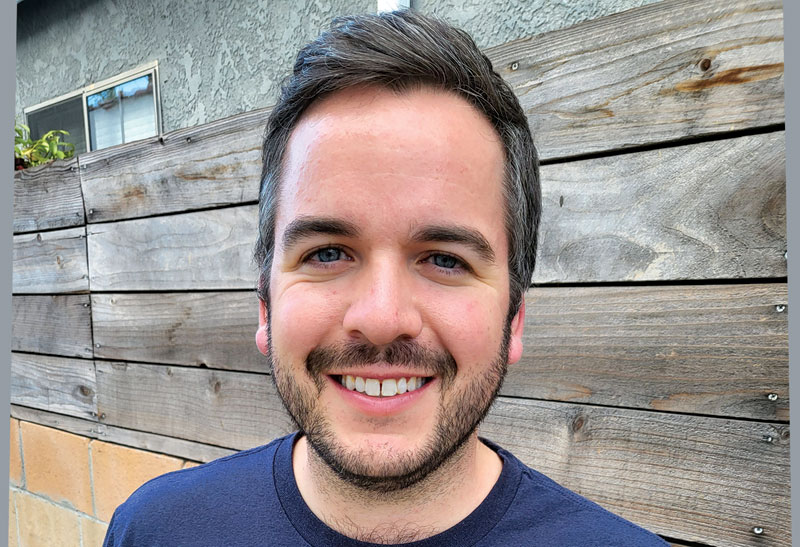
Rabbi Brett Kopin has been teaching at the Milken Community School for more than three years, but he almost didn’t make it past the first day. He started out feeling confident, telling himself “I’ve got this” as he walked into the classroom. That feeling didn’t last. 

 “Nothing is more terrifying,” the Chicago native told The Journal, “than going into your first class ever on a Monday at eight in the morning, and 23 15-year-olds are sitting there staring at you. They are, like, ‘who the hell is this guy?’” Recalling the moment and laughing, he said “I was lucky because it was August of ’21 and we still had to wear masks. I was grateful for my mask so they couldn’t see how nervous I was.”

He was so anxious he couldn’t sleep, telling himself that with his next class “I have to bring gold. This has to be great.” It took nearly a month and a half for the tension to ease. “As I started to get to know the students and get more comfortable, “he said, “I completely fell in love with the classroom.”

Not that there weren’t bumps along the way. He was teaching Honors Chumash (Torah) to 10th graders, a high-level Chumash course to ninth graders, five classes total. When told he needed to create “Lesson Objectives,” out of hearing range, he asked, “Like what is that?”

He learned how to master those skills, because “they are incredibly valuable as a rabbi.” And he decided that instead of sitting behind a desk for another year, “I am going to throw myself into the fire and learn to be a teacher.”

At the end of his first year, Rabbi Kopin was searching for other jobs. There were pulpit opportunities … but the lure of teaching had captured him. He decided to stay at Milken. He’s close to his high school English teacher, who advised him to “enjoy the paradise of the classroom.” After that rough year, he has learned what his mentor meant by “paradise”: “When you hit the magic, and there is energy between you and your students, the 15-year-olds, and there is back-and-forth, it is magic. You see their minds are opening. You realize you did that.” If you’re doing well, he said, “your students will tell you – they will give you reviews in real time.” By the same token, “when a couple of students tell you this is their favorite class, it boosts your confidence.” 

Students,” Rabbi Kopin said, “don’t know that. You think teachers are stoic. They don’t have feelings. They just give you grades. But if you boost up your teacher and say ‘you’re my favorite teacher,’ or ‘this is my favorite class,’ they are going to keep bringing it because you are getting positive feedback from them. And then I think to myself ‘They have bought in. Now I can take them deeper’ because that’s where they want to go.”

“If you boost up your teacher and say ‘you’re my favorite teacher,’ or ‘this is my favorite class,’ they are going to keep bringing it because you are getting positive feedback from them.”

Now in his fourth year, Rabbi Kopin appears set for a long run at Milken. “I am teaching three classes because I love teaching,” he said. 

As with any job he said “there will be aspects you love, aspects you don’t love. I feel like what I have done at Milken is preserve the core of what I love, being in the physical classroom with students.” 

There’s another reason why Rabbi Kopin feels so positive. This summer, he and his wife, Rabbi Sofia Zway, welcomed their first child, a daughter.

A year ago, Rabbi Zway became the leader of a new Base house in Los Angeles’ Picfair Village neighborhood. Base, a program of the international Moishe House, is a network of congregations – led by couples — for young Jews in their 20s and 30s. They meet monthly in homes.

Rabbi Kopin recalled last February when the couple decided it would be nice to host a Kabbalat Shabbat musical service outdoors, in the backyard, instead of their living room.(Tori Greene, a rabbinical student at Hebrew Union College, organizes the five- to six-piece band.) 

“It was really cold,” he almost shivered. “We had about 27 people, a really big success.  The second one drew 35. Forty the month after. “Then we took a risk. We capped it at 40 but we had a wait list of 12. We let all of them in, 52 people. My wife went to France – and I just opened up the gates. We capped it at 50 and had a wait list of 15.”

Now Rabbi Zway and Rabbi Kopin are up to 65 people. “Completely magic,” he says.

On the last Friday of the month, they hold what Rabbi Kopin describes as “an unbelievable Kabbalat Shabbat service.”  Starting at 7 p.m. “on the dot,” they start the service, Rabbi Kopin said. “After that is an optional Ma’ariv. First time we had five. Now it’s up to 25. We didn’t want to force it on people. Then we do Kiddush followed by a gourmet dinner until about 9:30.”

That’s not all. He was stunned, happily,  the first time he walked into his living room where 30 people were singing niggunim and zemirot (Hebrew melodies). Guests don’t leave until midnight or 12:30. “It’s magic,” he said.

Rabbi Kopin, striving to build a community of breadth and depth, recently launched an in-person yeshiva program with 10 Base members participating – so far.

Fast Takes with Rabbi Kopin

Jewish Journal: Do you have unmet goals?

Rabbi Kopin: I am looking for support to start yeshiva learning program. The website is six11.org. Also for someone to support the band (brett.kopin@moshehouse.org).

JJ: Has there been a moment in your life that you keep replaying?

RK: Plenty. I go back to my mentor, Dale Griffith, my English teacher from high school in Chicago. He was one of the few teachers I have had who brought me, in his words “into the paradise of the classroom.”

JJ: What is the best book you have read?

RK: The best novel I have read was “One Hundred Years of Solitude” by Gabriel Garcia Marquez.

Rabbis of L.A. | How Rabbi Brett Kopin Got Past His First Class Jitters Read More »

Douglas Murray vs. ‘Influencers’

Not a week has gone by this fall when British intellectual and Israel and Western advocate Douglas Murray hasn’t been in the news.  A senior fellow at the Manhattan Institute and author of seven books, Murray, 45, has proven to be our brilliant and brave truthteller during the darkest of times, well deserving of every accolade. 

At other inflection points throughout history, thinkers like Theodor Herzl, Hannah Arendt, Ayn Rand, Elie Wiesel and Rabbi Jonathan Sacks have played a larger-than-life intellectual role. All of which begs the question, which I’m asked often: Where are the Jewish Douglas Murrays?

At other inflection points throughout history, thinkers like Theodor Herzl, Hannah Arendt, Ayn Rand, Elie Wiesel, and Rabbi Jonathan Sacks have played a larger-than-life intellectual role. All of which begs the question, which I’m asked often: Where are the Jewish Douglas Murrays?

Where indeed. Unlike a century ago, no one is stopping Jewish intellectuals from speaking out, though leftism seems to have permanently shut the mouths of many. Still, a multitude of young Jewish intellectuals write for Tablet, Sapir, Commentary, The Free Press, my own White Rose Magazine, and the Journal. 

But here’s the problem. The Jewish nonprofit world ably realized that Murray should be rewarded for his extraordinary efforts to analyze the current surreal situation, but when it came to including others who have also been working exceptionally hard, many of the nonprofits—across the political spectrum—went straight to Instagram to find what are known today as “influencers” or Instaporners. What my GenZ son so aptly calls OMG Girls.

In 2024, in other words, the Jewish nonprofit world is rewarding and helping to fund self-worship: plasticized idols whose genius is to get attention. 

This brand-obsessed subterfuge comes after decades of much of the nonprofit world doing little except take our money and put on grossly lavish galas to applaud themselves. Michael Steinhardt aptly called out this mess in his 2022 book, “Jewish Pride.” “There’s a whole system of accolades and honors and galas and plaques that numbs most donors into believing that they are already doing their part,” he writes. “Their public status is commensurate with the size of their gifts, not with their effectiveness.”

As a result, many nonprofits missed the fact that Islamists had begun to fund and propagandize our universities; the media, seduced by leftism, had become aggressively anti-Israel; and the U.N. had become a seething cauldron of antisemitism.

Instead of seeing Oct. 7 and its aftermath as a reckoning, many nonprofits took it as a cue to go further off the ledge by looking for people to defend Jews, Israel, and our ancestry on Instagram, which has become a playground for people who crave incessant external validation but have never studied or written about any of the pertinent issues. 

Of course there are wonderful exceptions. I did find Elica Le Bon on Instagram, a first-generation Iranian immigrant born in the U.K. and currently living in Los Angeles, where she practices law. Le Bon is as brilliant, insightful, and brave as Murray, and possesses the same steadfast moral clarity. She also happens to be beautiful — but that’s far from the most interesting thing about her, and she never “uses” it. 

In their desperation for stardom, “influencers” end up doing all sorts of things that may backfire on Jews: Fabricating assaults; starting fights with random people on the street; yelling at homeless men. A pro-Israel rally up at Columbia University was suddenly moved because an “influencer” wanted a better camera angle. As a result, dozens of Jewish New Yorkers, including the elderly, were left facing a crowd of keffiyeh-wearing mobsters.

People of the Book or not, no one expects every Jew to become an intellectual; we all have our strengths and weaknesses. But pushing Jewish intellectuals aside to make way for “influencers” to literally do anything for likes and followers has left us precisely where we are right now: not in a good place.

Traditional editors like me will continue to teach young women and men how to become brilliant public intellectuals like Murray and Le Bon. I also will continue to boycott events honoring “influencers.” As for the shameful women and men who used Oct. 7 to “become famous,” at some point soon Gen Z, who have had to endure leftist and superficial drivel their entire lives, will remove all the frauds from every stage. It’s just a matter of time.


Karen Lehrman Bloch is editor in chief of White Rose Magazine. 

Douglas Murray vs. ‘Influencers’ Read More »

Cozy Fall Roasted Butternut Squash Soup

Before I was a homemaker and a Sephardic Spice Girl, I was in the fashion retail business. I had a store on the Third Street Promenade in Santa Monica. I loved it. I loved buying the clothes and shoes and jewelry and accessories. I loved merchandising. I loved working with my staff and I loved helping women find the right outfit or the perfect pair of shoes.

I don’t miss the long hours (I’d work Saturday nights until 1 am and be back to open the doors at 10am on Sunday morning). I certainly don’t miss the stress of paying all the bills.

What I do miss is the structure and purpose that having a “real job” gives to your days! Nowadays, my structure is carpool and my daily stop at Starbucks for a grande flat white (I think I really go there for their truly delicious water — did you know that Starbucks does a reverse osmosis 18 times to purify their water!?!).

Luckily for me, my purpose comes from feeding my family and volunteering my time for worthy causes. This week, the incredibly beautiful and talented executive director of Beth Jacob and my good friend Robyn Lewis invited me to help her make a Friendsgiving feast for the Golden Age Academy.

I had so much fun basting the turkey, mashing the potatoes, stirring the gravy and sautéing the cremini, baby Bella, shiitake and portobello mushrooms for the sourdough stuffing. (It was excellent practice for the real deal this week.)

While I cook from memory and make things up as I go along, Robyn has a folder filled with her tried and true recipes and a very precise plan. There was ruby red cranberry sauce and cute half oranges emptied of their flesh and filled with mashed sweet potato and topped with a glazed layer of sweet, creamy marshmallow fluff. There were dinner rolls brushed with olive oil and chopped parsley and green beans topped with perfectly crunchy almonds. There was an apple sangria and a leafy baby greens salad garnished with dates and candied pecans. There was crusty cornbread perfect for dipping in the vibrant roasted butternut squash soup.

For me, the best part of volunteering for this luncheon was the opportunity to meet the incredible seniors that make up this wonderful group. I was so honored to hear from so many that they read this column each week. Conversing with them totally filled my spirit.

I was 18 years old the first time I ever made butternut squash soup. My mother was away and I was in charge of Friday night dinner. I honestly don’t remember what I served besides the soup. I just remember being so proud that my father and my uncle Efrem really enjoyed the soup.

If you’ve read some of our articles, you’ll know that Rachel and I are obsessed with soups. We make lentil soups, tomato and rice soups, vegetable soups, chicken soups, bean soups. We love soup. But I have to say butternut squash soup is probably my favorite. The nutty, creamy, sweetness and the beautiful beta carotene brightness of the soup make it truly irresistible.

—Sharon

Sometimes it feels like Sharon’s life and my life have been intertwined forever. We were friends in high school, we navigated the young single life together, we were there for each other’s weddings and for the births of our children. My boys grew up best friends with her son Ariel and my daughter Rebekah grew up loving Sharon’s girls like younger sisters.

When Sharon decided to retire from retail, I was looking for something new after 20 years in the entertainment management business. I bought her store on Montana Avenue. I loved retail as much as she did. But retail got tough after the recession , so I decided to go into commercial property management which is now my full time gig.

But for me, my ultimate joy is being in the kitchen. Ever since I was a little girl, watching my mother create magic with her hands and a few ingredients, the kitchen is my favorite place to be.

People are always telling Sharon and me to become caterers, but that’s probably my biggest nightmare. I really just want to cook for my family and friends and of course, you, dear reader.

We all know soup equals comfort food. It’s the first thing we serve when someone is under the weather or in need of tender loving care. It’s one of the first things I fed my children as babies.

I learned from my mother to make soup all year round. It’s just automatic. This time of year, my mind always turns to a fall harvest soup. A creamy puréed soup that takes advantage of the fall bounty.

This week Sharon and I offer our amazing roasted butternut squash soup garnished with a crispy, spicy granola. Roasting the butternut with some baharat spices and brown sugar lends the soup the most delicious caramelized flavor. Sautéed leeks add a mild, mellow oniony flavor and the apples lend a tart sweetness.

Roasting the butternut with some baharat spices and brown sugar lends the soup the most delicious caramelized flavor.

This festive bright orange soup is a flavorful, nutritional bonanza.

—Rachel

Roasted butternut squash soup

1 medium butternut squash, peeled, seeded and cubed
1 Tbsp baharat spice or ground cinnamon
1 tsp sweet paprika
2 tsp brown sugar
1 tsp granulated garlic powder
1 tsp kosher salt
1/2 tsp Aleppo pepper or ground black pepper
2 Tbsp avocado oil
3 leeks, finely sliced
1 large apple, cubed
2 tsp ground cinnamon
3 bay leaves
1 Tbsp consommé powder dissolved into 2 cups of boiling water
2 cups cold water

Preheat the oven to 400°F.

Grease a large baking sheet with oil and arrange butternut squash in a single layer on the tray. Sprinkle with  spices, salt and pepper. Bake for 25-30 minutes or until fork tender.

Heat the oil in a large pot over medium heat, then add the leeks and sauté for 10 minutes until leeks are translucent.

Add the apples, bay leaves and cinnamon and sauté for another 10 minutes.

Pour in the consommé and the rest of the water and stir well. 

Add the roasted squash, then cover the pot. Lower the heat and simmer for 30 minutes.

Use an immersion blender or a standing blender to purée the ingredients to desired smoothness. 

Taste the soup and add salt and pepper, to taste. 

Savory Granola Topping 

1 cup old fashioned oats
½ cup roasted pistachios
½ cup pepitas (roasted pumpkin seeds)
½ cup candied pecans
1 Tbsp fennel seed
½ tsp Aleppo pepper
1 tsp salt
¼ cup maple syrup
¼ cup olive oil

Preheat oven to 350°F.

In a large bowl, toss all the ingredients and mix well to coat all the oats and nuts.

Spread the granola on to a parchment lined sheet pan.

Bake for 15 minutes, then remove from oven and stir the granola around on the tray. 

Bake for another 10 to 15 minutes, until golden and crispy.


Sharon Gomperts and Rachel Emquies Sheff have been friends since high school. The Sephardic Spice Girls project has grown from their collaboration on events for the Sephardic Educational Center in Jerusalem. Follow them
on Instagram @sephardicspicegirls and on Facebook at Sephardic Spice SEC Food. Website sephardicspicegirls.com/full-recipes.

Cozy Fall Roasted Butternut Squash Soup Read More »

A Giving Tuesday Pitch on Behalf of the Community

It’s awkward to bring up the number of compliments we regularly receive for the paper you’re holding in your hands. It’s awkward because it’s not very polite to show off, especially publicly. But I’m doing it this week in the spirit of Thanksgiving, a time when we look for ways to express our gratitude.

Indeed I’m deeply grateful for all the “thank yous” we get from across the community for putting together this weekly paper.

Because there’s so much variety in the Journal, I like to ask readers what they like most. It turns out that variety itself is a favorite feature. “It’s a great mix” is a common refrain.

This great mix means everything from thoughtful commentary on current events to community stories to food features to coverage of antisemitism and political trends to in-depth coverage of Israel to humor, film, arts, books and poetry to Torah commentary and rabbi profiles to Jewish and Israel activism to even a lifestyle page.

This broad and eclectic mix also means readers can indulge in whatever they’re in the mood for on any given week. Ultimately, our mission is to keep our community connected — to their world, to one another and to their tradition.

As we like to say, there are hundreds of Jewish organizations with their own stories, but there is only one whose job is to cover them all — and you’re holding that nonprofit organization in your hands.

There are hundreds of Jewish organizations in our community with their own stories, but there is only one whose job is to cover all those stories—and you’re holding that nonprofit organization in your hands.

“Holding it in your hands” happens to be one of the things people love most. I hear it over and over again—we’ve become so addicted to the frenzy of digital content that holding a paper allows us to slow down and savor the content.

A paper is to reading what Shabbat is to the rest of the week. We take our time. We’re not rushed. We don’t scroll frenetically—we can kick back and read peacefully.

Of course, good things don’t come cheap. Printing a paper and distributing it to the community week after week is a labor of love that costs a bundle. Advertising covers only a fraction of these costs. And because we’re a non-profit, we consider our paper a mitzvah to the community, which is why we gladly distribute it for free.

But this is our current reality: we can’t continue to offer this communal treasure unless generous and visionary donors step up. We know they are out there. We’re hoping a few of them will respond with major commitments of support. 

Through no one’s fault, we hit a rough patch recently when a few major pledges fell through. So we’ve made plenty of pitches to potential donors over the past few months. Some have stepped up, but we need more. It turns out that when I meet with donors, many of them prefer to talk about antisemitism or the crisis on college campuses or the situation in Israel. Oh, and they all tell me how much they value the Journal, in print and online.

I suspect some donors may think I’m bluffing when I tell them we will be forced to take a hiatus from the print unless some generous souls step up. I wish I were bluffing. I’m not.

That’s why I’m writing this column. One, to express our gratitude for your loyal readership and the praise we receive each week, and two, to ask major donors to put their generosity behind their gratitude right in time for Giving Tuesday on Dec. 3 (my email is davids@jewishjournal.com or visit jewishjournal.com/donate for our donation link).

If it means securing funding that will make this community paper sustainable, taking a hiatus won’t be the end of the world. In fact, it will turn out to be a blessing. 

That’s the end of the pitch. Enjoy this week’s issue, which features, among many other goodies, our annual Thanksgiving Haggadah and a terrific higher ed cover story by Gil Troy. 

Above all, let’s remember this Thanksgiving to be grateful for all of life’s blessings, including our vibrant community and that “great mix” of a paper that you so enjoy.

Happy Thanksgiving.

A Giving Tuesday Pitch on Behalf of the Community Read More »

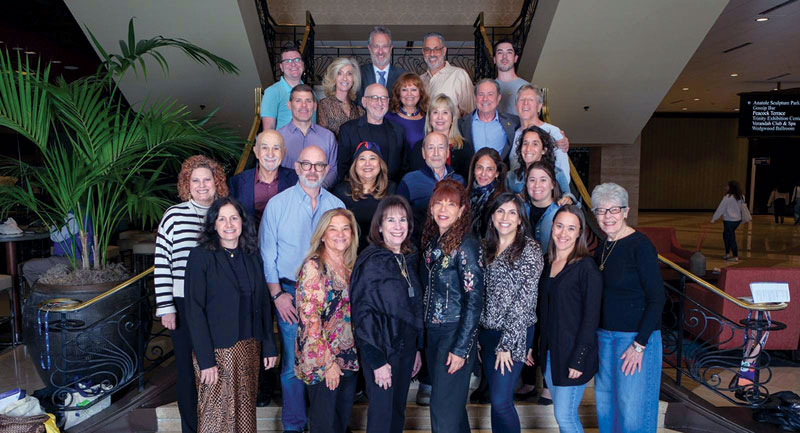
Drawing 2,500, JNF-USA Dallas Convention Confirms ‘Everything’s Bigger in Texas’

From a Friday night Texas barbecue Shabbat to a glitzy Saturday night gala emceed by actor and comedian Michael Rapaport, Jewish National Fund-USA’s (JNF-USA) latest gathering set out to prove the famous saying: “Everything’s bigger in Texas.”

That it did.

The organization’s 2024 annual Global Conference for Israel — held from Nov. 14-17 at the Hilton Anatole in Dallas, Texas — drew approximately 2,500 attendees while highlighting the often under-the-radar work of JNF-USA in Israel’s north and south, from Be’er Sheba in the Negev to Kiryat Shmona in the Galilee.

Among those who turned out were 500 college students, 250 Alexander Muss High School in Israel students, dozens of JNFuture members along with adults from JNF-USA post-Oct. 7 volunteer missions in Israel, Israeli mayors, regional council leaders, rabbis from across the country and many others. 

The organization’s Los Angeles delegation, meanwhile, was comprised of 70 attendees.

Highlights of the four-day conference included a Friday plenary with Rabbi David Wolpe; an Israel Expo featuring vendor booths (at one, people strapped on virtual reality headsets and undertook virtual tours of the Nova festival memorial while hearing firsthand testimony from survivors); and a Saturday dialogue between retired British army officer, Colonel Richard Kemp, and Jewish News Syndicate Editor-in-Chief Jonathan Tobin.

In short, there was a flurry of activity all weekend long, with people of all political beliefs bound together by their unwavering support for Israel.

“I feel like I’m amongst family,” Rapaport, a Jewish actor and comedian, said onstage in the hotel’s cavernous ballroom on Saturday night.  Rapaport, who has spoken out in support of Israel in the aftermath of Oct. 7, denounced the reluctance of his peers in the Hollywood community to express solidarity with Israel after Hamas’ attack last year.

On Friday, the conference’s first full day, Wolpe delivered a lecture on “The Future of American Jewry” that emphasized the way in which Israel is singled out amongst nations. It leaves one no choice but to assume anti-Zionism stems from antisemitism, he said.

“No other country in the world, none, is targeted for elimination,” Wolpe said, emphatically.

The emeritus rabbi of Sinai Temple, who took a one-year position at Harvard Divinity School, has spoken about the ways in which Harvard was rife with antisemitism and anti-Zionism following Oct. 7. Wolpe served on Harvard’s antisemitism committee before stepping down in early December 2023.

When he referenced his time at Harvard, saying, “I have since left,” the crowd broke into applause.

Later in the day, a panel titled “Hashtag Zionism” brought together four pro-Israel social media influencers: journalist Emily Austin, Columbia assistant professor Shai Davidai, Israeli Judoka and Olympic medalist Peter Paltchik and Angelina Palumbo, who was given the nickname “Little Miss Zionism” by her detractors and has chosen to embrace the name by turning it into a pro-Israel brand.

A student at SUNY Binghamton, Palumbo discussed why she began posting messages of support for Israel on platforms including Instagram.

“Nobody was listening to me on campus anymore, so I turned to social media,” she said in a matter-of fact way. 

Austin — who has racked up more than 2.4 million followers on Instagram by delivering content that includes pro-Israel messages — said she was just “like everyone else,” in an interview with The Journal. “I guess people just like my opinion.”

On Saturday, during an afternoon discussion titled “Ethics of War and the IDF,” Kemp spoke about the commonly expressed idea that Israel can’t defeat Hamas because Hamas, ultimately, is an idea.

But “we don’t need to defeat the idea,” he said. “We need to defeat the capability of the idea to pose a threat to us.”

As for Iran’s role in Israel’s current, multi-front war, Kemp was unequivocal about the need for Israel to eliminate the threat. He shared his confidence that Israel, in the end, would be successful. 

“The head of the octopus has to be chopped off, and I think it will be chopped off,” he said.

During a Q&A segment of Kemp’s discussion, an individual in the crowd asked Kemp what he predicted for the “day after” in terms of governance in Gaza and what kind of military presence he expects Israel to have in southern Lebanon. “I think Israel has to maintain overall security responsibility for Gaza, come what may … and the same applies to southern Lebanon,” he said.

Asked where his steadfast support for Israel came from, Kemp, who is not Jewish, attributed his pro-Israel beliefs to his Roman-Catholic upbringing.

“When I was a child, I was taught right from wrong,” he said. ”That’s why I support Israel.”

All weekend long, the feeling of unified support for Israel was strong in the air and few were even aware of the anti-Israel protesters gathered outside the hotel property, at one point numbering approximately 1,000, according to security officials. Their multiday protests led to 14 arrests, all of them among the demonstrators, according to head of security for JNF-USA.

All weekend long, the feeling of unified support for Israel was strong in the air and few were even aware of the anti-Israel protesters gathered outside the hotel property.

Protests aside, the weekend showcased the many sides of JNF-USA’s work — which is stronger and more impactful than ever, JNF-USA CEO Russell Robinson said. He highlighted the contributions of the organization’s 600,000 donors, saying the goal was to reach one million. As he spoke, the words, “We Are Zionists!” flashed in huge font on the massive TV screen behind him.

JNF-USA CEO Russell Robinson
Photo by Jim Woods Photography

Driving home the point of JNF-USA’s commitment to inclusivity, the conference highlighted JNF-USA’s Special in Uniform initiative, which integrates young adults with disabilities into the IDF, and, in turn, into Israeli society. The Special in Uniform band performed several times over the weekend, with a trio of singers offering moving renditions of everything from Eden Golan’s “October Rain” to Simon and Garfunkel’s “Sound of Silence.”

Driving home the point of JNF-USA’s commitment to inclusivity, the conference highlighted JNF-USA’s Special in Uniform initiative, which integrates young adults with disabilities into the IDF, and, in turn, into Israeli society.

A spokesperson for JNF-USA said the organization’s ability to turn out more than 2,000 community members, both Jewish and non-Jewish, to the conference was a testament to the important work it’s doing.

“It’s a sign that we still have momentum,” he said, “and the people who found us, post-Oct. 7, that we still have resonance with them.”

Drawing 2,500, JNF-USA Dallas Convention Confirms ‘Everything’s Bigger in Texas’ Read More »

Folded Turkey Napkins for Thanksgiving

When it comes to your Thanksgiving table, it’s the little details that count. And these napkins folded into turkey shapes will certainly have you gobbling up the compliments.

To make these turkey napkins, you will need two square napkins each. I chose a plain napkin for the body and a patterned napkin for the feathers. I also chose to use paper napkins because they’re much easier to fold than cloth napkins. As you fold, press down firmly to create defined creases.

1. Start with the napkin for the body. Crease the napkin in half diagonally. Fold the left and right corners into the center line.

2. Fold the outside corners once more into the center line.

3. Fold the front tip up until it meets the back tip.

4. Fold down about an inch of the front tip to create the head.

5. Moving on to the feathers, unfold the square napkin so it is a rectangle. Accordion-fold the napkin every one half inch until there are about three inches remaining.

6. Fold the napkin in half with the accordion folds on the outside bottom. 

7. Fold and tuck the open ends of the napkin into the bottom accordion fold crease.

8. Let go, and the feathers unfold. Place the feathers on top of the body.


Jonathan Fong is the author of “Flowers That Wow” and “Parties That Wow,” and host of “Style With a Smile” on YouTube. You can see more of his do-it-yourself projects at jonathanfongstyle.com.

Folded Turkey Napkins for Thanksgiving Read More »

Rebuilding Be’eri: A Kibbutz Community’s Fight for Survival and Legacy

Yarden Tzemach and three other members of Kibbutz Be’eri arrived in Los Angeles on Nov. 8 to raise awareness and funds for their community, which suffered some of the worst losses on Oct. 7. Hundreds of Hamas militants from Gaza invaded, looted and set fire to homes, leading to the deaths of 101 civilians and 31 security personnel, with 32 hostages taken from the kibbutz. 

Among the fallen was Shachar Tzemach, Yarden’s brother, who died after running out of ammunition while defending the kibbutz dental clinic. Shachar left behind a wife and two young children, Ella, 4 and Netta, 2.

At the time of the attack, Yarden was attending a friend’s bachelor party in Ashdod. “We woke up at 6:30 a.m. to the sound of sirens. There were 15 of us from Be’eri, all with families at the kibbutz. We started packing and headed there,” said Yarden. “The police had set up roadblocks and we couldn’t pass. We didn’t know what was happening until messages started coming in on WhatsApp.”

With his parents and four siblings living on the kibbutz, Yarden coordinated remotely and provided any assistance he could. “I had a weapon in a safe, so I called my neighbor Yossi Bachar, a former IDF major, and told him where to find it. He took it and went out to fight.”

Yarden stayed awake all night, tracking locations of kibbutz members and sharing them with the IDF through WhatsApp. Later that night, his family was rescued by IDF soldiers — all except his brother Shachar. “My parents were in the mamad (bomb shelter), using walking canes to keep Hamas from opening the door,” said Yarden. “They were trapped for hours. The militants were on the roof with RPGs and a machine gun. They spent time in the living room, eating, drinking, smoking and even using my parents’ credit cards to shop online.”

By morning, Kibbutz Be’eri — a place of carefully manicured lawns and flower beds — had become a war zone. A third of all houses were burned, others looted and destroyed and a few spared. It took Yarden two weeks to return. He was only the second member to come back; others were too traumatized or had no home left to return to. Even so, those who didn’t return home made the journey from their evacuation location at the Dead Sea back to Be’eri’s printing company, the kibbutz’s main source of income. 

“I went back to the farm, as our Thai workers had returned to Thailand and we had no choice,” said Yarden, who has worked globally as an agricultural consultant. At Be’eri, he helped establish the largest avocado and mango orchard in the area. “But something incredible happened: volunteers from around the world came to help. Some stayed a day, others weeks. One Israeli, Eran, paused his doctoral studies in archaeology in Los Angeles and stayed four months to help with the harvest.”

The Israeli government has provided temporary housing for kibbutz members in Kibbutz Hatzerim, located just west of Be’er Sheva. Yarden’s family has already settled there, and he plans to move in with his girlfriend, with the intention of returning to Be’eri once it’s rebuilt.

“It will take two to three years to rebuild,” he said. “I believe most of us — 80% plus — will go back. It’s where I was born. I’ve lived in many places in the world, but Be’eri has always been home. It always gave us a sense of pride to say that we are from Be’eri. We love the country lifestyle and close-knit community. It’s the best place in the world, and we want it back the way it used to be.”

“It will take two to three years to rebuild. I believe most of us — 80% plus — will go back. It’s where I was born. I’ve lived in many places in the world, but Be’eri has always been home.“ – Yarden Tzemach 

The Israeli government has promised to help them rebuild, but Yarden isn’t sure how much funding will be allocated to the kibbutz or if it will be sufficient. For now, they’ve decided they can’t wait for the funds to arrive and are using kibbutz resources to begin the rebuilding process.

As for security, they intend to build better bomb shelters with bulletproof doors that can be locked from the inside. Previously, these shelters were meant to protect against bombs and rockets, but not from militants just outside the door, and thus were not designed with locks. 

Yarden is a third-generation kibbutz member. His paternal grandparents, Jacob and Carmela Tzemach, were among the founders of Kibbutz Be’eri, while his maternal grandparents, Hana and Yoel Epstein, were members of Kibbutz Hama’apil. “Almost every family here has been hurt, losing brothers, parents or grandparents,” he said. “Some families were wiped out entirely. But we are planning to return and rebuild.”

When asked if he fears returning to a place so close to the border with Gaza and filled with painful memories, he replied that those memories will stay with him and the other kibbutz members, no matter where they live. They are committed to rebuilding in memory of those who perished and for future generations, so that they, too, can enjoy life on the kibbutz, just as their parents did growing up.

The Be’eri delegation remained in Los Angeles until Nov. 18, sharing their stories in synagogues and private homes.     

To learn more about rebuilding Be’eri and how you can help, visit rebuildbeeri.org

Rebuilding Be’eri: A Kibbutz Community’s Fight for Survival and Legacy Read More »

Pro-Israel College Students, It’s Time to Know Who’s on Our Side

I recently attended several pro-Israel conferences that focused on campus issues facing Jewish students. I was surrounded by some of the brightest, most engaged Jewish leaders and organizations working on American college campuses. 

Amidst the enthusiasm, one observation left me stunned: these pro-Israel and pro-Jewish organizations seemed to know far more about the anti-Jewish and anti-Israel campus movements and initiatives than they did about the ones supporting Israel and the Jewish people. They could name every anti-Israel group, quote their tactics, and break down their rhetoric. But when it came to pro-Israel and pro-Jewish organizations and knowing each other’s strategies and activities, there was a startling knowledge gap.

The organizations knew what their own group did, yet they were unaware of other organizations all working on the same campuses and appeared to have little interest in collaboration. This made me wonder. What about the estimated 250,000 Jewish students on campus today? Many of those students and their parents do not know any of us, our organizational acronyms, or how to join or support our work. I know the response from many will be that “it’s their fault,” “we communicate,” “we tell them,” and “we invite them and they don’t join.” 

I learned years ago the customer is always right, and if we cannot meet them where they are, we will be out of business.

I asked myself, “How did we get here?” Why do we focus so much on “the other side” and so little on our own? Why is working together such a challenge? Where is the resistance coming from? 

We must reframe our Jewish organizational world. We are not competitors; we are a marketplace for options. Every business owner knows the advantages of being near other shops, we need to adopt a similar abundance mindset.

We must reframe our Jewish organizational world. We are not competitors; we are a marketplace for options. Every business owner knows the advantages of being near other shops, we need to adopt a similar abundance mindset.

This speaks to a larger issue within the Jewish and pro-Israel advocacy landscape. Our next generation on campus often feels like it is fighting alone, without realizing the breadth of support they have from numerous organizations dedicated to helping them stand proud, informed and resilient. This is not just a problem of awareness—it is a call to action for every Jewish and pro-Israel organization to engage with college students meaningfully and to build a unified front that is stronger than the sum of its parts. A rising tide lifts all ships.

At Jewish National Fund-USA, we are taking concrete steps to bridge this gap. Our campus resources initiative, including our antisemitism reporting toolkit, aims to bring together a coalition of resources and partners so that students do not have to search high and low for support. Whether it is educational materials, advocacy training, opportunities for campus engagement, trips to Israel or funding initiatives, they should know where to go.

This is not the time for “organizational ego.” This is a time for unprecedented collaboration; a time when we must lift each other up. We cannot let personal brands or competing agendas hold back our shared mission of supporting our students and safeguarding our Jewish homeland’s future. 

Let’s face it – who wants to join a losing team? It is time we showed our students that we are not just in the fight; we are winning it, and they are an integral part of that victory. That is the team students want to be on—the team that empowers them, encourages them, and lets them know they are not alone.

I call on my colleagues and every pro-Israel organization out there to make it unmistakably clear: Jewish students have allies, and those allies are here to empower them, not just to defend against their detractors.  

I call on my colleagues and every pro-Israel organization out there to make it unmistakably clear: Jewish students have allies, and those allies are here to empower them, not just to defend against their detractors.  We have held meetings with over 40 organizations and are ready to convene everyone with the objective of collaboration. Let us flip the narrative. Now is the time to be loud, to be visible, and to make it clear: we are united, we are strong, and we are here to stay.


Russell F. Robinson is CEO of Jewish National Fund-USA.

Pro-Israel College Students, It’s Time to Know Who’s on Our Side Read More »

Campus Watch November 27, 2024

Bay Area High School Fires Teacher for Wearing “Free Palestine” Pin

Bishop O’Dowd High School, a private Catholic high school in Oakland, fired teacher Erin Donevan after she refused to stop wearing a “Free Palestine” pin in class.

The mother of a student complained about Donevan’s pin in an email to school principal Dr. Doug Evans; the email, obtained by NBC Bay Area, stated: “I wish a statement as simple as those two words weren’t so politically and socially charged but as a Jewish Zionist family with very close ties (and family) in Israel, this is not what I expect my son to see at school. [Redacted] is afraid that he will get in trouble or the teacher won’t like him for speaking up about this but I’m glad he mentioned it to me.” 

According to emails obtained by NBC Bay Area, Evans repeatedly requested that Donevan remove the pin after getting complaints from other students about the matter, but Donevan refused, contending that the school was being hypocritical because the school and various teachers have expressed support for causes like Black Lives Matter and Ukraine as it fends off the Russian invasion. Donevan also claimed that she has never said anything in the classroom about the subject. Evans, however, noted that because the school is private, it “has significant discretion to regulate employee speech. Teachers … have repeatedly been advised to maintain neutrality on controversial issues as professionals with positional power over young students.”

Donevan, who taught ninth-grade English for the school, told NBC Bay Area that she views the ongoing war in the Gaza Strip as a genocide and that she began wearing the pin in April “as a way to kind of let students know that I was a safe person to talk to if they wanted to speak about it.” 

Anti-Israel Protest Targets Columbia Hillel

Anti-Israel activists protested in front of The Kraft Center for Jewish Life at Columbia University on Nov. 21 over and event featuring Israeli journalist Barak Ravid. The protesters urged the university and Barnard College to “sever all ties with Hillel,” which is based in the Kraft Center building.

According to the Columbia Daily Spectator, the protesters chanted outside of the building: “Hillel you can’t hide, you invest in genocide,” “over a hundred thousand dead, Robert Kraft your hands are red” and “make sure Hillel knows, we’ll be back.” Anti-Israel protesters also held a walkout at the beginning of the event. The university’s Office of Public Affairs said in a statement, “Any efforts to intimidate the Kraft Center, Hillel and our Jewish community and all forms of antisemitism are unacceptable and inimical to what we stand for as a University.” 

Anti-Israel Protest Outside Harvard Hillel

Anti-Israel activists gathered outside Harvard Hillel on Nov. 18 to protest a speaking event featuring former Israel Defense Force spokesperson Ronen Manelis, The Harvard Crimson reported.

The protesters chanted “Israel is a terrorist state” and “Zionists not welcome here” and held signs stating “Hillel Hosts War Criminals.” The protest was organized by Jews for Palestine; Violet T.M. Barron, an organizer for the group, told the Crimson that “Zionism is, first and foremost, a political ideology, and a genocidal one at that” and that “we’re all Jewish and we say, ‘Not in our name.’” Harvard Hillel Executive Director Jason Rubenstein told the Crimson, “Zionism, the pursuit of Jewish self-determination in the land of Israel, is a central element of the religious identity of thousands of Jewish Harvard affiliates. ‘Zionists not welcome here,’ a call for discrimination against much of our community due to our sincerely held beliefs, is bigotry. I hope that everyone here, no matter your positions on Israel or the current war, will recognize it as such.”

Four Arrested During Anti-Israel Protest at UCLA Obstructed Access to Bruin Plaza

Four people were arrested during an anti-Israel protest at UCLA on Nov. 19 that obstructed access to Bruin Plaza.

The Daily Bruin reported that the protest was held by UCLA’s Students for Justice in Palestine (SJP) chapter and that 150 people showed. The protesters “lined up at the east end of Bruin Walk and blocked people from entering Bruin Plaza,” reported the Bruin. “Multiple people attempted to cross the lines of protesters, with some walking through bushes to avoid being blocked. One student physically engaged with protesters while trying to cross the protest, but they eventually turned and walked around the protest instead.” The Bruin also noted that there were “physical confrontations” between the protesters and counterprotesters. Later that evening, university police posted on X that three people were arrested for obstructing Bruin Walk and another was arrested for interfering with an officer. Jeff Chobanian, administrative division lieutenant of the UCPD, told the Bruin that the protesters violated time, place and manner restrictions.

Campus Watch November 27, 2024 Read More »