fbpx

November 12, 2024

A Seasoned Thanksgiving— Sweet Tfaya and Savory Mushroom Bourguignon

Can you believe there are people who don’t celebrate Thanksgiving? I love Thanksgiving and I’ve been a fan since my family arrived here from Morocco in October 1973. My family had never heard of this holiday but we were thankful to leave an Arab country to live in a country where Jews were welcomed and Jewish culture was embraced. We were thankful for the opportunity to live in the land of plenty.

My family had never heard of this holiday but we were thankful to leave an Arab country to live in a country where Jews were welcomed and Jewish culture was embraced. 

Although it was a rough adjustment for my parents — starting over and working long hours — they were thankful they could provide my brothers and me with a great education and for us to be part of a thriving Jewish community. 

Every Thanksgiving, my mother would make a great big stuffed turkey and all the traditional side dishes. The table expanded when my mother’s sisters, Clara and Sarah, their husbands and my cousins came to Los Angeles. Nowadays, my “sister” cousin Rachel is in charge of Thanksgiving, hosting us all for an amazing and abundant feast. 

Of course, I don’t get off so easily. On Friday, I host a Shabbatsgiving with all the traditional dishes. I start in the morning and by the time it’s time to light the candles, my turkey is ready. 

After all, isn’t every Friday Thanksgiving for the Jewish people!?

—Rachel 

I’m one of those people who absolutely adore Thanksgiving. I knew about the Pilgrims and the original Thanksgiving feast at Plymouth from watching the Brady Bunch on television in Sydney, Australia. 

My family emigrated to Los Angeles in November and I was plunged into lovely American Thanksgiving culture. At the school pre-Thanksgiving feast, the potatoes and gravy and roasted butternut and Brussels sprouts were no surprise. But sweet potatoes topped with fluffy miniature white marshmallows? And not considered dessert? That was a surprise. 

I am so grateful that over the years our American Thanksgivings have been memorable occasions spent with my grandparents and extended family. That unlike most Jewish holidays, we could document our togetherness with photos. 

I love all the cooking and baking for this holiday. I love making stuffing and cornbread, I love baking pecan pies, pumpkin pies and apple pies. I love mashing potatoes and slowly simmering gravy until it is just perfectly seasoned and smooth. 

I love to get that turkey golden brown and tender and moist. 

I’m grateful to have a backyard full of happy, satiated eaters. 

—Sharon 

Tfaya 

In Moroccan cuisine, there is always a garnish, whether it’s preserved lemon on top of a tagine or almonds sprinkled on top of meat or couscous or olives on a salad. Very often, you will find prunes as garnish on chicken. 

I am very fond of a Moroccan dish called tfaya, a tantalizing confection of caramelized onions and raisins. Sweetened with honey and seasoned with aromatic spices and saffron, tfaya is a popular topping for couscous or meat dishes. I love to serve it over rice, meats, lamb and vegetables. 

For the High Holy Days and Passover, I always make caramelized onions simmered with prunes and apricots.

Whenever I serve couscous, I like to make a simpler version with just onion and raisins and serve it on top of the roasted squash. 

This year, when I was planning my Thanksgiving menu, I remembered that at my Rosh Hashanah meal, everyone had devoured the roasted butternut squash topped with tfaya. 

Why not make a November version with all the amazing squash varieties available in the stores? We roasted three varieties of squash — acorn, delicata and butternut. Then we garnished with some chestnuts and a generous amount of tfaya. 

With its unique blend of honey, ginger and cinnamon, tfaya is the perfect topping for this turkey season. 

—Rachel 

Tfaya
1 cup raisins
1/4 cup orange juice
1/4 cup extra-virgin olive oil
4 large onions, thinly sliced
1/2 cup honey
1 cinnamon stick or 1 tsp cinnamon
1/2 tsp ground ginger
1/4 tsp salt
1/2 cup water
Zest of one orange 

In a medium bowl, soak the raisins in the orange juice for 15 minutes.

In a large pot, warm the oil over medium heat, then add the onion. Sauté for 10 minutes, using a wooden spoon to stir occasionally. Make sure to toss the browned onions from the bottom of the pan to the top. 

Lower heat, cover the pot and allow the onions to simmer for 15 minutes.

Add the honey, cinnamon, ginger, salt, water and orange zest to bowl of raisins and orange juice and toss to combine.

Add the raisin, juice and spice mixture to the pot with the onions. Cover the pot and simmer for half hour to an hour. Add a bit of water if bottom of the pot begins to stick. Stir occasionally and remove from heat when the onions are soft and dark.

Roasted Squash

1 acorn squash
1 lb delicata squash
1 lb butternut squash
1/3 cup extra-virgin olive oil
1 tsp salt
1 tsp cinnamon
1 small bag chestnuts

Preheat oven to 425°F.

In a medium bowl, toss squash with olive oil, salt and cinnamon. Arrange squash in a single layer on a parchment lined baking sheet.

Roast for 20 to 30 minutes, until golden brown and fork tender.

Arrange on a serving platter, then dollop spoonfuls of tfaya mix on top.

Garnish with chestnuts.

Mushroom Bourguignon

Growing up in the 70s, French cuisine was the height of sophistication. There was nothing fancier than going for dinner to a French restaurant. As a teen, I was an avowed Francophile. I loved French pastries, watched French movies and I studied French in high school. I always wanted to spend a summer living in France (Alan, are you reading this?) Of course, I’m grateful for all the adventures I’ve had and for the many times I’ve been to France.

As a Sephardic Spice Girl, I am especially fond of my French cookware—my beautiful Le Creuset pots and my handmade, hardy cast iron Staub cookware.

I appreciate French cooking techniques, especially the art of a fast sauté, a rich floury roux and a fabulous flavorful stew.

Beef bourguignon is one of those traditional slow-simmered stews, made with braised beef marinated in red wine. It includes carrots and mushrooms and a bouquet garni (French herbs like rosemary and thyme).

Rachel and I were inspired to take this traditional dish and make it vegetarian. In our mushroom bourguignon, shiitake, cremini and oyster mushrooms play the starring role.

While this dish is the perfect main course for the vegan, gluten-free guests at your turkey feast, we guarantee everyone else will love this richly divine dish too.

—Sharon

Mushroom Bourguignon recipe
1 cup extra-virgin olive oil, divided
14 oz shiitake mushrooms, sliced
14 oz cremini mushrooms, sliced
14 oz oyster mushrooms, broken into smaller chunks
2 shallots, peeled and finely diced
2 celery stalks, chopped
3 medium heirloom carrots, peeled and chopped
2 tsp sweet paprika
1 tsp salt
1 tsp Aleppo pepper
3 bay leaves
3 Tbsp tomato paste
1 cup red wine
3 cups warm chicken stock
3 Tbsp cornstarch or flour 

In a large, heavy pot, warm a small amount of oil over medium heat. Sauté mushrooms in small batches for 2-3 minutes, until golden brown, adding more oil as needed. Set cooked mushrooms aside. 

Warm the remaining oil and sauté the shallots for two minutes. Add the celery and carrots and sauté for 3-5 minutes. 

Add the paprika, salt, pepper, bay leaf and tomato paste. Stir well to combine. 

Add the red wine and two-and-a-half cups of the chicken stock. Stir well and allow to simmer. 

Add the flour to the remaining stock and stir thoroughly to create a roux. Slowly add the roux to the pot and bring to a boil, while stirring continuously. 

Lower the heat and cover the pot. Simmer for 30-45 minutes.

Serve hot over mashed potatoes or rice.


Sharon Gomperts and Rachel Emquies Sheff have been friends since high school. The Sephardic Spice Girls project has grown from their collaboration on events for the Sephardic Educational Center in Jerusalem. Follow them
on Instagram @sephardicspicegirls and on Facebook at Sephardic Spice SEC Food. Website sephardicspicegirls.com/full-recipes.

A Seasoned Thanksgiving— Sweet Tfaya and Savory Mushroom Bourguignon Read More »

Jeremy Piven Tap Dances for Nazis in ‘The Performance’

What would you do if you were a Jewish dancer offered a lucrative opportunity to perform in a country where Jews were becoming more and more persecuted by the day? This is the premise of the film “The Performance,” directed by Shira Piven and starring her younger brother Jeremy as dancer Harold May, a Jewish-American tap dancer in New York asked to perform a few shows in Nazi Germany in the late 1930s. 

The film is based on one of Arthur Miller’s final short stories, written a few years before his passing in 2005. Piven’s portrayal of May required more than just acting — it took a decade-long commitment to learning tap dance. His preparation paid off, as he and his co-stars bring entertaining performances to the screen — and in front of Nazi audiences in the film. Staying on beat isn’t a new skill for Piven — he’s been drumming for decades. “The Performance” came to the Piven siblings’ attention by their mother, actress and acting teacher Joyce Hiller Piven, now 94. 

“There’s something so unique about the synergy of all of the elements in this movie,” Shira Piven wrote on her Instagram. “People say, ‘What genre is this?’’ It’s absolutely a drama, but there’s also humor and there’s also tap dancing. And it was really important to me that the tap dancing be organic to the story. We don’t stop everything and suddenly do an entertaining dance number, and yet the dance numbers are wildly entertaining. But where else do you get a wildly entertaining tap number and a Jew having to come to terms with his cultural identity in one movie? Somehow it all comes together.”

Under her direction, the film blends archival footage from that era as the film transitions between scripted scenes. The film keeps viewers on edge as May and his troupe accept the invitation. He reassures them, “We’ll be in and out in two days.”

Audiences will want to shake May’s ambitious character and shout, “Don’t do it.”

Piven’s portrayal of May feels genuine. At first, there’s a trace of Piven’s cocky “Entourage” character, Ari Gold, in May’s dismissal of the risks of being a Jewish dancer traveling to Nazi Germany. But as his guardedness rises, that’s where Piven’s performance really shines. The joy of performing turns to tension as the troupe performs for more and more crowds wearing Nazi armbands. 

There’s a scene where Piven meets Alfreda Grouper from Germany’s Office of the Minister of Culture. She bluntly interrogates the Nazi who optimistically scouted and invited May out of New York to Germany. “Do you know your man to be compromised with any radical political beliefs or indiscretions? No Soviets? Jews? No homosexuals? Best we know now,” she says in the film. Grouper then tells May that there’s murmurs that he might be “the next Harald Kreutzberg,” a German dancer who spent most of World War II using his talents as a vessel of German propaganda. The Ministry of Culture then asks May’s troupe to extend their stay by three weeks. 

The troupe’s dance numbers are as suspenseful as they are entertaining, as drunken German spectators demand encores. Their performances may not rival the Nicholas Brothers in “Stormy Weather,” but each number encapsulates the thrill of performing amid the looming threat of being exposed as a Jew. 

As May navigates his dilemma, the film delves into themes of identity and moral compromise. His passport bears the name Harold Markowitz. Yet even as he tiptoes around his booker, May feels the weight of his Jewish identity, torn between keeping his troupe safe and staying true to himself.

As May navigates his dilemma, the film delves into themes of identity and moral compromise. 

“It’s something that is really a sign of our times right now,” Jeremy Piven said to audiences at the Miami Film Festival. “It’s accessible to everyone. It’s a film at its core about a guy that is struggling with the question of how far will one compromise themselves to become successful in this life? My character Harold May risks it all for fame, and for momentum. 

And it’s a cautionary tale. I’m really blown away with how many people connect to it.”

Jeremy Piven Tap Dances for Nazis in ‘The Performance’ Read More »

Natan Sharansky: We Are Never Alone

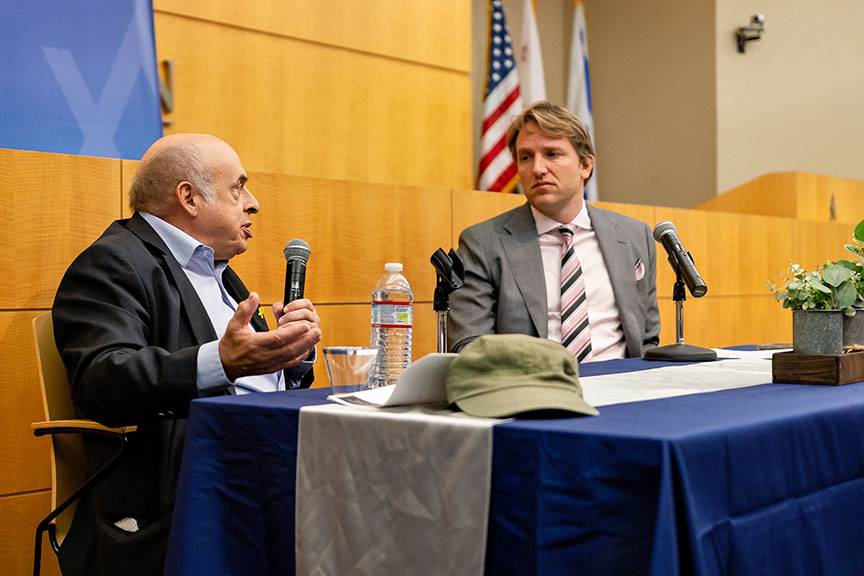
During a swing through California with the organization Combat Antisemitism Movement (CAM), Natan Sharansky addressed a private group of donors at a breakfast sponsored by the Jewish Community Foundation, the largest manager of charitable assets for Jewish philanthropists in Greater Los Angeles. Sharansky is chair of the CAM Advisory Board and held meetings in Southern California with Jewish communal leaders and grassroots activists ahead of CAM’s upcoming Mayors Summit Against Antisemitism in Beverly Hills on Dec. 11-13. More than 200 mayors are expected to attend the Mayors Summit to share best practices and discuss ways to counter antisemitism.

Sharansky is a modern-day hero, imprisoned for nine years in the Soviet Union for his activism on behalf of Soviet Jews trying to emigrate to Israel. He was finally freed in 1986 and reunited with his wife, Avital, in Israel, where he has lived ever since. Over the years he served in several capacities in the Israeli government, as well as the head of the Jewish Agency for Israel, promoting rights for new immigrants, religious minorities, and women. Sharansky’s most recent book is “Never Alone: Prison, Politics, and My People.” 

Natan Sharansky, Justin Jampol, founder and executive director of The Wende Museum of the Cold War.

At the breakfast on Nov. 7, Sharansky answered questions by moderator Justin Jampol, founder and executive director of The Wende Museum in Culver City, whose collections and programs focus on the Cold War, and then from the audience. The following are edited highlights from his answers. 

Q: How can Israel continue to heal from the war?

Natan Sharansky: Oct. 7 has changed our self-image. We know we can no longer appease our enemies. Yes, mistakes were made by the government and by the military, but we are in a much better place strategically than before. We finally know the real enemy is Iran and we are much less afraid. 

Israel is such a small country, and we feel the tragedy of the hostages and the many, many losses of our soldiers. Every loss is deeply felt. But we also have a deeply idealistic young generation whose readiness to continue to fight despite their personal sacrifices is unbelievable. I believe the vast majority of soldiers agree that they must fight until Hamas is destroyed and oppose a ceasefire. I have encouraged soldiers sharing the same tanks to go into politics to expand and broaden our political coalitions. They become close, sharing a tank. 

Q: What about the cultural and religious divisions in Israel?

NS: We are a Jewish democratic state. We cannot survive if we are not Jewish and we cannot survive if we are not democratic. Before Oct. 7, half the country wanted to steal the Jewish element from us and the other side wanted to steal the democratic element. Neither can be allowed to happen. But the grassroots feeling of togetherness is unparalleled.

Q: What about the draft conflict involving the Haredim?

NS: Many friends of my son-in-law have spent 250 days fighting, with wives and many children at home. They are all religious Zionists who have mutual interests with Haredim, who are mostly not serving. We cannot afford to support people who do not do their share. 

Q: How destabilizing is the role of radicalized groups in the region?  

NS: No doubt we now have two generations of Palestinians who have had radicalized education. We should have confronted this at the beginning and not the end, but we spent too much time on appeasement, such as with the Oslo accords, which were a disaster. In addition to Israel’s two stated war aims of getting the hostages back and destroying Hamas, I think there needs to be a third: deradicalizing Palestinian society. 

Q: Thoughts on the recent presidential election and its effect on Israel? 

NS: I read that more than 80% of Jews still voted Democrat even as it was clear that the party had gone so far to the left that they accepted the antisemitism in its ranks. Meanwhile, many other minority groups moved away from that party. For Israelis, our main question is our survival, and we believe the next administration will make it easier for us to do what we need to do to complete this war, including getting the munitions we need.

“For Israelis, our main question is our survival, and we believe the next administration will make it easier for us to do what we need to do to complete this war.”

Q: What about college campus antisemitism?

NS: I have spoken about this for more than 20 years and I believe this is where the main battle over antisemitism will be waged. In 2003 I visited several American campuses, including Harvard, Rutgers, and Brown. [At Rutgers, anti-Israel students protested his visit holding signs saying, “racist war criminals” and similar slogans, and one threw a pie in his face; at Brown there was a bomb threat at his appearance, which forced his talk into a much larger auditorium, which quickly filled with supportive listeners.] This was the first time I saw that Jewish students were afraid to speak out about Israel. They chose silence so they would not be punished by professors with bad grades. It was unbelievable. So many professors have come out for the liberation of Palestine, influencing students. 

Some of the Jews I met on these campuses reminded me of Jews in the Soviet Union. We had nothing spiritually. If you were born with the disease known as being Jewish, you had to be the best academically or in other ways as the key to success. Our biggest desire was for others not to know we were Jewish. It was shallow and boring and still without freedom. Once we began reading through the underground that we had a history prior to the revolution, and about the Jewish family and Jewish teachings, it was eye-opening. Similarly I see that many American Jewish students don’t care about being Jewish, and they don’t want others to think they are responsible for what is happening in Israel. They need to prove they are progressive and anti-Israel.

This problem was ignored for too long, but now there is more pushback, and Jewish Federations in many cities are now involved in supporting Jewish students when facing hostile actions among the “progressive” groups spreading groupthink antisemitism. A few months ago, 500 Jewish students at Columbia University penned and signed a letter calling out the antisemitism of both students and the administration. [Sharansky’s essay about this, titled “The 500,” appears on Tablet.] Another good sign is that a federal court ruled against UCLA for not stopping antisemitic activity on campus. But beyond the campus, Jewish students first need to be educated at home about Jewish history. They don’t know our history of 2,000 years ago. They don’t know about Zionism or Hebrew. 

Q: Do you agree that in the U.S. our biggest divisions are not left-right but liberal-progressive? 

NS: From my experience, progressives are the closest to communists. They oppress speech, they are against human rights and freedom, they judge people not by ability but by sexuality and race. They don’t believe in democracy. And they always accuse Israel of being an “oppressor” state. If you replace the word “class” with CRT, you have communism word for word.

“There is a huge attempt to separate Zionism from Judaism. We have to show the world the danger of this effort, not just for us, but for them.”

I was born in Ukraine, which had no voice in the Soviet Union. The Soviet Union also erased evidence of the Holocaust from Ukraine. I lived two miles from Babi Yar, where 70,000 Jews were murdered and thrown into a pit. Ukraine restored that place as a historical site. Today, levels of antisemitism in Ukraine are almost nonexistent. Of course, if you are looking for the place where they didn’t kill us, you have to look on another planet. While Putin isn’t antisemitic, per se, he is obsessed with restoring the Russian empire and chooses allies who can help, such as Iran. He wants to be Peter the Great. It will be very dangerous if he wins over Ukraine, so we have to support Ukraine to win this war. Putin is giving more and more weapons to Iran. The axis of evil is very clear. In Israel we are now beginning to correct the strategic mistake of not supporting Ukraine more initially.

Q: How can people help Israel the most? 

NS: There is a huge attempt to separate Zionism from Judaism. We have to show the world the danger of this effort, not just for us, but for them. We have to educate young Jews about their Jewishness. Mobilize the free world to understand the danger of the new antisemitism.

“There is a huge attempt to separate Zionism from Judaism. We have to show the world the danger of this effort, not just for us, but for them.”

Q: What gives you hope? 

NS: The moment you feel yourself deeply connected you are never alone. In all my years of imprisonment I never felt alone [because I knew I was a Jew]. I am more optimistic about the Jewish future than I am for the American future.


Judy Gruen is the author of “Bylines and Blessings,” “The Skeptic and the Rabbi,” and several other books. She is also a book editor and writing coach.

Natan Sharansky: We Are Never Alone Read More »

MAZON Continues to Advocate for Food Insecure in Light of Election Results

On November 6, MAZON: A Jewish Response to Hunger released a statement, vowing to continue their fight on behalf of food-insecure Americans nationwide. This declaration of commitment was released following the announcement of Donald Trump’s victory in the 2024 presidential election. 

“As anti-hunger advocates, we are keenly aware of the importance of working with our nation’s leaders and policymakers to address hunger in America,” Abby J. Leibman, president & CEO at MAZON, told The Journal. “We know that changes in leadership signal possible changes in the nutrition safety net, including SNAP, on which 47 million Americans living in food insecurity must rely.”

The statement read: “As advocates for our nation’s most vulnerable, we will not turn away, nor surrender to shock or anger or grief in the face of whatever comes. Our values as a Jewish organization ground us and give us strength and purpose in recognizing our obligation to all people who struggle.”

MAZON, which has been actively preparing for this moment, said it would not waver in its mission to protect and strengthen America’s comprehensive and robust nutrition safety net, as it continues to strive to end hunger among people of all faiths and backgrounds. 

“Our history has taught us to be ready for moments such as these, and we are prepared for the challenges ahead,” Leibman said. “This election has underscored how very vital [our] work will be moving forward. 

MAZON, which is about to celebrate its 40th anniversary, has long been a leader in making certain that overlooked populations that struggle with hunger are not denied access to nutrition programs. 

“While we may not know exactly what the next four years hold for us, we do know we have survived and surpassed administrations before who have shown contempt for the neediest among us,” the statement continued. “Our faith affirms that all people are B’tselem Elohim, created in the image of God. As such, we will continue to do everything in our power to secure a future where every person is able to feed themselves and their loved ones with dignity, even if those in higher office prove unwilling to join us in that effort.”

Leibman said MAZON will continue to fight on behalf of food insecure military families, veterans and Tribal Nations in Congress and with the Administration to ensure they are given the resources they need to feed themselves and their families. “We have also been prepared to look to the leadership of our nation’s states, where federal policies are implemented, and innovative and responsive policies can be secured,” she said. 

Also on MAZON’s radar is prioritizing meeting the hunger needs of single mothers, college students and LGBTQ seniors whose food security is greatly influenced by state policies and opportunities. “Our donors, our partners and our nation’s policymakers are looking to us to continue our leadership in anti-hunger advocacy,” she said.

“Our donors, our partners and our nation’s policymakers are looking to us to continue our leadership in anti-hunger advocacy.” 
– Abby J. Leibman 

When asked what people can do to support and assist the food insecure, Leibman talked about how the voices of the Jewish community are essential and powerful. 

“We bring our values, traditions and teachings to the hard work of crafting legislative solutions to food insecurity,” she said. “Our nation’s policymakers must hear us – and they will – if we raise our voices together to ensure that those who struggle with hunger are neither forgotten nor attacked, but given resources and opportunities to thrive in America.”

Inspired by Jewish values and ideals, MAZON: A Jewish Response to Hunger is a national advocacy organization working to end hunger among people of all faiths and backgrounds in the United States and Israel. For more information, visit mazon.org.

MAZON Continues to Advocate for Food Insecure in Light of Election Results Read More »

A Challenge to Anti-Zionist Jews

To American Jews who condemn the state of Israel—to those who have placed that condemnation at the very center of their Jewish lives; to those who have transformed every Jewish holiday and observance into a further opportunity for opprobrium for the state of Israel, its people, and its army; to those who call for boycotts and beg for the “Prayer for the State of Israel” to be torn from the siddurim and cast into a heap along with the Israeli flag that stands to the side of the Ark—to those Jews, I offer a challenge: Make Aliyah. Move to Israel.

There you will find comforts that Israel’s pioneers could not have imagined. Instead of malarial swamps and uncultivated desert, you will have Tel Aviv and Jerusalem. Instead of caravans threatened by ambush, you will have Israeli high-speed trains and the light rail. Instead of having to work by the sweat of your brow in an agricultural settlement, you can order takeout from Wolt and shop at Dizengoff Center. Even in the midst of this dreadful and unprecedented war, you will be pampered compared to those who came here with nothing and built everything.

Like you, those pioneers were rebels. Their secular Zionism scandalized their elders, much the way your anti-Zionism scandalizes your parents, who did their best, with summers at Camp Ramah and Birthright trips in high school, to instill in you a love of Israel. 

Unlike you, however, those pioneers put everything on the line to build the Jewish future they wanted to see. They didn’t condemn, or sneer, or despair. They built. They fought. They sacrificed. 

If you were like them, and if you truly believed—as you claim to believe—that Israel is coasting along a path towards illiberalism and religious extremism, then you would show up. 

Instead of condemning Israel’s treatment of the Palestinians from the comfort of the United States, you could be in the West Bank, volunteering in their communities, offering your presence and lending a hand during their olive harvests. 

Instead of bemoaning the monopoly of state Rabbinate in Israel, you could be strengthening progressive Jewish communities in Israel, the ones that struggle to keep the lights on, and fight the daily fight for pluralism and equality.

Instead of denouncing Netanyahu, you could be out in the streets with the exhausted masses of protesters who have been fighting against his cynical and divisive agenda for years. 

The thing is that I agree with you about many of the problems facing Israel. What I don’t understand is why your awareness of those problems has convinced you to further disidentify with the Jewish state, when the truth is that we need you. We need your activism. We need your presence. We need your skin in the game. 

If you perceive brokenness, the answer is to repair, not destroy. The “anti” of anti-Zionism tells me all I need to know about this movement—it is an ideology of negation rather than a positive vision of what could be.

If you perceive brokenness, the answer is to repair, not destroy. The “anti” of anti-Zionism tells me all I need to know about this movement—it is an ideology of negation rather than a positive vision of what could be. 

If you take your passion for condemning Israel and redirect it towards building Israel up from within, helping to shape its culture and its politics as citizens, something incredible could happen. Israel is a small country and small coalitions can make mighty differences. 

Of course, as you shape Israel from within, you must be prepared to be shaped by it in return. With exploding drones overhead, with invasions over the southern border and abandoned towns in the north, you will come to appreciate Israel’s precarious situation in the Middle East, and better grasp the nuances of the choices that Israel faces. 

Israelis will become humanized to you. They will become your friends, your community, your lifelines. 

You will better understand how the country works. Often, you will be impressed by what you see, other times you will be outraged. 

No longer will it be possible to see Israel as an “issue.” It will forever be a place, a home, and a family.

Remember, the archetypal wicked son of the Pesach Haggadah is wicked not because he questioned what his elders taught him, but because he condemned from the outside, rather than challenging from within. Your dissent is welcome. Your alienation is not. So drop it.

Israel needs you. Your people need you. And you have a rare opportunity to make a difference. Don’t let it pass you by. 

Israel needs you. Your people need you. And you have a rare opportunity to make a difference. Don’t let it pass you by.


Matthew Schultz is a Jewish Journal columnist and rabbinical student at Hebrew College. He is the author of the essay collection “What Came Before” (Tupelo, 2020) and lives in Boston and Jerusalem.  

A Challenge to Anti-Zionist Jews Read More »

Chosen Links by Boaz – Ep 8: Building Bonds Where Black and Jewish Perspectives Converge

So. Important.

So. Good.

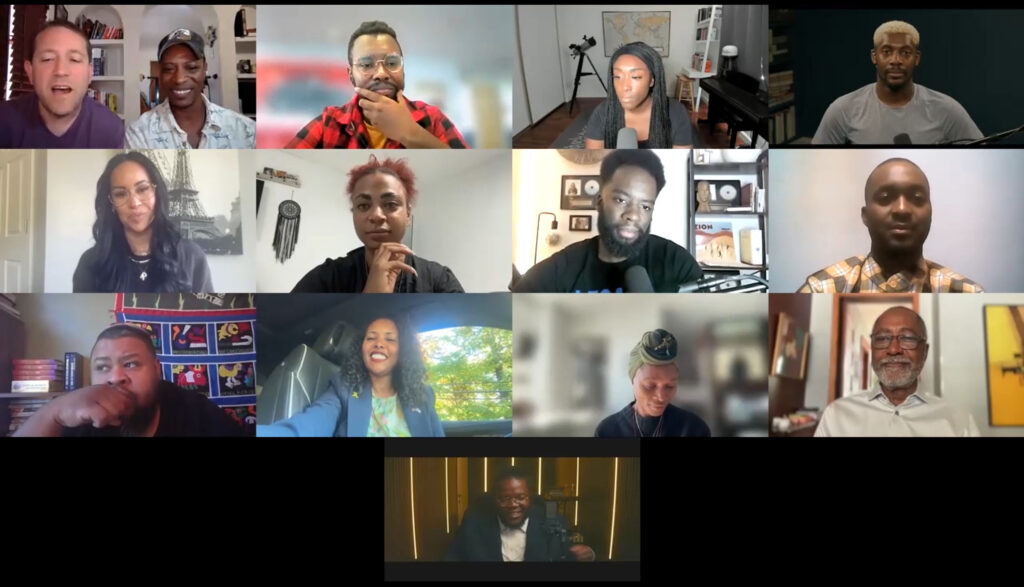
In this episode, I sat down with 12 incredible voices from the Black community—men, women, Republicans, Democrats, Jewish, Christian, and Muslim—joining in from across the U.S. and Israel. Together, we explored the powerful bond between the Jewish and Black communities.

Featured in this conversation:

Xaviaer DuRousseau
Michael Twitty
Mazi Melesa Pilip 
Don Samuels
Nissim Black
Rachel Moon
Malynda Hale
Bellamy Bellucci
Joshua Washington
Tamer Masudin
Lilaq Logan
Ashriel Moore

I had an amazing (first time) co-moderator, Nathan Looney, who brought so much insight that we’ll definitely be diving deeper in future discussions.

Catch the full conversation here, and don’t forget to share. Also available on all major podcast platforms: [Spotify, Apple, Amazon, and more]. 🎧

Chosen Links by Boaz – Ep 8: Building Bonds Where Black and Jewish Perspectives Converge Read More »

The True Test of Victory

The twentieth-century Methodist pastor Ralph W. Sockman, best remembered for his weekly presentations on NBC’s National Radio Pulpit for over 40 years, observed that “the test of courage comes when we are in the minority, but the test of tolerance comes when we are in the majority.” 

In the wake of this week’s stunning U.S. election results, Sockman’s words feel particularly relevant. Donald Trump decisively triumphed over Kamala Harris in a victory that marked a significant political comeback for someone who has faced challenges and setbacks like no previous U.S. president. What lies ahead during his second term will shape the country — and the world — for decades to come.

Trump’s sweeping electoral success, with wins in key swing states such as Wisconsin, North Carolina, and Pennsylvania, gave him a solid majority in the Electoral College. But perhaps even more striking is the breadth of his appeal, extending even to states he lost. Across diverse demographics, including the Latino community and first-time voters, Trump gained substantial support — a surge that also won him the national popular vote, making him the first Republican to do so since 2004.

Alongside Trump’s personal triumph, the Republican Party has regained control of the Senate, securing key victories in Montana, Ohio, and West Virginia and ensuring at least a 52-48 majority. The House of Representatives remains undecided, but Republicans have made significant gains, flipping several Democratic-held districts.

Politically speaking, the Democrats have been routed. Trump’s sweeping success has left the Democratic Party facing a comprehensive defeat. The media and pollsters confidently projected a different outcome and also emerged as major losers in this election. They are now forced to reckon with just how deeply they misjudged Trump’s reach and influence.

In the aftermath of such a decisive victory, it is tempting for those in power to press their advantage, exploiting their position to make opponents feel the sting of loss. But true leadership demands magnanimity, especially for those with the power to pursue their agenda unchecked. History offers powerful examples of leaders who rose above the temptations of victory, using their success not for vengeance but to foster reconciliation and unity.

One historical example is William of Normandy, better known as William the Conqueror. After winning the Battle of Hastings in 1066, William faced the challenge of consolidating power over a suspicious English public. 

Rather than obliterating the Anglo-Saxon aristocracy, he took a pragmatic approach, granting land to his Norman supporters but also allowing some English nobles to retain their titles and estates. He preserved existing laws and administrative systems, blending Norman rule with English customs. 

By respecting local traditions after such a decisive military triumph, William helped stabilize England, enabling a smoother transition to Norman rule and averting the threat of perpetual civil war.

Another example is Emperor Meiji of Japan. Japan was split in two when he took power in the late 19th century. The old samurai elite deeply resented the sweeping changes of Meiji’s modernization program. They had been in charge for centuries, living by a strict code and resisting any outside influence. Seeing Japan shift toward Western ideas and a centralized government felt like betrayal to them. Their opposition was fierce and unrelenting. 

Meiji could easily have cracked down, sidelining or eliminating his critics to secure his power. Instead, he extended an olive branch, welcoming former samurai into the new government and military and offering them roles in Japan’s emerging society. 

This move was crucial: Japan became unified and focused instead of becoming a country divided by endless resentment. Meiji’s restraint allowed Japan’s rapid modernization to thrive — paving the way for the global economic powerhouse we see today.

Similarly, Abraham Lincoln faced a profound test after the Civil War. At his second inaugural address in 1865, with the country ravaged and divided, he spoke not of punishing the defeated South but of healing — a vision he captured in his famous words, “With malice toward none, with charity for all …” 

Lincoln understood that what the nation needed most was reconciliation, which meant choosing empathy over retribution. Rather than using his hard-won victory to exact revenge, he focused on rebuilding trust and unity, knowing that the country’s future success depended on it. 

This approach helped lay the foundation for a truly united United States to emerge from one of its darkest hours. Without Lincoln’s commitment to compassion and healing at that pivotal moment, it’s hard to imagine America becoming the global symbol of freedom and democracy that it is today.

This principle of restraint, choosing integrity over self-interest, finds a powerful parallel in the Torah, in Parsha Lech Lecha. After Abraham’s victory over the four kings, the King of Sodom offers him the spoils of war. The king proposes that Abraham take the material wealth while he retains the captives — a seemingly fair offer, given Abraham’s role in the victory. 

But Abraham refuses, saying (Gen. 14:23), “I will not take so much as a thread or a sandal strap of what is yours, so you shall not say, ‘I have made Abram rich.’” Abraham’s rejection of the offer reveals his deep commitment to ethical integrity over material gain. Rather than capitalizing on his success for personal benefit, he displays a higher vision of leadership focused on principles.

At the same time, Abraham also encounters Melchizedek, the King of Salem, whose approach vastly differs from that of the King of Sodom. Melchizedek, both a king and a priest, greets Abraham — now the most powerful figure in the region — with bread, wine, and a blessing. This simple offering speaks to spiritual fulfillment rather than material wealth. 

Melchizedek’s welcome is rooted in goodwill and mutual respect, without the trappings of temporal power. He acknowledges Abraham’s victory and blesses him in the name of “God Most High, Creator of heaven and earth” (Gen. 14:19), framing Abraham’s success not as mere conquest but as part of a divine mission. 

By choosing Melchizedek’s blessing over the King of Sodom’s offer of wealth, Abraham aligns himself with a model of leadership grounded in moral clarity and cooperation rather than exploitation.

Abraham’s refusal of the King of Sodom’s spoils, in contrast to his acceptance of Melchizedek’s blessing, presents us with a profound lesson in the exercise of power. The King of Sodom represents a leadership model based on taking advantage and seeking gain in times of vulnerability, while Melchizedek embodies a model that prioritizes spiritual values and seeks common ground through shared ideals. 

Abraham’s reaction to these two figures symbolizes a profound moral choice: He wanted to build a lasting legacy based on higher principles rather than the short-term satisfaction of showing who is boss.

As Trump and his team navigate the aftermath of this remarkable election, and particularly in the wake of the impressive Republican victory, they should draw inspiration from Abraham’s actions and from leaders like William the Conqueror, Emperor Meiji of Japan, and President Lincoln. 

In his victory speech, President-elect Trump promised, “We’re going to help our country heal.” That is music to my ears. The real test of winning lies not in how much one can take but in how much one can give — how one can build bridges rather than nurture divisions, and inspire unity rather than discord.

By choosing restraint and respect over exploitation, true leaders — especially those with the most power — can transform moments of triumph into powerful opportunities for renewal, goodwill and hope.

By choosing restraint and respect over exploitation, true leaders — especially those with the most power — can transform moments of triumph into powerful opportunities for renewal, goodwill and hope.


Rabbi Pini Dunner is the senior spiritual leader at Beverly Hills Synagogue, a member of the Young Israel family of synagogues.

The True Test of Victory Read More »

CEOs and Commanders in Chief

While the details of Elon Musk’s potential involvement in the next presidential administration remain to be seen and Trump’s transition team is led by Cantor Fitzgerald CEO Howard Lutnick, all involved in navigating the dynamics between government and corporate leaders would be wise to prep by reading a recently released book. 

As my Yeshiva University colleague, presidential historian and former White House official Tevi Troy, documents in his enthralling new volume “The Power and the Money: The Epic Clashes Between Commanders in Chief and Titans of Industry,” business leaders have been a source of both headaches and help for presidents – and in one particular case, a decades-long example of both.

Henry Ford, who brought cars to the masses, had a long history of antisemitism mixed with presidential politics. 

Ford was long known for his dislike of the Jewish people. He purchased the “Dearborn Independent” newspaper and used it to disseminate conspiracy theories about “the International Jew.” He even reprinted the notorious antisemitic tract “The Protocols of the Elders of Zion.” As another historian, Hasia Diner, noted in an interview with PBS, “There are people who talked about him as a potential presidential candidate in the 1920s. Some local tavern keeper makes a antisemitic remark over the bar, well, nobody cares. Somebody may listen, and maybe repeat it, but it has a very limited span. But Henry Ford’s ability to gain a national audience with his words made him a very dangerous person.”

Though Ford’s reputation as a corporate titan took a hit, he was not “canceled,” to use today’s terminology. 

Troy notes that Ford even bears the dubious distinction of being the only American mentioned in Hitler’s “Mein Kampf.” Hitler told a reporter for The Chicago Tribune in 1924 that “We look to Heinrich Ford as the leader of the growing Fascist movement in America.”

Thankfully, presidents were among those who spoke out against Ford’s antisemitism. Presidents Taft, Wilson and Harding were among the signers of a statement by Ford critic John Webster Spargo, “The Perils of Racial Prejudice,” decrying his anti-Jewish animus. Jews started boycotting his products, in an effort to hit him where it hurts. It took until the late 1920s for Ford to pivot away from his public prejudices.

Around a decade later, however, in 1938, four months after the Nazis took over Austria, German officials awarded Ford the “Grand Cross of the German Eagle” in honor of his 75th birthday, an honor that he accepted. 

In response, Eddie Cantor, a renowned Jewish entertainer, denounced Ford publicly. Cantor questioned Ford’s Americanism “for accepting a citation from the biggest gangster in the world … Whose side is Mr. Ford on?” Cantor wondered. To this Ford had to issue a statement declaring “no sympathy on my part with Nazism” and that “those who have known me for many years realize that anything that breeds hate is repulsive to me.” 

Eventually, following a German bombing of a Ford plant in England and the Japanese attack on Pearl Harbor, Ford positioned himself firmly on the side of the Allies. His bomber production facility in Willow Run, Michigan became legendary during WWII It employed 35,000 people who helped produce 9,000 B-24 Liberators, with $200 million of support from the U.S. government. The 975-acre factory was designed by Albert Kahn, Ford’s Jewish architect and frequent collaborator. FDR toured the facility in September of 1942, a few months after Ford received glowing coverage in TIME magazine, which labeled him a “fighting pacifist” who was crucial to the “miracle of war production.” 

In 1945, Ford viewed footage of the concentration camps for the first time. He ran out of the room in horror. He was later praised by Harry Truman, FDR’s successor and the seventh and final president Ford had interacted with, for his “great benefit to civilization” during the war.

As the incoming administration is shaped by and potentially hires outspoken corporate executives, those aboard both Air Force One and corporate jets would be wise to add “The Power and the Money” to their reading lists.

Henry Ford’s interactions with presidents over decades offers a reminder of how complex the dynamics of powerful personalities in the White House and C-suites can be. As the incoming administration is shaped by and potentially hires outspoken corporate executives, those aboard both Air Force One and corporate jets would be wise to add “The Power and the Money” to their reading lists.


Rabbi Dr. Stuart Halpern is Senior Adviser to the Provost of Yeshiva University and Deputy Director of Y.U.’s Straus Center for Torah and Western Thought. His books include “The Promise of Liberty: A Passover Haggada,” which examines the Exodus story’s impact on the United States, “Esther in America,” “Gleanings: Reflections on Ruth” and “Proclaim Liberty Throughout the Land: The Hebrew Bible in the United States.”

CEOs and Commanders in Chief Read More »

City Leaders Need to Wake Up

The Mayor of Amsterdam, Femke Halsema was a ghostly figure as she took to the podium in front of the press on the morning of Nov. 8. The previous night, the tranquil canals of the old city of Amsterdam were turned into scenes of a violent pogrom, as young men hunted Jews and kicked them senseless in the streets. This was a nightmare the mayor could never imagine would happen in her beloved city. And yet it did.

Make no mistake it was no spontaneous outburst of soccer violence, which was once the hallmark of the European game. Today soccer is largely a family affair.

The perpetrators were not present at the soccer game between Maccabi Tel Aviv and the Dutch soccer team Ajax. Instead, they lay in wait coordinating their movements, ready to hunt Jews, like a pack of wild dogs. They were looking for Maccabi soccer shirts, and Israeli flags, Hebrew accents.

Amsterdam prides itself on its liberal values. I have been there many times before and admire its open-minded people. They legalized cannabis in 1976 and have had laws to protect its voluntary sex workers since 2000. It is an international city that strives to welcome all.

Despite the external sheen, there has always been a darker side. Nazi Germany rightly took the blame for the murder of Holland’s Jews during the Holocaust. Once they had left, the Dutch told stories of resistance, and the courage of its citizens, many of whom hid Jews. But there is another story to tell.

It is little known that 75% of Dutch Jews were murdered, compared to 25% in France and only 1% in their near neighbors Denmark. How so? Dutch collaborators. Lots of them. The Germans had no idea where to look for the many Jewish families hiding in the rabbit warren of canal side warehouses. The Dutch knew.

No wonder the Mayor of Amsterdam was reeling. History was coming back to reveal that her city is not all it appears to be.

This is not meant as a dis on Amsterdam. I love my Dutch friends. The point is this — if Jew hunting can happen in Amsterdam, it can happen anywhere.  Amsterdam has more than a fair share of antisemitic Muslims, but cities the world over have similar populations simmering with anger and disaffection. If we think we are immune from such behavior, we are very much mistaken.

In December, the city of Beverly Hills is to play host to a summit of over 300 mayors from across the USA. The Mayors Summit Against Antisemitism is in its fifth year and is convened by Combat Antisemitism Movement (CAM) to equip American mayors across the country with policies, tools and the knowledge they need to work more closely with city officials, law enforcement officers, educators and Jewish community leaders to prevent the spread of antisemitism in our local neighborhoods.

I was discussing the goals of the summit with Chairman of the CAM Advisory Board, Natan Sharansky in Beverly Hills on Nov. 7. Sharansky, a former Soviet refusenik who served in several Israeli governments, explained that our national government has too many layers of bureaucracy to be effective at a local level. He emphasized why our local mayors are the key. “City mayors are incentivized to keep their cities safe for all their citizens. It matters much more to them and they can get things done.” Little did we know as we chatted by the fireside, that at that very moment, Israeli Jews were running for their lives in the streets of Amsterdam.

Lisa Katz, CAM’s Chief Government Affairs Officer and a former mayor herself, reminded me, “When antisemitic incidents occur, they ripple through our communities and well beyond, fueling fear and division. It is mayors who stand at the frontline of this battle.” The Mayors Summit, which was planned long before the events in Amsterdam unfolded last week, now takes on even shaper relevance and urgency.

Sharansky is right, global antisemitism is a local matter. We need not be afraid of the mob if we stand together. But first we need to recognize, there is a potential mob lurking in every city, whenever conditions are ripe.

We need not be afraid of the mob if we stand together. But first we need to recognize, there is a potential mob lurking in every city, whenever conditions are ripe.

Our mayors strive to serve us every day.  Wherever you are in the country, take a moment to thank your mayor for their service, and urge them to participate in the Mayors Summit Against Antisemitism in Beverly Hills in December, lest they end up with the same ignominious fate as Femke Halsema.


For more information about the Beverly Hills summit see: https://mayors.combatantisemitism.org/summit

Stephen D. Smith is founder of Memory Workers and CEO of Breaking Through Initiative.

City Leaders Need to Wake Up Read More »

A Prayer for Our Country After the Election

Help us, God, to unite our great country
In this contentious time.
Teach us to listen to one another,
To heal our divisions and restore hope.
The days that lie before us are ours to shape.
Let them be days of repair,
Days when we join together
To build a new future.
For some of us the results of this election were a deep blow,
For some of us they were a cause for great celebration.
Our charge today must be to work through our differences
And find common ground,
To listen and to speak with caring and empathy
As we wish others to listen and to speak to us.
Bless us God, with ears to hear,
Hearts to love,
And hands to reach across party lines,
So that we can ensure liberty and dignity for all.

Land of opportunity and dreams
We vow to protect our blessed democracy
And treasure the freedom that is our birthright.
We pledge our allegiance
To every soul in need
And every child praying for a better tomorrow.
Bless America, God,
With peace, prosperity, and with justice for all. Amen.


Rabbi Naomi Levy is the founder of Nashuva and author of “Einstein and the Rabbi.”

A Prayer for Our Country After the Election Read More »