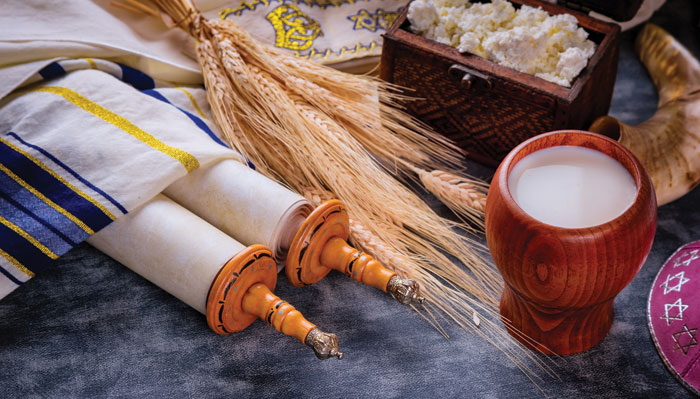
The Lord said to Moses: Count every firstborn male aged one month and upward of the children of Israel, and take the number of their names. ~ Numbers 3:40
What if holiness was contagious?
Instead of a virus, you could breathe
nearby the fallen and they’d take it in.
I’d take off my mask for that.
I’d pay the five shekel fee for that.
I’d try to give it to the ones I see
in the news who look like they
really need it. What if holiness was
contagious? Passed on from
a one-month-old who hasn’t had
the chance to learn about mistakes?
One with the cleanest slate –
One who, if you looked up
their record, it just said still infused with the light of creation.
What if holiness was contagious?
And no medicine could contain it?
And Doctor Fauci said it’s fine?
And everyone trusted Doctor Fauci
instead of the liars and the greedy
and the fundamentally extreme?
This poem has an agenda and
it wants to infect you. This poem wants
its writer to take it seriously.
No one gets out of this agenda.
This pandemic of righteousness.
This put away your cure,
this is the cure. What if holiness was
contagious? I won’t be at work today.
I’ve caught the world yet to come.
It’s a serious case. I don’t expect
to get better from this. There is no
better than this.
Rick Lupert, a poet, songleader and graphic designer, is the author of 28 books including “God Wrestler: A Poem for Every Torah Portion.” Find him online at www.JewishPoetry.net
In so many ways we live in a bleak and difficult time. And as always, we address life somewhere between the constraints and opportunities that reality presents to us and the choices that we make in the face of that reality. I think about that dynamic tension in the light of the Festival of Shavuot, which celebrates the giving of the Torah at Mount Sinai, and also celebrates the barley harvest and the beauty of summer days. That same coupling — of Torah’s revelation, on the one hand, and natural/agricultural reality on the other — is found quintessentially in parsha Behar, which begins, interestingly enough, with this same pivot. God speaks to Moses at Mount Sinai saying, “Speak to the children of Israel and say to them, ‘When you come to the land which I give you, then shall the land keep a Sabbath to the Lord.’”
The rabbis of old posed an interesting question about this odd juxtaposition: “What does the revelation at Mount Sinai have to do with the year of letting our fields lie fallow during the Shemita year, during the sabbatical year?” When I was in rabbinical school (slightly after the Iron Age), I was taught that these verses reflect the opposition between the natural world and civilization, that Shemita has to do with our living in harmony with nature, and that Mount Sinai is an artificial imposition on nature for the sake of (unnatural) morality. In that perspective, Shavuot marks the supremacy of ethics over nature: The giving of Torah imposes itself on a moment of harvest, creating morality in the unnatural display of divine power.
I no longer see a deep dichotomy between morality and nature. Instead, I’ve come to believe that seeing these clusters in opposition is, in fact, the signal mistake of Western civilization: that we never step outside of nature, that our morality itself is an evolutionary product, that we as mammals bubbled up from the experiences of all of our ancestors going all the way back.
It’s not so much nature versus civilization or creation versus revelation. Instead, God provides the backdrop of creation, and within creation invites us to innovate goodness. We find ourselves living in a natural world that we did not choose or create, and the pertinent question is: what are we going do with the world we find ourselves in? How are we going to make it beautiful and blessed and joyous? How are we going make it possible so that we and our loved ones and those who come after us will be able to thrive in this world?
Sinai offers the guidebook for making good choices in the world. Shavuot is all about integrating the two into a grand synthesis of creation and revelation together.
Shemita, in that light, is what we do to keep nature vibrant. Sinai offers the guidebook for making good choices in the world. Shavuot is all about integrating the two into a grand synthesis of creation and revelation together.
Shavuot reminds us that we as a community must, despite the challenges, continue to lean into curiosity, possibility, compassion, and love. In life, we all face mighty constraints. We participate in communities that already have a history. They already have a culture. They already have wounds and challenges and traumas. We engage with a society that has trauma at every turn. And we live in an age full of fiscal and existential threats that leave us all in a brutal difficult place.
Back when our species was emerging from the primal sludge, we developed a fear or fight response that served us well. After all, if you’re confronting a saber-toothed tiger, that is no time for nuance. But the contemporary challenge is that we now live eternally in fight or flight. As a result, we are drowning in anxiety, tension, and despair, heightened by social media round-the-clock news, and whipped into a frenzy by advocates so relentlessly partisan that it becomes a sin to listen to someone with whom you don’t agree.
And so how do we, in such a time, carve out a path of life? The Torah offers a lifeline, and a command: “Choose life.” Not because that choice is self-evident; it’s actually hard to do. In a world in which everyone is spoiling for a fight, how do we choose life? How do we stand for love? How do we, in a world of conflict, insist that there’s another way? How do we affirm that this alternative path is a way, not of weakness, but of strength?
Let’s keep affirming the clarion words of Joshua, who is echoing, in turn, the words of his teacher, Moses: “Be strong and courageous. Don’t be afraid. Don’t be dismayed.”
Now I want to point out the bad news hidden in the call to be courageous: nobody says that to someone who’s about to face something really unpleasant. In the real world, there will be serious challenges, and they will be hard. The greatest danger will not be that we can’t overcome them, because we will be able to overcome them. The greatest danger is that we are all prone to despair. We are all easily victimized by our own sense of being squelched. We abandon home, assuming that those who are challenging us are destroying us and, in our terror, we allow ourselves to be remade in their image.
Don’t let the haters alienate us from our truest nature. Don’t despair. Don’t surrender. Don’t become remade with the rigidity and the frailty of the extremists, our true enemies. The best way to fight back is to stay broad-hearted, to stay flexible and open and resilient, to be able to affirm their humanity even as we oppose their injustice.
To all of us, I bless us
• That we are able to step into the world with open and flexible hearts.
• That we build communities of care and presence and diversity.
• That we reach out beyond our borders to find and to create coalitions of well-meaning people with whom we may differ on important points, but who understand the centrality of affirming humanity in a first place.
And in holding these values together, I bless us that we will build in our hearts, with our very lives, tabernacles of purity and of holiness, in which those who are under our care will experience the embrace of angels. We will purify the sanctuaries of our souls; we shall keep the eternal light shining.
And I bless us that those who are in the outer courtyard will remain there, outside.
Rabbi Dr Bradley Shavit Artson, a Contributing Writer for The Jewish Journal, holds the Abner and Roslyn Goldstine Dean’s Chair of the Ziegler School of Rabbinic Studies and is Vice President of American Jewish University in Los Angeles. He is also dean of the Zacharias Frankel College in Potsdam, Germany, ordaining Conservative rabbis for Europe.
We can agree on many things when it comes to the holiday of Shavuot: Ruth’s loyalty to Naomi in the former’s eponymous book is profoundly inspiring. The rabbinic intern who gives the 3:30 a.m. lecture at your local synagogue’s all-night learning program is a good team player. And the cheesecake served for dessert is a gastronomical challenge to those of us who are lactose intolerant.
What has long been debated, however, is, well … when we celebrate Shavuot, and why.
The Talmud relates that the rabbis disagreed with another group of Jews known as the Boethusians about the date the Bible dictated for the holiday’s observance. “And you shall count for you from the morrow after the day of rest, from the day that you brought the sheaf [omer] of the waving; seven weeks shall there be complete,” reads Leviticus’ 23rd chapter. To the rabbis’ rivals, the count towards Shavuot was to begin the first Sunday following Passover. The rabbinic perspective, on the other hand, determined that the kick-off of the seven-week cycle is the day after Passover’s initial holy-day, a Sabbath-like day of rest.
Even after traditional Judaism standardized the post-Passover’s-first-day position, the festival’s meaning was hardly finalized. Though the Torah ascribes to Shavuot the aforementioned agricultural significance, the Sages concluded the festival actually commemorates the giving of the Ten Commandments amidst the fire and brimstone of Sinai. After all, if one counts fifty days after the 16th of Nissan, you land on the sixth day of the Hebrew month of Sivan, conventionally believed to be the date in which the Israelites received those divinely-engraved tablets. Alas, not if you’re Rabbi Yossi. He insisted that Moses descended the mountain clutching those precious commandments on the seventh of Sivan, not the sixth, calling into question Shavuot’s numerical alignment with the day of revelation.
Centuries before these controversies, around the time those hearty Maccabees took up arms against the oppressive Seleucid Greeks, a Second Temple-era Jewish writer composed the Book of Jubilees. Purporting to be a version of Genesis and parts of Exodus dictated by an angel to Moses and situating every story it tells within a certain year of the 50-year Jubilee cycle, the book presents its own radical take on Shavuot’s significance. According to Jubilees’ author, the festival occurs on the 15th of Sivan, and is premised not on “weeks” but on promises, or oaths, which the Hebrew “shavua” can also mean.
The Book of Jubilees places Shavuot’s origin in the first recorded oaths in history. After washing away the earth’s evil with a flood, God promised Noah that never again would the world be destroyed. He also permitted mankind to eat meat, while forbidding blood to be consumed along with it, a commandment Jubilees has Noah and his children swearing to uphold. “For this reason,” records Jubilees, “it has been ordained and written on the heavenly tablets that they should celebrate Shavuot during this month — once a year — to renew the covenant each and every year.” Likely, Jubilees connected covenant to blood following the book of Exodus’ 34th chapter recounting that Moses sprinkled blood on the Israelites following the revelation at Sinai, when Moses stated “This is the blood of the covenant that the Lord now makes with you concerning all these commands.”
Following in the post-flood footsteps of this initial promise between God and his loyal subjects, Jubilees informs its readers that crucial events in the lives of the patriarchs occurred on the date of the holiday. God changed Avram’s name to Abraham then, and it’s also the day Isaac was born. Isaac and Ishmael joined together in a feast on Shavuot (an episode invented whole cloth by Jubilees) and Jacob received the covenantal blessing from his father Isaac, as well. Shavuot is also Judah’s birthday, the day that Jacob made a treaty with Laban, and the day God told Jacob that He would protect him on the journey down to Egypt.
The covenant at Sinai that is commemorated on Shavuot, according to this reading, is just the latest example of the loyalty between God and his people, a bond strengthened over and over again, across the generations.
Likely, suggests Yeshiva University’s Professor Ari Mermelstein, Jubilees has Shavuot’s observance date back for centuries to offer strength to the Jews of its time. With the oppressive Seleucid Greeks running the political show, the Israelites in the second century BCE might have been convinced that God had abandoned them. Fear not, Jubilees seems to assure its readers, God is still loyal to his covenant, as he has always been. As Mermelstein puts it, “Sinai emerges as the latest affirmation of a single covenant … God may punish Israel for their sins, but the existence of a unilateral pact that extends back to creation [i.e the time of Noah] will eventually compel a reconciliation between the parties.” As the former Harvard and Bar Ilan University professor James Kugel elaborates, in Jubilees’ view, “things really did not begin at Sinai but with Israel’s ancestors – especially Noah, Abraham, Isaac, and Jacob. God has established his early covenants with them – with them and with their descendants, that is, with us, the Jews of Jubilees’ own day. We were God’s people long before the Sinai covenant, we worshipped Him back then in the same way we worship Him now, and we will remain His people forever.”
While debates may have long defined Shavuot, Ruth’s promise of unceasing devotion to the divine is one that Jews throughout our history – from Jubilees’ era to today – continue to have in common.
While Jubilees’ bizarro version of midrash might seem strange, the spiritual sentiment it expresses remains resonant. The rabbis ended up codifying Shavuot’s contemporary observance on a different date and made no connection between its commemoration of the giving of the Torah and the actions of Noah and our forefathers. But we share with this ancient book’s author a commitment to the covenant with God and His Torah, despite countless historical trials and tribulations. While Jubilees won’t be read in your synagogue over the holiday, we will hear once again Ruth say to Naomi “Your God shall be my God.” While debates may have long defined Shavuot, Ruth’s promise of unceasing devotion to the divine is one that Jews throughout our history — from Jubilees’ era to today — continue to have in common.
Rabbi Dr. Stuart Halpern is Senior Adviser to the Provost of Yeshiva University and Deputy Director of Y.U.’s Straus Center for Torah and Western Thought. His books include “The Promise of Liberty: A Passover Haggada,” which examines the Exodus story’s impact on the United States, “Esther in America,” “Gleanings: Reflections on Ruth” and “Proclaim Liberty Throughout the Land: The Hebrew Bible in the United States.”
An interview with Daniel (Danny) Lobell and Mark Schiff goes something like this:
Interviewer: “So, where did you two meet?” Lobell: “I met Mark at a Turkish bathhouse.” Schiff: “No, it was an Armenian one.” Lobell: “That’s right. The Armenian one, which is the rival bathhouse.”
It’s difficult to keep a straight face when interviewing these two stand-up comedians. They banter and they joke and at times, it’s hard to tell if they are being truthful or just engaging in their usual shenanigans.
The two met 10 years ago when Schiff was a guest on Lobell’s previous podcast, “Modern Day Philosophers,” where comedians discussed philosophy.
“Mark was a guest, and we hit it off,” Lobell said. “We found out we have a lot in common. We are both very handsome and married, and our wives always feel threatened because women are throwing themselves at us. We have to fight them off.”
Schiff is a well-known comedian who has been an opener on the road for one of his best friends, Jerry Seinfeld, for over 20 years. He traveled with Seinfeld to Israel twice, where they performed in front of 17,000 people. He also appeared in films such as “Funny People” with Adam Sandler and “Blankman” with Damon Wayans.
Lobell has established himself as a comedian who performs all over the world. He publishes comic books about his life and recently released a documentary, “Reconquistador!”, where he explored his Sephardic roots and performed stand-up in Spain. Stand Up! Records, which put out two of Lobell’s albums, produced the film.
Four months ago, Schiff and Lobell decided to join forces and start a weekly podcast called, “We Think It’s Funny.” In it, they talk about what’s going on in the news with an impressive guest list, including Jay Leno, Mike Binder, Jon Lovitz and Margaret Cho. Future guests they hope to book are Michael Rapaport, Jeff Garlin, Susie Essman, Jerry Seinfeld and maybe even Larry David.
“David will be our first ‘no,’” Schiff joked when asked if they were ever declined by a prospective guest.
Leno, one of the first guests on the show, had some fascinating and funny stories to tell about his family and behind-the-scenes stories from his time at “The Tonight Show.”
“You know how Michael Richards got his part on ‘Seinfeld?’” Leno said on the podcast. “He came on ‘The Tonight Show’ as an exercise guru, Dick Williams, and I told him, ‘Just ad-lib something.’ He’s wearing a workout leotard and he’s smoking and just tripping all over the equipment. People were falling off their seats laughing. Seinfeld saw it and was like, ‘Oh, that guy is Kramer.’”
On a recent episode of “We Think It’s Funny,” comedian Caroline Rhea told a story about some scary characters she met at a casino in between gigs – and how she hilariously handled the situation.
“I’m at this table, and what everyone except for me had in common was that they’d all been to prison. For murder. Except for one guy. Mail fraud,” she said. “And one guy, his entire family, five brothers and sisters, all had been in prison for murder. So, at this point, I’m like, I have to go. In my head, I’m like alright, I’ve been here for a long time. Even though there’s some good mojo, I gotta go. I got up and I was leaving. I said, ‘Well, it’s very nice to have met all of you. And they said, ‘You too.’ And then one said, ‘Can we take a picture with you?’ And I’m like, ‘Of course. You can do anything you want. Between the group, you’ve murdered legions of people. Yeah, whatever you want.’ So, we take a picture. And then he goes, ‘Hey, how can I find you? Can I find you on social media?’ And I go, ‘Yes. I’m Amy Schumer.’ It finally worked in my favor, for once in my life!”
Lobell and Schiff record the show, which is sponsored by local personal injury firm Pheffer Law, Stand Up! Records and The Kosher Cookie Company, inside of Lobell’s business, The Podcast Bus. It’s a school bus he transformed into a recording studio that is available for rentals as well.
“The guests are always really excited and sometimes taken aback when they arrive to find they’ll be recording inside a bus,” Lobell said. “But then they end up loving it because it’s so different.”
In fact, the show itself is different from anything else on the air: It’s not only funny, but it’s also proudly pro-Israel and pro-Jewish. One of their listeners, Guy David Knoll, a Jewish student from NYU and a stand-up comedian himself, reached out and told Schiff and Lobell how their podcast had helped him since Oct. 7.
“He told us what he is going through on campus,” said Schiff. “He was looking for a sense of community and belonging, and he contacted us because he said it’s been so awful for him. He was happy to find our podcast. He said it gave him strength in these times.”
Knoll became an intern, and the two hosts are excited to have him on board.
“We bring lightness to dark times and help people through it with a sense of humor.” – Daniel Lobell
“That’s why comedy is so important,” said Lobell. “We bring lightness to dark times and help people through it with a sense of humor.”
Lobell recalled the first time he did stand-up; he was 15 years old and went to an open mic at his local Starbucks. “At that age, you don’t think about doing anything for a living, but I went there, told a funny story and got a lot of laughs,” he said. “When I finished, they said, ‘Oh, you’re a comedian! Come back next week.’ I’ve been doing it ever since.”
Schiff’s first time doing comedy didn’t go as smoothly: “I was 18, and it was so bad I didn’t go back on stage for five years,” he said. “It threw me; it was like riding a horse, getting thrown and hitting my head on a rock. I didn’t go back until I was 23, but I haven’t stopped.”
Lobell said he had beginner’s luck. When he was 16, he participated in a stand-up comedy contest and came in third place. “And after that, I went through a lot of humbling shows, and I had to work really hard to get good at it.”
Doing a podcast together is less scary than performing live and not knowing how the audience is going to react. The two comedians still get butterflies often when going on stage but enjoy it no less, especially when the audience is roaring with laughter.
“Stand-up comedy is a very live art form,” Schiff said. “When people see a play, they are very quiet, but if they are quiet during your stand-up comedy, then it’s a really bad thing.”
Lobell, who often performs for Jewish organizations, added, “I love performing at Chabad. They are a big part of how I became religious. I love the opportunity to use my humor to inspire other people.”
When asked how they got Jay Leno to appear on the podcast, Lobell jokingly said, “Leno begged us to do it. He was practically on his hands and knees, and we felt bad for him. We wanted to give him his big break.”
Joking aside, Schiff said they appreciated Leno’s willingness to do the show. “He was so gracious and nice. Danny’s mom, wife and kids were there the day we did the podcast, and when we came out, Jay stopped to take photos and chat with them. He legitimized Danny to his own family. Right, Danny?”
Lobell agreed. “Yes, my mom thinks I’m a hit now,” he said. “She told everybody. She thinks it’s like that every day and asked me when David Letterman is coming over. Who knows? Maybe he will.”
“We Think It’s Funny” is available on Apple Podcasts, Spotify and every major podcast platform. You can follow the show on Instagram @wethinkitsfunnypodcast, find it on wethinkitsfunny.com, and sponsor an episode by emailing wethinkitsfunnypodcast@gmail.com.
The new PEW survey of Israelis was outdated on the day of release. It was published last Thursday, based on interviews in March and April. When the pollsters interviewed Israelis, the sense of exhaustion and despair was still far from its current peak. When the pollsters interviewed Israelis, there was still a majority thinking that Israel will win the war. In wartime, six or eight weeks is an eternity. And the past week proved it time and again.
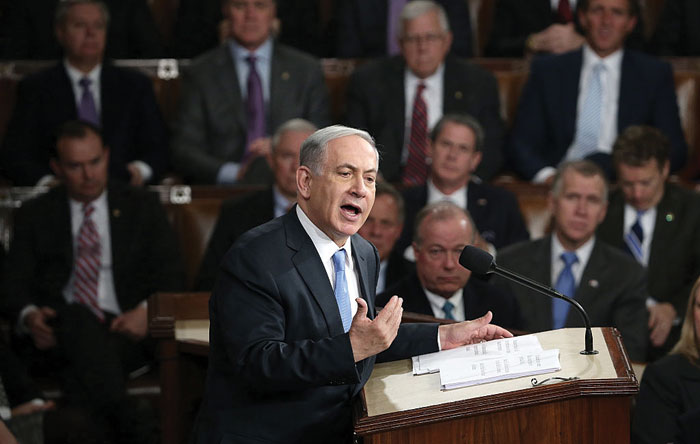
Still, we dwell on the new report, because of the invitation PM Netanyahu received to give a speech in Congress. When? It’s not yet clear. Why? Good question. Every speech should have an objective. And there should be some probability that the objective could be met.
In the absence of clear information about the objective – Netanyahu said that he wishes to “present the truth” about the “just war” — we will have to guess. Here are some options.
Option: The goal is to convince Americans that Israel had to go to war (but they know this already). Option: The goal is to convince Americans that Israel is waging a just and moral war (this may be necessary, but Netanyahu is not the right messenger for such a message, and we will expand on this immediately). Option: The goal is to upset the Biden administration (done!). Option: It’s all about Israel’s domestic politics (not quite glamorous). Option: The goal is to explain that Israel will not agree to a Palestinian state (does such a claim serve Israel’s interests?). Option: The goal is to convince Americans that a Palestinian state is a bad idea (again, is he the right messenger?). Option: The goal is to remind Americans of Iran (Netanyahu did this in 2015 — and it’s not clear that that was a strategic success). Option: The goal is to help the Republican party in the run-up to the presidential elections (that’s playing with fire). Option: The goal is to announce Israel’s support of a Saudi plan that includes a path to Palestinian statehood (yeah, right…).
We do not know what the PM wants to achieve with a speech in Congress. But one thing we know — Netanyahu is the man who will deliver the speech. And we know that he is a good speaker. And we know that there were times in which he was exactly the right man to deliver an Israeli message in Washington. And we know that he is no longer that man. That is, the speech will still be polished. But the audience will be different. It will be an audience that doesn’t trust Netanyahu.
Here, the Pew survey comes in handy. It shows that what happened to Netanyahu in Israel in the last year also happened to him in America. “The majority of Americans (53%) have little or no confidence” in him. The meaning of such a finding is clear. When Netanyahu speaks to the public in Israel, there are many who no longer listen. If he says it’s day, they’ll look out the window to make sure it is. This is the meaning of having no trust: No matter how good the arguments, the hearts and minds of the audience can’t be won over.
Many Americans do not trust Netanyahu. They will not listen to him. Many Democratic members of Congress will not be in the chamber. Others will attend unwillingly. One of them, a Democratic member of Congress, said: “Why is he doing this to us?” For him, Netanyahu’s visit is an unnecessary headache. In fact, several sources in Washington told me that those who will be most hurt by the visit will be Israel’s friends in the Democratic Party. And the Jews. The heads of almost all major Jewish organizations would gladly give up on a Netanyahu visit, although they will not say so openly, because Jewish organizations do not openly clash with the Israeli government on these kinds of issues.
I met quite a few advisors, activists, managers, professionals, first in New York and then in Washington. I was looking for someone to tell me that Netanyahu’s speech is a good idea. I couldn’t find one.
I met quite a few advisors, activists, managers, professionals, first in New York and then in Washington. I was looking for someone to tell me that Netanyahu’s speech is a good idea. I couldn’t find one. A message in such spirit was delivered to the Israeli embassy. Netanyahu does not listen to the embassy. A message in such spirit was delivered through other parties. But not one of firm rejection of the idea. I asked: Why not? The answer was: “Because he doesn’t listen to us anyhow.” And this wasn’t a leftist Democrat. Maybe — someone told me — maybe the Republican Jewish coalition thinks it’s a good idea. They will be the only ones.
Netanyahu is unlikely to deliver a message worthy of the event. And if he does, he is the least effective messenger to deliver such a message. Of course, he is still an important figure, and very well known, and what he says carries weight. But the weight is currently a burden. Netanyahu in Washington is Israel’s burden.
Something I wrote in Hebrew
Some Israelis say that they aren’t worried about isolation of Israel and the Jews. What do we need the others for? Here’s what I wrote in response to such positions:
Those who are not worried about the possibility of a culturally isolated Israel perhaps think the Jewish culture is rich enough for Israel to have an independent cultural existence. Perhaps they delude themselves that the Jews are smart enough to progress and thrive regardless of what the rest of the world thinks. They are wrong. Jewish culture is rich, but it is strengthened by having interface with other cultures. The Jews are smart, but their wisdom is revealed when they forgo the cultural suffocation of the shtetl and mingle with the riches of other cultures.
A week’s numbers
Is this the right messenger?
A reader’s response:
Rick Landau asks: “I got confused: did President Biden repeat an Israeli offer for a ceasefire or present his own idea?” Answer: Israel’s offer, with some twist. Israel does not necessarily see the deal as a prelude to ending the war, Biden does.
Shmuel Rosner is senior political editor. For more analysis of Israeli and international politics, visit Rosner’s Domain at jewishjournal.com/rosnersdomain.
Pro-Palestinian Protesters Block Traffic at Westwood Plaza
More than 300 pro-Palestinian protesters reportedly blocked traffic at Westwood Plaza on June 3.
According to The Daily Bruin, the protesters marched from Dickson Plaza to the intersection of Westwood Plaza and Le Conte Avenue, where they “occupied the area” and “hosted a teach-in about union organizing and the war in Gaza.” UCLA alumnus Andrew Lewis posted on X that the protesters had “cut off access via Westwood Blvd into the heart of the UCLA Campus” and “obstructed” the “main entry-point into UCLA Ronald Reagan Medical Center.” The Bruin posted on X that the protesters eventually “moved from the road to a lawn adjacent to Le Conte Avenue” after talking to police. Among the reported chants at the intersection included “occupation is a crime” and “we are the intifada,” according to a post on X from the Bruin.
UCLA Vice Chancellor Mary Osako said in a June 3 statement, “Today, the union shut down streets that patients use to get critical medical care, the same streets that students use to get to class. Why is the union punishing students who are just trying to learn?” UAW Local 4811 members were reportedly among those who planned the protest; they are striking due to the university allowing “police to use force on members of the union during the sweep of the Palestine solidarity encampment,” reported the Bruin.
Pro-Palestinian Protesters Establish Encampment During Columbia Alumni Weekend
Pro-Palestinian protesters at Columbia University built another encampment during the university’s alumni reunion weekend and then subsequently removed it.
The Columbia Daily Spectator reported on June 2 that the “Revolt for Rafah” encampmentlasted more than 48 hours on the west side of the university’s South Lawn before the protesters removed it; they left a cardboard sign saying, “We’ll Be Back B—es.” The protesters had erected 10 tents on May 31; shortly thereafter, public safety officers removed five of the tents and told the protesters that they had to leave. Protesters surrounded their central white tent with wooden tables and chairs, per the Spectator.
“Demonstrators established the encampment both to disrupt Columbia’s annual alumni reunion weekend and in response to the Israeli military’s invasion of Rafah, a southern city in Gaza and a key access point for humanitarian aid,” the Spectator reported. “Protesters called for alumni to withhold donations from the University and demanded that the University divest from companies with ties to Israel, offer full financial transparency, and grant amnesty for disciplined student protesters.”
“Free Palestine” Graffiti Outside of UMich Jewish Board of Regent’s Office
Graffiti stating “Free Palestine” and “Divest Now” were found outside of the law office of Jordan Acker, a member of the University of Michigan’s Board of Regents.
Other graffiti found stated, “UM Kills” and “F— you Acker,” reported Jewish Insider (JI). Acker, who is Jewish, told JI, “It’s a disgusting escalation and pure antisemitism. This has nothing to do with Palestine. I am one of eight [regents] and I was the only person targeted. I believe that’s because I’m Jewish. I believe this was a message to be sent to the Jewish community.”
DePaul Students Pass Referendum to Divest from Israel
Students at DePaul University voted in favor of a referendum calling on the university to divest from Israel.
According to The College Fix, the referendum called for the university to ‘divest from companies that directly profit from the suffering of Palestinians.’” The referendum received 91% support of students who voted. The DePaul Divest Coalition said in a statement posted to Instagram, “This referendum makes support of divestment a binding position of the Student Government Association for the entirety of the upcoming academic year and therefore codifies the legitimacy of our movement into the shared governance of the institution — though of course, much more work is needed to push the Trustees and senior administration into committing to implement this overwhelming call for divestment made by the student body.”
A spokesperson for the university told The DePaulia student newspaper, “We recognize and appreciate the activism of our students, but the university disagrees with their call to divest from Israel.”
House Committee Requests SJP Provide Documents on Funding, Communication
House Committee on Oversight and Accountability Chair James Comer (R-Ky.) sent a May 29 letter to National Students for Justice in Palestine (NSJP) and American Muslims for Palestine (AMP) requesting that the organizations provide “documents and information … to facilitate oversight into how pro-Hamas propaganda and illegal encampments are being funded.”
Comer’s requests included asking the organizations to provide “all documents and communications related to National SJP’s funding,” “all documents and communications related to the October 7, 2023, terrorist attack by Hamas, including, but not limited to, documents and communications related to National SJP’s public facing responses to the Oct. 7, 2023, terrorist attack by Hamas” and “all documents and communications, regardless of topic, created on or sent between Oct. 6, 2023 – Oct. 8, 2023, inclusive.” AMP, according to Comer, “founded and controlled” NSJP. The organizations have until June 12 to provide the information requested by the committee.
Shavuot is known for many things: the celebration of the beginning of the wheat harvest, Torah study and, perhaps most notably, eating dairy. This year, Shavuot begins at sundown on Tuesday, June 11, and goes through sundown Thursday, June 13. Why not try a new recipe this year!
Faith Kramer’s strawberry rhubarb mini cheesecakes makes a lovely presentation for celebrating the giving of the Torah.
Faith Kramer’s strawberry rhubarb mini cheesecakes makes a lovely presentation for celebrating the giving of the Torah.
“The dessert is inspired by my friend Marcia’s late mom, Helena,” Kramer, author of “52 Shabbats: Friday Night Dinners Inspired by a Global Jewish Kitchen,” told The Journal. “Her signature dish for potlucks and celebrations was her cheesecake cupcakes also topped at the last minute with fresh fruit.”
Kramer said she was honored Helena gave her the recipe and entrusted her to keep this delicious tradition going. “Add sugar to taste while cooking the fruit If your strawberries are not very sweet or you would like a sweeter topping,” Kramer said. “The mini cheesecakes and topping can be made ahead and the desserts assembled just before serving.”
She added, “For best results, the cream cheese should be as soft as possible.”
Mini Cheesecakes with Rhubarb and Strawberries
Makes 12
TOPPING: Have this ready at room temperature before preparing cheesecake
3 1/2 cups chopped fresh rhubarb or 12 oz. frozen, chopped rhubarb (do not defrost)
2 Tbsp water or as needed
2 cups chopped fresh strawberries
1/2 tsp vanilla
Place rhubarb in a medium saucepan with water (do not use water if frozen) over medium heat. Cover. Cook until very soft (about 7-10 minutes), stirring often, adding just enough water if needed, so rhubarb does not stick to the pan or burn. Uncover the pan, and stir in strawberries and vanilla. Continue to cook covered until the berries are just soft. Stir. Let any liquid evaporate.
Remove from heat and let cool for a few minutes. Puree with a hand or regular blender. Cool completely before using in the recipe. Can be made up to three days ahead and kept refrigerated. Bring to room temperature before using. Use any extra topping on ice cream or other desserts.
CHEESECAKE:
Heat oven to 375°F. Line a 12-hole cupcake or muffin tin with liners (or set 12 foil cupcake liners on a sturdy baking sheet).
6 (3 1/4 oz.) whole graham crackers
6 Tbsp unsalted butter, melted
1 cup plus 2 Tbsp sugar
24 oz. brick-style cream cheese, softened to room temperature
2 large eggs, beaten
2 tsp vanilla extract
1 tsp lemon juice
1/4 tsp salt
1/2 cup plus 1/4 cup sour cream
12 thin slices of strawberry
Chopped mint leaves, optional
Put graham crackers in food processor and turn into fine crumbs (well crushed but not powdery). Or put cookies in a sealed plastic bag and crush with a rolling pin. Place in a medium bowl. Stir in melted butter and two tablespoons of sugar. Press crumbs into the bottom of the cupcake liners.
Cut the cream cheese into 1-inch chunks. In a large bowl combine sugar, eggs, vanilla, lemon juice and salt. Beat with an electric hand or stand mixer on medium high until light and lemony in color (two minutes). Add cream cheese chunks in batches, beating on medium high until incorporated before adding the next batch. Once all the cream cheese is incorporated, add 1/2 cup of sour cream. Beat again on medium high until mixture is very smooth (3-4 minutes). Divide cheesecake batter between the 12 liners.
Place 1/2 tablespoon of rhubarb and strawberry topping on top of each cheesecake. (Return remaining topping to the refrigerator until needed.) Use a dinner knife to swirl the topping through the batter.
Bake 20-25 minutes until the centers of the cheesecakes are a bit loose and jiggly and the tops are puffed up. They will still be pale. (Timing varies.)
Turn off the oven, open the oven door and leave cheesecakes inside for 30 minutes. Transfer to a wire rack until completely cool. Refrigerate four hours or overnight. (Can be made up to four days in advance and kept refrigerated and, if frozen, several weeks. If freezing, defrost in the refrigerator before serving.)
Serve chilled or remove from the refrigerator 20 minutes before serving. Remove liners if desired. The tops of each will have fallen, making an indent. Fill each indent with 1 tsp. of rhubarb and strawberry topping and 1 tsp. sour cream. Add a strawberry slice. Garnish with mint.
Baked Labneh Cheesecake
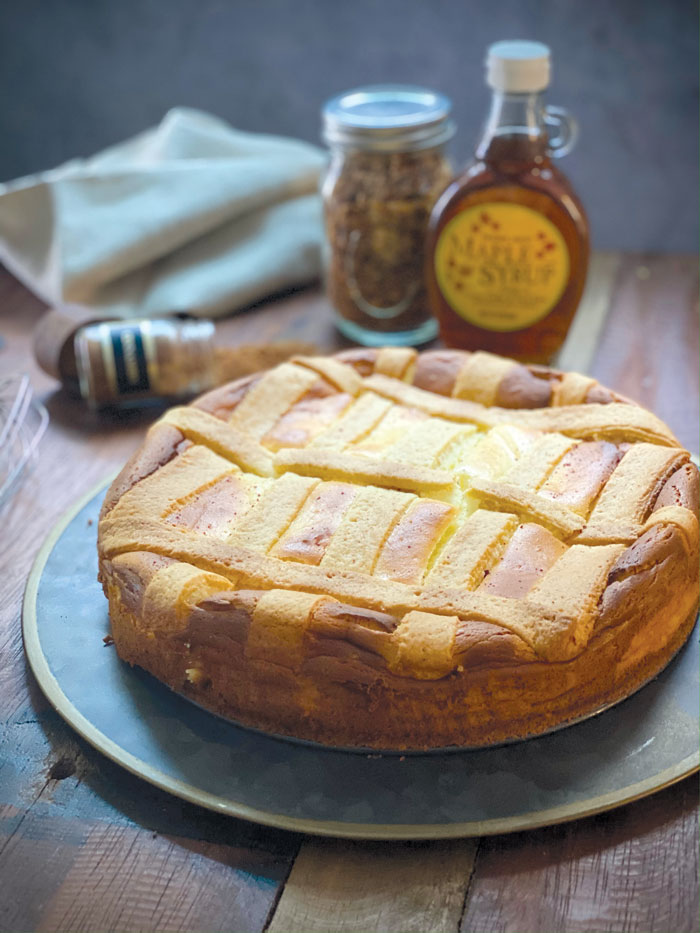
Chef Shimi Aaron’s baked labneh cheesecake is his mom’s favorite recipe.“Shavuot is also her birthday, so it makes it even more special,” Aaron told The Journal. “What I specifically love about this one is the fact I replaced soft cheese from my mom’s original recipe with labneh.”
Since Aaron is not a big fan of sweet/sugary desserts, for him, this is the ultimate cheesecake. Plus, it has the added benefit of orange zest.
“I am so well known for my babka,” Aaron said. “One of the reasons my fans love it so much is because of the orange peel I use in it and how beautifully it contrasts with sugar without being too overpowering.”
Filling:
1 kg (4 1/2 cups) labneh cheese
3 yolks
1 tsp vanilla
½ lemon or orange zest
2 full Tbsp cornstarch
2 Tbsp powdered sugar
Decorating:
Kosher marshmallow spread, kosher mini marshmallows and slivered almonds
Make the dough:
Place all dry ingredients in a mixer with a paddle attachment.
On a medium speed start adding the soft butter, the yolks, sour cream and vanilla extract. Cover the dough with plastic wrap and place in the fridge while making the cheese filling.
Place six egg whites in a clean and dry mixer bowl, add sugar and, with the whisk attachment, start whisking it at the highest speed for exactly 10 minutes.
While the egg whites are being whisked, use a large clean bowl and a hand whisk to mix all the filling ingredients together (no specific order).
After the egg whites are ready, add it to the large bowl with the cheese mix and, using a silicone spatula, start folding it in until it’s all mixed. Don’t whisk it. Leave in the fridge until you finish assembling the dough.
Assemble the cake:
Take the dough out of the fridge and divide it into two parts.
Use one part to create the base. Using your hands, flatten it into a 26cm/10 inch-wide, nonstick springform round baking pan. Make sure that you go a bit higher all around to make sure that the filling won’t spill out while baking it.
Pour the cheese filling onto the base you created in the pan.
Use the other half of the dough to create a lattice:
On a lightly floured surface with a floured rolling pin, roll out the dough into a 12-inch circle. It doesn’t have to be a perfect circle, as long as it’s 12″ in diameter. Cut dough into 12 strips. Start using the strips on the cake. Long ones in the center of the cake and short ones on the ends. Start weaving it until you begin to see the beautiful woven pattern. Keep going until you put 6 strips in each direction. Fold the excess dough that lays over the edges into the cake with a knife.
Heat your oven to 340°F (170°C) and bake the cake for one hour. After one hour, turn off your oven and leave the cake inside with the door open for another 45 minutes. Then, take it out and let it cool down for at least an hour and a half before slicing it. No need to keep it in the fridge.
The cake lasts for five days outside the fridge.
Although Shavuot is the dairy holiday, there are options for those who are lactose intolerant, vegan or simply prefer something different.
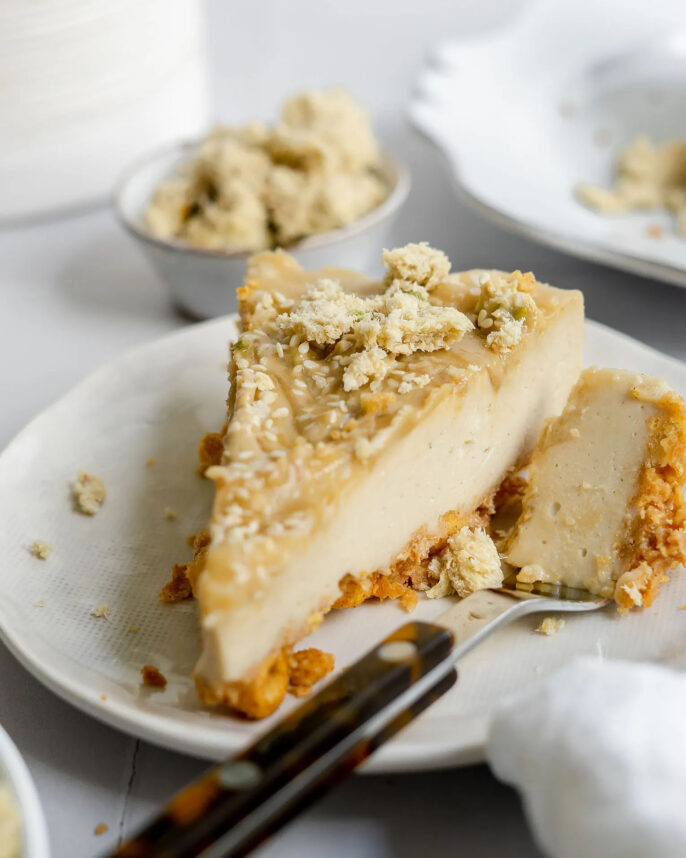
Nosh with Micah’s Micah Siva’s vegan cashew halvah cheesecake is perfect for sweetening up your celebration or anytime of year.
“It has a waffle-y crust and cashew filling, making a lusciously rich dessert that’s decadent and creamy,” Siva, author of “Nosh,” said. “It’s a cross between halvah and cheesecake, and it’s so easy to make.’
Photo courtesy noshwithmicah.com
Vegan Cashew Halvah Cheesecake
Serves: 8 – 10
Ingredients
Crust:
2 cups waffle cones crushed into crumbs
1 tsp cinnamon
¼ cup coconut oil, melted
Filling:
1 ½ cups cashews, soaked overnight, drained
1 lemon, juiced
¼ coconut oil, melted
2 tbsp tahini + 1 tbsp to top
⅔ cup coconut milk (canned)
½ cup vanilla halvah, crumbled + ⅓ cup to garnish
2 tbsp maple syrup
1 tsp vanilla extract
Pinch sea salt
Preparation:
Line a 9-inch springform pan with baking paper.
In a medium bowl, combine waffle cone crumbs, cinnamon and coconut oil. Press into the springform pan. Place in the fridge to set.
Meanwhile, combine cashews, lemon juice, coconut oil, 2 tbsp tahini, coconut milk, ½ cup halvah, maple syrup, vanilla and sea salt in a blender until smooth.
Pour over the crust. Top with remaining ⅓ cup halvah.
Miracles have a unique hold on us. Even if we don’t take them too literally, their sense of mystery can expand our consciousness, make our minds and spirits soar, make us think big thoughts.
Consider the amazing little miracles of life we take for granted, such as the simple miracle that I can breathe and see as I write this.
Consider the wondrous miracles of nature, like those we feel when we hike on a mountain trail or walk on a beach at sunset, experiences that touch all our senses.
In the Jewish tradition, when we talk about miracles we usually refer to biblical miracles rooted in sacred texts, such as the shofar blast that brought down the walls of Jericho, or the bush that burned with fire but was not consumed, or the iconic splitting of the Red Sea that even made it into a Hollywood film.
We also have miracles connected to Jewish holidays. On Passover it’s the miraculous rescue of the Jews from slavery in Egypt. On Hanukkah it’s the tiny cruse of oil that burned for eight days, and on Purim, we recall the improbable and miraculous Jewish escape from genocide.
The rebirth of modern Israel is surely one of the greatest of all Jewish miracles. How could it not be? Returning home to Zion after waiting for 1900 years is a miracle in a league of its own.
Personally, I have a special place in my heart for a miracle we will commemorate in a few days, during the holiday of Shavuot.
Shavuot is not one of the glamor holidays, like Passover or Hanukkah or Rosh Hashana. It’s a more modest, humble holiday that commemorates the giving of the Torah on Mount Sinai more than 3300 years ago.
Where’s the miracle?
To really appreciate Shavuot’s miraculous nature, it helps to first consider how the Jews are so split today. We have endless denominations, from Reform to Conservative to Orthodox to ultra-Orthodox to Reconstructionist to even post-denominational.
We are split ethnically, culturally, geographically, theologically and politically. Jews are divided in so many ways it’s almost a cliché to talk about our differences.
Enter Shavuot.
This modest holiday, which begins at sundown Tuesday night, reminds us that despite our differences, there is one extraordinary thing that brings all Jews together.
It’s not an ideology. It’s not a belief. It’s not a party.
It’s a book. It’s our Torah scroll.
Open any Torah in any synagogue in any city in the world and chances are you will see inscribed on parchment the exact same words and exact same 600,000 or so Hebrew letters.
How is that possible?
For a people that has made arguing an art and division a passion and dissidence a calling, how is it possible that after 3,300 years, we’re all still reading from the same holy book?
Just as we take our breathing for granted, we take our scroll of unity for granted.
The splitting of the Red Sea may make for great Hollywood drama, but for my money, Jews reading from the same book for millennia ranks right up there with our great miracles.
Shavuot is our rendezvous with that miracle.
That rendezvous, however, has competition, as Shavuot is also fashionably known as the dairy or cheesecake holiday. Our Sages recount that when the ancient Israelites discovered their meat was no longer kosher after the Torah was given on Shavuot, they ate dairy instead. Needless to say, Jews have embraced that culinary ritual with gusto.
Fortunately, there is another Shavuot ritual that’s closer to the Torah miracle. It’s the tradition of learning all night.
Where does this one come from?
According to Chabad.org, “The Midrash records a fascinating story. The night before the giving of the Torah, the Jewish people did what anybody does before an important event — they turned in early for a good night’s sleep … [but] the next morning, when it came time for the Torah to be given, the place was empty. The entire Jewish people had slept in!”
Thus, “in order to rectify our forefathers’ mistake, we stay up late every Shavuot night to show that our enthusiasm isn’t lacking at all.”
How cool is that?
Just like an all-nighter at a jazz bar, we get to stay up late on the first night of Shavuot to indulge in the very book that brings all Jews together.
In traditional circles, it’s customary to follow a learning program (known as Tikkun Leil Shavuot) that contains excerpts from the kaleidoscope of Jewish texts. True to our spirit of diversity, it has become popular these days for people to create their own nights of learning based on their individual tastes.
What is not left to individual taste is the Torah scroll itself. This is the scroll Jews around the world will open on the first morning of Shavuot when they’ll get to hear the Ten Commandments.
As for those who have stayed up very late and eaten too much cheesecake, the miracle will be to not sleep in.
As a child growing up in Sydney, Australia, I would often hear my parents wistfully reminisce about eating qei’mar (pronounced khey’mar) for breakfast everyday. Qei’mar, an Iraqi clotted cream made from the milk of water buffalo, acquired an almost mythic quality in my young imagination.
The cream is made by slowly boiling raw milk over low heat, then cooling overnight, which results in a thick layer of cream. Water buffalo milk has a very high percentage of fat (about 40-60%) which makes it ideal for this recipe. Kaymak, a word with Central Asian Turkic origins, meaning “melt,” is a similar type of clotted cream. It is popular in Turkey, Greece, the Balkans, Romania and central Asian countries like Kazakhstan, Azerbaijan and Georgia. In Iran, this cream is called sarshir, which means “top of the milk.”
Water buffalo originated in western India and were domesticated about 6,000 years ago. They were traded from the Indus Valley civilization to Mesopotamia in 2500 BCE. Archeological records even show the sacrifice of water buffalo on the seal of the scribes of an Akkadian King. The marshes that dominate the south of Iraq are particularly suitable for the raising of water buffalo. While Saddam Hussein, in his attempts to root out the “Marsh people,” tried to destroy the marsh ecosystem, the marshes of southern Iraq are now a UNESCO World Heritage Site and the water buffalo continue to thrive there.
For Iraqi Jews, Shavuot is synonymous with kahi and qei’mar. When we were younger, my mother would make us kahi, a flaky layered crepe. But it’s an involved process of kneading a dough made with vinegar, allowing it to rest, then rolling it out and layering it, then frying it with lots of butter.
This year for Shavuot, I decided that rather than struggling with the kahi dough, I would bake little squares of puff pastry. But what could possibly come close to the thick, rich creamy qei’mar?
Rachel and I hit on a wonderful solution—we strained equal parts sour cream and ricotta cheese. The results were a mouthwatering smooth, thick, rich cream.
We highly recommend you try this recipe for crispy kahi, clotted cream and Silan, a dark caramel date syrup. A typical, traditional Iraqi breakfast food, for Jews and non-Jews alike, it makes a perfectly simple, yet elegant dessert.
I will be nostalgic for my childhood home on the Sydney harbor and the happy memories with my parents. But, as always, I will try to make sweet new memories
—Sharon
Iraqi Kahi And Qei’mar
1 roll puff pastry cut into 12 equal squares.
1/2 cup full fat ricotta cheese
1/2 cup sour cream
Silan -Date syrup
Preheat oven 400°F
Combine ricotta and sour cream and place in a sieve or strainer Place puff pastry squares on a sheet pan lined with parchment.
Poke a few holes on each square with a fork Bake for 10 minutes or until golden and puffed Allow puff pastry to cool. Arrange on a serving tray top with cream and Silan.
Sharon Gomperts and Rachel Emquies Sheff have been friends since high school. The Sephardic Spice Girls project has grown from their collaboration on events for the Sephardic Educational Center in Jerusalem. Follow them on Instagram @sephardicspicegirls and on Facebook at Sephardic Spice SEC Food. Website sephardicspicegirls.com/full-recipes.