fbpx

March 27, 2024

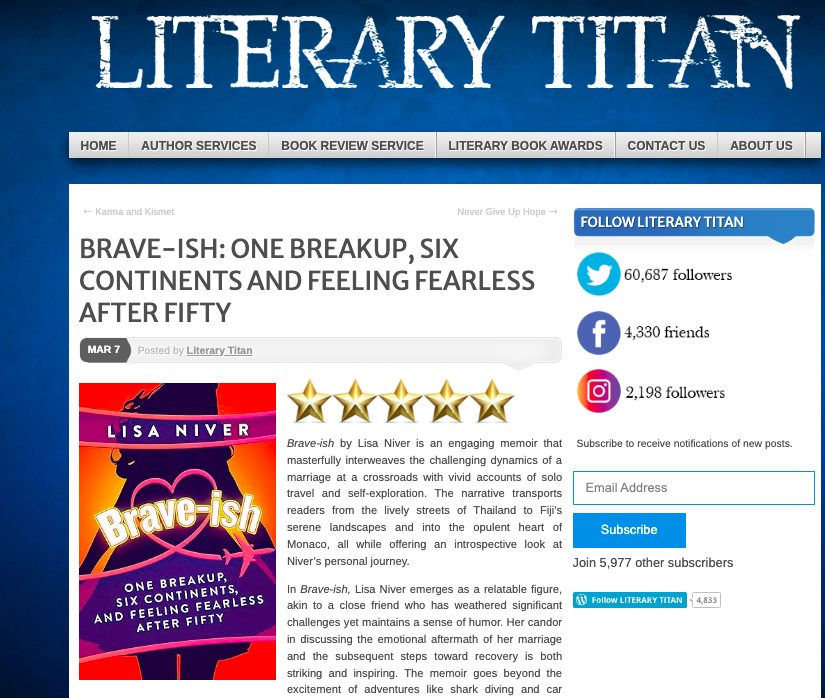
Brave-ish: 5 Star Review from Literary Titan

Thank you to Literary Titan for this marvelous 5 star review of my memoir!

Brave-ish by Lisa Niver is an engaging memoir that masterfully interweaves the challenging dynamics of a marriage at a crossroads with vivid accounts of solo travel and self-exploration. The narrative transports readers from the lively streets of Thailand to Fiji’s serene landscapes and into the opulent heart of Monaco, all while offering an introspective look at Niver’s personal journey.
In Brave-ish, Lisa Niver emerges as a relatable figure, akin to a close friend who has weathered significant challenges yet maintains a sense of humor. Her candor in discussing the emotional aftermath of her marriage and the subsequent steps toward recovery is both striking and inspiring. The memoir goes beyond the excitement of adventures like shark diving and car racing in Vegas, framing these experiences as pivotal moments in Niver’s path to healing. While the memoir at times delves deeply into the emotional aspects of her life, potentially overshadowing the more light-hearted, travel-centric narratives, it is precisely this vulnerability that lends authenticity to her story. The book skillfully blends reflective thought with the excitement of global exploration. Niver doesn’t just pass through destinations; she fully immerses herself in them, extracting meaningful insights from each experience, whether confronting fears or embracing different cultures. She is the approachable protagonist of her own story, exemplifying that true bravery often lies in perseverance. Brave-ish is an invitation to confront the unfamiliar, to discover resilience in openness. Lisa Niver’s memoir is not only a revealing journey into her own experiences but also a reflective look at the adventurous spirit that resides within us all. It appeals to anyone drawn to the unknown and serves as a poignant reminder that often, the most significant adventures are those that take place within ourselves.
https://twitter.com/LiteraryTitan/status/1765905294301753377

Click here for more about BRAVE-ish and Lisa Niver

Although Lisa Niver has traveled in far-off locales from Vanuatu to Nepal and received numerous accolades for both her writing and her top ranked website, what people don’t realize is that this began from the wreckage of a rotten romance. Newlywed Niver was on the adventure of a lifetime. She had quit her job, rented out her condo, and was traveling around Asia. To the outside world, Niver was a woman living out her dreams of exploring ancient ruins in Cambodia and seeing orangutans in Borneo. In private, she was keeping a dark secret. But, when she found herself lying on a sidewalk in Thailand, looking up at the sky in severe pain, she knew things had to change. At age forty-seven, Niver found the courage to set course on a new life. Feeling like a failure, pushing fifty, and moving home to her parents’ house to start again from scratch, Niver started taking one tiny “brave-ish” step at a time to take her life far away from the old one and into the adventurous world of travel writing. These small hurdles led to the challenge of trying fifty new things before turning fifty. From diving into shipwrecks, swimming with sharks, bobsledding at 3 Gs, to indulging in wild escapades, Niver found herself traversing the world on a journey of reinvention, personal growth, and discovering what it actually means to be “brave.” While Brave-ish chronicles Niver’s inspiring expeditions to distant corners of the world including Myanmar, Cuba, Morocco, Kenya and Mongolia this is more than a travelogue. Niver’s story is a testament to the resilience of the human spirit and the power of perseverance. Brave-ish inspires readers to dream big, take risks, and embrace the unknown to create a life filled with wonder and excitement, even when courage seems elusive.

Brave-ish: 5 Star Review from Literary Titan Read More »

Fighting the War of Words and Ideas

Welcome to the TikTok War.

Just as television coverage brought the fighting in Vietnam into our living rooms in the last century, and Matthew Brady’s photographs of Civil War battles allowed Americans to witness the devastation of military conflict in the century before that, the ubiquity of streaming video on social media has transformed the way voters in this country and around the world are now experiencing the war in Gaza. The unhappy result is that Israel and its advocates, who have never placed an especially high priority in telling the modern Jewish state’s story to an international audience, are badly losing the contest for global public opinion in a markedly one-sided fashion.

In those earlier eras, still photographs and television video created a visual and emotional immediacy for the vast majority of the public that was not physically present for battlefield bloodshed. Social media has had a similar impact as images of the fighting in Gaza spread virally around the planet and millions of consumers watch abbreviated and horrifying videos presented without the context that could explain what caused the violence to take place. But advances in communications technology did not create Israel’s lopsided disadvantage in this clash of competing narratives. Rather, these digital tools have only exacerbated an already-skewed discussion that now has pictures to support the misleading and deceptive words that portray Israel – and Jews – as oppressors ruthlessly subjecting helpless victims to their dictates.

The third-party sympathies that naturally flow toward the underdog and therefore buoyed public support for Israel for many years have shifted over the years to its enemies. 

Since Israel’s independence in 1948, its leaders have seemed to view public relations as an unaffordable luxury to a country fighting for its very survival. But the third-party sympathies that naturally flow toward the underdog and therefore buoyed public support for Israel for many years have shifted over the years to its enemies. In recent years, the changes in public opinion have been noticeable but not large enough to cause alarm among Israel’s supporters. But the war in Gaza has created a political landscape on which these attitudes have become much more intense, much more apparent and much more harmful.

Over the same time period, the changing role of social media has provided a powerful set of platforms from which these messages can be delivered. The traditional political and media gatekeepers, while not always consistent in their support for the Jewish state, usually provided some level of protection against the angriest and most deceitful critics of Israel. But those gatekeepers no longer possess the power they once held, so the ugliest verbal attacks can now move rapidly into the public conversation.

The power of social media isn’t just that anti-Israel messages can spread more quickly and more uncontrollably, but also that the power of video allows that message to pack a much greater emotional wallop and therefore move public sentiment much more dramatically. While these platforms are theoretically available to all messengers on all sides of this debate, the historic disregard that Israel and its allies have displayed toward international public opinion means that these technological tools have been utilized much more proficiently by Israel’s opponents than its friends.

The great irony is that one of the Jewish people’s powers throughout our history has been our strengths and skills as storytellers. The legends that we have passed on through the generations — the stories of Abraham and Noah and Moses, of Miriam and Ruth and Esther, of David and Samson and Judah Maccabee and so many others — not only shape our own history and values, but create moral grounding for people of all religious faiths.

Now, as Israel faces the greatest challenge of its modern existence, we no longer make our case in the public square. There are some — Zioness on the left and Bari Weiss’ The Free Press on the right, newly emerging voices such as We Are Tov and others — who possess the courage and savvy to confront these challenges on the digital battlefield. But these are brave exceptions to the sporadic and ineffectual countermessaging we see more frequently. It’s time for us to remember that a critically important aspect of achieving military victory is winning the war of words and ideas.


Dan Schnur is the U.S. Politics Editor for the Jewish Journal. He teaches courses in politics, communications, and leadership at UC Berkeley, USC and Pepperdine. He hosts the monthly webinar “The Dan Schnur Political Report” for the Los Angeles World Affairs Council & Town Hall. Follow Dan’s work at www.danschnurpolitics.com.

Fighting the War of Words and Ideas Read More »

Making “Israel Alone” a Self-Fulfilling Prophecy

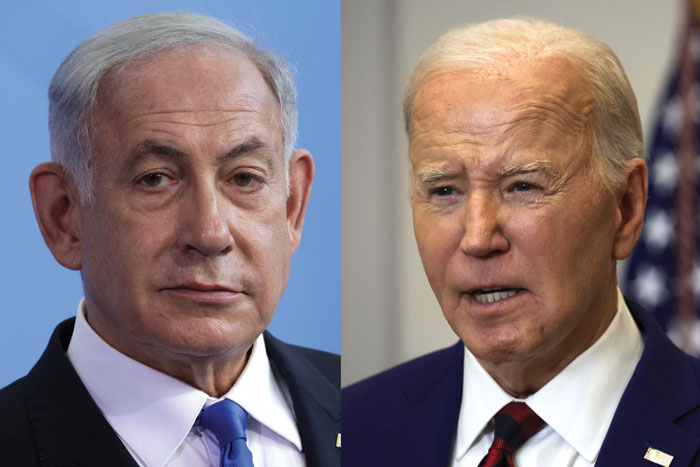
On Monday, the United Nations Security Council passed a resolution that checked many important Israeli boxes. It called for a temporary ceasefire for the duration of Ramadan that should then lead to a lasting and sustainable ceasefire, rather than calling for a permanent ceasefire now. In the very same clause as the one calling for a temporary ceasefire, it demanded “the immediate and unconditional release of all hostages, as well as ensuring humanitarian access to address their medical and other humanitarian needs.” It deplored acts of terrorism and reiterated that taking hostages is prohibited under international law. It also called for expanding humanitarian assistance in Gaza—presumably in line with Israel’s statement last week that it will now be flooding Gaza with aid—and for protecting civilians, both of which Israel has said it is doing and will continue to do. The resolution was not perfect; it did not, for instance, condemn Hamas by name, unlike the draft resolution authored by the U.S. last week that was vetoed by China and Russia. As a result, the U.S. abstained from the resolution, allowing it to pass 14-0. In response, Prime Minister Binyamin Netanyahu canceled the trip that Strategic Affairs Minister Ron Dermer and National Security Advisor Tzachi Hanegbi were scheduled to make to Washington this week at President Joe Biden’s request in order to get the U.S. and Israel on the same page with regard to Israeli plans in Rafah.

If that type of escalation and public rebuke from Netanyahu does not make sense to you, you are not the only one. The Economist’s cover last week was a picture of an Israeli flag struggling to stay upright against a backdrop of billowing smoke and the ruins of Gaza, with the caption “Israel Alone.” What the image got wrong is that Israel is not alone; it has its most powerful and only indispensable ally in its corner. Despite world opinion having decisively turned against Israel as its military response to Hamas’ horrific October 7 terrorism continues and the humanitarian crisis in Gaza worsens, the U.S. has continued to provide Israel with military assistance without conditions. It has vetoed multiple one-sided U.N. resolutions that blame Israel for all that has transpired. It has actively defended Israel’s West Bank occupation at the International Court of Justice. It has suspended all funding for UNRWA in response to Israeli charges of UNRWA’s complicity in the October 7 attacks and its entanglement with Hamas. It has deployed aircraft carrier groups to deter Iran from getting directly involved. It has worked non-stop to try to get a negotiated agreement to push Hizballah back from the Lebanese border in order save Israel from having to launch a large-scale operation in the north. This has all happened against a backdrop of Netanyahu and other Israeli government officials publicly dismissing American concerns about the number of civilian casualties in Gaza, insisting that the U.S. is wrong in its contention that Israel could be doing more to ensure more aid reaches those who need it, vetoing American plans to train a Palestinian security force for Gaza akin to the U.S.-trained one that coordinates directly with the IDF in the West Bank, and categorically ruling out U.S. requests to consider plans for the war’s aftermath that involve any role for the Palestinian Authority. 

To add to the already-stratospheric levels of both chutzpah and irony, Netanyahu’s announcement that he was recalling Dermer and Hanegbi from his only meaningful remaining ally before they even had a chance to leave Israeli airspace came as Defense Minister Yoav Galant was walking into meetings with Lloyd Austin, Tony Blinken, Jake Sullivan, and others with a reportedly long wishlist of weapons systems and munitions that Israel wants the U.S. to supply. If it weren’t for the fact that Israel is legitimately in the midst of a precarious security situation, Netanyahu attempting to punish the Biden administration through publicly embarrassing the president diplomatically over an alleged slight—abstaining on a resolution that backs Israeli policies but contains the genuine sin of not condemning Hamas by name—at the exact same time that he is demanding unfettered access to American-made weapons would make for a great Eretz Nehederet skit. Instead, it stands as a sad testament to just how reckless and irresponsible Netanyahu is: throwing Israel’s interests and needs under the bus in order to score a few meager political points at home in a doomed last-ditch effort to hang on to power by distracting Israelis from his failures.

Israel is not actually alone, despite the U.S. abstention at the U.N. But preventing its sense of isolation from deepening depends on Netanyahu wising up to where he does and does not have leverage.

Netanyahu is acting as if he is the one holding the leverage over the U.S., as if it is the U.S. that desperately needs Israeli assistance with all manner of things in Gaza, as if Biden is the one who has no choice but to accede to Israeli pronouncements at risk of being left entirely isolated and holding the military, material, and diplomatic burden of Gaza alone. It is of course the opposite, and yet Netanyahu either delusionally believes it is Biden who needs him rather than the other way around, or he still retains the ability to perceive reality as it is and nevertheless is willing to burn everything down around him so long as he remains standing in the center of Balfour amidst the ruins. Biden’s patience with Netanyahu’s behavior since October 7 has been remarkable, and the latest example is his not ordering Galant’s plane to immediately turn around after it had a chance to refuel.

If your reaction to Monday’s events is outrage at the administration over its abstention because the resolution did not condition a temporary ceasefire on the prior release of the hostages, I’d gently suggest that you read the actual text; when a single numbered paragraph demands both a ceasefire and the unconditional release of all hostages, it takes a tendentious reading to argue that these things have been treated as wholly separate issues. And if your reaction is outrage at the administration over its abstention because the resolution did not condemn Hamas by name, I genuinely share your disappointment but would point out that the result was China, Russia, and Algeria endorsing the release of all hostages without any corresponding release of Palestinian prisoners, without a permanent end to Israel’s military operation, and without a call for an IDF withdrawal from Gaza. If that is worth an Israeli accusation that the U.S. has effectively abandoned it and giving the U.S. a metaphorical middle finger—thereby ensuring that the dispute over what happens in Rafah becomes even wider—then your notion of what constitutes smart diplomacy is very different than mine.

The cold hard reality is that contrary to the t-shirts sold in Ben Yehuda Street tourist traps declaring that the U.S. need not worry because Israel is behind it, it is Israel that needs to be constantly worried that the U.S. remains behind it. If Israel is truly left standing alone, it will become instantly clear how absurd it is to claim that abstaining on a resolution that is a reflection of Israel’s best-case policy scenario—but that does not contain every single rhetorical element of Israel’s best-case textual scenario—is the equivalent of abandoning Israel. What Netanyahu is risking is that he will finally succeed in driving away Biden, Chuck Schumer, and every other true Democratic friend of Israel, at which point he should fly a Mission Accomplished banner with his signature on it to accompany the Israeli flag sadly fluttering alone in the smoky and ash-filled diplomatic landscape.


Michael Koplow is Israel Policy Forum’s Chief Policy Officer, based in Washington, D.C. To contact Michael, please email him at mkoplow@ipforum.org.

Making “Israel Alone” a Self-Fulfilling Prophecy Read More »

United Hatzalah Raises $12 Million at LA Gala

At United Hatzalah’s Los Angeles gala on March 20, over 1,200 people gathered and raised more than $12 million. The organization, which has 7,000 volunteers in Israel, provides emergency medical services to those in need and an average response time of three minutes or less. They are called the “Angels in Orange” because of the orange uniforms they wear.

The gala honored Michael Milken of the Milken Institute for his philanthropy, and featured speeches from event co-chairs Rick Caruso and Sunny Sassoon as well as special guest Dr. Miriam Adelson. Gal Gadot, who was supposed to appear in-person, sent in a video because she was at home, recovering from giving birth to her fourth child two weeks earlier.

“This organization embodies the spirit and unity of Israel in such a profound way.” – Gal Gadot

“I wish I could be there with you tonight, but I have a good reason,” she said, smiling. “It’s incredible to think about the 7,000 volunteers from all different backgrounds: Jews, Christians, Muslims, all coming together with one goal, to save lives. This organization embodies the spirit and unity of Israel in such a profound way.”

Much of the event focused on how United Hatzalah kicked into gear on Oct. 7. Normally, the organization handles 2,000 emergencies per day; on Oct. 7, that number reached over 12,000. Eight volunteers died trying to save others, and two were taken hostage. “Our volunteers went into the most dangerous places, rescuing soldiers, civilians and babies,” Eli Beer, founder of United Hatzalah, said. “There were twin babies whose parents were murdered, and they were left alone for 13 hours screaming and crying. They saved those 10-month-old babies.” Beer admitted he was “scarred for life,” and, as a first responder, saw things “that I never believed could be done.”

Milken, who received an award for his philanthropy, praised Beer for his lifesaving actions on Oct. 7 and beyond. “The Talmud tells us that anyone who saves a single soul is deemed by scriptures as if they have saved the entire world,” he said. “No one fits that better than Eli Beer.”

Dr. Miriam Adelson, Sheldon Adelson’s widow and a longtime support of United Hatzalah, discussed the idea of “Am Yisrael Chai,” which means “the Jewish people live on,” and how we will persist with our fight to live no matter what. “We are a people that cherish hope and not hatred, and that fights for what is right, even if that means fighting alone,” she said. 

Rick Caruso, founder and executive chairman of Caruso as well as a former candidate for mayor of Los Angeles, brought up how he is a “Sinatra-loving Italian Catholic” and that his family stands proudly with the Jewish community. “The message tonight is clear: Support for the Jewish community crosses any and all cultural divides,” he said. “We are here to make the world a safer place. Tonight, more than anything, we hope to unite and heal, and bring together Jews, Arabs and Christians in the shared mission of saving lives.” 

The evening also featured a children’s choir singing “The Star Spangled Banner” and “Hatikvah”; Consul General for Israel in L.A. Israel Bachar said the Mi Shebeirach prayer for everyone who needed healing. 

The most resounding message of the night? Despite what happened on Oct. 7, United Hatzalah would keep fulfilling its mission to serve everyone in Israel who needs their help – no matter what their background – and stand strong with their fellow Jews in unity. 

“The atrocities Hamas did to the Jewish people brought us together,” Beer said. “We are one people. We are together. That’s the only way we will win.”

United Hatzalah Raises $12 Million at LA Gala Read More »

‘Our People’ Targets Needs for Displaced and Traumatized Israelis

When Russia invaded Ukraine on Feb. 22, 2022, Leah Zakh Aharoni immediately suspended her work as a business consultant in Israel. Born in the former Soviet Union and having led multiple groups on trips to Hassidic sites in Ukraine, Leah had a keen understanding of the territory, the Jewish communities and the geopolitics. Working with Agudath Israel of America and its Vaad Hatzalah for Ukrainian Jewry, Leah helped set up a system to provide food to Ukrainian refugees throughout Europe and a support center for new immigrants in Israel.

These efforts blossomed into the nonprofit organization she created, Our People, to help new immigrants from the former Soviet Union transition to life in Israel. In just one year, Our People assisted and advised more than 1,000 families, ran four summer camp programs with over 400 participants, and ran a non-profit accelerator for 15 Russian-speaking community initiatives in Israel and Europe, among other endeavors. 

Leah immigrated to the U.S. with her family at age 12 and grew up in Riverdale, New York. After graduating high school in 1993, she made aliyah by herself. As a young mother wanting to work from home, she started a translation business at the age of 25, which she ran for 15 years. After earning a Master’s degree in Organizational Psychology, she began helping other women start and grow their own businesses. For 10 years she taught and consulted with hundreds of companies and organizations on marketing, organizational development and finances, but the twin tragedies of the war in Ukraine and the Hamas attack on Israel pushed Leah to apply her organization-building skills to the world of charitable assistance to victims of wars.

Leah has long been alert to the needs of the Jewish people, both urgent and day-to-day. For example, a few years ago she spearheaded an effort to train writers in the art of opinion and public relations to help boost Israel-friendly media messaging. After Oct. 7, she recruited writers and editors to curate a daily news digest of the war, called the Israel Media Room. At Leah’s request I gladly volunteered in both projects.

”This is my guiding light. We do what we can to preserve our people’s humanity in this very hard situation.”
– Leah Zakh Aharoni

Since Oct. 7, Our People has been providing tactical and personal equipment for IDF soldiers, food, and dozens of washing machines for hotels housing displaced families. Increasingly, though, Leah’s eye is trained on easing the emotional burdens carried by thousands of Israelis. She explains, “In the early days of the Ukraine war I went to get my nails done. A Jewish-Ukrainian psychologist displaced by the war was doing my nails. She shared her story of bombings and escape. When her family arrived at the Chabad refugee center in Romania, she found flowers on each table in the dining room. Those flowers made her cry for the first time during the war. This is my guiding light. We do what we can to preserve our people’s humanity in this very hard situation.”

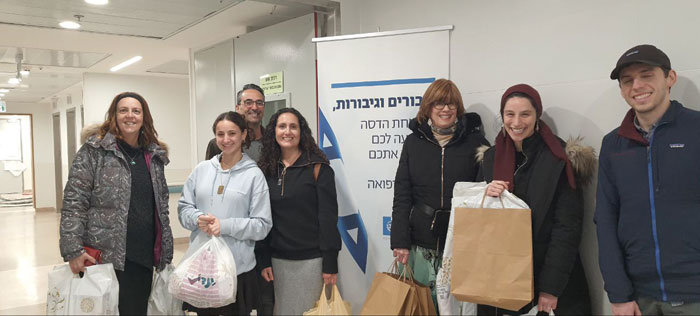
Washing machines for evacuees arrive in Mitzpe Ramon

Leah realized that her work helping Russian-Ukrainian Jews in 2022-2023 was a training ground for what she is doing now. “Having worked directly with displaced war victims, we gained many insights about what would be needed in this war. I knew what was coming before it came.” 

Many needs weren’t immediately apparent. For example, a number of families who were not evacuated officially but needed to leave danger zones such as Ashkelon and Netivot had American holiday apartments found for them in Jerusalem. The apartments were beautiful, but the families had no way to make a living. Our People raised funds for more than 7,000 food boxes and 1,000 food vouchers, distributing 400,000 pounds of food in six weeks. Much of the funding came from an American nonprofit.

Jewish organizations that focused on relief efforts quickly realized that this war would be long, its horrors creating the biggest mental health crisis in Israel’s history. “For children off school, not living at home, and many with fathers deployed, injured, or killed, toys were as important as food,” Leah said. “The right games can keep kids from hanging out on the streets.” So far, Our People has distributed more than 1,200 toys and games. Now she is trying to identify other ways to help Israelis “finish the war a bit less traumatized. All our programs today are to find creative ways for people to feel just a little bit better.” 

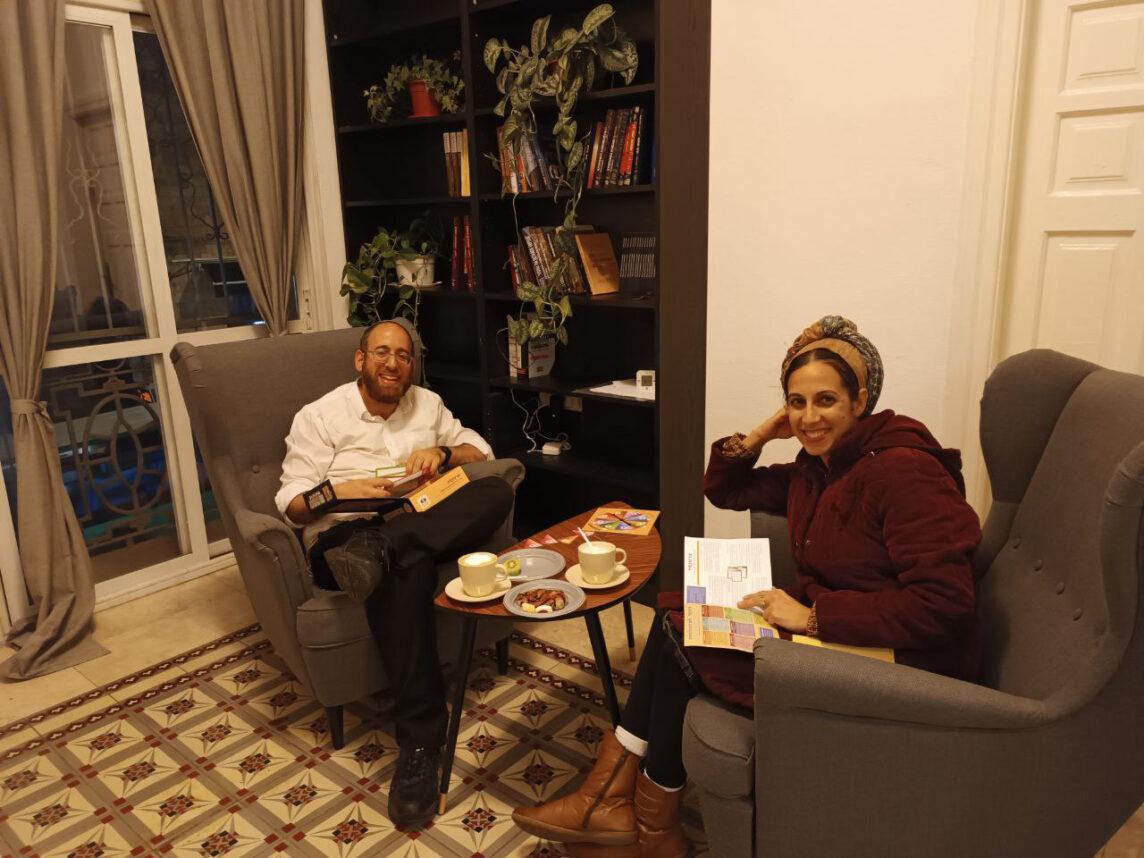
Living in a hotel is also disruptive to families, breaking down family structure and erasing personal space. Couples have no privacy. Friction easily flares. To try to ameliorate the stress, Leah established the Shalom Bayit café, open three times a week, where couples can reserve space for a date night in a space furnished with comfortable chairs, coffee and cake. Couples can get away from the kids, talk, play “couple card games” donated by psychologists and otherwise find their way back to healthy emotional connections. “This has been one of the most endearing efforts,” Leah said. “You don’t think of date night as something needed in a time of war.”

An evacuated couple enjoying date night at Our People’s “Shalom Bayit Cafe”

Many of the initiatives seem small but pay big dividends. Leah brought a huge donation of yarn from U.S.-based knitting circles to Russian grandmothers in Jerusalem. Eager for something to do to help the war effort, they began knitting hats for soldiers. Women who immerse in the mikveh each month but come home to an empty bed because their husbands are deployed are given beautifully wrapped gift packages tied with ribbon, containing self-care products and make-up. These await the women in mikvehs throughout Israel and have been hugely popular. One Israeli company has provided products at a 90% discount. “In every gift we distribute, whether a cosmetics bag, a game for children or box of food, there is a handwritten note from a volunteer. When people realize that someone else took the time to think of them, it is very meaningful.” 

Often, a program blossoms from an offer of help. “One day, the Begin Center in Jerusalem offered us their facility to hold a bat mitzvah for displaced girls. We jumped at the opportunity and held a beautiful group bat mitzvah event for 20 young women. But we had so many more requests. Kids dream of their bar or bat mitzvah for years, but being stuck in a hotel, their parents can’t even think of throwing a party. Since then, we’ve held six events for close to 100 children – everything you would do for your own kids – new clothes, arts and crafts workshops, music, dancing, gifts.” At one of the events, a mother came up to Leah in tears. Hailing from Sderot, she hid her kids (including her bar mitzvah boy) in a closet as Hamas terrorists slaughtered their next-door neighbor. “Just like during the Holocaust,” she said. The boy had been stuttering ever since. Being celebrated and picked up on someone’s shoulders was the first time the boy broke out of his shell since the start of the war. Leah is now planning to run a summer-long camp program for war-affected children. “For the past two years we have run extremely popular and well-received sleepaway and day camps for Jewish refugee kids from Russia and Ukraine. We now want to give the same opportunity to the kids traumatized by this war.”

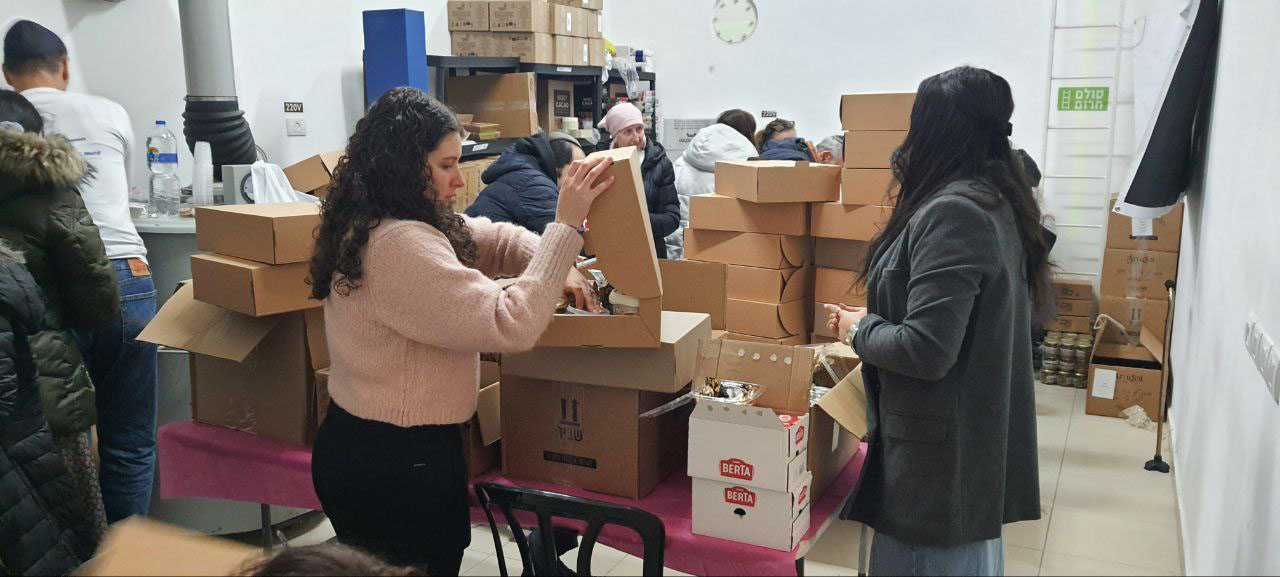
Ourpeople.org has two packing facilities, one of which is a bomb center, and 90% of donations come from the U.S. “Israelis are shocked at how many Americans come to volunteer,” Leah said. “Just their presence is a huge boost to morale.” Still, she said there’s often a huge mismatch between where volunteers are placed versus where they are needed and best utilized. Leah and her team offer both financial and logistical support to half-a-dozen other aid organizations, helping them maximize their usefulness.

Volunteers pack food boxes for distribution to war-affected families


The success and reach of Our People have been “beyond our wildest dreams and plans,” Leah said, having raised and distributed more than $850,000 since the start of the war. “It’s as if Our People is one big shopping cart that we walk around with in the supermarket of life. Since day one we have identified ongoing needs, thought about how to fulfill them, and then someone taps us on the shoulder and offers us the resources necessary.”

To donate, go to www.ourpeople.org.il/wareffort.


Judy Gruen is the author of “Bylines and Blessings,” “The Skeptic and the Rabbi,” and other books. 

‘Our People’ Targets Needs for Displaced and Traumatized Israelis Read More »

Speaking with IDF Colonel Golan Vach

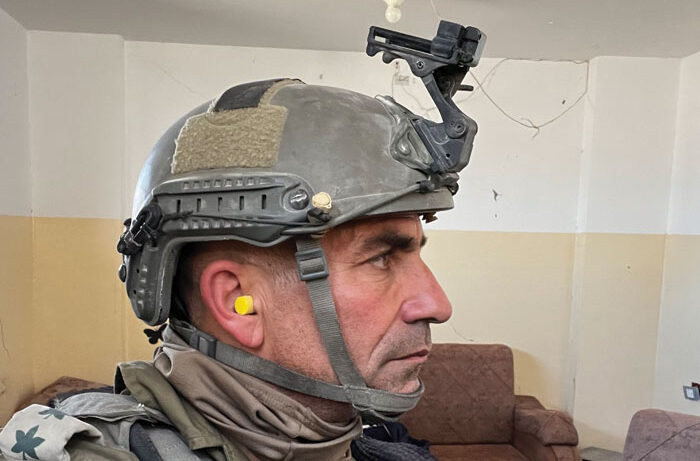
Colonel Golan Vach, a 35-Year veteran of the IDF, until recently headed the IDF’s renowned National Rescue Unit of the Home Front Command, which has assisted in some of the most difficult disaster rescues and humanitarian aid missions around the world, including in Turkey, Haiti, the Philippines, Mexico, Albania, and Surfside, Florida (with the condo building that collapsed). In his civilian life, he helps new immigrants to Israel through an organization called “Klitat Kehilot Yisrael.”

As I wrote recently in Jewish Action Magazine, Col. Vach, an Orthodox officer, summed up his unit’s role simply: “What we do is save lives.” Despite being a veteran commander, he was overwhelmed by “the scale, the number of casualties, the brutality” that he saw in the aftermath of the Simchat Torah massacre. 

He and his soldiers spent the first few days of the war carrying out bodies from the Nova music festival and the kibbutzim; some of the cars were still on fire with scorched bodies inside them. But he also describes how IDF soldiers, citizen defense squads and even ordinary people with their bare hands “stormed into the fire… to stop the terrorists. I saw heroism at the highest level.”

He says that many of those murdered on Oct. 7 were people who believed in good neighborly relations with the Palestinians. Now, he said, the citizens of that area must be provided with real protection. 

He said that many of those murdered on Oct. 7 were people who believed in good neighborly relations with the Palestinians. Now, he said, the citizens of that area must be provided with real protection. “We cannot expect them to return to their homes without eradicating the evil that emanated from Hamas…This was not an attack against the IDF. It was not an attack against the state of Israel. It was an attack against the Jews.” 

In a new interview, Col Vach told the Jewish Journal, “For the first three weeks, we dealt with the aftermath of the disaster, like the rest of the IDF and the rest of this country.  We evacuated all the bodies and then we started to search for the missing. Many of the missing were not found as a result of being burned, and we walked from house to house to search for remains.”  They brought archaeologists to sift through the ashes.

He was also assigned the responsibility of escorting and explaining what had happened to VIPs like the head of the European Parliament, ministers, Governor Kathy Hochul (D-NY), ambassadors from around the world and many journalists. 

“I cannot remember many time periods in my IDF service as difficult as those three weeks, for several main reasons.

“The first reason is that each time one describes what happened, it takes you back to the humiliation and to the horror and to the fact that you, an IDF soldier, are part of the system that failed, and you’ve just explained to a foreigner exactly what the enemy did. 

“The second reason is that I, like all the rest of the IDF combat units, was waiting for the ground attack, for the counterattack. We heard that there were a lot of pressures, from both inside and outside, that Israel not enter Gaza, and we knew that going in was the right thing to do.” 

When the IDF started the ground offensive in Gaza on Oct. 28, Col. Vach went in with some soldiers of his search and rescue unit, to accompany another unit that was fighting in the northeast side of the Gaza Strip in Beit Hanun. He was wounded in his hip by a ricochet from one of the booby traps there, but he stayed in and they spent 10 days fighting there.

“Unfortunately, four days later, the command team of the unit I escorted all went over a booby trap near one of the tunnels that they had discovered and from the 10 that led this company, that we were part of, they were all wounded.” Four were killed, including two close friends of his.

One of those close friends, Yossi Hershkovitz, a beloved principal of Pelech Boys High School in Jerusalem, had composed a song while fighting in Gaza. After his death, Vach taught it to Hershkovitz’s family and they recorded it professionally. Vach, who is himself a singer and composer, also sang on the recording and it went viral. It can be found on a YouTube channel called “yossi memorial.” The words are from Psalms 23:4: “Though I walk through a valley of deepest darkness I fear no harm, for You are with me…”

He described a dilemma. “How should I intermediate the importance of being part of the combat units to my search and rescue unit?  

“I thought it’s important that we accompany the combat units closely, so if there is an incident, we are nearby. Usually a search and rescue unit stays outside and we are sent to the location as needed. Now we were, on the one hand, fighting, and then switching hats and evacuating those Israeli soldiers who were wounded or killed.” Sometimes the casualties were a result of the collapse of infrastructures. Such was the case with the 21 soldiers who died in the collapse of a building on Jan. 22. 

“A few weeks later there were dozens of my soldiers escorting the units, but I still had hundreds of soldiers, I think the best men in the market, who were not accompanying combat units. So I found an area in which we could deal with the hundreds of buildings in which had been found ammunition, weapons, grenades, explosives and mines.”  

First they had to ensure that the area was clear from terrorists. Afterwards they destroyed more than 800 buildings where the Hamas weapons had been hidden.

Then, in the area they were assigned, he told his soldiers, “Let’s find these tunnels.”   They cleared them of grenades and weapons, then they destroyed them. The three main tunnels found in the northern part of the Gaza Strip were found by Vach’s units. 

“Several weeks after we were inside Gaza, I saw something incredible. We got a signal of intelligence that there is a capability that we can locate the terrorists.  We saw the signals of the terrorists surrounding the area that we were assigned to, and none of them were inside. It meant that our job was done so well that they didn’t have the opportunity to advance into the zone, not underground and not on the surface, because we had cleared it above ground and underground.”

He also took explosive experts in their unit and, in the refugee camp of Jabalia, they took down seven buildings of the leaders of the Oct. 7 massacre.  They continued this mission. “We destroyed hundreds of buildings that our intelligence indicated were connected to those who directed and carried out the massacre.” 

He says there are certain missions of a normal search and rescue unit “in Uzbekistan, France or Italy.  But after three months inside Gaza, we discovered that our mission there was to be a tool in the hands of the IDF to destroy Hamas, the enemy. And I say it comes from the same place of cherishing life.  If you love human beings, if you cherish and sanctify life, it gives you the opportunity and the capabilities to fly to the farthest place in the world and in minus four degrees to take a boy out [of the rubble] by risking yourself [like we did in Turkey] and this also gives you the power to kill the bad guys.  

“We left Gaza in the beginning of January, and a few weeks later I relinquished my role to another officer who had waited patiently for me to finish commanding this incredible unit, after six years and two months. 

“Now I’ve been given the responsibility to manage and lead all the aspects of search and rescue efforts in the Home Front Command. I was fortunate to pass the command on, walking on two legs, healthy, after so many things that we did together for the benefit of Israel and for the world. I said thank you to Hakadosh Baruch Hu, to all those who supported me, to the entire group that surrounded me and helped me in my job.

“We have at least a few more years of war, to settle the situation and to make sure that the citizens of Israel are safe, like Isaiah says (2:4), and it’s the inscription on the building of the United Nations – ‘And they shall beat their swords into plowshares, and their spears into pruning hooks. Nation shall not take up sword against nation; neither shall they learn war anymore.’

“But right now, we need to do the opposite, to take the swords, to fight and invest every capability to defeat the evil.  

“I thought that the face of evil is to see the horror at the Nova festival and in Be’eri, or Kfar Gaza. But it turns out that the face of evil is entering a children’s classroom in one of the schools in Gaza and to see the reality contrasted between our classrooms and their classrooms. How do those Gaza children grow?  What do they learn?  You see pictures of shahids, martyrs, those people who explode themselves among citizens. You see pictures of the kids with Kalashnikov rifles, with the green headbands of Hamas on their foreheads.

“You see our whole map, the map of Israel, in every classroom, you see our country on each one of the walls, with inscriptions in Arabic of our home, with a picture of Al Aqsa.  It is very clear to you that they educate and raise and teach their children that you are not a person, that you should be eliminated and our home is basically their home.  And this is the face of evil. 

“This is the end of innocence.  

“The person who wants to understand what this war is about — don’t go to Be’eri or to Kfar Aza. Enter one of their classrooms. Understand who will be the terrorist of 10 years from now, of 15 years from now.

“I killed two terrorists personally, with my hands. They were in their 20s. And when I entered these classrooms, I understood that they were children during Cast Lead [2008-9], Protective Edge [2014] and Guardian of the Walls [2021]. They were kids. They were implementing and executing what they learned. 

“I think that the most powerful thing that people should hear is the call one terrorist made to his parents on Oct. 7. He was a child who had been educated and raised on the ideal of killing people because they are Jews, so as an adult, he exclaimed, exuberantly, ‘How happy, how proud are you of me, father!?’ as he excitedly described the Jews he had murdered. 

“Now you understand that this is the face of evil, and from now on, you cannot go to sleep, and the IDF should be very determined to dismantle this evil.

“But I want to add something. I love people.  I love human beings.  And [being in Gaza] won’t take away from me the sensitivity that I have when I see a child, when I see a baby.  People asked me, after what Erdogan said about Israel, if something happens in Turkey tomorrow, will you go again? 

“And I said, if I’ve been asked, of course I’ll go. There are human beings there, they are in trouble, I will come. He said what he said, but they are not my enemy.  And I’m not distinguishing between people in Turkey and people in Italy and people elsewhere because of what Erdogan said.  

“But the people of Gaza…70% of them voted for Hamas. And Hamas and the classrooms bring you to the sad, sad understanding that Hamas is raising evil. We will put our children’s lives in danger as long as Hamas controls Gaza.”

How is it possible to change the thinking of those hundreds of thousands of children? Is there any hope? 

“I don’t know what will happen many years from now. It won’t be easy. It won’t be fast. It will take time, maybe decades. But what we need to do right now, tomorrow morning, is dismantle any capability of them to execute their beliefs. That’s it.” 

He added, “The IDF till now is one of the most efficient, moral and professional armies in the world, if not the most. I’m not familiar with many armies that face this challenge, to fight inside the most populated area in the world, and to do what we did. The IDF is doing the right thing to fulfill the two missions that have been given by the Ministry of Defense: eliminate Hamas and rescue the hostages.”


Toby Klein Greenwald is an award-winning journalist and theater director, and the editor-in-chief of WholeFamily.com. 

Speaking with IDF Colonel Golan Vach Read More »

Sick as a Dog

Recently our 4-year-old Yorkie, Leo, got very ill. We thought we might even lose him.

For more than four days Leo vomited. Like Gandhi, Leo stopped eating. We were not so worried about the food part, what worried us was when Leo stopped drinking. I finally understand sick as a dog. Soaking wet he normally weighs four pounds, so if he lost even one pound, that would be 25% of his total weight. Even Jenny Craig or Ozempic can’t boast those results. For almost five days Leo lay his head on his pillow, facing the wall. Like my wife when she’s mad. The opposite of his usual modus operandi — staring at us in perpetuity. 

On the second day, we texted our caring veterinarian, Dr. Jeff Werber, who said, “Bring him in.” On arrival, we handed him to Dr. Jeff. “Leave him; I’ll call you later.”  Five hours later Jeff texted to come get him. He said, “I gave him fluids to hydrate him. His belly is soft, and it doesn’t seem like he is in any pain. But clearly, something is wrong. We gave him something for the vomiting but if he continues, we need to run blood tests and X-rays.” When dogs get sick, with or without insurance, it can get very costly. 

On day three Leo was still not taking food or water and continued to retch. Back we went to Dr. Jeff for blood tests and X-rays. Our last Yorkie, Glendi, in her final days we had spent almost 7,000 dollars on, to no avail. I asked the vet, “How will we know when their time has come?” He said, “You’ll know.” He was right; one day it became clear. A moment sooner would have been too soon. It’s a big question how much money is enough to spend before giving up? When you have a sick pet, the brain loves guilting you out. “He’s a member of the family. He loves you. Is money more important?” Saving a pet can become a form of gambling. I’ll go $2,000 more and that’s it. He perked up? I’ll go another $1,000. On and on and on. We love our pets and would do almost anything for them. Almost is the keyword. I hate to say it, but pets can be replaced. You may not think so, but they can. Leo is dog number seven.  Torah tells us to feed our pets before we feed ourselves. The Torah tells us not to get an animal if we can’t afford to care for it. Part of caring for a pet is not allowing them to suffer.

About two hours before Shabbat, I walked by Leo on his pillow and noticed he was looking at me instead of the wall. That gave me hope. 

So, my wife and I took it day by day. Early morning on day four, I texted Jeff, “Still no energy and no food or drink, still throwing up, but less.” “Bring him in.” Dropped him off at 9 a.m.; at 3 p.m. we got a text, “Come get him.” Jeff said, “The good news is his blood tests are fine and the X-rays seemed normal. I even did an ultrasound. If there is still no improvement, the next step might be surgery to see if something is blocking him. Get some baby food and put a little on the roof of his mouth. See if he eats it.” About two hours before Shabbat, I walked by Leo on his pillow and noticed he was looking at me instead of the wall. That gave me hope. My wife then put a drop of baby food on her finger and schmeared it on the roof of his mouth. He licked his chops and swallowed. When we gave him more, he lapped it right up. By morning he was slowly walking around the house. And by afternoon he was his old self, wanting to kill the mailman. He is now 110% back to normal. We all agree he ate something that almost killed him. My wife and I were prepared to spend some real dough if we had to. Every dog we had to put down was a heartbreaker but ultimately, I always felt we did the right thing. When it’s the right time you’ll know it. And thank God it wasn’t the right time to say goodbye to Leo.


Mark Schiff is a comedian, actor and writer, and hosts, along with Danny Lobell, the ‘We Think It’s Funny’ podcast. His new book is “Why Not? Lessons on Comedy, Courage and Chutzpah.”

Sick as a Dog Read More »

How To Plant Seeds of Hate This Spring (A Satire)

The following is a work of satire. The author is not responsible for any unwanted weeds, radioactive vegetables or genocidal flowers that may bloom as a result of implementing the suggestions below. For more information on how to order limited-edition seed packets, please call the Gaza Ministry of Ballistic Missiles and Horticulture at 011-970-8-YAY-HAMAS.

Spring is finally here, and for those who have waited patiently all winter for those first signs of soft, pink blossoms on fragile tree branches or fresh, dewy grass beneath their feet, now is the perfect time to invest in a few spring gardening tips that will enrich your charming garden and feed your hateful soul. 

Most gardening enthusiasts know that investing in a vibrant and thriving spring garden takes time and effort. It may also pose a challenge to those whose precious time is already limited due to a rabid obsession with Israel that motivates them to attend countless rallies, shut down streets, airports and freeways and impulsively hurl their laptops against the marble kitchen counter after learning that their devices contain Intel’s Core M processors, which were developed in Israel. 

Ask anyone who hates Jews, but loves gardening, about how they manage to carve out time for their passion for dead Jews and their passion for living plants, and they will confess that it has never been more difficult to balance both pursuits in healthy, meaningful ways. 

But this spring, you may not have to sacrifice either passion, thanks to a few simple tips for spring gardening that will ensure an Instagram-worthy garden and a TikTok-worthy video rant against persistent Jews who, for some reason, keep insisting that they have a right to live. 

Nurture the Right Environment for Hate

Like citrus trees or ferns, hate will not thrive in just any environment. Green thumbs (or green/white/red/black thumbs) know that good gardening begins with the right soil. Israel has selfishly destroyed much of the Hamas-made tunnel network in Gaza, which took decades of painstaking labor and foreign aid to build. But in anticipation of spring, Hamas officials have managed to salvage several hundred pounds of soil from these sentimental tunnels and announced plans to export them to Europe, Canada and the United States. 

The “Liberation Soil,” as it is being branded, contains unique nutrients and additives found only in Gaza and other merciless dictatorships in the Middle East, namely potassium and nitrogen, and small fragments of aluminum, carbon steel and other alloys from Hamas missiles and rifles that accidentally exploded in tunnels at the wrong time. It should be noted that Hamas is requesting any customer who finds a set of Kia car keys in their bag of “Liberation Soil” to immediately air mail the keys back to Gaza, care of chief horticulturalist and rare orchid expert Yahya Sinwar. 

When Hamas asked officials from nearby Middle Eastern states, including Egypt, Jordan, Saudi Arabia and the United Arab Emirates whether they were also interested in purchasing the patented soil, several officials were rumored to have said, “We already have enough of that garbage here. Try the Canadians.” 

This spring, Egypt’s loss is certainly our gain. 

The One Tool to Have in Your Garden Shed This Spring

Spring gardening also requires the right tools, but not all gardening tools are created equal. For months, our test labs have experimented with some of the most popular tools for removing weeds, lightly raking topsoil and properly aerating and irrigating deeper soil. While shovels and hoes may suffice for first-time gardeners, our tests revealed that the best tool for gardening this spring is right in your garage, coat closet or for the more impassioned, car trunk: a long, heavy, wooden pole attached to a large banner that says, “Globalize the Intifada!”

Our test labs found that wooden poles attached to thinly-veiled genocidal signs and banners proved more sturdy, weather-resistant and versatile than shovels for proper digging and ventilation. Though shovels were still the proven winners for gently reminding pro-Israel Jews and their allies that they are not welcome on campus, at street rallies or at the first annual tulip festival at the Yasser Arafat Botanical Garden in San Francisco.

Invest in Heirloom, Non-GMO Seeds

Similar to gardening tools, not all seeds are created equal. This spring, we recommend planting new, heirloom “Seeds of Hate” seed packets, carefully cultivated and packed by Hamas experts (non-GMO varieties may also be purchased abroad from Hamas partners Hezbollah, Islamic Jihad and the Guns N’ Roses division of the Iranian Revolutionary Guards Corps, which specializes in crude weaponry and fragrant heirloom rose seeds). 

After months of indoor growth and care, we enthusiastically recommend the following Seeds of Hate varieties, which are compatible with most American planting zones ranging from Zone 1 to Zone 7. As always, it is best to consult with the USDA Plant Hardiness Zone Map before planting seeds, including Seeds of Hate:

• PLO-delia Flowers: This exciting new variety comes in black, white or purple color options. 

• Justice Shrubs: An excellent choice for concealing terrorists, weapons or large bags of “Liberation Soil.” Fast-growing and low-maintenance alternative to most other shrubs. 

• Gaza Heirloom Tomatoes: Perfect for Non-Zionist Salad when mixed with Persian cucumbers, red onions and fresh herbs. The tomatoes are also excellent on bagels with capers, cream cheese and lox — a Palestinian specialty that has been appropriated by Jews for 300 years. 

• Gamal Abdel Nasturtiums: This latest variety comes in variegated colors and trailing options. Readers should note a warning package on the seed label that explicitly warns against planting Gamal Abdel Nasturtiums within two feet of other flowers, due to the risk that the nasturtiums pose in promoting rapid nationalism and Pan-Flowerism in flower beds large and small. 

• CeaseFire Cayenne Peppers: While local Hamas farmers have repeatedly stated that this particular variety is milder than others, our taste testers have still not recovered any sensations in their tongues or mouths in the past six months since consuming them.. 

• From the River to the Sea Non-GMO Fertilizer: This unique product speaks for itself. 

Compost is Key

Composting is key to soil health and it also reduces the need for dangerous pesticides and non-organic fertilizers. Yet we feel obligated to remind readers that despite our multiple efforts, the following materials were not found to be compostable: ripped-down posters of missing Israeli hostages (the paper was too glossy); American flags of all sizes; jarred gefilte fish that seemed to last well beyond its expiration date and therefore never fully decomposed; and least compostable of all, the metaphoric will and resilience of the Jewish people, which we repeatedly attempted to break down, unsuccessfully.

Various tests revealed that the most compostable types of paper were those found on copies of past peace agreements, as well as degrees from Ivy League universities.

We have always known that paper is a wonderful organic material for composting, but for reasons still unknown to our experts, various tests revealed that the most compostable types of paper that broke down the fastest were those found on copies of past peace agreements, as well as degrees from Ivy League universities. 

Whatever you choose to sow this spring, we hope you will reap an abundance of hate, fanaticism and Russian propaganda that will last long into the summer and fall. Happy gardening.


Tabby Refael is an award-winning writer, speaker and weekly columnist for The Jewish Journal of Greater Los Angeles. Follow her on X/Twitter and Instagram @TabbyRefael.

How To Plant Seeds of Hate This Spring (A Satire) Read More »