fbpx

January 18, 2024

Food for the Frontline in Photos at Asif Gallery in Tel Aviv

Asif: Culinary Institute of Israel in Tel Aviv sprang into action when the war in Gaza started. Asif is a nonprofit organization and culinary center, dedicated to cultivating and nurturing Israel’s diverse and creative food culture.  

“On the second day of the war, we received a request from the IDF’s central food command,” Chico Menashe, CEO of Asif, told the Journal. “They told us, ‘We don’t need food, but we do need a constant morale boost for our combat soldiers.’”

Aware that local restaurants in Israel were struggling, Asif established a mechanism that brought restaurant teams to two central kitchens every day. 

Asif said, ‘Create a great menu for a battalion … We will cover the costs of your team, plus some extra for your profit, and we will also pay for the ingredients, kitchen facilities and transportation.’

“Hundreds of volunteers have been arriving daily during the last few months to serve food to the soldiers,” Menashe said. “It has had an impact not only on the chefs and the soldiers but also on the entire supply chain, which benefits because we are placing large orders of product on a daily basis.” 

Through Asif’s Chefs in Shifts/Food for the Frontline project, restaurant chefs from across the country began cooking hot meals for soldiers. The goal was to feed their spirit, as well as their bodies. 

“We arrived every day at the southern and northern borders with 500 hot meals, prepared by the most well-known restaurants in Israel,” Menashe said. “This led to the understanding that we need to seize these moments, and share them with the public in our space at Asif.” 

As the project brought together soldiers and the civilians who were feeding them, photographers Avishag Shaar-Yashuv, Haim Yafim Barbalat, Noam Preisman and Or Sitt began documenting these moments. The result is a new exhibit at Asif Gallery, called “Gathering Together.” 

“The inspiration for this exhibition was our daily, practical activity at Asif during the war,” Menashe said. “The chefs jumping in to help inspired us, as well as the soldiers’ appreciation of our efforts.” 

Photographer Haim Yafim Barbalat was delighted to take part in one of the most “beautiful projects” during this period, by “taking pictures and witnessing the power of delicious and well-prepared food to uplift soldiers’ spirits and comfort them,” he told the Journal. “Indeed, they say that the army marches on its stomach.”

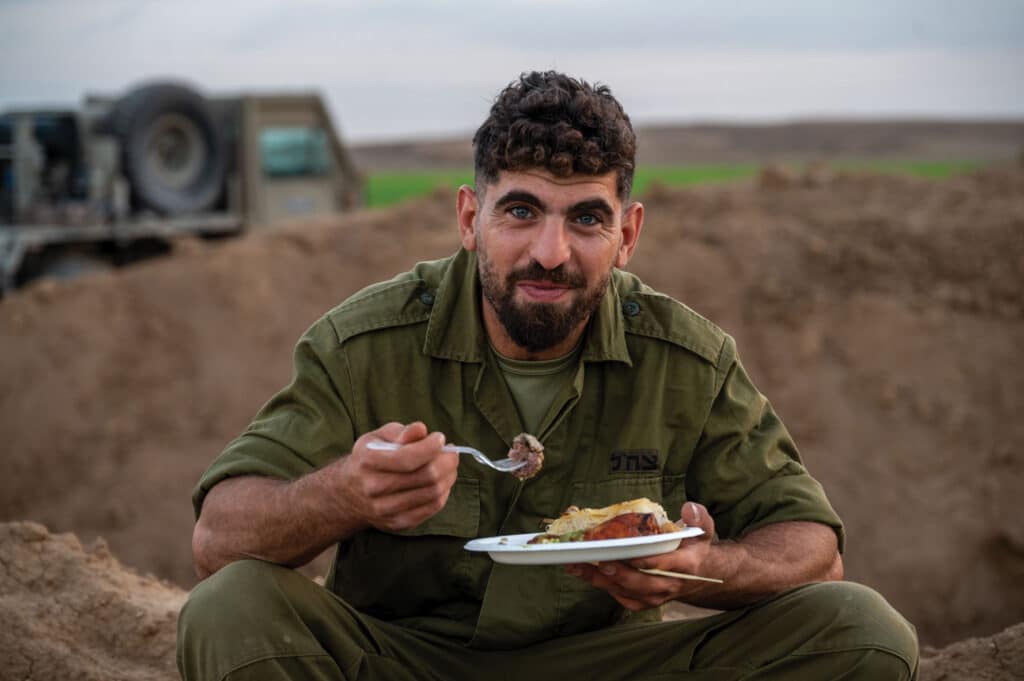
The photo that Barbalat feels the strongest connection to is his image of the soldier eating on a mound of dirt. 

“In the field, there are no proper conditions, not even a place to sit, but the food brought such happiness to this soldier,” Barbalat said. “When I captured the moment, he looked at the camera, and his eyes sparkled.”

Avishag Shaar-Yashuv was invited to photograph a wedding with Asif in the midst of the war. 

“After many days of documenting the horrors, the mourning, the survivors and the funerals, suddenly documenting a day filled with joy was an important and energizing experience for me,” Shaar-Yashuv told the Journal. “The faces and smells of the dishes, the diligent kitchen workers and Tamar the chef, all devoted themselves to preparing the food for the wedding.”

When Shaar-Yashuv arrived at the base, she was amazed by the beauty.

Photo by Avishag Shaar-Yashuv

“For a moment, I could have thought that we were in a wedding venue and not on a military base in the south of the country,” she said. “The image of the bride and groom entering the chuppah, with the bride in a wedding dress and the groom in uniform, surrounded by fireworks: For me, this picture manages to convey a story of happiness and love even in times of war.”

“The exhibition serves as a testament to the beauty of giving and solidarity in Israel … In such challenging times when everything appears bleak, projects like these are the beacons of light that will illuminate our path.” – Haim Yafim Barbalat

“The exhibition serves as a testament to the beauty of giving and solidarity in Israel,” Barbalat said. “In such challenging times when everything appears bleak, projects like these are the beacons of light that will illuminate our path.”

ASIF Gallery is open from Sunday through Thursday from 9 am to 5 pm and on Fridays from 9 am to 3 pm. Learn more at ASIF.org.

Food for the Frontline in Photos at Asif Gallery in Tel Aviv Read More »

Campus Watch January 18, 2024

Lawsuit: Harvard Accused of “Double Standard” In How It Handles Antisemitism

A group of Jewish students filed a lawsuit against Harvard University on Jan. 10 accusing the university of engaging in a “double standard” with how it treats antisemitism compared to other forms of discrimination.

The New York Post reported that the lawsuit alleges that the university “permits students and faculty to advocate, without consequence, the murder of Jews, and the destruction of Israel, the only Jewish country in the world. Meanwhile, Harvard requires students to take a training class that warns that they will be disciplined if they engage in ‘sizeism,’ ‘fatphobia,’ ‘racism,’ ‘transphobia’ or other disfavored behavior.” The suit also claims that Harvard did nothing when a Jewish student was surrounded by pro-Palestinian protesters chanting “shame” at him and that Jewish students have hide in university buildings during pro-Palestinian protests. 

A spokesperson for the university told Axios that the university does not comment on pending litigation.

Education Dept. to Investigate Brown 

The Department of Education’s Office of Civil Rights (OCR) is launching a Title VI investigation against Brown University over allegations that that are pro-Israel students are being “targeted and threatened” on campus, Fox News reported on Jan. 10.

The complaint was filed by Dr. Zachary Marschall, the editor-in-chief of the conservative website Campus Reform; a spokesperson for the university told Fox News that OCR made it clear that they were simply “fact-finding” and have not made a determination on the merit of the allegations. “We remain resolved in our cross-campus efforts to ensure a community where all individuals feel safe and valued and where no instance of antisemitism, Islamophobia or bias based on religious, cultural or ethnic differences is tolerated.”

MIT Computer Science Lecturer Quits Over Campus Antisemitism

Mauricio Karchmer, a computer science lecturer at the Massachusetts Institute of Technology (MIT), announced in a Jan. 9 piece in The Free Press that he is quitting his “dream job” due to “the pervasive antisemitism on MIT’s campus.”

Karchmer explained in The Free Press that the university was unable to condemn the Oct. 7 massacre and instead issued a statement “riddled with equivocations, without mentioning the barbarity of Hamas’s attack.” And the congressional hearing in which MIT President Dr. Sally Kornbluth said that it would depend “on the context” if calls for genocide against Jews violated university policy. The final straw was when he realized that one of his former teaching assistants “was one of the organizers of the Coalition Against Apartheid and helped bring Mohammed El-Kurd to campus.” He handed in his resignation on Dec. 13.

“My letter stated, in part: ‘I cannot continue teaching Algorithms to those who lack the most basic critical thinking skills or emotional intelligence. Nor can I teach those who condemn my Jewish identity or my support for Israel’s right to exist in peace with its neighbors,’” Karchmer wrote. “My boss asked me to reconsider. But my mind was already made up.”

Report: HS Principal Approved, Lauded “Shut It Down for Palestine” Walkout 

Emails obtained by The Daily Wire reportedly show that the principal of a high school in Maryland approved and expressed pride in an anti-Israel walkout that was held on the anniversary of Kristallnacht.

Edward Owusu, principal of Clarksburg High School in Montgomery County, purportedly responded to an email notifying him of the protest by stating: “I am proud that the Muslim Student Association has made a collective decision of support. Please make plans to see Mr. Haynes regarding plans for the Walk Out.” The assistant principal, David Douglass, also reportedly informed the Muslim Student Association of the protest’s approval and that the school would be providing equipment for them to use.

MLA Passes Motion to Protect Anti-Israel Faculty, Students

The Modern Language Association (MLA), the country’s most respected group for language and literature scholars, passed a motion calling on the organization to protect university faculty, staff and students who denounce Israel’s “massive bombardment of the Gaza Strip” as well as faculty who believe that the ongoing war “must be viewed in the context of the Palestinian Nakba of 1948, Israel’s 56-year-long illegal occupation of the West Bank, and Israel’s 16-year long land, sea, and air blockade of the Gaza Strip.”

The College Fix reported that a separate motion calling for the protection of all faculty members regardless of their viewpoints on the conflict was voted down overwhelmingly. University of Illinois-Champaign Professor Cary Nelson, who co-authored the motion that was voted down, told The College Fix: “With this vote, the MLA allies itself decisively with anti-Zionism. Worse still, by considering Jewish students unworthy of equal protection, it crosses the line into antisemitism.”

Campus Watch January 18, 2024 Read More »

Complaint Filed Against AU Over Alleged Antisemitism on Campus

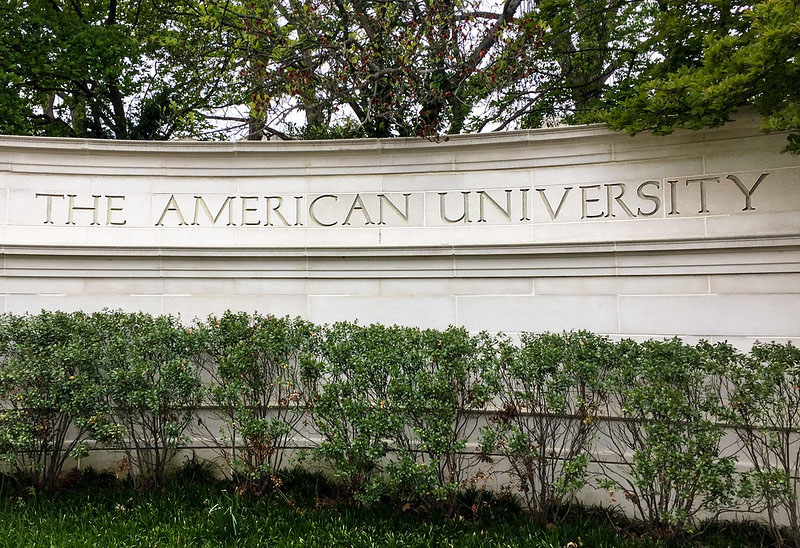
The Louis Brandeis Center for Human Rights Under Law filed a complaint to the Department of Education’s Office of Civil Rights (OCR) on Wednesday alleging that the Washington, D.C.-based American University (AU)  has failed to properly handle incidents in which Jewish students were targeted on campus.

The complaint states that Student 1, a Jewish Israeli American who had several friends and family murdered during the Oct. 7 massacre, was subjected to calls of “Zionist pig” as he was walking back from a pro-Israel vigil with an Israeli flag around his shoulders. He was also allegedly spat at by two people wearing face masks and keffiyehs while riding scooters. Student 1 filed a report to the university over the matter, but heard nothing.

Student 1 subsequently hid his Star of David out of fear, but because many people were aware of his Israeli identity, the student was still subjected to several subsequent incidents of spitting and being called a “Zionist killer.” But Student 1 did not report any of these incidents to the university after not hearing anything after filing his first report.

Additionally, the complaint alleges that in November, Student 1 had posted a flyer advertising a piano recital he was performing in that was vandalized with a swastika and the words “DEATH TO ZIONISTS HITLER WAS RIGHT.”

“Student 1 immediately reported the vandalized poster to the AU administration,” the complaint states. “It took nearly a week for the administration to release a statement condemning the vandalism. After AU’s campus newspaper, The Eagle, reported on the incident and included identifying details without permission, Student 1 experienced increased harassment and unwanted attention on campus. AU administrators, however, made no effort to identify the perpetrators or inform Student 1 if it had taken any steps to ensure that other concert posters would not be similarly vandalized and that Student 1 would not be targeted at his piano recital due to his Jewish and Israeli identity.” The complaint further alleges that the FBI had two officers appear at the recital for Student 1’s safety; the school had connected Student 1 to the FBI, as the FBI were already there to investigate an anti-Palestinian message left at a Palestinian staff member’s office.

“The University’s response to the incidents targeting Student 1 has been wholly inadequate,” the complaint continues. “It took the administration five days to contact Student 1 after the vandalism incident, and even then, only one Dean emailed him, nearly a week after the event, to inquire about his well-being. This was only after Student 1 notified his professors that the administration had not offered him any support. AU’s failure to investigate the spitting incident Student 1 reported, left the student feeling abandoned by the University and demonstrated the University’s lack of care and concern.”

Further, the complaint notes that AU President Sylvia Burwell condemned the anti-Palestinian message left at a Palestinian staff member’s office as being “vile and dehumanizing.” Yet, in response to the vandalism of Student 1’s flyer, “the university sent an email to the AU community that merely restated the university’s policies on postering and made no mention whatsoever of the antisemitism.” This, the complaint contended, is “disparate treatment.”

Student 1’s suffering from the hostility on campus, combined with the university’s lack of an adequate response, has caused Student 1 to face such severe distress and anxiety that he canceled multiple piano lessons that he teaches and was unable to reach the maximum number of hours he needed as a teacher’s assistant — both of which are jobs he relies on to pay his tuition. As a result of the lost income, Student 1 could not visit his family during Thanksgiving.

Student 2, the complaint alleges, found a giant swastika scrawled on his door on Oct. 19, as well as on the door of another student and a third opened the door before the perpetrator could finish drawing it on the third student’s door. Additionally, “a bathroom on the same floor was also vandalized with a swastika and a Nazi slogan,” the complaint states. “Later that evening, the second student whose door had been vandalized received a text message from an unknown number that said, ‘I know who you are, jew.’”

AU President Sylvia Burwell did denounce the antisemitic vandalism as a “hateful act of antisemitism”; however, the complaint alleges that AU “has yet to take effective steps to identify the perpetrators, hold them accountable and prevent the  anti-Semitic vandalism of first-year dormitories from reoccurring.”

Another allegation in the complaint is that a handful of separate students, who are also anonymous in the complaint as Students 3-6, reported to the university that they were putting up posters of Israeli hostages taken captive by Hamas — many of whom the students personally know — only to have them taken down by students. The students who took them down would also yell disparaging remarks, such as shouting that “Israelis aren’t real people.” The university allegedly claimed that they couldn’t do anything about it, so Students 3-6 — who are members of the university’s Students Supporting Israel (SSI) chapter — took videos of the students who were tearing down the hostage posters. But the university still did nothing, even though the complaint notes that university policy explicitly prohibits the vandalism of posters.

Instead, the university launched an investigation against Students 3-6 as well as Student 7, the president of the SSI chapter, and charged them with “harassment and disorderly conduct.” The university further charged that the students who vandalized the hostage posters were “removing unauthorized postings.” The complaint claims that “the students removed the Jewish students’ hostage posters from authorized locations as well as from alleged ”unauthorized” locations. Second, the students who removed the hostage posters replaced them with their own posters. Third, according to University policy, ‘No community member should remove or deface any poster.’ This applies to all posters, no matter where they are placed.” Additionally, the recordings taken by Students 3-6 were in a public space and in a state in which there are no two-party consent laws, the complaint contends, adding that the videos were not publicized in any way and were simply shared with the university as a part of the standard reporting procedure.

The complaint proceeds to several other instances in which Jewish students allegedly suffered harassment from other students on campus, including one Jewish student (Student 9) who was told by her suitemates that she is a “white privileged wealthy girl from New York City who knew nothing” because she didn’t believe that Israel is committing genocide against the Palestinians and has faced continuous “anti-Jewish hostility” from them. Student 9 eventually moved to a different suite, but the Housing Office did not take any action outside of suggesting she move to a different housing situation. Another student, Student 10, was allegedly verbally accosted by a classmate who screamed that she couldn’t sit near a Zionist and that Student 10 has “blood on your hands! You are responsible for genocide! Your people are killing innocent Palestinians!”

Student 11 allegedly dealt with a professor, whose name is redacted in the complaint, who asked students during a Nov. 6 class to share photos from a pro-Palestinian march the previous weekend; the professor also described the protest as being “powerful and meaningful,” per the complaint. “At one point, an image of a sign showing a Star of David in a trash can reading ‘Keep the world clean’ was projected onto the large screen,” the complaint added.”[Professor Redacted] made eye contact with Student 11, and many of her classmates turned around to stare at her. Student 11 was so uncomfortable she left the class in tears.”

The professor, the complaint alleges, knew Student 11 was Jewish because she always wears a Star of David necklace.

Additionally, the complaint claims that pro-Palestinian protests on campus were so loud that they disrupted classes and that the protesters actively blocked the entrance to a building described in the complaint as the “central student hub of AU’s campus.” And yet the university did nothing, the complaint alleges.

“Shamefully AU has repeatedly chosen to turn a blind eye to the antisemitism snowballing on its campus,” Brandeis Center Founder and Chairman Kenneth L. Marcus, who served as U.S. Assistant Secretary of Education for Civil Rights under the George W. Bush and Donald Trump Administrations, said in a statement. “Not only has the university failed in its legal obligation to protect Jewish students from illegal targeting and harassment, it is attempting to bully those brave enough to speak up. The university’s delinquency is reprehensible, and it only signals to the AU community there are no consequences for those who harass, threaten, assault or shun Jewish and Israeli students, emboldening those hostile to Jews even further.”

“Not only has the university failed in its legal obligation to protect Jewish students from illegal targeting and harassment, it is attempting to bully those brave enough to speak up.” – Kenneth L. Marcus, Brandeis Center founder and chairman

Matt Bennett, AU’s vice president of communication, said in a statement to the Journal, “American University received a letter the Brandeis Center sent to the Department of Education’s Office of Civil Rights (OCR) regarding antisemitism. We have not received any complaint from OCR. We take these issues and any concerns in AU’s Jewish community seriously, and we review and address them. We will cooperate with any inquiries regarding our work to combat antisemitism.” He added: “American University supports the safety, well-being, and sense of belonging for our Jewish students, a community which has been and remains an important part of the fabric of our university. We have taken decisive action to address antisemitism, including working with the FBI on investigations, enforcing our student conduct code, incorporating antisemitism into our curriculum and inclusive excellence work, and engaging with Jewish groups including ADL and Hillel. While we have made progress in combatting antisemitism, we know we have more work to do.”


Complaint Filed Against AU Over Alleged Antisemitism on Campus Read More »

A Bisl Torah – Signs from Beyond

In attending a family brit milah, we visited a synagogue that merged with my home shul. In tribute to my home shul, the new chapel is adorned with the former shul’s ark doors and yahrzeit plaques. Many of my family members are memorialized on these walls.

I took a moment to look at the plaques. My grandparents, great grandparents and great aunt all “stared” back at me. And for the first time, I noticed the day of death for my great grandmother: September 24, 1982. The exact date my husband Erez was born.

It can’t be a coincidence that as my great grandmother left this world, my husband was entering. Same day, month and year. We wonder if there are signs from above, the world to come. We ponder if there is a connecting thread between the living, dead, something woven between it all. Moments like this convince me there is. My great grandmother helped usher in one of the most important people in my life. A beautiful cord from one world to the next.

Vayikra Rabba reads, “Rabbi Yochanan said, ‘If a man merits, he inherits two worlds—this one and the one coming….’” Meaning, we are never just dwelling in one world. We are constantly touching and being impacted by the world to come. The voices, actions, and ideas of the deceased move with us, inspiring, lifting, holding and embracing our hearts.

Look for the signs from beyond. They’re meant for you.

Shabbat Shalom


Rabbi Nicole Guzik is senior rabbi at Sinai Temple. She can be reached at her Facebook page at Rabbi Nicole Guzik or on Instagram @rabbiguzik. For more writings, visit Rabbi Guzik’s blog section from Sinai Temple’s website.

A Bisl Torah – Signs from Beyond Read More »

Martin Luther King and Reinhold Niebuhr

Though you may put a guy at ease

with parsonic para-pieties,

you can’t correct a grave mistake

improving him for heaven’s sake.


Because of this don’t make the error

of claiming King approved of terror

against the Jews, his strong support

of Israel, truth does not distort.


He followed Reinhold Niebuhr’s views

regarding Israel and the Jews,

the pieties of both much needed

today by Jews, unsuperseded.


King emerged from a corner of Protestant liberal theology that not only was suffused with pro-Zionist sentiment but took a highly critical view of the Arabs. That approach was personified, indeed championed, by Reinhold Niebuhr (1892-1971), arguably the most influential American theologian and ethicist of his time. When King was a student, Niebuhr appeared on the cover of Time magazine. In the magazine’s accompanying profile, he was called “the spiritual inspiration which has infused old orthodoxy with the tremor of new life.”

As King himself would relate, he soon came under Niebuhr’s spell:

During my last year in theological school, I began to read the works of Reinhold Niebuhr. The prophetic and realistic elements in Niebuhr’s passionate style and profound thought were appealing to me, and I became so enamored of his social ethics that I almost fell into the trap of accepting uncritically everything he wrote.

The “trap” had to do with Niebuhr’s critique of pacifism, with which the pacifist King had problems. But in general he drew inspiration from Niebuhr, and while in graduate school wrote two papers on him. 

….. Andrew Young, King’s close adviser, would later recall that “whenever there was a conversation about power, Niebuhr came up. Niebuhr kept us from being naïve about the evil structures of society.” According to Young, King ultimately even tilted toward Niebuhr’s skeptical view of pacifism: “King always claimed to have been much more influenced by Niebuhr than by Gandhi; he considered his [own] nonviolent technique to be a Niebuhrian strategy of power.” As King himself wrote: “After reading Niebuhr, I tried to arrive at a realistic pacifism.”

Given his influence upon King, it’s important to recall the vigor with which Niebuhr supported both the establishment of Israel and its right to defend itself. He had expressed sympathy for Zionism as early as 1929, and in 1942 he founded the Christian Council on Palestine, a pro-Zionist association that grew to include thousands of (mostly Protestant) clergymen. In 1946, he testified in favor of a Jewish state before the Anglo-American Committee of Inquiry on Palestine. “The fact that the Arabs have a vast hinterland in the Middle East,” he said there, “and the fact that the Jews have nowhere to go, establishes the relative justice of their claims and of their cause.”

In 1948 and again during the Sinai campaign of 1956, Niebuhr defended Israel’s military actions and chastised American policymakers for not standing firmly behind “our only secure bastion in this troubled area.” 

…. Occasionally, Niebuhr worried that “the Jewish ethic and faith” would “not be morally safe when . . . it comes in conflict with Arab forces.” But in every crisis, he ended up justifying whatever means Israel used in its defense. Niebuhr, in his own words, “never ceased to be favorable to the state of Israel”—as King certainly would have known.

Ann Hulbert (“Among the Heathens,” the NYT Book Review, November 2, 2003) reviews “The Serenity Prayer: Faith in Times of Peace and War,” by Elisabeth Sifton (Norton), a description of life in the home in Heath, Massachusetts, of her father, Reinhold Niebuhr, the theologian who wrote the serenity prayer that is the mantra for Alcoholics Anonymous. 

… Most people have no idea that Niebuhr is its author, or that it even has one. Many Roman Catholics assume St. Francis of Assisi wrote the [Neibuhr] lines about wisely knowing when to work for change and when ”to accept with serenity the things that cannot be changed.” 


Gershon Hepner is a poet who has written over 25,000 poems on subjects ranging from music to literature, politics to Torah. He grew up in England and moved to Los Angeles in 1976. Using his varied interests and experiences, he has authored dozens of papers in medical and academic journals, and authored “Legal Friction: Law, Narrative, and Identity Politics in Biblical Israel.” He can be reached at gershonhepner@gmail.com.

Martin Luther King and Reinhold Niebuhr Read More »

A Moment in Time: “Navigating Life”

Dear all,

Growing up, our family sailed in Buzzards Bay in Southern Massachusetts. When little Zach (pictured here) would get my turn at the helm, the entire world lay before me to navigate.

But I was never alone:

Dad’s hands guided mine on the wheel.

One sister hoisted the sails.

Another sister cranked the winch.

Mom’s careful eye sought landmarks.

And a Divine spirit blew us toward our destination….

Indeed, navigating life takes all hands on deck.

Who are the members of your crew? Are you doing your part to ensure a smooth passage? And have you taken a moment in time recently to acknowledge their blessings?

With love and shalom,

Rabbi Zach Shapiro

A Moment in Time: “Navigating Life” Read More »

Sephardic Torah from the Holy Land | Blood Libel in The Hague: Back to the Future

“In the wake of the recent murderous attacks against us, Arab newspapers and leaders nonetheless engage in open lies and libelous accusations against Jews. In their quest to influence world opinion against us, they seek to reverse the truth, accusing Jews of doing what they actually just did to us – raping women, pillaging property and mercilessly killing innocent civilians. Enough with our constantly having to defend ourselves in the court of public opinion. It’s time for us Jews to launch a legal case against our libelous accusers. It’s time for us to file charges in court against all those who incite world opinion against Jews, against all who spread these slanderous lies and perpetuate these perverse reversals of the truth against us.”

These words could easily have been lifted from any of the five different Israeli newspapers I plowed through this past Shabbat here in Israel – Yediot Acharonot, Globes, Makor Rishon, Ha’aretz and Jerusalem Post. Left, right, center, Hebrew or English, all of these newspapers had similar reactions to the libelous accusations currently being leveled against Israel by South Africa in The Hague. The above paragraph would neatly fit into any of their editorial pages.

What’s chilling is that these words are not from this weekend.

While they bear a frightening resemblance to recent events, these words date back to the summer of 1929. “The recent murderous attacks against us” are not about October 7, 2023, rather August 24, 1929 – otherwise known as the “Hebron Massacre.” That’s when violent mobs of axe-wielding Arabs slaughtered 69 Jews, wounded and maimed scores of others, ransacked their synagogues and pillaged their homes. Sounds hauntingly familiar.

In the face of this physical brutality and verbal onslaught against Jews, one brave leader stood up in the name of the truth: Tel Aviv’s (and eventually Israel’s) Chief Sephardic Rabbi, Benzion Meir Hai Uziel. 

The greatest compliment to a leader is that their ideas hold relevance in every generation. In this case, 95 years after he spoke the above words, I’m sure Rabbi Uziel would respectfully pass on this compliment.

Instead, I’m sure he would have loved for his closing remarks to his 1929 address to take effect:

“To all Muslims who don’t partake in spreading these lies, and to all nations of the world, we call upon you to ignore these words of incitement that seek to sow seeds of hatred and bloodshed amongst people. One God has created us all, so let us extend a hand of peace to one another.”

95 years later, three months after October 7, and now in The Hague – wouldn’t that be nice.

In the meanwhile…

Shabbat Shalom 


Rabbi Daniel Bouskila is the international director of the Sephardic Educational Center.

Sephardic Torah from the Holy Land | Blood Libel in The Hague: Back to the Future Read More »

Print Issue: Israel on Trial | Jan 19, 2024

CLICK HERE FOR FULLSCREEN VERSION

Print Issue: Israel on Trial | Jan 19, 2024 Read More »

Law, Politics, and Antisemitism

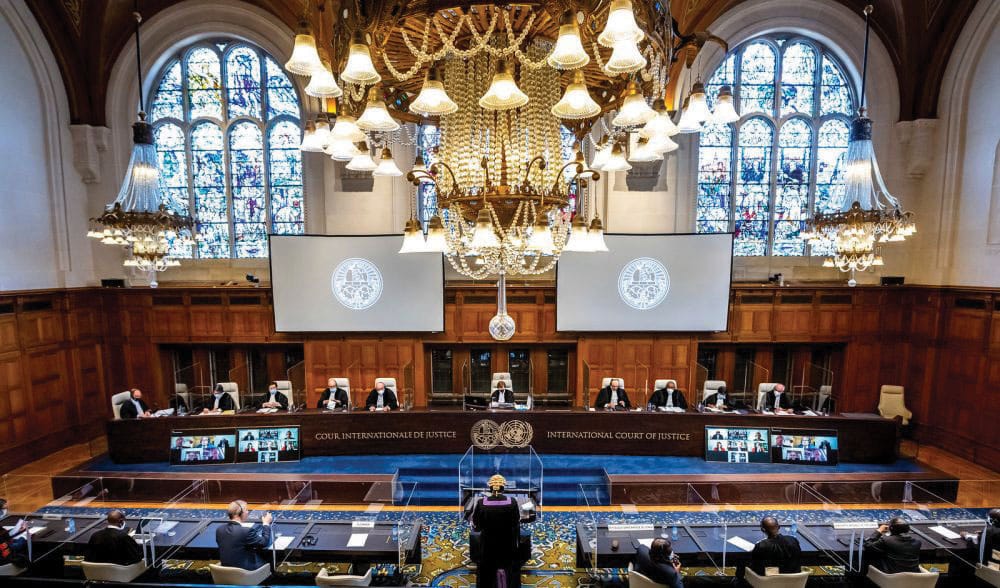
On Dec. 29th, South Africa filed a complaint against Israel to the International Court of Justice (ICJ), arguing that Israel is committing genocide in Gaza. While the suit will likely take years to reach a conclusion, the ICJ heard arguments by both sides on Jan. 11th and 12th as part of South Africa’s request for “provisional measures” – an interim order meant primarily to bring about an immediate ceasefire by Israel.

The ICJ’s authority extends over states and not individuals (as opposed to the International Criminal Court, the ICC) and, like many other international tribunals, its decision is not legally binding. However, the court’s decision might have economic and diplomatic implications – both in general and specifically on Israel’s ability to continue fighting the war in Gaza. The legal process is based on the U.N. Convention on the Prevention and Punishment of the Crime of Genocide. The convention, signed in 1948 and in effect since 1951, was the first U.N. human rights treaty and a direct lesson from the Holocaust. Israel was one of the first countries to ratify the convention without reservation and to incorporate its provisions in its domestic legislation. For that reason, and as opposed to other international tribunals (like the ICC), Israel was required to appear in front of the court and defend itself from the allegations raised against it.

To understand what is misguided about the ICJ proceedings, three points require deeper explanation: the strength of Israel’s legal case, its political background and implications within Israel, and the disturbing role of revived antisemitism in the current process. 

To understand what is misguided about the ICJ proceedings, three points require deeper explanation: the strength of Israel’s legal case, its political background and implications within Israel, and the disturbing role of revived antisemitism in the current process. 

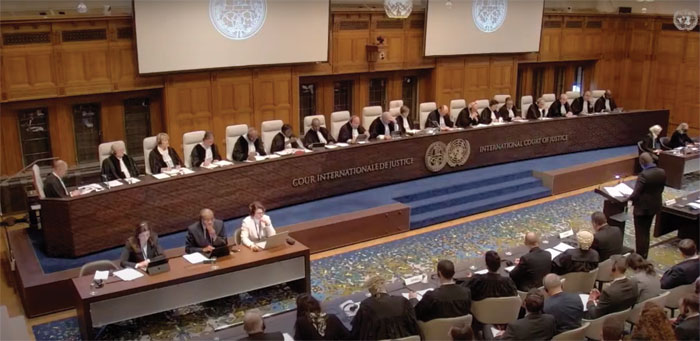
Supporters of Israel and Palestine outside the International Court of Justice (YouTube screenshot)

Law

Article II of the convention defines the crime of genocide as a list of five acts committed with the “intent to destroy, in whole or in part, a national, ethnical, racial or religious group, as such.” The five acts listed in the convention are: (i) killing members of the group, (ii) causing serious bodily or mental harm to members of the group, (iii) deliberately inflicting on the group conditions of life calculated to bring about its physical destruction in whole or in part, (iv) imposing measures intended to prevent births within the group, and (v) forcibly transferring children of the group to another group. Genocide, the most heinous crime within the family of nations, requires not only the act but also the intent to destroy the group in question. 

According to South Africa’s claim, the combination of the number of Palestinians killed as a result of the Israeli military’s aerial bombardments and ground operations (mostly women and children according to the Hamas-controlled Health Ministry in Gaza), the displacement of the vast majority of the Gaza population into makeshift camps with harsh sanitation and health conditions, the destruction of vast swaths of the civil infrastructure in Gaza, and preventing the basic humanitarian needs of Gazans to be met – together with many statements by Israeli public figures spanning the realms of politics, the military and culture about the need to “erase” Gaza and Gaza having “no innocents” within it – prove that Israel is committing genocide in Gaza. 

From a legal viewpoint, the claim that Israel is committing genocide in Gaza is both unjustified and baseless. First and foremost, the South African claim ignores the background and context for Israel’s actions in Gaza. As the Israeli legal team indicated, the correct framing for the hostilities between Israel and Gaza is that of war and not genocide. Following the massacre Hamas committed on October 7th, Israel declared two goals would guide its response. The first was freeing the hostages Hamas and other terrorist organizations kidnapped from their homes and public spaces. One hundred and thirty-six of them are still in captivity, and according to the testimony of freed captives, they are being held under horrific conditions with their lives continually in danger. The second goal was eliminating Hamas’s control over Gaza and the threat of missile, rocket, and ground attacks like Israel experienced on October 7th. International law recognizes a state’s right to self-defense. Demanding a stop to its military campaign in Gaza hinders Israel’s right to defend its citizens against Hamas’s violence – an organization whose charter is committed to the destruction of Israel and whose leaders vow to repeat the acts of October 7th again and again.

There are many indications that Israel sees itself committed to the international laws of war in a way that precludes genocidal intent and actions … Israel has invested exceptional effort to minimize harm to Gazan civilians.

While specific acts and commands on the ground are difficult to discern as the war is ongoing, there are many indications that Israel sees itself committed to the international laws of war in a way that precludes genocidal intent and actions. From providing humanitarian corridors for civilians to evacuate from areas of war and publishing an interactive map that shows where the Israeli army intends to operate to supplying and facilitating the provision of humanitarian aid – food, water, medicine, and even makeshift hospitals – Israel has invested exceptional effort to minimize harm to Gazan civilians.

Many Israelis have made inflammatory statements regarding Gaza and its citizens, like the remarks by Ministers and Parliament members calling on Israel to “nuke Gaza.” And “wipe it out”. While public figures, these people are not members of the Israeli Government’s War Cabinet. Therefore, they do not have control over Israel’s military, neither personally nor through association with a military governing body. According to the interpretation of international tribunals, this means that even if their statements express genocidal intent, their remarks cannot establish the commission of genocide in Gaza because their intent does not drive the acts of Israeli soldiers in Gaza. 

Some statements were made by members of the War Cabinet, like those by Prime Minister Netanyahu and Defense Secretary Gallant. Netanyahu described reducing the enemies of Israel to “ruins” and compared them to the biblical tribe of “Amalek,” the people of Israel’s mythical enemy, while Gallant called those that attacked Israel on October 7th “human animals” and said the siege of Gaza was intended to ensure “no electricity, no food, no water, no fuel.” However, when these words are considered in light of the entire statements they were drawn from, it is clear that they express the intent to defeat Hamas (e.g., Gallant’s reference to “anyone who fights against us” and Netanyahu’s statement that Israel’s war aims were the “destruction of Hamas’s military and governing capabilities”) – not to destroy the Gazan population. 

South Africa makes its case against Israel at the International Court of Justice
(YouTube screenshot)

Politics 

South Africa’s lawsuit submitted to the ICJ is malicious and devoid of context, but that does not justify Israeli politicians’ irresponsible statements. The statements regarding Gaza and the Palestinians were made primarily by extreme-right politicians. Those were the same politicians whose job it was to take care of Israeli citizens’ needs as the war commenced: the displaced from the south and then the north of Israel, the survivors of October 7th, the injured, and even reservists – all those who had to rely on the kindness of volunteers, donors, and civil society while the government was missing in action. These politicians have no influence over the day-to-day conduct of the war on the ground, but in trying to disguise the government’s total failure to do its most fundamental task – protecting its citizens – they chose to inflame the raw pain Israelis are experiencing.

The process at the ICJ illuminates the irresponsibility of Israel’s October 6th government still in power today (Benny Gantz’s centrist party, the Mamlachti Camp, joined the government shortly after October 7th to form an emergency unity government). Since it was formed at the beginning of 2023, the government has been dedicated to the overhaul of the judiciary through a legislation package meant to limit its power. According to Justice Minister Yariv Levin and Constitutional Committee Chair Simcha Rothman, the leaders of the judicial reform attempts, the main cause of the judiciary’s overreach was former Chief Justice Aharon Barak, who led an activist Supreme Court that exercised broad judicial review. Two weeks ago, the judicial reform movement received what might be a fatal blow when the Supreme Court affirmed its authority to engage in judicial review on Basic laws and struck down the reasonableness amendment – the one judicial reform law the government managed to pass into legislation.

If crimes have been committed during the war, Israel’s strong and independent legal system will make sure that justice will be rendered.

Ironically, Netanyahu nominated the same Aharon Barak as Israel’s representative to the judicial panel of the ICJ. The 87-year-old Barak, a Holocaust survivor and Israel’s leading legal scholar – who withstood protests outside his home over the past year despite not serving as a public official for over 15 years – did not hesitate when called upon to help Israel. It is Israel’s commitment to the rule of law embodied in Barak that underlined Israel’s argument at the ICJ – as proof that if crimes have been committed during the war, Israel’s strong and independent legal system will make sure that justice will be rendered. The war has shown once again that Israel remains committed to the rule of law, and must withstand the attempts of some of its populist politicians to alter that course. 

Antisemitism 

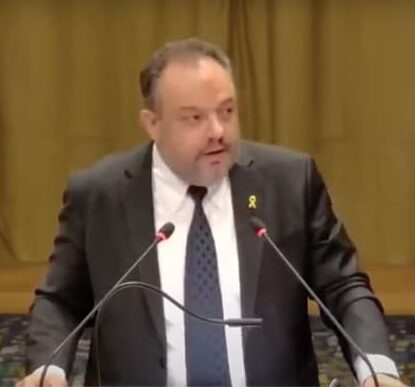
Israel’s Tal Becker gives the opening remarks for Israel at the International Court of Justice (YouTube screenshot)

In his address to the ICJ, Dr. Tal Becker, the Israeli Foreign Ministry Legal Advisor and my colleague at the Hartman Institute, noted that “we live at a time when words are cheap.” He went on to observe that “in an age of social media and identity politics, the temptation to reach for the most outrageous term, to vilify and demonize, has become, for many, irresistible. But if there is a place where words should still matter, where truth should still matter, it is surely a court of law.” 

The term genocide was coined by Raphael Lemkin, a Polish Jewish lawyer who fled to the US after Germany’s invasion of Poland in 1939. Lemkin used the term to refer to the heinous campaign by Nazi Germany to exterminate Jews in the Holocaust. After World War II, Lemkin committed his life to campaigning for legislation enshrining the Genocide Convention in order to prevent the rise of “future Hitlers.”

The weaponization of Jews’ historic legal remedy – the Genocide Convention – against the Jewish state is a reminder of dark days in the world’s history: days in which Jews would be blamed for society’s worst crimes when they were in fact its victims.

To be clear, Israel is not without its flaws. Like every country involved in armed conflicts, it has undoubtedly committed crimes in its decades-long conflict with the Palestinians. And in this war the loss of innocent Palestinian lives is truly heartbreaking. But the claim that Israel is committing genocide is not only factually incorrect but also dangerous. The weaponization of Jews’ historic legal remedy – the Genocide Convention – against the Jewish State is a reminder of dark days in the world’s history: days in which Jews would be blamed for society’s worst crimes when they were in fact its victims.

In a court of law truth should matter, and from a legal perspective Israel’s case is ironclad. However, this legal case is also clad with politics and tinged by antisemitism. Unlike most of the world’s democracies, South Africa has refrained from identifying Hamas as a terrorist organization. The US, Canada, England, and France have stated their outrage at South Africa’s complaint, and in a historic move, Germany declared that it will intervene with the legal procedures as a third party in support of Israel. But with the politicization of today’s international institutions, it is unclear whether Israel will receive a just trial. 

On October 7th, Hamas engaged in the systematic rape, torture, and slaughter of Jews, making it the single deadliest day for the Jewish people since the Holocaust. But in a remarkable act of blaming the victim, the international institutions of justice are now busy – not trying the offender, but standing in judgment of justifiable steps Israel has taken in self-defense.


Dr. Masua Sagiv is Scholar in Residence of the Shalom Hartman Institute and the Koret Visiting Assistant Professor of Jewish and Israel Studies at the Helen Diller Institute in U.C. Berkeley.

Law, Politics, and Antisemitism Read More »

Confronting Antisemitism: Bringing Meaning and Context to Our New Reality

If the 19th Century afforded Jews the opportunity to identify and to adopt Western liberal political ideas, to create our own national liberation movement through Zionism, and to access and assimilate into democratic and civic institutions, then, in this century, American Jews are feeling for the first time a systematic rejection of their standing and place within modern society.

We are experiencing an era in which our liberal political moorings are being upended, our embrace and identification with Zionism is being questioned and our positions and roles within democratic societies are being challenged.

We are experiencing an era in which our liberal political moorings are being upended, our embrace and identification with Zionism is being questioned, and our positions and roles within democratic societies are being challenged.

The transformative events of the 20th century —  the two World Wars, the Holocaust, and the formation of the Jewish State — all served to motivate Jews to advance their distinctive political self-interests as well as their universal priorities. By contrast, in this 21st century, many of the major transformative events — the 2008 recession, the 2017 Unite the Right rally in Charlottesville, the 2018 assault on Pittsburgh’s Tree of Life Synagogue, and the October 7th Hamas pogrom directed against Israelis — have contributed to the most significant expressions of antisemitism in a century.

There is a striking dichotomy here, according to a series of recent studies about American attitudes towards various religions and faith communities, showing both Judaism and Jews are highly admired.  Yet the incidents of antisemitism currently are at an all-time high, even as there are today more organizations, both Jewish and non-Jewish, engaged in the fight against antisemitism and anti-Zionism than at any point in American history, and more financial resources being dedicated to this effort than at any prior time.

The ADL studies on American attitudes towards Jews offers us some important insights:

In the original 1964 poll, ADL found that 29 percent of Americans believed in six or more common stereotypes about Jews, out of a total of 11 such stereotypes that they were asked about. That percentage has declined significantly over the ensuing 55 years and, indeed, has stayed relatively flat at the lower end over the past two decades.  

However, a 2023 survey of antisemitic attitudes among Americans found 20% of adults believed in six or more of the 11 stereotypes that ADL employs to measure anti-Jewish sentiment: a sharp increase since 2019, when 11% were recorded holding such views.  How can we explain this sharp acceleration of antisemitic beliefs? Sociologists hold that a number of factors are contributing to this acceleration of hate. 

The normalization of antisemitic conspiracies has also contributed to the spreading of hate messages by white supremacists; such incidents have more than doubled, with 852 incidents in 2022, up from 422 incidents in 2021.  One such conspiratorial notion fostered by white supremacists involves “Replacement Theory.”  This belief holds that people from minority populations, both here and in Europe, are replacing the existing white, largely Christian populations and existing governmental leadership, and that all this transformation is being facilitated by Jews, who are seeking to garner control of Western institutions. 

The issue of race and whiteness simply was not part of the conversation about how Jews perceived themselves, yet today it has become a central tenet of the political rhetoric of both the political right and of the extreme left. The “whiteness” of America’s Jews is now a racial barometer of acceptance. For the far right, the Jewish pedigree is defined as non-white and therefore any Jewish aspirations to operate in the political mainstream, as part of the “white establishment” are rejected. The Alt-Right and others see egalitarianism, globalism, and multiculturalism as Jewishly inspired liberal initiatives that run counter to American nationalist ideas and values. On the left, Progressives are seeking to discredit Jewish (Zionist) participation as legitimate liberal actors on the basis that “Jews are white” and therefore by definition belong to the oppressor class, possessing no claims as authentic political partners on behalf of communities of color. Indeed, if you are categorized as a “Zionist,” then you have no standing!

We have held the belief that Western liberalism offered for Jews a political home. But today we are no longer so sure, as many of the core tenets of our liberal political tradition are being challenged, questioned and rejected by those who oppose us, as we face a new illiberalism. The moral “truths” we affirmed are now being challenged by our enemies, and even by some within our community. 

Two other factors are contributing to these contemporary expressions of antisemitic hate: the continued presence of religiously based views and perceptions about Judaism and Jews and the employment of conspiratorial ideas extracted from “The Protocols of the Elders of Zion,” a publication released in the early years of the 20th century that was widely circulated posting a wide assortment of untruths about Jews.   

Today, many of these new forms of antisemitism are expressions of opposition to Israel.  The accessibility of social media and the high profile of Israel and Jews provides the “perfect storm” for what we are expe-riencing.

No doubt, two other factors may account for this recent acceleration of hate: the presence of political instability and economic uncertainty and the documented increase of mental illness.    

Recent antisemitism is also a reflection of destructive forces tearing at American and Western European societies, where stability and democracy are already under pressure. 

How best can we respond? The Jewish community sadly has experience in having to manage such hate expressions at various times in our history. These ten steps reflect successful past efforts and provide a formula for moving forward:

• Providing Education and Engagement: History provides us with a practical lesson that education and exposure make a profound difference. An effort to formally push back against ideas, individuals and institutions that promote various forms of anti-Jewish and anti-Israel expression becomes essential.

• Creating Experiences: Offering folks we identify as “influencers” particular opportunities to meet and connect with Jews, experience Israel, and learn about Jewish history and texts alters perceptions and attitudes.

• Monitoring Social Media Platforms: As we know, the most significant growth in hate messaging is happening online.How hate speech is managed, isolated, and called out will be essential to minimizing the extent of our current problem.

• Engaging Government as a Partner: Historically, the US government along with our state and local officials must be seen as a critical ally in both monitoring and assisting in the necessary responses to hate speech and antisemitic actions. Working with legislators, law enforcement, and the courts, all represents essential pieces to this strategy.

• Mobilizing Elites, Key Civic Institutions, and Coalitions: Our ability to identify and work with high profile influence makers and credible organizations in business, culture, religion, and civic affairs can help in offsetting hate expressions. Forming coalitions of key ethnic, religious, and social justice leaders and groups represent an essential organizing principle.

• Setting the Record Straight: Untruths and misrepresentations need to be countered by prominent individuals and institutions to minimize hate messaging.

• Identifying and Isolating Bad Actors: Historically, focusing on and isolating the “problematic players” can go a long way in limiting the effectiveness and access of these individuals to the broader public square.

• Managing the Problem Effectively: As in the past, coordinating and managing tasks essential to minimizing the impact of antisemitic rhetoric and action requires the collective involvement of all the institutional players in harnessing their collective talents, resources, and energy.

• Maintaining and Expanding Research: Jewish agencies have benefitted greatly from the scholarly and scientific work that has been done on understanding and monitoring what triggers both such prejudicial ideas, analyzing the motivations and actions of those who market hate, and developing strategies to minimize and counter such groups.

• Ensuring Jewish Security: Fundamental to this work must be the collective efforts of Jewish communal and religious institutions, working with governmental agencies and law enforcement units in providing security updates and on the ground protection.

We are experiencing a hate war being orchestrated against us. Now we must effectively organize to fight this battle, protecting our community while employing our collective resources in responding to this challenge.


Steven Windmueller is Professor Emeritus of Jewish communal studies at HUC-JIR, Los Angeles.  His writings can be found on his website, www.thewindreport.com.

Confronting Antisemitism: Bringing Meaning and Context to Our New Reality Read More »