fbpx

September 14, 2023

Table for Five: Rosh Hashanah Edition

One verse, five voices. Edited by Salvador Litvak, the Accidental Talmudist

Now Hannah was praying in her heart; only her lips moved, but her voice could not be heard. So Eli thought she was drunk.

1 Samuel 1:13,
from Rosh Hashanah Haftarah


Dini Coopersmith

Educational Director, Orot haTorah Israel, www.reconnectiontrips.com

Most of our code of law for saying the “amidah”- the 19 blessings which are the main component of our prayers three times a day, is based on Hannah’s silent prayer. When Hannah came to the mishkan in Shiloh, distraught about not being able to conceive a child, she turned to God and spoke “from her heart,” connecting to the Source of everything, realizing that only He could give her what she needs. This transformed the act of prayer from a ritual to a deep meaningful and personal conversation with God. 

Rabbi Ira Kosowsky says in “DMC: the Amidah”: 

“The Amidah grants us clarity and confidence … to become the person we are meant to be … the more we appreciate prayer, the more we realize that God has empowered us to partner with Him to answer our own prayers- through our decisions, efforts and actions.” 

On Rosh Hashanah, we are conceiving our own lives anew. God is judging all of humanity based on who they are on this day. This is perfect time to stand before God like Hannah, to speak from the heart, to reach clarity about who we really are, articulate what we want for this year: what are my aspirations and goals? What tools do I need in order to achieve them? What are my values? 

On Rosh Hashanah we have the opportunity to come close, to pray, to partner with God, who will Judge us based on this vision and plan, and grant us a sweet new year. 


Rabbi Gershon Schusterman

Author of “Why God. Why?: How to Believe in heaven When it Hurts Like Hell”

A central theme of Rosh Hashanah is G-d’s coronation as King of the universe. Much of the service revolves around this theme. Royalty is exalted and powerful, evoking reverence and awe — and detachment. 

Hannah’s prayer, however, introduces G-d’s feminine side, known as the Shechina. (G-d, of course, is neither male nor female, though we “borrow” human definitions as metaphors for G-d’s personas). It is only appropriate that Hannah, a woman, teach us how to evoke the Shechina. 

Eli, the high priest, could not relate to the barren Hannah’s silent prayer for a child and thought she was drunk in her *self-absorption*, unseemly in this holiest of places. Eli saw this as a time and place for submission, not for beseeching G-d for one’s own needs. Hannah taught Eli that prayer is the realization that “*you are children to the L-rd,*” (Deut. 14:1) and that G-d’s Motherly love for Her children encompasses *all* their needs, be they physical or spiritual. 

Hannah explained: “I’m not intoxicated by my needs. I am praying for a child from my very essence that loves G-d, and ‘I have poured out my soul before G-d.’ The Shechina relates to me with Motherly-love and feels my pain, my darkness, and my distress. I need not negate myself, because my Mother, the Shechina, relates to all of me, as I am, in my pain.” 

Eli’s response? “Go in peace, and may the G-d of Israel grant your request.” And so it was. Hannah bore a child, Samuel, the prophet.


Rabbi Benjamin Blech

Professor of Talmud, Yeshiva University

Did you know that there is a Biblical source for a unique – and distinctly Jewish – way to pray? 

Some people shout, as if God is hard of hearing. But that is not the correct tone for talking to the Creator of the universe. In fact the central part of the traditional service is called “The Silent Prayer.” Silent – as in a whisper. Silent – as if it is the voice of the soul, not the lips or the vocal chords. Silent – as if no vocabulary exists to express our human connection with God. 

It is a law: The Shemoneh Esrei must imitate the paradigm of the most powerful biblical prayer of a barren woman who would not give up her hope for a child. Hannah, praying in her heart so that only her lips moved but her voice could not be heard, is the Talmudic ideal. 

The truth remains that the essence of prayer transcends language; a truth so beautifully expressed in the famous lyrics of Paul Simon: 

“The words of the prophets Are written on the subway walls 

And tenement halls 

And whispered in the sounds of silence” 

The Silent Prayer is the whisper of Hannah that needs to dominate our Rosh Hashanah-Yom Kippur attempt not simply to speak to the Divine but to define ourselves to ourselves. To acknowledge what is truly important in our lives. To define our values. To understand our purpose. To make a difference to our families, our friends and the world. And to do so with such enthusiasm that observers might even confuse our love for our earthly mission as though we were “drunk” with Godliness.


Yehudit Garmaise

Freelance writer, teacher

The avot [patriarchs] taught us when to pray, but Hannah, with her intensity and concentration, taught us how to pray. 

“Even if the king inquires as to the welfare of those who are davening, they should not answer him,” says the Mishna, before the Talmud recounts the story of Hannah, “and even if a snake is coiled about one’s heel, davening should not be interrupted.” 

While some of us are tempted to “multi-task” as we daven, Hannah approached Hashem with awe and reverence. Instead of reading through her davening silently, Hannah was the first to quietly verbalize her words. 

D’var means both “word” and “thing” and Hebrew, and in this way, Hannah taught us that when we pray in low but audible tones, Hashem helps us to create beautiful new realities. Hannah also understood that prayer is a two-way street. Instead of merely asking for a child, she promised to dedicate the life of her future son Shmuel to the service of Hashem. 

Now, when we ask Hashem for so much: to help, to heal, to forgive, and to provide for ourselves and our loved ones, perhaps we might also consider what we are willing to give and do in return. For the many times we do not have such strength, we can remember to thank Hashem for another day and for everything that gives us sustenance, joy, and nachas. 

Whenever we need anything from a miracle to bursts of love, calm, and comfort: all we have to do is ask. 


Rabbi Dr. Jason Weiner

Cedars-Sinai; Knesset Israel

At this time of Hannah’s prayer for a child, the central place of Jewish worship, the Tabernacle (“Mishkan”), was not yet located in Jerusalem, but in Shilo. In order to properly dedicate this space to holiness and prayer, it was a beautiful site, as is appropriate since we are taught “this is my God, who I shall glorify.” There was much ceremony, pomp and circumstance at this site in order to help the worshipers experience the Divine presence that rested there. The grandeur of this location was not its purpose. Rather, the experience of connecting with God was supposed to be the goal. 

However, the focus became so much on these externals, that it became abnormal for someone to actually have a sincere spiritual moment there. 

Perhaps this is why Eli accused Hannah of being drunk: she was appropriately silent and sincere, but it had become so rare there that it seemed strange to him, in the very place where that was supposed to be the norm! 

This verse may thus be criticizing Eli for finding fault in Hannah and losing sight of the primary reason for the Tabernacle. Pomp and circumstance has its place, but the central theme must remain the sincere, private, spiritual encounter. So too, as we approach the High Holy Days, our synagogues should be beautiful and special, with moving melodies, warm community and wonderful ascetics, but the ultimate goal is an internal, personal, transformative experience, as it says, “God desires the heart.” 

Table for Five: Rosh Hashanah Edition Read More »

Two Biblical Odes

Two bible stories tell of the near death of the two sons of Abraham,
Ishmael and Isaac, heroes of two complementary codes.
One son is by an angel saved, one spared by a substitute, a ram.
The words al odot, denoting “on account,” bilingually anticipate two “odes,”

the first of which highlights the patriarch’s distress concerning
the threat of death that, like the second, will by an angel be prevented,
informing us that God, His death-decision in both overturning,
provides a happy ending to both “odes,” implying that He never meant it.


There are two adjacent “odes” about the near-deaths of Abraham’s two sons, Ishmael and Isaac, in Genesis 21 and 22, which are read on consecutive days of Rosh Hashanah. In the first, we learn in  Gen. 21:10-11:

י  וַתֹּאמֶר, לְאַבְרָהָם, גָּרֵשׁ הָאָמָה הַזֹּאת, וְאֶת-בְּנָהּ:  כִּי לֹא יִירַשׁ בֶּן-הָאָמָה הַזֹּאת, עִם-בְּנִי עִם-יִצְחָק.    10 Wherefore she said unto Abraham: ‘Cast out this bondwoman and her son; for the son of this bondwoman shall not be heir with my son, even with Isaac.’

יא  וַיֵּרַע הַדָּבָר מְאֹד, בְּעֵינֵי אַבְרָהָם, עַל אוֹדֹת בְּנוֹ.            11 And the thing was very grievous in Abraham’s sight. al odot beno, on account of his son.

I read the words עַל אוֹדֹת בְּנוֹ  al odot beno, as a bilingual wordplay, implying that the stories of the near-deaths of Abraham’s sons should be regarded as “odes”.

The happy ending of the second “ode”, mediated by an angel and a ram, is reflected in Gen. 22:11-13:

יא  וַיִּקְרָא אֵלָיו מַלְאַךְ יְהוָה, מִן-הַשָּׁמַיִם, וַיֹּאמֶר, אַבְרָהָם אַבְרָהָם; וַיֹּאמֶר, הִנֵּנִי.   11 And the angel of the LORD called unto him out of heaven, and said: ‘Abraham, Abraham.’ And he said: ‘Here am I.’

יב  וַיֹּאמֶר, אַל-תִּשְׁלַח יָדְךָ אֶל-הַנַּעַר, וְאַל-תַּעַשׂ לוֹ, מְאוּמָה:  כִּי עַתָּה יָדַעְתִּי, כִּי-יְרֵא אֱלֹהִים אַתָּה, וְלֹא חָשַׂכְתָּ אֶת-בִּנְךָ אֶת-יְחִידְךָ, מִמֶּנִּי.         12 And he said: ‘Lay not thy hand upon the lad, neither do thou any thing unto him; for now I know that thou art a God-fearing man, seeing thou hast not withheld thy son, thine only son, from Me.’

יג  וַיִּשָּׂא אַבְרָהָם אֶת-עֵינָיו, וַיַּרְא וְהִנֵּה-אַיִל, אַחַר, נֶאֱחַז בַּסְּבַךְ בְּקַרְנָיו; וַיֵּלֶךְ אַבְרָהָם וַיִּקַּח אֶת-הָאַיִל, וַיַּעֲלֵהוּ לְעֹלָה תַּחַת בְּנוֹ.         13 And Abraham lifted up his eyes, and looked, and behold behind him a ram caught in the thicket by his horns. And Abraham went and took the ram, and offered him up for a burnt-offering in the stead of his son.


Gershon Hepner is a poet who has written over 25,000 poems on subjects ranging from music to literature, politics to Torah. He grew up in England and moved to Los Angeles in 1976. Using his varied interests and experiences, he has authored dozens of papers in medical and academic journals, and authored “Legal Friction: Law, Narrative, and Identity Politics in Biblical Israel.” He can be reached at gershonhepner@gmail.com.

Two Biblical Odes Read More »

New Year’s Resolutions – A poem for Rosh Hashana

The New Year is coming and
I make these promises –

I will invest in apples.

I will open negotiations with the bees
to make sure they have what they need
to continue their work.

I will set foot inside a synagogue.
(Maybe both feet.)

I will not judge a shofar
by its length.

When the sun sets on Fridays
I will not treat it like
any other day.

I will learn how to pull the first tissue
out of the box without destroying it
and the next five. (That may not be specific
to Rosh Hashanah but it’s on my mind
and there must be something in there
about improving one’s skills.)

I will give to those who need and
ask for help when I am the one who needs.

I will drive on the road like I am
the least important person on the road.

I will spend more time outside and as
much time downstairs as I do upstairs
so neither gets jealous.

I will bake more quiches with my son.

I will love the ones I vehemently disagree with
so much.

I will take all the money I make from
investing in apples and donate it to bees
or to charity, or to a bee charity.

I will try not to break these promises
even though a document is coming on
Yom Kippur which tells me I
probably will.

I
will do the best
I can.


Rick Lupert, a poet, songleader and graphic designer, is the author of 27 books including “God Wrestler: A Poem for Every Torah Portion.

New Year’s Resolutions – A poem for Rosh Hashana Read More »

American Committee for Shaare Zedek Fundraiser Honors Sam Yebri

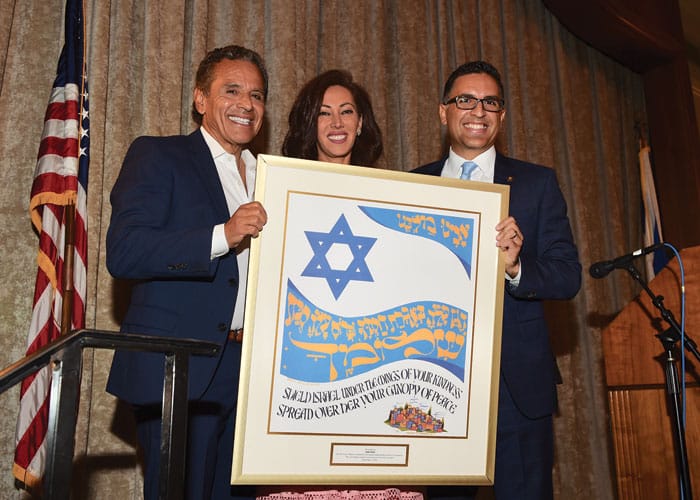
On Thursday, Sept. 7, the American Committee for Shaare Zedek Medical Center in Jerusalem honored local leader Sam Yebri at the Sephardic Temple in Westwood. The event was a fundraiser for Shaare Zedek, a 120-year old, 1,000 bed medical center on two campuses in the center of Jerusalem that serves the Jewish, Muslim and Christian populations in the city.

Sam Yebri, an accomplished attorney and civic activist, recently ran for LA City Council in the 5th City Council district. He was a city commission under former Mayor Antonio Villaraigosa, and he currently serves as board president of ETTA, which provides housing and supportive services developmentally disabled individuals. 

Yebri, a member of the ACSZ advisory council, has visited Shaare Zedek twice, including on a mission to Israel with Villaraigosa. Another time, he visited with his wife Leah when she was pregnant with their first child.

“We were moved to see Israelis of all backgrounds receiving world-class care in the hospital’s newly opened underground emergency room.” – Sam Yebri 

“The hospital touched my heart each time but in different ways,” he said. “While expecting our first child, we were moved to visit the world’s busiest maternity ward at Shaare Zedek, filled with Israeli expectant parents of all backgrounds. During our political mission, we were moved to see Israelis of all backgrounds receiving world-class care in the hospital’s newly opened underground emergency room.”

The host committee, including former Beverly Hills Mayor Lili Bosse and her husband Jon, Nate Miller of Miller Ink, his wife Emily, Rabbi Zachary Shapiro and Hon. Ron Galperin served as the host committee for the event. It featured special guests like Villaraigosa, who spoke about the six times he visited Israel and said a blessing in Hebrew on stage; Jewish Journal Editor David Suissa, who is friends with Yebri; actor Ben Savage, who MCed and is running for congress; and comedian Avi Liberman of Comedy For Koby. The USC Trojan Marching Band, from Yebri’s law school alma mater, played their fight song, “Fight On” as well as their versions of hits from The Offspring, Pat Benatar and Bruno Mars. Yebri’s two daughters led the singing of the U.S. and Israeli national anthems. 

“I feel humbled to be recognized by such an important and historic Israeli institution,” Yebri said. “I am excited to leverage my passions and relationships to raise vital funds for the life-saving work of Shaare Zedek.”

Paul Jeser, the national director of major gifts and director, western region for ACSZ said, “Sam is one of the great young leaders of our community … Supporting SZ means one is supporting innovative medicine while, at the same time, SZ is known as the hospital with a heart. [It’s a] strong and successful medical center in the heart of Jerusalem [that] benefits the people of Jerusalem.”

In 2022, over 22,000 babies were born at Shaare Zedek, and doctors there performed more than 35,000 services and oversaw upwards of 850,000 outpatient clinic visits. There are over 1,200 physicians, 2,000 nurses and 600 paramedical staff working at the hospital. It is the fastest growing major medical center in Jerusalem, and was founded 45 years before the founding of the State of Israel. 

Now that the State of Israel is 75 years old, Yebri is supporting it by staying involved with ACSZ and encouraging others do the same. 

“We hope to raise critical funds for the hospital today and plan the seeds for future philanthropy, innovation and collaboration in the future,” he said. “The hospital in many ways represents the best of Israel and the Jewish people: welcoming and inclusive, resilient and innovative, superlative but humble, big brains and an even bigger heart.”

He continued, “For those of us who believe that Israel is home and Israelis are family, there is no better way to help your home and your family than making sure they have the best medical care in the entire Middle East.”

American Committee for Shaare Zedek Fundraiser Honors Sam Yebri Read More »

A New Year’s Message

As we begin a New Year, I am very excited to begin my role as Consul General of the State of Israel, especially as we welcome the High Holy Days. 

I am very aware I am also celebrating a new and exciting beginning. I arrived from Israel just a few weeks ago.  I left the company I have built over the past 20 years and a fairly busy career in order to fulfill an important personal mission. 

It is a mission that I hope to fulfill together with the Los Angeles community and the region.

As the New Year descends upon us and spreads its wings over us, I look forward to new beginnings, growth and renewal.  The beginning of a Jewish year is a thoughtful time, accompanied by setting shared positive goals. We also reflect, repent and renew, aiming to heal the past and build a better future together.

I know this esteemed Jewish community in the Western region holds great influence when it comes to Israel-US relations and are wonderful ambassadors for the State of Israel.  I believe that here, in the western United States, lies immense potential to do great things.  I look forward to implementing initiatives and projects that will shine a light and reinvigorate the treasures that are so dear to us, our Jewish identity and the existence of a state Israel. I believe, for success moving forward we must pull upon all our resources and unite.

In recent years, we proudly pointed out — in front of the whole world — the rapid growth of the State of Israel in all fields: economy, industry, research and technology.

But at the same time, it’s no secret that the last year has been a difficult challenge for us. A fierce debate erupted between parts of Israeli society. Unfortunately, this bitter debate went beyond the boundaries of politics and at times has even seemed to threaten to divide society as a whole.

As Jews and Israelis, disputes are not a novelty for us; they have been there almost since we became a people, throughout history. Sometimes it is precisely from these disputes that the unique character of our people has been forged. 

One of the most significant and emotional moments of the Holy Days is the blowing of the shofar. In the ancient tradition of the Jewish people, it symbolizes a call to the entire nation to unite and gather around an important goal.

I ask all of us this year to really stop, reflect and listen to the shofar’s call. A huge responsibility and weighty role is placed on our shoulders at this time. Those of us who are here in the U.S., even in these tumultuous times, can aspire to continue to serve as ambassadors of our amazing people and our beloved country. I want to work on building a better future and a more peaceful year with you, side by side.

We, the staff of the Consulate will do our part as much as we can, as much as it takes, with all the tools at our disposal to empower and work with the Jewish community in Los Angeles and our region.

My brothers and sisters, I would like to wish you from the bottom of my heart, on my behalf, on behalf of my family, on behalf of the State of Israel and on behalf of the entire consulate staff – a happy and sweet New Year, a year of love and growth.


Consul General Bachar has just arrived in Los Angeles to begin his tenure as Israel’s Senior Representative to the Pacific Southwest Region.

A New Year’s Message Read More »

Campus Watch September 14, 2023

High School Students in Sacramento Pictured Doing Nazi Salutes

A photo of four high school students from the Sacramento area were pictured doing Nazi salutes and wearing Hitler-style mustaches in a photo that has gone viral on social media.

The Jewish News of Northern California (The J) reported that the photo was posted on September 3 and that the students are from Delta High School, which is located in the town of Clarksburg in Yolo County. A spokesperson from River Delta Unified School District told ABC10 that the district has launched a “thorough investigation” into the matter. “We absolutely will not tolerate such horrific behaviors and actions and appropriate disciplinary actions will be assigned immediately as these behaviors are in direct opposition to the values, beliefs, and goals of our schools and the district as a whole,” the spokesperson said. “We wholeheartedly will only accept actions and behaviors that respect, protect and celebrate the wonderful diversity of our student population and the community and world at large.”

Harvard Dean Heckled By Student Accusing University of Supporting “Israeli Apartheid”

Harvard College Dean Rakesh Khurana was heckled by a student on September 7 who accused the university of supporting “Israeli apartheid.”

The Algemeiner reported that Khurana was speaking at a ceremony welcoming new students to campus when the heckling occurred. “Dean Khurana, you talk about equity, you talk about justice, you talk about truth,” the student reportedly yelled. “Here’s the real truth — Harvard supports, upholds, and invests in Israeli apartheid, and the oppression of Palestinians.”

A university spokesperson told The Harvard Crimson regarding the incident: “Freedom of expression is essential to a liberal arts and sciences education.”

Swastika Found in Sacramento County Elementary School Bathroom

A swastika was found in the bathroom stall of an elementary school in Sacramento County on August 30.

KCRA reported that a student at Del Dayo Elementary School in Carmichael found the graffiti during lunch and brought it to the school’s attention; the graffiti was subsequently removed. A spokesperson for San Juan Unified School District told KCRA that the student was a fifth grader. 

The day after the swastika was discovered, students put up posters stating, “Stop the Hate” and “Del Dayo Is an Inclusive School” written in paint, per KCRA.

Court Rules That Lawsuit Accusing CUNY of Antisemitism Can Move Forward

New York Supreme Court Judge Gina Abadi ruled on August 23 that a lawsuit accusing the City University of New York (CUNY) of antisemitism can in fact move forward.

The College Fix and Legal Insurrection reported that the lawsuit was filed by five Jewish professors alleging that the Progressive Faculty Caucus (PFC) at Kingsborough Community College, which is part of the CUNY umbrella, “denied entry to every observant Jewish applicant” and purposely scheduled an anti-discrimination event on a Friday evening with the intent of excluding observant Jewish professors. One of the plaintiffs, Professor Jeffrey Lax, is alleging that he was “badgered” by five PFC members at an event held by CUNY’s faculty union. 

Per The College Fix, both CUNY and the union “denied the allegations and claims of harboring a hostile work environment” in their unsuccessful attempt to get the case dismissed.

Poll: 57% of American Jewish Students Say They Have Experienced Antisemitism

Jewish on Campus (JOC) and the World Jewish Congress (WJC) released a survey on September 11 finding that 57% of American Jewish students have said they have experienced antisemitism both on and off campus.

The survey, which was conducted from March 19-May 24, queried a little more than 3,000 college students, both Jewish and non-Jewish. The survey found that 29% of Jewish students say they experienced antisemitism on campus, half of which involved hate speech. Twenty-one percent of Jewish students who experienced antisemitism on campus say they witnessed people “wishing death and/or genocide on Jews,” according to a press release on JOC’s website. Fifteen percent of college students in general said that they “found the historical reality or death toll of the Holocaust not very believable, not at all believable or were unsure.” In total, 84% of Jewish students said they view antisemitism as a threat, while only 64% students in general said as such.

“Our new analysis of the antisemitism Jewish students face – measured on an unprecedented scale – underscores the urgency of our mission to elevate the voices and experiences of Jewish students,” JOC CEO Julia Jassey said in a statement. “As the new school year begins, these findings provide key evidence of the breadth and depth of antisemitism students face, and we will continue urging university administrators, campus leaders, and non-Jewish students to meet this moment and take antisemitism seriously.”

Campus Watch September 14, 2023 Read More »

Longtime New Yorker Writer Releases a Collection of Stories About Friendship and Aging

Ruth, Bridget, Farah, Lotte and Bessie are longtime friends. For 30 years, they’ve met for lunch once every two months to discuss what’s going on in their lives and reminiscence about the past. Now that they are getting older, however, their conversations are focusing more on age and illness and death, which is happening all around them.

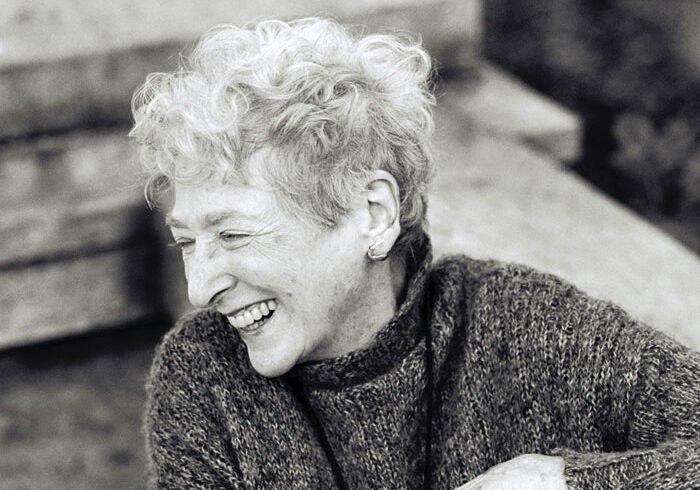
These friendships and conversations appear in the new book “Ladies’ Lunch,” a collection of short stories by author Lore Segal that were originally published in the New Yorker. Segal, 95, based the stories on her own lunches with friends, which would always turn into four o’clock tea and a drink at five. Since COVID, she meets with her group on Zoom and finds inspiration for her writing in their gatherings.  

Instead of turning her stories into a work of nonfiction, Segal decided to fictionalize her stories for “Ladies’ Lunch.”

“I think like a novelist, rather than a journalist or historian,” she said. “I let what comes to me as an idea, a feeling, a thought grow into its true shape without worrying about ‘what really happened.’”

In one poignant scene in “Ladies’ Lunch,” the women – sans Lotte – discuss how Lotte was in assisted living and acting out.

“They laughed; they were quite a long moment,” Segal writes. “They had watched their witty friend turn into the angry old person who abused her aides, irrationally – or was it rational to fight the two sons who put her into a well-run assisted living in the boonies from where – quite potty by this time – Lotte had never stopped plotting to drive herself home.”

“It shows old women mostly continuing to be themselves, and shows them discussing their losses and diminishing energies.” – Lore Segal

“It shows old women mostly continuing to be themselves, and shows them discussing their losses and diminishing energies,” said Segal. 

Later in the book, a character, Ilka, is introduced. Ilka is a Holocaust survivor from Vienna who discusses getting a pet tortoise the week of the Anschluss, when Hitler took over Austria in 1938. She talks to Lotte about what may have happened to her tortoise. 

“The three brownshirts walked in and gave us 24 hours to be out of our apartment,” she says. “I look back and I don’t see . . . the Kröterl [tortoise] didn’t come with me to Edith’s.” 

Another one of the ladies, Bridget, says, “And now… MyKroeterl38@usa.com is your email. It’s how I write to you.” 

“Yes,” Ilka says. “Now that’s my address.”

Segal borrowed Ilka from her novel, “Her First American,” and said, “she, like me, was born Jewish and in Vienna. She cannot prevent herself from reverting to her experience.”

The author was born into a middle-class Jewish family in Vienna, escaping on the Kindertransport and going to England. After she immigrated to the United States, she became a celebrated writer, releasing the widely acclaimed novel “Other People’s Houses,” which was based on a journal she kept while a refugee in England and living with a foster family. She was a Pulitzer Prize finalist for her book, “Shakespeare’s Kitchen,” and she wrote the children’s book “Tell Me a Mitzi.” She also freelanced for New York Times Book Review, Harper’s Magazine and the New Republic.

Segal still contributes to the New Yorker, most recently published flash fiction in the magazine over the summer. She lives in New York City and writes every morning for four hours. 

“I now have an aide with whom I take a brief walk on Riverside Drive,” she said. “In the afternoon, I see friends, or read, or nap or watch a movie. The day ends with the seven o’clock news.”

Currently, Segal is working on more “Ladies’ Lunch” stories. When asked why people enjoy her stories, she kept it simple. 

“I don’t know,” she said. “But it makes me happy when they do.”

Longtime New Yorker Writer Releases a Collection of Stories About Friendship and Aging Read More »

Here, You Take Her

I mentioned to my friend Goldie that our daughter-in-law Anna was leaving for the weekend and our son Jacob was to watch three-year-old Ben and seven-month-old Lucy on his own. Then, when I told her that Jacob wanted us to watch Lucy because it was a lot for him to handle, Goldie laughed, and said, “When Noah (her husband) went away, I handled four of them myself.” Fortunately, I never told her that when my three boys were little, before my wife Nancy would leave town she set up every meal and had people stop by every 15 minutes to ensure everyone was still breathing. My son Jacob takes after me.

So, from Friday afternoon to Sunday afternoon, we had little seven-month-old Lucy as a house guest. It’s amazing how fast you fall in love with the little ones, especially since you know you can return them. 

Jacob did warn us that Lucy’s brother Ben had the flu, but said, “So far, Lucy has tested negative for it.”  He then added, “Oh but by the way, she’s coughing, her nose is running, and she had a fever yesterday.”  I said, “You know that when people my age get the flu, sometimes it turns into pneumonia, and they die very quickly.” Smiling, Jacob said, “Here, take her.” Then he speedily drove off to Dave and Busters to play skeet ball with Ben. 

While we watched his car disappear quicker than mist from an atomizer, Lucy turned, looked at me, coughed, and sprayed a diseased mist directly into both my eyes, making sure whatever she was carrying went directly into my bloodstream.  

I said to Nancy, “When is her nap?”  My heart sank when Nancy said, “She just woke up.” Lucy smiled and again coughed into my face.  I told Nancy to take the baby because I needed to walk the dog. When I returned 11 hours later, Nancy was on the floor watching Lucy chew on her hand. “You sit with her. I must change my blouse because she threw up on me.” 

I sat down and said, “Hi Lucy, it’s Zayde.” She looked at me and immediately started screaming. She was so inconsolable I could barely hear the phone ringing.  I picked it up and heard, “It’s Jacob. Why is she crying? What did you do to her?” 

“I didn’t do anything. She hates me.” 

“Where’s Mom?” 

“She’s cleaning vomit off her blouse.”  

The second we hung up, Lucy got Buddhist Monk calm. Kids are evil. They do that to you on purpose. She knew he was going to call. 

Sitting on the floor, we were now playing with one of her and my favorite toys.  It’s a piano that when you hit any key, a ball in a tube floats up in the air. The piano then lights up and music plays. I said, “Lucy, please play the piano for Zayde.”  She instantaneously hit one of the keys. Then she did it two more times.  Being an artist, I can spot the genius in others.  It was at that moment that I realized she was a musical prodigy and should be enrolled at the 227-year-old Conservatoire de Paris in France. When I asked her to repeat her vigorous arpeggio for Nancy, her deep humility would not permit it.   

When Nancy said it was nap time, I told her to wake me in an hour. She said, “Lucy, not you.”  I purported, “People on Medicare also need naps.”

The first night, Nancy woke me up half a dozen times to check on the baby. No big deal, I get up that many times to pee. I’m not lucky like Lucy where I can pee and sleep at the same time.  At least not yet anyway. 

Of course, I’m not complaining. We love our grandchildren. They are exactly what the doctor ordered. They’ve given us a new lease on life, and so much to look forward to.  

On Sunday, Jacob came by with Ben to pick up Lucy. After hooking up the U-Haul with all her stuff, we kissed Lucy and handed her back in one piece.  As Jacob was buckling her in to her carseat, she coughed and sprayed her famous mist right in his face. All I could think was “You go girl”.


Mark Schiff is a comedian, actor and writer, and host of the ‘You Don’t Know Schiff’ podcast. His new book is “Why Not? Lessons on Comedy, Courage and Chutzpah.”

Here, You Take Her Read More »

Dear Tabby: Rosh Hashanah Edition

The Jewish High Holy Days are usually preceded by Jews worldwide who run into one another and exclaim, “I can’t believe it’s already Rosh Hashanah.” This incredulousness may suggest that most of us are so busy with work and family obligations that even the thought of preparing for the next Jewish holiday renders us feeling unprepared at best, and overwhelmed at worst. And most of the latest reader questions for this “Dear Tabby: Rosh Hashanah Edition” focused on how to have a stress-free High Holy Days season. If you have a question that you would like answered in this mostly useful advice column, please email deartabby@jewishjournal.com.

Dear Tabby,

I’m kind of panicking about the chagim. Is there such a thing as a stress-free Rosh Hashanah?

Thanks,

I’m Still Recovering from Passover

Dear Recovering,

In response to your question about whether there is such a thing as a stress-free Rosh Hashanah, the answer is no. Shana Tova u’Metuka!

[Correspondence continued]

So, you’re just saying “no”?

Dear Recovering (Again),

If you’re searching for a stress-free Rosh Hashanah, such a unicorn doesn’t exist. Unless you order full catering, employ a live-in housekeeper to clean your home, a nanny to keep your kids content, an ironer to remove all those wrinkles from your holiday attire (yes, such a word exists), or a personal assistant to pick up all of the holiday attire you had washed and steamed at the dry cleaners, after firing your ironer for ruining your chiffon skirt. You can plan your menu in advance (as well as shop for groceries and cook before the holidays), clean your home and prepare as best as you can, but remember that when you allot time for such important endeavors, something’s got to give, whether it’s having to devote a few less hours to work or giving up on that fantasy of preparing Martha Stewart’s Old Vienna Apple Strudel recipe. Blessed is the one who maintains reasonable expectations of oneself (and others). And one who remembers to pick up the dry cleaning 48 hours before a Jewish holiday.

Dear Tabby,

Why am I so much more motivated to make resolutions in January for the non-Jewish new year, than for Rosh Hashanah? I just thought about it and it feels a little weird. 

Thanks,

Confused in California

Dear Confused,

Don’t be too hard on yourself. Remember that you live in the United States, where making resolutions in January is the norm. Something tells me that if you lived in Israel this time of year, there would be an air of self-reflection and renewal, and that would uplift you to resolve to make better choices this coming year. I wish more Jews would reflect on their choices during Rosh Hashanah, rather than early January, because Rosh Hashanah is an accounting of the soul. I used to make many resolutions in January, but in hindsight, few of them had anything to do with how I treated others; they mostly focused on how to undo five weeks (if we’re counting Thanksgiving) of copious eating and drinking. This year, give Rosh Hashanah more head space. Even if you eat your body weight in challah, honey, brisket and desserts until Simchat Torah, at least you’ll have three months to diet and exercise before January. And by then, you’ll be way ahead of the rest of us. 

Dear Tabby,

How does a traditional cook maintain her sanity when preparing for chag, when she will be hosting multiple meals, each one with guests that observe different dietary restrictions (sugar-free, gluten-free and vegetarian)?

Sincerely, 

A Concerned Hostess 

Dear Amazing Hostess, 

For your sugar-free guests, mash bananas with almond flour, vanilla and salt, roll into balls and cook in the oven for dessert. For those who are gluten-free, buy chickpea pasta and pour a jar of marinara sauce over it, adding garlic, paprika, onions and Trader Joe’s vegetarian “meat” crumbles. Vegetarians can enjoy this as well. Most importantly, for yourself, buy your favorite bottle of wine, pour yourself a large glass, and take your first sip as soon as anyone asks if you prepared anything that complies with Ketogenic, Paleolithic or Blue Zone diets. 

May we all be inscribed in the Book of Life for a healthy, safe and sweet new year.


Tabby Refael is an award-winning writer, speaker and weekly columnist for The Jewish Journal of Greater Los Angeles. Follow her on X and Instagram @TabbyRefael

Dear Tabby: Rosh Hashanah Edition Read More »

The High Holy Days Were Made for this Moment

This year, as the High Holy Days approach, there’s more on my mind than holiday food, preparing services, or even my own spiritual life. After a summer like no other, the High Holy Days have me thinking about the biggest question we all face.

For many decades, most Jews struggled to make sense of the High Holy Days’ ancient imagery of judgment, atonement, and divine decrees. For many, it seemed hopelessly superstitious; after all, we all know that those who died in the last year were just as moral as those who made it to another Rosh Hashanah. Others came to see it as a metaphor, with spiritual but not material consequences for our actions. 

But our world has changed. Much of what appeared implausible is now all too real.

Let me set the scene:

It is a season of great consequence. A sense that life and death hang in the balance begins to emerge. The awareness that our actions can have consequences much bigger and more terrifying than we ever imagined dawns on us.

And yet, despite this growing awareness, we are largely asleep, mostly continuing to move forward on autopilot. Something else is needed to break through ingrained habit.

To rouse ourselves from this sleep — to fully awaken to the consequences of our actions — we need a very powerful alarm.

Meanwhile, very soon, a window — or gate — of opportunity will be closing. 

A very fateful closing. 

But it’s not too late! Not quite yet. The awakening and the change in direction must occur now.

End scene. Am I talking about our moment in the Jewish calendar, right before the High Holy Days? Or am I describing our moment in the climate crisis? 

Yes and yes. Point by point.

Each element of the classical High Holy Days imagery finds its counterpart in our present reality: The fateful books in which we have written our destiny with our own hands – the climate change we have wrought ourselves. The litany of fates that may await us in the year to come (“Who by fire” and so on) – the relentless stream of disasters: Lahaina and other wildfires, heatwaves, floods, intensifying hurricanes. The fear and trembling as the heavenly gates swing shut – the ticking clock and the windows of opportunity to avert worse outcomes that we keep missing. The confrontation with our own mortality – the mounting fatalities. On a collective scale, our actions really do have consequences. As recently as a decade ago, the story the High Holy Days tell could have been easily dismissed as pre-modern superstition. Now it’s a poetic description of scientific fact. 

And the spiritual tools that tradition gives us to navigate the High Holy Days are the same ones we need to make our way forward in this parallel moment of climate crisis: Cheshbon hanefesh – a thorough examination of our past behavior, a reckoning and acknowledgment of where we went wrong. Shofar – an alarm, a wake-up call that demands, in the words of the Book of Jonah that we read on Yom Kippur, “why have you been sleeping?” And the three prescribed practices that are said to avert the harshest fate: Teshuvah – returning to the path we know we should have been on all along; Tefilah – prayer and reflection; and Tzedakah – giving generously and acting in accordance with justice.

All of this leaves us with a simple but challenging task – to translate the guideposts of the High Holy Days into resolve and action. To sound that alarm. To awaken ourselves to the consequences of our collective actions, to the consequences of continuing on the path we are on. To change course and head towards a future filled with life before it is too late.

It’s real, it’s challenging, and it’s daunting. Fortunately, we have all the tools we need. They were here with us all along. The High Holy Days were made for this moment.

The High Holy Days are far from being exclusively focused on dire consequences. From the promise of Rosh Hashanah’s new year to the fresh start we are given at the end of Yom Kippur, these days, for all their serious themes, are ultimately about joy, hope, and new beginnings.

But the High Holy Days are far from being exclusively focused on dire consequences. From the promise of Rosh Hashanah’s new year to the fresh start we are given at the end of Yom Kippur, these days, for all their serious themes, are ultimately about joy, hope, and new beginnings. Our confrontation with the climate crisis can be the same. After all, what could be more joyful than waking up, joining hands, and returning to a hopeful path towards a better future, writing a new page in the Book of Life?

We know the path we need to take – collectively demanding sustainable policies, new sources of energy, and new models for our economy; adopting an attitude of humility towards a planet we did not create but are currently damaging beyond recognition. Before the gates close at the end of Yom Kippur – before the earth’s gates close on a livable future – let’s take this path. The time is now.


Rabbi Josh Weisman is the rabbi of the Temple Beth Sholom Village in Alameda County and a co-founder of the Big Bold Jewish Climate Fest. He writes, speaks, and teaches on climate and Judaism.

The High Holy Days Were Made for this Moment Read More »