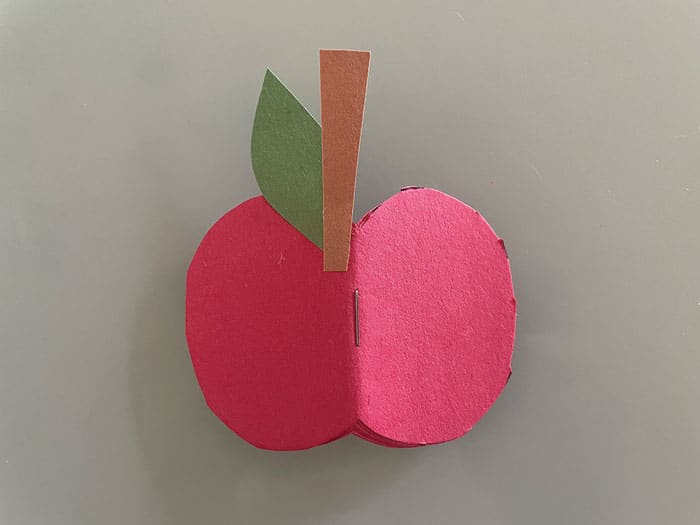
You’ve heard of the Apple Macbook. Just in time for Rosh Hashanah, here is the Apple MicroBook. It may not be a computer, but it is a cute little booklet in the shape of an apple that you can use to jot down your hopes for the new year.
Fill the pages with wishes, resolutions and refections. Then keep it handy all year long to remind yourself of the promises of Rosh Hashanah.
What you’ll need:
Red, green and brown construction paper
Pen
Scissors
Stapler
Glue stick
1. A standard sheet of construction paper is 9 x 12 inches. Cut it into eight sections of 4½ x 3 inches.
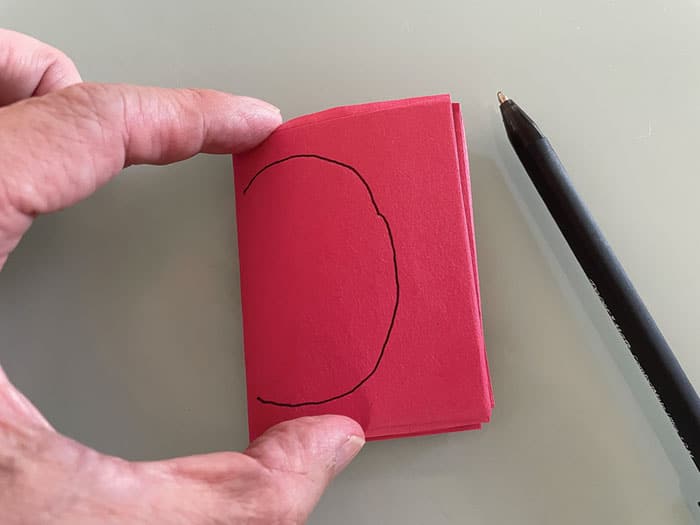
2. Stack the pieces together and fold in half. Draw one half of an apple shape along the folded side.
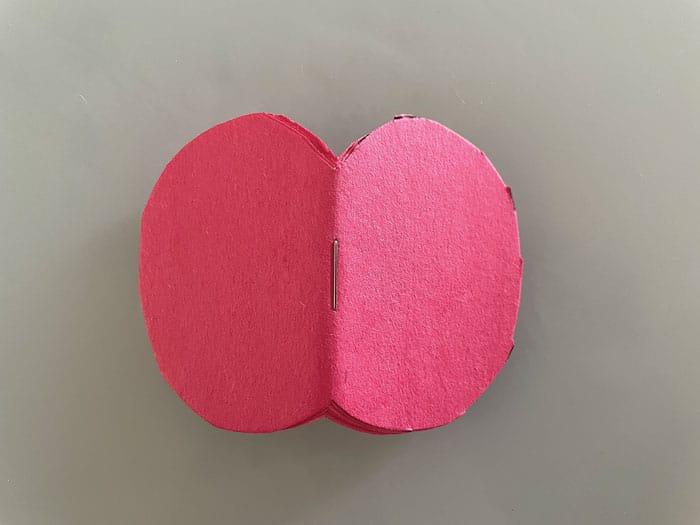
3. Cut along the line with scissors and you’ll have a folded booklet of 16 pages. Staple the middle at the fold.
4. Cut a leaf and stem out of green and brown construction paper. Attach it to the back of the booklet with a glue stick.
Jonathan Fong is the author of “Flowers That Wow” and “Parties That Wow,” and host of “Style With a Smile” on YouTube. You can see more of his do-it-yourself projects at jonathanfongstyle.com.
Sharon and I have been Instagram friends with Beth Lee from @omgyummy since 2020. In 2021, when she published “The Essential Jewish Baking Cookbook,” I immediately bought it. I loved every page. Beth really did her research. The book features many traditional Sephardic recipes such as burekas, boyos, sweet rolls, malawach, pastellicos, as well as all Ashkenazi favorites like blintzes, apple strudel, babka and rye bread. She really covers the spectrum of “essential “ baking.
We were so happy to finally meet her face to face at a Jewish Food Lab event at Wilshire Boulevard Temple. Beth immediately filled the room with her infectious energy, doing what she called her “tishpishti dance.” As I watched her make her tishpishti cake and then tasted this delicious cake, I knew that this was the dessert that I was going to make this Rosh Hashana. I’d been meaning to try the recipe forever and this was the nudge I needed.
When we reached out to Beth, she was so gracious about sharing her recipe with our readers. She was so proud that we loved her cake.
It is a super easy cake to bake and though the cake is drenched in a citrusy sugar syrup, it truly is as light as air. My kids will never touch a dense honey cake, so this is the perfect dessert to serve them.
—Rachel
Tishpishti is such a throwback to the flavors of my childhood in my grandmother’s kitchen. The nuanced layering of walnuts and almond flour. The sugar syrup with the essence of lemon and orange. The only difference between the one my grandmother would make was substituting cardamom for the cinnamon stick. I can still picture my grandmother cutting her cake diagonally into diamond shapes and placing a whole shelled almond square in the center.
This honey almond cake was originally included in my cookbook as Tishpishti, which means quickly cooked cake in Turkish. I like to describe it as a baklava cake because of the flavored syrup, nuts, and the way you serve it — sliced in the pan then slathered and dripping with citrus syrup.
—Beth
For the Syrup
1 cup water
2/3 cup honey (or 1 cup sugar)
2 Tbsp freshly squeezed lemon juice
3 strips lemon rind
3 strips orange rind
1 – 2 sticks cinnamon
For the batter
1.5 cups toasted walnuts coarsely chopped
Nonstick cooking spray
5 large eggs separated, room temperature
¾ cup sugar
1/3 cup extra-virgin olive oil
1/3 cup freshly squeezed orange juice
1 tsp grated orange zest
1.5 cups almond flour
2 tsp cinnamon
Syrup
In a medium saucepan, boil water, honey (or sugar), lemon juice, lemon rind, orange rind, and cinnamon stick over medium-high heat. Reduce the heat to low and simmer for 10 minutes to slightly thicken and reduce the liquid. Set the syrup aside to cool and continue to infuse while you make the cake.
Strain syrup once it’s cool.
Cake Batter
Prep/Preheat: Chop the toasted walnuts coarsely. A food processor can help but is not necessary. Preheat the oven to 350°F. Grease a 9-by-13- inch baking pan with nonstick cooking spray. Line the pan with a parchment liner, allowing an inch or two of overhang to help remove the cake from the pan, unless you plan to serve it directly from the pan.
Place the egg yolks in the bowl of a stand mixer fitted with the paddle attachment. Add the sugar and beat on medium-high speed for about 2 minutes, until mixture is pale yellow.
Add the olive oil, orange juice, and orange zest, and continue beating for another minute on medium-high speed.
Add the walnuts, almond flour, and cinnamon and reduce the speed to low. Beat until just incorporated and transfer to a different bowl, and wash and dry the bowl of the stand mixer.
Using the stand mixer fitted with the whisk attachment, whip the egg whites on high speed until they form stiff peaks, 2 to 3 minutes.
Gently fold a cup of the whipped egg whites into the batter to loosen it up, making it easier to fold in the rest of the whites.
Now fold in the rest of the whites until evenly incorporated.
Bake and Serve
Pour the batter into the prepared pan and bake for 30 minutes. When done, the cake will take on color almost like a toasted piece of bread and a toothpick should come out clean.
Let the cake cool for about 5 minutes, then gently slice it into squares or diamonds. If you are not serving the cake directly from the pan, transfer it to a serving platter before pouring syrup. Pour ¾ to 1 cup syrup over the cake. Serve warm, at room temperature, or chilled. You can store this cake in the refrigerator for up to a week.
NOTES
Remember to bring your eggs to room temperature for this recipe.
Be sure to use superfine almond flour and not almond meal to make this honey almond cake.
If you plan to serve from the pan you bake it in, no need for the parchment.
It’s fun to decorate the top with the cinnamon stick(s) you used in the syrup and the orange and lemon rinds.
A dollop of whipped cream (regular or non-dairy) would be a lovely topper!
Sharon Gomperts and Rachel Emquies Sheff have been friends since high school. The Sephardic Spice Girls project has grown from their collaboration on events for the Sephardic Educational Center in Jerusalem. Follow them on Instagram @sephardicspicegirls and on Facebook at Sephardic Spice SEC Food. Website sephardicspicegirls.com/full-recipes.
“Enlarge the site of your tent, Extend the size of your dwelling, Do not stint! Lengthen the ropes, and drive the pegs firm.” —Isaiah 54:2
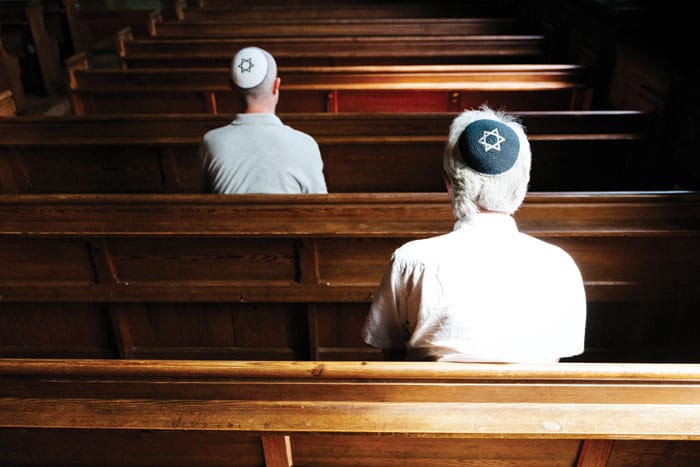
How fitting it is that this passage is included in the seven “haftarot of consolation” read between Tisha b’Av and Rosh Hashanah, when rabbis across America are indeed busy “enlarging the site of their tents,” pushing the modular walls of the sanctuary outward in anticipation of the droves of worshippers who will show up for the Jewish new year and then again, ten days later, on Yom Kippur, only to disappear again for another year.
This “flex sanctuary” model was pioneered by expressionist architect Erich Mendelsohn and made popular by the German-born modernist Percival Goodman, who designed dozens of iconic synagogues in America between 1948 and 1983.
Discussing the flex model, Goodman explained that it was “necessary to design the social parts, the educational parts and the worship hall as a unity, for all our activities shall be a hymn in His praise.”
That’s one way to put it. A more skeptical individual, however, might suggest a different motive. The moveable walls serve to conceal an embarrassing fact of Jewish American life. On the High Holy Days, the walls expand outward like the feathers of a peacock, expressing pomp, importance and grandeur. The rest of the year, they contract inwards, concealing the synagogue’s relative emptiness with a byzantine system of subdivisions.
According to a 2020 Pew Research Center study, more than a third of Conservative synagogues and a fifth of Reform synagogues have “gone out of business” in the past two decades. According to the same study, only 20% of American Jews show their faces in a synagogue at least once a month.
Some things, however, can’t be so easily concealed. Take, for instance, the fact that, according to a 2020 Pew Research Center study, more than a third of Conservative synagogues and a fifth of Reform synagogues have “gone out of business” in the past two decades. According to the same study, only 20% of American Jews show their faces in a synagogue at least once a month.
It would appear that the synagogue — that venerable old institution — is going the way of Borscht Belt resorts and mahjong night.
This is concerning because the American synagogue is, as author Marc Lee Raphael writes in his book, “The Synagogue in America: A Short History,” “the most significant Jewish institution in the life of” American Jews. If the synagogue is in decline, does that not also mean that American Judaism itself is in decline?
Facing this grim prospect, a couple questions leap to mind. The first, obviously, is “why?” Why is this happening? What spooked all of the Jews away from the synagogue?
The second question is “what next?” What can be done to reverse the trend? Should we invest in better food? In more music? Should the sermon be more political? Less? Should a rainbow flag be hung on the building? What about a hundred rainbow flags?
I began writing this piece as a way of investigating these solutions, but what I discovered when I began researching was that I was wrong about the matter at hand.
The synagogue, it turns out, is not in decline. It merely seems so because its former glory has been so profoundly exaggerated and misremembered.
The empty pews, the merging communities, and the shul closures that we see today are not actually a sign of decline. Rather, they are a sign that economic and cultural conditions no longer favor financially propping up institutions mainly for the sake of two holidays a year.
We may indeed be witnessing a decline in membership, but we shouldn’t confuse this with a decline in attendance or a decline in the synagogue’s significance to Jewish American existence. Attendance was always low. Non-affiliation was always the norm.
What’s happening now is simply that fewer Jews feel the need to pay for the privilege of not going to synagogue.
The story of the synagogue in America is almost as old as America itself and dates back to the colonial era. The synagogue of the 18th century, however, was far more than just a house of prayer. Instead, it was the center of all Jewish communal activities, including what we might consider mundane. According to Raphael, “its leaders routinely announced not only the time of prayer services and holiday celebrations but the availability (and price) of kosher meat.”
Over the next two centuries in America, the synagogue would transform “from the sole institution in which nearly all communal functions took place to an entity focused primarily on worship and on children’s education.”
The synagogue was still the center of Jewish life, but “Jewish life” was no longer synonymous with “life.”
This centrality, however, never amounted to universal appeal. “When we discuss Reform, Conservative, and Orthodox congregants in any period, we are discussing a minority of the Jews in America,” writes Raphael.
And so, when we talk about the decline of the synagogue, we might ask “decline from what, exactly?”
Despite ebbs and flows, it has always been a small but persistent minority of American Jews which shows up regularly to services.
As mentioned, a 2020 Pew study found that 20% of US Jews show up to synagogue at least once a month. In 2013, a different Pew study put the figure at 25%. While there is technically a decline here, a difference in question wording and data gathering techniques makes it difficult to directly compare the figures.
Both studies, however, show an increase in attendance from a population study of Los Angeles Jews conducted in the 1950s, which found that less than 20% attended synagogue.
Of course, that’s just one city. Still, it seems that attendance, no matter where you look or when, never cracked 50% and tended to be less than one fourth of the total Jewish population.
This is true no matter how far back one looks. “When we discuss the synagogue,” writes Raphael, “even in the eighteenth century, we are far from discussing all the Jews in the community.”
As to how the pandemic has affected these numbers, that’s still unclear. Some communities have seen a spike in attendance post-pandemic, others a decline. Most of the data on this point is anecdotal. My guess, however, is that the trend that has dominated since the 18th century will continue — somewhere between 15% and 25% attendance.
Whether or not the pandemic has created a decline in synagogue attendance, however, it has certainly added to the sense of decline—the perception that not long ago, Jews showed up more than they do today.
The data doesn’t back this up, and our sanctuaries themselves tell a different story. The “flex model” was popularized in the decades after the Second World War. This was, supposedly, the golden age of the American synagogue. Jews, like many Americans, were ditching the city and chasing a fantasy of utopia out to the suburbs where car-centric city planning gave rise to supermarkets, commercial centers, and other one-stop shops. Under these conditions, the synagogue became the one-stop shop of Jewish identity — an all-in-one house of worship/community center/school — what author David Kaufman called “the shul with a pool.”
But even in these halcyon years, the modular walls were necessary. As Rabbi Louis Binstock of Chicago observed in the 50s, “in spite of the boom in construction and enrollment, we are a bust in devout prayer and regular worship. Congregations contain more and more families, but fewer and fewer who are faithful; more pay-ers but fewer pray-ers.” In a sermon, he suggested that the “emptiness of pews” was in “inverse proportion to the rising membership rolls.”
Reversing the trend of declining memberships might be a futile effort. The typical purchaser of a synagogue membership, after all, is a young family with children, a steady income, and a permanent address. Fewer and fewer people fit this description than ever before in American history. People are more mobile than ever. They earn less than they used to. And they are more likely to live alone.
Moreover, broad cultural trends are moving in the opposite direction. According to a new book which came out this August, “The Great Dechurching: Who’s Leaving, Why Are They Going, and What Will It Take to Bring Them Back,” Americans are leaving behind their houses of worship in record numbers. The book, penned by three pastors — Jim Davis, Michael Graham, and Ryan P. Burge — focuses on Christians, but notes that Jews, as we have mentioned, are particularly likely to be unaffiliated.
As for drumming up attendance, Jewish professionals can soul-search all they want, but the truth is that for some Jews, synagogue will never be alluring. The most likely reason is the simplest. They aren’t religious. They don’t believe in God and don’t want to spend precious weekend hours praying to Him in a language they don’t understand. Making it more musical or focusing on social justice may help somewhat, but it won’t overcome the essential barrier that prayer, which is a fundamentally religious act, is not all that tantalizing to atheists, a demographic in which Jews are majorly overrepresented.
But even believers may find synagogue stultifying or boring. Even rabbinical students (like myself) might feel this way. Or perhaps it just starts too early. Or perhaps it’s too far from home.
Whatever it is, efforts to lure Jews “back” to synagogue are unlikely to succeed in the long run.
Here, the fantasy of a bygone golden age of American synagogue attendance becomes harmful. It leads us to believe that this one type of Jewish space can and should be able to reach every Jew in America when, in truth, it never has before and doesn’t need to.
If we move past this fantasy, we can focus on creating other types of institutions that actually have a chance of reaching the non-affiliated.
We might consider investing in the Beit Midrash — house of study—to the same extent that we’ve invested in the Beit Knesset — house of prayer.
As the great Zionist thinker Ahad Ha’am wrote, “We have to make the Synagogue itself the House of Study, with Jewish learning as its first concern and prayer as a secondary matter.”
There is evidence that this transformation is already taking place. New and growing institutions like the Lehrhaus in Boston, a bar/café where one can study Torah with friends or attend a lecture; and Svara in Chicago, an LGBTQ yeshiva — are both innovative examples.
coldsnowstorm/Getty Images
We might also look at Moishe House and One Table, organizations that place the social/communal dimension of Jewish life at the center of their mission, rather than prayer. For those who go to synogogue mainly for the Kiddush table and the shmoozing, these options may be a better fit.
When church was at the center of human culture, the church steeple was the tallest structure in town and placed at the very center of the settlement.
Today, our cities have no clear centers, and our skylines are pierced by countless peaks and spires. The landscape of Jewish institutions should look a little like this. No single center. Rather, places of learning for those who want to learn. Houses of prayer for those who want to pray. Movie nights, Modern Hebrew classes, book clubs, and so on.
But what about the synagogues? I’ve argued that the story of declining attendance is illusory, but the story of declining paid memberships is real.
One path forward involves rethinking the flex walls and finding other ways to be flexible with space.
As David Suissa wrote in a piece about the future of synagogues, we shouldn’t be asking “how do we save our Jewish buildings?” but rather, “how do we save our Judaism?”
Some synagogues, it should be noted, are thriving. But those that are struggling to keep the lights on may want to consider what a building-less future would look like. A number of synagogues have pioneered this model. Mishkan in Chicago is a wandering community, making camp in outdoor spaces and community member homes. Beineinu in New York does the same, renting indoor space when needed, making use of free and outdoor options when possible.
This lowers overhead, but that’s not the only reason to do it. Like parents who keep their children’s room preserved long after the kids have moved out, we are failing to honor the needs of the people who actually live in the house day-to-day. Does it make sense to design synagogues specifically for the people who come the least? Does it make sense to financially structure these institutions so that they are dependent on the contributions of individuals who only show up twice a year? This is the business model of an Equinox gym.
Instead, we should be designing synagogues — both as physical spaces and financial models — for the people who actually show up, week after week and month after month.
By congregating in smaller and potentially borrowed spaces, the synagogue can also ditch the notion that success means packing a giant building to the gills.
By ditching the flex walls and congregating in smaller and potentially borrowed spaces, the synagogue can also ditch the notion that success means packing a giant building to the gills. It can admit that it’s a small but vital institution, and start thinking of paths forward that reflect the reality of the community and its activities.
A few objections might be raised to such a proposal. The first would be that it’s not realistic. Communities are attached to their buildings and dependent upon them. Closing up shop and leaving behind the stresses of maintaining a large physical site might sound intriguing, but so does quitting your job and moving to a remote island. Intriguing or not, it’s not feasible.
For those who feel this way, I would suggest thinking about this proposal differently. The idea is not to sell off real estate impulsively. If your community can afford its building and makes good use of it, that’s wonderful. Still, we should stop understanding the health of a community solely in terms of congregation size or memberships sold. There are other important vital signs to be taken. The ratio of community members who are actively involved in lay leadership roles to those who take no active part in making the community happen, for instance. Or the extent to which community members show up for one another outside of the context of services — visiting one another when sick, or hosting each other for Shabbat dinners.
Thinking of our communities in this qualitative rather than quantitative manner would allow us to move past the hand-wringing caused by news of low membership sales or widespread “dechurching.” It would give us the ability to look at synagogues that do choose to downsize in a new light — not as communities in decline, but as communities with their priorities in order.
For synagogues that do decide to ditch their big buildings, either now or in the future, another objection is bound to be raised: What do we do with all those people who want to show up on Rosh Hashanah and Yom Kippur?
Perhaps these two holidays a year are their most important point of contact with the faith of their fathers and mothers. How can we get rid of the flex walls that have so graciously expanded all these years to make space for them?
Maybe a Hasidic teaching can help. During Elul, the month leading up to Rosh Hashanah and Yom Kippur, it is said that “the king is in the field.” God Almighty, normally hidden away from us in an elaborate palace of walls, corridors, and locked chambers, is just outside the window, standing in the high grass, beckoning us to join Him.
I suggest we take God up on this offer, grab some folding chairs, and head outside.
Matthew Schultz is the author of the essay collection “What Came Before” (2020).
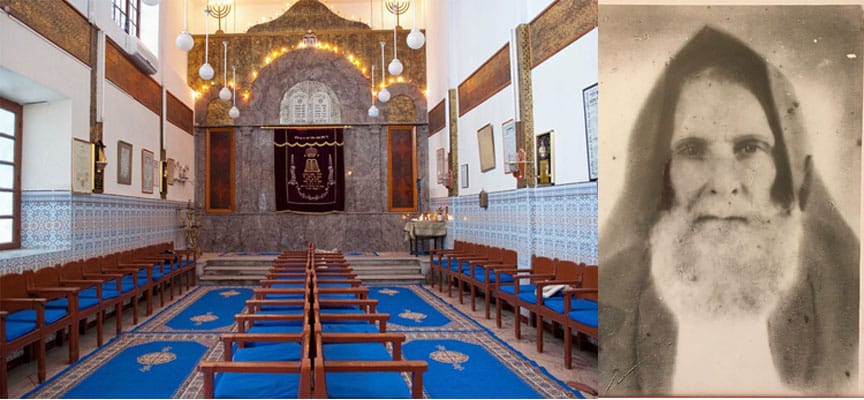
This week it’s personal. I’m devastated by the earthquake that claimed thousands of lives in Morocco, and wrought damage on some of the most beautiful historic sites in Marrakesh, including the Mellah (Jewish Quarter) where my father grew up. The streets where my father played are now reduced to rubble. I am especially saddened by the damage to the historic Slat Lazama synagogue in Marrakesh. This was the synagogue where my father grew up praying alongside his grandfather, the Kabbalist Rabbi Yosef Pinto.
The Slat Lazama synagogue was built by the “Megorashim,” the Sephardic-Spanish “exiled Jews” who settled in Marrakesh shortly after the expulsion from Spain in 1492. The “Toshavim” – the local Moroccan Jews who lived there for centuries – named this new synagogue “Slat Lazama” – the “Synagogue of the Foreigners.” For my family, “Toshavim” (local Moroccans) was “Bouskila” – my father’s father – and “Megorashim” (Spanish Exiles) was “Pinto” – my father’s mother. These two communities were distinct and separate, and in the earlier generations, a Bouskila would never have married a Pinto. At some point, a local Moroccan Bouskila boy ventured into the Spanish Slat Lazama synagogue, and that’s where he met a Pinto. My family’s blended Moroccan-Spanish heritage – Toshavim and Megorashim – came together in this beautiful synagogue.
My father’s description of the prayers in Slat Lazama was magical. “Every Shabbat,” he told me, “beautiful Andalusian tunes filled the air, chanted with love by ‘paytanim’ (liturgical singers). They weren’t there to show off their voices, but to humbly give honor to God and uplift our souls.” The synagogue was distinguished by the deep sense of reverence amongst the worshippers. “This was a synagogue for those who wished to pray, not talk, eat or gossip,” my father said. “Talking in Slat Lazama was words of Torah, spoken to us by the many sages who prayed there.”
Amongst those sages was my great-grandfather, Rabbi Yosef Pinto. The last of a distinguished line of Kabbalists originally from Spain but for many generations in Marrakesh, Rabbi Yosef Pinto was a talented “darshan” (public speaker). As a tribute to the damaged Slat Lazama synagogue, I offer one of his precious teachings about the Shofar, as transmitted to me by my father:
“There is nothing that more powerfully connects Jews than the notes of the Shofar. No matter where we’ve lived and the different languages we spoke, on Rosh Hashana, our common language, for all generations, is Tekiah, Shevarim, Teruah.”
On Rosh Hashana in Slat Lazama – a synagogue where descendants of Toshavim and Megorashim prayed together – Rabbi Pinto’s message resonated as loudly as the Shofar. His beautiful words still resonate with me today.
Tizku L’Shanim Rabot and Shana Tova
Rabbi Daniel Bouskila is the director of the Sephardic Educational Center and the rabbi of the Westwood Village Synagogue.