I interviewed Alex Fogg, THE FISH GUY, who I first met at the DEMA Dive Conference when he was a speaker about LIONFISH, an invasive species in the Atlantic Ocean and Caribbean Sea.
Alex is a marine biologist who is part of the team at Destin-Fort Walton Beach. In fact, he is one of four marine biologists on the tourism team unlike any other tourism team I am aware of. Many people talk about over-tourism and over-fishing but what do they do about it? On the Emerald Coast, they have hired top professionals like Alex to focus on protecting their reefs for fishing and scuba diving both of which I did on my first trip here May 15-18, 2023 ahead of the Emerald Coast Open.
They call Destin–the “Luckiest Fishing Village” due to its prime location, rich marine environment, and warm waters of the Gulf which support a wide variety of fish species, including red snapper, grouper, amberjack, mahi-mahi, and tuna. Several of which I caught on my very first ever fishing trip with the amazing Captain Gaby of Lady Luck Adventures! I highly recommend going out with her to experience the thrill of the catch and see the gorgeous emerald green and turquoise crystal clear waters. We saw dolphins, the pristine white sand beaches and the thriving fishing industry makes it a favored destination for anglers.
However, I would call it the smartest fishing village since they hired Alex and have focused on sustaining and supporting the waters with their many projects including local advice by mom chat, artificial reef deployments several of which I saw installed today, Lionfish restaurant week and the incredible Emerald Coast Open happening this weekend.
How can you help our planet? CATCH A LIONFISH!
The Destin Fort Walton Lionfish Emerald Coast Open (ECO) is the largest lionfish tournament in the world! In 2019, ECO had 189 participants and removed 19,167 lionfish throughout the tournament – 14,119 in 3 days! ECO gave away $48,000 in cash prizes, and over $10,000 in gear prizes. We are looking forward to an exciting 2023 tournament!
Join marine enthusiasts and conservationists this weekend May 19-21. SIGN UP HERE. This tournament is held annually on the pristine shores of the Emerald Coast in Florida and tackles the invasive lionfish species while promoting environmental awareness and sustainable fishing practices.
Lionfish, native to the Indo-Pacific region, have become a major threat to the delicate balance of marine ecosystems in the Atlantic Ocean and the Gulf of Mexico. They cause ecological imbalances, habitat destruction, harm to native fish, and negative economic impacts. To combat this invasive species, the Lionfish Emerald Coast Open encourages participants to hunt and catch as many lionfish as possible during the tournament.
The event attracts skilled divers, recreational fishermen, and conservationists from all around the region. Participants compete for prizes based on the number and size of lionfish they catch. In addition to the thrill of the hunt, the tournament also offers educational workshops and seminars on lionfish biology, ecological impact, and proper handling techniques. These sessions help increase public understanding of the lionfish invasion and provide strategies for mitigating its effects.
The Destin Fort Walton Lionfish Emerald Coast Open serves as a platform for promoting sustainable fishing practices. Participants are encouraged to utilize spears and nets to catch lionfish, minimizing harm to other marine species and the surrounding environment. The tournament also facilitates the donation of captured lionfish to local restaurants, where they are prepared and served as a delicacy, raising awareness about lionfish as a viable food source and potentially reducing their numbers through consumer demand. I ate at La Paz last night and we loved our lionfish fajitas!
By combining sport, education, and conservation, the Lionfish Emerald Coast Open serves as a beacon of hope in the fight against invasive species. It fosters a sense of community, encouraging individuals to actively contribute to the protection of marine ecosystems and the preservation of the Emerald Coast’s natural beauty.
Alex sharing his love of the sea with kids at the NY Travel and Adventure Show Jan 29, 2023
Lisa and Alex met at the DEMA Dive Show in Nov 2018 and finally went diving together today May 17, 2023 in Destin, Florida! SEA you soon under water scuba diving or on the water soon!
Want to DIVE in DESTIN? I loved the team at ScubaTech and my gear rentals were fantastic!
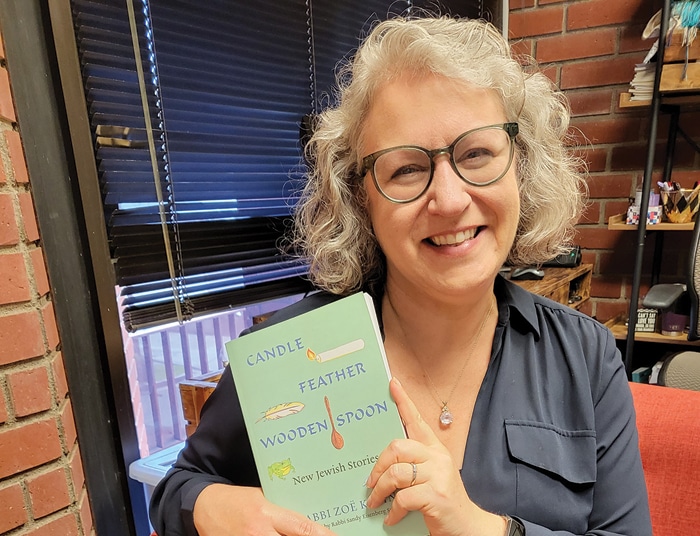
Last winter, Zöe Klein Miles, the senior rabbi at Temple Isaiah and the author of four books (the novels “Drawing in the Dust,” “The Scroll of Anatiya,” “The Goblins of Knottingham: A History of Challah” and the short story collection, “Candle, Feather, Wooden Spoon”), took a sabbatical:She spent three months in a rustic cabin in Tennessee, writing. “I went there to fulfill a fantasy,” she told the Journal, to see “if I was a full-time writer.”
It’s a question she has wrestled with in her quarter century at the West L.A. Reform congregation. In 2009, when she was asked if she considered herself a rabbi or writer, she said “While the answer is clear in my heart, sometimes it is hard to speak it. I consider myself a novelist first.”
“I come to the rabbinate with a novelist’s soul … being a rabbi is field work for stories. Being a novelist is soul work for being a rabbi. They feed into each other.”
Asked today, she answers the question differently. “I am both. Today, I would not distinguish between the two. I come to the rabbinate with a novelist’s soul.” In many ways, she explained, “being a rabbi is field work for stories. Being a novelist is soul work for being a rabbi. They feed into each other.”
But the real answer to the question came to her while she was still in Tennessee. Even though being off the grid sparked a creative flurry — she wrote hundreds of poems — by the end, she changed her flight and returned two days early. “I was ready to be back in my community.” She missed the vitality and energy from being part of a community, “that back and forth, not just having all of the ideas churning inside of yourself.” On the other hand, she was “pleased to learn I wasn’t a hermit, because I didn’t know that I wasn’t. I thought maybe, secretly, I am.”
Mixing literature and her Judaism is something that came naturally to Rabbi Klein Miles. “I always loved writing. I wanted to be a writer.” As a young girl, she used to pull her parents’ copy of “Moby Dick” off the shelf.She would start reading and think, “This guy knows a lot about whaling.” She realized she “needed to know something. In so many books the main character is a writer. I didn’t want to do that. I wanted to immerse (myself) in learning.”
“I was always fascinated by sacred literature, the beauty, the intrigue.”
That led her to study “sacred texts, ancient writing, scripture, exploring spirituality, exploring mysticism — these were journeys that inspired my love for language, for letters and for stories.” By age 10, she was reading the Bible with a dictionary by her side. “I was always fascinated by sacred literature, the beauty, the intrigue.”
Becoming a rabbi wasn’t on Klein Miles’ radar until, as an undergrad at Brandeis University, she decided to spend her junior year in Israel. While schmoozing with friends, she told them, “Gosh, if I was a man, I would be a rabbi.” While she had never met a female rabbi, and was “not the type to break through glass ceilings,” once she learned that “becoming a rabbi was possible, that was the direction I knew I needed to go.”
But, then again, Klein Miles is not the type to let roadblocks stand in her way. Early in her career, a publisher rejected her manuscript, telling her he didn’t accept fiction. She dug in, telling him that “fiction delivers messages and transmits values in a lasting way that imprints itself into our hearts and souls.” The publisher gave in. “Unlike non-fiction, stories stay with us for a lifetime.”
Looking back, the 52-year-old Klein Miles said she doesn’t wish she had taken the path of being a fulltime writer. “I know a lot of people who are. The interesting thing is, I think that I produce as much, if not more, because of the generativity of being in a community.”
Fast Takes with Rabbi Zöe Klein Miles
Jewish Journal: What favorite book is on your night table?
Rabbi Klein Miles: “Godel Escher Bach,” a fascinating book about the mind and patterns in the universe.
JJ: Your favorite Jewish food?
Rabbi Klein Miles: Cholent.
JJ: Your favorite kind of music?
Rabbi Klein Miles: I love the ‘80s. Classic rock. But my favorite is the music my children make. My younger daughter Zimra plays guitar. My son Rachmiel is a beautiful guitarist, also plays banjo and sitar. Kinneret is a professional musician – pop, jazz, New Wave, alternative music.
With the Gaza crisis in the rearview mirror, a new crisis is only a matter of time. And for an Israeli government whose lone achievement is to keep Israelis on their toes, awaiting the next eruption of political fireworks, the annual budget is an opportunity to demonstrate its unique character. What’s wrong with the budget, you may ask? The better question would be: what’s good about it? It is based on unrealistic assumptions, has little to offer when it comes to resolving long term challenges, and is especially, distinctively bold in handing what Americans tend to call “pork,” only in Israel’s case pork might not be the proper term, as the allocations in question are generously handed out to serve ultra-Orthodox interests.
The Finance Ministry warned this week that what the government intends to do is likely to weaken Israel’s economy. “Increasing the support for Yeshivah institutions and the distribution of food stamps … will increase the incentive for non-participation in employment…” the professional team explained in a letter. It is not the usual habit of professional government officials to pen a letter in which the policy of the government is interpreted in such a negative light. But the men and women of the Finance Ministry seemed to think that they have no choice. Informing the public that what the government is doing has the potential to harm Israel’s well-being is the bare minimum for an honest public servant.
What is the government doing? It is allocating many billions, some say 10, some say 12, to achieve the following things: more allocations to tens of thousands of Yeshiva students who study Torah all day rather than go to work. Distributing food stamps to communities who are eligible for local tax discount – mostly ultra-Orthodox. Eliminating the demand that schools must teach basic skills to get equal funds, thus adding billions to Haredi schools.
The government still says that it strives to increase the share of Haredi men in the workforce, but everything it does seems to counter such stated intention.
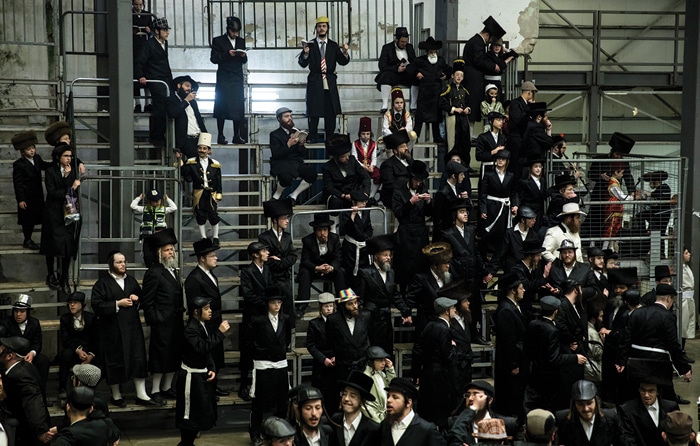
The government still says that it strives to increase the share of Haredi men in the workforce (it is currently slightly higher than 50%, compared to more than 80% in other communities), but everything the government does seems to counter such stated intention. “The increase in the employment rate of ultra-Orthodox men is the main potential for growth … from a labor-market viewpoint,” the professionals wrote. That is to say: What the government is doing is the opposite of pushing for growth. Giving more to Haredi schools “without supervision” and in which “basic skills” are not taught “will lead to a widening of the skill gap and an impairment of [Haredi] participation in the work force.”
The more one thinks about this policy the more enraged or desperate one becomes. A commentator in Haaretz, known for her no-nonsense approach to economic affairs, wrote that “the funds approved by Netanyahu are a death sentence for Israel.” And of course, it might be a little premature to wrap up and declare that the end is around the corner, and yet, the sentiment is based on evidence. If the government is actively encouraging the empowerment of the least productive sector in Israel, whose rate of demographic growth is staggeringly high, the future indeed seems bleak. A poorer Israel is going to be a weaker Israel, and a weaker Israel cannot survive in a tough neighborhood.
And we didn’t even touch the other repercussions of such a budget. The moral travesty of letting the ultra-Orthodox evade the military draft; the emotional stress of secular Israelis who might feel they have no future in their own country; the devastation of the national education system whose requirements are no longer more than a recommendation; the growing suspicion of center-left Israelis that Jewishness is something they must reject.
For a week of fighting in Gaza, it was easy to forget about all the other urgent challenges that Israel faces. What an irony – an eruption of violence gave us some room to breathe, a temporary respite from the bickering and the contentious debate that characterizes 2023 Israel.
But now it is all back: The failure – thus far – to reach a compromise concerning legal reforms; the wasteful, anti-growth budget; the bad mouthing of political rivals; the dismissive tone directed at concerned citizens; the daily reminders that Israel is headed in a direction that would make it a place that many of its citizens might consider inhabitable.
Something I wrote in Hebrew
There is nothing less useful than saying that we need to “think outside the box” about Gaza. In general, thinking outside the box is overrated … what one finds outside the box, are mainly delusional, dangerous, kooky ideas … In Gaza the players are known, the interests are fixed, the arenas do not change. One can offer many ideas about Gaza, and few practical ideas about Gaza. Applicability is a necessary ingredient. And there is another necessary element: a reasonable level of risk. That is, there is no point in proposing a creative idea that could lead to devastation.
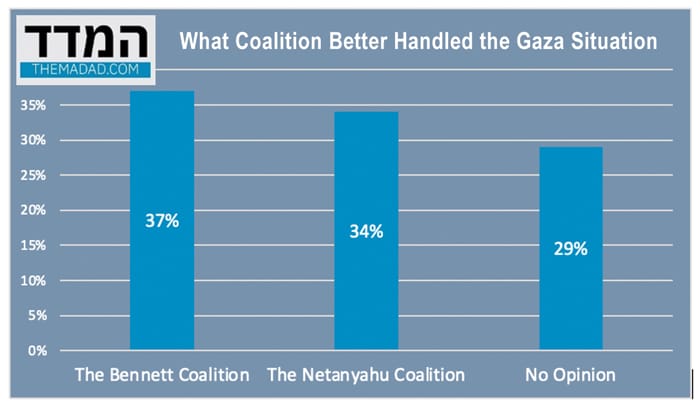
A week’s numbers
The operation in Gaza was good – politically speaking – for the coalition and boosted Netanyahu’s numbers. But it was short, and in two weeks, could be forgotten.
A reader’s response:
Erez Katz asked: “Why is Israel only bombing Islamic Jihad and not Hamas, who rules Gaza?”
Answer: It is a good question. Many experts feel that Israel is too soft with Hamas, because of its reluctance to destabilize the situation within Gaza (someone needs to be in control).
Shmuel Rosner is senior political editor. For more analysis of Israeli and international politics, visit Rosner’s Domain at jewishjournal.com/rosnersdomain.
One verse, five voices. Edited by Salvador Litvak, the Accidental Talmudist
You shall assign the Levites to Aaron and to his sons: they are formally assigned to him from among the Israelites.. – Num. 3:9
Miriam Mill-Kreisman President /Tzaddik Foundation
I heard this from Rabbi Hoffman of Denver many decades ago on Tisha b’Av in a cave near Tsfat after a group meditation. Some moments are unforgettable. To understand the relationship between the Levites, which include Moshe’s descendants and the Kohanim, Aaron’s descendants, we have to go way back to the first offerings to God, that of Cain and Abel. It was Cain’s idea to bring an offering to God, yet his was rejected and Abel’s accepted. Next, Abel meets Cain “in the field” and Cain kills him. For what? Maybe Abel gloated or said, “Next time bring your best.” Either way, he didn’t understand Cain’s pain of being rejected by God. That lack of sensitivity was his undoing. Could Abel have demanded that God accept Cain’s offering? Would that have brought peace? Maybe.
Fast forward to the Exodus. When God tells Moshe to go redeem the Jewish people, Moshe insists that God choose his older brother Aaron. So God reassures Moshe that Aaron will work with him. Even more than that, as this pasuk states, the Levites (Moshe’s tribe) are formally assigned to the Kohanim (Aaron’s tribe). This time Aaron, as the soul spark of Cain, gets the honor of the sacrificial service. And this time, God is very specific on how to bring the sacrifices to avoid any misunderstandings. And Moshe, as the soul rectification of Abel, insists that his older brother gets the honor. Now that’s brotherly love and is what builds the Beis HaMikdash, may it happen immediately.
Rabbi Nolan Lebovitz Valley Beth Shalom
On one hand, here in Numbers 3, the Torah describes a Jewish social hierarchical ritual system whereby the Levites are assigned to serve the Kohanim.
On the other hand, in Exodus 19, the Torah charges us all with being “a kingdom of priests and a holy nation.”
How do we reconcile these competing notions? Are we supposed to all live up to the standard of holiness, or relegate roles for specific individuals to carry extra responsibility?
In Ahad Ha’am essay “The Priest and the Prophet” (1893), the Zionist philosopher argued that within our people there exists a constant tension between the lofty ideals of justice and righteousness set out by our tradition of prophets, and the realistic practice of those principles within this world facilitated by our priests.
Jewish Prophecy was offered for the entire world, while Priestly Judaism was intended for our people. At the core of his writing, the only way to fulfill large societal goals alongside the dreams of the Jewish People was to harmonize them together into a Jewish national body. In this way, we can all contribute.
In our optimal self, we should all contribute to our communal holy purpose to live as a kingdom of priests. In reality, we need individuals to serve as leaders, and help guide our collective future. The Torah understood that at moments we live as our best selves and at moments we fall short. As Jews, even when we disappoint, we must strive to serve God and one another.
Rabbi Gershon Schusterman Author, “Why God Why?”
Moses and Aaron were Levites, descendants of Levi, son of Jacob, our ultimate patriarch. When the tabernacle was inaugurated, Aaron and his offspring were additionally designated as Kohanim, the priestly caste, who managed the formal service. Supporting them were the Levites who acted as the sanctuary’s custodians and musicians and served other spiritual roles for all of Israel as judges, scribes and teachers.
The Levites were unique among Israel’s 12 tribes. They did not go to war or share in its spoils nor receive an inheritance in the land nor acquire anything for themselves through their physical prowess. They were set aside to serve G-d and “teach G-d’s judgements to Jacob and His Torah to Israel.” They were G-d’s legion and “G-d blessed His legion” and provided for them saying, “I am your portion and inheritance.” G-d obligated the Israelites to tithe 10% of the annual harvests to them.
Maimonides asserts: “This arrangement is not exclusive for Levites. Any one of the inhabitants of the world [implying gentiles too] whose spirit motivates him can decide to set himself aside and stand before G-d, to know Him and to serve Him, proceeding to live justly as G-d made him. G-d will remove from his neck the yoke of the machinations which people seek, and he is sanctified as holy of holies. G-d will be his portion and heritage forever and G-d will provide what is sufficient for him in this world as He once provided for the priests and the Levites.”
Denise Berger “Miracles in Minutiae” columnist and freelance writer
The phrase “formally assigned” is a streamlined translation of some awkward language in the Torah. The original Hebrew word used is “nitunim,” from the root “natan,” which refers to giving. The awkwardness is that it’s used twice in a row “nitunim nitunim”. This sort of double syntax occurs only a few times in the Torah, and always with the intention of making a major point. The translation to “formally assigned” suggests that the Torah wants to emphasize the strictly defined role of the Leviim, who were divinely designated to help the Kohanim carry out the work of holiness. The use of the specific word “netunim” however, suggests that the emphasis is really about how the priestly class should relate to their assistants.
When someone is formally assigned to a job, there is an inherent set of expectations. In the case of the Levites, being subordinate, it might be natural for the Kohanim to consider them as servants (since on some level they were). The Torah is cautioning against this human tendency. Even if G-d has determined the tribe of Levi to be cast in this supporting role, it is a gift to the priests and not an entitlement. A gift must be appreciated, and cherished, and held as precious. It’s stated twice, “nitunim nitunim,” perhaps to convey to the highly privileged descendants of Aharon that both in the realm of thinking and in the realm of behavior, they must always remain conscious of their gift.
Rabbi Dr. Janet Madden Fountainview at Gonda Westside
Torah repeatedly singles out the tribe of Levi for spiritual leadership, the most recognizable example of which is the triad of Levite siblings: Miriam, Aaron and Moshe. Therefore, the “assignment” of the Levites to the recently-ordained Aaron and his sons carries deep and consistent meaning.
The Hebrew emphasizes the Levites’ value through our verse’s three-fold repetition of the root nun. tav. nun., intensifying the meaning “give,” to expanded meanings including “entrust” and “consecrate.”
Thus, we can understand the value of the Levites and their selection for this work: “You shall give the Levites to Aaron and to his sons: they are entrusted to him from among the Israelites.”
The meaning of “Levi” — “joined” — highlights the Levites’ union with the Kohanim in holy service, intimating the ultimate joining that is expressed in Numbers 3:45, when the Holy One states “Veyahu li ha Levi’im” — they, the Levites, will be for me,” an assertion that is repeated in Numbers 8:14: “the Levites shall be mine.”
In addition to the Levites’ selection for wholehearted, unwavering dedication to the Divine under the direction of the Kohanim, if we read “from among the Israelites” as “together with the Israelites,” we see the Levites as uniquely connected to the people, a foreshadowing of Deuteronomy 17:9-10, in which the Levites are designated as teachers of the Jewish people.
Chosen by the Holy One, poised between the priests and the people, the Levites’ spiritual leadership is defined through service, joining and being joined.
A swastika made out of feces was found in a UC San Diego bathroom wall on May 7.
It was found in the Kaleidoscope residence hall at Sixth College, The San Diego Union-Tribune reported.“We are angered and horrified by this and reaffirm that hate has absolutely no place at UC San Diego,” UCSD Chancellor Pradeep Khosla said in a statement to the community, adding that “this disturbing incident is being actively investigated by campus police, and it is our intention that those involved will be held accountable.”
In a statement to the UCSD Guardian, Associate Executive Director of Hillel of San Diego Lisa Motenko lauded the university for their “swift efforts to remove the offensive graffiti, investigate the incident and condemn antisemitism.” The Triton Jewish Leaders club similarly praised the university’s response and called on the university “to ensure that Jewish students are included in every aspect of [Diversity, Equity and Inclusion] efforts.”
Swastika, “We Are Everywhere” Scrawled on Jewish Prof’s Door at University of Delaware
A swastika and the words “We Are Everywhere” were scrawled on a poster in front of a Jewish professor’s door at the University of Delaware.
The swastika and words were found on May 8 on a poster advertising a drag show that the professor coordinated “years ago,” the Delaware News Journal reported. The university said in a statement the next day via email that they were “deeply disturbed” by what was drawn on the poster. “This incident is in direct opposition to our institutional values supporting diversity, equity and inclusion, and we unequivocally denounce this and all expressions of hate, prejudice and discrimination,” the statement read. “The University has also reached out to support those directly affected by this incident and will continue to make resources available to all members of our community.”
University Police Chief Patrick Ogden told the Delaware News Journal that they are investigating the matter as a possible hate crime.
Swastikas Found at FL School
A couple of swastikas were recently found at Cooper City High School in Florida’s Broward County.
WPLG Local 10 reported on May 8 that a group of parents volunteering at the school found a swastika under one of the tables and then found several swastikas drawn across a bathroom wall. A mother of one of the students told WPLG that various students have said that “this is common” in the school. “It’s scary, and you think you’re sending your kids to school and they’re safe, and between all the threats and all of that, and they have to go look at antisemitism on their walls? It’s terrible,” the mother said.
Principal Vera Perkovic said in a statement that the swastikas “are not representation of our school” and that students would be taking part in “No Place for Hate” programming that was planned prior to the swastikas.
Swastika, Homophobic Slur Found at MA School
A swastika and an anti-gay slur followed by a student’s name were scratched on a stall in the boys’ bathroom at Lenox Memorial Middle and High School in Massachusetts.
The Berkshire Eagle reported on May 15 that a faculty member discovered the etchings on April 28. The school has been investigating the matter, including interviewing everyone who entered the bathroom that day. Assemblies were held on May 12 addressing the matter as well.
Superintendent Howard Eberwein and Principal Jeremiah Adams said in a statement, per the Eagle: “It was clearly explained to students what has happened and why these words and images are so harmful to both individuals and our collective community. Following the assemblies, students returned to classes where they engaged in conversations surrounding what it means to be an ‘ally or up-stander,’ and how to recognize and report incidents of hate and bias.”
Report: Decline in Jewish Students Enrolling at Ivy League Schools
A May 8 report from Inside Higher Ed highlighted a precipitous decline in Jewish students enrolling at Ivy League universities.
The report noted that Jewish students currently make up 16% of the student body at the University of Pennsylvania, a decline from “about a third… several decades ago.” Inside Higher Ed later cited a 1967 Jewish Telegraphic Agency (JTA) report noting “that the student bodies at Columbia University and University of Pennsylvania were 40% Jewish. Jewish student populations at Harvard, Yale and Cornell were estimated to be between 20 and 25%, while those at Dartmouth, Princeton and Brown hovered between 13 and 20%.” Today, these numbers are 22.3% for Columbia, 9.9% for Harvard, 12.2% for Yale, 8.8% for Dartmouth and 9.6% for Princeton, per the report. Cornell and Brown actually saw increases, as their current numbers are 21.5% and 23.9%, respectively, according to the report.
Hillel Executive Director Rabbi Gabe Greenberg told InsideHigherEd that they are “deeply concerned” about the decline, as it “sends the wrong message and concretely negatively affects the lived experience of Jewish students on campus.”
India: a growing democratic nation with rich culture, contemporary architecture, beautiful estates, modern hotels, a thriving economy and a highly skilled labor force — or — India: a backward, misogynistic country with a still existent caste system, plagued by poverty, pollution, and religious differences. This is the enigma that readers will encounter when reading “Honor,” the most recent novel by best-selling author Thrity Umrigar.
Protagonist Smita is a 34-year-old journalist, born in Mumbai. Readers will learn that she and her family left India for the United States when Smita was twelve years old. The relocation happened under extenuating circumstances that are not revealed until later in the story. Her father, a university professor, was hired to teach at a college in Ohio. Smita does not have fond memories of her homeland, and although her job takes her all over the planet, she has a personal vow never to return to India. This changes when her colleague and fellow journalist at the same magazine, Shannon, is sidelined with a broken hip while on assignment in Mumbai. Smita is vacationing in the Maldives when she receives a call from Shannon with the news of her injury. Reluctantly, Smita travels to India to be with her friend, who will require extensive surgery to recover.
Shannon convinces Smita to finish her latest assignment – an article about an honor killing in Birwad, a village about 500 kilometers from Mumbai. Meena, a once- beautiful Hindu woman, had fallen in love with Abdul, a very kind Muslim man. They secretly married, and Meena went to live with Abdul on the outskirts of his village. When Meena’s two brothers and their village leader learned of her marriage, they became enraged. The “honor” of the family and the entire village had been desecrated. They needed to remedy the situation, and so one night the brothers attacked Abdul at his home. They poured kerosene over him and set him on fire. Meena tried desperately to save her husband, but she was badly burned by the flames. Abdul died, and his mother was able to bring Meena to a hospital. She survives but is badly disfigured.
At the hospital, Meena meets Anjali, a feisty human rights lawyer. Anjali decides to take Meena’s plight to the courts and try the brothers for murder. Together they try to apply the rule of law to the brothers, who plead to the judge that they were simply following the rules of their culture in order to restore “honor” to their family. Several months go by, and now the judge is about to deliver his verdict.
At this point, Shannon hands off the article to Smita, who must interview the victim, the perpetrators (who are out on bail), the lawyer, and the head of the village council. To travel to and from the village and to help her with translation, Smita is introduced to Shannon’s friend, Mohan, the handsome and highly educated son of an Indian diamond merchant. While Meena symbolizes all that is wrong with India, Mohan represents the modern, high-tech, progressive nation. He is very proud of his country and cannot understand why Smita does not share his views.Spoiler alert – readers will probably guess that romance ensues, and they will be correct.
The reporter and her companion travel to Birwah and meet Meena, her young daughter, and her angry mother-in-law. Mohan’s eyes are opened to the obscene poverty and the unhealthy living conditions of the village. When Smita interviews Meena’s brothers, both she and Mohan are unable to comprehend their lack of empathy for their sister. Call it what you may — religious extremism, superstition or just plain old racism – these are the attributes of an illiterate society who put their perspective of “honor” before the sanctity of human life.
Despite our advances in technology, communication and science, there are still those who will ostracize, discriminate against and even murder those who do not share their religious beliefs.
Let us not single out members of the less educated of India as the only society that supports this brand of religious extremism that produces misogyny, hatefulness of other religions, racism and “honor” killings. Despite our advances in technology, communication and science, there are still those who will ostracize, discriminate against and even murder those who do not share their religious beliefs.
Ms. Umrigar succeeds in showing us both sides of modern India. The novel is interesting to read. The narration sometimes changes from Smita to Meena, thus enhancing the narrative by presenting different perspectives on their contrasting lives. Readers will not want to put this book down until the very end of the story.
A journalist herself, Thrity Umrigar has written for The Washington Post, The Cleveland Plain Dealer, and other national newspapers, and contributes regularly to the Boston Globe’s book pages. She has won several literary awards.
In this riveting and immersive novel, bestselling author Thrity Umrigar tells the story of two couples and the sometimes dangerous and heartbreaking challenges of love across a cultural divide.
Paul J. Starr is a recently retired systems analyst who has lived his entire life in Montréal, Canada. On Sunday mornings he is “living the dream,” hosting a two-hour Internet radio show featuring music from the 50s and 60s called “Judy’s Diner.”
Rabbis are thoughtful people. They consider every detail of their calling at the most granular level — working on High Holy Day sermons for months, debating seemingly minute variations in liturgy, and carefully searching out the perfect words to address the most pressing and sensitive issues facing the community.
There is one area of practical rabbinics, however, that has received seemingly no consideration, and this dereliction of duty is a matter of grave significance for our communal and our spiritual lives.
I am speaking about lighting, and I will no longer keep silent.
It is not as if synagogue aesthetics have been ignored. Skilled architects are often brought in to create beautiful buildings. The Ark and the Bima may well be exquisite works of carpentry. Why, after all of that effort, would we fill our sanctuaries with the garish white light of buzzing, fluorescent tubes?
It is not as if synagogue aesthetics have been ignored. Skilled architects are often brought in to create beautiful buildings. The Ark and the Bima may well be exquisite works of carpentry. The walls may be covered in gorgeous tapestries and works of art.
Why, after all of that effort, would we fill our sanctuaries with the garish white light of buzzing, fluorescent tubes?
Fluorescent bulbs give off an icy bluish light that is the very opposite of heimish. It is the chosen light of all of our modern world’s most terrible man-made hells — gas station bathrooms, grocery store dairy aisles, the DMV. It is known to be a strain on the eyes and its low-frequency flicker (not noticed consciously) can cause migraines. Above all — it is ugly, and makes us ugly as well.
Overhead lighting is also a problem. Photographers know that the best time to get a picture is during the “magic hour.” Either in the morning or the evening, the magic hour is that golden time of day when the sun streams in at an angle. It gives everything a beautiful, warm glow. At this time of day, shadows grow longer. This mixture of warm orange light and deep shadow creates depth.
Contrast this with high noon, when the sun is directly overhead. All shadows disappear, making things look washed out and flat.
When we light from overhead, we are creating an artificial high noon in our synagogues. We would be better advised to light from a variety of sources including hanging lamps, floor lamps, and candles.
This weekend, I attended Kabbalat Shabbat at a gorgeous synagogue that happened to be lit like a dentist’s office. Rabbi Art Green was visiting, and he gave a beautiful sermon about the “extra soul” that we receive on Shabbat.
According to Rabbi Green, this soul is always with us, but it is scared away during the rest of the week by the frantic pace of our lives.
I would like to suggest that this soul is also scared away by harsh lighting. What philosophers call the disenchantment of the world — the mass abandonment of belief in the supernatural — coincides historically with the illumination of the world—the transition from candle to gas light to light bulb.
This is no coincidence. In overly bright places, we become insensate to the spiritual. This is why our prehistoric ancestors enacted their rituals by torchlight in the darkest caves. This is why our more recent ancestors in Jerusalem sent the High Priest into the darkness of the Holy of Holies with only a pan of glowing embers.
Choose warm light over cool. Turn off the ceiling lights. Create a lightscape that is diverse, containing areas of glow and pockets of shadow.
Nocturnal Jewish rituals like Kabbalat Shabbat should not be conducted under the violent glare of an artificial noon. Rabbis and synagogue board members, I implore you — buy lamps and lampshades for your sanctuaries. Choose warm light over cool. Turn off the ceiling lights. Create a lightscape that is diverse, containing areas of glow and pockets of shadow.
If you have fluorescents, just get rid of them.
They are scaring the shechina away.
Matthew Schultz is the author of the essay collection “What Came Before” (2020)
There are subjects that are too uncomfortable to talk about or even consider. One of them must surely be whether any of us carry genetic diseases that may be transmitted to our offspring. Who wants to know such things? And what can we do about it even if we knew?
That also was my take when I encountered this subject over a decade ago. Because one of our advertisers is an awareness and educational nonprofit called GeneTestNow, which we helped launch and market, I had to do a deep dive on the field itself.
What first caught my attention is that this was unlike any cause I had encountered in the Jewish world. Fight antisemitism? Sure. Genetic screening? This was something else entirely.
It’s one thing to ask people to donate to a Jewish institution or get involved as a volunteer. But to ask people to get screened for genetic diseases is a whole other type of ask. No one likes to be told what to do, especially when bad news might be part of the outcome.
But it was precisely this unique challenge that drew me to the cause. More importantly, it was also the realization that people have little to lose and much to gain by getting screened.
What is there to gain? Above all, valuable information. Especially if you’re planning on having children, getting screened allows you to assess the risks of having a child with a genetic disorder.
Neurons in Tay-Sachs disease KATERYNA KON/SCIENCE PHOTO LIBRARY/Getty Images
A brief primer: Most carrier screening is for recessive conditions. It takes two gene mutations — one inherited from the mother and one inherited from the father — for a person to inherit a recessive condition. If a person carries only one genetic mutation for a condition, he or she is known as a carrier. Carriers often do not know that they carry a mutation because it does not impact their health.
Today, thanks to the advances of science, you now can be tested for more than 200 diseases, both those common in those with Jewish ancestry and among the general population.
If both parents are carriers of a recessive condition, there is a 25% (1-in-4) chance that their child will be born with the condition. Thanks to the advances of science, you now can be tested for more than 200 diseases, both those common in those with Jewish ancestry (Ashkenazi, Sephardic, Mizrahi, etc) and among the general population.
Is this information worth getting? Here’s how a consultant with GeneTestNow, Daniella Kamara, LCGC, MS (Licensed certified genetic counselor, UCLA David Geffen School of Medicine), explains the value of carrier screening:
“Even though the information can be difficult to hear, it gives you that power to make decisions the way you want to make them. It gives you more control than just shooting into the dark.”
“Even though the information can be difficult to hear, it gives you that power to make decisions the way you want to make them. It gives you more control than just shooting into the dark. The idea is that you won’t be thrown a curve ball and thrown into this crisis that can be very emotionally taxing. The flip side is that you can have this testing and find out you and your partner are not carriers for the same condition and you can have peace of mind. It solves the mystery and you can have a stress-free family planning process.”
The big question, of course, is: What happens if both parties test positive?
“If both partners are positive for the same disease,” Kamara adds, “there’s usually a 25% chance that the child of the pregnancy will be affected by the disease, and a 75% chance that the child of the pregnancy is healthy. So some couples are very comfortable with those odds and they choose to proceed to conceive naturally without intervention.
“But the idea is that they’re informed and they’re making that conscious decision. Other couples are not as comfortable with those odds and they choose to use some form of assisted reproductive technology, something like using In Vitro Fertilization (IVF) and Preimplantation Genetic Testing-Monogenic (PGT-M) to actually screening embryos and selecting those embryos that do not have the condition to be implanted in the woman.
“The bottom line is having that information allows both to make an informed decision, so regardless of which path they decide to take, they thought about it, they know what they’re getting themselves into, and they make that choice. It allows for these couples to control for these curveballs that can be very emotionally tolling on a couple and on a family when it comes to genetic conditions and unexpected issues in pregnancy.”
In other words, like a lot of things in life, it’s better to know than not know.
Over the years, the Ashkenazi community became the poster child for genetic screening because much of the screening started with Tay-Sachs.
Over the years, the Ashkenazi community became the poster child for genetic screening because much of the screening started with Tay-Sachs. It was common to hear, “Oh yes, before I got married they took my blood and tested me and my partner for Tay-Sachs.”
There are certain genetic conditions that are more common in Persian, Mizrahi and Sephardic Jewish communities.
The frequency and tragedy of Tay-Sachs was really brought down with carrier screening, so it was quite an accomplishment in the Jewish community. But as Kamara says, “on the flip side, it’s also given people of other ancestries a bit of ‘Oh I don’t need to do that because I’m not Ashkenazi,’ which is not true. There are certain genetic conditions that are more common in Persian, Mizrahi and Sephardic Jewish communities. They’re different conditions than the ones we see in the Ashkenazi community but they absolutely occur in a higher frequency in those communities than in others.
These days, we see a lot more mixed individuals — half Mizrahi, half Sephardic, Sephardic individuals marrying Ashkenazi individuals. Just because you’re not Ashkenazi doesn’t mean you can’t be a carrier for Tay-Sachs. There’s always that chance, and even in French Canadians there’s a very high carrier frequency for Tay-Sachs. As Kamara warns, “Because of the genetic diversity that we have today and the mixes that we’re seeing, screening is really important for anybody that’s planning on having children, regardless of background.”
In recent years, three developments have accelerated the movement to get screened. First, the Jewish nonprofit initiative JScreen has made it affordable and convenient. Instead of the hassles of doing a blood test, JScreen mails you a kit to get a saliva sample, after which a certified genetic counselor provides you results with a telehealth appointment.
The second development is the rise in direct-to-consumer tests like 23 and Me, which used discovery of one’s ancestry to demystify the whole field of gene screening. People got into the habit of getting screened via home kits. However, as Kamara points out, people need to understand the limitations of these direct-to-consumer ancestry tests, as people should not make medical decisions based on them. “A lot of people will say, ‘I already did 23 and Me, I don’t need any more testing,’ but the fact is they’re not comparable in that way at all.”
Third, hundreds of rabbis and spiritual leaders have gotten behind the idea. Many rabbis now include genetic screening on their “check list” when assisting couples preparing their weddings. Indeed, we timed this article to coincide with the start of the wedding season.
One rabbi who has been highly supportive is Rabbi Dr. Elliot Dorff, who is an author, professor of law and theology and a renowned bio-ethicist. At a panel on the subject, he explained the value of screening:
“The ultimate ethic is that we have a duty to preserve our health. That goes back to something very fundamental in the Jewish tradition, mainly that my body belongs to God. And I have fair use of it during my life. It’s as if you were renting an apartment. You have fair use of that apartment but you may not destroy it, you may not harm it. As a matter of fact, you have to take reasonable care of it.
“We have a fiduciary duty to God to take care of our bodies, and that means preventive care as well as curative care.” – Rabbi Dr. Elliot Dorff
“And in the same sort of way, the way that the Jewish tradition understands us is that we have a fiduciary duty to God to take care of our bodies, and that means preventive care as well as curative care. And in the case of genetic testing, this is one way to try to make sure that the children that we have are healthy and are not burdened with a genetic disease.”
The rabbi added:
“You should also not be worried about being tested for fear that you are going to somehow be looked at as damaged goods in terms of things like marriage. Most of us are carriers of something. But even if you are a carrier of one of the more prominent diseases, that does not at all mean that you cannot have children that are perfectly healthy … and therefore you really have a duty to the future generation to do what you can to prevent illness, and genetic testing is a critical way of doing that.”
Perhaps the most sensitive area is when we talk about “healthy babies.” All babies are created in the image of God, healthy or not. All babies are equally loved, healthy or not. That’s not the point. The real issue is: What can future parents do to minimize the risk that their children will have a life-altering disease? Screening helps to put the odds on your side.
Given the sensitivities, how do you talk to your family about genetic conditions?
“It can be a very difficult thing to discuss with family members,” Kamara says. “Oftentimes, if there is a history of specific diseases it can be a very sensitive topic for some people. I think the best way to start is to ask questions. Be interested in who came before you. Ask your grandparents, your parents, your aunts and uncles about the different relatives, and through that storytelling it’s easy to get into the conversation about people’s health, about the history of the family, what their lives were like.
“That sort of conversation in the form of a narrative can be a more helpful way to go about asking more difficult questions. Also, explaining to family members why it’s so important to have those conversations. So the idea that keeping the family history alive and keeping everybody well informed is very important for future generations.” The family tree worksheet attached to this article is a good starting point.
We often talk in the Jewish world about what we pass down from generation to generation. Today, valuable information about our genes, and the health benefits that can come from it, can now be added to the list.
We often talk in the Jewish world about what we pass down from generation to generation. Traditionally, we have focused on things like Jewish values, a strong Jewish identity, Jewish education, a connection to Israel, a mission to help repair the world, and so on.
Today, valuable information about our genes, and the health benefits that can come from it, can be added to the list.
To learn more about genetic carrier screening, please visit genetestnow.com
Disneyland is known as the happiest place on earth. And I’m starting to understand why. Happiness is a fleeting, temporary emotion. Imagine the rapid high experienced during a rollercoaster ride. The thrilling turns, an exhilaration felt as a fear is conquered. Yet, the ride ends almost as soon as it begins. There’s an immediate need to either go on the ride again or try out a new one. The happiness comes and the happiness goes.
As you enter the Disneyland park, there is a caution to leave today behind. Unlike the nostalgia of the past and fantasy of the future, today comes with responsibility, realistic expectations and an inability to hide under the covers. Today arrives whether we like it or not.
But the embracing of today allows for something better than fleeting happiness. Embracing today allows for the building of reservoirs of joy, compassion, and strength. Today is living through disappointments, loving through frustration, growing through obstacles, opening the eyes to wonder, awe, beauty and blessing. It is the holding of today that enables us to be present and engaged in God’s glorious world.
Modeh Ani Lifanecha, Dear God, let us not leave today behind as we look towards the past or the future. Be present, be mindful, be grateful for what these hours offer. It will be how we live today that shapes how we experience tomorrow.
Disneyland may be the happiest place on earth. But today is much more: a gift from God filled with endless possibilities.
Shabbat Shalom
Rabbi Nicole Guzik is a rabbi at Sinai Temple. She can be reached at her Facebook page at Rabbi Nicole Guzik or on Instagram @rabbiguzik. For more writings, visit Rabbi Guzik’s blog section from Sinai Temple’s website.
The Gemara cites additional homiletic interpretations on the topic of the revelation at Sinai. The Torah says, “And Moses brought forth the people out of the camp to meet God; and they stood at the lowermost part of the mount” (Exodus 19:17). Rabbi Avdimi bar Ḥama bar Ḥasa said: the Jewish people actually stood beneath the mountain, and the verse teaches that the Holy One, Blessed be He, overturned the mountain above the Jews like a barrel, and said to them: If you accept the Torah, excellent, and if not, there will be your burial. Rav Aḥa bar Ya’akov said: From here there is a substantial caveat to the obligation to fulfill the Torah. The Jewish people can claim that they were coerced into accepting the Torah, and it is therefore not binding. Rava said: Even so, they again accepted it willingly in the time of Ahasuerus, as it is written: “The Jews ordained, and took upon them, and upon their seed, and upon all such as joined themselves unto them” (Esther 9:27), and he taught: The Jews ordained what they had already taken upon themselves through coercion at Sinai.
Exod. 24:7 states:
ז וַיִּקַּח סֵפֶר הַבְּרִית, וַיִּקְרָא בְּאָזְנֵי הָעָם; וַיֹּאמְרוּ, כֹּל אֲשֶׁר-דִּבֶּר יְהוָה נַעֲשֶׂה וְנִשְׁמָע. 7 And he took the book of the covenant, and read in the hearing of the people; and they said: ‘All that the LORD hath spoken will we do, and hear.’
The word “catchpenny” alludes to Henny Penny in “The Sky is Falling,” an iconic European folk tale about a chicken who believes that the world is coming to an end. The phrase “The sky is falling!” voices a misconceived threat in the story, and inspired a common idiom indicating a mistaken belief that disaster is imminent.
Gershon Hepner is a poet who has written over 25,000 poems on subjects ranging from music to literature, politics to Torah. He grew up in England and moved to Los Angeles in 1976. Using his varied interests and experiences, he has authored dozens of papers in medical and academic journals, and authored “Legal Friction: Law, Narrative, and Identity Politics in Biblical Israel.” He can be reached at gershonhepner@gmail.com.