If your brother becomes destitute and sells some of his inherited property…
– Leviticus 25:25
When I was growing up
I barely owned a stapler.
When I was growing up
I blessed the refrigerator if
it had anything in it.
When I was growing up
we rented our land from
people whose names
we did not know.
When I was growing up
we would take breaks
from paying the unknown
and then put our possessions
in boxes and move to new land.
When I was growing up
a lost nickel or an ice cream cone
fallen to the ground, felt like
destitution.
When I was growing up
crossing an ocean or even
a state line seemed like something
only kings got to do.
When I was growing up
someone cutting in line in front of me
felt like theft.
When I was growing up
I walked and walked because
there was no other way
to get there.
When I was growing up
I eventually got there.
I eventually found all my
missing dimes.
I eventually crossed borders
and continental divides.
I eventually bought ice cream
whenever I wanted.
When I was all grown up
I made every effort to remember
whose hands pulled me this far
and what it was like
before I got here.
I believe there should be a regulated right to abortion. The fact that this is simultaneously America’s majority opinion yet wildly controversial shows how irrational our politics have become.
But while I favor abortion rights, I agree with Supreme Court Justice Samuel Alito’s leaked draft opinion that Roe v. Wade was wrongly decided. The furious reaction to this conclusion reveals our decaying understanding of and commitment to liberal democracy.
The legality of abortion should be our starting point. There are many reasons a woman might choose to have an abortion—rape, incest, fetal deformity, youth, maternal health, economic straits, “not ready to have a child” and others. These reasons are entitled to society’s respect, because we respect the mother’s autonomy. A woman should be able to decide whether to bear children. “My body, my choice” is the sort of philosophy a free people should embrace.
But not always.
For example, polio, measles, tuberculosis and other terrifying diseases are contagious. If you’re infected, what you do with your body affects the public at large. Thus, public health considerations may lead governments to override “my body, my choice” by requiring vaccinations to prevent epidemics of crippling, lethal diseases.
Similarly, “my body, my choice” is an insufficient moral or legal principle for governing pregnancy because the mother’s body contains another person, or potential person, within her. The rights of the fetus or unborn child must be considered.
A common retort is that the fetus or unborn child is not a “person,” and therefore cannot have “rights.” At the end of this logic lies the conclusion that abortion is permissible, for any or no reason, up to the moment of birth. But I see no moral difference between a child the moment before birth and the same child the moment after. The vast majority of even pro-choice Americans reject this extreme position.
Thus, the right to abortion, like all rights, is subject to legal oversight. In my view—the majority view—fewer protections should be given to the fetus or unborn child in earlier stages of a pregnancy. But as the pregnancy progresses and the fetus’s capacity to survive outside the womb increases, the fetus should have more protections and rights. However, when the pregnancy threatens the life or health of the mother, even late-term abortions are justified and perhaps even required.
Roe v. Wade is, overall, good social policy because it largely tracks these principles. Had Roe been passed by Congress or state legislatures, I would support it. But good social policy is not necessarily good constitutional law.
A liberal democracy is first of all a democracy. Public policy issues are debated and enacted in the legislature, where compromises are often required to achieve a workable majority to pass a bill. In this way democratic, majoritarian legitimacy is maintained.
However, a genuinely liberal democracy is also a rights-based government. Legislative majorities can’t revoke or degrade certain rights because they are enshrined in the Constitution. If a law, however popular, attempts to violate a constitutional right, the courts declare the law invalid.
Which rights are in the Constitution, then? Certainly, the ones that are explicitly stated—freedom of speech, freedom of religion, trial by jury and so on.
So we arrive at the crucial question: What about rights that are not explicitly stated in the Constitution? Judicial recognition of implicit rights creates a serious problem for democracy: If the Constitution is a magic lamp that grants new rights whenever the judiciary rubs it, judges become unelected, unaccountable and irreversible super-legislators. We consequently become a less democratic nation.
The Supreme Court’s answer to this problem is that the Fourteenth Amendment’s Due Process clause does contemplate unmentioned rights, but only those that are “deeply rooted in this Nation’s history and tradition” and are “implicit in the concept of ordered liberty.”
Our deeply-held conviction that abortion should be legal in most instances does not itself make abortion a constitutional right.
As Justice Alito explains at length in his leaked draft opinion, abortion fails this test. Roe v. Wade does not convince. Then-Yale Law Professor John Hart Ely wrote in 1973 that Roe was “not constitutional law and gives almost no sense of an obligation to try to be.” Our deeply-held conviction that abortion should be legal in most instances does not itself make abortion a constitutional right. If we want abortion to be protected by the Constitution, we must amend the Constitution.
Should the Supreme Court overrule Roe v. Wade, abortion rights will not immediately disappear. Congress will consider abortion-rights legislation. Some states will strengthen their protections of abortion by statute or even in their state constitutions. In short, normal democratic politics will resume.
It is true that the prospect of Roe’s demise has led some Republican-led state legislatures to enact truly hideous laws in order to make abortion essentially impossible to legally obtain at any point during pregnancy. We are rightly enraged at these unreasonable attacks on women. But the dawning post-Roe era means we won’t be able to rely on the courts to secure abortion rights. As is appropriate in a liberal democracy, we will have to fight anti-abortion extremism by political means—lobbying, demonstrating and, above all, voting.
Paul Kujawsky is a Los Angeles appellate attorney.
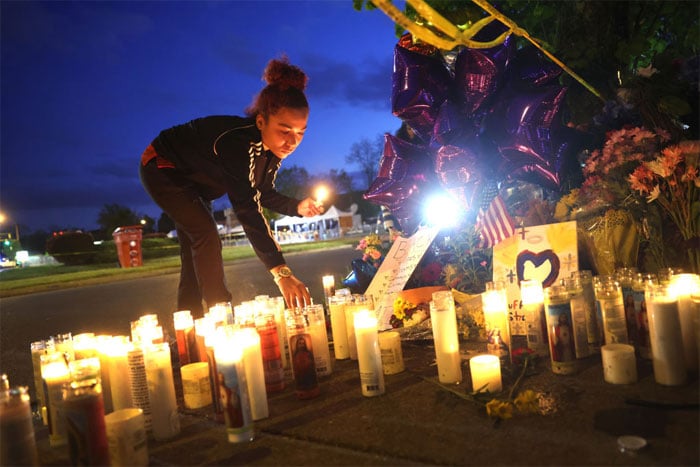
In what has been called the “Buffalo Massacre,” on May 14, 2022 18-year-old white college student Payton Gendron shot over a dozen people, nearly all black. Ten have died. Despite massive coverage, politicians and commentators are mostly getting the story wrong.
No matter how you look at it, this brutal act was horrific. Beyond the immediate victims, the shooting has spread terror throughout America, especially in Buffalo’s Black community.
The massacre was surely “motivated by race,” as many have argued—and by white supremacy, as New York Gov. Kathy Hochul specified. Gendron chose the crime scene for its high concentration of Black people. His anti-Black racism was real, reprehensible and tragic.
But there is more to this story than meets the eye. The Buffalo Massacre is not just about anti-Black racism, white supremacy, or the so-called replacement theory.
Reflecting a widespread but incomplete understanding of Gendron’s crime, Hochul pledged, “Mark my words: we’ll be aggressive in our pursuit of anyone who subscribes to the ideals professed by other white supremacists, and how there’s a feeding frenzy on social media platforms, where hate festers more hate,” she said.
But this misunderstands the problem.
Gendron explained his motivation in a manifesto. He says he targeted the Black community, because they present numerous, convenient, “soft” targets. This is a disgusting way to talk about human beings. But the point is that he had more targets in mind, beyond the Black community.
The Buffalo victims were not the sole source of Gendron’s hatred. Nor do they represent the whole “problem” Gendron sought to solve.
Without diminishing the horrors of Buffalo, we need to understand that this crime fits a pattern. Gendron chose Black victims, but his loathing ran deeper.
Like other recent mass-murderer—from all parts of the political spectrum—Gendron was driven by an age-old conspiratorial hatred.
In his manifesto, Gendron wrote, Jews “are the biggest problem the Western world has ever had …They must be called out and killed.” In Gendron’s warped view, Jews are orchestrating a global system in which racial minorities are taking public funding and usurping roles previously held by white Christians. He drew these ideas from “replacement theory.” That theory, however, is not fundamentally what is at issue here.
The Buffalo Massacre is the third major, multi-victim crime this year in which antisemitic conspiracy theory played a central role. In all three cases, the antisemitic element has been ignored, downplayed or misunderstood. And yet the failure to grasp this problem has endangered members of all communities.
The scapegoating of Jews for societal ills has led to violent crimes against Jews, against people thought to be part of Jewish conspiracies, against those living or traveling near Jewish neighborhoods, as well as against members of other targeted groups.
The day before the Buffalo Massacre, accused Brooklyn Subway Shooter Frank James appeared in court for firing his handgun 33 times on a crowded subway train. James had posted a Facebook video that castigates Jews while showing photos of Adolf Hitler and images of Jewish Holocaust victims. “This is gonna be about Jews and my personal relationship with Jews.”
Like Gendron, James sees Jews as the center of a system that abuses persons like himself. James, however, is no white supremacist. In his case, antisemitism was laced through an ideology of black supremacy. Like Gendron, James chose victims who were not primarily Jewish, yet Jew-hatred rendered his worldview lethal.
In January, Malik Faisal Akram, a British Pakistani man, entered a Colleyville, Texas, synagogue and held a rabbi and his congregants hostage to demand freedom for imprisoned terrorist Aafia Siddiqui— a convicted terrorist who dismissed her legal defense team because her lawyers were Jewish and who wanted jurors to take DNA tests to make sure they were not Zionists. “Study the history of the Jews,” Siddiqui once said. “They have always back-stabbed everyone who has taken pity on them and made the ‘fatal’ error of giving them shelter.” Nevertheless, the FBI initially failed to understand the antisemitic character of this event.
Yet their ideas were unified and made murderous by the same central principle: the age-old conspiratorial fantasy that Jews are an all-powerful cabal who are responsible for all the world’s evils.
Gendron, James, and Akram represent three different races and three different mindsets: white supremacist, black supremacist, and radical Islamist. Yet their ideas were unified and made murderous by the same central principle: the age-old conspiratorial fantasy that Jews are an all-powerful cabal who are responsible for all the world’s evils.
The end-game for this ideology is genocidal. Gendron speaks for genocidal antisemites of all stripes when he calls for a war between Jews and non-Jews. “The real war I’m advocating for is the gentiles vs the Jews,” he wrote.
In the meantime, no one is safe from these criminals. Some perpetrators, driven by antisemitism, choose Jewish targets, as in Poway, California, or the Pittsburgh synagogue shooting. In other cases, they choose targets who are not Jewish. That is because antisemitism is commonly at the core, and it serves to bolster and metastasize, other forms of hate, including anti-Black and anti-White racism. Antisemitism is also often the first sign of a deteriorating society.
To prevent the next Buffalo Massacre, the next Brooklyn Subway shooting, the next Colleyville hostage-taking, we need to grasp that what unites all of these criminals in murderous ambition is the all-encompassing global ideology of antisemitism. We must confront that evil, and fast, or we will have many more bodies to bury.
Marcus is founder and chairman of the Louis D. Brandeis Center for Human Rights Under Law and author of The Definition of Anti-Semitism. He served as the 11th Assistant U.S. Secretary of Education for Civil Rights.
One verse, five voices. Edited by Salvador Litvak, the Accidental Talmudist
If your brother becomes destitute and his hand falters beside you, you shall support him [whether] a convert or a resident, so that he can live with you.
–Lev. 25:35
Bracha Goetz Author of 40 Jewish children’s books
All Jewish people are considered our brethren. We are in the same extended family, coming from the same foremothers and forefathers, sharing an amazing heritage. Even though we may be an argumentative bunch, and even though we have been scattered around the world for thousands of years, when one of our siblings is suffering, we still care.
We feel a part of the pain being experienced and we reach out our hands, which may be stronger than our siblings’ right now. We provide support whenever possible to help them live again with dignity.
Rabbi Lord Jonathan Sacks, of blessed memory, told a joke about an advertising campaign in New York in the 1980’s. “You have a friend in the Chase Manhattan Bank” was a popular slogan on many big signs in Manhattan. At the bottom of one, an Israeli had written, “But in Bank Leumi, you have mishpacha!”
Our Torah’s directives are deeply embedded within us. We continue to respond to the pain of faltering family members, no matter how far away they may be, since we are, in truth, one single entity.
Hitler said that the Jewish people brought two things to the world, circumcision and conscience. He despised both. He was a social Darwinist who believed in survival of the fittest, and that helping the poor and struggling weakened mankind. You don’t find this in the animal world, so why should it exist in the human world? The Holocaust was part of his solution to the problem he perceived.
Well, if you look at man as nothing more than an animal, then such a perspective is understandable. But the Torah does not say that animals were made in the image of God, as it does concerning man. As physically similar as we might be to non-human beings, we are completely different when it comes to spiritual attributes.
Animals are instinctual; creations pre-programmed to act in certain ways for the sake of survival and whatever other purpose they might serve in the greater scheme of things. Humans are also quite instinctual, and when we allow only our instincts to guide our responses, we act like animals.
But we have a higher level of soul that allows us to rise above our selfish animal instincts, in order to be selfless. When we care for others as much or even more than ourselves, we don’t just do a nice thing. We do the human thing, the godly thing, and that helps us as much, if not more, than the people for whom we are doing the kindness.
Lt. (res) Yoni Troy Counselor, Beit Hatzayar for At-Risk Youth
G-d commands us to treat everyone as brothers. We must help whoever falters, no matter how different they might seem.
This verse describes my defining mission as an officer in the IDF Reserves. I must build a unit out of people from the different corners of Israeli society, rich and poor, religious and secular, Jewish, Druze, and Christian. Because we only meet periodically in the Reserves, this task becomes even harder.
The only way to survive in the military is by knowing that we all, as soldiers, are looking out for each other. You start creating solidarity by opening your own mind and heart. On the outside, we may look and act different, but, digging deeper, we realize how similar we are.
Ultimately, our words and wishes must translate into practical actions.
To achieve this, as acommander, I start with the smallest things. We run together. No one leaves until all have finished their tasks. Those little yet difficult actions lead to bigger ones. Eventually, the soldiers realize the importance of this solidarity and form the unit we need. That’s why the verse begins with calling the destitute person “your brother,” then clarifies that the commandment includes everyone, “convert or resident.”
In the civilian world the need for solidarity is equally great.
Giving to others is not only the right thing to do. We also benefit. A society filled with people looking out for each other, like a military unit, is more functional and healthier.
Rabbi Adam Kligfeld Senior Rabbi, Temple Beth Am
It is humbling to confront a Torah verse that we continually fail to fulfill. The near-messianic vision at the end of Leviticus, curating a society in which neither poverty nor wealth is bequeathed, and in which every person’s travail becomes your obligation to redress, is extraordinary, and aspirational, and represents a goal human civilization has never fully achieved.
How often have we walked by an indigent person and, obligated by our commitment to Torah, felt moved to invite that person inside for a meal, let alone to live? In this verse, every person we meet is an akh, a sibling, and as such deserves personal hizuk (strengthening), even to the point of v’hai imakh, living with you.
According to Rabbi Shlomo of Karlin, an 18th C. Hasidic sage, our verse obligates us in a nitty-gritty, down-and-dirty way. This is a command more intimate – and thus more challenging – than generally supporting agencies who themselves support the impoverished. “In order to help such a person, one must be prepared to get into the muck up to one’s neck. If you want to raise someone from the muck, you need to descend into it yourself, for you cannot pull them out from above.”
Rabbi Karlin’s words would obligate us not to walk over the most needy among us and fulfill our societal duty with a magnanimous check. But rather to be down with them, among them, enduring some of the very debasement from which we wish to rescue them, so that with us, and because of us, they are able to live.
Rabbi Aryeh Markman Executive Director, Aish LA
What is a “resident”? It is a righteous gentile whom we must consider as our “brother”. A righteous gentile is defined as a non-Jew who undertakes the Seven Commandments of Noah: the bedrock laws of all of humanity. These Seven Mitzvos are: not to worship idols, nor blaspheme God’s name, and neither to murder, steal, engage in sexual misdeeds, nor tear a limb from a live animal, as well as establish honest courts of law.
The media doesn’t seem to be encouraging this kind of ethical behavior and yet there are unique people among us who rise high and qualify for this virtuous distinction. Such a person is our “brother” and our responsibility!
In the 60s and 70s there was a famous print ad with a picture of a particularly non-Jewish looking person with the caption, “You don’t have to be Jewish to love Levy’s (rye bread).” You don’t have to be Jewish for the Jewish People to have your back. You just have to live a decent existence that doesn’t existentially threaten us, and we will extend you a hand in your time of need.
In return, God will respond when we cry out to Him as well. Our charity to the “resident” is not just some nice gesture to be politically correct. It’s one of the 613 Commandments from God!
Stop wearing your masks! Oh but wear them during these circumstances. You don’t need a booster at your age! Why are so few people getting their boosters? You can end your isolation after five days! Except for all of these people who should really isolate for 10 days.
I’ve been giving COVID-19 health advice for over two years; first as a nurse, then as a journalist, and most recently as Saint John’s Health Center’s COVID Vaccine Educator. During this time, the only thing I’ve been able to consistently rely upon is how maddeningly inconsistent and confusing the health guidance has been. There was even one point during the pandemic where I contacted the LA Department of Public Health to make them aware that their guidance was directly contradicting that of the CDC, which they begrudgingly admitted after a dozen emails showing them their own education, and then corrected. And let’s not forget this story I published, basically an exposé of the blatant inconsistency and confusion of the use of gloves during the pandemic. Neither administration has handled this smoothly, and at this point the majority of Republicans and Democrats consider this pandemic a thing of the past. And that has left a sizable portion of the populace scared and shuttering themselves in their homes — likely far more than is prudent.
Boaz Hepner’s vaccine lecture to the hospital and community from 12/23/21
I continue to welcome emails and phone calls from anyone who is trying to understand things better. In the past week alone I have had several friends both vaccinated and unvaccinated asking me how to best navigate their new COVID diagnoses, so this motivated me to do two things:
Type up something here, knowing that brevity is my kryptonite.
Record a new video full of hot tips and suggestions, which can be seen here.
The new video of tips and suggestions
So without further ado, the frequently asked questions I’m being asked recently:
Everyone keeps testing negative before finally testing positive. Why are the tests so inaccurate?
Actually, the tests are far more reliable than you think. The issue is that people are often not taking the right test and at the right time to get a reliable result. Think of a PCR (molecular) test as being something to examine what happened days ago. Like a CSI team analysis. It does not look for real-time contagious virus, it looks for something that was in you recently. As such, a PCR test is a wonderful tool to use four days after your exposure. Three days might work but could be too soon; so if you had an unmasked night where a few friends caught COVID, I recommend waiting four days to take a PCR, and can rely on those results quite well.
If on the other hand you wake up one morning with symptoms, most people immediately test themselves with a home rapid (antigen) test, but this is also too soon. An antigen test actually tries to detect real-time virus. If that test is positive, it shows you actively have it in you, and are likely contagious. The flaw in most testing is that it is done too soon to detect the virus. The virus replicates/multiplies daily, and there has to be a high amount to be detected by tests. So my advice is to wait at least 24 hours before using a rapid test, and ideally 48 hours to rely on the results.
Are there many false-positive results?
It certainly does happen, but with the FDA-approved tests you can assume a positive is accurate, and errors are more like one in a few hundred. This is true for both PCR and antigen tests.
It costs me too much money to keep testing!
Ready for something you likely don’t realize? Almost every insurance plan covers eight free home tests per person, per month. That means that if you have a family of four, you are entitled to a whopping 32 FDA-approved rapid home tests each month, and can do it again the next month! Some pharmacies will have you buy the tests and then get reimbursed through your insurance, and others including CVS will do it for you. Just ask your pharmacist to look up your plan and many times they can just hand you a bag to take home. You can also use their app or follow this link to do it yourself. Sometimes, as with my family’s plan, it just requires a doctor’s prescription for the tests. So please stock your medicine cabinets with these tests so you have them for when you need them.
And while there are some private companies charging for testing, most are still free, whether PCR or antigen.
Should I get tested again after a positive result?
As soon as you test positive, there’s no reason to get another PCR test. It can remain positive for weeks beyond when you actually have the virus (because it is a forensic exam, as explained earlier). But this is when having a good supply of home antigen tests is ideal. You may continue to be contagious until day 13, or you may be contagious until day six, it just depends on your case. Many people do not even hit their peak viral load until day five or six, so the idea of isolation recommendations ending at day five is quite laughable to many epidemiologists. Here is my recommended timing to re-test (antigen testing):
1a. If you have no symptoms at any point after five days (including if you never had symptoms in the first place), take a test. If it is negative, take a second one to double check. If both rapid antigen tests are negative, you can safely end all precautions.
1b. If either of the tests come back positive with a solid line, try again two days later.
1c. If the only line that comes back is faint, try again the next day. Faint line implies there isn’t much left. Hooray! (Fair warning: I’ve seen the faint line linger for three days or so.)
2a. If your symptoms continue through day 10, take a test at that point anyway, as your symptoms may remain even after you are no longer contagious. If the test is negative, you can safely end your precautions.
2b. If your test comes back with a faint line, check again the next day. If your test comes back with a solid positive line, you may as well wait two days to test again.
It is important to realize that regardless of what day you are at, a positive line in an antigen test means you continue to have active virus within you.
How do I know what day to start the count?
This common question even confused me for the longest time, but is quite simple if explained properly:
If you have symptoms and test positive, you consider the day your symptoms began as day zero.
2a. If you have no symptoms and test positive, the day the positive test was collected is day zero.
2b. If you then develop symptoms, you change day zero to the day the symptoms begin.
By the time my symptoms start, haven’t I already spread it to my friends and family? When COVID began there was a high amount of pre-symptomatic spread, because by the time you felt yourself getting sick, you’d already been contagious for a day or more. Here comes one of my favorite side-benefits of getting vaccinated, something that is rarely discussed. By having good antibody and memory cell protection in advance, your body should start fighting the virus sooner. Most of the time the first symptoms you will feel, for example a sore throat, is actually not the virus itself, but the body’s immune response fighting the virus. In a way they are “good” symptoms. Symptoms such as diarrhea and losing one’s sense of smell are from the virus’s attack on the body, and could be seen as “bad” symptoms.
Those early symptoms being felt by a vaccinated individual, (and to a less reliable extent someone with a prior infection and some natural immunity), are usually while the person’s viral load is small, and there is far less pre-symptomatic spread. Whereas someone without antibodies nor memory cells is more likely to still have that period of being contagious prior to symptoms.
Anything I should take to cure the virus?
The great news is that we not only have the vaccines basically premedicating us with antibodies that fight the virus, but there is a highly effective medication. The most proven effective medication is Paxlovid, made by Pfizer. It is sadly collecting dust on shelves and being under-prescribed, with the guidance to give it to those at moderate or high risk.
The medication helps stop the virus from replicating/multiplying, so the earlier you are diagnosed, the earlier you can start the medication, and the more effective it will be. The latest you can begin taking it is day five.
In truth, everyone over the age of 50 and with any immunocompromise should be asking for it immediately upon diagnosis. I would also suggest that if someone is not vaccinated with a booster that they would be wise to ask for it, given their likely lower antibody level, but your doctor may refuse. (Please note: There are certain medications that prevent you from being eligible, unless they can safely be paused, as well as health conditions that rule you out, listed here, but your doctor can make that determination).
Should I get a second booster?
Currently only people who say they are immunocompromised, or are at least 50 years old, are eligible if it’s been four months since their last shot.
-If you are between 50 and 65 and have no health conditions, and you’ve gotten Omicron, I think it’s reasonable to wait for the new, updated versions of the vaccine that will hopefully be ready in a few months.
-If you have not gotten Omicron and are eligible, I recommend getting the second booster just to give yourself a fresh, high antibody count.
Keep in mind that every month your antibodies from the vaccine wane about 6%, but the beauty of each booster is that it not only refills you to peak levels, but your antibodies become smarter and more adept at fighting the virus, including variants. It is true that people who are vaccinated with boosters are still getting sick from COVID, but the ones with boosters have proven to have the best outcomes overall.
The vaccines haven’t been updated yet?
I will be the first one to shout that I am extremely frustrated with how long they have been dragging their feet on adapting the vaccine. Each and every year we know the flu shots will be updated with different strains, and even when they are not perfect, they still prevent a good amount of influenza; and what is not prevented is at least treated. And yet about 18 months after the vaccines were released, they still have not updated them to any of the new variants. Each mutation comes along and the vaccines continue to work a bit less effectively. People would be wise to keep up with boosters, not because the vaccine will prevent their illness, but because they still work nicely to premedicate them to fight the illness. It is also why getting a flu shot is prudent. From personal experience I can attest that if you get the influenza vaccination, it will give you a less severe case even if you still contract it.
They plan to have the updated versions of the vaccine for early Autumn. We just need it authorized for development and hope that the budget is approved for it to be available for wide distribution.
Is COVID ever going away?
Realistically, this is now endemic to our world, along with influenza and other viruses. I have always found it unfair to compare COVID to the flu, given how much more deadly it is. However, I believe that those who are vaccinated with boosters (and some with less predictable natural immunity) become more comparable to the risk of the flu. I encourage everyone to get their flu shot annually, and I predict that I will likewise encourage everyone to get an annual COVID shot. I believe they will start to update them and some companies are already planning to create one shot that is for both the flu and COVID combined. That would be fantastic.
Any tips about other vaccines?
• Pneumonia vaccines are wonderful. I can’t tell you how many patients I see in the hospital with a pneumonia diagnosis. If you state you have immunocompromise, or are 65 or older, you can get those vaccines just like the flu shot, in your pharmacy. There are two that I recommend, but you should separate the timing of them by a year. Pneumovax 23 protects you from 23 strains of pneumonia. And recently they upgraded Prevnar 13 and came out instead with Prevnar 20, which protects you from 20 additional strains. Unlike the annual flu shot, in most cases you will only take these pneumonia vaccines once apiece and be done.
• Let’s understand TDAP better, another one you can get in any pharmacy. It stands for Tetanus, Diphtheria and Pertussis. We are used to getting this every 10 years because we grow up as children getting stitches along with a tetanus shot, and are told to get it again in a decade. It would be helpful to understand that pertussis, commonly known as “whooping cough,” is mostly harmless for adults, but can be very dangerous for babies. So when you are going to visit someone with a newborn, you would be responsible to be up to date with this vaccine. What you may not realize is that the pertussis part of the TDAP actually wanes after a few years, and even though they will tell you to get this boosted every ten years, I strongly recommend getting your shot every five years for the sake of the pertussis.
• HPV is a vaccine that had been mostly given to young women, and then men were eligible to get it through the age of 29, so I was never eligible. A few years ago however, they raised the age to allow men to receive the vaccine until the age of 45. To clarify, men are generally harmless carriers of the disease, but it is helpful to women if more men are vaccinated, and thus preventing the spread of this HPV which can cause cervical cancer.
• It is crucial that we understand and remember that while there are some vaccines that can entirely prevent you from catching the disease, many others including flu and COVID may not prevent it, but they will still give you a far better fight if and when you catch it. I believe that each of us will catch COVID and influenza throughout our lifetimes, but I am grateful that we now live in a time where we have ways to lessen the impact of these viruses when the time comes.
Boaz Hepner works as a Registered Nurse in Saint John’s Health Center, and teaches COVID vaccine education throughout the hospital, and to the community at large. He grew up in LA in Pico/Robertson and lives here with his wife and daughter. He helped clean up the area by adding the dozens of trash cans that can still be seen from Roxbury to La Cienega. He can be found with his family enjoying his passions: his multitude of friends, movies, poker and traveling.
At a time of rising antisemitism, the nonprofit Community Security Service (CSS) of security volunteers is expanding and protecting Jewish institutes from antisemites.
Evan Bernstein, who heads CSS, explained in a sit-down interview with the Journal while visiting Los Angeles that when he initially took over the organization in May 2020, “it was a really small organization with limited resources.” Under Bernstein’s leadership, the CSS has “made our trainings vetted by partners, and by our security council, which includes members of the FBI and Secret Service.” CSS has also built partnerships and signed memorandums of understanding (MOU) with the Secure Community Network (SCN) and the Anti-Defamation League (ADL) (Bernstein was the Vice President of the ADL’s Northeastern Division prior to being named CEO of CSS).
“We have really solidified ourselves in the New York City area,” Bernstein said. “We are expanding, we are hiring more staff. Our budget has grown eight-fold since I started … we’re looking to expand nationally.” The expansion will include “hubs in key cities” that will also cater to “smaller communities.” “If you look at the incidents that have taken place, a lot of them are small,” Bernstein said, pointing to the January hostage crisis at a synagogue in Colleyville, TX.“You need to make sure that the volunteer security model is not just in the major metropolitan areas, but we need to have hubs and then build out those hubs so we can then go out into those areas.” The three major areas CSS is looking into are New York, Los Angeles and southern Florida.
Bernstein argued CSS’s “volunteer security model” is “very unique,” pointing to the fact that CSS has “over 1,700 active people around the country doing shift[s]” in front of synagogues. “They’re able to be outside the synagogue when something happens, and then report it in real time to the ADL Center on Extremism or the SCN … and help them liaison with law enforcement,” he said.
On a recent trip to Europe––which included France, Belgium, the United Kingdom and the Netherlands––Bernstein learned that various European countries first established volunteer security services in the aftermath of the Holocaust to keep their Jewish communities safe before turning to law enforcement. In the United States, it has been the “opposite” in that Jewish institutions have been “outsourcing” security to law enforcement and private security firms, Bernstein said. “We’re kind of 50 years behind, so we’re playing catch up … but we’re still far behind where other diaspora communities are.”
CSS volunteers have already had a tangible impact on specific incidents at synagogues. One shift of volunteers in front of a New York synagogue––who were there only because private security failed to show up––implemented lockdown procedures when a vandal started throwing stones at the synagogue. The volunteers subsequently contacted law enforcement, and within 24 hours a suspect was arrested. Similarly, during a shift in front of a different synagogue of which Bernstein was a part, the volunteers noticed an individual taking photos of the synagogue during Shabbat services. The volunteers took note of the individual’s vehicle and license plate and then passed it along to law enforcement; that individual now knows they’re surveilled, Bernstein said.
“No one’s gonna care more about who’s in this synagogue than a member [of that synagogue],” he said. “It’s their family, it’s their friends, it’s their synagogue. No one’s gonna care more than a volunteer.”
Beneath the carrion-carnaged carapace
lies pride in search of racial self-esteem
in a fatal Liebestod embrace
with death, while Arabs choose to dream
of former triumphs, paying no attention
to their failing future, overtaken
by vain delusions caused by reinvention
of their great past, as morbidly mistaken
as poets about greatness of their verses,
craving what they are not given, praises.
Unfortunately, making any curses is
more common that bestowing words of praise is.
On 5/13/22 I understood the late Fouad Ajami’s praise of my 2013 poem in a new light after reading the following in a review by Tunku Varadarajan of Ajami’s posthumously published memoir, “When Magic Failed “ (“Civilization’s Ambassador,” WSJ, 5/13/22:
Ajami, who died of cancer in 2014 at age 68, was among America’s most clear-headed thinkers on Middle Eastern affairs. He taught at Princeton and Johns Hopkins and was, at the time of his death, a fellow at Stanford’s Hoover Institution. While a few others competed with him in their mastery of the politics and history of the Arab world, none could match him for eloquence and for the melodic loveliness of his prose. The author of numerous books, Ajami is best known for “The Dream Palace of the Arabs” (1998), in which he parsed the disenchantment—and disconnection from reality—of Arab intellectuals and writers….
In the most heartbreaking passage of the book, the grandfather tells Fouad’s father that his teenage son composes poetry. “My father asked for my poetry,” Ajami writes, “and it was duly submitted to him that night.” He took the notebooks to his bedroom, as the callow poet waited for a father’s verdict. It was never delivered. His father never spoke to him about them. “I waited the next day. But no acknowledgment was to come. The notebooks of poetry just vanished.” Ajami learned later—he doesn’t tell us from whom—that his father had found his son’s poems of love “unbecoming of a young man.”
Gershon Hepner is a poet who has written over 25,000 poems on subjects ranging from music to literature, politics to Torah. He grew up in England and moved to Los Angeles in 1976. Using his varied interests and experiences, he has authored dozens of papers in medical and academic journals, and authored “Legal Friction: Law, Narrative, and Identity Politics in Biblical Israel.” He can be reached at gershonhepner@gmail.com.
This week I was honored to attend the rabbinic ordination at the Ziegler School of Rabbinic Studies. This also marks the 13th anniversary of my own rabbinic ordination. I watched the seven newly minted rabbis look at the audience with joy, a little trepidation, and mostly, accomplishment over their completed journey.
Rabbi Bradley Shavit Artson charged the rabbis with knowing themselves and coming to terms with the brokenness that exists within each person. He reminded the new rabbis and current rabbis that before brokenness becomes irreparable, to identify and reach out to other rabbis, mentors, friends, or family. The people that will ground us. The people that will hold us when we don’t even realize we need holding. The people that remind us of who we are.
Rabbi Artson was speaking to rabbis, but his advice rang true for all. Can we name the people that without hesitancy, we would call if truly in need? Often, shame, embarrassment, pride, and ego cloud our ability to reach out. Who am I to ask for help? But instead, perhaps, we can shift the paradigm. As one of God’s creations, it is incumbent upon our very being to find ways to repair ourselves, to seek out ways to heal our souls.
I am the rabbi I am because of those that see me. We walk in the world as the best versions of ourselves when we know we get to be authentic versions of ourselves. Rabbi Artson reminded us that we all wear masks in this world—it is natural. But who exists within our universe that allows us to take off the mask? Who sees us when we need to be seen?
We glean wisdom from the Psalmist, “I turn my eyes to the mountains; from where will my help come? My help comes from the Lord, maker of heaven and earth.” From where does our help come? Our help arrives in those God put on this Earth to serve as our guide, to serve as our anchor.
May we have the fortune of knowing ourselves. But when we lose our way, may God’s messengers lift us up…over and over again.
Shabbat Shalom
Rabbi Nicole Guzik is a rabbi at Sinai Temple. She can be reached at her Facebook page at Rabbi Nicole Guzik or on Instagram @rabbiguzik. For more writings, visit Rabbi Guzik’s blog section from Sinai Temple’s website.
This week I became a “Doctor of Divinity” – honoring my 25 years in the Rabbinate. It’s a great milestone, and I have been so touched by the outpouring from the community.


 Los Angeles poet Rick Lupert created the Poetry Super Highway (an online publication and resource for poets), and hosted the Cobalt Cafe weekly poetry reading for almost 21 years. He’s authored 25 collections of poetry, including “God Wrestler: A Poem for Every Torah Portion“, “I’m a Jew, Are You” (Jewish themed poems) and “Feeding Holy Cats” (Poetry written while a staff member on the first Birthright Israel trip), and most recently “The Tokyo-Van Nuys Express” (Poems written in Japan – Ain’t Got No Press, August 2020) and edited the anthologies “Ekphrastia Gone Wild”, “A Poet’s Haggadah”, and “The Night Goes on All Night.” He writes the daily web comic “Cat and Banana” with fellow Los Angeles poet Brendan Constantine. He’s widely published and reads his poetry wherever they let him.