fbpx

September 17, 2021

DC Rally to Support Those Who Stormed Capitol Has Jewish Officials on High Alert

(JTA) — On the surface, a rally in Washington, D.C. planned for Saturday sounds like it will have echoes of Jan. 6.

The “Justice for J6” rally, which is being organized by former Donald Trump campaign staffer Matt Braynard, plans to gather in front of the U.S. Capitol and demand an end to what it calls “the tyrannical and inhumane treatment of the January 6 political prisoners.” Rather than a group intent on breaching the Capitol to reverse a democratic election, Braynard has said that all but a “few bad apples” in the insurrection were “nonviolent offenders” who didn’t think they were breaking the law.

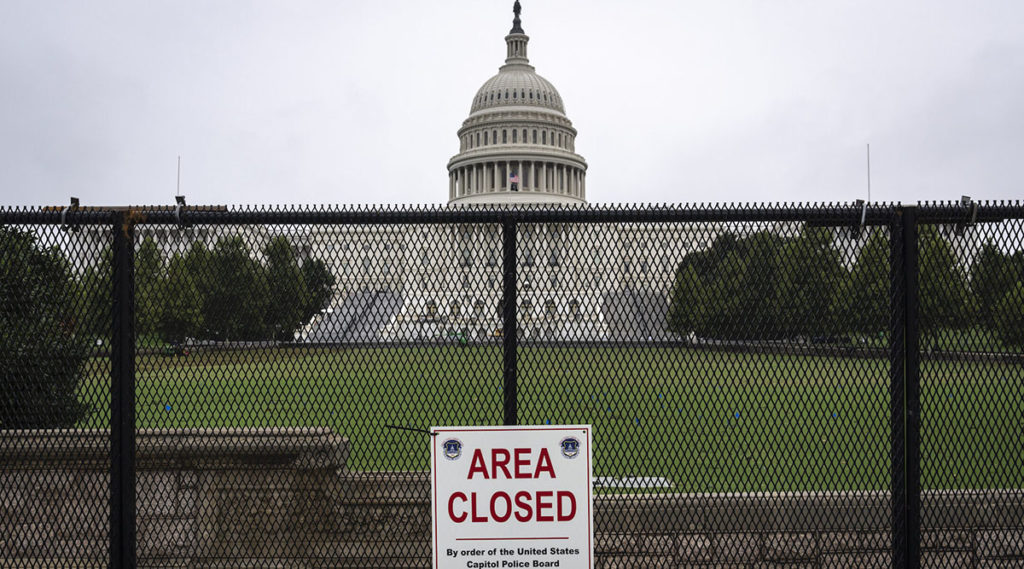
Braynard has said his rally will not be violent, but police in the capital are on high alert and have mobilized all their personnel. But while local Jewish institutions are also bracing themselves for the possibility of violence, security officials say that Saturday’s rally is likely to be far smaller and less dangerous than the insurrection at the Capitol, which resulted in five deaths and more than 500 arrests.

“I don’t think it’s going to be like Jan. 6, not even close,” said Heidi Beirich, c​​o-founder of the Global Project Against Hate and Extremism, though she added that “we have no idea about lone actor violence.”

The crowd is going to number roughly 700, according to the official rally permit and police estimates — a far cry from the tens of thousands who showed up to rallies on Jan. 6. Unlike in January, when extremist groups organized to attend in groups, this time extremist groups are using messaging apps like Telegram to tell their followers to stay away, fearing arrest.

In January, President Donald Trump egged the rioters on, telling rallygoers to “fight like hell” and “to walk down to the Capitol” prior to their march on the Capitol. This time, he’s no longer in the White House, and is sending mixed messages. He said in an interview that Saturday’s rally could be “a setup” in which attendees will “be harassed.” But in a statement on Thursday, he endorsed the rally’s message, saying, “Our hearts and minds are with the people being persecuted so unfairly relating to the January 6th protest concerning the Rigged Presidential Election.”

But just in case violence breaks out, police say they’re taking extensive precautions, and have erected a security perimeter around the Capitol. After the January Capitol riot, police were faulted for not adequately responding to the threat, and the chief and second-ranked official of the Capitol Police stepped down. In March, one officer was suspended after a copy of the Protocols of the Elders of Zion was found near his work area.

“The chatter we heard prior to Jan.6, many of those threats turned out to be in fact credible, so we’re not taking any chances,” said J. Thomas Manger, the new chief of the Capitol Police. But regarding extremist groups, he added later, “We’re seeing mixed messages about whether folks are coming or not coming.”

Jewish security officials and extremism watchdogs say the same thing: That they’re concerned about potential violence, but that they aren’t aware of any specific threat to any Jews or Jewish institutions. A memo from the Department of Homeland said plans for the rally have included discussions of “using the rally to target local Jewish institutions, elected officials, and ‘liberal churches.’”

“Some of the online chatter has suggested that because the police force has been so tied up, it presents an opportunity to go after Jewish organizations or other houses of worship,” said Michael Masters, CEO of the Secure Community Network, which coordinates security for Jewish institutions. Masters added that there are currently no credible antisemitic threats that he knows of, but said, “There’s a general sense that we need to be enganged and proactive.”

For months before the Jan. 6 rally, security officials within and outside of the Jewish community issued a string of warnings about violence connected to the election and its aftermath. Immediately before Jan. 6, Jewish security groups worried about possible violence, though then they also said there were no credible threats toward Jewish institutions. And while Jews were not the target of the attack, it did attract neo-Nazis and other far-right extremists, as well as signs with a range of hate symbols.

“When you have organized groups that are basically telling people to stay home, that’s going to have an impact,” said Oren Segal, who heads the Anti-Defamation League’s Center on Extremism. “That doesn’t mean self-identified members of those groups won’t show up. It’s still possible, but unlike the chorus of voices we heard before Jan. 6.”

Even if it doesn’t lead to violence, Segal says Saturday’s rally still has troubling long-term implications.

“This is an event that is essentially portraying individuals who attacked the Capitol and our democracy as political prisoners,” he said. “When you’re talking about political prisoners and government overreach and the illegitimacy of accountability, those are all animating narratives for extremists.”

DC Rally to Support Those Who Stormed Capitol Has Jewish Officials on High Alert Read More »

What Kol Nidre Was Like in a Cemetery

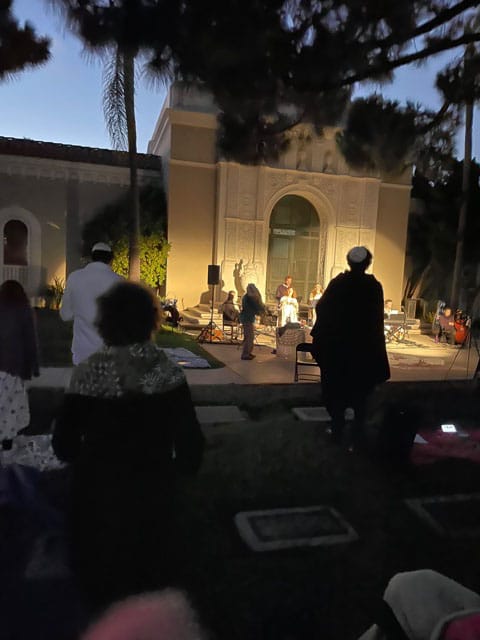
As the sun set in Santa Monica, cars entered narrow driveway of Woodlawn Cemetery as the band played “Bitter Sweet Symphony” by The Verve in a loop:

“Well I’ve never prayed
But tonight I’m on my knees yeah
I need to hear some sounds that recognize the pain in me, yeah
I let the melody shine,
Let it cleanse my mind,
I feel free now
But the airwaves are clean and there’s nobody singing to me now
No change, I can change
I can change, I can change
But I’m here in my mold
I am here in my mold
Cause it’s a Bittersweet Symphony that’s Life.”

The iconic song transitioned, and Cantorial soloist Shira Fox, herself the daughter of Valley Beth Shalom’s Cantor Herschel Fox, chanted the traditional High Holiday Nigun with its penetrative, “Lai lai lai lai lai lai lai…” melody, ending on a emphatic final punctuation. With the music halted, the silence penetrated us. Standing together, we realized what was obvious but formerly not as penetrative – the beautiful park-like environment was filled with headstones, as we contemplated our own life on Kol Nidre.

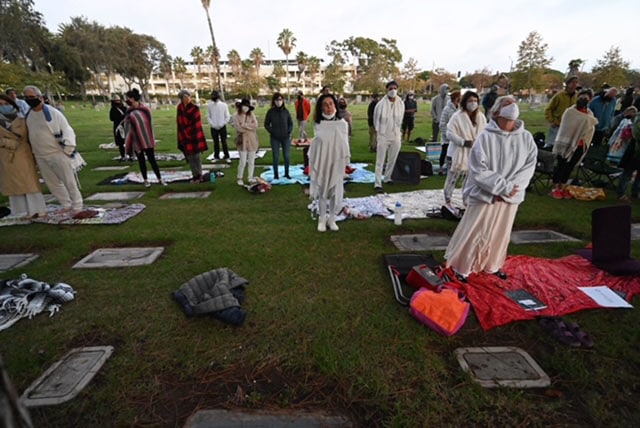
Yom Kippur rituals return year after year, and we are asked to recognize the permanence of our actions reconciled with the evanescence of our existence. Under a rising half-moon, 120 souls sat on tapestries laid out for them in between headstones, the marble stones and the names etched into them a visible reminder of where all of this ostensibly leads.

Photo by Scott Laurie

Our cellist began the Kol Nidre, sounds chanted for millennia, Max Bruch’s famous cello solo a haunting melody. The Kol Nidre observance is a descent into the grave, with the hope that we will make it out of this near death experience and rededicate our lives for the good. As the Selichot service began, the Jewish ritual practice of Tahara, or ritual cleansing of a body for burial, was described, and all participants given white shrouds to wrap themselves in. As the music began, participants were asked to take a look at the headstone they were standing before and whisper the name of the person, asking for their blessing to lie down. Beginning with an awareness of what will sustain us for the next 25 hours – breath – a guided visualization began of their own funeral – what were the eulogies given? Who would show up? What regrets did we hold in our hearts were life to end at this moment?

The Selichot service swelled, and an old, almost forgotten song from the 80s, “The Living Years,” began:

“Say it Loud
Say it Clear
You can Listen as well as you Hear
It’s too Late
When we Die
To admit we don’t see Eye to Eye.”

Shema Koleinu wove in and out of the “Mike and the Mechanics” song, the words of “God’s holy liturgy” underscored by the rock song, “Hear our voice, O God, pity us, save us, Accept our prayer with compassion and kindness.” A harmonium’s chords rose, and the melody of “Avinu Malkeinu” began. In the darkness, bodies began to appear, apparitions in the moonlight. One at a time, ghostly shrouds of white arose, their voices forming a Requim Choir:

אָבִֽינוּ מַלְכֵּֽנוּ
ah-vee-noo mahl-kay-noo
Our Father, Our King!
חָנֵּֽנוּ וַעֲנֵֽנוּ
chah-nay-noo vah-ahh-nay-noo
favor us and answer us
כִּי אֵין בָּֽנוּ מַעֲשִׂים
kee ayn bah-noo mah-ahh-seem
for we have no accomplishments;
עֲשֵׂה עִמָּֽנוּ צְדָקָה וָחֶֽסֶד
ahh-say eeh-mah-noo tzih-dah-kah vah-cheh-sed
deal with us charitably and kindly with us
וְהוֹשִׁיעֵֽנוּ
vih-hoe-shee-ay-noo

As the prayers swelled, audible cries were heard throughout the cemetery – it was as if the dead poured their remorse through the soil. What rose through the congregation was more than just a simple regret – it was a life’s reckoning of what Kol Nidre is actually about. We create a near death experience as a simulation or test-run for what we will one day experience, and emerge with a renewed sense of what each of our personal life journey is about. We release regrets and replace them with resolve. We forgive ourselves for the shame that we carry around, the klipot (or shells) that inhibit us from living life to the fullest. Facing down our own graves, we have no choice, as the 13 Attributes of God are chanted, but to acknowledge that we still have work to do in order to resemble one who is full of “Compassion, Grace and Loving-Kindness.”

Our collective chant of Mourner’s Kaddish bore new meaning – this funeral was for the living. The band closed the service with Pearl Jam’s “Just Breathe” and all lingered, despite the cold, damp air.  The service ended, and the band and I stood, our heads down, tears streaming from our cheeks, our hands on our hearts. And 120 souls stood under a half-light, half-moonlit sky, still processing what we had just experienced.

At the end of the service, a man walked up to me. “My father was a rabbi,” he said, “and I attended his Kol Nidre service for 40 years. Tonight, for the first time, I finally know what it is about.”

Open Temple’s Yom Kippur Kol Nidre returns October 4, 2022 at Woodlawn Cemetery.  For more information, please go to www.opentemple.org


What Kol Nidre Was Like in a Cemetery Read More »

AOC Proposes Amendment Blocking U.S. Weapon Sale to Israel

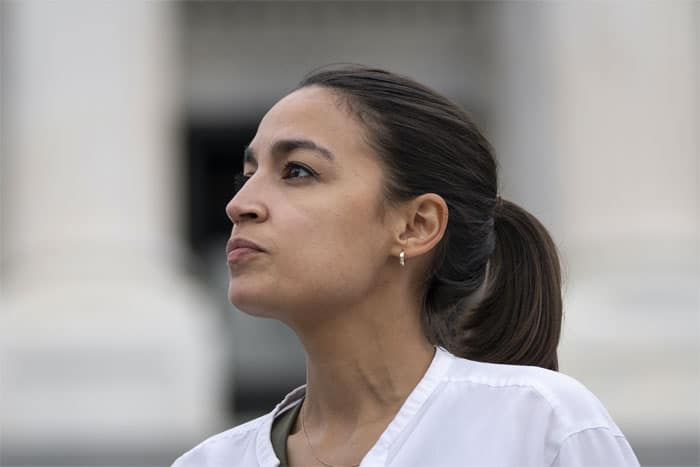
Representative Alexandria Ocasio-Cortez (D-NY) proposed an amendment to the National Defense Authorization Act (NDAA) on September 17 that would block a Unites States weapon sale aid from going to Israel.

According to a press release from Ocasio-Cortez’s office, the amendment would “suspend the transfer of Boeing Joint Direct Attack Munition weaponry under the $735 million direct commercial sale to the Israeli government” because it “would block the transfer of the same kind of Boeing weaponry that the Israeli government used to kill 44 Palestinians in one night in al-Rimal,” a neighborhood in Gaza City. She had introduced a similar resolution during the aftermath of the conflict between Israel and Hamas in May.

This amendment is one of seven that Ocasio-Cortez introduced; others included barring weapons sales to the unit of the Saudi Arabia government that killed journalist Jamal Khashoggi in 2018 as well as an amendment blocking “military aid, weaponry, and training” to Colombia.

In a tweet, Ocasio-Cortez said that the amendment is blocking the sale to Israel because of “the bombing of Palestinian civilians, media centers,” with the latter being a likely reference to Israel bombing the building in the Gaza Strip housing the Associated Press (AP).

Some Jewish and pro-Israel groups criticized Ocasio-Cortez on Twitter.

“Slamming the Jewish nation in her new bill, AOC is silent when it comes to the 4500 terror rockets fired from Hamas, funded by US tax dollars,” Stop Antisemitism tweeted.

The Israel War Room Twitter account similarly tweeted that Ocasio-Cortez “neglects to mention that Hamas launching offensive rocket attacks and using civilians and media building as human shields are the leading cause of civilian deaths in Gaza.” Israeli Ambassador to the United States Gilad Erdan told AP executives in June that Hamas was using the building to “jam the Iron Dome.”

On the other hand, Jewish Voice for Peace, a group that supports the Boycott, Divestment and Sanctions (BDS) movement, praised Ocasio-Cortez on Twitter. “The media may have turned its attention away from the US made bombs that Israel drops on Palestinians, but progressives in the House haven’t.”

The Adalah Justice Project, a pro-Palestinian advocacy organization, called Ocasio-Cortez’s amendments “truly stellar” and urged people to pressure their members of Congress to support the amendments because “it’s past time to stop these weapons transfers.”

Ocasio-Cortez’s office did not respond to the Journal’s request for comment.

AOC Proposes Amendment Blocking U.S. Weapon Sale to Israel Read More »

Unscrolled: From Prophet to Poet

In last week’s Torah portion, Moses completed his great work – the writing of the Torah. “Moses wrote down this Teaching and gave it to the priests, sons of Levi, who carried the Ark of the LORD’s Covenant, and to all the elders of Israel.” (Deuteronomy 31:9).

It would seem, then, that his work was done. He led the Israelites to the promised land and gave them the Torah in full. The only thing left was to ascend the mountain and be gathered unto his kin.

In Parashat Haazinu, however, we see that Moses’ work is not yet finished. He delivers a final address to the Israelites – this time, notably, in the form of a poem.

When we first met Moses, he was weak of speech. “I have never been a man of words,” he said to God. “I am slow of speech and slow of tongue.” (Exodus 4:10). Later in Exodus, Moses refers to himself as “uncircumcised of lips” (6:12), a bizarre expression which hints at the spiritual and physical depth he ascribes to his issues with speech.

His arc throughout the Torah, then, is that of a man whose speech capacity is blocked to a man whose speech capacity is opened – from “uncircumcised of lips” to a poet.

This journey is traveled slowly and by degree. In the beginning, Moses is lent support by Aaron. God feeds him lines to repeat word by word. At this point, it seems that Moses has little agency in what he says, performing the perfunctory task of repeating back what he has heard like a stenographer in a courtroom.

In truth, however, this is a process of hachshera – preparation or training. Through his dialogue with God, Moses is learning how to speak. By repeating, parrot-like, the words of God, Moses is strengthening the muscles of expression so that they will be ready when he has something to say.

By the time the book of Deuteronomy comes along, Moses is speaking to the people on his own behalf. His language is fluent and elegant. Rather than parroting what he has heard from God, he subtly reframes and interprets the history of the people and the teachings of the Torah. When this is completed, however, he ventures to take a step further and writes a poem.

“May my discourse come down as the rain,” he begins confidently. “My speech distill as the dew, like showers on young growth, like droplets on the grass.” (Deuteronomy 32:2).

To understand the significance of this moment for Moses, we must understand what makes poetry different than other forms of writing. Poetry is language in its purest form. While some poems have narrative content, the emphasis is not on content but on form – the letters, the spaces, and the sounds themselves.

In delivering his poem, which is indeed a masterpiece, Moses shows us just how far he has come since we first met him. The muscles of his mouth and tongue have long been strengthened by the process of hachshera that God put him through, but now it is his heart that has learned to speak.

In delivering his poem, which is indeed a masterpiece, Moses shows us just how far he has come since we first met him.

In his book “The Tongue of Adam,” Abdelfattah Kilito sites an Islamic idea that a prophet, definitionally, cannot be a poet. According to this idea, the divine source of inspiration and the poetic source of inspiration are mutually exclusive to one another.

There may be a hint of such a notion here in the Torah.

Last week’s Torah portion opened with Moses saying, “I am now one hundred and twenty years old, I can no longer be going and coming.” (Deuteronomy 31:6). Parsing this strange expression, “going and coming,” Rashi suggests that Moses is saying that the prophetic spirit had departed from him and been transferred to Joshua, and that the “wellsprings of wisdom had stopped up for him.”

If this was truly the case, the poem that Moses now speaks is his own.

We most often think of Moses in terms of his relationship to the people. He delivered us, he brought us the Torah, he led us through the wilderness. In Parashat Haazinu, we remember that he also had a relationship with himself, which we see play out through his development as speaker.

Both of these relationships made great demands on Moses. In the end, both were utterly transformative. Leading the people and learning to speak – these were his two great missions in life. One was outward facing; one was inward facing.

Having at last completed both, Moses can now, finally, lay down to rest.


Matthew Schultz is the author of the essay collection “What Came Before” (2020). He is a rabbinical student at Hebrew College in Newton, Massachusetts.

Unscrolled: From Prophet to Poet Read More »

AFT Head “Troubled” By San Diego Chapter’s Anti-Israel Resolution

American Federation of Teachers (AFT) President Randi Weingarten told the Times of San Diego that she’s “troubled” by some of the passages the San Diego affiliate’s passage of an anti-Israel resolution.

On September 6, the AFT Guild Local 1391 union representing San Diego and Grossmont-Cuyamaca community college district teachers passed a resolution condemning “the forced removal of Palestinian residents in West Jerusalem, the bombing of civilian areas in the besieged Gaza Strip, and the continued human rights violations committed by the Israeli government during its 73-year occupation of this land.”

“I’m troubled by aspects of this resolution, which I have already conveyed to the local leadership, including its refusal to acknowledge the right of Israel to exist or to defend itself,” Weingarten told the Times of San Diego. “The national union advocates for the right to self-determination and justice for both Israelis and Palestinians—two states for two peoples. This resolution falls far short of that commitment.”

Jewish groups have also criticized the resolution. Anti-Defamation League (ADL) San Diego released a statement on September 13 calling the resolution “problematic and based on biased assumptions with an extremely one-sided view” and warned that it could “cause Jewish and non-Jewish students and staff who are supportive of the state of Israel – and for whom a connection to Israel is part of their Jewish identity – to feel isolated and may lead to a negative impact on school campus climate.” “We fear that when people demonize Israel, denigrate its government, negate its fundamental legitimacy, and hold it to double standards, it can be antisemitic and can spawn anti-Jewish violence, as we saw happen in recent weeks, including on the streets of Southern California.” In May, members of a Palestinian caravan assaulted multiple patrons in front of the Sushi Fumi restaurant in the Beverly Grove area after asking them if they were Jewish.

“The National American Federation of Teachers rejected a similar resolution in July, and we were disappointed that AFT Guild, Local 1931 passed this problematic resolution, which likely will not foster fair treatment for all, for which we so passionately strive,” the ADL’s statement concluded.

StandWithUs similarly said in a September 11 statement that they were “deeply disturbed” by the resolution and that just because the resolution denounced antisemitism doesn’t mean it isn’t antisemitic. “As we have seen in recent months, dehumanizing campaigns targeting Israel, are anything but harmless. Anti-Israel narratives fueled a shocking spike in hate crimes against Jewish communities across the United States, including assault, vandalism, and harassment. As a result, too many teachers and students now question if they are safe and welcome in the places where they work, study and live. This statement only adds more fuel to the fire.”

Other Jewish groups criticized the resolution on Twitter. “Denying the Jewish people’s right to self-determination in its ancestral homeland is antisemitic,” the American Jewish Committee tweeted. “This hateful resolution must be withdrawn.”

The Simon Wiesenthal Center also tweeted: “The Simon Wiesenthal Center also tweeted that the passage of the resolution was “antisemitism on full display.” “This is what a teachers union does? Replacing history and respect with lies and hate demonizing and endangering our children.”

Stop Antisemitism criticized the part of the resolution accusing Israel’s “advanced weaponry and indiscriminate bombing” of killing a “disproportionate amount of Palestinians.” “BILLIONS in Palestinian aid go to terror tunnels vs. sheltering/safety of their own people,” the watchdog group tweeted, asking how that is “Israel’s fault.

The union did not respond to the Journal’s September 13 request for comment. The Times of San Diego reported that the union declined to comment on their inquiries.

AFT Head “Troubled” By San Diego Chapter’s Anti-Israel Resolution Read More »

A Moment in Time: A Time to Break Down, A Time to Build Up

Dear all,

As we conclude the observance of Yom Kippur, our first obligation is to begin to build the Sukkah. Why?

Yom Kippur is all about breaking down the shell that hides our souls. We are yearning to open our hearts. It’s quite a process. And while Judaism encourages us to dig deep, we can’t remain in that stage of perpetual vulnerability.

Sukkot is a Festival of building (albeit temporary). We create structures to provide physical shelter and spiritual ascent.

During Sukkot, we study the book of Ecclesiastes – which in many ways offers an alternative theology to the heavy Yom Kippur liturgy. While Yom Kippur teaches that all is sealed in the Book of Life, Ecclesiastes teaches that no matter what, we build, take down, and build again. And in the process, perhaps, just perhaps, we will discover a moment in time when the sun shines on our faces, and we can take in the extraordinary gift of creation.

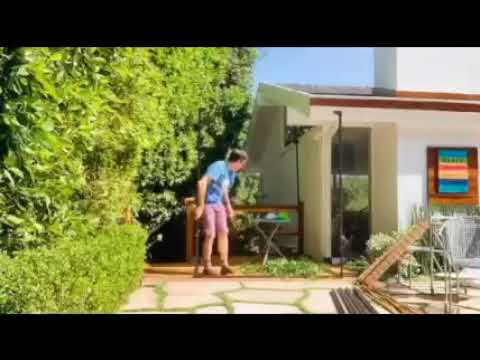
(Ecclesiastes also teaches that things aren’t always what they seem. And if you look closely at the video, you may discover something kind of cool! After all, there is a time to break down – and a time to build up!)

With love and shalom,

Rabbi Zach Shapiro

A Moment in Time: A Time to Break Down, A Time to Build Up Read More »

From Suez to Afghanistan: A Sukkot Message

After watching the recent Afghanistan debacle unfold, I could not help but be reminded of the Suez Crisis of 1956—with a sense of foreboding and terror about what the future holds for those who treasure the freedoms and comforts of the Western world. Truthfully, it wasn’t the shocking scenes of Afghan citizens desperately running alongside a U.S. military cargo plane at Kabul airport that I found so discomforting, although those images are seared on my mind forever; nor was it the shocking revelation that the U.S. military left billions of dollars’ worth of military hardware in Afghanistan, weaponry now controlled by an evil terrorist regime.

For while it is true that these aspects of the withdrawal do send a chill down my spine, they are not the cause for my doomsday premonition. Rather, it is the specter of Suez that hangs over Afghanistan that gives me sleepless nights and makes me fear for the future of the free world.

Rather, it is the specter of Suez that hangs over Afghanistan that gives me sleepless nights and makes me fear for the future of the free world.

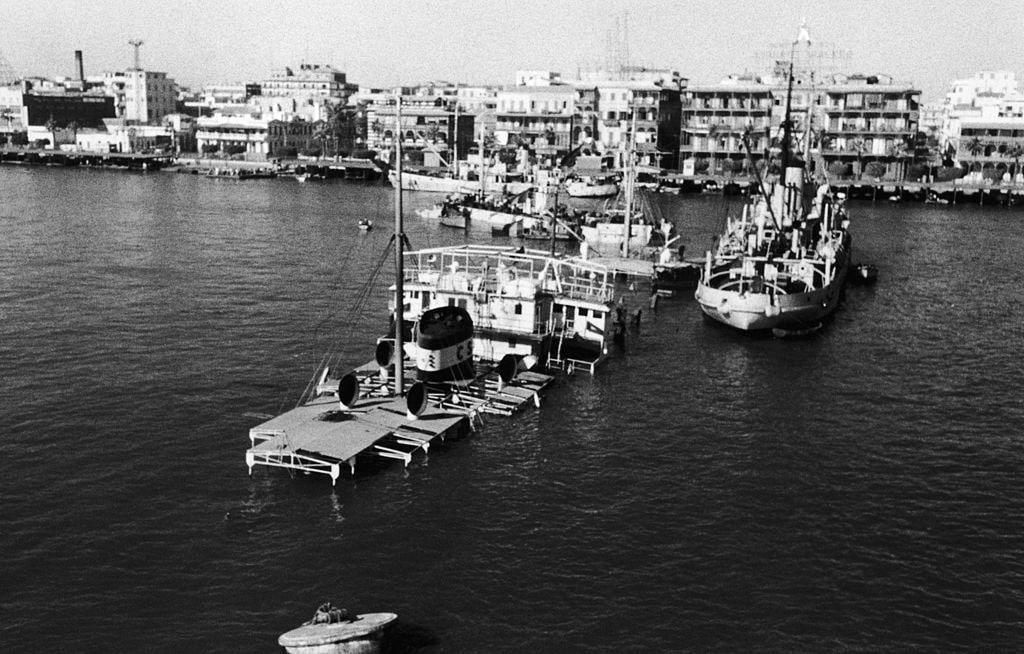
The Suez Crisis of 1956 is best remembered for the precipitous downfall of its main cheerleader, UK Prime Minister Anthony Eden (1897-1977), until then one of Great Britain’s most highly regarded politicians and statesmen. The crisis began on July 26, 1956, after Egypt’s populist president Gamal Abdel Nasser (1918-1970) nationalized the Suez Canal, one of the world’s most important waterways, then owned by the Suez Canal Company, a commercial entity controlled by French and British interests.

Nasser’s provocative decision was precipitated by an American and British decision not to finance the construction of Aswan Dam, a consequence of Egypt’s growing ties with the Soviet Union. Nasser was furious and took his revenge by seizing control of the canal with the idea that Egypt could use revenue from the thriving shipping trade to pay for the dam’s construction. But Britain and France were determined to thwart Nasser’s unilateral seizure of their asset, and decided that Nasser had to be taught a lesson. They secretly planned a military campaign together with Israel to regain control of the canal, and to also effect regime change in Egypt.

After a pre-agreed Israeli invasion of the Sinai in late October, and the inevitable conflict between Israeli and Egyptian forces that followed, the Anglo-French alliance declared the military confrontation a casus belli, and in early November sent their armies to occupy the canal, wresting control of the territory from the Egyptians.

But the Suez campaign turned out to be a gross miscalculation. U.S. President Dwight Eisenhower—who had not been informed of the plan in advance—was horrified, believing that the Anglo-French invasion would be widely perceived as an egregious example of Western imperialism, driving Egypt and other Arab nations into the arms of the Soviet Union, who were eagerly looking for a foothold in the Middle East. The U.S. administration, in a rare show of cooperation with the Soviets, secured a UN resolution condemning the invasion while simultaneously refusing to sell oil to the British, whose supply of oil was severely curtailed by the blockage in Suez—all of which forced the British and French armies into a humiliating withdrawal. Eden, once celebrated as Churchill’s right-hand man and as the wisest of diplomats, was compelled to resign his premiership with his reputation in tatters.

At the time, apart from Eden’s dramatic fall from grace, the Suez Crisis outcome was widely perceived as an unequivocal success. The United States, with the help of the United Nations and by using its considerable leverage with the UK, had succeeded in preventing wholesale bloodshed, while the international economy emerged largely unaffected, possibly even improved, as a result of the internationally sanctioned resolution. Both the United States and the Soviet Union had behaved responsibly, acting together to ensure that this kind of foreign military adventure—which only benefited superpowers, while less adept countries took the brunt of hostilities—would no longer be tolerated by the new international order. Everyone breathed a sigh of relief.

But how wrong they all were. An emboldened Nasser went on to use his victory against Great Britain in particular, and the weakness of the West in the face of his belligerence in general, as proof that if the mouse roars loud enough, the mightiest lions will slink away. Eden was utterly convinced of this awful consequence, telling an interviewer in 1967 that he was “unrepentant” for having initiated the Suez campaign, and that he believed Nasser was a postwar incarnation of Hitler. Forcing the West into retreat had simply encouraged him and other Arab leaders to arm their countries, which had, in turn, gravely threatened peace in the region. Eden’s biographer, D.R. Thorpe, was far more blunt; in his book “Eden: The Life and Times of Anthony Eden” (London, 2003), he wrote: “Had the Anglo-French venture succeeded in 1956, there would almost certainly have been no Middle East war in 1967, and probably no Yom Kippur War in 1973.”

The difference between the humiliating climbdown and troop withdrawal by Great Britain in 1956, and the shameful fiasco of the U.S. withdrawal from Afghanistan in 2021, is that by 1956 the British Empire was already in steep decline, and while the Suez Crisis may have been the catalyst for a faster descent into oblivion, it brought into sharp focus just how toothless the once mighty British tiger had become. By contrast, the United States of America is ostensibly still the world’s mightiest superpower, a position it has held for decades, and to see it disgraced and sent scuttling out of a country, leaving an unholy mess in its wake, reveals just how ephemeral and evanescent that power really is. Historians will one day look back at the Afghanistan withdrawal and cite it—as they do the Suez withdrawal for Britain—as the moment when the penny dropped, and the American king was seen with no clothes.

By contrast, the United States of America is ostensibly still the world’s mightiest superpower, a position it has held for decades, and to see it disgraced and sent scuttling out of a country, leaving an unholy mess in its wake, reveals just how ephemeral and evanescent that power really is.

The Jewish calendar cycle includes a festival called Sukkot, celebrated each year in the early autumn. We build a temporary outdoor structure, using leaves or branches as a roof. For an entire week this hut becomes our home: we eat in it, we spend family time there, and many of us even sleep in the sukkah. Custom demands that we decorate our sukkah, and the interior of some sukkahs can be elaborate and even ornate, with beautiful drapes and artistic images covering the walls, and fabulous decorations suspended from the ceiling. But then, once the Sukkot week is over, each sukkah is dismantled and the lovely interior that was our home for seven days is gone.

One of the most frequently asked questions about Sukkot is why it takes place in the fall, and not in the spring, when the weather is more suited to the outdoor aspects of the festival. Answers are abundant, but the answer that has always struck me as particularly sharp is the one suggested by Rashi’s grandson, Rabbi Shmuel ben Meir (1085-1158; “Rashbam”). He suggests that God deliberately chose the fall, after the harvest is over, when an agricultural society feels most successful and complacent. The storehouses are full, life is good, and there is nothing to be worried about. It is exactly now that God asks us to leave the comfort of our homes and spend some time in a temporary dwelling—although, despite their ramshackle transience, we are expected to decorate and make them as nice as our permanent homes, or even nicer. And then, after being in them for a week, we dismantle them completely, and they’re gone.

As we approach the winter, God wants us to be aware just how temporary our livelihood and security really is, or can become; it’s here one day, and gone the next. Because, in the final analysis, it is not our status, our homes, our possessions, or our strength that give us security—it is God. And all of it can be gone in the blink of an eye.

All of us in the Western world are endlessly dazzled by our prowess and self-diagnosed superiority, as we navel-gaze and shoot the breeze on every topic other than our own existential vulnerability, while at the same time the barbarians are at the gate waiting to turn our harvest festival into the harshest winter we have ever experienced. That’s why we need Sukkot: so that we spend time reflecting on just how quickly our world can turn upside-down and be gone, with the edifice that is our home taken apart, leaving us to face the elements without the protection we took for granted. It is this Sukkot phenomenon that should have been the strategic takeaway of the Suez Crisis. Had that been the case, the Afghanistan situation might have unfolded quite differently. And this time the stakes are far higher, which is the reason I am so worried. Let us all hope and pray for a mild winter, and that spring comes much earlier than expected.

From Suez to Afghanistan: A Sukkot Message Read More »

Sukkot: The Holiday of Doubt

We didn’t build a sukkah in 2019. It was the first time since my son was born, six years before, that we didn’t do it. But my father had died a week earlier, on Yom Kippur, and so instead of planning our annual Sukkot party, where I’d make as many Ottolenghi dishes as possible, and figuring out how to make our sukkah even better than the year before, I was planning a funeral.

Our son’s favorite holiday is Sukkot, and so when we broke the news to him, he broke down. It was the first time he’d cried since he learned that his grandfather, with whom he had a very special relationship, was gone. I remember thinking how strange it was that it was the loss of his beloved sukkah that pushed him to that breaking point first, rather than the loss of his deeply special friend, my father.

The sukkah is, among other things, about remembering, and suddenly the space of memory and remembering was wiped away.

In retrospect, I understand why he cried over the absent sukkah. It was about much more than the three walls and makeshift bamboo ceiling with all its glittering gaps and spaces. It was about the way that the temporary brings us together and reinforces something within us. For my son, there was immense stability and security in knowing that each year that sukkah would go up in our backyard; and each year, there would be fun and laughter and gratitude and friends in that sukkah. And losing that meant losing everything. The sukkah is, among other things, about remembering, and suddenly the space of memory and remembering was wiped away.

How does one go on without that space to remember who we are? Our lives are, after all, an accumulation of memories, compounded and compressed. We are not blank slates.

As I mourned for my father—who I, mistakenly, assumed would live forever, the embodiment of permanence for me—I also mourned, along with my son, the loss of the temporary, made visible by the absent sukkah. But the truth is that even in the absent sukkah there was a lesson to be learned: Everything is temporary. The sukkah isn’t a reminder of what life could be like—out in the desert, wandering, searching for stability—it’s a reminder of what life is, always and already, though we may pretend otherwise.

During Sukkot we leave the “security” of our homes and dwell in what is, in theory, less stable—but what if the stable is no less secure than the unstable? Perhaps it isn’t meant to teach us to appreciate our perceived sense of security, but rather our perpetual lack of security. Perhaps the space of the sukkah is asking us to remember not where we’ve been, but where we are.

And as we find ourselves in the (hopefully) final throes of a never-ending pandemic, reflecting on where we are is inevitable. If nothing else, the last year and a half has taught us that nothing is certain. Life is one continuous jazz song—against the backdrop of a strong, prominent meter are the bent notes and reliable improvisations. The melody, harmony, and rhythm are all there, but it’s the unexpected that shake them up and render them unpredictable. In fact, the only predictable thing about jazz is its improvisational heartbeat, its unpredictability. It doesn’t exist without that crucial element.

Sound familiar?

Jazz, like life, elicits complex and competing emotions. There is creative freedom in it. It’s no wonder many artists and writers have drawn on the musical genre to tell their own stories. Pulitzer and Nobel prize-winning author Toni Morrison wrote a novel called “Jazz,” set in 1920s Harlem, but with flashbacks reaching decades into the past. In a foreword to the novel, Morrison writes: 

“I was struck by the modernity that jazz anticipated and directed, and by its unreasonable optimism. Whatever the truth or consequences of individual entanglements and the racial landscape, the music insisted that the past might haunt us, but it would not entrap us. It demanded a future—and refused to regard the past as ‘… an abused record with no choice but to repeat itself at the crack and no power on earth could lift the arm that held the needle.’”

The past—the desert, the unstable—is with us at every moment, even when we think we’ve left it behind. But it need not pull us backward; it need not repeat itself, even as it remains with us.

Still, the music reminds us that there is nothing mechanical, predictable or inevitable when it comes to life, and while we may have conditioned ourselves over many years to fear such traits, they are also the place where hope resides, for they contain both our past and our future.

But the shifting sands of this long pandemic moment force us to confront this reality, and to ask, invariably, where we have been this past year and a half. We have a tendency to want to ground ourselves in a specific place and time. Have we been in the desert, or have we been in the promised land, we might ask ourselves.

Without the desert, we have no promised land, and without the promised land, we have no desert. Perhaps we are meant to inhabit both, all of the time, simultaneously.

But I suspect that this is a false choice, an unfair question. Since when have Jews been relegated to binaries? The truth is that without the desert, we have no promised land, and without the promised land, we have no desert. Perhaps we are meant to inhabit both, all of the time, simultaneously.

All of this is contained in the sukkah—a temporary structure that is built only after we have become free, but always before we become so stable, so set in our ways, that we become forgetful.

All of this is contained in the sukkah—a temporary structure that is built only after we have become free, but always before we become so stable, so set in our ways, that we become forgetful. It’s a liminal space, the kind we usually only pass through on our way to somewhere else, and almost always want to escape because it makes us feel unanchored. There is danger in detachment, we think, erroneously. Because maybe we need to float, even flail about, for a bit in order to swim. Either way, we have to move.

“Let everything happen to you: beauty and terror,” the poet Rilke said. “Just keep going. No feeling is final.”

We imagine that the promised land—the place we end up on the other side of the sukkah, the other side of the temporary—is a place full of beauty and free of doubt and instability. But I’m not so certain of that. In the space of the sukkah, we are called to remember the fear and the doubt that must have haunted the original inhabitants of makeshift desert huts. I’ve heard some people say that this is to remind us to be grateful for the safety and security that is now ours. But I don’t think that’s quite right. I think we are, instead, supposed to be reminded of the importance of doubt—the “greatest civilizer on earth,” according to Rabbi Sarah Blumenthal, a character in E.L. Doctorow’s novel “City of God.”

Doubt is the only thing that functions consistently. Is there anything more stable, more necessary, than doubt?

Doubt is the only thing that functions consistently. Is there anything more stable, more necessary, than doubt? In a world in which knowledge and information are now regularly manipulated and deployed to further political agendas, shouldn’t we embrace doubt with open arms? Perhaps a lesson of Sukkot is that doubt is not just something that happens in the desert, but something that we should take with us into whatever we imagine is the promised land—because doubt, the “great civilizer on earth,” is precisely what brings us closer to a deeper, more profound understanding of both God and ourselves. Doubt forces inquiry, and compels us to seek answers, to engage in a process that we hope will lead us to the truth. And at the end of the day, there’s nothing more stabilizing than the truth. But we don’t get there without doubt.

Doubt both reinforces and reminds us of the importance of the improvisational and unpredictable. It’s reminds us of life, that we are alive, that we are complex human beings. It reminds us that we can be sure of nothing—not in a way that makes us afraid, but in a way that reassures us, that allows us to think and feel and move closer to the places we are meant to be. It’s the jazz song all over again, pushing us into a space of self-discovery. 

There’s a group of musicians in Doctorow’s novel that he calls “The Midrash Jazz Quartet.” Like jazz, midrash is an interpretive art, riffing on what comes before it. It contains what precedes it, without repeating the original. It is familiar without repressing spontaneity. All that to say: Jews know, deep down, the importance of doubt.

I admit that 2019 wasn’t the last year we didn’t build a sukkah. The following year presented its own challenges, as we all know. We found ourselves temporarily away from Los Angeles, in Vancouver, where our downtown high-rise apartment did not offer the possibility of building a sukkah. “Never mind,” I told my son, who was once again disappointed, though with fewer tears this time—the mark of a boy one year older. “We’ll find someone else’s sukkah to visit. We’ll find a shul with a sukkah.” But pandemic restrictions meant that sukkahs were few and far between. 

Another year with an absent sukkah.

And now, as Sukkot approaches once again, I find myself not just in another country, but on another continent, far from Los Angeles, where a drive through Pico-Robertson or Beverly/Fairfax is scattered with sukkahs popping out from behind homes and apartment buildings this time of year. In contrast, from my temporary home in the small town of Fiesole, Italy, I look down on the city of Florence, and see looming structures that aggressively assert their permanence, as if to defy the inferior idea of the temporary. There is power in permanence, they seem to say.

But as beautiful as they are, those aren’t my structures. They don’t remind me to doubt. They don’t remind me that there’s both beauty and value in the temporary. They don’t remind me that life is both the desert and the promised land, rather than just a respite from the time in the desert. They don’t remind me of who I am.

They’re formidable, these structures that have lasted for hundreds of years. I can spend hours looking at them and peering inside of them. But this time of year, I long for the temporary and deconstruct-able. I long for the space to doubt so that I have the space to appreciate the unknown and improvisational. I don’t know if this is the year where we get back to building our own sukkah (after all, I spent an entire day trying to track down challah and a Havdalah candle last week), but I do know that I have been, for now, uprooted, and that even an absent sukkah has a lesson to teach.


Monica Osborne is Editor-at-Large at the Jewish Journal. She is a former professor of literature, critical theory, and Jewish Studies, and is the author of “The Midrashic Impulse and the Contemporary Literary Response to Trauma.” Follow her on Twitter @DrMonicaOsborne

Sukkot: The Holiday of Doubt Read More »

The Season of Our Joy

In Torah, “simcha,” the Hebrew word for “joy,” is written zero times in the description of Passover, once in the description of Shavuot, and three times in the description of Sukkot. This gives Sukkot its alternate name: Z’man Simchateinu, “the season of our joy.”  In an impassioned speech to a congregation, Rabbi Jonathan Sacks once asked: “Tell me–If you didn’t know any of this, which is the most joyous festival? Which is the one you would have chosen? Pesach–you get liberated from slavery to freedom! On that you can rejoice….I would have chosen Pesach. Or God comes down from heaven and speaks to you personally! (alluding to Shavuot), On that I would rejoice.” 

Why are we compelled to rejoice on the holiday which honors something specifically non-miraculous, the changing of the seasons?

So why Sukkot? Why are we compelled to rejoice on the holiday which honors something specifically non-miraculous, the changing of the seasons, when during other holidays we remember a single drop of oil lasting for eight nights and consequently saving the Jewish people from destruction?  Recalling my personal Jewish upbringing, I remember Purim baking contests and Rosh Hashanah shofar blasts with significantly more smiles than sitting in my synagogue’s sukkah in the blazing Arizona sun. But Torah says we must rejoice, and so my rabbis did their best to inspire with their lulav waving and etrog worship. 

It’s been over a decade since I last sat in my childhood sukkah. I write these words as a recent college graduate in a small apartment in New York City. The only place to build the walls of a sukkah in this space is on my tiny (but cherished) fire escape, which a friend recently told me was called “The Williamsburg Way,” alluding to the Jewish neighborhood where one week per year, small huts replace what usually constitute the iconic metallic frames of fire escapes. I found myself walking past them several years ago and wondered how it must feel to be inside them. Surely it must be odd, considering you can still hear cars, sirens, and of course the occasional street bickerings and sound systems that come with the package of New York. Could it still be meaningful? Knowing that just below lay the famously unspiritual, harsh realities of the city?  Though I am very lucky to be of good health and good spirits, those harsh realities have come for me as well. 

I arrived in New York at the height of the coronavirus pandemic, when the majority of shops, restaurants, and activities were either half or fully closed. Then came a particularly biting winter, made all the more harsh by finishing my senior year of college virtually, thousands of miles away from my university. When I completed my last course, I didn’t get the balloons and cap and gown and night-out-on-the-town with my friends to celebrate. Instead, I received a “I’m very proud of you” text from my father, and a glass of wine on my again, tiny (but cherished) fire escape. Amidst all of this was financial stress, family stress, relationships coming and going, and of course, the time I locked myself out of my apartment in a hurricane and had to pay an extraordinary amount of money for an Israeli locksmith to open my door. Later I was given a discount for being Jewish, but I digress…

I matured, and I believe all of Generation Z matured, faster than we would have preferred during the years 2020 and 2021. We’ve grown accustomed, and at this point desensitized, to how fast things can change, how quickly plans can fall apart, and how to accommodate the merciless winds of nature.  I believe I will someday regard these last eighteen months as the most formative of my life, simply because of the perspective the endless exhaustion offered. If you were to have asked me during this era what would bring me the most joy, I would not answer with a vacation in Hawaii or a new luxury car. I would say that seeing my grandparents for dinner, attending my cousin’s Bar Mitzvah, or going to the movie theater with friends would bring the most pleasure. These were all things I once took for granted, swept away by that which I could not control.

The days will grow shorter, the nights will grow colder, and Judaism responds to this by finding joy, whether a Jew finds himself in the throes of a Roman takeover of Judea or in the seemingly endless slog of the coronavirus.  

Perhaps the ancient Israelites were onto something when they designated Sukkot as the ‘festival of our joy.’”  In turbulent times, the sweetest reprieve does not take the form of extravagance or miraculousness, but rather, of the routine. Of that which we take for granted. The harvest providing nourishment during the summer to sustain us during the winter is something we can rely upon, a certainty, a promise. The days will grow shorter, the nights will grow colder, and Judaism responds to this by finding joy, whether a Jew finds himself in the throes of a Roman takeover of Judea or in the seemingly endless slog of the coronavirus. 

Of course spending time in a “Williamsburg Way” sukkah is still meaningful. Not in spite of hovering above a Brooklyn street, but because of it. It allows for us Jews to make a point. “Look God,” we say, five floors above wailing taxi cabs, “I see the unpredictability and mayhem of all of this. And yet I will allow myself to revel in the important things that stay the same.”

The Sukkah does not only symbolize our relationship to the earth and its splendors, but also our primal need for stability. On this Z’man Simchateinu, I will take a break from the trials and tribulations of modern life, comfortably protected by the walls of a sukkah. And  I will find great joy in this, as the Torah commands.


Blake Flayton is New Media Director and columnist at the Jewish Journal.

The Season of Our Joy Read More »