Some reflections on the blessings of the earth, including selected poems.
How do we manage our lives during the Coronavirus crisis? How do we keep our sanity? How do we use this quarantine to bring out the best in ourselves? Tune in every day and share your stories with podcast@jewishjournal.com.
I woke up at 6:30 am (on a day when I could have slept in) and my mind started racing: What if I lose my job? What if my husband loses his job? What if one of my immediate family members gets the Coronavirus? As Mark Schiff wrote, “my mind loves to take me on trips through very bad neighborhoods.” Indeed, my tour had begun.
I was eager to end my mind’s trip through this bad neighborhood, so I got on the elliptical and put on a recording of Trevor Noah’s Daily Social Distancing Show on the television for comedic relief. In this episode, he interviewed Christina Koch, a NASA astronaut who recently returned from 11 months in space, the longest mission any woman astronaut has ever completed.
Trevor asked Christina: “How do you prevent yourself from going crazy when you’re stuck in that small environment for so long?”
She answered: “It’s all about how you frame it and your attitude, just like what we’re going through now.” She further explained that for her, “the trick is to put the right thing on repeat in my head.” So if she found herself missing something from earth and thinking something like, “I wish I had a latte right now,” she would replace it with something unique she had now that she’d never have again, like “Wow, I’m really going to be bummed out when I can’t look at these auroras from space again,” and repeat that in her mind. That way, she flipped the negative into a positive. So instead of thinking, “I’m so over this… when is it going to be over…you’re actually thinking wow, I want to savor every moment.” Genius!
Her idea reminded me of an article I read months ago which offered another mental trick which is key to happiness. The article by Jon Gordon, an author and speaker on leadership explains that two simple words can transform your whole outlook on life. He explained that we often say things like, “I have to take the kids to practice.” “I have to go to this meeting,” “I have to go to work today” or “I have to see my family this weekend.” – as though we don’t have a choice in the matter. He suggested instead of saying “have to,” to say that we “get to” do those things – since those tasks are a privilege, a sacred gift. “We get to go to a job while so many are unemployed. We get to raise our children even if they drive us nuts at times.”
I read this article months before the Coronavirus outbreak, but I didn’t implement this change to the way that I spoke. I still talked in terms of have to. Now, though, I realize just how right Jon Gordon is. Many of the things I had to do before the Coronavirus outbreak, I don’t get to do anymore. I don’t have to drive my daughter to school or dance class because she doesn’t get to go there anymore. I don’t get to go to the drycleaner or Goodwill because they’re closed. I don’t get to visit family and friends. I’m acutely aware that like all jobs nowadays, my job is a privilege that may end at any point.
Our tradition is big into the language of “have to” and of “obligations” – a long list of 613 have tos – mitzvot (commandments), to be exact. This language reflects the reality of human psychology. If we have to do something, then we get it done, whereas if it’s optional, we’re less likely to do it. We are far less motivated to do extra-credit assignments than required ones. I know this from my own experience. After my mother’s heart attack, I learned from CNN that exercising for 30 minutes 3 times a week reduces one’s chance of heart attacks by a third. So I added 30 minutes of daily exercise to my to-do list as a “have to” – a mandatory obligation. If I had added it as an optional activity, it wouldn’t get done.
Yet, the problem with the language of obligation is that our life can become an endless list of have-to’s which can eclipse our sense of joy and gratitude for these activities. The root of the word Mitzvah (commandment) comes from a root that means to join or attach. So each obligation is a chance to connect to each other and to God.
This idea is echoed in a verse from last week’s Torah portion. After the ordination of Aaron and his sons as priests, Moses told Aaron to bring a purification offering. Moses said, “And they brought that which Moses commanded before the Tent of Meeting; and all the congregation came close and stood before God.” (Leviticus 9:5) In this verse, the verbs “commanded” and “came close” are juxtaposed. Every commandment is a chance to get closer. Each “have-to” is actually a “get-to.”
Actually though, the trick to happiness isn’t two words – but just one. It’s a word that has come up a few times in the last few weeks, striking and puzzling me each time. My dad keeps reminding me how “lucky” we were to be able to have my daughter’s bat mitzvah in person on March 14th. He is absolutely right. The bat mitzvah was in the last open synagogue in Los Angeles, the day before it closed. Each time, he says it though, I feel a certain irony. It would have been luckier if it had been a day earlier, and we wouldn’t have had to cancel the party. It would have been luckier if it had been a few weeks earlier and her grandparents could have kissed her when they wished her mazel tov. But he’s right, we were extremely lucky.
This weekend, I zoomed with my Aunt Laurie, who had Covid-19 and was released from the hospital recently. She too said how “lucky” she was to have survived. Here too, surely it would have been luckier not to get this disease – not having to spend harrowing days in the hospital where her family couldn’t even visit her. Where after returning home, her daughter had to dress up in a hazmat suit to bring her food. Still, the fact that Laurie emerged from this horrible experience with a sense of being lucky is the key to her recovery and happiness.
Actually, the first time I was struck by the word “lucky” was when it was said to me by Yetta Kane, a Holocaust survivor from Temple Beth Shalom in Long Beach. Her husband, Rabbi David Kane, of blessed memory was the Cantor Emeritus of that synagogue when I was the rabbi. Yetta always tells me that she is so lucky and that she “won the lottery.” The reason she gives is because her children, grandchildren and eight great-grandchildren practice Jewish life and keep kosher homes. She uses the metaphor of the lottery, not for monetary gain, but for the Jewish continuity in her family.
I am always struck with that same sense of irony whenever she says the word lucky. In many ways, she lost the lottery by being born as a Jew in the worst time and place in Jewish history to have been born a Jew. She witnessed first-hand the worst horror in human history – and fled with her family while being shot at – through the forests of Eastern Europe to ultimately live in a small stall with a horse in Siberia for over a year eating pig food. (Her younger sister was born in that stall.) Talk about confinement! The space shuttle is a palace by comparison.
But through it all, she considers herself “lucky” to have survived and that attitude is what gave her and her husband the courage to create a beautiful family, to care for a community, and to teach us the recipe for courage. Yetta and David Kane’s memoir is aptly called, “How To Survive Anything.”
In these past weeks of restrictions I’ve thought so much about Yetta and Anne Frank and all the Holocaust survivors who had to endure confinement much worse than this. As I see how familial friction increases when the family is stuck in close quarters for extended periods with fear of death looming, I think of Anne Frank and her family, and how much worse it was for them in much smaller quarters for much longer with a greater probability of death. Yet somehow, she managed to retain hope and to transmit that hope to us. As Anne Frank wrote, “How wonderful it is that nobody need wait a single moment before starting to improve the world.” Perhaps, we should put that on repeat in our head!
Yesterday, I caught a glimpse of that hope. I was filming my daughter for a dance audition for her school’s dance elective for next year. To get a better view, I stepped outside my front door. There I heard my neighbor Scott coaching his fifth grade students for a Zoom performance of Romeo and Juliet. In that moment, I was touched by the resilience of the human spirit. After the bombing in Tel Aviv on the Dolphinarium dance club in 2001, a sign was put at the site of the bombing that said, “Lo Nafsik Lirkod” – we will not stop dancing. Indeed, the virus can keep us home but it can’t keep us from dancing, theater, and improving the world.
This Yom Hashoah, I pray: Someday soon, may we again get to do what we had to do before the Coronavirus, and may we remember just how lucky we are to do so.
The name of this blog was going to be “Conscious Loving” because I saw this amazing article this week that was all about just that.
“Conscious Loving” was the theme of my classes last week.
That was my intention of the week to “Consciously love”.
But to be completely honest and transparent, what I did this week was very far from conscious loving.
I was losing it all week.
The things I did with grace the week before were lost last week.
Working out and exercise went out the window.
I was so far from conscious loving this week.
I know I am one of the lucky ones. I have an amazing job that I love.
We received a grant that will keep us above water. We have incredible supporters who are helping us pivot in this new reality.
I am optimistic regarding the payroll loan, because my bank has been wonderful.
In addition, I have a terrific team. The other day I was on the phone with one of them who was sharing that she is having a hard time. She was crying as she told me how this crazy lock down highlights everything you don’t have or didn’t do, and, because you can’t escape to the things that bring you joy, you are stuck with these big emotions.
“I have so much sadness,” she tells me, “and oh so many feelings.”
I hold her words in my heart. It felt good to hear out loud what I was feeling inside, and I said to her, “I sometimes feel like I am standing next to myself, working and functioning, but next to who I am trying to be.”
And she said to me, “Yup, that’s how I feel.”
“My theory is,” I tell her, “being in one house day in and day out can make you momentarily hate the people you love. So, you must choose conscious loving.”
She agrees, but little does she know that I have been losing it all week.
We shared our weaknesses. We shared our feelings, it was good.
We didn’t get a lot done on that Zoom call.
But we did consciously love each other.
So, maybe, just maybe, I am not losing it all the time.
She apologized for not finishing something she was supposed to do. I told her it’s fine. We just need to choose to consciously love, as we lose it.
We shared a good laugh.
In my class I ask my students who makes them smile.
They share the most heartwarming stories.
One student says, “Honestly, Ms., no one.”
I use him as the example.
“Come on, Dude. Find something or someone positive and choose that.”
“I got no one,” he tells me.
“That cannot be true,” I say. “It can be as random as someone who smiled at you in the store.”
He then shares that last year at the Homeboy Thanksgiving dinner for the first time he felt what family feels like.
For the first time in his life he felt accepted.
He felt loved and not like a fuckup. The people at Homeboy make him smile.
“How did that feel?” I ask him.
“Awesome!” he says. “Well, conscious loving, Baby,” I tell him.
“Choose to think about that and not the people who do not make you happy.” He nods his head and agrees to try.
My fierce students never cease to amaze me.
I think about the fight I had with one of my daughters last night or how I have NOT been getting along with my husband. I really need to follow my own advice more, because I was very far from choosing love. I was more in the direction of rage and it was not pretty.
I have been working with the most brilliant life coach for the past few years. This woman is beyond extraordinary. She is deep, wise, well read, and has helped me become a better me, although I don’t feel that so much right now.
She wrote in her newsletter, “There’s Gold in the Uncertainty.”
I have been thinking how hard the gold diggers had to look for the gold in the Gold Rush.
I remember when my kids were little, and still loved me A LOT, I took them to a simulation of searching for gold at some farm somewhere.
They came out, filthy, soaking wet but with some fake gold and serious smiles.
“Mommy, Mommy, I am rushing with gold,” the one who now pushes every button I have said smiling with a twinkle in her eye. She looked so sweet and charming that the fact that she was covered in mud from head to toe didn’t matter.
Perhaps it’s okay to be on the path of losing it while on the road to finding the gold in uncertainty that leads us to the house of conscious loving.
We will have some weeks that we do not exercise.
We will fight with everyone and hate more and love less.
We will be next to ourselves and not totally ourselves.
“You know, Miss,” (That is how she spelled it when one of my students texted me.)
“I never liked texting, but now I do it all the time.
I was losing my shit, but now I am trying to love.”
“That’s great,” I text back.
In an epic texting exchange, she wrote to me,
“When I was locked up, feelings were contagious. When someone was losing it, everyone lost it. When someone was happy, others followed.
Maybe what we need instead of the conscious loving you talked about is contagious loving. I have been thinking about what that guy said about Thanksgiving, and I’m feeling the love, ya know?
I had a shit ass week last week, and now I am trying to catch me some love. Better than catching Corona. Right, Miss?”
I text back, “That’s really smart. You should try and find the gold in all you do.”
She texts me. “Miss, why gold? I’m looking for diamonds and every time I lose it, I know I am one step closer to the shimmer.”
I cry.
I breathe.
I understand.
I will lose it and then I will find gold.
I will consciously choose love and it will be contagious.
I would love you to join me in the effort.
Stay Safe.
Stay healthy.
Don’t forget to smell the flowers.
Naomi Ackerman is a Mom, activist, writer, performer, and the founder and Executive Director of The Advot (ripple) Project a registered 501(c)3 that uses theatre and the arts to empower youth at risk to live their best life.
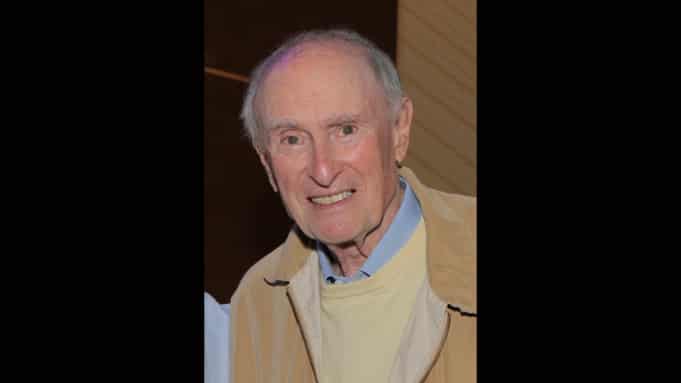
Emmy-nominated writer and producer Saul Turteltaub died April 9. He was 87.
Deadline reported that his youngest son, director Jon Turteltaub, confirmed that his father died of natural causes at his Beverly Hills home. “To say this was a talented, funny, loving and beloved man is truly an understatement,” his son said in a statement reported on nj.com.
During his 50-year career, Turteltaub left his fingerprints on 23 sitcoms. He wrote for and produced such iconic 1960s and ’70s shows as “The Carol Burnett Show,” “Sanford and Son” and “That Girl.” He earned back-to-back Emmy nominations in 1964 and 1965 as part of the writing team for the TV series “That Was the Week That Was” and was again nominated in 1968 for “The Carol Burnett Show.” He frequently collaborated with television producer and writer Bernie Orenstein.
Besides “Sandford and Son,” Turteltaub and Orenstein teamed on “Kate & Allie” (1984-89), “The New Dick Van Dyke Show” (1971-74), “13 Queens Boulevard” (1979), “Carter Country” (1977-79) and others.
“Just heard that one of my favorite people on the planet has died,” director Howard Murray wrote on Facebook. “Saul Turteltaub along with his partner Bernie Orenstein created some of the funniest sitcoms ever to grace television. But that’s only a small part of his legacy. Saul was by any measure, a mensch among mensches.”
Variety.com reported that Turteltaub helped launch the careers of George Clooney, Richard Pryor, Dana Carvey, Nathan Lane, Garry Shandling and Meg Ryan.
Turteltaub was born on May 15, 1932 in Teaneck, N.J., and raised in nearby Englewood. Variety reported that his father, Bernard, suffered from polio and that his mother, Anna, died when Saul was 11.
Turteltaub earned a bachelor’s degree from Columbia University and eventually a law degree in 1957 before starting a career in the entertainment industry. He married Shirley Steinberg in 1960.
Nj.com reported Turteltaub got his start in comedy in the Catskills after a friend hired him for a routine. The website quoted him from a 2016 interview with the Television Academy Foundation about how he was inspired by comedians. “I used to admire those guys more than the singers and more than the actors because they would say something and 200 people in the audience would laugh,” he said. “So it was my job when I was doing ‘Sanford and Son’ to make 20 million people all over the country laugh at the same time and never hear it. But it was enough to hear the audience in the studio.”
Turteltaub is survived by his wife, Shirley; sons Jon (Amy) and Adam (Rhea); five grandchildren; and sister Helena Koenig.
Although the 2020 March of the Living will not take place on Holocaust Memorial Day due to the coronavirus pandemic, an estimated 10,000 people have participated in the organization’s virtual memorial-plaque project.
The plaques will be projected on the entrance gate to the Birkenau death camp on Tuesday as Holocaust Remembrance Day begins across the Jewish world.
The virtual project launched last week, under the slogan “NeverMeansNever,” gives individuals around the world the opportunity to simulate one of the most meaningful personal moments of the March by composing a personal message and placing it on a virtual plaque along the train tracks in Birkenau.
The project continues the tradition of remembering and paying tribute to the victims, honoring the survivors and committing to the global fight against anti-Semitism, hatred and intolerance.
The project continues the tradition of remembering and paying tribute to the victims, honoring the survivors and committing to the global fight against anti-Semitism, hatred and intolerance.
So far, more than 10,000 people (the number scheduled to participate in March of the Living 2020) from 60 different countries have laid personal plaques via the mini-site.
Israel’s President Reuven Rivlin was the first to lay a virtual plaque.
He has been joined by a wide range of international figures, including the heads of Israel’s security services; human-rights icon and Genesis Prize winner Natan Sharansky; Israel’s Ambassador to the United States Ron Dermer; U.S. Ambassador to Israel David Friedman; Jewish Agency chairman Isaac Herzog; Rabbi Lord Jonathan Sacks; Christians United for Israel (CUFI) Pastor John Hagee; actress Mayim Bialik; British TV stars Rachel Riley and Matt Lucas; classic Israeli singer and songwriter Shlomo Artzi; Israeli pop-star Ivri Lider; and Israeli soccer star Eran Zahavi.
In addition to screening the virtual plaques on the infamous “Arbeit Macht Frei” gates at Auschwitz-Birkenau, the plaques were projected onto the wall of Israel’s National Theater-Habima in Tel Aviv on Monday evening, when the holiday began in Israel. Actors and actresses from the theater stood for a minute’s silence during a memorial ceremony at Habima.
Meanwhile, on Tuesday a virtual March of the Living ceremony will take place at 7 p.m. Eastern Standard Time and can be viewed live here.
The ceremony will feature Rivlin, testimonies from Holocaust survivors Edward Mosberg and Irving Roth, addresses from Jewish leaders, Holocaust educators, March of the Living alumni and more.
JNS – Amy Klein thought she had a hard time with infertility, having gone through 10 doctors, nine rounds of IVF in three countries and four miscarriages. But she thinks it’s nothing compared to what aspiring mothers are going through now with the coronavirus pandemic.
“I can’t imagine what it’s like to put fertility treatments on hold,” says Klein, author of the new book The Trying Game: Get Through Fertility Treatment and Get Pregnant Without Losing Your Mind,” which is based on her popular “Fertility Diary” series in The New York Times.
Recently named as Hadassah’s Ambassador for “Reconceiving Infertility,” their new infertility initiative, in time for National Infertility Awareness Week (April 19-25), Klein has had to push off—or completely halt—her multi-city book tour due to the pandemic, as well as even the thought of trying for a second child.
“If you’re high-risk or going through fertility treatment, or if you’ve had a baby and you know you’ll be hospitalized, you shouldn’t be taxing the health services right now.”
“People are saying there’s going to be a baby boom because couples are at home, so what are you going to do aside from have sex? But if you’re high-risk or going through fertility treatment, or if you’ve had a baby and you know you’ll be hospitalized, you shouldn’t be taxing the health services right now,” she said.
Amy Klein, author of the new book, “The Trying Game: Get Through Fertility Treatment and Get Pregnant Without Losing Your Mind.”.
In the United States, the American Society for Reproductive Medicine (ASRM) has recommended that fertility clinics suspend all non-urgent treatments. So while lockdowns are believed to be saving lives, some potential new ones will have to wait until they’re are lifted, including in Israel, where procreation is considered such a national priority that the socialized health-care system offers Israeli citizens among most generous fertility package in the world, including free IUI (intra-uterine insemination) and IVF (in-vitro fertilization) treatments for women up to the age of 45 for two children.
“There was guidance from the Health Ministry to halt all fertility treatments,” said Professor Shevach Friedler, a leading Israeli reproductive endocrinologist and former director of the Infertility and IVF Unit at Barzilai Medical Center. “All the IVF departments are temporarily closed. So there are no fertility treatments, just pregnancy follow-up.”
The March 23 guidance did not apply to women already in the middle of treatment cycle, which usually involves hormonal injections over the course of 10 to 14 days to stimulate egg production. Fertility treatments fall into the category of elective procedures that should be suspended to free up resources for the pandemic. One of Friedler’s patients, a 44-year-old woman, is unsure that she’ll make it before the cut-off age.
“It’s drastic for older women for whom every month counts for their chances for fertility,” he said.
Roadblocks to conceiving
Such is the case with Galit (who for privacy reasons requested that her name not be used), a 44-year-old New Yorker who embarked on her journey to become a single mother last year, believing that it was “now or never.”
Her March IVF treatment, however, was halted. She is now in talks with her clinic to consider freezing embryos to preserve them for transfer at a later date. Women requiring urgent treatments, like those with cancer or diminished ovarian reserve, are given some leeway. Because she is 44 and near the end of her natural fertility, her treatment might be considered “urgent.”
Galit has experienced firsthand the complications caused by the coronavirus; her clinic limited operations when she learned, after the fact, of her own prior exposure to a colleague who later tested positive for COVID-19.
“I’m going to do it if I can,” she said. “I know I’m putting myself and maybe others at risk, but in this situation, I don’t have the time to be putting everyone else’s needs above mine. But even as I say those words, the Jewish guilt is in my head.”
She’ll take utmost precautions, she insisted, including opting out of public transpiration to reach her clinic.
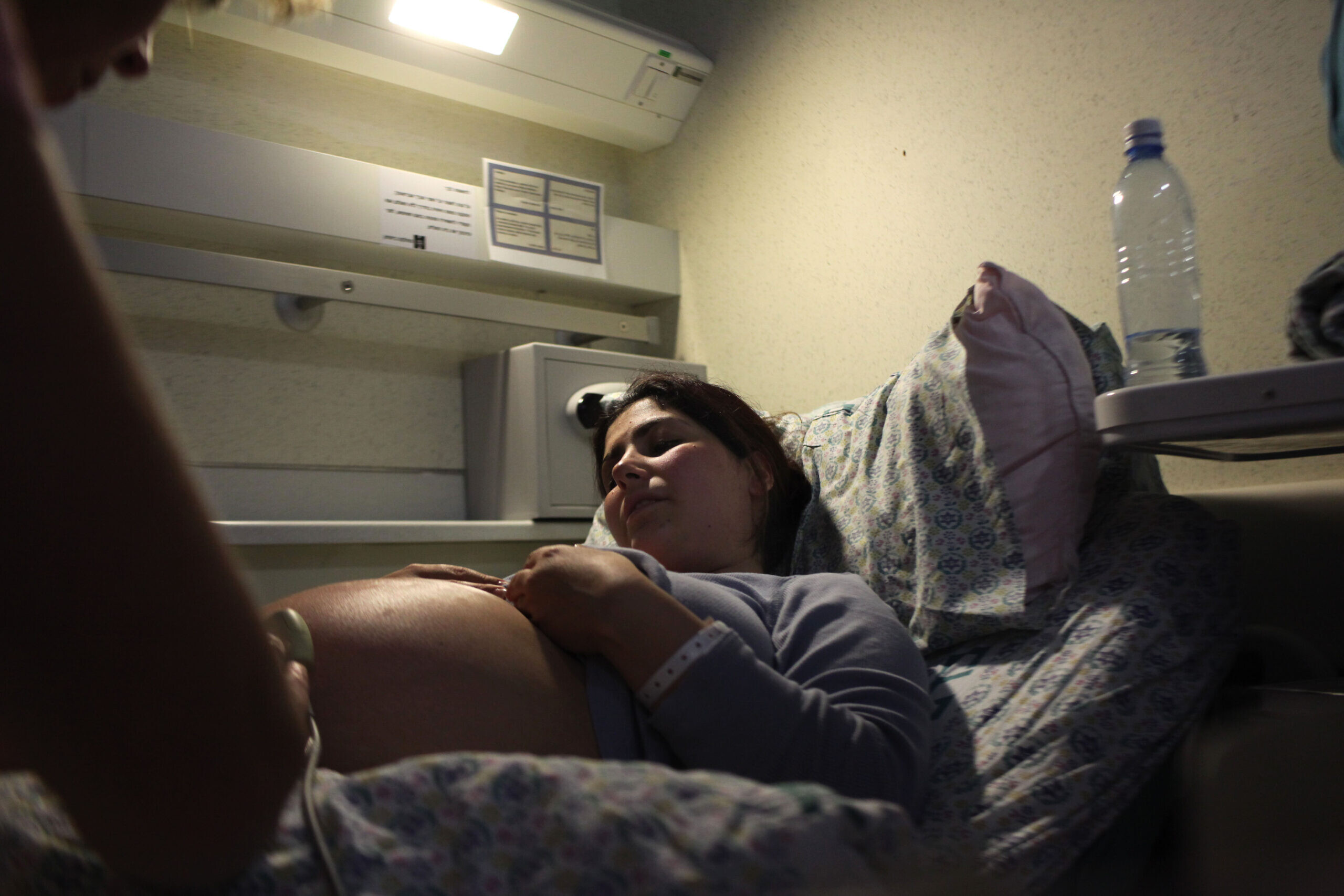
A nurse uses a monitor to check the baby’s heartbeat for a woman about to give birth in a delivery room at the Hadassah Ein Kerem Hospital in Jerusalem. Photo by Kobi Gideon/Flash90.
Orthodox Jewish women face an added roadblock to conceiving. Women in quarantine, women who exhibit any COVID-19 symptoms, or those who may have been exposed to the virus may have to forego the monthly rite of dipping into the mikvah, the Jewish ritual bath where Orthodox women immerse themselves after menstruation in order to resume sexual relations with their husbands, and by extension, to get pregnant.
Orthodox Jewish women face an added roadblock to conceiving. Women in quarantine, women who exhibit any COVID-19 symptoms, or those who may have been exposed to the virus may have to forego the monthly rite of dipping into the mikvah.
“Most mikvahs are requiring appointments and preparation procedures at home to further reduce time spent in the building, in compliance with social-distancing and CDC guidelines,” said Gila Block, co-founder and executive of YeshTikva (defined as “There Is Hope”), a Los Angeles-based nonprofit that supports Jewish couples and women struggling to conceive.
Women’s mikvahs in Israel, like this one in the settlement of Alon Shvut, are still open. (Gershon Elinson/Flash90)
At the Los Angeles Mikvah, for example, women must take their temperature before entering, along with other new guidelines. Other mikvahs in the United States have closed their doors temporarily during the pandemic.
Chabad, the worldwide Chassidic Jewish outreach and educational organization, sent out a message to women outlining safety guidelines for mikvah use, recognizing the centrality of this ritual to Jewish family life and the sacrifice women make by refraining from it.
Even couples and women without fertility challenges may be in no rush to conceive. The American College of Obstetricians and Gynecologists have cautioned women against getting pregnant during this time. Pregnant women are considered an at-risk population, and there are no conclusive studies on the effects of COVID on a fetus.
The American College of Obstetricians and Gynecologists have cautioned women against getting pregnant during this time.
To help couples cope, YeshTikva, noted Block, has increased the number of emotional support groups it offers. She also pointed out that “making a joke about a corona baby boom is insensitive for people who are struggling and not accurate for people who are trying.”
Klein has encountered immense disappointment among couples or singles on fertility forums where she often serves as an informal guide.
“Imagine if you’re going through fertility treatment and they tell you to stop, and you have to watch people complaining about being at home with their kids. One woman told me: ‘I had a miscarriage a month ago, and I’d give anything to be at home with a baby right now.’”
We all want to be the best we can be. And of course, we want to surround ourselves with the best of the best. But this seemingly positive motive has led some people to say and do some pretty horrific things throughout history.
The Greek Philosopher Plato suggested selective mating to breed a higher class of humans. In Sparta, a council of elders inspected every child to determine if he or she was fit to live. In early ancient Rome, fathers were expected to immediately kill their child if they were disabled in any way.
But it’s not just ancient history. In the 19th and 20th century a new system of beliefs began to emerge – Eugenics. The idea that through selective breeding we can improve the genetic make-up of the human race. Sound familiar?
But where did Eugenic thought originate?
Professor Amir Teicher discusses exactly that in his new book, “Social Mendelism: Genetics and the Politics of Race in Germany, 1900-1948” Professor Teicher is an assistant professor of history at the University of Tel Aviv. His research is focused on Germany, eugenics, the development of modern biological thinking, racism and antisemitism, and the history of medicine.
We are super thrilled to be joined today by Professor Amir Teicher to talk about his new book and the history of Eugenics.
On the morning of Sept. 11, 2001, I was at a gym downtown when the first plane flew into the North Tower of the World Trade Center. We watched with horror, not knowing if it was an accident or intentional. Forty-five minutes later, we knew: A second plane hit the South Tower. We ran outside to join others running up Sixth Avenue. Within 24 hours, we knew more: Our city — our country — had been attacked.
Although the heavy smoke and endless swirl of helicopters continued for weeks, most New Yorkers soon went back to work and more important, onto the streets — defiant, determined to reclaim our city.
This year on the morning of March 29, my son, Alexander, and I entered Central Park as we always do, at 97th Street, in front of our building. Schools had closed two weeks before, but the full scope of what we were dealing with had not yet set in. The scene in front of us was like the second plane hitting the tower. Volunteers from the Christian humanitarian group Samaritan’s Purse were erecting huge white tents, covering 50,000 feet of the swath of land called East Meadow, where Alexander had played soccer just the day before. Now New York Police Department (NYPD) and metal barriers prevented anything except stunned spectators from doing anything but taking photos.
To Alexander, it was just another bizarre scene in New York City. To the adults, it was incomprehensible, surreal.
Two days later, the field hospital — 68 beds, including 10 ICU beds — was ready. After 9/11, the hospitals had been ready, but the ambulances never came. Now, ambulances and helicopters swirl around Mount Sinai Hospital day and night.
The rare person you see isn’t defiant, but filled with fear, an existential foreboding. People are afraid to look into each other’s eyes.
As I write this, New York City nears 12,000 deaths; four times as many as on 9/11. Some outside of the city have called New Yorkers irresponsible; I can only think that they’ve never been here. Essentially, we live on top of one another. Crowded apartment buildings, crowded sidewalks, crowded shops, crowded theaters. “I suspect NYC as both a transit hub and target for international travel plays as big or even bigger role than density,” Dr. David Isaacson, an internist and hospitalist in Wisconsin, told me. Indeed, an April 9 study by researchers at Mount Sinai Hospital’s Icahn School of Medicine states that most of the early cases came directly from European as well as United States sources.
By the end of March, the city was on lockdown, which closed not just non-essential businesses but essential ones, too, such as the pharmacy around the corner. Up and down the main avenues, businesses are boarded up, streets are vacant, sidewalks clear. The rare person you see isn’t defiant, but filled with fear, an existential foreboding. People are afraid to look into each other’s eyes.
The Central Park Conservatory Garden. Photo by Karen Lehrman Bloch
Typically, there is an energy that runs through New York City that, no matter how much you may be sick of the winters or enjoy a vacation, you find yourself missing. That energy is gone. The city of the hyper-creative and the hyper-competitive — the city of constant motion — has been forced to stop.
Stillness often connotes beauty. But in this case, it tells an ominous truth: The city has lost its soul.
Changing the nature of New York
“This is a bad time to be living in an apartment building,” said my doctor, who lives in a house with a yard in Bergen County, N.J.
After the schools closed mid-March, anyone who had a home in the Hamptons (on Long Island) or Connecticut fled. That left many parts of the city, including the Upper East Side where we live, empty. At first, it just felt like a typical summer in New York City. But as “shelter in place” became the new normal, crowdlessness quickly lost its appeal. When most restaurants also closed — they couldn’t survive on take-out alone — it began to feel as if the walls were closing in.
Although it’s been only a month, the anxious monotony makes it feel far longer. Our apartment doesn’t get much light, so we try to get out every day. But on rainy days, it can feel as if we’re sinking into a black hole.
“NYC’s finger-waggers and toilet-paper hoarders are far outweighed by the random acts of kindness.”
Some of us questioned the logic of the lockdown. If you force 8.4 million residents into their often-cramped apartments, isn’t that going to make a highly contagious problem worse? Why not quarantine just the most vulnerable? Gov. Andrew Cuomo also initially questioned the lockdown: “I don’t even know that that was the best public health policy,” he told the New York Post on March 26. “Young people then quarantined with older people, [it] was probably not the best public health strategy. The younger people could have been exposing the older people to an infection.”
Nonetheless, as the numbers of sick and dying continued to climb, Cuomo and New York Mayor Bill de Blasio went on a closing spree. Closing the basketball courts was particularly painful. Basketball is New York’s great equalizer. The day the park rangers took down the hoops in Central Park, one man shouted at them, “Do you know what this is called? Oppression.”
“I hear you,” responded one of rangers. “Both my kids play here. Now they’re playing video games.”
To stay on trend, The New York Times published a total of five pro-video game pieces. You could almost hear the eyerolls from some parents.
“We are a city of congregators,” wrote Glynnis MacNicol in Medium’s vertical GEN on April 15. “We are so used to being jammed up against one another, so thrilled and challenged and comforted by it that maintaining social distancing requires the mental vigilance of giving up an addiction. … In a city of people used to rallying in an emergency, be it large or small, we have been forbidden from using our greatest strength. This virus is perverting everything: It’s Gotham’s kryptonite.
“The abrupt closures of the last month have mimicked the sudden loss of a loved one: the immediate disorienting grief when everything is upside down and your brain, stretched between what was and what is now, does acrobatic maneuvers trying to exist in both places at once. In Alzheimer communities, it’s known as anticipatory grief: The confusing and extraordinarily painful process of understanding that what you see before you is not actually there. And may never be there again.”
A toll on the community
Bereavement notices from our synagogue, Park Avenue, typically come once a month, maybe once every two months. I started to get six or seven a day. One friend lost her father. My 90-year-old father is on such tight security in his Palm Beach, Fla., nursing home that often, I can’t even call him.
The homeless are gone, too, presumably to shelters. The lines outside the various food pantries stretch around the block.
The ultra-Orthodox communities in Williamsburg, Crown Heights and Borough Park have been especially hard hit. Estimates put the number of deaths in these communities at roughly 300. The early resistance by many to social distancing was part of the problem but so was the fact that “community” is precisely what this community rests on. “Twenty-five people in the Hasidic communities died over the course of one Shabbat,” a Satmar adviser told The Jerusalem Post on April 17. “We didn’t want to get up in the morning because we didn’t want to hear any more bad news.”
I feel so blessed to have Alexander. We deal with isolation issues — now, I am often the unwilling recipient of his tackles — but friends who live alone face an aching loneliness on top of the relentless anxiety.
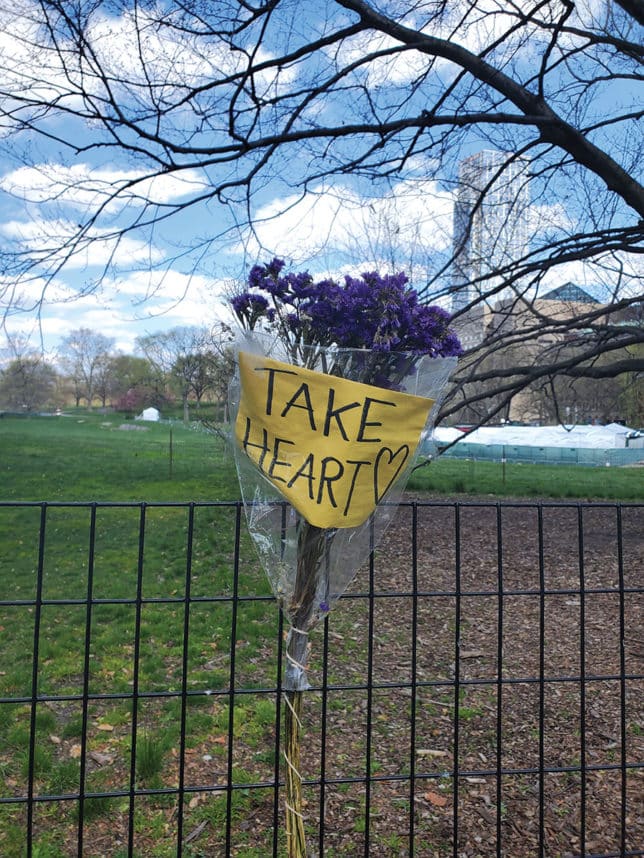
A bouquet of flowers urges New Yorkers to “Take Heart.” In the background are tents erected to treat Covid-19 patients. Photo by Karen Lehrman Bloch
I urge my friends to take walks in the park. But sometimes, even that can be dangerous. I’ve been scolded for laughing; walking too close to Alexander; and told that I was “setting a bad example” by running after his soccer ball. Yes, New Yorkers are on edge. But not as much as non-New Yorkers observing this. Whenever I post photos from the park, there’s always a group of finger-waggers attempting to virus-shame (HBO TV show host Bill Maher’s term) me. Oh yeah, they all live in big houses with yards.
‘I just don’t see an end of this in sight’
Short of losing a loved one, I simply can’t process what it must be like for the health care workers who go in each day to face a humanitarian crisis not seen in this country for a century. Each time they go to work, they are risking their lives and those of their loved ones. On April 17 the New York Post reported that at least 26 health care workers in NYC had died from complications of the virus; 900 staffers had tested positive; 3,000 had called in sick.
I see Mount Sinai staffers take a break on benches in Central Park. Their eyes bloodshot or closed from 12-hour shifts, they look as though life, let alone bravery, has been beaten out of them. But soon, they pick themselves up and go back into battle.
The New York Times Magazine ran a particularly wrenching description by Dr. Helen Ouyang as the headline: “I’m an E.R. Doctor in New York. None of Us Will Ever Be the Same,” on April 14. She is part of a WhatsApp group chat with other emergency room doctors to share facts and feelings. By the end of March, she learned that 13 COVID-19 patients died in one hospital in 24 hours: “A refrigerated truck is sheltering dead bodies there because the morgue is already full .… Paramedics say they are seeing 300 ‘dead on arrival’ cases in one day, citywide, instead of the usual 50 or so.
“It seems impossible to avoid getting infected,” Ouyang continues. “You would have to be perfect, and in the mayhem of the E.R., it’s nearly impossible to be even good. I make mental calculations to keep all protective equipment on for my eight-hour shifts; during my 12-hour shifts, I’ll remove it only twice, to eat or drink.
Typically, there is an energy that runs through New York City that, no matter how much you may be sick of the winters or enjoy a vacation, you find yourself missing.
“When I walk through the hospital doors, the E.R. is a place I no longer recognize. Intubated patients, of every age, are on ventilators everywhere. It feels simultaneously electrifying and oppressive. But it’s also eerily quiet. Family members and friends haven’t been allowed in the E.R. for more than a week; most of the patients are too sick to talk. … Oxygen hisses in the background.
“The virus is impulsive, attacking one person more ferociously than another …. I just don’t see an end of this in sight,” she continues. “When I think about that, I feel submerged, and my instinct is to rip off my mask and leave the hospital.”
But she doesn’t. Ouyang continues to weather the storm with a strength and resilience that feels biblical.
Random acts of kindness
NYC’s finger-waggers and toilet-paper hoarders are far outweighed by the random acts of kindness. Food shopping can be onerous in NYC, but cabs typically are a short step away. What happens when the cabs disappear? Alexander and I were walking up Madison Avenue, laden with grocery bags, when a guy with a helmet and mask approached on his electric scooter. “Hey neighbor, let me take a few of these for you.” Alexander was dumbfounded that I gave our grocery bags to a complete stranger. But his heavy Israeli accent signaled he was our neighbor across the street, the guy who owns the dog spa.
The tents in front of our building soon became part of the Central Park landscape, as solid and as unwavering as the trees, despite the 24-hour presence of the NYPD, media and groups trying to steal the media spotlight. One day, we saw a bunch of violets tied to the fence. A sign read “Take Heart,” but it faced the spectators, not the tents. Whoever put it there knew we needed that message almost as much as the patients in the tents.
There also have been moments of humor: the guy in the park with the full-head goat mask; the guy wearing a mask and smoking (actually not funny); the scantily clad sunbather who took over the basketball courts.
The defiance of nature
The lifesaver for all New Yorkers has no doubt been the most glorious blossoming of spring throughout the city. Are the cherry blossoms and tulips and daffodils even more beautiful this year? Why do the squirrels and baby birds seem more eager to connect? “Without all of the people, you notice everything more,” my son said.
My hope that a sense of defiance would emerge quickly was quashed by a new set of rules and regulations from the governor, rules that further confiscate the three things we need to get us through this: sun, air and human contact.
I asked Isaacson where this is all going. “We don’t know,” he said. “If initial predictions pan out, so far, we’ve seen just the tip of the iceberg. The rapid progression of the disease, that it can so swiftly derail multiple organs in the body, offers significant treatment challenges still.”
On the morning of April 19, Cuomo was slightly optimistic. “If the data holds, we are past the high point, and all indications at this point are that we are on a descent,” he said during his daily press conference. “We are on the other side of the plateau and the numbers are coming down.”
The governor asked that we remain vigilant, stressing that 1,300 people had been hospitalized for the virus the previous day.
“Don’t get cocky,” he said. “Don’t get arrogant. This virus has been ahead of us every step of the way. This is only halftime in this entire situation.”
Spring continues to defy all forms of oppression. For humans, defiance rests on hope, on the glimpse of an end to this horror. Sadly, we don’t quite have that yet.
Karen Lehrman Bloch is an author and cultural critic.
An Israeli Border Police officer sustained moderate wounds on Wednesday morning in a multi-stage terrorist attack at a checkpoint near Jerusalem.
According to police, the attacker, a Palestinian, rammed his van into the officer at a checkpoint near the town of Ma’aleh Adumim, then got out and attacked him with a pair of scissors. The terrorist was then shot dead by other troops on the scene.
A pipe bomb was later found in the terrorist’s backpack, which he presumably had intended to detonate at the crossing.
The assailant is believed to be a 24-year-old from the Palestinian village of as-Sawahira ash-Sharqiya, which is just east of Jerusalem. He does not have a valid permit to work in Israel.