fbpx

November 26, 2019

London Man Reportedly Attacks 3 Jewish Children on Bus

An unidentified male allegedly attacked three Jewish children on a bus in London on the morning of Nov. 24, the Jewish Chronicle reports.

The London Shomrim, which a neighborhood watch organization, tweeted that “1 victim was punched in the eye, all 3 had their hats thrown off.” A video accompanied the tweet.

Police told the UK Metro publication that they are investigating the matter; no arrests have been made at this time.

Anti-Defamation League CEO Jonathan Greenblatt tweeted, “Absolutely disgraceful. Three Jewish kids were punched on a bus in London. Such violent #antiSemitism cannot go without justice, especially as #antiSemitism continues to rise in the UK.”

The alleged assault comes after a video clip went viral Nov. 22 of a man subjecting a Jewish family on the London Metro to anti-Semitic harassment. A Muslim woman intervened; a man was later arrested over the matter. The Jewish father met with her on Nov. 25 and thanked her for her actions.

A Community Security Trust (CST) report from August concluded that there has been a 10 percent increase in anti-Semitic incidents in Britain from 2018 to 2019; the 892 reported anti-Semitic incidents at that point are a record-high in a CST report.

London Man Reportedly Attacks 3 Jewish Children on Bus Read More »

Netanyahu: The Two Narratives

Netanyahu 1: From the beginning, we knew Prime Minister Benjamin Netanyahu was corrupt and irresponsible. His path to power was cleared when Prime Minister Yitzhak Rabin was assassinated in 1995. Netanyahu bares a share of responsibility for that tragic event —he’d viciously attacked Rabin verbally and rallied incitement against him. He had no limits and didn’t care about the consequences of his actions. 

Netanyahu 2: From the start, they wouldn’t give him a chance. First, they blamed him for Rabin’s assassination. Then, they blamed him for the collapse of a bogus peace process with Yasser Arafat. He’d barely been elected when a fusillade of investigations into him began. The old establishment was determined to take him down, by whatever means. 

Netanyahu 1: He knew no limits in pitting people and groups against one another. Why did he need to whisper into a rabbi’s ear that “the left forgot how to be Jewish?” Because he thrived on mutual hatred. He fought against the media, the courts, democratic values. Rather than wanting to be a unifier, he was a divider. Oh, and he never liked to pay for services. He thought that he deserved to get everything for free. 

Netanyahu 2: Wouldn’t you become a paranoid if groups wielding great power sought to destroy you, politically and personally? Wouldn’t you become obsessed with the media’s power, when newspapers and TV channels are all filled with commentators whose only mantra is “Bibi must go” and whose only analysis of events is “It’s all Bibi’s fault?”

Netanyahu 1: Before Bibi, Likud had leaders who had dignity. Menachem Begin, Yitzhak Shamir — we didn’t like their policies but we knew their true motivation was to protect Israel. That it was not about them, it was about their country. They were honest, they were gentlemen, they were worthy rivals. It is good to have differences of opinions, and good to have political rivalries but some rules of civility must be maintained — and Bibi has no interest in maintaining them. 

Netanyahu 2: Ha! You called Begin a “baby killer” and “a terrorist” in demonstrations against the first Lebanon War. You betrayed Shamir in the 1990 “stinking (dirty) trick.” The only reason you miss these two is because they ultimately lost an election and let you — the left — hold onto power, not just in the government but also in academia, the courts, the media. Netanyahu bit you time and again and is determined to uproot the old Labor establishment. That’s why you dislike him (in fact, hate would be a more accurate term).

Netanyahu 1: He is bad a prime minister. He destroyed the peace process with the Palestinians and wants to annex and West Bank. He failed to stop Iran. He sells the country to the ultra-Orthodox parties. He alienated the Democratic Party in the U.S. and American Jews. 

Netanyahu 2: Look at the facts: In the mid-1990s, Israel was still a second-rate country, endangering itself by entertaining pipe dreams about a “new Middle East.” Netanyahu cut through that nonsense. He modernized Israel’s economy, stopped the detrimental process of compromises with terrorists who want to kill us, and correctly assessed that the Middle East wasn’t about to become a friendly territory for Jews. In fact, the opposition is angry at him not for being wrong, it’s angry at him for being right. When world leaders had delusions about an Arab Spring, Netanyahu was there to pour cold water on their heads. Sure, they didn’t like it but was he wrong?

Netanyahu 1: He has had too much power for too long, and power corrupts. In recent years, he became sloppy or overconfident or both. He thought he could do whatever he wanted  without paying a price. He could appoint “clown” ministers to important positions to spite his rivals (Culture Minister Miri Regev). He could pass legislation without regard to the sensitivities of others (nation-state bill). He could enjoy expensive cigars provided by wealthy acquaintances who needed to remain his allies (Case 1000). He could pressure the media, offering financial benefits in exchange for positive news coverage (Cases 2000, 4000). He was out of control.

Netanyahu 2: As much as they tried to do so by political means, his critics couldn’t take him down. The people wanted him as their prime minister. So ultimately, they turned to legal means. And because he never took any money from anyone, they started inventing crimes that don’t exist in law books. Accepting gifts is suddenly illegal (what about gifts received by Prime Ministers Ehud Barak and Ariel Sharon?). Getting positive news coverage is suddenly a crime (why didn’t anyone investigate the 40 members of Knesset supporting legislation that would benefit a certain newspaper?). To indict Netanyahu, they would use all means, employ all dirty tricks. This is a coup, not the pursuit of justice. 

Netanyahu 1: Finally, we got him. Now, for once, he should do the right thing and step down. We are tired of his trickery, his incitement, his never-ending campaign of hate. It’s time for him to act like a statesman and clear the way for a successor, either from within his party or from another party. And you know what? Maybe, if he does the right thing, we’d be willing to consider a deal of sorts. Clemency. This can be good both for you, Mr. Prime Minister, and for your country. 

Netanyahu 2: He must fight. He must not let the legal system, the old establishment, the left, win. The law doesn’t say that he should quit. The Knesset doesn’t have a majority of elected officials who’d vote to remove him from office. If he goes, it’d be exactly as he said: Rather than the people deciding who they want as their leader, a small cadre of insiders will get to determine the country’s political fate. This is the rule of the elite over the masses. This is undemocratic. Netanyahu, as a true democrat, not a fake one who only talks the talk but doesn’t face the consequences, must give them hell and fight — for himself, and also for the people who still want him as their leader.

Epilogue

As I write these words, Netanyahu seems poised to fight. 

As I write these words, Israel is facing a political and a legal crisis. 

As I write these words, two narratives clash, and the country is trapped between them. 

Thinking and reading about Netanyahu in recent weeks, I came across an interview with him and Larry King when he first visited the U.S. as prime minister in 1996. A lot has happened to Israel and to Netanyahu since those early days of his first term. A lot has changed. Not all for the better. 

Netanyahu: What does Israel do with its former prime ministers? First of all, in Israel there is no such thing as a former prime minister. They always try to come back. I’m going to break the mold.

King: You wouldn’t stay?

Netanyahu: Well, two terms and I’m out. Now, you may not believe this, but … I advocated a limit of two terms for the prime minister, two successive terms and then you’re out. And I would be delighted to serve my two terms and then go and write a book…


Shmuel Rosner is senior political editor. For more analysis of Israeli and international politics, visit Rosner’s Domain.

Netanyahu: The Two Narratives Read More »

Continuing to Provide Service After the Military

David Horesh’s story is one of brotherhood, Israeli chutzpah and intelligence. As he explains, “Someone’s sister goes missing in Kyrgyzstan, we hear about it. We buy a few tickets. A group of guys fly there the next day. We start working intelligence angles that we know are connected in that area.” 

Horesh and his brothers-in-arms did all of this for a man they had never met. “I didn’t know this guy, but he’s from my unit,” Horesh explained. “I had no interaction with him until he called me up.”

The unit Horesh referred to is Rimon, an elite counterterrorism unit in Israel’s south that no longer is active. After his three years of army service, Horesh helped establish and lead Rimon’s nonprofit alumni network. “Most of the elite units of the army have alumni associations,” he said. “They realize that the human capital is extraordinary.”

For many, these associations are strong support networks as these young men and women transition into civilian life, including job networking, career training, pooling funds to assist wounded soldiers and offering scholarships to alumni. 

“The military service was the best thing that happened in my life,” Horesh said. “All the lessons that I implement today, whether it’s in business or friendship or leadership, everything came from the military.”

Horesh’s parents immigrated from Australia before Horesh was born. He said they tell him all the time, “We didn’t have the network that you have. The fact that you met that caliber of human capital, that is priceless.”

“Most of the elite units of the army have alumni associations. They realize that the human capital is extraordinary.”

Horesh is just 28, but he is a leader to watch, having been one of just 120 soldiers chosen each year to receive a  presidential commendation. He’s already taken further strides by joining the board of another nonprofit, Combat Ventures, which focuses on helping combat veterans thrive in the business world, especially in the high-tech sector. Horesh calls it “the tip of the spear of the Israeli economy.” 

“Everyone who has gone to the elite units and has been the tip of the spear of the IDF (Israel Defense Forces), wants to continue to be that in their career. These people are looking to excel. The high-tech ecosystem has the most influence on Israeli society.”

However, he added that combat soldiers are at a disadvantage when entering this sector post-military service. “If I was in 8200 (an elite intelligence unit), I could explain very easily what I did in the army: I learned to code.” But translating that combat experience into business terms is where Combat Veterans comes in, by helping “bridge this gap between combat veterans and the high-tech ecosystem,” Horesh said. He encourages those he mentors to “talk about teamwork, perseverance and being able to perform in highly stressful situations.”

Continuing to Provide Service After the Military Read More »

Searching for Bobby Fischer — Again

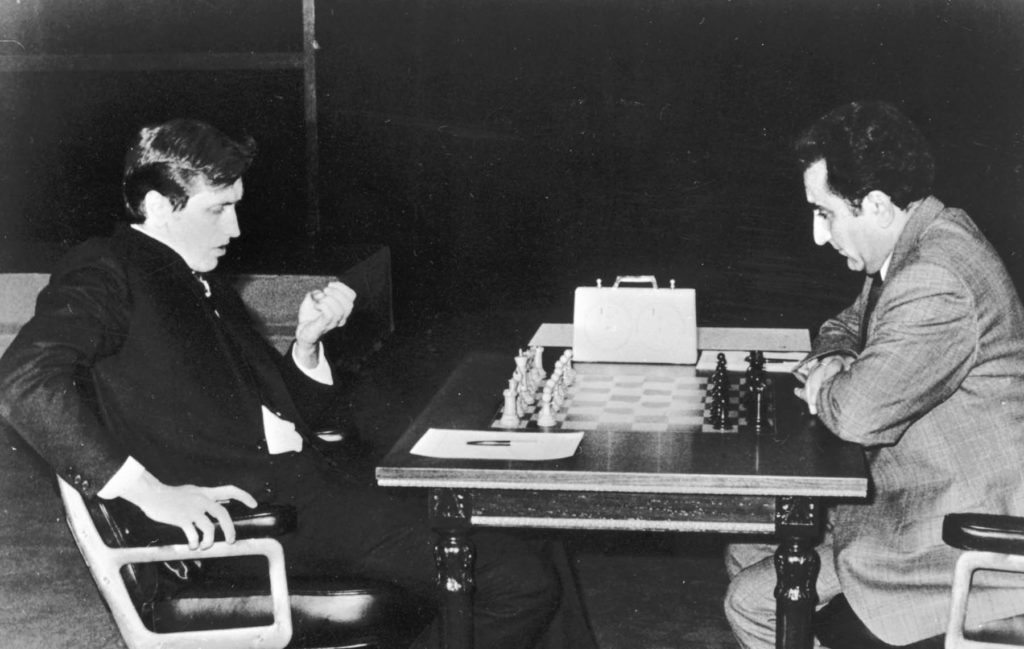
I went to the tiny town of Laugarvatn in southern Iceland to spend a month at an artists’ colony to write a novel. Little did I know I was about to become re-obsessed with Bobby Fischer.

I initially became obsessed with Bobby Fischer in the early 1970s, when he dominated the chess world like George Balanchine dominated dance and Babe Ruth dominated baseball. Fischer became the world champion when he won the most famous chess match in history, in Reykjavik, Iceland, in 1972. He was one of the most brilliant human beings of the 20th century. His chess games were “Mona Lisas.”

I became re-obsessed with Fischer in the early 2000s, when his anti-Semitism reached virulent new heights — “Jews are a filthy, dirty, disgusting, vile, criminal people,” he said in one interview. His anti-Americanism led him to proclaim the 9/11 attacks were “wonderful news. It’s time to finish off the U.S. once and for all.” How had this man, this genius, turned into such an evil idiot? How had this American, born to a Jewish woman, developed such self-loathing? Seeing him speak back then, I wanted to shake him. “You’re Jewish, for God’s sake. Pull yourself together,” I wanted to yell.

But eventually, because no better explanation for his behavior was ever forthcoming, I just said to myself, “he’s crazy” and forgot about him. He went into hiding in Asia for a few years because he’d broken a United Nations embargo against Yugoslavia. The law caught up with him. Pictures surfaced of Fischer in a Japanese jail, with a scummy beard and an old gray ball cap. Underneath it, you could see those brilliant eyes, but something was wrong with them. They were unfocused and way too intense.

He was crazy.

He had renounced his American citizenship, so he was without any place to go. Seven elderly men from Reykjavik, who had met Fischer in 1972, petitioned the Icelandic Parliament to declare him a citizen of Iceland and give him a home. The parliament agreed. Fischer flew to Iceland and spent the last three years of his life there, before dying in 2008.

“I became re-obsessed with Fischer in the early 2000s, when his anti-Semitism reached virulent new heights.”

I had forgotten this last portion of Fischer’s life, then I arrived in Laugarvatn and learned Bobby Fischer was buried only about 25 miles away, in the small town of Selfoss. There is a museum dedicated to his memory: the Bobby Fischer Center, open from 1 to 4 p.m. every day.

And that’s when I became re-obsessed. The great Bobby Fischer, the horrible Bobby Fischer, buried in a tiny town in Iceland? How could this be?

What did Icelanders think of him? How did they feel about his anti-Semitism? Were they anti-Semitic, on this quiet little island that when I was there, was as close to paradise as any place I’ve ever been?

I don’t have to tell you anti-Semitism is back in fashion today in the United States and Europe. For me, as a Jew, this is not a huge surprise. I’ve never felt totally safe in the United States. Yeah, we’ve had a good 250- year run, but I know my history. Every country we’ve ever been in, we eventually got kicked out.

All my life, I’ve kind of kept my eyes open for possible escape hatches, if it comes to that: Israel, Ireland, New Zealand, Iceland.

But now, was Iceland going to be out of the question? So I went in search of, not so much Bobby Fischer, as what Icelanders thought about Bobby Fischer. I began with Katla, the pixyish blond artist who ran our artists’ colony. “Katla,” I said, “I noticed Bobby Fischer is buried near here.”

“Yes,” she said, as she kneaded a loaf of rye bread she was making for us starving artists. “Isn’t that great?”

“He was a great chess player,” I said, “but he was kind of crazy, too.”

“Crazy? How do you mean?”

“Well, he had some pretty out-there views.”

“Out there?”

I decided not to mince words. “He was very anti-Semitic.”

English isn’t Katla’s first language. “Anti-Semitic? You mean like, anti-Jew?”

“Yes, he was very anti-Jewish.”

“Oh, I don’t know about that.”

She didn’t know? Did Icelandic people not care enough about his anti-Semitism to talk about it?

Later, I asked Katla’s husband, Einar, about Fischer. Einar, it turned out, knew of Fischer’s anti-Semitism. He said, “Yes, Fischer was very, shall we say, eccentric? In Iceland, we tend to be very, what’s the expression? ‘Live and let live.’ ”

“Huh,” I said. Eccentric? The man was a monster. Maybe you could say he was more mentally ill than monstrous, but he believed “these goddamn Jews have to be stopped. They’re a menace to the whole world.”

“I don’t know,” I said. “To me, being anti-Semitic or racist or whatever is worse than just being eccentric.”

“You have to understand,” Einar said. “When Fischer came to Iceland and insisted that we have the world championship here, this put Iceland on the map.”

The next night, Einar and Katla invited a woman named Hekla to their place. Hekla is a published fiction writer and a former candidate for president of Iceland. That’s not quite as impressive as it sounds; Iceland is full of people who are former candidates for president, and she got only about 1.5% of the vote. But still, I thought Hekla could give me the worldly Icelandic view of Bobby Fischer.

“Sure. Bobby Fischer,” she said. Her face brightened. “My uncle owns a bookstore in Reykjavik. Bobby Fischer used to hang out there all the time.”

“Really,” I said. “What was he like?”

“Oh, you know. He just used to hang out there. A lot of people would hang out there. It’s that kind of place.”

“Did he seem, you know, crazy?”

Hekla looked at me, puzzled. We were standing in the kitchen before dinner. “Crazy? No. My uncle said he was a nice guy. Why do you say crazy?”

Did she really not know what I was talking about? “Well, he had some pretty extreme views.”

“Oh yes, he was very anti-American.”

“And anti-Semitic. He was terrible that way.”

“Well, you know, people have a right to believe what they believe.”

At this point, Katla saw that the conversation was about to go off the rails. She swooped in and noisily offered everyone wine. Later, over dinner, Hekla described some of her experiences as a child traveling in the Middle East. It became clear that she was not anti-Semitic. But if I knew somebody was a virulent racist, would I say, “Hey, he has the right to believe what he believes?” I guess that’s technically true, but this way of thinking kills people.

I’m scared that during the next 20 or 30 years, many Jews may die in Europe because of anti-Semitism. Not that we Jews are the only ones at risk because of ethnic hatred. We have plenty of company.

“He had renounced his American citizenship, so he was without any place to go. … Fischer flew to Iceland and spent the last three years of his life there, before dying in 2008.”

I finally hustled up a car ride to Selfoss to visit the Bobby Fischer Center. It was on the second floor of a building on the main street. It cost 1,000 Icelandic krona to get in. That’s about $8.

The museum was quite moving. There were pictures of Fischer at his handsomest, most alive, with alert flashing eyes; pictures of him 40 years later in that funky beard and ball cap, looking drugged. There were books and videos of his most famous chess masterpieces. There also were displays of Iceland in the early 1970s, with videos of joyful natives greeting Fischer and descriptions of how much the world championship match had meant to them. The match took place less than three decades after Iceland finally gained independence from Denmark, and it was the country’s national coming-out party. Icelanders were forever grateful to Fischer for insisting the match be held in Iceland.

Much to my relief, the museum acknowledged Fischer’s anti-Semitism. It was conveyed with great sadness on at least three plaques. The Icelanders in charge of this museum were very aware his views weren’t just eccentric or crazy; they were evil. The museum made no lame apologies on Fischer’s behalf.

But, as Einar might have said, “They still love? Admire? Respect? They have great interest in Bobby Fischer.”  I can relate; I have great interest in him, too. And you could say, who am I to judge? I’ve admired the writings of people who held slaves and seen movies directed by people who were probably rapists.

After I left the museum, I walked the mile and a half to Fischer’s grave. He’s buried in the front yard of a small, white, wooden church on the outskirts of town. His tombstone just gives his name, date of birth and date of death. It’s small, no bigger than any of the 15 or 20 other tombstones. There were no flowers. Just Bobby Fischer’s grave.

I went searching for Bobby Fischer, and I guess I found him.

I do have one more thing to say. I had a great time in that tiny Icelandic town. Katla was a generous host, and Einar drove us to nearby waterfalls and ice cream restaurants. Baldur, at the diner down the road, gave us free Icelandic skyr cake and hung out with us. The phlegmatic teenage lifeguard at the municipal swimming pool, after he got to know me, actually smiled when he saw me coming — and Icelanders, though friendly, are not known for smiling. 

We had a lot of good communal meals at the artists’ colony. The lesbian poet from Tennessee; the Indian from Australia who wrote “weird fiction,” as he called it; the British visual artist who painted a chair blue and took photographs of himself carrying it all over Iceland; the Native American memoirist who was writing about his father; and the Jewish crime writer from Los Angeles (that’s me) all cooked up a storm and had a great time together. We  had hilarious debates long into the night about whether the blue chair was Brit or Hindu or Jewish, eventually deciding it was all three.

I guess what I’m saying is there’s a lot of love in the world, too. The corny stuff is true: We’re all pretty much the same and, person to person, we’re usually nice to one another.

So who knows? Maybe this current wave of hatred in Europe and the United States will subside.

If not, let’s vote for New Zealand.


Matt Witten is a TV writer, screenwriter and novelist who has written for “Pretty Little Liars,” “House” and “Law & Order.” He also wrote the Jacob Burns mystery series, published by Signet.

Searching for Bobby Fischer — Again Read More »

Simms/Mann Think Tank Offers Latest in Early Childhood Development

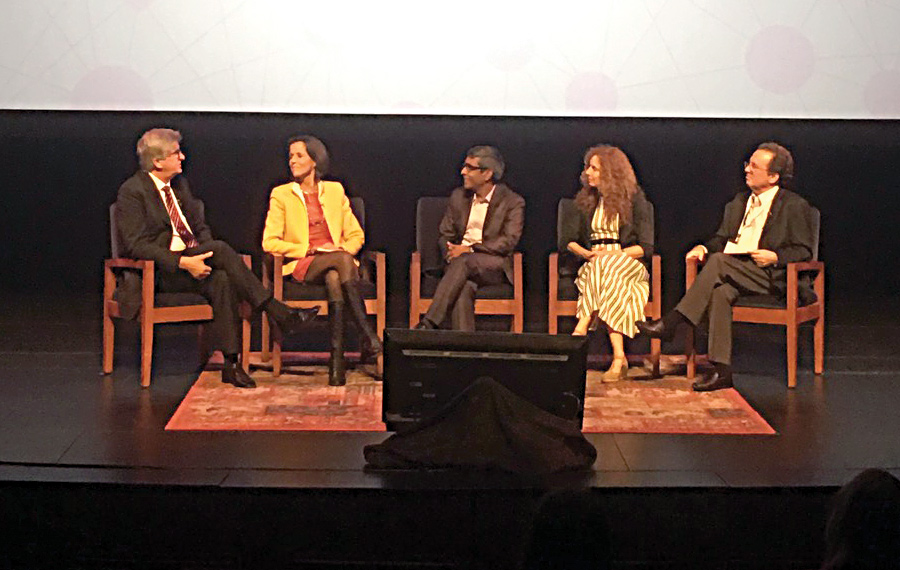
More than 300 people attended the sixth annual Simms/Mann Institute Think Tank on Oct. 28 at the Wallis Annenberg Center for the Performing Arts in Beverly Hills. The subject was “Rituals, Routines and Body Rhythms: The Simple and Profound Impacts of When We Eat, Sleep and Pray for Health Across the Lifespan.”

Speakers included Ruth Feldman, the Simms/Mann professor of developmental social neuroscience at the Interdisciplinary Center (IDC) Herzliya, Israel, whom Mann Simms calls one of the preeminent scientists in early child development.

Feldman discussed the parenting method Kangaroo Care, whereby parent and child have chest-to-chest, skin-to-skin contact. This creates greater synchrony — or attunement — between the two, Feldman said. Kangaroo Care, she added, also may increase a child’s empathy.

University of Maryland professor of human development Nathan Fox spoke about teaching children to overcome their anxiety. “If the anxious brain has a bias toward threats, training the brain to focus less on threats is possible,” he said.

Salk Institute of Biological Studies professor Satchin Panda, author of the “The Circadian Code” and a leading expert in circadian rhythm research, spoke about natural biological clocks, saying that keeping the body on a schedule is vital for one’s well-being. “The brain needs downtime and a person needs sunlight,” he said, adding sunlight is the greatest and cheapest anti-depressant. 

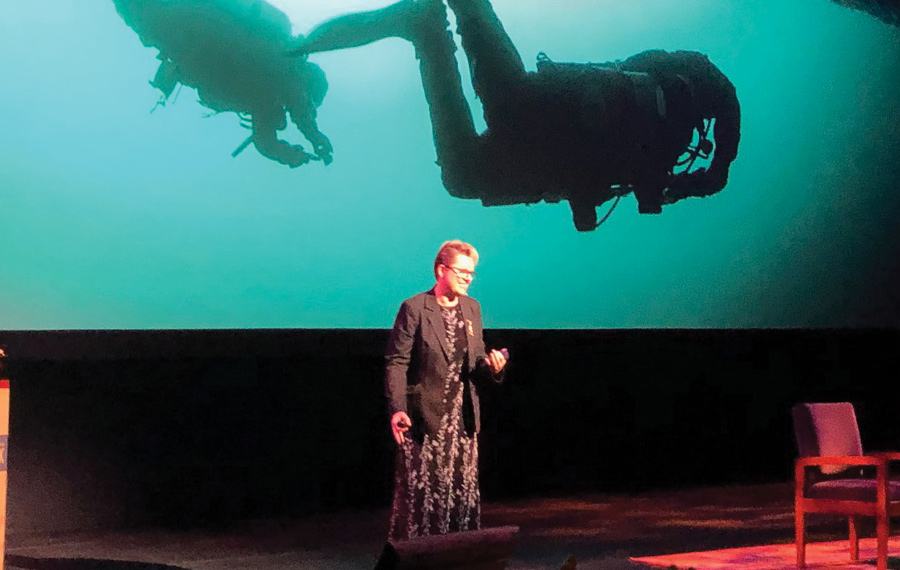
Underwater explorer Jill Heinerth discussed her anxiety and triumphs around cave-diving at the Simms/Mann Institute Think Tank. Courtesy of the Simms/Mann Institute

Jodi Mindell, professor of psychology and associate director of the sleep center at Children’s Hospital in Philadelphia, discussed “The Power of Bedtime Routines.” If a child is not sleeping, she said, it means there are other issues at play. “Sleep is a window into a child’s functioning,” she said.

Mann Simms concurred, emphasizing the importance of building routines around a child’s bedtime, making sure they go to sleep at the same time every night and wake up at the same time every morning. “It’s all about integrating the whole,” she said. “The child is only as good as the parent is.”

Susan Kaiser Greenland, an expert on mindfulness for kids, spoke about how objects in the home, such as a snow globe, can teach children how to master their emotions. When a child’s thoughts are unsettled, judgment is cloudy, just as one cannot see through a shaken snow globe, she said. The opposite, she added, also is true: When a child is more calm and composed, they can see more clearly and make smarter decisions.

“Treat unpleasant emotions as visitors at a dinner party,” Greenland quipped. “Transitory and not that substantial.”

Wendy Slusser, associate vice provost for the Semel Healthy Campus Initiative Center at UCLA, gave tips to parents on what to do if their children are defiant. She advised delivering a command in a close, calm and quiet way, using the acronym CCQ for her method.

Jill Heinerth, underwater explorer and consultant to Hollywood director James Cameron, led a discussion about exploring underwater caves in far-flung locales, including inside icebergs in the Antarctic. Mann Simms explained that including Heinerth in the program was done to show how people can overcome stressful experiences.

Dr. Fernando Martinez, a professor of pediatrics at University of Arizona, spoke about exposing children to bacteria to build up immune systems. He said parents have to exercise caution, but should be comfortable introducing children to a certain amount of risk. “We have to base our lives not on fear, but on trust,” he said.

Addressing the attendees, Mann Simms said, “You all have a unique ability to incorporate the research presented today into your own lives and the lives of children, families and communities you serve. Here is an area where even small changes in behavioral habits have the potential to make a big impact on the overall health of all of our children.”


Read more about Victoria Mann Simms here. 

Simms/Mann Think Tank Offers Latest in Early Childhood Development Read More »

Victoria Mann Simms: Changing the World One Family at a Time

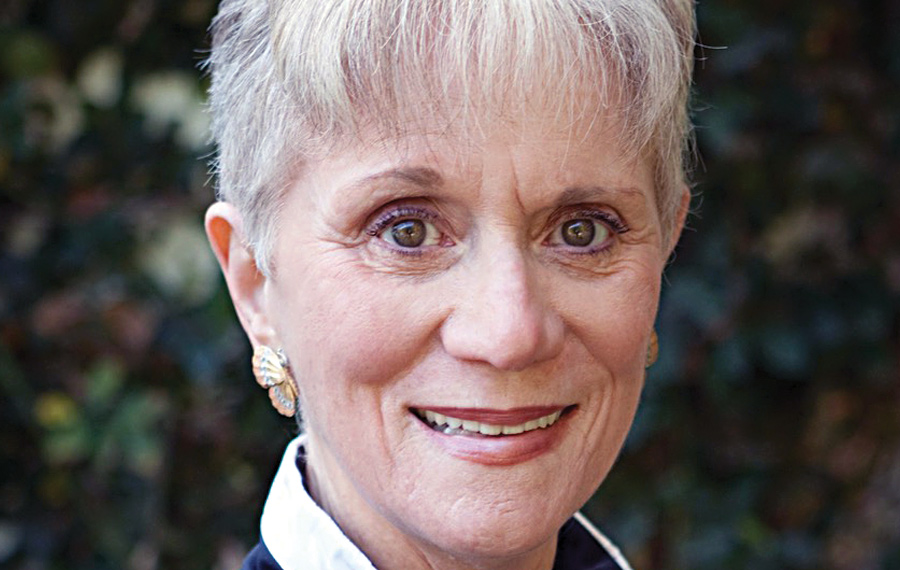
Victoria Mann Simms is dedicated to helping young children grow and thrive. 

The Los Angeles-based nationally recognized child development specialist and philanthropist is focused on creating more recognition around early childhood development, particularly in the local Jewish community.

Her work in serving children ages 0-3 dates back to her 25 years as a clinical psychologist and her training in infant psychiatry at Cedars-Sinai Medical Center. 

After her father, Ted Mann (of the Mann Theaters chain), passed away from lymphoma in 2001, Mann Simms combined her expertise in child psychology with her newfound passion for integrative care — a methodology that helps improve a person’s mind, body and spirit alongside whatever medical treatments they require, which was used in her father’s care.

She dedicated herself to increasing the accessibility of integrative care to oncology patients, low-income families and children up to the age of 3. Before her father’s death, “I was more right-brain than left-brain,” Mann Simms told the Journal. “When he got ill, I got very involved in his medical care and involved in integrative medicine.”

That included founding the Simms/Mann-UCLA Center for Integrative Oncology in 2001. In 2005, she established the Simms/Mann Health and Wellness Center at Venice Family Clinic — the first integrative care center at a free clinic. In 2011, she founded the Simms/Mann Institute, a nonprofit dedicated to promoting the health and wellness of children, families and communities. 

“As a professional and mother and grandmother, I would love to see the Jewish community strive, and I want us to help grow strong, capable, empathetic adults.” — Victoria Mann Simms

The organization’s programs include the annual Simms/Mann Institute Think Tank, which brings early-childhood development practitioners and professionals together to share their research on children from the time of birth to age 3. She began the think tank out of the backyard of her and husband Ronald’s Santa Barbara home. Thirty people attended the initial event. Today, it draws hundreds of people from around the world. 

“One of the reasons we invested so highly in ages 0 to 3 is we feel that helping a parent and child right from the beginning learn how to connect, how to calm, is very important in learning how to be adaptive to a fast-moving society,” Mann Simms said.

The Institute specifically engages Jews through its “First 36 Project” in partnership with the Jewish Federation of Greater Los Angeles, which offers 18 months of training to parent-and-me facilitators at Jewish day schools across the city. Participants include educators from Adat Ari El, Maimonides Academy, Stephen Wise Temple and Sinai Akiba Academy.

“One of the reasons we invested so highly in ages 0 to 3 is we feel that helping a parent and child right from the beginning learn how to connect, how to calm, is very important in learning how to be adaptive to a fast-moving society.” — Victoria Mann Simms

“We’ve not been doing this for that long,” Mann Simms said, “but we’ve been able to attract some of the most important neuroscientists in the world.”

Mann Simms, raised in a non-practicing Jewish home, said, “As a professional and mother and grandmother, I would love to see the Jewish community strive, and I want us to help grow strong, capable, empathetic adults.” 

She also believes synagogues can attract more families by working with parents to help them understand there is more to parenting than buying the best stroller, such as teaching a parent the simple act of putting down the cell phone and talking to his or her child over dinner.

“I didn’t have much of a Jewish background, but I think all Americans have the pursuit of happiness, and it can be shallow and self-absorbed,” she said. “If you look at statistics, the temples are not getting young families in the way we would hope. Research shows the importance of spirituality and community experiences for young families. I think it is important to connect with them.”

She added, “Promoting early child, welcoming the families, is a wonderful way to bring families into the temples and a wonderful way to help parents so they can understand and get in touch with what they want to be in this world, and what they want to model for their own children.”


Read more about the Simms/Mann Think Tank here. 

Victoria Mann Simms: Changing the World One Family at a Time Read More »

Give Thanks That You’re Not in Iran

I’ve always liked the Yiddish word “kvetch,” which means to complain. No one surpasses my stupefying ability to kvetch, not only until the cows come home, but until they take a running dive off a pastoral cliff in order to find respite from my incessant complaining.

I like kvetch, but I love the Persian version, which is more pejorative: “zehr zadan.” No one can out-zehr me.

But as I’ve watched the recent eruption of historic and deadly protests unfold in Iran, I haven’t felt like complaining.

On Nov. 15, one day after the Iranian government announced it would slash gasoline subsidies, which would result in a nearly 300% upsurge in fuel prices, thousands poured into the streets. But unlike the 2009 post-election Green Revolution protests, which consisted primarily of the middle-class chanting, “Death to the dictator!” these angry, working-class Iranians were calling out the supreme leader by name, fervently screaming “Death to Khamenei!”

I know California gas prices are no picnic, but let’s maintain some perspective the next time we complain about topping off our tanks.

Protesters burned down more than 100 banks and attacked government offices. They also set fire to images of Khamenei.

The regime alleged the protesters weren’t Iranian but anti-government forces “pre-planned by the reactionary regional regimes, the Zionists and the Americans.”

This assertion speaks to how insecure the regime is about outside capabilities to oust leaders from power, whether through sanctions, public diplomacy or all-out force.

Iranians have taught us lessons in bravery and the value of life, but they also remind us of our sheer bounty.

Many schools were closed, which hasn’t happened since the 1979 Islamic Revolution. And then, the government shut down the internet. … for days. Let’s think about that this Thanksgiving as we mindlessly scroll through our phones at the dinner table. In one country, residents use the internet to score half-price off slow cookers on Black Friday. In another, brutalized citizens tried (and failed) to use social media to receive news on the ground about where helicopters reportedly were mowing down protesters with machine guns.

Thank God the only thing we have to worry about in the U.S. is misdirected drones that take wrong turns and snap lovely photos of farms rather than weddings.

Protests of such magnitude haven’t occurred in Iran since the revolution, which ironically called for the end of another regime — that of the shah and the Pahlavi dynasty. As of the Journal’s press time, 200 people have been killed and more than 3,000 have been injured. In Iran, some would rather be dead than arrested, and there have been more than 5,000 arrests.

The Iranian people have taught us lessons in bravery and the value of life, but they also remind us of our sheer bounty. The rial’s value dropped more than 60% last year, making access to items ranging from medicine to meat excruciatingly expensive. Iran soon is expected to reach a 40% inflation rate.

Let me try to describe what that would mean in U.S. terms, where inflation hovers around 1.9%: We’d be able to afford “luxuries” such as meat once every few months, buying eggs might even be out of the question and diapers would cost up to $7.

Not $7 per package, but $7 per diaper.

Does the U.S. have a hand in the economic struggles faced by the average Iranian? Yes. But is the campaign of maximum pressure working so effectively that the U.S. government is helping the regime push itself off a pastoral cliff? Absolutely.

This Thanksgiving, there’ll be no kvetching or zehr for me. I’ll fill my car with reasonably priced gas to drive to one store for pumpkin pie and another for Persian ice cream with saffron and rosewater, per my mother’s annual Thanksgiving menu. I’ll have the freedom to use the internet, although, let’s face it, I’ll probably spend three hours looking for the perfect waffle iron. And the only helicopter around will be the battery-operated toy our toddler continues to fly into my head and my back. Truly, what’s there to complain about?


Tabby Refael is a Los Angeles-based writer and speaker.

Give Thanks That You’re Not in Iran Read More »

How Gratitude Changed My Life

Patience can wear thin, even when one is in a fairly good mood. Minor things such as traffic jams and no clean socks might transform into reasons for irrational frustration. A few months ago, I found myself yelling and cursing because I had forgotten to pack a dress I’d wanted to wear when traveling. After my rant was over, I felt drained. As I analyzed this feeling, it dawned on me I hadn’t written in my daily gratitude journal in quite some time.

Over time, I learned to counteract negative thoughts with positive thoughts, actions and affirmations. One of the actions I do is list what I’m grateful for. Sometimes, I focus on life-giving sustenance I often take for granted (clean water, access to healthful food); other times, I focus on my friendships, the people I call when I’m having a low moment, who lend me their hands to help me climb up from the space into which my negative thoughts placed me. 

There is a noticeable improvement in my mood on the days I actively engage in a gratitude journaling practice. My physical and mental spaces are more organized; I have clarity and understand the work in front of me; I’m not nearly as bothered by life’s annoyances.

I wear a different dress. 

Small stuff seems huge on the days I don’t write in my gratitude journal. A single negative thought may lead to multiple negative thoughts. This propels me nowhere but down. It is not a fun place to be — and it’s not productive. 

Many of us observe gratitude in the Birkat ha-Mazon prayers on Shabbat. Many of us practice gratitude on Thanksgiving. These weekly and annual “thanks” are positive, but what if we are grateful for something each day? Find something to be grateful for — even on days that are not our finest. When we give daily thanks, even for the simplest thing, we build a habit that encourages a positive life.

My gratitude practice changed my life as other virtues became nearly impossible to ignore. After I began to use the power of gratitude on a daily basis, I became grateful for it all: the good, the bad, the ugly. 

Gratitude can be an antidote to many negative experiences. We’re human, and we have moments in our lives that are difficult, yet they may seem less difficult with a dose of gratitude and the adoption of the mantra “This, too, shall pass.” Gratitude is the gateway to other virtues.

My gratitude practice changed my life as other virtues became nearly impossible to ignore. After I began to use the power of gratitude on a daily basis, I became grateful for it all: the good, the bad, the ugly. All three are there to teach us lessons, and lessons often turn into blessings.

“Practice” is the key word here. Life ebbs and flows; some days, I’m on top of listing what I’m grateful for while on other days, I’m scattered (or worse, I’m airing my grievances). I try to use those scattered moments to bring myself back to my center. And what’s at the center is a simple “thank you.”

My life unfolds more ideally when I choose to think more positive thoughts, acknowledging my blessings on a daily basis. When negative thoughts creep in from a lack of daily gratitude … well, I yell about an inanimate piece of fabric.

The more reasons we find to give thanks, the more blessings we’ll have; the more blessings we have, the more beautiful our lives can be. This Thanksgiving, I invite you to show up to the table giving thanks for the abundant harvest of your life. I invite you to take away a gratitude practice that becomes an everyday feast.


Heather Colleen Reinhardt is an author, speaker, producer, entrepreneur and yogi. Her debut book, “Go Love Yourself,” was released earlier this year. You can follow her on Instagram @heathereinhardt. 

How Gratitude Changed My Life Read More »

Anti-Semitism Can’t Extinguish Our Eternal Flame

“Around the world — even in America — Jewish students are being mistreated on college campuses: Jew-haters are provided student activity funding and special safeguards, while Zionist clubs are banished from campus. Jewish students are afraid to speak their minds in the classroom, while the crazy carnival of intersectional activists — with no Jews allowed — are provided safe spaces,” said Eric Cohen, executive director of the Tikvah Fund, at the start of this year’s Jewish Leadership Conference in New York on Nov. 10.

“Yet stand up for truth and civility we will.”

Last year’s conference delved deeply into philosophical questions. This year was equally stirring, but began with a clear-headed if pessimistic reality, moved into a perceptive optimism, and ended with a spiritual pronouncement that’s hard to ignore.

Malcolm Hoenlein, executive vice chair of the Conference of Presidents of Major American Jewish Organizations, spoke forcefully about the re-emergence of anti-Semitism — “a poisonous disease, not based on reason or facts.” It is now thriving — “an indisputable change in the 21st century” — with openly anti-Semitic professors facing no repercussions, the nefarious ideology of intersectionality and BDS (boycott investments sanctions) campaigns. “Words of hate lead to deeds of hate,” Hoenlein said.

“Why do you think they can attack with impunity?” he asked. “The vast majority of anti-Semitism is not even reported.” Social media is a major part of the problem. “It took months to spread the Big Lie. Now it takes nanoseconds.”

But Hoenlein focused the most blame on the apathy of the Jewish community. “We need to re-create the Soviet Jewry movement. We need to build walls of public condemnation, so that every anti-Semitic act or comment is disgraced, denounced, diminished.

“Words of hate lead to deeds of hate.” — Malcolm Hoenlein 

“The Holocaust was built by hate but paved with indifference,” Hoenlein said. “Everyone today must find their role: We will be judged by future generations by how we act today.”

The vibe changed dramatically with the next speaker, Yoram Hazony, president of the Herzl Institute in Jerusalem. If you look past the internal and external conflicts, Hazony said: “Israel is a rock of stability, even compared with most Western nations.” Israel continues to grow in every dimension he said, from exports to the number of Jewish children.

“What does Israel have?” Hazony asked. “A conservative democracy, based on the principles of the Prophets.” He also cited the revival of Hebrew, the requirement of military service — a nation-state of the Jewish people. “Israel looks to its past to move into its future,” Hazony said. “The Torah provides us with a system of values.”

Now, he said, Christian leaders from around the world come to Israel to learn from Israelis about the Old Testament, saying, “Our communities need it.” 

“For the first time, Jews can offer a model for a way of living,” Hazony said. 

One can quibble with Hazony’s use of the word conservative. Israel’s treatment of women, minorities, homosexuality, etc., is very much a liberal value. It is precisely liberals and centrists who need to hear all of this. But until liberals fully disconnect from illiberal leftism, conservative intellectuals may as well take true liberalism under their sway. 

Because there is no quibble with Hazony’s ultimate message: “Despite everything, Israel has indeed become a light unto nations.”

And then, after a full day of thought-provoking analysis, we were treated to what can only be described as a spiritual respite: Rabbi Meir Soloveichik of Congregation Shearith Israel in New York, offered us “Jews: The Case for God.”

“An eternal fire shall burn at the altar; it shall never be extinguished,” it is written in Leviticus, he said. 

“That eternal fire,” Soloveichik added, “is the Jewish defiance of time. It is the miracle of our survival and endurance through hatred and exile. Our story is the greatest argument for the case of God.

“We were chosen — different. But in our particularity we have shown the universality of the human condition,” Soloveichik said. “We are a nation apart — exceptional, eternal. And as such, we have stopped world domination by fascists, Soviets, jihadists.”

It is time to honor the idea of Jewish uniqueness, he said — “the miraculous eternity of the Jew: the one nation that cannot die. The eternal fire of the Jew is undeniable. The only question is our courage.”


Karen Lehrman Bloch is an author and cultural critic living in New York City.

Anti-Semitism Can’t Extinguish Our Eternal Flame Read More »

Satirical Semite: Thanksgiving for the Ideological Vegan

Thanksgiving can be tough for vegans. As a resident alien, I’ve learned the American ways and grown to love this November celebration, but as a lifelong vegan, I struggle with the idea of the turkey sacrifice. When I say “lifelong vegan,” I have been vegan for 99.95% of my life, spending no longer than 1,929.8 hours of my years on earth consuming meat. If you round up 99.95% to the nearest decimal point, I am 100% vegan, although the turkeys may shout, “Fowl.”

The only turkey celebrating Thanksgiving is the one who annually is pardoned by the president, unless it supports Rep. Alexandria Ocasio-Cortez, in which case the turkey may be willing to sacrifice itself.

Technically, I am an ideological vegan and love the idea of it, although every genuine attempt to go vegan has left me hungry and feeling a little depleted after a couple of weeks. Nobody promised that lifestyle change would be easy, and like most things, it takes planning. I also love the idea of visiting a kosher slaughterhouse to watch a shochet perform the ritual shechitah process. Watching this process will be a great motivator to go meat free.

There is overwhelming evidence that livestock give off methane gas emissions that contribute to global warming, which may lead to the end of ranching and food chains, that may lead to the end of life on this planet. That said, it is easier to stick my head in the proverbial sand, which is an admirable trait because sand is vegan.

My favorite restaurant is Cafe Gratitude, a fully vegan restaurant chain, unlike my 0.0005% mathematically inaccurate assessment of personal meat consumption. Cafe Gratitude is more of an ethical-spiritual movement than just a restaurant group, and items on their menus are presented as affirmations. Brussels sprouts are “I am Thankful”; a black-bean burger is “I am Magical”; and creamy puttanesca pasta is “I am Brilliant.” If you proclaim the affirmation when ordering, look the server in the eye and say, “I am Awesome,” they reply “You are Awesome.” #ThisIsLA. Although, if I said to a waiter in England, “I am awesome,” he would respond, “You are an a——.”

It would be great if the ethically sourced, fully organic Cafe Gratitude attained kosher certification, although if that happened, they might have to add a Judeified menu, with dishes like “I am Complaining,” “I am Negotiating” and “I am Kvetching.”

Adam and Eve were vegan, as was Noah,
but it’s complicated.

Another favorite eatery is Jeff’s Gourmet Sausage Factory. This Pico-Robertson landmark may only be 50% vegan (french fries) but it is 100% tasty, and restaurateur Jeff Rohatiner is a community treasure. The menu is more traditional than Cafe Gratitude, unless you want to say to the waiter, “I am the Possible Burger,” “I am Beef,” “I am Tasty Meat” or “I am Jeff’s Sausage.”

How Jewish is a vegan diet? Adam and Eve were vegan, as was Noah, but it’s complicated. I try to reduce my 0.05% carnivorousness by meditating on the water shortage caused by beef ranching, the horrible conditions of commercially raised chickens, the fact “cage-free eggs” can mean that chickens are jammed together on the floor rather than being jammed together in cages. Then there are the screaming slaughterhouses, how livestock is treated in fields and how animals are treated like, well, animals.

I once had a memorable visit to the Hazon Jewish Food Conference, which has roots in the movement led by British visionary Nigel Savage. A brilliant innovation of the conference was a visit with a shochet who performed the kosher ritual slaughter on an organically raised turkey, which was then prepared for the Shabbat meal. I loved the idea but the turkey was stringy, gamey and tasteless, unlike the hormone-fueled supermarket turkeys that taste great unless you think about how they got to the table.

The rabbis teach “it is not studying that counts but actions” (“Ethics of the Fathers” 1:17), to which the turkeys may respond, “And you can’t be a little bit vegan.” Whatever you’re eating, Happy Thanksgiving.


Marcus J Freed is a Los Angeles-based actor. For more on Freed, visit his website.

Satirical Semite: Thanksgiving for the Ideological Vegan Read More »