fbpx

September 25, 2019

Table for Five: Rosh Hashanah 5780

One verse, five voices. Edited by Salvador Litvak, Accidental Talmudist

And Hannah answered and said, “No, my lord, I am a woman of sorrowful spirit, and neither new wine nor old wine have I drunk, and I poured out my soul before the Lord.” –From the Rosh Hashanah haftarah, 1 Samuel 1:15


Shaindy Jacobson
Director, Rosh Chodesh Society (Jewish Learning Institute)

One of my early childhood memories is sitting next to my mother in the synagogue on Rosh Hashanah, rifling through the pages of my prayer book. Having recently learned to read Hebrew, sounding out each word was a thrilling, yet thoroughly time-consuming, activity. I recall whispering into her ear, “Mom, how can anyone say this many prayers?” 

Now, as I think about sitting in synagogue with my little girl, and her little girl, I am reminded that this haftarah, “Hannah’s Prayer,” is a foundational biblical source for the institution of prayer. Indeed, the dialogue between Eli and Hannah touches on the essence of prayer in general, and on the Rosh Hashanah prayers in particular. 

Eli’s accusation of Hannah’s “drunkenness” can be perceived as an admonishment of what seemed to be an excessive indulgence in the desires of the material self. “Is this the time, and is this holy tabernacle the place, to pray so passionately for personal gain?” 

“No, you misunderstand my intention,” replied Hannah. “I have poured out my soul before the Lord. I am not merely asking for a son; I am asking for a son so that I might dedicate him to God all the days of his life.” 

Like Hannah, when we “pour out our souls before the Lord,” our prayers stem directly from our pure essence — our Godly souls. And then, on this awe-inspiring day, our “personal” needs and our desire to serve God become one and the same. 

This Rosh Hashanah, may we pray — and be answered — like Hannah, the Mother of Intention.

Rabbi Benjamin Blech
Professor of Talmud, Yeshiva University

Poor Hannah. Overcome with pain, she poured out her soul to God in prayer — only to be mistaken for someone intoxicated by wine, not by faith. To pray with true passion to an invisible higher power seems for many today to be dismissed as naïve and purposeless. That’s why I can so readily empathize with Hannah. 

Seven years ago, I was told by my physician that I had an incurable disease and had about six months to live. My prayers intensified to levels I never thought possible. I spoke to God as friend, as confidant, as the one to whom I entrusted the final decision of life or death with complete trust. I am alive to write these words today not simply because God answered my prayers but because my prayers proved life-changing for me. They achieved what prayer was meant to do and what is, in fact, the theme of Rosh Hashanah and Yom Kippur: to become a better person by reinforcing our awareness of God’s presence in every moment of our lives. 

What I have learned is that there is a reason why people have such a problem with prayer. It is simply because they misunderstand its basic premise. Prayer doesn’t come to change God. It comes to change us — so that God will look at us differently. It wants us to talk to God because God is inside every one of us and we need to communicate with our inner selves so that we can be inspired to become all that we can be.

Rabbi Nolan Lebovitz
Adat Shalom

Judaism is a tradition of words. We read words in the Torah. We pray words in the siddur (prayer book) and machzor (holiday prayer book). We study pages upon pages of words in the Talmud. In fact, the High Holy Days coincide with the fifth book of the Torah, which in Hebrew is named “Devarim,” meaning words. 

All during the month of Elul, we are encouraged to reflect on our actions throughout the year and apologize. We reconcile through words because not only do words matter, but the way in which we convey them matters a great deal. This is not the case when it comes to prayer, our conversation with God. 

Our verse reminds us on Rosh Hashanah that Hannah prays in her own way for her own concerns. And as unrecognizable as her style of prayer might be to the High Priest Eli, her prayers are accepted and answered by the Holy One. On other holy days like the Passover seder, we read words scripted from the Mishnah. On kabbalat Shabbat, we echo the words of the kabbalists. Rosh Hashanah and Yom Kippur beckon us to rise above time and place and to meet the Divine, and other loved ones, in the great beyond in our own unique way. 

We must close our eyes to see. We move our mouths, yet no sound is emitted. We pray like Hannah. May God accept our prayers as the Holy One did hers. Shanah Tovah U’Metukah — May we all enjoy a good and sweet 5780!

Heftsibah Cohen-Montagu
Arevot Women’s Beit Midrash of the Sephardic Educational Center

What is going on in the dialogue between Eli and Hannah? Why does he think she is drunk? Does Eli the High Priest not recognize intense mindful prayer, a total and intimate connection with God, a state of ecstasy leaving its marks on the worshipper’s face? Eli, the keeper of order and regulations, is confused by Hannah’s spontaneous unrestrained prayer, and she responds assertively. 

The Spanish commentator Abarbanel turns her answer around: instead of “No, my lord, I am a woman of sorrowful spirit,” she says, “My lord, I am not a woman of sorrowful spirit.” In this interpretation, Hannah asserts the strength of prayer that comes not from sorrow and not from drunkenness but from the meeting place with the infinite and the unknown. Natural prayer, as she understands it, is pouring out her soul before God — using a Hebrew word which literally means “face to face.” 

The haftarah for the first day of Rosh Hashanah is often seen as a parallel to the prophecy of the birth of Isaac to Sarah, childless like Hannah. But we also can see Hannah’s prayer as an echo of the phrase repeated throughout the Musaf service: “Hayom Harat Olam” — today is the birthday of the world. On Rosh Hashanah, the day when the first man and woman were created, Hannah prays for liberation from infertility, face to face with God, boldly confronting insecurity and chaos, but in contact with a moment of becoming, the instant before a new creation.

Salvador Litvak
Writer-Director, AccidentalTalmudist.org

There is a time to pray and there is a time to pour out one’s heart before the Lord. Hannah already tried prayer, and her situation remained miserable: a beloved but childless wife whose fertile rival mocks and bullies her. So she enters the Holy Temple and pours out her heart before God. The High Priest Eli spots her and does his job, rebuking a pilgrim who seems to be violating the prohibition on entering the Temple while intoxicated. After learning that her supplications stem from a broken heart, however, he adds his own prayer that the Lord should grant her worthy request.

Ironically, this exchange leads our sages to teach not only that the Lord answers those who sincerely cry out to Him, but also that formal prayer should emulate Hannah’s in certain respects. Prior to this event, all prayer was recited aloud. From Hannah’s example, we learn that 1) the Amidah (the Standing Prayer) should be recited quietly; 2) the words nevertheless should be enunciated; and 3) the words should be spoken so quietly that they are not heard by others.

I cannot recommend enough that we learn from the spirit of Hannah’s prayer as much as its form. There needs to be a moment in every service we attend, or every prayer session we perform privately, in which we cry out from the depths. God hears those entreaties, and so do we. It can be both surprising and illuminating to hear what our needs truly are, when we let our hearts flow through our silent lips. 

Table for Five: Rosh Hashanah 5780 Read More »

Reminders for the New Year  

Dip the apples in the honey,
not the other way around.

Your napkin supply and fingers
will thank you.

Practice blowing the shofar ahead of time
but, please, do it in the other room.

We don’t want you to ruin the surprise.

Whatever melody they’re singing
at your shul is the only
correct melody.

You’re going to find out soon
if you were written in the Book of Life.

This book, unfortunately, is
not available on Kindle.

The shofar is made from a ram’s horn.

Animal rights activists who are
uncomfortable with this may consider
blowing directly into a live ram.

Results may vary.

Why stop with just a round challah
when you can mold any food into
a round shape? Consider a chicken ball
or a brisket globe. Vegetarians, you
can mold tofu into any shape.

We’ve got your back.

Unlike when we were in the desert,
synagogue buildings are not temporary
structures that exist only once a year.

Don’t be a stranger. We do this thing
every Friday. There’s food afterward.

Don’t forget to wear white on Yom Kippur.

We know it’s after Labor Day and this
goes against everything you ever
were taught on the subject, but you don’t want
to be the only one in the room receiving

Kol Nidre dressed in autumn browns.

Don’t be the only one in the room.

Be where there are others. Do that all the time.

You don’t get out of this world alive
so you might as well not go alone.


Rick Lupert, author of “God Wrestler: A Poem for Every Torah Portion,” is a freelance graphic designer, song leader, and poet who lives in Van Nuys with his wife, son, and far too many cats.

Reminders for the New Year   Read More »

Contemplating the High Holy Days

The High Holy Days are an opportunity to reflect and contemplate. Now more than ever, we need to find a way to address conflict and division, both inner and outer. So the Journal reached out to more than two dozen rabbis from across the community and asked them what they think we need to hear over Rosh Hashanah and Yom Kippur. Shanah tovah.


Making Wise Choices

In Poland, I stood at a mass grave filled with the lives of 800 Jewish children. Tears poured down my face as I gathered my congregants and read the letter of a mother, making the choiceless choice of sending her toddler daughter on a transport out of the ghetto. The letter includes the mother’s hopes and dreams for her child; the whispered urgencies of a parent that leaves her child in the hands of a stranger, praying that fate will be kind. A letter saying goodbye. A letter sealed with love.

We never know how our choices will impact our future. On Yom Kippur, we must read the letters of our hearts. Think of the moments in which we have said, “But I didn’t have a choice.” And the many moments in which we can say, “I have a choice. And my child, this is what I do for you.” Dig deep within the crevices of your soul. If one day, you had to write a letter explaining the decisions of your life, what would it say? Would you be proud of the choices you have made or ashamed of the path you are walking? Will our children speak with pride or grimace, knowing we could have done better?
— Rabbi Nicole Guzik, Sinai Temple


Making Religion Relevant 

This year, I’ll be speaking to the fundamental question of whether religion has a real role in the 21st century and beyond. With declining rates of religious affiliation, there’s a real possibility that religion will become an increasingly marginal phenomenon. Yes, it certainly has played an important role in the development of our civilizations over the past thousands of years. But we cannot justify its future solely based on its past. What relevance does it have now? Rather than putting the burden and the guilt on people for leaving religion, I believe that our traditions must make a case for our adherence. It’s on religion to prove to us that it still matters to us as individuals and to our society.
— Rabbi Sarah Bassin, Temple Emanuel of Beverly Hills


A Call for Jewish Unity 

In his inaugural address as Haham Bashi — Sephardic Chief Rabbi — of Jaffa in 1911, Rabbi Benzion Meir Hai Uziel articulated a grand vision of unity for the Jewish people: “It is my tremendous desire to unify the divisions that the diaspora tore us into, the separate communities of Sephardim and Ashkenazim. These divisions amongst us are not natural. Our particular linguistic and communal divisions were created due to our dispersion throughout the diaspora.” 

Later in his life, Uziel said, “I do not relate to any distinctions or separations between Sephardim and Ashkenazim. It is not the countries of Spain (Sepharad) or Germany (Ashkenaz) that gave us great Torah scholars, rather the Torah itself.” 

Uziel’s aspirations for Jewish unity are rooted in both the Sephardi and Ashkenazi High Holiday liturgy, when we repeatedly say: “V’ya’asu kulam agudah ahat” (May we bind together in unity). Some speak of a post-denominational Judaism. Imagine a “post-ethnic” Judaism. Imagine a Jewish community that blends the best of all Jewish worlds: Torah, customs, recipes, tunes — creating something new, dynamic, exciting and different. Ashkenazi and Sephardi join as one. It’s happening all over Israel. It’s time we catch up.
— Rabbi Daniel Bouskila, Sephardic Educational Center and Westwood Village Synagogue


Recognizing What’s Important

The most unsettling words in the machzor are, “On Rosh Hashanah it is written and on Yom Kippur it is sealed: How many shall pass away, how many shall be born? Who shall live and who shall die?” 

Whether you take these words literally or metaphorically, take them seriously. These words serve as stark reminders of life’s finitude. They heighten our need to live with greater urgency. They are essential to the High Holy Days’ theme of self-examination. When taken seriously, they help us prioritize that which is genuinely important.

“But repentance, prayer and righteous deeds temper the severity of the judgment’s decree,” concludes these potentially transformative words.

Here the machzor gives us a recommendation for life. It acknowledges the inherent uncertainty of the coming year (Who shall live and who shall die?). And yet, through repentance, or resolving to improve one’s behavior; prayer, or striving to be more at one with God; and righteous deeds, or helping the world become more civilized, all of us individually and together can make a difference. 

A life spent in repentance, prayer and righteous deeds is a richer and better life. I pray that be true for those in my Stephen Wise Temple community —  indeed for the Jewish people for this year and beyond.
— Rabbi David Woznica, Stephen Wise Temple


Acknowledging Our Privilege 

We need to talk about racism on the holiest day of the year. If we don’t face our internal racism and our unconscious racist acts, then we won’t be able to heal the wounds of our world today.

Yom Kippur is about taking a hard look at ourselves and our part in the web of life.

I realize that it can feel uncomfortable for Jews who have a history of being marginalized and who have suffered the effects of white supremacists, who explicitly and often violently exclude Jews to come out and say we are racists. You might be thinking, “How can we be [racist]?” But the fact is we are mostly white and we walk through life with a great amount of white privilege. What are we doing to welcome Jews of color into our communities and synagogues? How can we lift up their narratives and expand our tent? How can we be an anti-racist — to use Ibram X. Kendi’s definition — a person who expresses the idea that racial groups are equals and no group needs improving or developing, and is supporting policy that reduces racial inequality?

Our world is hurting. We are in trouble.
— Rabbi Michelle Missaghieh, Temple Israel of Hollywood


Inspiring Acts of Decency 

I plan to discuss the importance of common decency in our discourse and in our actions. “Derech eretz kadma letorah,” we are taught that common decency in our interactions with one another even precedes Torah. Words can be weapons of hate or comfort and they are ultimately within our power. 

I’ll be citing examples of both quiet and in-your-face heroism as well as the power of sacred memory to inspire our acts. At our Temple of the Arts, we celebrate Judaism through artistic expression and our unique Chagall prayer book contains a quote from the artist who declared, “The more Jewish we are the more human we become.” Our Jewish identity informs our human decency and each year we are afforded the God-given opportunity of setting the path for a new year of blessing.
— Rabbi David Baron, Beverly Hills Temple of the Arts


Responding to Life’s Fragility
We are living in a time of great uncertainty and rapid change. There are many threats to our sense of safety and security from school shootings to wildfires to the violence at Poway. What does our tradition have to say as guidance in this uncertainty? One piece of our liturgy, the Unetaneh Tokef, speaks about the many dangers present in the coming year and even cultivates in us a spiritual state of uncertainty — not to scare us but to motivate us to take responsibility for changing the things we can. We can’t control when or where the next wildfire will be but we can be strongly supportive of funding for our emergency response teams and coordinated efforts to provide relief and recovery for victims of the fires. We can’t prevent the next school shooting but we can be certain that our school staff knows what to do in such an emergency to protect our children, and we can and should be convening a national conversation on gun violence and prevention. 

We chant Untetaneh Tokef with its plaintive melody and haunting theme as a reminder that life has always been fragile and the Jewish response to that fragility is to appreciate the preciousness of life and to act to improve the world we all live in.
— Rabbi Amy Bernstein, Kehillat Israel


Using Our Time Well 

In “The Summer Day,” the late, great poet Mary Oliver writes: “Tell me, what is it you plan to do with your one wild and precious life?” In preparation for the upcoming Days of Awe, I ask myself and you, “What will I do with my one, wild and precious year?”

What, in this year to come, will I, will you, be at the cause of? What will you author or inspire, give birth to or launch and let go? What mountain will you climb or relationship will you mend? What difference will your presence make in your home, your family and your community this year?

To inspire us, Torah illustrates this idea of being on a mission, being sent. God says to Moshe in Numbers 13:2: sh’lach. Send out one person from each of the 12 tribes to scout out the land of Canaan. God says, “Be courageous and bring back fruits from the land.”

At my ordination 10 years ago my teacher, Rabbi Arthur Green, the founder and now rector of Hebrew College Rabbinical School in Boston, offered each of us a personal blessing and each rabbi completed their remarks with the phrase from the Book of Isaiah, chapter 6 verse 8: “And I heard the voice of the Lord, saying, Whom shall I send, and who will go for us? Then I said: ‘Here am I; send me.’ ”

The scene in the Book of Isaiah is one we know from the Amidah, our standing prayer where we go on our toes and say, “kadosh, kadosh, kadosh — holy, holy, holy.” In the Book of Isaiah, we read how God’s robes fill the sacred space and the angles flutter in awe. Then, Isaiah breaks out of what feels like a mystical trance and speaks these two transformative words: “Hineini, shlachani. I’m here. Send me.”

Every day, and especially as the New Year calls us to awaken, it is an auspicious and urgent time to powerfully take on the words of Isaiah and make them our own. So I ask you, what will you do with your one, wild and precious year? Tell me your mission for 5780 and how I can support you. To what quest or purpose will you proudly and eagerly proclaim, “Hineini, shlachani.”
— Rabbi Alyson Solomon, Beth Chayim Chadashim


Caring for Mother Earth 

A birthday is a time to reflect. It is a time to think about the past year and consider how we want to be in the year to come. Rosh Hashanah celebrates the creation of our world. So let’s reflect upon the Earth and the year past. 

From humanity’s point of view, it has been another great year. We continue to completely own this place and have once again proven ourselves to be the fittest such that the future for our genetic material looks good. Our numbers continue to grow and we are extending our domination of the natural world. However, for the Earth and almost every other species, it is has been yet another disastrous year. One million species were lost completely. Forests have been destroyed, water poisoned and arable land used up at eye-popping rates. And the cause of all this destruction? Us. Humans are the biggest threat to almost every life form and the Earth’s ability to provide a habitable environment. 

And yet such actions directly contradict our tradition’s vision for who we are meant to be. We are taught to believe that we are to tend the earth and till [it]. We are not just the consumers but the custodians as well. And we are taught to believe that we are to act now both for ourselves and the generations that follow. We have failed and failed monstrously. Now let’s consider what we must do going forward.
— Rabbi Jonathan Bernhard, Adat Ari El


Finding the Good    

“Tell me about despair, yours, and I will tell you mine.” 

Mary Oliver wrote these words in her poem “Wild Geese.” Many of us are experiencing hopelessness and despair today. While there are many personal reasons for anguish, there is also a blanket of despair that covers much of our nation. The spike in anti-Semitism, the fear of gun violence, the suffering of children and the assault on truth, to name a few. 

Even at our lowest moments, we can learn from those who came before us. Rebbe Nachman of Bratslav, who battled deep depression, taught: Find a little bit of good in others and ourselves. Anne Frank wrote in her diary, “It’s really a wonder that I haven’t dropped all my ideals. … Yet I keep them, because in spite of everything I still believe that people are really good at heart.”

To counter despair, make it a daily spiritual practice to search out the good. It could be simple. Notice your blooming flowers, or be grateful for living in freedom, or your granddaughter’s laughter.

Create an ongoing list of all the good you see. Keep it next to you. Learn to hold both the joy and the pain.
— Rabbi Jill Zimmerman, Path With Heart


A Break From Politics
Soon, Jewish people will be flocking to synagogues, small and large, across the Southland. Many come to shul regularly and they are seeking a deeper understanding of the meaning of life during the High Holy Days. Sharing kabbalistic insights and fascinating Torah thoughts can accomplish this.

Then there are those who set foot into a Jewish house of worship only this one time of the year. These people present rabbis with a uniquely significant challenge of transforming the “once-a-year” Jew into becoming a twice-a-year or even a once-a-week Jew. The way that this is done is with authenticity. By inspiring Jews with the moral values and wisdom of Torah-true Judaism we touch their hearts and ignite their souls.

The overwhelming majority of Jews coming to High Holy Days services this year do not want to hear politics. No matter how important a rabbi feels a certain political issue may be, I believe it would be a big mistake to preach about it from the pulpit. People come to shul to seek spiritual guidance and not hear more of the politics, which have turned brother against brother and neighbors into enemies.

My hope for this High Holy Days season is that we are successful in turning our synagogues into sacred havens of spirituality free of political strife.

That is what I believe people in the pews want to hear this year.
— Rabbi Simcha Backman, Chabad of Glendale and the Foothill Communities


Odyssey of the Soul

We must engage in personal rebuke, to’che’cha. The depravity captured through the media lures us into action, and oversteps the need to first reflect upon our hand in this mess. Yamim Noraim, in name, acknowledges the fear element of these days. This 60-day practice begins on the ninth of Av by looking at our own brokenness. 

Without this, we are missing the essence that requires an authentic nullification of the ego. The High Holy Days remove us from the haughty tasks of ego, and demand vulnerability, culpability and connectedness to awaken us and turn to the understanding that one person’s transgression is all of our transgressions. Our singularity, called “humanity,” must be refined, one person at a time. Only then can we enter into action unified by a god-consciousness that is for the good of all. No red or blue, no liberal or conservative, just humans trying the best that we can. 

Open Temple’s 5780: A Soul Odyssey is a High Holy Days ritual lab that invites participants to engage in this work through ritual practices. We connect these timeless concepts within the machzor to our own personal soul journey as we are each asked to begin again.
 — Rabbi Lori Shapiro, Open Temple


Moving Forward 

The year 5779 has been difficult and, in the middle of all that we face personally, nationally and globally, we must hold on to hope and garner the strength to move forward, taking action for positive change. We must even celebrate the joy of living, loving and come to these High Holy Days both to reconnect with our communities, supporting and gaining strength from one another, as well as individually build resilience, by rediscovering the anchoring presence of the Divine. 

Firming the inner core of our being makes it possible to withstand and cope with whatever it is we must face. Rosh Hashanah is the birthday of the human so, through meditative moments, I will guide a rebirthing of the soul, connecting each person to the breath of the Holy One as described in Torah upon the creation of the first human being.

Feeling the gift of God’s loving grace we are reminded that we are never alone. Despite our fears, we can find the courage to face our iniquities, whether purposeful or inadvertent, mend and heal our relationships and be ready on Yom Kippur to be cleansed of the past, ready, with optimism and confidence, to enter a new year of potentiality.
— Rabbi and Cantor Eva Robbins, Congregation N’vay Shalom


Strengthening Family Ties 

Rosh Hashanah is supposed to be about creation writ large, and the creation of humanity in particular. However, the Torah and haftarah readings for Rosh Hashanah discuss family rupture, rather than creation. We read about a family breakup — the expulsion of Hagar and Ishmael (which occurred to Abraham’s dismay according to the Torah), and about the binding of Isaac, which according to midrashic anthologies brought about the death of Sarah, and a lifelong estrangement between Abraham and Isaac. 

In the haftarahs, we read about Hannah’s desperate longing for family, for children and about how we, the children of Israel, are akin, in God’s eyes, to a child who wreaks havoc, thereby making his parents’ innards turn inside out (Jeremiah). Why did the rabbis of antiquity deliberately choose these devastating texts of familial disintegration and heartache for us to read on Rosh Hashanah? In order to emphasize the foundational primacy of familial relationship in Judaism and the human condition. So that we make amends with loved ones before it’s all over, rather than fall prey to the false idols of ego and radical individualism.
— Rabbi Tal Sessler, Sephardic Temple


Questioning and Journeying 

We’re about to go on a journey to the deepest places. Here are some questions to ask along the way:

·   Who am I, and who is God?
·   Why is there a world? And what am I supposed to be doing in it?
·   Am I still growing? Or am I going through life imitating the person I used to be?
·   Are the majority of my prayers for myself and money?
·   When is the last time I had a heart-to-heart conversation with God where I cried?
·   Do I still believe that I can be the person I once wanted to be? And if not, what died inside of me?
·   Is God an idea inside my head? Or am I an idea inside God’s head? (And by way, God doesn’t have a head.)
·   What can I do for the world that nobody else can (even if it’s small)?
·   Should I continue to boycott God until He gives me what I want?
·   Do I believe that I have a soul that lives forever?
·   Does God know better than me, or do I know better than God?
·   Would I ever worship a God you completely understood?
·   Do I believe that God believes in me?
— David Sacks, Emmy-winning writer and podcaster


Making a Change

Every morally reflective person wants change in themselves. Many of us are not sure how to effect change. The upcoming Days of Awe, especially in the Chasidic interpretation, can give us that wisdom. In the Chasidic tradition, the word root Shanah, which means year, has another meaning — change. In the Chasidic tradition, Rosh Hashanah comes to mean the fount of transformation.

This year, one of our teachings at Ohr HaTorah will go into some detail on the process of inner transformation. The first step is to cultivate a relatively detailed vision of what we want to become. Our tradition tells us that our main goals in life should be righteousness (“tzedek”) and well-being (“osher”). Righteousness has to do with our moral character — how we treat others and how we allow others to treat us. Well-being has to do with our inner lives — finding goodness within and combating the forces within us that deprive us of that goodness. For the religiously oriented, a deep part of well-being and inner goodness is a meaningful and nourishing relationship with God.

With a vision for ourselves in the future, we can then work on mastering the will and skills for creating human wholeness.
— Rabbi Mordecai Finley, Ohr HaTorah


Summoning Courage 

In this time of fear and insecurity in our nation and our planet, I will be sharing about the need for courage, ometz lev. Yom Kippur is a day that calls out for courage of heart. Courage is a dance with fear and a strength of heart. I will share about individual courage and collective courage. 

These times we are living in require both: A conscious integration of the individual and the collective is a tremendous gift of the Jewish tradition. There is much courage (strength of heart) in Torah, Psalms, tefillah, rabbinic literature and the Mussar teachings of Rabbi Israel Salanter. 

I will draw from our rich tradition as well as the work of macroeconomist Paul Romer (“The Economics of Ideas”), author Toni Morrison (z”l) and the sermons of Monsignor Oscar Romero (z”l).
— Rabbi Susan Goldberg, Nefesh


Nurturing our Relationship With God

Every year, for one full 25-hour day, Jews across the world reflect and pray. That day is called Yom Kippur. On Yom Kippur, one’s fate for the coming year is sealed. As part of our deference to the seriousness of this auspicious day, the Torah requires that we fast on Yom Kippur. But Judaism, being the very practical religion that it is, prohibits us from fasting if doing so endangers life.

Seventy-five years ago, as Yom Kippur approached, the Jewish inmates of Auschwitz debated whether or not to fast. They were, after all, starving —  each of them hovering near death. Among the Auschwitz inmates was a teenager called Elie Wiesel, just three days shy of his 16th birthday. He later wrote of the debate he witnessed that day in Auschwitz. “The question was hotly debated … in this place, we were always fasting, it was Yom Kippur all year round. But there were those who said we should fast anyway, precisely because it was dangerous to do so. We needed to show God that even here, locked up in hell, we were capable of singing His praises.”

What I find most striking about this passage is the faith it communicates: Starving men debating about fasting on Yom Kippur as if their life or death depended on the outcome.

Elie Wiesel did not fast that Yom Kippur. In part, this was because his father forbade him from doing so. But there was another reason, he later recalled. He ate on that Yom Kippur as “a symbol of rebellion, of protest against Him.” For the young teenager, eating that day was not an act of denial, rather it was an act of faith.

Ultimately, Yom Kippur demands that we engage in a relationship with God. The greatest threat to our existence as Jews is if we abandon God and deny His existence. Our purpose, our mission, is to include God in our lives and to nurture our relationship with Him, making it meaningful in every situation.
— Rabbi Pini Dunner, Young Israel of North Beverly Hills


Learning to Love Ourselves, Then the World

I am looking forward to Yom Kippur this year at the Pico-Union Project, helping to lead Kol Nidre. We will do a deep dive into the themes of gratitude, love and hope through the lens of the Vidui, our confessional. Ashamnu, we have trespassed … Al Chet, for the sin … we beat our chests and concentrate on where we have “missed the mark” with the goal of self-improvement. 

However, with a focus on the negative, this can also lead to self-doubt, despair and a lack of trust in one’s ability to do good in our own lives and in the world. Instead, we will look at our confessional from a different perspective: how we can reinforce the positive. Rabbi Nachman of Bratslav teaches us, “Always look for the good in yourself.” The Torah teaches us to “love thy neighbor as thyself.” A condition of loving an “other” is to love oneself, albeit humbly. The sage John Lennon teaches us, “You can learn how to be you in time, it’s easy, all you need is love.” 

Through acknowledging where we have “hit the mark” and what we have gotten right, we have the potential not only to change ourselves, but to change the world.
— Rabbi Bill Kaplan, Pico-Union Project


Finding the Good in Others

The upcoming election, its divisive past and foreboding future has inspired me to rethink the High Holy Days. Our shul on the boardwalk is at the literal “ground zero” of free expression, yet the left-right divide has ripped through our community. Can we change the trajectory of this assault on the raison d’etre of our holy sanctuaries? The creation, through inclusivity and acceptance, of spiritual homes for everyone? Absolutely, and a radical new approach to the essence of this period can be our key.

A practicing lawyer, I read the machzor and I can’t help thinking how the term “time of judgment” sounds somewhat fraudulent. What court would allow a parent to adjudicate her child’s case and remain unbiased? Yet we audaciously proclaim “Our father our king” seeking special treatment every year. Is this true justice?

The lesson: Worry not about being judged, but how you judge others. Save impartiality for the earthly courts and be as unabashedly biased as God is when judging the words or deeds of others. Find the good and potential great that lies within all. Applying this, we will find plenty of praise for whoever occupies the seat next to us, in shul or anywhere else.
— Rabbi Shalom Rubanowitz, Shul on the Beach


From Despair to Hope: Rosh Hashanah Resilience

Our world is in a fragile state. You just have to look around us to see the world is on fire. Literally and figuratively. The Amazon is burning. Truth is under attack. Totalitarianism has reared its ugly head. Children are in cages. Anti-Semitism is palpable. You can taste despair with every breath.

When we sat together last year on the High Holy Days, we couldn’t have imagined Pittsburgh and Poway or the many violent attacks on synagogues and fellow Jews. Anti-Semitic violence is a growing menace. 

But now, in their aftermath, exhausted by the constant assault on our senses and our institutions, I see despair and sadness and grief creeping into our collective psyche. The despair is real. Each day, there is a desperate sense that hope is fleeting for our nation, for the planet and, sadly, despair eats away at many of us. 

On Rosh Hashanah, we imagine a new world; a world reborn. We pray to imagine a new way of being for ourselves. We pray for the chance to take all the brokenness inside of us and the brokenness inside the world and rebuild our lives and rebuild our world.

When we celebrate Rosh Hashanah with the sound of the shofar, we are being called to awaken our souls from the dark night that haunts us. Let the sounds of the tekiah lead us to toward renewal and revitalization. Its sounds remind us to persevere in the face of adversity.
— Rabbi Denise Eger, Kol Ami


Back to Basics

We focus on the theme of teshuvah — repentance. I think this year we need to focus on teshuvah as returning, as a reset. Holding in that pinhole-sized button to refresh the selves we wish to be, the world we wish to live in, the themes of our souls that can be drowned out by the cacophony of mundane living. 

This year, my thoughts, my leadership and my advice became reactive. Reactive to situations that leave people anxious, angry, destroyed or disappointed. Sure, there were beautiful moments of creation and joy this year as well, but if I think back to a theme, it was “reaction.” 

Wanting to maintain safe space for all voices of the political spectrum; wanting to hold close those who fear our spiritual home might be the next target; wanting to build bridges with open arms. That was this past year. 

So for the coming year, my intention or kavanah, and focus are returning to foundational tenets: 

What does it mean to believe in God? 

Choosing spiritual space 

A life of fear. A life of momentum 

Nothing is gone forever, only out of place 

I hope that we all have the opportunity to experience teshuvah and reset to our basics.
— Rabbi Rebecca Schatz, Temple Beth Am


Focusing on ‘Avinu’ and the Spirituality of the Parent-Child Relationship 

This summer, my husband and I were blessed to welcome our first child. As my parent-child relationship unfolds, I am reflecting on what it means for God to be our parent and we, His children. 

This message is built into Rosh Hashanah and applies to all of us whether or not we are parents ourselves. The liturgical language of “Avinu” (God as “our Father”), the Torah and haftarah readings, and the day celebrating God giving birth to the world, encourage us to reflect on being both God’s children who receive His love, and God’s appointed “parents” in this world who give love to others. 

And so, to deepen our tefillot, I encourage us to ask: How is viewing God as a parent informed by our relationships with our own parents? And how can God’s role as a loving parent impact how we care for others? Embodying God’s model may be tough, but it is holy year-round work. 

This Rosh Hashanah, as God’s children, may we be blessed to receive and accept love, even if we feel unworthy. And as God’s spiritually appointed “parents” in this world, may we give love selflessly, exercising sacrifice, flexibility and faith.
— Rabbanit Alissa Thomas-Newborn, B’nai David-Judea


Global and Inner Transitions

With the Israeli election drama unfolding and the presidential elections underway, there’s a lot of transition. According to the kabbalah, the outer world is an analogy for our inner world. Therefore, I would like to focus on how global transition reflects the inner transition of our teshuvah process. Change, compromise and conflict.
— Rabbi Shlomo Einhorn, rav and dean of Yavneh Hebrew Academy


Let’s Get Serious About Saving Lives

It’s widely understood in our community that pikuach nefesh, acting to preserve and protect a life, is so critical that it takes precedence over nearly everything else. If God taught us that protecting a life trumps other mitzvot, why are we letting down God so terribly?

Locally, 44,000 people struggle to stay alive each day on our streets, battling the cruel depravity of homelessness. Globally, 200-plus species will disappear this year, and all life is in peril of extinction as we cook our planet with CO2.

I wish I could deliver only good news entering 5780, but God wants a true accounting. We can’t fudge our returns when they’re sent to the auditor-in-chief. God entrusted us with the care of the downtrodden and to be stewards of the Earth, and it seems we are personally and collectively failing. 

So when we bow our heads, and strike our chest acknowledging our collective failings as a Jewish community, we each need to ask ourselves two questions: What am I going to do, and what are we going to do in 5780 to take responsibility and be part of the solution to solving homelessness and slowing global warming?
— Rabbi Yonah Bookstein, Pico Shul 

Contemplating the High Holy Days Read More »

Netanyahu Nominated to Form Israel’s Government

JERUSALEM (JTA) — Prime Minister Benjamin Netanyahu will get his second try this year to form Israel’s government after talks aimed at creating a unity government broke down.

President Reuven Rivlin tasked Netanyahu with forming a government on Wednesday evening even though his Likud party did not finish first in last week’s Knesset elections.

The centrist Blue and White, led by former military chief Benny Gantz, won 33 seats to 32 for Likud in the Sept. 17 balloting for the parliament.

However, 55 lawmakers recommended to Rivlin that Netanyahu try to form a government, one more than Gantz. Still, the incumbent is short of the 61 seats needed to form a viable coalition. He was unable to assemble a government following national elections in April.

Netanyahu has one month to cobble together a government. While he has the support of the nationalist and religious parties to the right of Likud, he still needs the backing of the secular-nationalist Yisrael Beiteinu party led by ally turned rival Avigdor Liberman in order to return to the Prime Minister’s Office.

September’s repeat vote was triggered by Liberman, who would only join a Netanyahu coalition if the country’s military draft was expanded to include more haredi Orthodox men — they can use a religious exemption to avoid being conscripted in the army. The haredi parties balked, however, and the Knesset was disbanded, leading to the second election.

Liberman unsuccessfully attempted to use his leverage to force a national unity government. According to The Times of Israel, negotiations between Netanyahu and Gantz brokered by Rivlin could not resolve the issues of who would serve first as prime minister under a rotation or if Netanyahu’s far-right allies would be invited to be part of the government.

If Netanyahu fails to form a government within a month, Rivlin can tap Gantz or another Likud politician, The Jerusalem Post reported.

Despite failing to come to an agreement regarding a coalition with Blue and White, Netanyahu said on Wednesday evening that Israel needed a “broad national unity government” in order to deal with the challenges facing the country and to “achieve national reconciliation” following what he described as a “tough election campaign on all sides.”

Netanyahu said he would “make every effort” to establish such a government “as soon as possible.”

In response, Gantz stated that “Blue and White is committed to the idea of unity, but from our perspective, the appropriate order would see negotiations between the two largest parties — and them alone — in order to reach agreements on the substantive issues and the character of the next government,” The Times of Israel reported.

Netanyahu Nominated to Form Israel’s Government Read More »

No Better Time to Form a New Government

Unity

The two ministers who orchestrated the 1984 unity government are ancient yet sharp. Moshe Shahal, former Labor minister, is 85. Moshe Nissim, former Likud minister, is 84. Thirty-five years ago, these two relatively young and promising politicians represented Shimon Peres and Yitzhak Shamir — two leaders who couldn’t stand each other but had to form an uneasy union. What’s the difference between these leaders and the two haggling leaders of today: Likud’s Benjamin Netanyahu and Blue and White’s Benny Gantz? 

It’s easy to fall into common sentimental traps and assume that Peres and Shamir, being legendary and dead, cared about the country more than Netanyahu and Gantz do. Maybe they did. Or maybe they were just as cynical as Israel’s current leaders, and the only thing that separates the two pairs is tactical in nature. While Netanyahu doesn’t see good reason to serve in a unity government that won’t save him from his legal trouble, Shamir had a strong motivation to serve in a unity government with his archrival Peres to save him from his own trouble. As Shahal remembers it today, Shamir was reluctant to cooperate with Peres but was even more reluctant to let his Likud comrade, Ariel Sharon, be defense minister. A unity government was a way for him to have Yitzhak Rabin, as defense minister, and keep Sharon at bay. 

The 10 days since the election in Israel were similar to what sports fans call garbage time. But although in football and basketball, garbage time usually comes at the end of games when the outcome is no longer in question, in Israeli politics, it comes at the beginning. It comes when both parties must pretend that they negotiate in good faith and yet have no incentive to make any concessions. Not now. Not yet. Not when there’s still time to hope that the other side will be first to blink. 

This is probably what we see now: the faking of good faith. Netanyahu says he wants unity, but also says that he represents the whole political “bloc.” That is: That Likud will enter into unity only with its allies: the ultra-Orthodox and right-wingers. Gantz says he wants unity  with Likud. He has no plans to have Yaakov Litzman and Bezalel Smotrich (United Torah Judaism and Yamina, respectively) as ministers in his government. Oh — and there’s also this little detail: It’d be his government. Gantz’s. Because he is the winner of the last election. Or so he seems to believe.

Is he really? That depends on one’s definition of wining. Blue and White has two more Knesset seats than Likud. Gantz has one less recommendation to be the next prime minister than Netanyahu. He can prevent Netanyahu from forming a coalition. He cannot form a coalition. 

Having met all parties, President Reuven Rivlin reached the conclusion that any child with an abacus could make: The math doesn’t allow for any coalition to form, unless some politician breaks a meaningful promise. 

It could be Gantz, who promised never to sit with the indicted Netanyahu.

It could be Netanyahu, who promised to never abandon his bloc.

It could be Likud leaders, who promised never to dump Netanyahu. 

It could be Yisrael Beiteinu’s Avigdor Lieberman, who promised to not sit with Charedis. 

It could be Charedis, who promised never to sit with Blue and White’s Yair Lapid. 

If all politicians remain true to their words (an admirable quality), Israel holds a third election (undesirable scenario). So, we, the people, must do what we hate doing. We must let our politicians break a promise without us breaking their bones.

Practicality

“We will be the cornerstone of democracy,” declared Ayman Odeh, the leader of the Joint List of Arab parties, and then quoted from the Book of Psalms: “The stone that the builders rejected has become a cornerstone.” Odeh made headlines three weeks ago when he declared that joining an Israeli coalition is something that Arab parties ought to consider. Odeh made history this week when his party — well, most of it — told the president that they support Gantz as Israel’s prime minister. 

It is no small thing for Arab politicians to recommend a former chief of the Israel Defense Forces, backed by two other chiefs, to be prime minister. Gantz began his previous campaign by boasting about the number of Arabs who were killed in Gaza under his command. Odeh, writing in The New York Times, emphasized that “my colleagues and I have made this decision not as an endorsement of Gantz and his policy proposals for the country.” So why recommend that Israel’s president choose Gantz to be the next prime minister? Because he is not Netanyahu. And because the Arabs are tired of not playing the game. 

No, they didn’t become Zionists. No, they didn’t change their ideology. No, they didn’t become a natural partner for any feasible coalition. Odeh is an interesting and cunning politician who knows how to tailor his messages in different languages to different audiences. There is the English Odeh of the Times, the Hebrew Odeh of Israel’s TV, and the Arabic Odeh of meetings with convicted murderers of Israeli civilians. It is not always easy to figure out which of these is the authentic Odeh and which is the inauthentic mask. 

Having met all parties, President Reuven Rivlin reached the conclusion that any child with an abacus could make: The math doesn’t allow for any coalition to form, unless some politician breaks a meaningful promise. 

He did something significant this week by showing that the Arab party realized something of great importance: There is a lot of potential influence for those who have 13 seats in the Knesset. There is a lot of potential influence for those willing to use those seats to advance certain causes. For many years, Arab Israeli politicians tended to stay on the sidelines and waste most of their energy on symbolic gestures of protest against Israel’s governments. The logic behind this was that playing the game legitimizes the game, and they didn’t want to legitimize Israel’s game. 

And now they have. They traded power for influence, the way politicians do. They compromised on less than their ideal, the way politicians do. They climbed off the high tree of symbolic boycotts and accepted the reality of having to choose the lesser evil.   

Sanctity

Spiritually, there is no worse time to form a new government — to deal with politicians and their shenanigans. A time of spirituality and elation becomes one of political maneuvering. Rather than looking at its future, Israel is being dragged into dealing with its mundane present. The questions that remain are trivial and tactical. There’s no worse time than Rosh Hashanah to think about them.

There is no better time to form a new government — to appoint the servants of our modern civic Jewish Temple. A time of renewal, of soul searching, of beginnings. A time to start fresh and examine old maxims. Israel is looking forward to a future that will be a lot like its past but also a lot different. Many questions remain. There’s no better time than Rosh Hashanah to answer them.

Before Rosh Hashanah, I prefer to think about the timeless rather than the timely. The timeless never portrays a clear path forward; it does not tell us if supporting or opposing a specific leader or legislation is the “Jewish way.” But it hands us a box of tools and provides us a language with which to think about life and society, meaning and morality, spirituality and politics. I would argue that it gives us a way of elevating, even sanctifying, the monotonous humdrum of political maneuvering.


Shmuel Rosner is senior political editor. For more analysis of Israeli and international politics, visit Rosner’s Domain.

Shmuel’s book, #IsraeliJudaism, Portrait of a Cultural Revolution, is now available in English. The Jewish Review of Books called it “important, accessible new study”. Haaretz called it “impressively broad survey”. Order it here: amzn.to/2lDntvh

No Better Time to Form a New Government Read More »

The Modern Renaissance Man

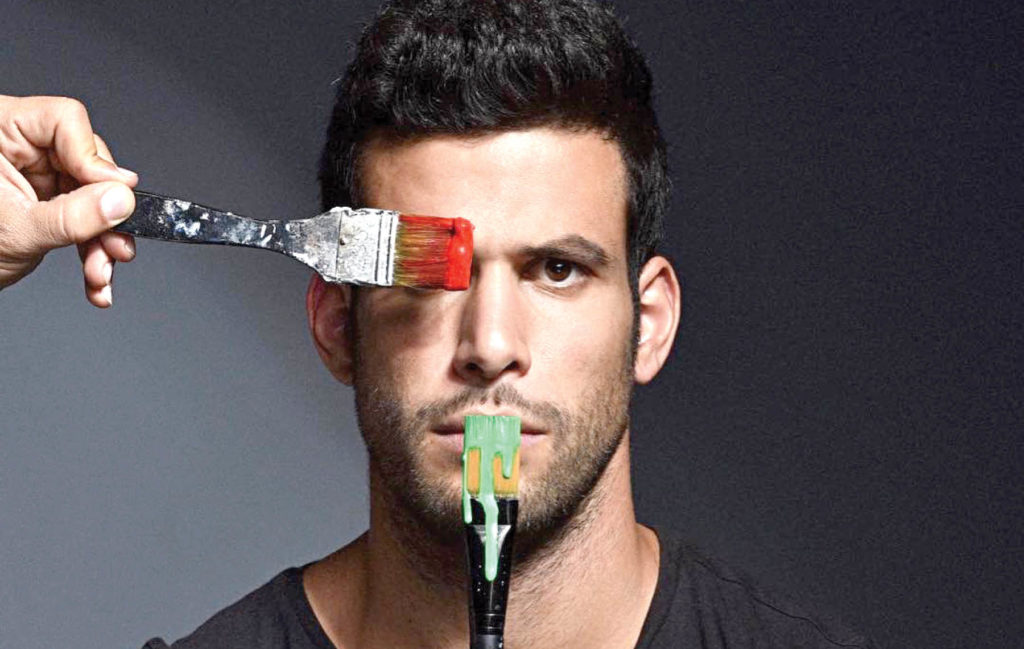
You’ve seen the Forbes 30 Under 30 Cover and his art website, so you know you’re meeting an extremely accomplished and handsome man. But what you’re not ready for is his approachability. You want to find something to dislike about this guy, but you just can’t. He’s a total mensch. Could it be that Nimrod Ron is perfect?

His resume reads like a guide in how to excel in modern Israeli society. Serving in the Special Forces in one of the top three elite units in the army; studying at the No. 1 undergraduate program at the No. 1 university in the country (dual program in business and law, of course); launching a successful tech startup before the age of 30. He casually lets you know he’s started training for a marathon, he bought a piano and is teaching himself to play, he’s going to lecture in the U.S. He has an upcoming art exhibition in Dallas at a premier gallery in the design district. He’s speaking to 500 people at a Jewish National Fund breakfast in Austin, Texas.

Just as he calmly discusses the aspects of himself and the world that he’s exploring, he also casually reveals extraordinary moments in his life: his time with the Israel Defense Forces (IDF) in the days after the devastating earthquake in Nepal in 2015; his student exchange at King’s College in London, where he dreamed up a way to protect first responders from danger using micro drone technology; the time he was flipping Tel Aviv and Beersheba apartments while studying at the Hebrew University in Jerusalem. Even his supposed “failures” sound perfect on his resume — because everyone knows every successful entrepreneur needs a great failed venture story. “I mean, I failed with my last company. Big time. I threw 2 1/2 years away,” he said.

“I don’t think of anything as impossible now. I know my abilities are far more than what I think they are.”

But what makes Ron extraordinary isn’t his resume, his immense talent for  painting or his ever-quickening smile. It’s his attitude. “I won’t walk in the street and say, ‘Oh, I failed.’ I choose to see the success,” he said. 

Ultimately, this success lies in his belief in himself and his infinite potential — fueled by his time in his IDF Special Forces unit. “For two years, you are competing with yourself every moment,” he explained. 

After the multi-year training, 100-mile hikes without food (super-human missions he can’t discuss), Ron believes he can do anything he sets his mind to. “I don’t think of anything as impossible now. I know my abilities are far more than what I think they are.”

If perfection is an art form, Ron has perfected it. Perhaps this is why so many of his paintings feature the iconic faces of the highest achievers in their fields: Aretha Franklin, Salvador Dali, Clint Eastwood, Gandhi.  

For Ron, his painting has been “a spiritual journey, an awakening.” The self-described “last kid chosen in soccer” and “chubby, insecure teen” has built himself into a modern Renaissance man through hard work, self-confidence and a healthy dose of Israeli chutzpah.

The Modern Renaissance Man Read More »

A High Holy Days Appeal for the Skeptics Among Us

I know about packing but what does it mean to “prepare,” especially my heart? What’s with everyone talking about their hearts these days, anyway? If it’s time to “prepare” for the High Holy Days, how about sending us a plane ticket to Hawaii, a gift card for a new air conditioner or taking my kids to their dental appointments? Or just put some gas in the car. That’s a fresh start.

This time of year, I hear my own inner skeptic say, “Why bother?” Isn’t this idea of starting the new year over a bit outdated? After all, we are Jews. There’s no Times Square fanfare or a ball to drop. Yes, there are apples and honey, but frankly, I’d rather eat a brownie. 

Where might this “preparation” lead me? I would get all gussied up, brave the traffic, miss work, fight for parking, struggle to find a seat, then what? I would sit in a big, old, echoing building we rarely enter because it reminds us of funerals and weddings turned into divorces. Then I would listen to a rabbi who has no idea who I am and what I’ve been through tell me, “Come on, you’ve got this. Have a little faith. Give a little tzedakah. Call your mother.”

Big exhale. Join me. Exhale. Yes, we are all in it together. 

We are all wondering: How can I begin again? What does forgiveness even look like, let alone sound like? What if I’m not interested in prayer, God or even the idea of being Jewish, especially in light of the news? I’d rather go to yoga. What if I commit to binge watch “The Marvelous Mrs. Maisel”? That’s culture. That’s tradition. Isn’t that what this time of year is all about? Oh, but I’ll fast on Yom Kippur. 

So why be a Jew this year? Because:

1. We need our tribe. The world is falling apart and many are laughing. The Jewish people have not survived this long to be made a mockery of. 

2. Your voice, your prayers, your questions, your doubts, your joys are needed in synagogues. It is up to us to fill our halls and sanctuaries with our voices. These are our Houses of God. We are safe as we stand together. 

3. We cannot Jew alone. Our existence is an act of revolution, audacity and hope. To Jew requires action, choices, a stand, a way of being in the world that reflects a commitment to contribute — not simply to exist. 

4. We change one another. When we come together, we galvanize our strength, even if wavering, to live with compassion, dignity, peace and justice. 

5. Just as we are searching, God is searching for us in one another. When we look into each other’s eyes, we see the source of all creation. Potential, possibility and peace are not found via our screens, only our screams: our doubts, our fears, our pounding hearts. 

6. Birth is not without pain and tears. Rosh Hashanah wails of infertility, fratricide, betrayal, sacrifice and new beginnings born out of the impossible. It is a deep immersion into what’s possible. Share your truth and be met by depth in our tradition. 

7. Yom Kippur pulls us to our knees and then onto our faces to sense our fragility, our mortality, our vessels of spirit fueled only by faith and grace. Yom Kippur is a chance to take our pulse and decide if we want to live or die and how. 

8. AtONEment. We gather to practice and reinforce what it means to be a community. It’s messy and layered with history, and, when we are all together in the same room, our houses of worship become the Holy of Holies, crucibles that forge our sense of messy and urgent oneness. Our fragile and fiercely vital organism, personal and planetary, depend on our (re)dedication.

9. We are the ones we’ve been waiting for. You know the story about the person on the roof during the hurricane shouting at God? We are the firefighters. We are the police. We are the roof. We are the neighbors. We are the cat. We are the willingness to ask and receive, give and relish in one another’s desire to contribute and matter. It’s time to get off    whether it’s the roof, our resentment, our disappointment, our cynicism or our resignation. It’s time to create a new beginning.  

10. You never know what tomorrow may bring, so today we show up. Today we Jew up. All are welcome: Jews, those who love us, those with a grandparent who loved a Jew, those hungry for Spirit, hungry for justice, hungry for Torah, hungry for life. Every one of us matters. See you in shul.


Rabbi Alyson Solomon is the interim rabbi at Beth Chayim Chadashim. She hosts the Salty-Torah vlogs at thisisRAS.com. 

A High Holy Days Appeal for the Skeptics Among Us Read More »

Discovering My Ancestors’ Past

In 2010, a friend recounted the story of her recent journey to Europe where she met, for the first time, relatives left behind during World War II. Her meeting was so joyful, it got me thinking about my own family heritage, which, sadly, was very murky.

I knew my father’s parents were from Ukraine and my mother’s parents were from Germany or Austria — but that was as far as it went. With a yearning to learn more about my ancestors’ pasts, I began a project that would occupy most of the next year as I researched family history, conducted dozens of interviews, then wrote my family’s memoirs.

I started by identifying all my dad’s relatives as far back as I could to build our family tree. I did this with the help of Ancestry.com. Over the next three months, I was able to document more than 350 people in my family going back four generations.

With that information, I began tracking down relatives, far and wide. I interviewed more than 40 people — some of whom I hadn’t seen since I was a child and others whom I had never met, like my third cousin Ellen Zirin. Her great-grandfather, Fehter Sucha Ainbinder (“fehter” is Yiddish for “uncle”), was a kosher butcher and cantor in Peabody, Mass. Sucha was one of my great-grandmother’s brothers, both of whom were named Samuel. With Ellen’s help, I learned a great deal about my great-grandmother, Sarah Ainbinder Morochnick, mother to my grandmother, Anna Morochnick Kramer.

By interviewing all of these cousins and documenting their colorful stories, I was able to create a 30-page memoir of the Morochnick family with short vignettes bringing each person to life. I learned that my grandmother was only 8 years old when she fled the pogroms in 1909, leaving the Ukrainian village of Shepatovka with her mother and four siblings after waiting five years for her father, Boroch, to send them money for passage. Once reunited in America, the Morochnicks settled into a three-story house in West Roxbury, Mass., renting out the attic to various family members as they arrived.

I learned about the mysterious Shia Morochnick, one of my great-grandfather’s two brothers. Shia escaped from a work camp in Siberia by climbing over an electrified fence, eventually making his way to America years later. 

I believe everyone has a story to tell. It is worth recounting these histories for the sake of our future generations.

My 95-year-old cousin, Sylvia Loman Morochnick, was a great resource. As the last remaining member of the Morochnicks, she had some of the best stories about the older generation, as she was born to her parents later in life. She told me that her father, Mottel Morochnick (my great-grandfather’s other brother), changed his name to “Max” to fit in and worked as a union house painter. He also served as a member of the Shepatovka Cemetery Keepers in West Roxbury, where many of my family members are buried.

By asking questions and writing down these memories, I learned who my ancestors were and I forged a connection to the past. When I wrote the Morochnick family memoir, I dedicated it to “those who came before us, those who inspired us, and those who will never be forgotten.”

As a thank you to each person I spoke with, I mailed printed copies of the family memoir, complete with historic photographs of all the people whom I described. 

The essence of this experience was that I built our family legacy, connecting each of my family members with our shared heritage, which inspired many to renew their connections with one another.

I believe everyone has a story to tell. It is worth recounting these histories for the sake of our future generations. If you are waiting for the perfect time to write down the stories of your elders, don’t wait too long, as we never know if we are going to have another tomorrow.


Pat Kramer is a Los Angeles memoir and business writer. In April 2019, she was named “Woman of the Year, 28th Congressional District, Sunland-Tujunga” by Rep. Adam Schiff (D-Burbank). To read her work, visit writerpatkramer.com.

Discovering My Ancestors’ Past Read More »

The Hope and Repentance of the Days of Awe

We are entering an incredibly emotionally charged time as this past year has touched all of us personally, nationally and globally. During the month of Elul, we began our preparation, taking account of where we fell short while knowing that God awaits with open arms to receive even the most shattered among us. Song of Songs reminds us “I let my devotion sleep,” but Shema, listening attentively, “my heart hears the voice of my beloved (the Divine) knocking, whispering, Open to me.” 

Sunday evening, Sept. 29, is Rosh Hashanah, offering a new beginning. It celebrates the birthday of the world, which began on Wednesday, the 25th of Elul, as well as the birthday of the human being, six days later, the first of Tishrei. Like life itself, it is an expression of both light and dark, the sweet and the bitter. We celebrate both the joy of new possibilities represented by eating apples with honey for the promise of a sweet year while acknowledging the heaviness of year’s end, reviewing our failures, omissions and sinful behavior toward others.

Unlike Jan. 1, when we often make resolutions, empty promises often unfulfilled, this is a time for preparing and understanding where we missed the mark and dedicating ourselves to taking action, bringing more wholeness to our lives. We open ourselves to the grandeur and awesomeness of this great day and all that it can bring. 

This holiday means to return, Teshuvah, to our authentic self, the soul we often abandon. We are called to surrender to the brokenness, the pain or the unrequited love we so deeply want to repair within the tender parts of our being as well as the relationships often worn away by lack of attention or hurtful words and actions, often unaware of the unintended impact of mistaken choices. This time reverberates with possibility but demands our attention and commitment not only to celebrate but also do the work, which extends through the Asseret Y’mei T’shuvah, the Ten Days of Return, culminating with Yom Kippur. Just as Passover leads to Shavuot, Rosh Hashanah takes us to the cleansing day, 10 days later, of Yom Kippur.

The name itself hints at a much deeper understanding. The word rosh means head and shanah means “to repeat, change or year.” Literally it means the “head of change or repetition,” depending on what we decide to do.

Will this New Year maintain the status quo for us or will it be an opportunity to mend, heal and even elevate our lives in new or risky ways? The kabbalists teach that the “head” is the place of spirituality — keter (crown) at the top and right and left brain, chochma (wisdom) and beena (understanding), the center of consciousness. Rosh Hashanah is literally where we begin to assess, consider and decide how we will move forward — resisting or surrendering to who we can become.

This Holy Day also has three other names reflecting its purpose and themes — Yom Ha-Din, the Day of Judgment; Yom Ha-Zikaron, the Day of Remembrance; and Yom T’ruah, the Day of Blowing the Shofar. These themes represent the past, present and future. Yom Ha-Zikaron is when God remembers all that we have done over the past year; Yom Ha-Din is God, King/Queen and Judge, the ultimate ruler and decider of what our fate might be; and Yom T’ruah, the mighty sound of the shofar as it reflects our anguish, our call, and our desire for wholeness this coming year.

The language of our prayer book can feel foreign and hard to relate to, having originated hundreds of years ago. But we need to suspend our disbelief and modern sensibilities. We need to be willing to capture the spirit of their message, which  teaches us our place in the universe with its grander scheme that rules the how and why of Creation. Our tradition teaches it is HaShem, the Divine Creator of all.

Will this New Year maintain the status quo for us or will it be an opportunity to mend, heal and even elevate our lives in new or risky ways? 

We stand with our fellow congregants, friends and family, mere mortals, praying, singing and meditating to the Holy One, Blessed Be S/He — the Judge, the King/Queen, and most importantly the parent, the Great Father/Mother, who loves us unconditionally, waiting with open arms to forgive when we are willing to be humble and contrite.

The Talmud teaches there are three books opened now, one for the completely wicked, one for the completely righteous, and one for those of us between, benoni, mortals who in our humanity make mistakes. These coming days give us the opportunity to amend what’s recorded by turning toward blessing and goodness, as the liturgy says, “Teshuvah, Tefillah, Tzedakah,” repentance, prayer/spiritual work and charity modify the Judgment. For 10 days, we have the opportunity to take even baby steps, to shift our behavior — making reconciliation where necessary, praying/meditating for clarity and support, and bring lovingkindness to others through words or deeds. Moses reminded the people, when they were ready to go into the land, “Take care lest you forget HaShem … you become satisfied, build good houses, increase cattle, silver, and gold and your heart becomes haughty.”

It is so easy in our comfort to forget the source of our good fortune and worship the idols of materialism, ego and outer trappings. Each year we are gifted with an opportunity to transform the past, reinvigorate the present and awaken hope and confidence for the future.

The glorious sounds and profound words we hear during these coming days can move us and release the tears of pain and joy that well up within. Like a mikveh, ritual bath, we can be cleansed and transformed, shedding the unwanted layers of guilt and shame that hold us back. 

This is a time of rebirth and renewal. May it be a sweet year that brings less division and greater peace, less hate and more love, less anxiety and more serenity, and greater opportunity for each person to express their purest soul.


Eva Robbins is a rabbi, cantor, artist and the author of “Spiritual Surgery, Journey of Healing Mind, Body and Spirit.” 

The Hope and Repentance of the Days of Awe Read More »

High Holiday Memories

At Casimir Pulaski elementary school in Chicago, I was the envy of my classmates every September. Many of them had never known a Jew, but school had barely begun and I alone was absent for both Rosh Hashanah and Yom Kippur.

My parents, who fled Poland to Siberia and then to Kyrgyzstan, where I was born, finally came to the United States from a displaced person’s camp in 1951. I was 5  years old. We moved into an immigrant Polish neighborhood on the near north side of Chicago, where my parents could communicate and thus support their four children. My parents’ America was the familiar mini-Warsaw of kielbasa-eating blue-collared laborers and bundle-shlepping babushka’d-women. 

By contrast, my America was “Ozzie & Harriet” and “Father Knows Best” with the Nelsons and Andersons as my role models. Dressed in high heels and frilly aprons, perky Harriet and Margaret served the cotton-y white bread I desired, not rye “mit” seeds, and they never “pooh-poohed” against the evil eye. 

The High Holy Days were challenging. While delighted that my friends languished in school when I was free, sitting in synagogue was hardly freedom. By the 1950s, Jews began to move northward, abandoning urban neighborhoods, and our dilapidated shul consisted largely of elderly stragglers and newly arrived immigrants. Children’s participation in services was considered narrishkayt — nonsense. We were expected to be still, and I sat, unaware of even the page number. This was my parents’ New Year. 

My television New Year featured streamers, midnight revelry and sequined dresses. In fairness, I noted that both traditions involved countdowns. The American countdown was when Champagne corks popped and people kissed at midnight as I twirled my Purim noisemaker. The Jewish countdown of sins was less compelling. I didn’t understand Hebrew, so the sins escaped me. Then I unearthed a prayer book with English translation that piqued my interest. Minor transgressions impressed me not, but I savored those I deemed most foul, even when I didn’t understand them. The Sarah Bernhardt in me wholeheartedly embraced the drama of breast-beating. While I longed for a breast to beat, I pummeled my scrawny chest and envisioned a buxom new year.

Minor transgressions impressed me not, but I savored those I deemed most foul, even when I didn’t understand them. The Sarah Bernhardt in me wholeheartedly embraced the drama of breast-beating.

The Yizkor memorial service was especially poignant. Before what we called Mazkir Neshomes, my mother whisked us children outside as if pursued by demons, ordering us to stay put until called. In wonder and fear, I imagined the souls of our relatives who died in the Holocaust taking shape in the sanctuary, floating aloft like figures in a Chagall painting. Terrified lest the spirits snatch me away, I stayed dutifully outside. 

We few kids passed the time venting energy and exchanging scary stories. When she reappeared, my mother was subdued. I understood her sadness to mean that she wouldn’t see her lost family for an entire year.

Although our New Year lacked the sartorial splendor, food we did have. After services came the fruits of my mother’s nights of labor. My father made Kiddush and we dipped apples into honey for a sweet year. We began with ovals of gefilte fish in aspic crowned by carrot rings, along with horseradish and mounds of challah. After my brother warned that it would put hair on my chest I began skipping the horseradish.

On returning to school, my friends were perplexed by my family’s peculiar observance. I was 12 when we moved to a Jewish area and was relieved not to explain myself every holiday. 

Decades and countless jars of honey have passed and I still appreciate both new years — the countdowns, the sequins and spangles, the rituals, the food. My holiday menu is much the same as my dear mother’s, and my parents’ traditions learned from their parents has been shared with my children. I’d like to think that they would do the same with their families. Happy New Year. Shanah tovah. May we all be inscribed in the book of life.


Sara Nuss-Galles’ work has appeared in The New York Times, Los Angeles Times, Lilith, Catamaran and numerous anthologies.

High Holiday Memories Read More »