fbpx

September 25, 2019

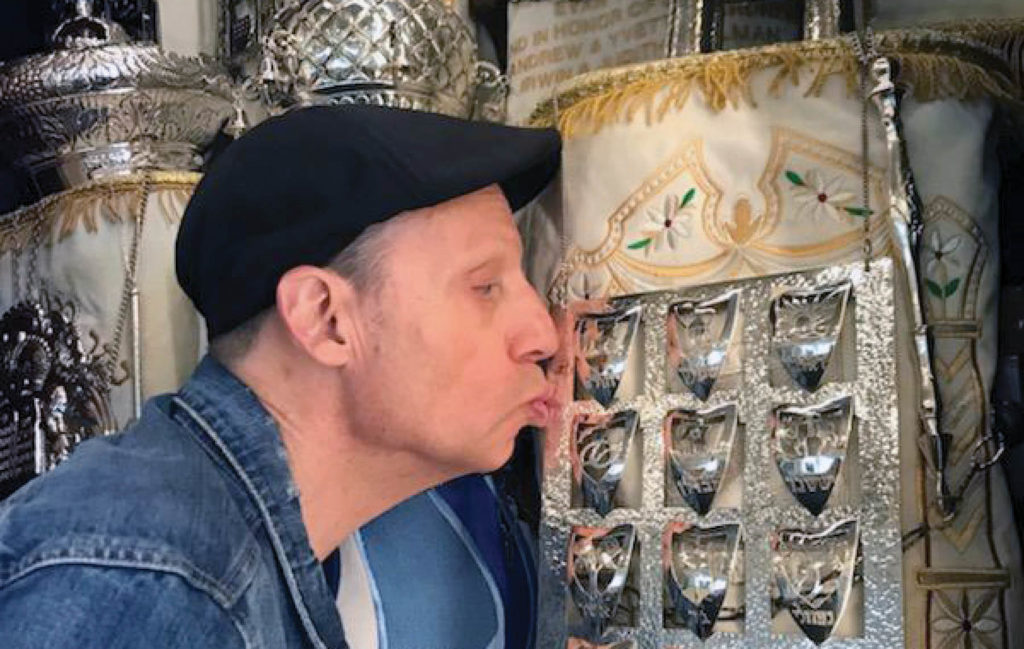
Sealed With a Kiss

“A kiss is a secret told to the mouth instead of the ear; kisses are the messengers of love and tenderness.— Ingrid Bergman

According to the Torah, a kiss is more than just a greeting; it represents loyalty. In the book of Exodus, God instructs Aaron to work with Moses to free the Israelites. Aaron greets Moses with a kiss. The kiss signifies their loyalty to each other, God and their faith. By working together, Aaron and Moses were able to free the Israelites.

Kissing is amazing. Almost everyone has done it and has had it done to them. Lovers kiss and mobsters kiss.  Some kisses we like and some we don’t. While I was growing up, my grandmother would put her lips to my cheek and work up a suction that almost took off half my face when she broke loose. I let her do it because I loved her and because I’d get $3 if I let her. 

We kiss animals, gravestones, mezuzots, tzitzit, tallitot, Torahs and even some walls in Israel. We kiss hello and goodbye. We kiss to congratulate, we kiss to comfort. We kiss photos of loved ones who have died. We kiss on one cheek, we kiss on two cheeks. We eat chocolate kisses. Dodger Stadium has the “Kiss Cam.” There’s a rock band named Kiss. There are long kisses and little pecks. There’s kiss and make up. If we don’t want to deal with people, we tell them to kiss off. Some religious Jews won’t kiss for two weeks a month and hardly ever in public. 

When I was a kid, they told me that mononucleosis was the “kissing disease.” I wanted to get mono but couldn’t find anyone who wanted to give it to me. 

I never knew how many kisses I had in me until we had our children. I’ve probably kissed my kids a few hundred thousand times. Any time my wife handed one of them to me, I’d rev up the kiss machine. She once left for three days and I forgot to feed them because I was so busy kissing them. You can do that only to your children and, to some extent, your grandchildren. If my neighbor asked me to hold their baby and I started to kiss him for 10 minutes straight, they would take away the baby and perhaps even move out of the neighborhood. But with my kids, I was unstoppable. 

Lovers kiss and mobsters kiss.  Some kisses we like and some we don’t.

My kids aren’t big on kissing me back. If I want to kiss them now, they’ll lower their heads and let me kiss them on the top of their skulls like they are the pope. 

A few months after my father died, I realized his birthday was coming up. I bought a birthday card and wrote inside, wishing him a happy birthday and that I hoped he was OK and signed it, “Love, Mark.” I put the card in the envelope, sealed it, found a mailbox, kissed the envelope — unaddressed — and dropped it in. 

Most of all, it’s nice to be kissed by someone you love and to kiss someone you love. Years ago, I had a breakfast appointment with my friend Irwin who was in his 80s. Irwin and his wife, Dottie, had been married almost 60 years and lived in a second-floor apartment, up a very long flight of stairs. At this point of his life, it was very difficult for Irwin to walk up and down the flight. Each step was arduous.

We were about a half a block away from his apartment when he said he had to go back home because he’d forgotten something. I told him I’d get it for him but he wouldn’t have it. He had to do it himself.

When he finally got to the top of the stairs, he knocked. Dottie opened the door and said, “Did you forget something?” Irwin said, “Yes. I forgot to kiss you goodbye.”


Mark Schiff is a comedian, actor and writer.

Sealed With a Kiss Read More »
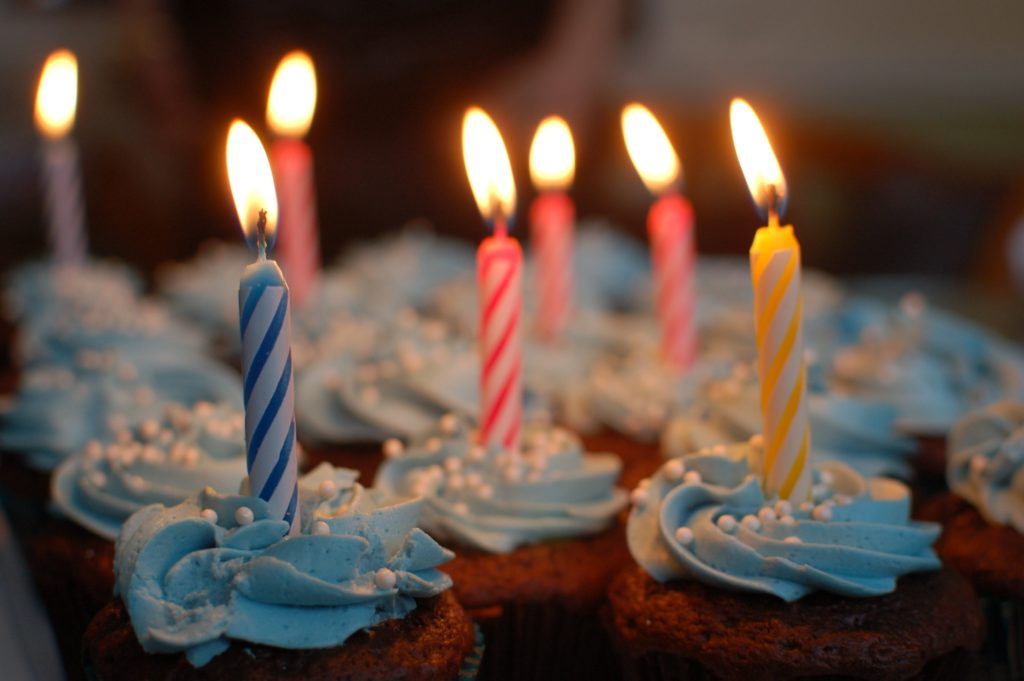
This Will Be The Best. Birthday. Ever.

This year, I outed myself. I fessed up. In front of 18 of my closest female friends, I uttered two words I vowed never to say: I’m 60.

The reaction was expected: shock, disbelief, then some food, then more shock and then more food. Because I have a young child, no one would ever guess I have the same birthday as Barbie: March 9, 1959.

As an actor, I’m afraid of ageism although no one can ever guess my age. For that, I thank my Hungarian heritage of good skin and a lifelong love of exercise and optimism. 

I outed myself because I was tired of hiding my wisdom. Tired of hiding my experience. Tired of hiding, well, myself. 

Growing up in New Jersey during the ’60s and ’70s meant jumping on my bike after school and disappearing till dusk. Or ice skating on the pond at the local middle school. My education included public school and Hebrew school, as well as ballet and music lessons. By 14, I was dancing in a local ballet company. But scoliosis and a two-year stint in a full-body brace altered my career trajectory. Playing acoustic guitar and singing folk-rock songs helped me finance my college education; I was a regular performer at the coffeehouses at my school, Goucher College, and our brother school, Johns Hopkins. When I met Jackson Browne, I thanked him for helping me get through college. 

After graduation, I stayed in Baltimore and worked for the Film Forum. Then I pushed my way into advertising by showing up at an agency and insisting I had an appointment with the creative director, who was scattered enough to think it was his mistake. Impressed with my tenacity, he hired me to work in Broadcast Business Management and Talent Payments, and I soon began producing radio commercials, as well.

When I told my boss that a jingle for a theme park aimed at teens sounded too “Christy Minstrels,” I was dispatched to a studio in Dallas to produce a new track. I ended up working with a composer named Chris Kershaw, who would brag that his young son, Clayton, was an amazing athlete. It took me years to put those two names together. 

As the only woman working in broadcast there, I had plenty of #MeToo experiences in that “Mad Men” environment. Refusing advances from the president of the agency resulted in a vicious whisper campaign against me. And my name was replaced on the Cleo Award I won for a TV campaign I produced for the Baltimore Orioles. I was 24 years old.

Then my father died. 

So I moved to New York to follow my dream of becoming an actor. I first fell into hand modeling and found myself the subject of a front page profile in the Wall Street Journal. (Soon thereafter, “Seinfeld” aired an episode in which George becomes a hand model.) Then came plays, commercials and stand-up comedy. I tap-danced in the Statue of Liberty celebration, got married, and thought I’d live happily ever after. Except my husband was an accountant and a cocaine addict. Dodging the abuse and emptiness, I filled my days and nights with work, auditions, classes and stand-up gigs in New York and London. 

Then my mother died. And I could no longer live without love or hope.

It took some time, but enough strength and courage emerged for me to extricate myself from that marriage. Weeks before the financial crash, I sold my apartment and moved downtown. A bigger agent signed me and I started to work more often. Then a Chabad rabbi living in my building invited me to a Shabbat dinner.

Seated next to me was a handsome man with beautiful green eyes. He was so funny. And Orthodox. I felt butterflies in my stomach over that guy in a kippah who was 13 years my junior. 

We dated, I became Orthodox, we got married and moved to L.A. I was 49. At 53, I gave birth to our son on the first day of Rosh Hashanah.

I am 60. And I have a lot more to say and a lot more to do. And I have nothing to hide.


Jill Moray Reichman is an actor, motivational speaker and medical intuitive. 

This Will Be The Best. Birthday. Ever. Read More »

Teach Your Children Well

My entire life, I have recited from the Ve-ahavta prayer, “Vishinantam l’vanecha” (You shall teach them to your children). Certainly meaningful words. But my friend and colleague Rabbi Jeremy Gimbel shared that the depth of the ancient words would take on new significance after I gaze into the eyes of my newborn infants. 

He was correct. 

And so, as we observe the High Holy Days, and as my husband, Los Angeles Controller Ron Galperin, and I enter as new parents, these awesome days face us with the task of teaching lessons to our children.

Teach them diligently to your children. What exactly do we want to teach them?

Teach them that they come from a line of thinkers, doers and survivors. They come from intellectuals, rebels and fighters. Their ancestors were scholars and milkmen, musicians and tailors. We were poets and pioneers. We were tortured. And we rose from the ashes.

Teach them diligently to your children.

Teach them that we have a rich text, an anthology of Jewish values. Our Torah and rabbinic literature offer a treasure trove of stories, allegories and spiritual guidance. Teach them to sift through the pages, to argue and wrestle with the passages. Teach them to question but never walk away from our texts. While the Torah and Talmud may not always make sense, our engagement with them enables us to be part of a 3,500-year conversation. Remind them that the Talmud is not about how the rabbis agreed or came to resolution. No — the pages show that even the smallest voice from a minority perspective is honored and preserved.

Teach them diligently to your children.

Teach them that it is their right and responsibility to question God, to demand more of God.

“Teach them that we have a rich text, an anthology of Jewish values.”

But also teach them to pray to God. Teach them from ancient texts. Write with them new texts. Find God in the synagogue and on the playground. Experience God at Yosemite or at the opera. Partner with God every time they do a mitzvah or participate in tzedakah. Be God’s eyes when they look at the Earth from above and marvel at just how incredible it is. Be God’s feet when they march for social justice. Be God’s voice when they speak out against inequality. Be God’s hands when they feed the hungry. Be God’s soul when they give another person a hug.

Teach them. Teach them that God can be found in oh so many places. And teach them that things that we often call “acts of God” like hurricanes and earthquakes, floods and avalanches — that those have nothing to do with the God that their daddy prays to.

Teach them diligently to your children.

Teach them that they have a responsibility to the Jewish community. Teach them that even after they have received their education, they must ensure others get one as well. Teach them to support Jewish institutions, local and beyond. Remind them we are all responsible for one another.

Teach them diligently to your children.

Teach them also that we have a responsibility beyond our people. We need to build bridges, to welcome the stranger, to reach out to those we don’t understand. Teach them never to judge another until we have been in that person’s place. This means the homeless person, those who suffer mental illnesses, older adults and people who are lonely. This means trying better to understand our neighbors from other religious backgrounds.

Teach them diligently to your children. Teach them Ahavat Yisrael, a love of Israel. We are a people as well as a nation. We have a history and a future that is woven into the land, woven in a tapestry that includes Jews of all backgrounds and practices — but including threads and patterns from people from other faiths. 

Teach them to be mensches. Teach them to welcome the stranger. Teach them to give really good hugs.

Teach them diligently to your children. They are here to make the world a better place.

Dear God, as we teach them, please teach us to be the best role models we can be. Teach us, Avinu Malkeinu, to harness their light, listen to their spirits and embrace their souls.


Rabbi Zach Shapiro is the spiritual leader of Temple Akiba, a Reform Jewish Congregation in Culver City.

Teach Your Children Well Read More »

Inscribed for Another Year of Loneliness?

Everywhere I turn, I see it.

It’s on the face of the arthritic, elderly woman who pushes her squeaky shopping cart through a busy intersection. 

It’s in the eyes of the 14-year-old out to dinner with his parents who wishes he could be in his bedroom alone to scroll his phone in peace. His friends understand him so much better than his parents. At least, they understand his posts much better.

It colors the awkward evenings of a married couple who have nothing to say to each other anymore. Thank God for Netflix, they reckon.

I see it everywhere. It’s the emotional and spiritual Black Plague of the 21st century.

I’m referring to loneliness.

The kind that results from having 1,178 Facebook friends, none of whom can gaze into your eyes from across the coffee shop table because they’re virtual.

The kind that is drowned out with the deafening noise of emails, traffic and, if not those, politics — or, as I see it — the bludgeoning of another’s character because he or she disagrees with our righteous views.

The kind, which during Rosh Hashanah and Yom Kippur, leaves us shoulder to shoulder with 500 Jews in a synagogue, standing together alone.

It used to be that Jews begged God to inscribe them in the Book of Life because they were faced with existential threats — from pogroms to dictators. Today, what are we asking, exactly, when we plead with our creator to inscribe us for another year of life?

Naturally, we want our bodies to be around for at least another year, but who wants to be inscribed in the Book of Life for another year of deep loneliness? For another year of working a bit too hard to find meaning and connection? “Please, God,” we ask, “protect our bodies from cancer and distracted drivers.” Yet we seem to forget that another year of loneliness is its own soft form of death.

“The holidays force us to confront who we are — not our avatars, but our souls,” Sinai Temple’s Rabbi David Wolpe told the Journal. “We are not called to be skilled or popular or coiffed or curated. We are called to be holy.”

On Yom Kippur, we’re compared with the holy angels, which is why many Jews wear white.

Do angels ever feel lonely? If they don’t, that’s reason enough to try to emulate them.

Do angels ever feel lonely?

If they don’t, that’s reason enough to try to emulate them.

It’s hard to enter a synagogue looking and acting exactly as we are. All the ridiculously high heels, designer purses and incessant bragging about our latest business deals or vacations means we’re joined by our avatars, as Wolpe calls them, during these holy days. If that’s the case, we should buy two seats for synagogue services — one for our lonely, true selves, and another for our well-coiffed public personas.

I don’t have prescriptive advice for ending loneliness. There are areas where we have control (curtailing screen time, for example), and areas where loss, bad luck and unfulfilled dreams have left us alive, but alone.

That 14-year-old in the restaurant can start connecting with friends and family in person, but what options remain for the elderly woman pushing that shopping cart? I can think of at least one: a weekly phone call from a caring grandchild. And maybe, he’ll be 14 and not even know how much he needs real connection.

“What should young people do with their lives today?” asked Kurt Vonnegut in a 1974 commencement address. “Many things, obviously. But the most daring thing is to create stable communities in which the terrible disease of loneliness can be cured.”

“Inscribe us in the Book of Life,” we all ask at this time of year. Life is indeed a beautiful thing, but in our First World country, shouldn’t we aim a little higher?

We often ask elderly people the secret to longevity but the real question we should ask is, “Given your long life, how did you live?”


Tabby Refael is a Los Angeles-based writer and speaker. 

Inscribed for Another Year of Loneliness? Read More »

How Rosh Hashanah Can Change Your Life

There are plenty of somber themes at this time of year — themes like repentance, atonement, forgiveness and so on. It’s heavy stuff, and we must honor it. It’s important to hold ourselves accountable for our sins and mistakes, and Rosh Hashanah is our annual opportunity to do just that.

But there’s another aspect to Rosh Hashanah that has always intrigued me: Why do we greet the Jewish New Year on the seventh month of the Hebrew calendar, Tishrei, rather than the first month, Nisan?

In other words, why does Rosh Hashanah, the “head” of the Jewish year, not follow the actual calendar in the same way that the secular New Year begins on Jan. 1?

If you take this question to heart, it can change your life.

You see, Rosh Hashanah commemorates something much deeper than the rhythm of a calendar — it commemorates the actual creation of the world. It commemorates creativity.

Why is this a game changer? Because it offers us a blueprint for how to renew our lives.

When we try to heal from things like loneliness, depression or trauma, we often talk about renewing ourselves.

When we lose a family member, when a marriage breaks up or a job is lost, or when we just feel an emptiness in our lives, we also talk about renewing ourselves. A “new beginning” gives us hope; it reminds us it’s never too late to make something out of our short and precious lives.

What it doesn’t do, however, is guide us — it doesn’t tell us how to renew ourselves.

This is where the act of creation comes in. Rosh Hashanah commemorates the ultimate, most essential creative moment in human history — the act of creating the world.

Since we are created in God’s image, when we ourselves create something from nothing, we are participating in this ultimate, most essential and holiest of acts.  

Creativity may lack the drama of repairing the world, but it has the drama of repairing ourselves. When we create, we’re less likely to get angry, to gossip, to hurt someone, to feel resentful or fearful or lonely.

Think of the moments in your life when you experienced great satisfaction. In my case, even as I write this, I’m experiencing the fulfillment of making something from scratch. A blank screen has turned into a collection of thoughts and ideas that I am sharing with you.

This kind of satisfaction has few equals. It doesn’t matter what you create — a bookshelf, a poem, a meal, a painting, a garden, a song, a friendship, a TV show, a story, a newspaper column. What matters is that you took nothing and turned it into something. You created a world.

It’s true that during these High Holy Days, we’ll hear more sermons about morality than about creativity. Yes, this is a time to work on our ethics, on our relationships, on how well we fulfill our obligations to our families, communities and to humanity.

But there’s room for creativity in this moral picture. Creativity may lack the drama of repairing the world, but it has the drama of repairing ourselves. When we create, we’re less likely to get angry, to gossip, to hurt someone, to feel resentful or fearful or lonely, or simply to waste hours looking at Instagram. 

Creating is the opposite of consuming. Instead of passively munching on something external, we actively create something internal, something rooted in our creative spirit.

Creating is the opposite of consuming. Instead of passively munching on something external, we actively create something internal, something rooted in our creative spirit.

By honoring the act of creation, Rosh Hashanah does something extraordinary: It honors not simply the passage of time but what we can do with that time. It honors, indeed, time itself, inspiring us to spend our time in creative ways that can enrich our lives.

Tapping into our creative spirit requires courage. People who create take risks; they stick their necks out. They’re not afraid to look foolish or ridiculous. Writing a weekly column for 13 years is a constant reminder that one false note here or there, one mistake, can come back to bite me. 

The rewards, though, are more than worth it.

So, as you reflect on new beginnings during these Holy Days, look for a blank page, a blank wall, a blank section on your calendar. Look for anything blank, anything empty, and ask yourself: How can I turn nothing into something?

The satisfaction may be so great that you may find it easier to repent, atone and forgive.

Shanah tovah.

How Rosh Hashanah Can Change Your Life Read More »

Sept. 27, 2019

Click here for fullscreen.


Sept. 27, 2019 Read More »