More than 20 years ago, as I looked over family papers with my late father, I came across a letter referring to my "conversion." Curious, I asked
what that meant. With some self-consciousness, my father first shared with me the fact that I had a Catholic baptism as a 2-year-old child in Vienna, Austria.
My parents and I had been baptized near Vienna in 1938, as we sought to flee Austria, newly a part of Nazi Germany. We hoped we might find refuge in some Latin American country that would not accept Jews, but would accept Catholic refugees. According to my father, the priest who performed the baptism understood that ours was not a religious conversion, but one of survival.
"Why did you wait until now to tell me this?" I asked.
My father replied, "I promised your mother never to tell you. She was afraid you might lose your job at the temple." I am executive director of Wilshire Boulevard Temple. I was a bar mitzvah in the congregation and had served for many years as a teacher, educator and the temple’s camp director.
I was thrilled to hear of a Righteous Gentile who reached out to us in those threatening days. My father provided me with the certificate of my baptism. I proudly shared the story with my friends, colleagues and students. The framed certificate hangs in my home today. I came to understand my parents’ 45-year silence. They were of a place and time when blood, origin and faith could mean life or death.
We fled Austria shortly before Kristallnacht, in November 1938. Our journey took us through Czechoslovakia, Hungary and Italy. The affidavit of an L.A. relative was accepted, and that city became our final destination.
Over the years, my family’s silence and self-consciousness was no doubt fueled by survivor guilt and a sense of apostasy. As a child, I was neither told nor overheard stories about their terrible experiences. The story of our baptism was provocative. Who was this priest, Dr. Ludwig, who signed my baptismal certificate? Why had he acted boldly, unlike so many of his fellow priests and their congregants?
In April 2003, my wife and I traveled to Europe to uncover truth behind my baptism. We arrived in Korneuberg, a small town on the north side of the Danube, opposite the great abbey at Klosterneuberg.
My baptismal certificate identified the church as St. Agyd. Entering, we approached an aging priest just leaving the confessional and told him the purpose of our visit: We sought information about a Dr. Ludwig who baptized Jews during the Nazi era. Had he heard of Ludwig? Were there records we might see?
Warily, the priest satisfied himself regarding our motives. He introduced himself as Dr. Jochlinger, the senior parish priest. He said that he not only knew of Ludwig and of his wartime activities, but he had known him personally. Ludwig had survived the war, living until 1958. Jochlinger had known Ludwig as his teacher at the abbey in Klosterneuberg.
Jochlinger recalled that Ludwig was close to the artistic community of Vienna, which included many Jews. In fact, his niece was the famous singing actress Krista Ludwig. Apparently, Ludwig participated in more than 300 "emergency baptisms."
I asked if there were written records we might see. In response, he led us into a private room in the neighboring parish house. He opened the doors of a large wooden cupboard to reveal dozens of large worn leather-bound ledgers. These proved to be the registers of weddings, births and baptisms dating back more than 200 years. Based on information from my baptismal certificate, we found the appropriate volume. After leafing through pages to find the correct date, there we were: My family history was spread across two large pages in large formal calligraphy.
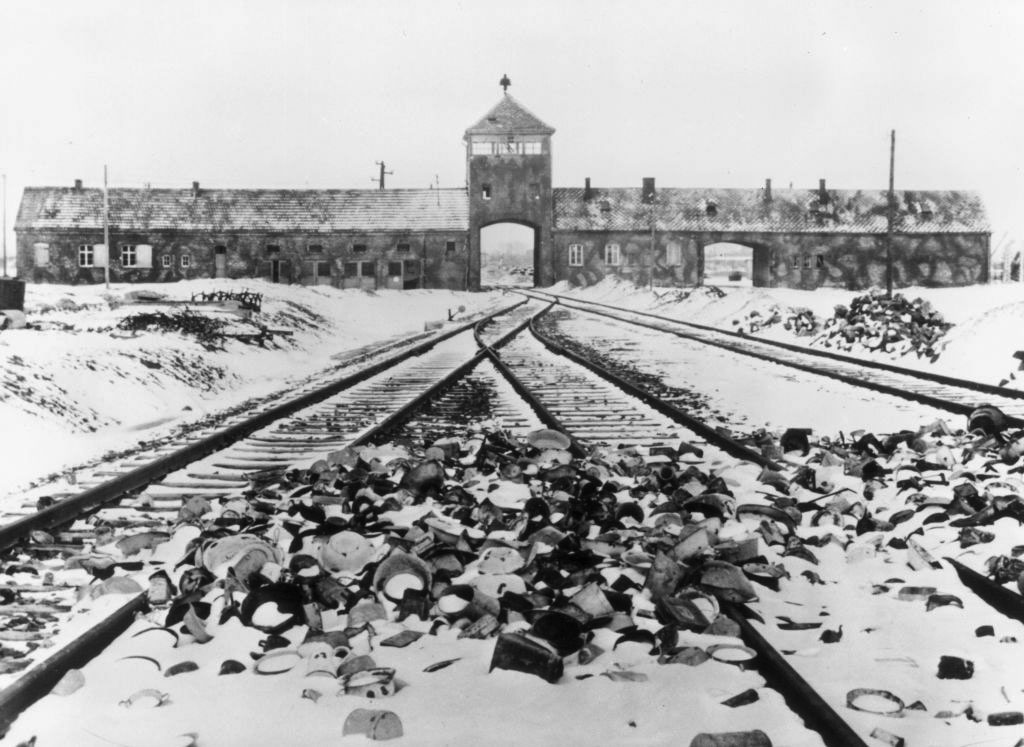
Ludwig was listed as officiator, Alois Holzer as "sponsor." There followed my father’s name with his birthdate and his address at birth. My paternal grandfather was identified on the facing page, listed as "of the mosaic confession" — a Jew. My father’s mother, listed with her maiden name, was similarly identified. These were the grandparents who were killed in Auschwitz. On the next line, my mother and her family were identified, with names, addresses, also of the "mosaic confession." These were the grandparents who, in 1940, made a dramatic journey through Russia and Japan, to finally join us in Los Angeles.
Then there was my name, written as the others in a bold European cursive. Because my parents were baptized first, I was listed as having two Roman Catholic parents. The pages before and after our names included dozens of baptisms performed by Ludwig, all of members of the "mosaic confession."
The amiable Jochlinger let us photocopy the relevant pages. He explained his earlier wariness was due to a recent warning regarding those critical of the passivity of Austrian clergy during the Holocaust. Jochlinger felt personally insulted, because his own mother had sheltered a Jew. In September 1938, the Gestapo called in those whose names appeared in the church records. Concerned about his potential arrest, Ludwig was reassigned to the abbey at Klosterneuberg. There he taught church history until his death.
We thanked Jochlinger for his time. How remarkable to learn about Ludwig’s efforts — more than 300 Jewish "conversions." Jochlinger was gracious and modest.
"It was my pleasure," he said. "After all, you are the only ones who have ever asked."
Apparently, neither the church nor any beneficiaries had as yet come forth to credit Ludwig. It will be my mission to add his name to the rolls of the Righteous Gentiles. He is already inscribed in the Book of Life.
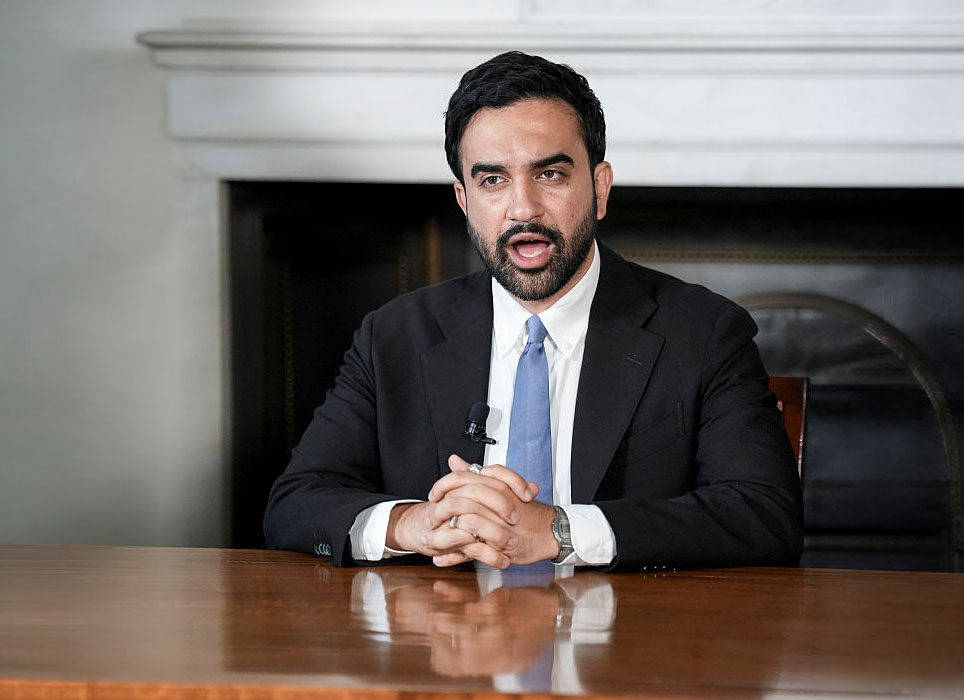
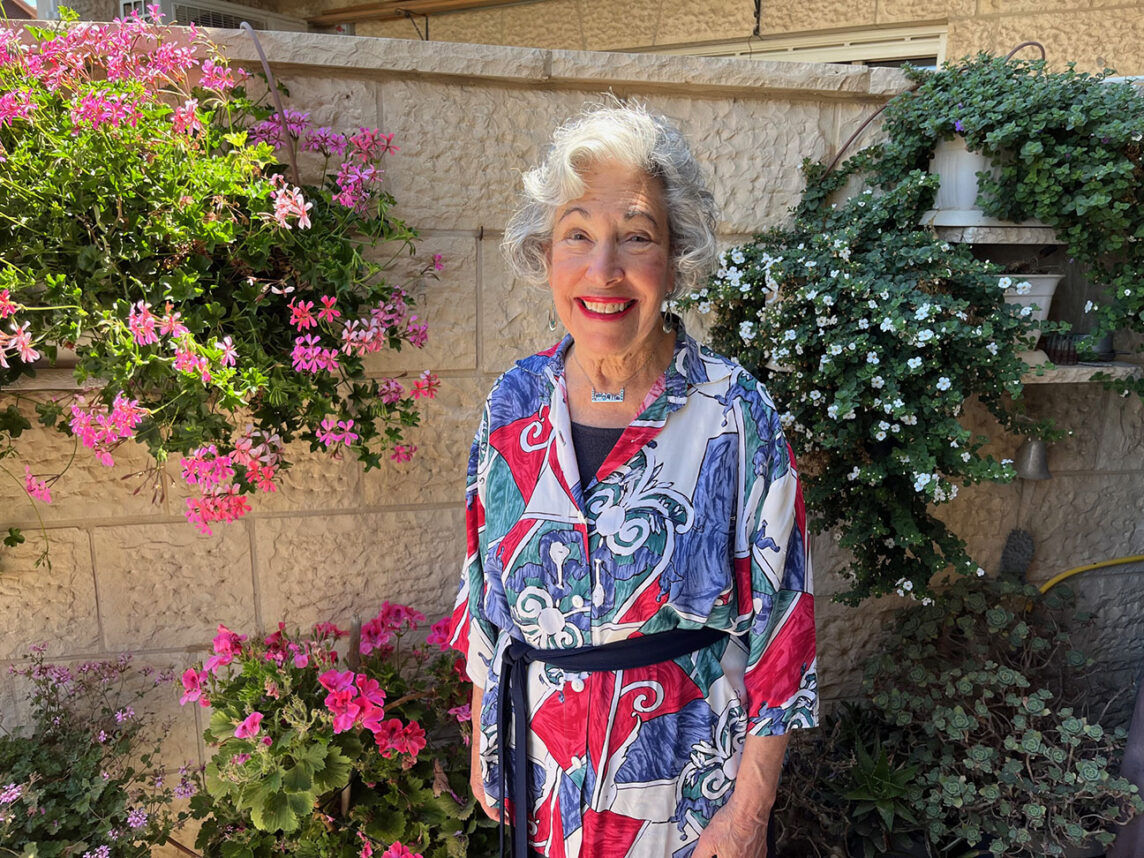
Stephen E. Breuer has served as executive director of Wilshire Boulevard Temple since 1980.