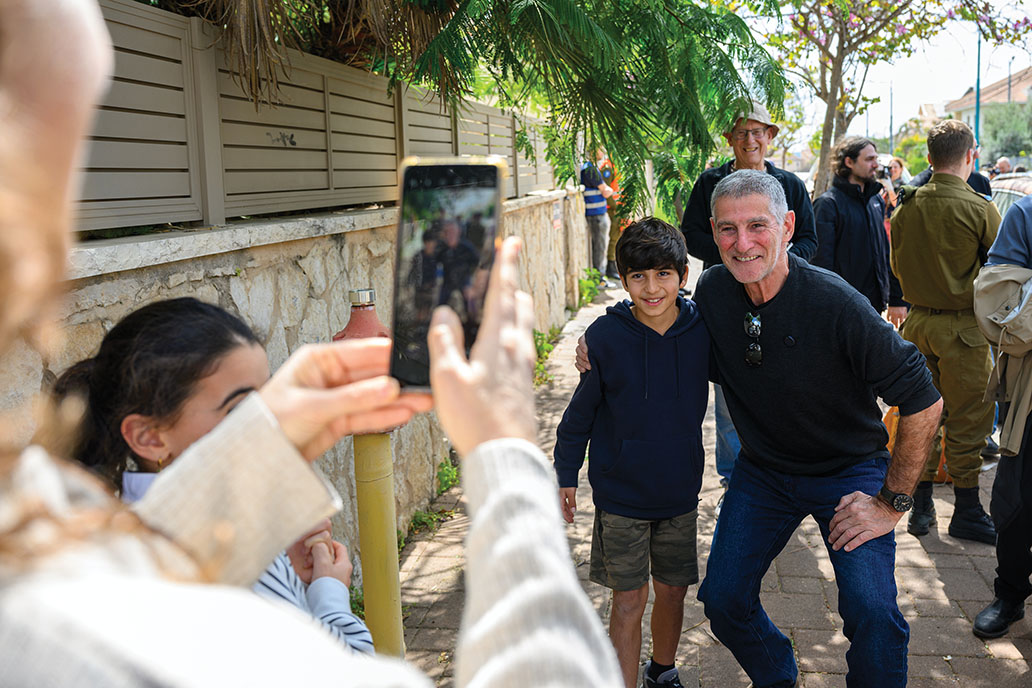
About a month after Joi Morris (photo, above) learned she carries the breast cancer gene, she went out to lunch with a group of women. Like Morris, three of the others had recently gotten the news and were weighing their options: mastectomy, ovary removal or extra medical vigilance to catch any cancer early enough to treat.
Four others in the group had already had prophylactic mastectomies and were in various stages of reconstruction. These four shared information the others couldn't get from their doctors — how the surgery affected their children, what happened to their sex life, how they felt about their bodies. After lunch, everyone went into the bathroom, and the women who had completed their surgeries took off their shirts.
“It was amazing. I thought, 'Oh my God, it is so much better than I envisioned,'” Morris said. “They were all my age or younger, with young kids, and they were all very happy with their lives and their bodies. It was a turning point in my thinking, and I will forever be grateful.”
Morris, then a 41-year-old mother of two, opted for a prophylactic mastectomy. She found out after her surgery that she already had cancer growing in her breasts.
Morris met the other women through FORCE�”Facing Our Risk of Cancer Empowered, an organization that provides support and advocacy for women who have a genetic risk of developing cancer. In October, she became a Western region outreach coordinator for FORCE, fielding phone calls, linking women with buddies who have similar cases and planning quarterly meetings. Last week, she spoke at Friday night services at Leo Baeck Temple, and she hopes to make the rounds at other synagogues to raise awareness about a mutation on the BRCA gene, common in Ashkenazi Jews, that gives women a 50 percent to 85 percent chance of getting breast cancer and raises the risk for melanoma and ovarian, prostate and pancreatic cancer.
FORCE distributes a brochure written specifically for Jewish women at high risk for getting breast cancer. The brochure was produced by Sharsheret, an organization for young Jewish women with breast cancer.
“Breast cancer genetics is the most frequently addressed topic by women calling Sharsheret and attending our national outreach events,” said Elana Silber, director of operations for New Jersey-based Sharsheret. “We continuously receive queries from those who want to understand the impact of family history on the diagnosis and treatment of breast and ovarian cancer in Jewish women and the impact of genetic counseling and genetic testing on those in their families.”
After a study came out in 2004 confirming that Ashkenazi Jews have a one in 40 chance of carrying a BRCA mutation, Sharsheret held a medical symposium on the topic. Last year, Sharsheret developed Genetics for Life, a program that provides information about cancer genetics and connects people to a certified genetic counselor on the Sharsheret staff.
Sharsheret has also developed a series of seminars about the BRCA mutation called, “Understanding Our Past, Guarding Our Future.” Many of the group's medical symposia are dedicated to BRCA-related topics, and videos and transcripts for those are available on Sharsheret's Web site.
Sharsheret's core program, Link, connects those with cancer with women who have had similar experiences. Silber says many of the program's 540 participants are concerned about whether they carry the BRCA mutation.
One-on-one connection is also a mainstay of Florida-based FORCE, which has a database of 10,000 names and gets 60,000 visitors per month to its Web site.
Sue Friedman, a veterinarian by training, founded the group when she discovered she carries the BRCA mutation, less than a year after she had breast cancer.
Because her treatment was straightforward — mastectomy with no chemo or radiation — Friedman found that peer support was hard to come by.
“I thought, 'If I could have breast cancer and not get the support I needed, and feel like I haven't suffered enough, where are these women, who might not even have cancer, going to go for support?'” Friedman said.
In 2000, Friedman, then a practicing veterinarian with a 2-year-old son, started a message board. FORCE quickly grew into an advocacy group, resource center and online and in-person community spread across various regions.
In 2006, FORCE held its first international conference with 250 doctors, geneticists and patients. Friedman is hoping to attract 450 this May in Tampa, Fla.
Perhaps the best indication of FORCE's penetration into the genetic cancer field is its coining of the term “previvor” on a message board discussion in 2001. Doctors used to refer to healthy women who carried the BRCA mutation as “unaffected carriers” — a term women found dismissive. “Previvor” now has been adopted by some doctors, and was one of Time magazine's 10 best buzzwords for 2007.
“This community of stakeholders has been marginalized, and I think until we understand that, we are not going to get the resources and research we need to make sure the next generation has better options than removing breasts and ovaries,” Friedman said.