
When I left New York to move to Los Angeles in 1982 I was sad. No more newsstands on every corner, no more filthy subways, no street hot dogs with mustard and sauerkraut. But when I said good-bye to my hairdresser—someone with whom I expected to grow old—I was desolate.
When it comes to hairdressers, I prefer a long-term relationship. There is something so intimate about sitting in that chair and staring at yourself in a mirror while a man handles your hair that I can’t bear switching. Plus, why run the risk of a terrible haircut? Hair may grow back, but who wants to sit around and wait?
After a few false starts, I found my ultimate LA hair man on Sunset Plaza in West Hollywood. My literary agent handed me Bob’s phone number as if it were a state secret. As soon as I set foot in his cozy modern salon, I felt comfortable. He had a low-key charm and just enough Italian flair to make my heart pump. He was efficient—as soon as one gorgeous client left, the next slid into his seat for her Bob time. Before we could begin our first visit, he hustled me out to the parking lot to see how my chestnut brown hair looked with sunbeams bouncing off the top. 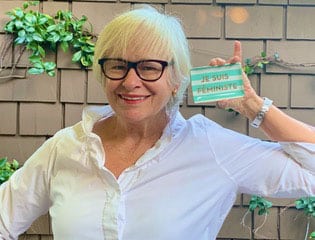
“I’ll need to color your grays or we shouldn’t get started,” he said with a straight face once we were back in the salon. Even though at 35 I had not even noticed those errant strands, I quickly agreed. Over the next 20 years, Bob did a great job of keeping my hair in line. Together we went from feathery blonde highlights that he artistically painted on with a brush—total coloring time 30 minutes—to me sitting in his chair for half a day with tin foil radiating from my head like a bad science experiment as he helped me bravely battle the clock.
The fact is I enjoyed our time together. Bob was smart, we shared an obsession with restaurants, plus my appointments gave me an excuse to stop at the original Jewish Chinese, Chin-Chin for take-out. Sadly, it all ended when Bob packed up his scissors and retired to Calabria, where he could sit in a café sipping espressos rather than stand all day.
By the time I hooked up with my next hairdresser the hair was starting to present more challenges. Not only was it galloping towards total grayness, it was also thinning and the chemicals were turning the texture to hay. Priorities had switched in my mid-fifties. As much as I still cared about my looks, free time was at a premium. When a local mom introduced me to my next hairdresser, or Bob 2, I fell in love with his location, a ten-minute walk, no parking. I chose to overlook his odd demeanor and mercurial temperament. Sure I squirmed when he bragged about his intimate relationship with Sharon Stone or made me wait 30 minutes while he fussed with his toupée. But he gave a good haircut and I wasn’t interested in shopping around.
Our problems began ten years later, when I started to question the wisdom of aggressively attacking the grays with a pasty brown goo that sat on my head for close to three hours every six weeks emitting toxic fumes. The resulting flat brown color created a disconnect between my sagging jaw line and what was happening on top of my head, and inside my brain. If I waited a minute past six weeks, I grew the white fringe of a medieval monk, not a good look.
When I opened the topic of going natural, Bob 2 slammed me. “You will look terrible and your career will be over,” he said with absolute certainty. Wow, I thought for a second. I knew it was time for a break-up.
The search for a new hairdresser began with one requirement—he/she had to be open to having a conversation about going gray. When a friend told me that her female hairdresser’s method was to listen to what you want, then do it with precision and Zen-like calm, I booked an appointment. I was tired of the theatricality of moody men.
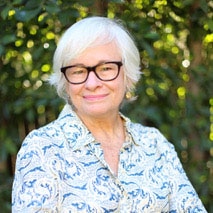
Within five painless months, my short hair was totally bright white gray. Or platinum as she called it. My resemblance to my mother was astonishing.
“All the cool young girls are trying to get this look,” she told me, “but it’s difficult and expensive to strip the hair of its natural color before adding the silver.”
“Too bad, my pretties,” I cackled to myself. Then I kept on aging with my perfect hairdresser by my side.
Los Angeles food writer Helene Siegel is the author of 40 cookbooks, including the “Totally Cookbook” series and “Pure Chocolate.” She runs the Pastry Session blog.