At a cheese plant in Compton, Rabbi Avraham Vogel, a mashgiach (kosher supervisor) from OK supervision, adds a bucket of culture to a 780-gallon bath of hot milk. A table nearby is spread with cheese curd, which a worker cuts and then puts through a cooker stretcher that bathes the curd in hot water and then stretches it to produce the stringiness endemic to mozzarella cheese. Another worker slowly dips a small plastic ladle into a giant vat of small lumpy curds swimming around in yellowish whey. These are curds of ricotta cheese, which is made from the milk after the mozzarella has been extracted. The smell of hot milk is overpowering and soporific.
This production will yield 12,000 pounds of cheese for a small company called Anderson International Foods (AIF) that is trying to carve out a portion of the kosher cheese market for itself.
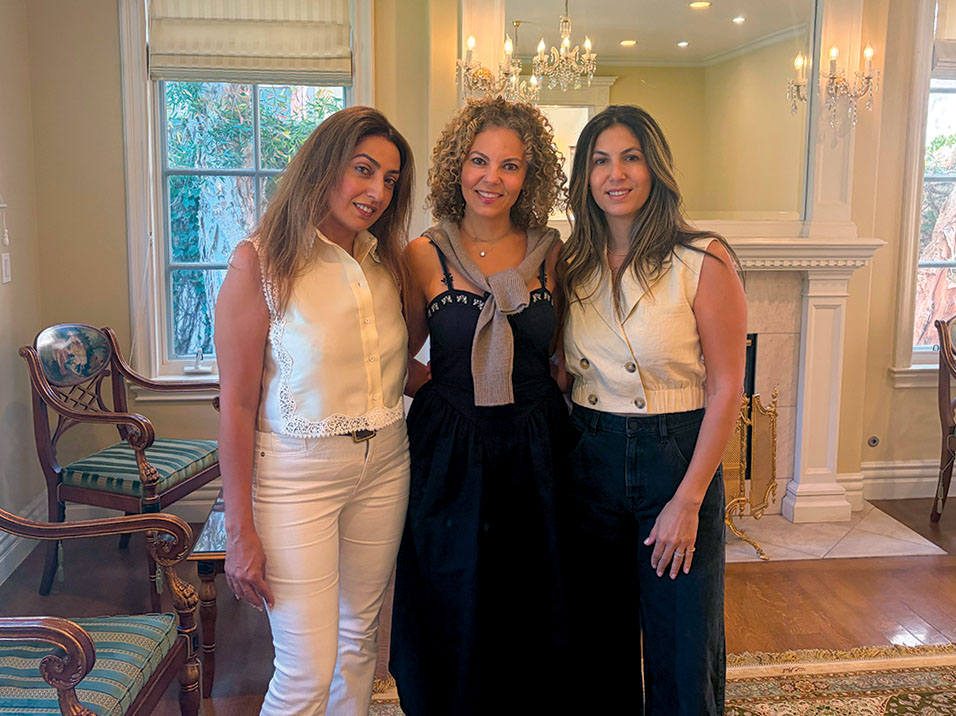
Brigitte Mizrahi, a French woman who now lives in Los Angeles, co-founded AIF in 1995 with the aim of producing quality kosher cheeses in attractive packages. The company currently sells kosher cheese under four labels: Natural and Kosher, which makes Mozzarella and Ricotta cheese; Les Petits Fermier, which produces "everyday" cheese such as Colby and Monterey Jack; Monsey Dairy, a line of specialty cheese such as Swiss cheese and Havarti; and La Chèvre, which is a line of goat cheese made from the milk of Chilean goats. Although AIF distributes several millions of dollars worth of cheese every year to kosher markets, supermarkets, restaurants and industrial clients, making a real dent in the kosher cheese market is a task that faces several obstacles.
Unlike other foods, which only require kosher certification of the ingredients and machinery in order to be considered kosher, cheese needs an onsite mashgiach who supervises all aspects of the production and who participates in the cheesemaking process. In that sense, cheese is like wine. Although a wine can be made of all kosher ingredients, it will not be considered kosher if made by a non-Jew without Jewish supervision.
The apocryphal story is that cheese was invented 6,000 years ago after an unknown Arab took a walk across the desert carrying milk for the journey in a pouch made of the stomach lining of a cow. When he arrived at his destination, the milk had coagulated, leaving him with cheese curds and whey. The stomach lining of an animal — which contains a chemical known as rennet casein — has been used in cheesemaking ever since, and it was for this reason that the Talmudic rabbis prohibited eating hard cheese that was not made by Jews. The rabbis feared that unless properly supervised, the rennet would come from either a non-kosher animal or an incorrectly slaughtered animal, which would make it non-kosher. Today, although many cheeses are made without animal rennet (cheesemakers use a microbial rennet instead) the prohibition against eating products of non-Jewish cheese production still stands.
Kosher cheese is thus known as gvinas Yisroel (cheese made by a Jew). There are many Orthodox Jews who use a still stricter stringency when it comes to dairy products known as cholov Yisroel (Jewish milk), which requires all milk and milk products to be supervised by a Jew from the time of milking — again, to prevent drinking kosher milk that might have been contaminated by non-kosher milk. (Two AIF cheese lines — Natural and Kosher and Le Chevre — are cholov Yisroel in addition to being gvinas Yisroel.)
The kosher hard-cheese market — as opposed to soft cheese, such as cottage cheese or cream cheese — is valued at $50 million a year, and is increasing at a rate of 40 percent annually, according to Kosher Food Industry reports published in 2000. However, industry experts say it is unlikely that kosher cheese consumption will ever come close to mainstream cheese consumption, due to laws of kashrut dictating that consumers need to wait six hours after eating meat before they eat dairy, and many large Orthodox families are too price conscious to shell out for expensive specialty cheese items.
However, new companies like AIF face fierce competition from World Cheese, a Brooklyn-based company that experts say controls 70 percent of the kosher cheese market. World Cheese currently distributes Haolam, Migdal and Millers brand of cheese. Sholom Halpern, sales and marketing director of World Cheese said the company distributes 8,000 packets of cheese every week in California alone. Another spokesman for the company, who declined to be named, said they are unfazed by competition.
"We pride ourselves on fair pricing, and one of the reasons why many a competitor have had a hard time breaking into the market is that to undercut us they would be working at cost," he said. "And the market for kosher dairy is much smaller than you and I think."
But AIF has grown by 50 percent every year that the company has been operating, and they are planning to develop other lines of luxury cheese such as Camembert and Parmesan.
Although Goodis has no illusions about becoming the next Miller’s cheese, she is confident that her cheese is good enough to win over many kosher consumers.
"We are trying to make people realize that there is good kosher cheese," she said. "There is a market for kosher specialty cheese, and it is starting to develop more and more."