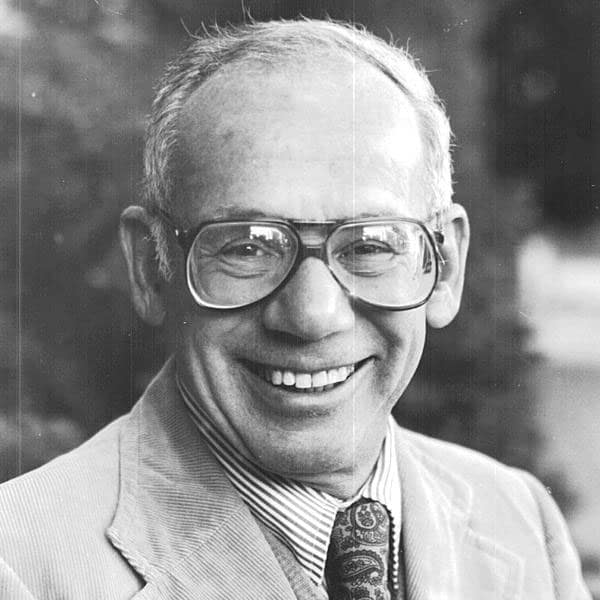
In all his 76 years, filmmaker Paul Mazursky had never seen anything like the 25,000 Chasidim singing, swaying, blowing shofars and dancing around a lake.
“It’s like the old days at the Apollo in Harlem, with the crowd going wild,” the irreverent Mazursky said. “Can you dig it?”
The scene is from his documentary, “Yippee: A Journey to Jewish Joy,” which had its Southland premier this week at the Palm Springs International Film Festival. The film is quite a change of pace for the creator of such quirky social comedies and dramas as “Bob”&”Carol”&”Ted”&”Alice,” “Harry and Tonto,” “Next Stop, Greenwich Village,” “An Unmarried Woman,” “Down and Out in Beverly Hills” and “Enemies: A Love Story.”
Despite his artistic reputation and string of Oscar nominations, Mazursky has found it increasingly difficult to find backing for his iconoclastic movies, which are infused with his wry take on the human condition.
During the past decade, after a quadruple heart bypass operation, Mazursky has gone back to his roots as an actor and comedian, including parts in HBO’s “Curb Your Enthusiasm” and “The Sopranos,” while looking for the right combination of film and financing.
But last year, he and his two camera crews found themselves in Uman, a Ukrainian town of 80,000, whose population swells every Rosh Hashanah during an invasion of ecstatic Chasidim dressed in white kitels (robes), black suits or streimels (fur hats).
They come to pray at the grave of Rabbi Nachman of Bratslav, the great Chasidic master, disputatious tzadik (learned scholar) and great-grandson of the Baal Shem Tov, founder of the Chasidic movement. Nachman was buried in Uman in 1811 at the age of 38.
What had brought the insistently secular Mazursky to Uman were the urgings of three disparate Angelenos: David Miretsky, his optometrist; Shmuel Levy, a devout Moroccan-born rock musician; and Rabbi Ezriel Tauber.
All three regularly participated in the pilgrimage to Uman, and they promised Mazursky that he would witness an event unlike any he had ever experienced.
Putting up $50,000 of his own money, and with his broken arm in a sling, Mazursky embarked on the adventure with his friends and a six-man crew, including his son-in-law.
During a brief layover in Munich, he warmed up by filming the beer-swilling Oktoberfest, before stopping in Kiev, where his grandfather is buried, and then reaching Uman after a three-hour drive.
In the run-up to the climax of the three-day celebration, Mazursky meets and talks with Chasidim, policemen, scholars and peasants, combining the roles of an innocent abroad, travel guide and self-described “wise guy from Brooklyn.”
Typical is his encounter with two local peasant women selling fruit from a sidewalk cart. They, like all the other Uman natives, know about Rosh Hashanah, which enriches the town by $2 million each year.
Despite the windfall, one woman is not entirely happy.
“Jews are not cultured people,” she complains. The other woman disagrees.
“They are cultured,” she insists, “they are just different.”
Mazursky’s camera lingers on other happenings. There is a rustic folk festival with pretty dancing girls in costumes and later, Vodka Appreciation Day, during which the filmmaker digs into his bottomless reservoir of jokes, many unprintable.
His favorite joke, told at least three times in the film, goes something like this: Cohen meets Schwartz in New York’s old garment district and Cohen says, “I heard about the fire.” Schwartz puts his fingers to his lips and whispers, “Shhhh, tomorrow.” (The joke dates back to at least the Great Depression, when some storeowners facing bankruptcy would set fire to their shops to collect insurance money.)
The film climaxes on the evening of Rosh Hashanah, when the 25,000 Chasidim throw their sins into the lake and pray, dance and sing through the candle-lit night.
“Madonna and Woody Allen should be here,” Mazursky murmurs.
Before leaving, Mazursky organizes a bull session with Tauber and Dr. Julian Unger, a British neurologist, to explore the meaning of what he has seen.
“We come to Uman because on the day of judgment, Rabbi Nachman will be our lawyer, pleading our case before God,” Tauber explains.
Unger has a darker observation. “You know, 37 years before Rabbi Nachman came to Uman, there was a great pogrom here and thousands of Jews were drowned in the lake.
“When the Nazis came, they again murdered Uman’s Jews,” Unger continued. “It is a great irony that in 2005, we should be dancing in the streets of Uman. We are dancing on the graves of our martyrs.”
Mazursky, the wise guy from Brooklyn, drew his own lessons. “I could never think like a Chasid,” he ruminated during a two-hour interview in his crowded Beverly Hills office.
“I think of life as a cosmic joke, which keeps getting bigger all the time. But I’ve learned tolerance and maybe affection for the Chasidim. They are real people, who can see light in the darkest things,” he said.
The title of the film comes from another Mazursky observation. “It is better to wake up in the morning and instead of kvetching, say ‘Yippee.'”
“Yippee” is available on DVD through the National Center for Jewish Film at Brandeis University and will be included in a retrospective of Mazursky’s works at New York’s Lincoln Center, May 4-10.