For Aaron Wolf, an anecdote sparked a personal memory that inspired a film. The same day he read reflections by Rabbi David Wolpe about the Sinai Temple rabbi’s father, Rabbi Gerald Wolpe, and about the kindness of a stranger, Wolf went to his keyboard and banged out the first draft of what would become “The Walk.”
“I tend to think very visually,” said Wolf, an actor and director as well as a writer. “I read Rabbi Wolpe’s paragraphs — maybe three brief, very cool paragraphs — and I said, ‘This has to be a film.’ ”
And now it is. Clocking in at 20 minutes and starring Peter Riegert (“Crossing Delancey,” TV’s “Dads”) and newcomer Sawyer Barth, the short, fictionalized story received its Los Angeles premiere before a hugely appreciative audience at the Skirball Cultural Center. (At that same event, the filmmaker showed a teaser of his next project, “Restoring Tomorrow,” a full-length documentary about the renovation of Wilshire Boulevard Temple.)
From the Skirball, “The Walk” moves on to festivals around the country and in Canada.
“The Walk” hits close to home, the 32-year-old filmmaker said. Wolf drew on conversations he’d had with his own grandfather, Rabbi Alfred Wolf, when the two would walk in the hills of Los Feliz. Aaron was a boy of 8 when these walks/talks started.
“He loved taking hikes and being at one with nature,” Wolf recalls of his grandfather, who passed away in 2004 at 88. “We would talk about life, but I never felt like he was pounding me with information. I was his equal, and we were having conversations.”
Wolf channels these talks in crafting his tale of Danny (played by Barth), who, following the death of his rabbi father, returns alone to the synagogue where his father officiated. Danny is befriended by a goodhearted congregant named Alfred, who takes him into services and then returns the following day so that the two can walk to shul together. Danny’s apartment, Alfred says, is on his way.
“I don’t like to be alone,” Alfred tells the boy, knowing full well that companionship is what his new young companion desperately needs. Over the course of a year, Alfred and Danny share walks, food, stories and wisdom. The story has a heart-warming twist that will not be revealed here.
Wolpe, who is recognized as a producer of the film as well as its inspiration, says he was touched by the “bare bones” appeal of the film.
“It’s such a beautiful, moving and human story,” Wolpe said. “And it has a relationship that I thought felt genuine, and that was just a wonderful thing to see.”
Wolpe’s own story — recounted in his book “Why Faith Matters” — tells of how his own father, Gerald Wolpe, lost his father when he was 11. En route to the synagogue to say Kaddish, young Gerald encountered an older man, the temple’s shammas, named Mr. Einstein, who subsequently made a practice of walking with the boy to shul for the 11 months of his mourning. As in the film, Einstein told the boy his house was on his way. Years later, Gerald Wolpe introduced his first-born son to Mr. Einstein.
“The lesson of it is an old man sees a young man in need, and mentors him, and then, later, the young man goes to see him and presents him with his own child,” said David Wolpe, whose father died in 2009. “I think my father would have been thrilled to see that his story inspired this film.”
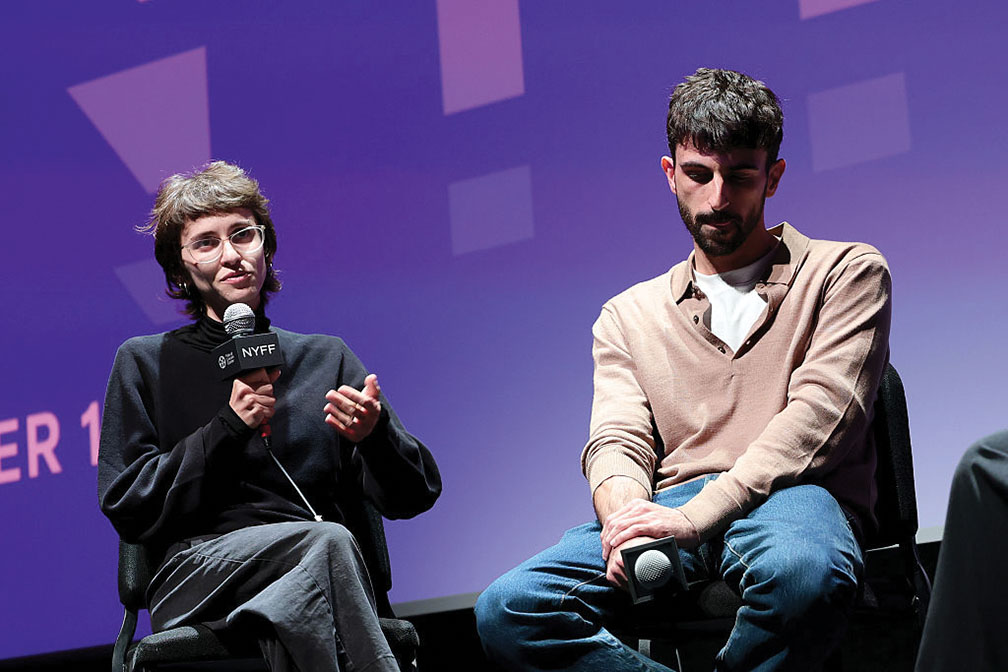
Following the Skirball screening, Wolf and Riegert shared stories of the film’s genesis. It was shot over just four days in and around Brooklyn. As if the challenges of shooting a low-budget independent film weren’t substantial enough, the crew worked around the tail end of a blizzard that dumped 10 inches of snow on the city.
Riegert, who was sent the script by his agent, said he and Wolf discussed the project over dinner at an Italian restaurant in New York, and the actor admired Wolf’s courage as much as his writing abilities.
“It’s not everyday that I get to play an old Jew,” deadpanned Riegert, who is doing exactly that on the Fox series “Dads.” “I was really flattered to be asked, and Aaron has got a very tasty look at life. It’s fun to meet new talent, obviously, so I’m hoping he’ll be running Paramount Pictures in three years.”
When Wolpe recounts the story, he emphasizes the ripple effect of an act of kindness.
“Because Mr. Einstein did [what he did], my father told the story. Because he told the story, I told the story,” Wolpe said.
“Because I told the story, the film was made and other people will see the story. It’s a beautiful thing how such a selfless act can have endless ripples in people’s lives.”