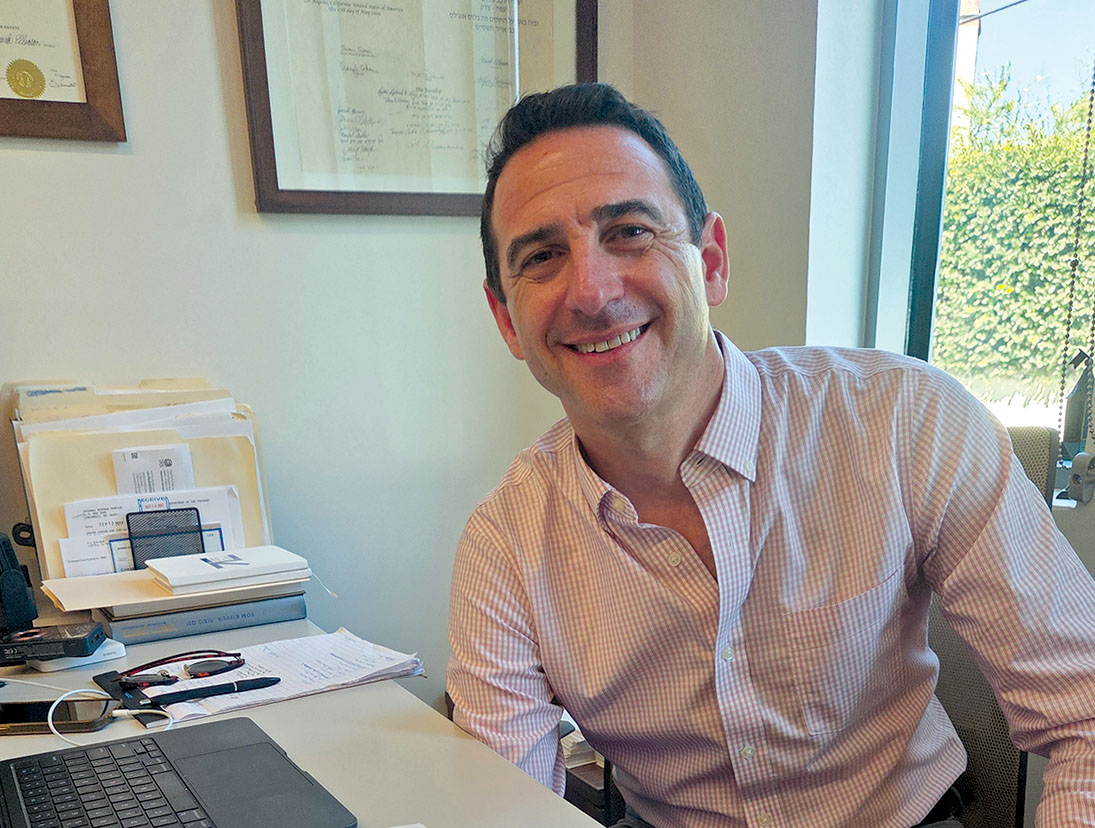
Name: Max Podemski
Age: 33
Best-known for: Planning director at Pacoima Beautiful
Little known fact: “I’m like a freak who’s always been interested in cities. I would build cities out of paper when I was a little kid.”
Max Podemski grew up in Portland, Ore., an urban-planning mecca where regular exposure to terms such as “floor area ratio” permanently ingrained them in his psyche. Eventually, he moved on from building cities out of printer paper in the attic of his childhood home to helping to create urban spaces in the Los Angeles Basin. Now he is planning director at Pacoima Beautiful, an environmental justice organization in the San Fernando Valley.
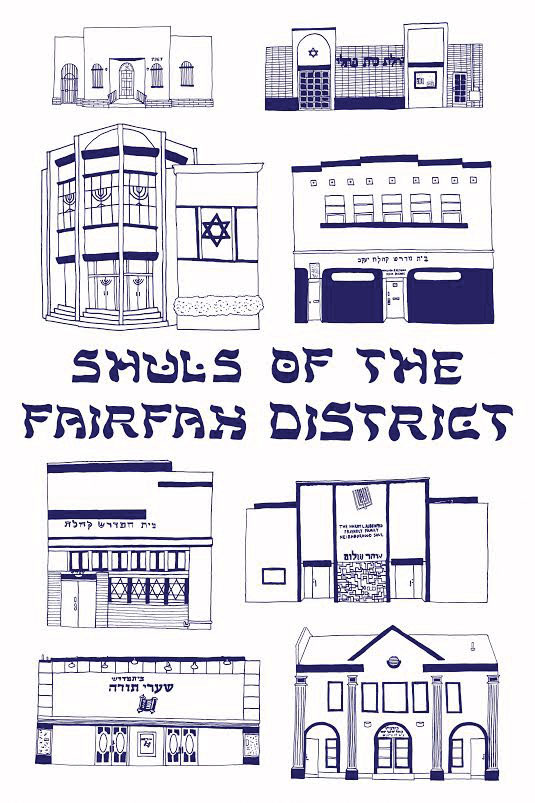
In his spare time, Podemski, 33, illustrates the vernacular architecture of Los Angeles — including the shuls of the city — while also eating his way across the many hamburger stands and strip-mall restaurants that give the area some of its comestible color.
Did Judaism influence you in your professional life?
I come from a family of Holocaust survivors, and my grandparents immigrated here. My dad was born in Poland, and I think it indirectly made me want to work in social justice. I’m a very privileged person — and honestly, if you’re Jewish and you don’t want to stand up for people who are being discriminated against or marginalized, especially in this climate — all you have to do is go back a couple generations and we were in the same position.
How does this relate to your job as planning director?
Pacoima Beautiful is an environmental justice organization. Communities of color and low-income communities have traditionally had racist policies that steer polluting land uses into their neighborhoods, and in turn, have a higher rate of pollution-caused health issues. Pacoima was traditionally an African-American community and now it’s a Latino immigrant community. It’s a neighborhood where you have three freeways bisecting it, an airport in the middle, railroad tracks bisecting it and factories built next to homes. It’s the most park-poor neighborhood in L.A. It has some of the most unsafe streets for pedestrians in the city. It has the Pacoima Wash, which is the highest swift-water rescue area in the city. While it’s important to be on the defense against polluting land use, what I do is try to bring amenities into the community by making the physical environment better match up with how it’s used by the community.
Can you give a specific example?
There was a pedestrian bridge that was part of the Pacoima Wash that had huge amounts of foot traffic, and it looked like a World War I armament with barbed wire on it. It was built in such a way that a person in a wheelchair couldn’t go over it, and neither could a mom with a stroller. If you couldn’t walk over it, you’d literally have to go one mile out of your way to get to the other side. We made it structurally accessible, painted it, put landscaping in, and cleaned it up. Immediately after, we had a woman in a motorized wheelchair tell us, “Thank you so much. I can visit my family now on the other side.” And that’s a really small project. But it shows how changing the physical environment, even on that small scale, can make a huge difference in people’s lives. We also are currently working on a number of urban-greening and complete-streets plans — plans we started working on a decade ago but finally have the funding to implement.
Can you define “urban-greening” and “complete streets”?
It’s basically creating more environmentally sustainable and people-friendly urban areas. An example would be creating pedestrian and cycling road infrastructure with infrastructure that captures stormwater runoff, which is a major way to combat the drought and create water resilience. One of [Los Angeles] Mayor [Eric] Garcetti’s first big executive orders was for Great Streets, and the idea behind that is to change how we think about our existing streets. They should carry more than just cars. But it’s not just about pedestrian safety either, but also economic vibrancy, and as places for communities to come together.
People tend to have a negative, preconceived notion of Pacoima. What would you like everyone to know about Pacoima to enhance their understanding of it?
 Pacoima’s an amazing place with a really rich legacy. Ritchie Valens was from there. It has the Mural Mile, which is one of the largest collections of murals in Los Angeles. It’s an immigrant community with a history of entrepreneurship and cultural vibrancy.
You’re also an artist, and you specialize in posters featuring historical and unique local architecture. What kind of buildings are you drawn to?
Everyday buildings. The way most people experience Los Angeles is through their homes and the hamburger stands, and the other mundane things in their neighborhood. So my posters elevate the everyday, familiar spaces of L.A.
Do you have a favorite building in L.A.?
I love hamburger stands. There’s a place in Pacoima called Aye Papi Que Rico that’s a Cuban chicken place that I really like. I honestly think I like hamburger stands so much because we don’t have stuff like that in Portland, because it’s cold and it rains a lot. Also, I technically don’t like them because I can’t technically like them as a planner, but I think they’re fascinating. I also like the strip malls here.
And you also recently illustrated a “Shuls of L.A.” poster, right? What’s your favorite shul here?
My favorite shul in terms of architecture? Wilshire Boulevard is pretty amazing but, I guess, the shuls of the Fairfax District. I couldn’t tell you their names, but I just love them because they’re these little storefront buildings and they’re very intimate. I feel like lots of synagogues are designed like bomb shelters, these brutalist, bunker-like spaces. In the Fairfax District, you imagine 10 old Jewish guys inside running these places without a rabbi.
So where can people see and purchase your posters?
My wife, Sarah Klinger — who is a very talented illustrator — and I have a company called Polkela, which is Yiddish for “drumstick,” and we sell our artwork at the L.A. Library Store, the Los Angeles County Store in Silver Lake and online at polkela.com.