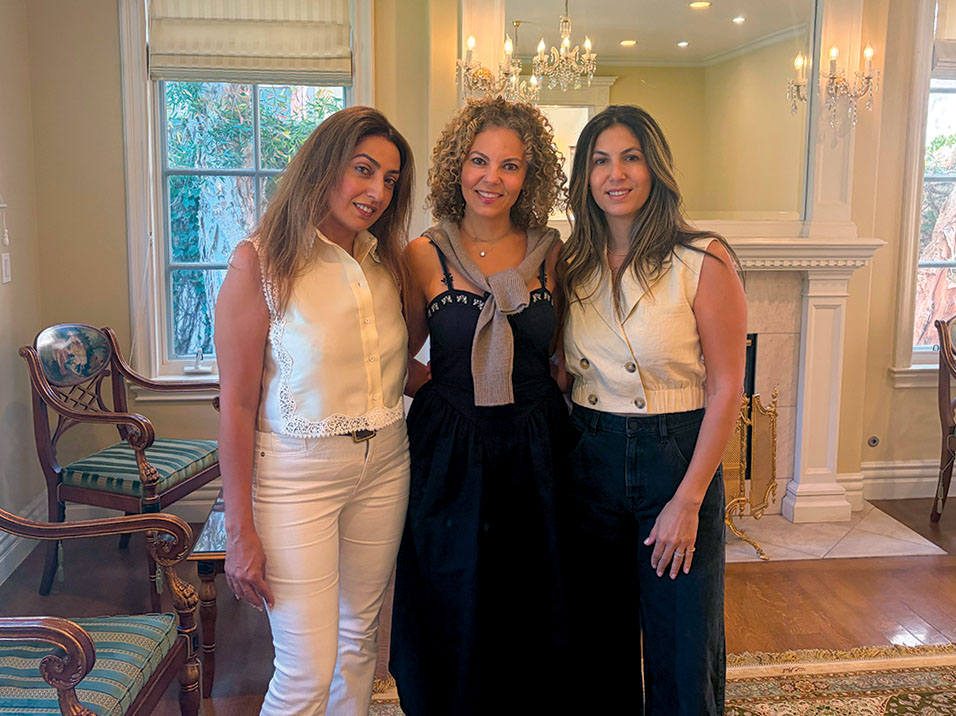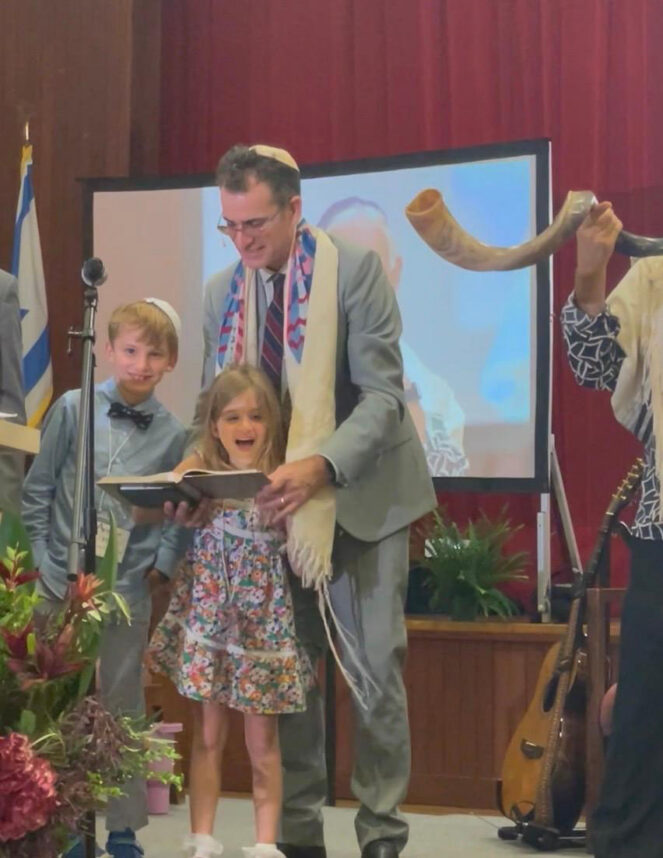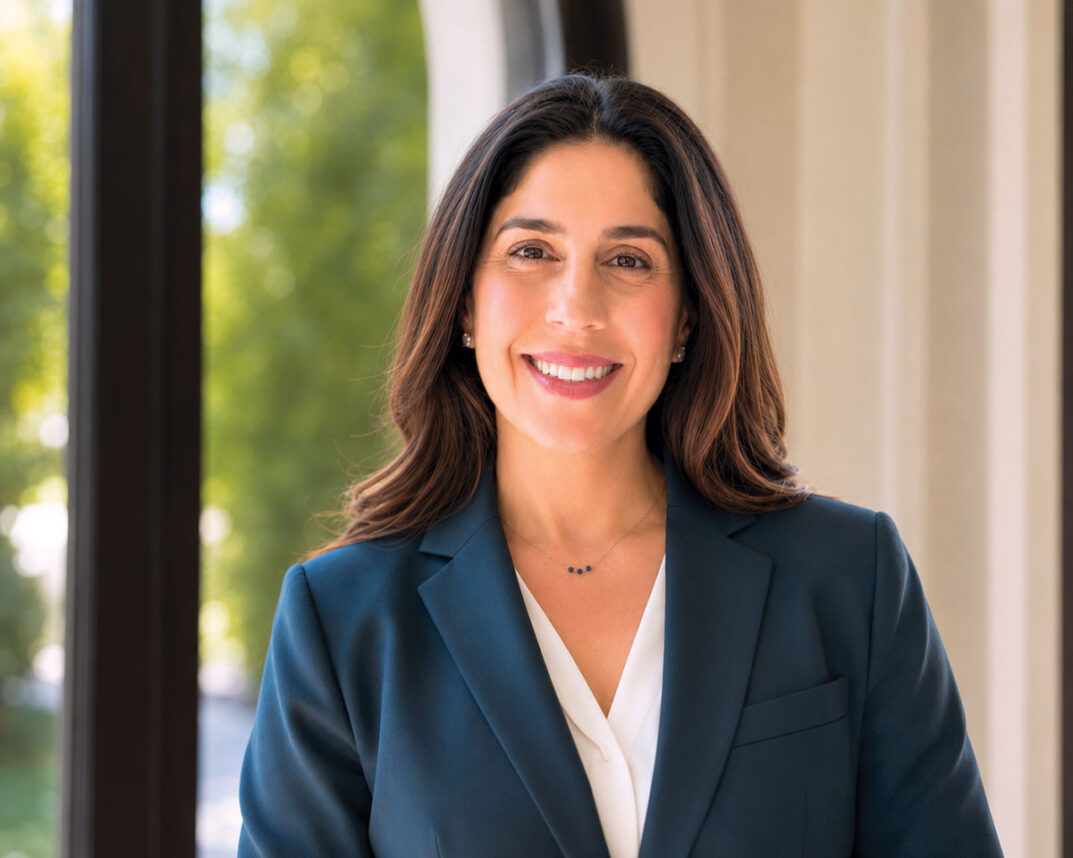
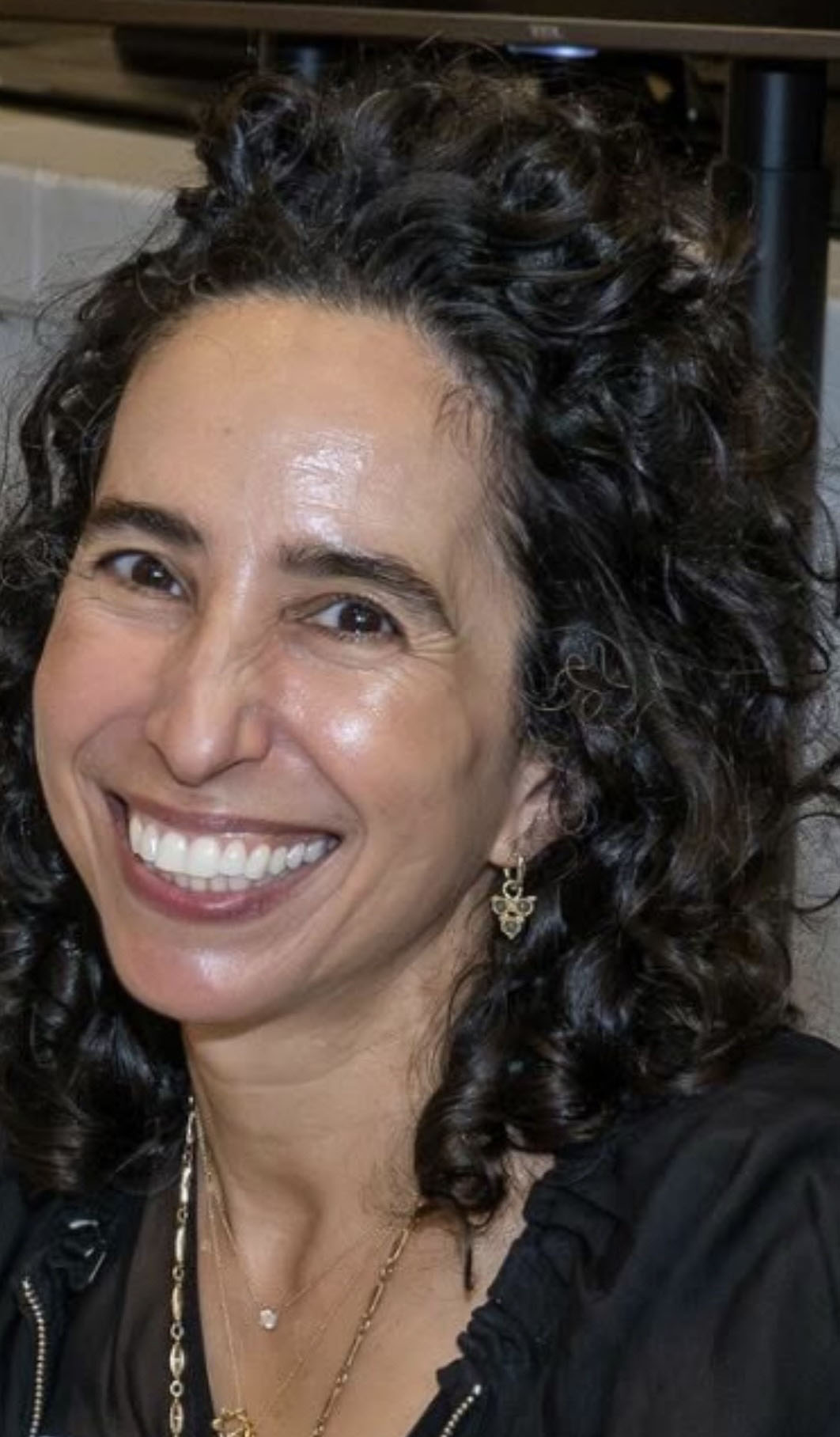
Michelle Missaghieh, Temple Israel of Hollywood’s associate rabbi, is likely the busiest rabbi in Los Angeles. She teaches children and adults, learning, pastoral duties, in-person and online classes, involvement with numerous boards, every program — large and small — at TIOH.
On top of all this, the slender Rabbi Missaghieh goes for a brisk 60-75 minute walk every morning, wearing a weighted, 24-pound vest. “Good for your balance as you age,” she said. And, oh, yes—she’s also working toward a doctorate in Jewish Studies.
With so much on her plate, what part of her week does Missaghieh anticipate most?
Without hesitation, she responded. “Monday afternoons, I usually meet with my two chavrutas (learning partners) … With one I study Hassidic texts having to do with the parasha of the week. With the other, Talmud Berakhot. I look forward to both because they frame my week. I think about how I may use whatever I am studying during the week.”
The Mizrachi and Ashkenazi New York City native – her father emigrated from Iran in 1951 – landed at Temple Israel of Hollywood directly following her 1996 ordination by Hebrew Union College. “I really enjoy teaching, and I really enjoy learning,” she said. “I love doing that with people of all ages. We are lucky enough at Temple Israel of Hollywood to have a nursery school, a day school, a religious school and adult learning. I am involved in all of that.”
And what she finds most appealing about being a rabbi has changed over the nearly 30 years of her rabbinate. “When I started, I was 28 years old and I didn’t have a lot of life experience,” she said. “As I have aged – even though I am not very old — by now I have had a lot of life experience. I really appreciate learning from older people.” She learns by just being present with people of all ages who are going through difficult challenges – be it personal, existential or the life cycles of illness and death, struggle and questioning.
Missaghieh is also inspired by her innate curiosity. Here is a key clue to the unique rabbi’s success.
“A few years ago, I took a course on Rabbi Nachman of Breslov’s approach to prayer,” she said. “I decided, ‘Oh! I want to learn about this.’ I took the course. Then I turned the course into a class.” At the start of the COVID pandemic she decided she would do a deep dive into how Jews responded to plagues in the past. “So I learned how Jews have to take care of our health and what is our responsibility to other people and to ourselves. Then I turned it into a class.”
Do you detect a pattern? “For example,” the rabbi continued, “Gila Fine just wrote a fabulous book – ‘The Madwoman in the Rabbi’s Attic.’ It just won the Jewish National Book Award. She teaches at Pardes (Institute of Jewish Studies) in Jerusalem. I heard about the book through the director of Pardes. He and I were ordained together. I read the book that is so fabulous, and I turned it into a five-session class.”
Always on the lookout for new material to teach, Rabbi Missaghieh cited the recent nationwide protests against ICE. “I decided to go back to my notes,” she said, “and see if I ever taught about civil disobedience. In fact, I did. So I brought those up. Now I will think about how I might use them for Shabbat.” Stimulating subjects, she said, often bubble up from an issue going on in the world or something she has referenced. Immediately, the rabbi shapes her plans by delving into traditional texts and turning the news into newly configured learning moments.
But all of this begged the question — why didn’t she have much experience with life when she came to Temple Israel of Hollywood? “Because I was only 28,” Rabbi Missaghieh said with a hearty laugh. “I had not yet been married. I had not yet given birth to three children, nursed three children, sent three children through high school and college. I have been married now for 27 years, and all of these life experiences give me some depth of compassion, understanding, flexibility. openness, presence.”
To get an idea of her full schedule, “every Monday morning we have T’filah in our day school. It’s called ‘Briskin.’ Every Monday I co-lead this class, and I meet with every single fourth-grader and study a prayer with them and help them write some sort of talk about the prayer during the service. The kids sort of talk about the prayer during the service.”
And about once a month, she helps lead Friday morning mini-Shabbat services for the nursery school. Don’t forget the adults. There are “approximately 250 adults on my Adult Ed email list,” she says, “both for Zoom and face-to-face lessons.”
Missaghieh teaches Daf Yomi, a page of Talmud a day, and presently is half-way through the seven-year cycle. Once a month, she teaches conversion students, a 14-month curriculum after they complete their Intro to Judaism class elsewhere. She is deeply involved with the unique Sandra Caplan Community Bet Din. She serves on the board of LA Family Housing.
Otherwise, she relaxes.
Fast Takes with Rabbi Missaghieh
Jewish Journal: Your favorite childhood experience?
Rabbi Missaghieh: My dad used to take us ice skating on Sundays in the winter and bike-riding on Sundays in the other seasons – both in Central Park. In my 20s, I worked in Central Park, a beautiful place to escape.
J.J.: Your next goal?
RM: To get my doctorate and spend time with my children.
J.J.: Your favorite moment of the week?
RM: Sitting in my backyard on Shabbat afternoon reading.