Last Tuesday, 22 years to the day after the Iraqi government, led by Saddam Hussein, committed an act of genocide against the Kurdish people of Halabja, the Simon Wiesenthal Center in Los Angeles unveiled a small but graphic exhibition in its Museum of Tolerance (MOT) commemorating the 5,000 Kurds who were killed. Hussein’s catastrophic chemical barrage was intended to suppress guerilla revolts at the end of the Iran-Iraq War.
Bleak photos of the dead — frozen bodies collecting dust in gravel, lying in gutters and piled on top of each other — dominate the exhibition’s nine panels. They are depicted alongside a mass gravesite, smoke plumes enveloping the region. The poisonous gas emitted a fruity scent, according to one description. While some dropped dead immediately, others “died of laughing.”
The show, which runs through March 26, has three themes: “Breaking the Silence,” “Remembering the Victims” and “Lessons for Today, Warnings for Tomorrow.”
Included is grainy footage, shot by an anonymous Iranian journalist after the attack, that shows injured victims spilling out of underserved hospitals and survivors struggling to reach the Iraq-Iran border over rocky terrain.
Former Iraqi military commander Ali Hassan al-Majid (aka “Chemical Ali”) is portrayed here as evil and bloodthirsty. “I will kill them all with chemical weapons. Who is going to say anything?” he is quoted as saying.
In a particularly gripping photograph, a girl dies in her mother’s arms. Nearby, a boy lies dead in the middle of the road, his eyes remaining open.
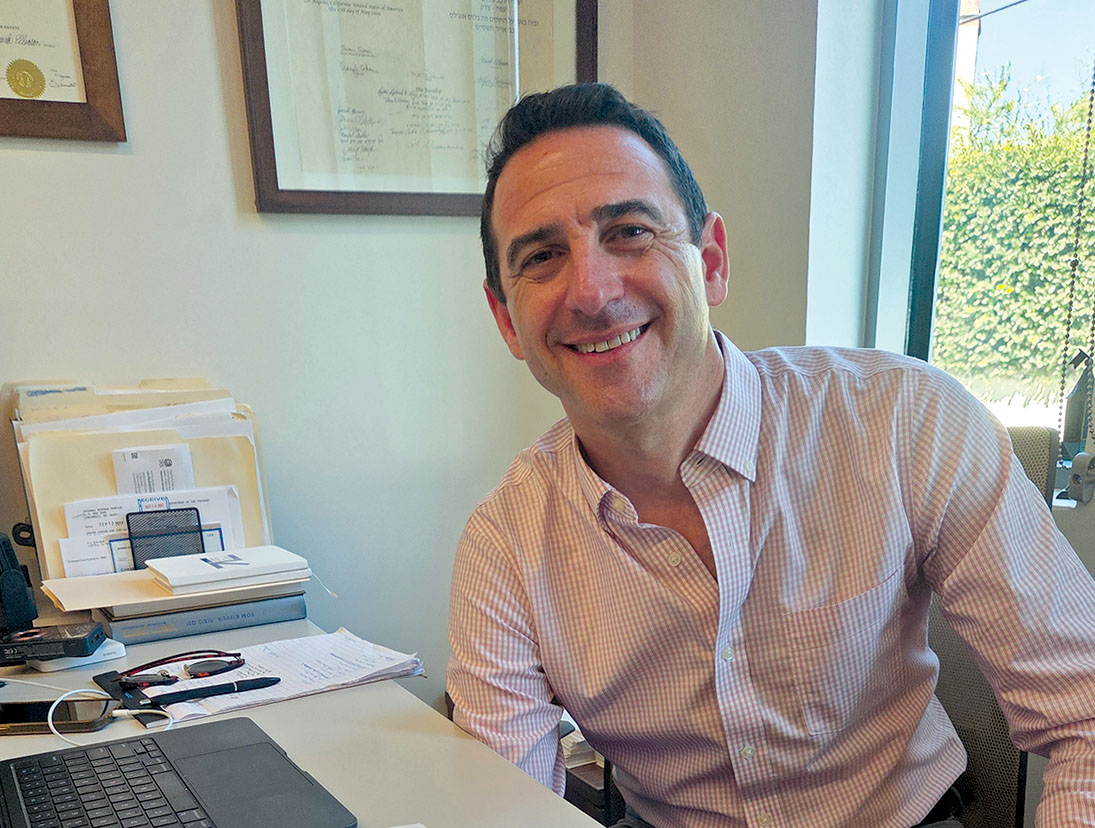
Accepting an invitation from the Kurdistan regional government, representatives of the Simon Wiesenthal Center traveled to Halabja in 2008. There Liebe Geft, MOT director, and Rabbi Abraham Cooper, associate dean of the Simon Wiesenthal Center, spoke with families of the deceased. At the time of Geft and Cooper’s visit, the U.S. military maintained a heavy presence in Iraq. Armed guards escorted Geft and Cooper everywhere.
Last week, during a press conference that preceded the exhibition’s opening, Geft’s words echoed rhetoric used at Holocaust memorials: “Hope lives when people remember,” Geft said.