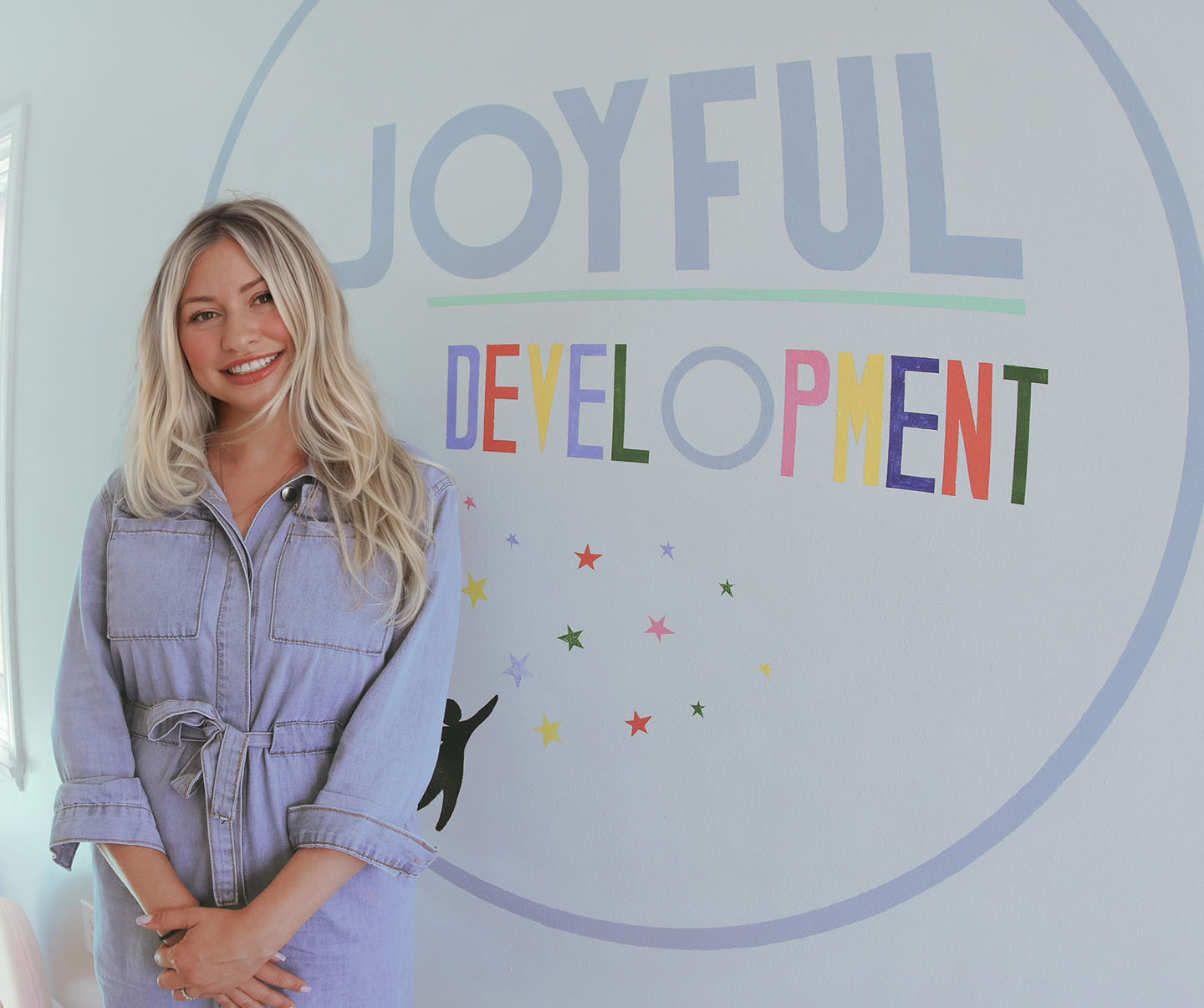
Sophia Dvorkina, a DIR/Floortime (“Floortime”) therapist and child development specialist, moved from Brooklyn to California and, in 2024, launched Joyful Development, a transformative program for neurodivergent children, in Los Angeles. This evidence-based initiative offers personalized support to help children flourish emotionally, socially and intellectually while respecting their unique interests.
Joyful Development fosters a nurturing community for children with developmental and neurological differences. The program creates a safe and encouraging environment where children can build confidence and resilience. Through sensory exploration, play therapy, Floortime techniques, and adaptive skills training, Joyful Development fosters the growth of essential life skills in a way that is both empathetic and tailored to each child’s needs.
Dvorkina, the CEO and director of Joyful Development, has always held deep compassion for neurodivergent children, fueled by her fascination with autism. Her passion for working with children with developmental differences began during her journey of determining her career path.
“Kids with special needs hold a special place in my heart because they are [often] misunderstood,” Dvorkina told The Journal in a phone interview. Her own experiences with family shaped her approach to therapy, as she became aware first-hand of the complexity of neurodivergent behaviors and emotions.
Dvorkina grew up with an emotionally absent father, and it wasn’t until after his passing that she began to recognize the deeper complexities of their difficult relationship. Through her educational training, she learned that her father had a hidden mental disability that he had managed to mask throughout his life. The challenges he faced in relating to others had hindered his ability to empathize and communicate effectively. Dvorkina recalled, “When it all finally made sense, I was able to forgive him for the father he was to me.”
In contrast to the traditional Applied Behavior Analysis (ABA) therapy, which focuses on modifying behavior through rewards and consequences, Joyful Development adopts the DIR (Developmental, Individual-differences, and Relationship-based) model. This approach disregards the adult-directed ABA model and, instead, empowers children to take the lead in their development. Rather than attempting to eliminate “unusual” behaviors and force them to conform to societal norms, DIR/Floortime focuses on understanding the child’s emotions and inner world.
Dvorkina explained, “DIR/Floortime views behaviors as a form of communication, focusing on comprehending and responding to the child’s emotional and developmental needs.” This model creates a space where children can express themselves authentically, with parents and therapists working alongside them in the process. The core of DIR/Floortime therapy is the belief that behaviors serve as an important means of communication.

According to Dvorkina, “We are trying to understand why certain behaviors occur, explore their underlying causes and emotions, and gain insight into what is going on in the child’s mind.” This holistic approach fosters a deeper connection between children and their caregivers, allowing children to be their true selves rather than trying to mold them into a preconceived ideal.
Dvorkina continued, “Rather than teaching [archetypal] behaviors, Floortime strengthens communication, social skills, self-expression, and growth. With Floortime, we first join the child in their world — we connect with them — and then we gradually bring them into our world through building rapport and establishing trust and safety.”
Research consistently supports the effectiveness of DIR/Floortime therapy in enhancing interaction, promoting self-regulation, and encouraging developmental growth in children with diverse needs. The therapeutic framework helps caregivers understand the child’s motivations, developmental stage, and individual differences, allowing them to become more attuned to the child’s emotional needs.
Dvorkina emphasized that play, as it manifests in neurodivergent children, often looks different from the way it unfolds in neurotypical children. “One of my goals is to coach parents on how to understand their child, be attuned to their needs and recognize their cues [to develop] a stronger parent-child relationship,” Dvorkina said.
“One of my goals is to coach parents on how to understand their child.”
Joyful Development offers a variety of programs designed to support children’s growth and well-being, all grounded in the principles of DIR/Floortime. These include one-on-one play therapy to develop skills and foster connections, and the Safe and Sound Protocol (SSP), which uses specially engineered music and low-frequency sound patterns to help calm the nervous system and reduce anxiety.
Sensory integration therapy is also available, providing customized exercises and activities to engage the senses and promote balance. PlayDates Facilitation helps children develop meaningful relationships with peers. Music and Movement therapy encourages self-expression while simultaneously improving both fine and gross motor skills.
Through these diverse programs, Dvorkina hopes to equip children with essential skills that will serve them throughout their lives. “I hope to help my clients with crucial skills, such as emotional regulation, social engagement, reciprocity, problem-solving, self-awareness, empathy, self-advocacy, imagination, adaptation, independence and more — all of the beautiful gifts that Floortime offers,” she said.
At the heart of Joyful Development’s mission is the belief that every child deserves to feel seen, heard, and valued for who they truly are. Dvorkina’s main goal is to support the child’s emotional growth and individuality, ensuring they feel happy and understood. “I want families, providers, and teachers to see all the beautiful strengths that the child has to offer because then, we can change the world.”