Noam Zissman, 21, a convoy commander from Ra’anana, and Moran Kalinsky, 20, a deputy company commander from Holon, sit in their Israeli officers’ uniforms at Johnny Rockets on Melrose. They have just arrived in Los Angeles after more than a week of nonstop travel across the U.S., and they won’t even have time to order a plate of fries before they have to rush across town.
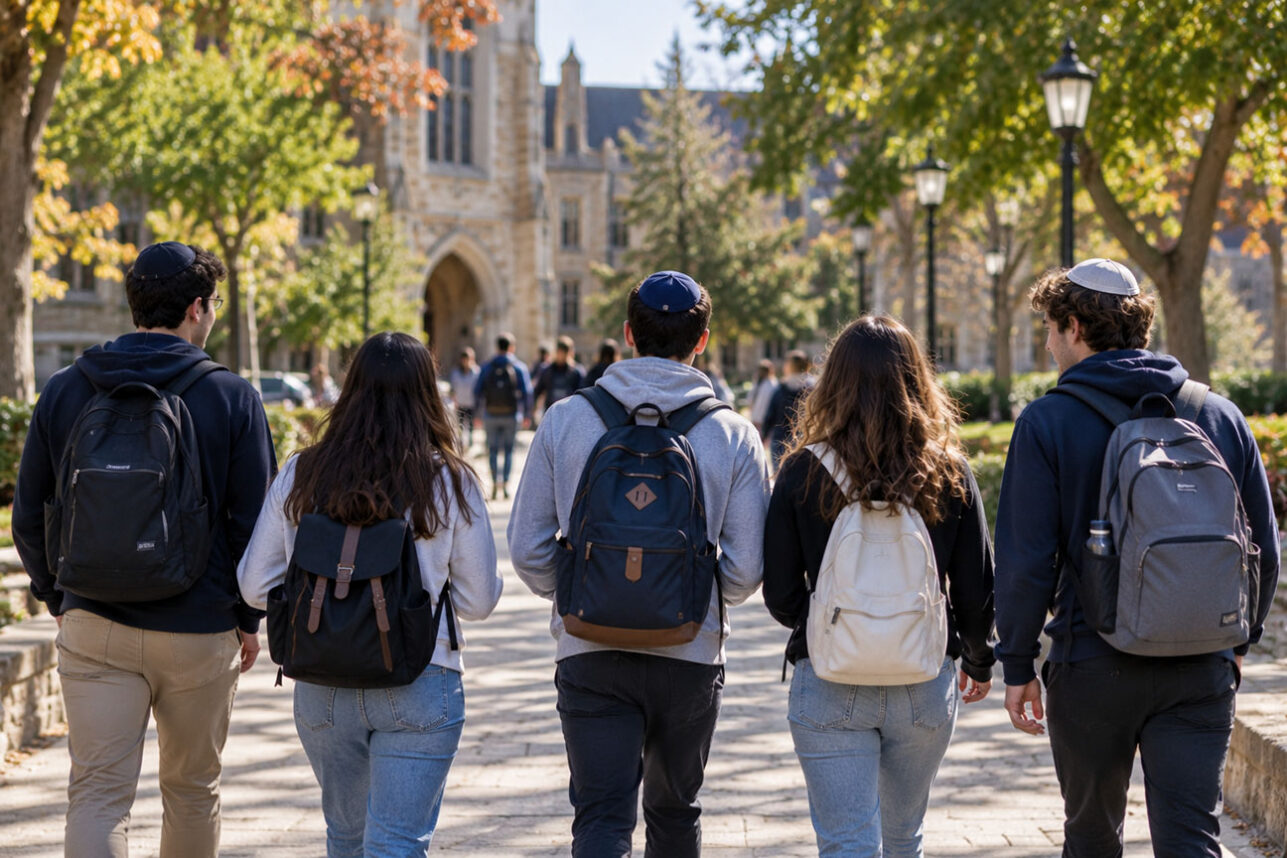
Moran and Noam are booked solid as speakers for Achva, a program sponsored by the Israeli consulate’s Office of Academic Affairs that each year brings two IDF officers to speak to Americans about life in Israel. The speakers for Achva (Hebrew for “brotherhood”) generally meet with university students, as the closeness in age of the Israeli soldiers and American students reinforces both similarities and differences. Given the violence in Israel, interest in this year’s program is especially high..
Zissman has firsthand experience with that violence. A member of the elite Givati Brigade, he led a demolition unit stationed in Netzarim, in the Gaza Strip, which was the first Israeli unit to come under fire in the current fighting. One of the men under Zissman’s command, David Biri, was killed in the ambush. Zissman was shot in the leg. When he speaks to American students, he tells them, “the media doesn’t always show the right picture. So much [is] ‘the brutal Israelis.’ I tell them when, under what circumstances, we open fire.”
Kalinsky agrees that the Achva program helps to correct misunderstandings. “A lot of questions to me have been about the thing going on in Israel, about the politics,” she says. “I don’t think in last year’s program they dealt with that. It’s very important, but not the first goal of this program. I want to tell people about life in Israel. Most people are very sympathetic to us; Jewish and not Jewish, they understand the media doesn’t show the right picture.”
Before they head off to UCLA, the Achva soldiers note how important American support is to their work. “I knew, but didn’t know how much, the Jews here are organized to support Israel,” says Kalinsky. Zissman adds, “As a soldier, the e-mail, the letters, the packages we receive, they mean a lot to us.”