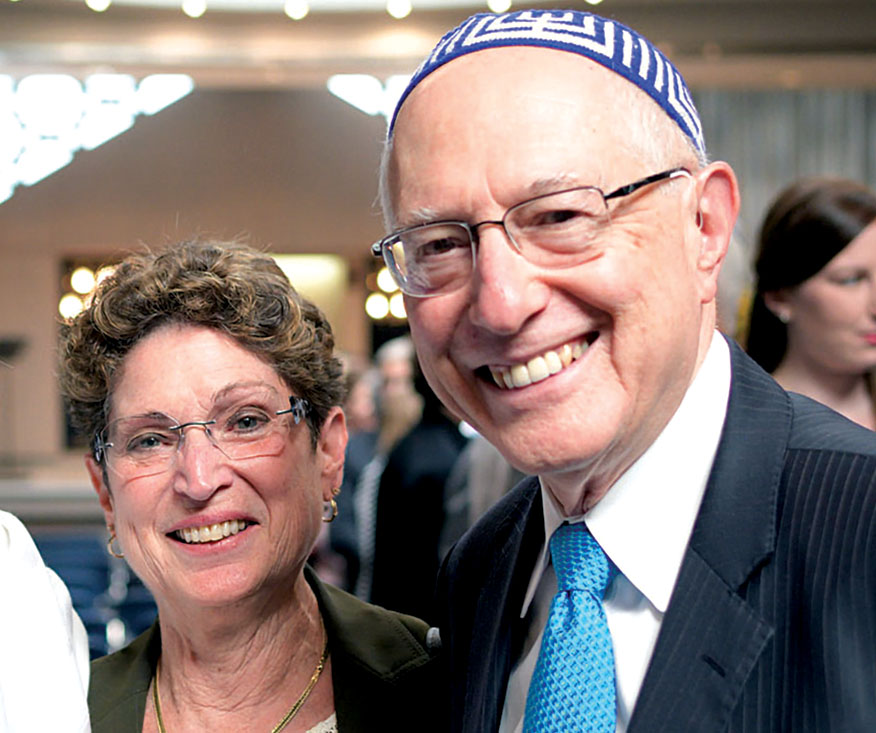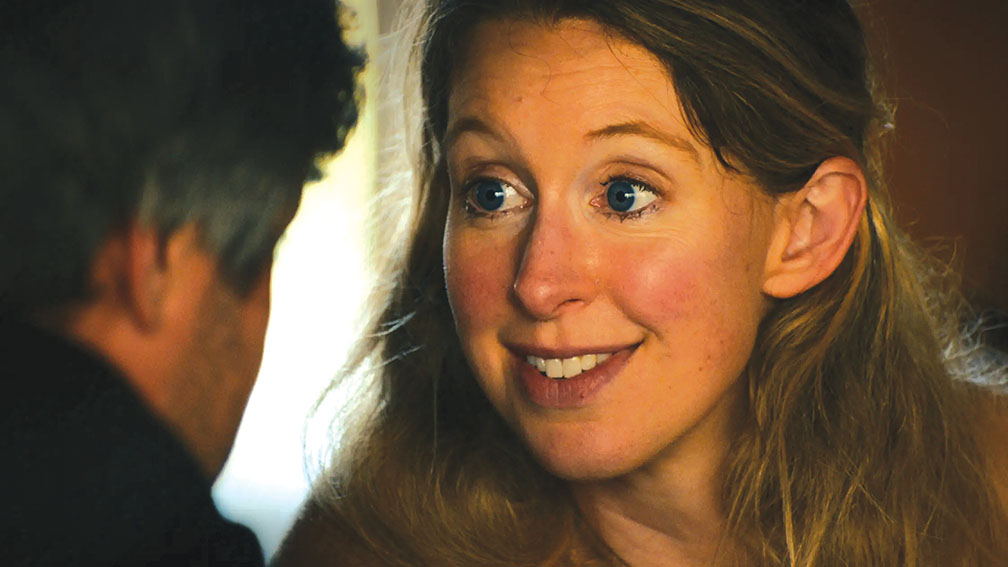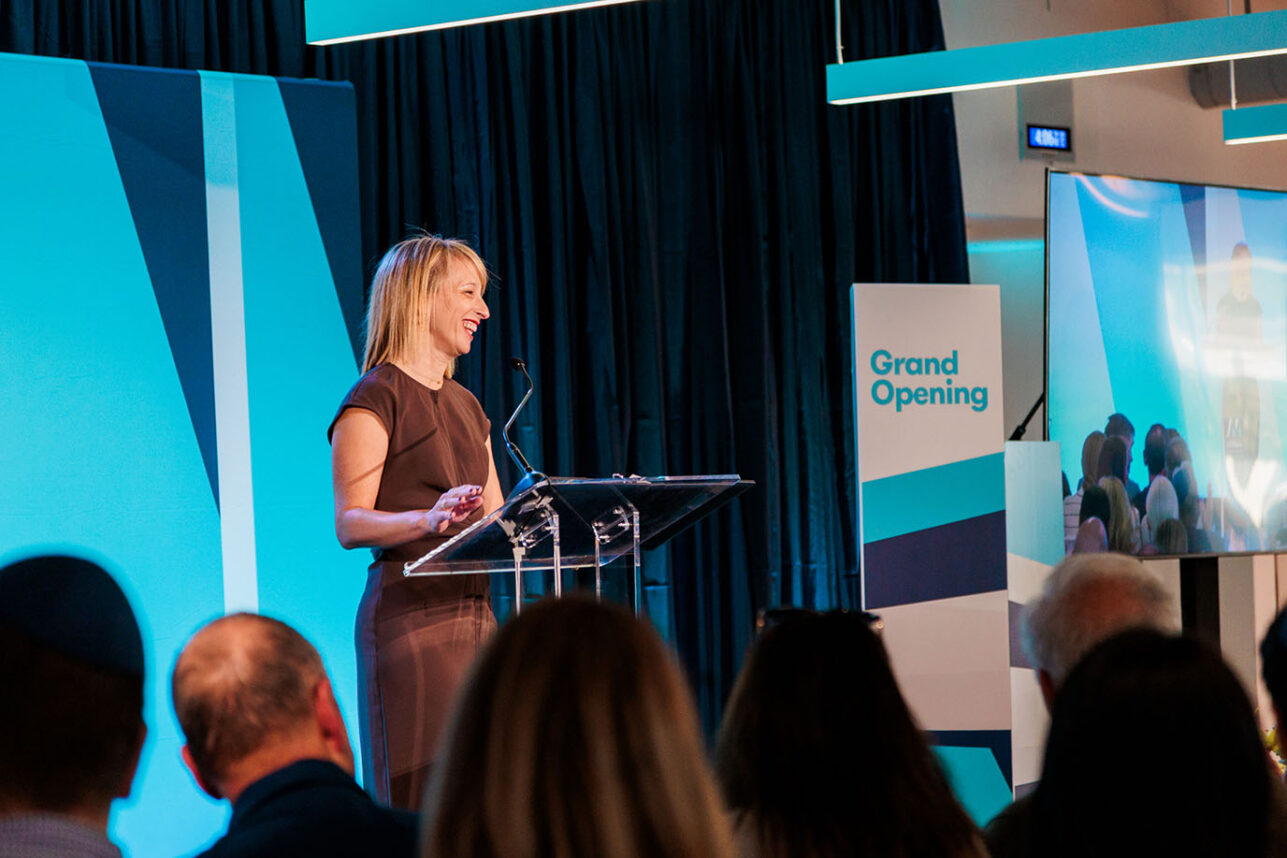
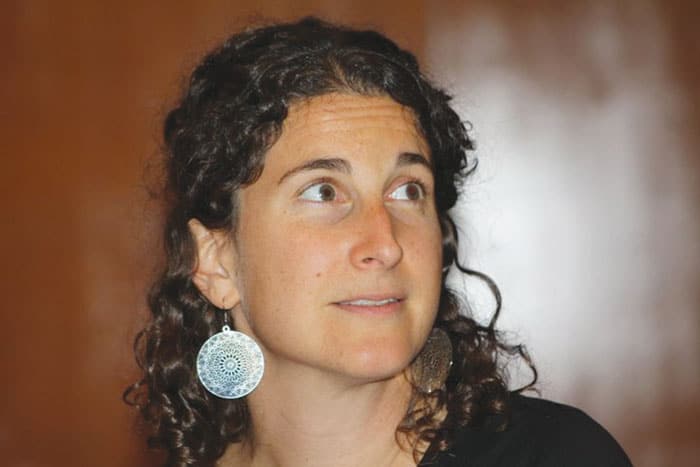
“I am a strong feminist,” says Dara Frimmer, the senior rabbi of Temple Isaiah. “Being a feminist is part of everything I do, as a friend, a parent, a citizen.”
Since becoming the senior rabbi five years ago, Frimmer has made inclusion a daily target. “Inclusion,” she says, “is about bringing in people who previously have been marginalized back into the center of the work we do and of the community we build and sustain.”
The New Jersey native, who has an easy smile and a quick laugh, chose to dedicate her life to the rabbinate for two reasons: She loves Judaism and the Jewish community. She was raised in a traditionally Conservative home in New Jersey, led by “my father, of blessed memory, who grew up Orthodox in Brooklyn.”
She was born curious. “For me, part of where change first emerged was, what does it mean to raise a precocious feminist daughter in a traditional Conservative environment. Because, as we are taught to ask questions on Passover, I had a lot of questions from a very early age.”
Frimmer’s father was supportive of his daughter’s curiosity.
”You may not love everything about the tradition, but we don’t exit the tradition because we are uncomfortable or unhappy. We stay and work within it to seek the answers.”
“He was very clear that — and this is still true today — you may not love everything about the tradition, but we don’t exit the tradition because we are uncomfortable or unhappy. We stay and work within it to seek the answers.”
The elder Frimmer did not live to see his daughter’s 2007 ordination, but endorsed her life choice.
Frimmer’s search for answers began at Stanford. The undergraduate didn’t realize she could take Religious Studies classes.
“One of the first classes I took,” she said, “was from (scholar/author) Arnie Eisen. It was called, ‘Intro to Judaism.’ I thought ‘there’s an easy A. Instead, I got a B-plus.’”
That didn’t stop her; instead she “really dove into studying, not just about Judaism but other world religions.
“I was very taken by the stories of women, minorities and other marginalized groups who were turned away, pushed away from tradition because they weren’t men – and did not give up on it. Rather, they said, ‘How do I read Scripture? How do I look at community and the power it has to transform and tell a different story for the future?”
After graduating and spending a year in Israel, she came home and enrolled in the Master’s program at Harvard Divinity School.
“Religion still was a deep interest,” she said, “but I was not sure I necessarily wanted to be clergy.” She pondered teaching, working in the non-profit world, journalism and exploring faith-based organizations globally that were doing impressive work. But a year at Harvard made her choice clear, she would enroll in rabbinic school. The choice made sense, because of her desire and compassion. “I wanted to take our text and bring it alive for people,” Frimmer said. “How would our tradition speak to someone who was at the end of life? Or in great pain?”
Her 17 year (and counting) relationship with Isaiah has been accompanied by her own growth. “The funny part of coming here as a young rabbi at 30 and being someone who was outspoken about social justice and seeing the world differently, a lot of the feedback that I got, with love, was that we love having you at Isaiah but we know you won’t stay.”
Rabbi Frimmer sensed her new congregation presumed that since she was so passionate about social justice, she would not stay. They worried she would see Isaiah as a stepping stone to eventually leading a social justice organization, especially since she still was relatively new to Los Angeles.
“But I have fallen in love with the community during the years I have served it,” the rabbi said.
“I don’t know how else to say it. When you fall in love, you feel unbelievably seen, embraced and supported for who you are, just as in any partnership.”
Frimmer’s commitment to Isaiah deepens “when the Torah I have to teach is appreciated and welcomed. It also can be challenged. But I can wake up every day and be able to have a purpose-driven life that achieves my spiritual hopes and dreams as well for my family. An incredible gift.”
Temple Isaiah also allows her to pursue her social justice beliefs. “We have been committed to the environment and climate change for a generation,” says the rabbi. “Feeding the hungry, providing school supplies for the needy, working on the environment and on how kids can become involved, helping those who are unhoused, and how families can do that work together.”
As the interview was winding down, Rabbi Frimmer related a memorable moment with the late Isaiah member Joel Peck shortly before he died.
“He asked me, ‘what do you think was harder — when you started as a rabbi or the work you do now?
“A beautiful question”, she thought.
“What was hard and uncertain in 2007,” she said, “was not yet knowing the depth of relationship a clergyperson could have with their community. In the beginning, I spent hours thinking about everything.
“Seventeen years later, how could there have been any path but this one?”
Fast Takes with Rabbi Frimmer
Jewish Journal: What superpower would you like to have?
Rabbi Frimmer: Extraordinary emotional intelligence.
Jewish Journal: Favorite place you have visited outside of Israel?
Rabbi Frimmer: Sequoia National Park.
Jewish Journal: Best book you ever read?
Rabbi Frimmer: I love reading. There is no best book, only the most recent I have fallen in love with. Last year it was “Four Thousand Weeks” by Oliver Burkeman. Also, “Reader, Come Home” by Maryanne Wolf.