
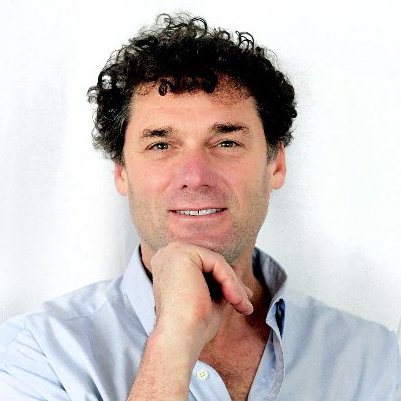
David Lehrer may be overstating his case only slightly when he says that most Westsiders are unaware of what goes on “6 inches below the 10 freeway and 6 inches east of the Golden State.” Maybe he’s off by a few inches, but cut him some slack; Lehrer has been trying to bridge the social divides in this city for decades.
Last month, the 51-year-old marked his 25th year as regional director of the Anti-Defamation League (ADL). Breakfasting in a Westside restaurant, he’s the opposite of what you imagine when you think of a crusader against anti-Semitism. An attorney by training, Lehrer is insightful, sober-minded and utterly congenial, hardly the type to see the enemies of his people lurking around every offhand slur or bad-taste joke.
He’s a glass-is-half-full kind of guy, which is probably healthy when your life is spent dealing with hate, discrimination, intolerance and other human frailties that aren’t about to disappear anytime soon. “We’ve made tremendous progress,” says Lehrer over his fruit bowl. “Tolerance has won the day as the ethos of America.”
According to the ADL’s annual report on hate crimes, anti-Semitic acts are down by about 20 percent. “It is not an omnipresent fear,” says Lehrer. The decline no doubt reflects a low crime rate overall, but it is also the fruits of hard labor. “It doesn’t happen by itself,” Lehrer is quick to point out.
If the ethos of our times has made demigods of tolerance and diversity, the grunt work of turning ethos into action has often been taken up by the ADL. Its “A World of Difference” program has trained thousands of teachers throughout the state. The group has sponsored cross-cultural Passover seders bringing together all faiths and colors, and a “Children of the Dream” program that brings together Israeli and local teens. “These are programs that may sound hokey,” says Lehrer, “but they work. The virus of hate doesn’t disappear on its own.”
So with hate on the run, why doesn’t Lehrer pack up his bags and return to the world of corporate law that he left for nonprofit work? For one, he quickly grew tired of the corporate practice that made many of his boomer contemporaries rich. And he’s had plenty of opportunities to use his law degree, helping to draft California’s first hate-crime legislation, its anti-paramilitary law and its law against the Arab boycott of Israel. Lehrer has also overseen an annual budget that has grown from $400,000 to about $6 million.
There’s still a lot to be done. Lehrer was all over the news during the North Valley JCC shooting and has helped prepare and disseminate serious information on Internet hate sites and local paramilitary groups. But his work these days, says Lehrer, focuses on a deeper problem than mere hate. “The bigger problem in L.A. is that we’ve become incredibly isolated,” he says. “It’s not like New York City or Chicago, where you live and work and commute next to all different sorts of people. Twenty-five years ago you had people meeting at football and basketball games. Now poor are even priced out of those events. It’s not healthy. Not because of some ‘Kumba yah’ 1960s notion of kinship, but because when you don’t mix, you don’t know other people. And you end up with a bizarre notion of what the world is like.”
Lehrer is intent on helping Angelenos cross the widening divides of race and, even more so, class. The diversity training, the interfaith seders, an ongoing Latino-Jewish roundtable, Holocaust education for public school teachers, the Tornberg Lecture series that brings together Black, Muslim, Christian and Jewish speakers – these, say Lehrer, “provide places people can see one another.”
But Lehrer understands that such programs alone cannot overcome the city’s increasing social barriers. “Public education,” he says. “That’s the key. It’s important for us to re-engage in the public schools.” Lehrer and his wife Ariella, a software entrepreneur, live in Los Feliz, where they have sent all four of their children through the public school system. But they’ve seen their contemporaries withdraw their children from the district, opt for private schools and distance themselves from the battles and problems facing the district. And that can only hurt us all, says Lehrer. A well-run public school is the best place to reach the hearts and minds of future generations of all types of Angelenos. When that falls apart, can the rest of the city be far behind?
“Our message is not that the sky is falling,” says the director. “Our message is that we have to work very hard to keep it up. If we make a committed effort to educate kids, we have more than a chance.”

































