
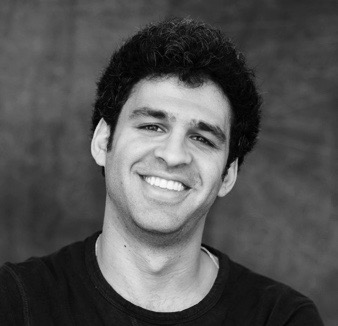
Hillel International CEO and president Eric Fingerhut has called for a review of how his organization’s national guidelines will be applied to Hillels on college campuses around the country.
“The guidelines were passed in 2010. Frankly, not a lot of work was done on how to explore how they would be applied on campus. … They haven’t been updated or modernized. They are getting all this attention, now, for the first time they have been called into question,” Fingerhut said during a Jan. 12 panel discussion at UCLA titled “Through the Looking Glass: A Glimpse Into the Future of Jewish Life on Campus and Beyond.”
Fingerhut was referring to a December 2013 resolution passed by Swarthmore College’s Hillel chapter that rejected Hillel International guidelines. Those policies state, in part, “Hillel will not partner with, house or host organizations, groups or speakers that as a matter of policy or practice: Deny the right of Israel to exist as a Jewish and democratic state with secure and recognized borders.”
Hillels on college campuses receive resources from Hillel International, but they function as autonomous organizations. The Hillel at UCLA, for instance, is an independent nonprofit.
Hillel International’s response to the Swarthmore decision — namely, that the school Hillel’s “position is not acceptable” — has sparked a debate about whether Hillels on college campuses are inclusive enough when the topic is Israel. Fingerhut insisted that the organization remains welcoming of many perspectives on Israel, including those of JStreet University, the campus affiliate of J Street, a pro-Israel group that advocates an end to Israeli settlements.
Other participants on the panel, which took place at the Hillel at UCLA’s Yitzhak Rabin Hillel Center for Jewish Life, included Deborah Lipstadt of Emory University. A leading historian on modern Jewry and the Holocaust, Lipstadt earned additional notoriety by winning a libel case in an English court against Holocaust denier David Irving.
Former University of California President Mark Yudof also participated on the panel. The moderator was David Myers, who teaches Jewish history and is the Robert N. Burr Department Chair of the UCLA history department.
Controversies surrounding Hillel were not the only topic that the speakers addressed during the gathering, which lasted approximately 45 minutes and attracted an audience of about 200 people. Panelists also debated the implications of the Pew Research Center’s recent survey, “Portrait of Jewish Americans,” whose findings about Jewish affiliation being on the decline have some worrying that the end is nigh.
Despite the study’s finding that fewer Jews than ever are reporting being “Jewish by observance,” Lipstadt said she prefers to look at the study’s finding that shows that 90 percent of those surveyed consider themselves proud to be Jewish.
“I think what the Pew study is saying … is that there are now more and more ways, multifaceted ways, of doing and being Jewish. Different avenues and entry points into being Jewish,” she said. “I think the study is reminding us of that.”
Yudof agreed, saying that while the Pew report illustrates challenges for the Jewish community — such as the high incidence of intermarriage — American Jews have always had many issues with which to wrestle.
“I think sometimes we idealize our past,” he said.
The future, on the other hand, was close by. Elyssa Schlossberg, 21, a UCLA psychobiology major and member of the campus Hillel’s student executive board, was seated at one of the dozens of banquet-style tables at the event.
Schlossberg said that Hillel’s weekly Shabbat dinners — including some that are followed by hip-hop concerts at the AEPi house — are among the activities that have drawn her to Hillel. She called the organization a “close-knit community.”
Additional speakers included Zev Yaroslavsky, a UCLA alumnus and member of the L.A. County Board of Supervisors; Rabbi Chaim Seidler-Feller, executive director at Hillel at UCLA; Dorothy Salkin, a member of the Hillel at UCLA board of directors and board of trustees; and Tammy Rubin, student chair at Hillel at UCLA.
Their speeches, along with the panel, wrapped up a daylong program at the Hillel that marked the rededication of the center’s Jerusalem Stone Wall, which was erected years ago in memory of Salkin’s parents, Morris and Celia Kahn Aberman. It also celebrated the campus’ new Capital Donor Wall.
It was an event that, more than anything, marked how far the Hillel at UCLA has come since its building at the Westwood Village-adjacent address on Hilgard Avenue opened in 2002, according to Rachael Petru Horowitz, UCLA Hillel director of development.
The 22,000-square-foot facility serves as a community building, providing recreational and study space for the university’s approximately 4,000 Jews. It even has its own Coffee Bean & Tea Leaf on the ground floor. Horowitz called the Hillel campus a “permanent fixture of the Jewish community and the Westwood community.”

































