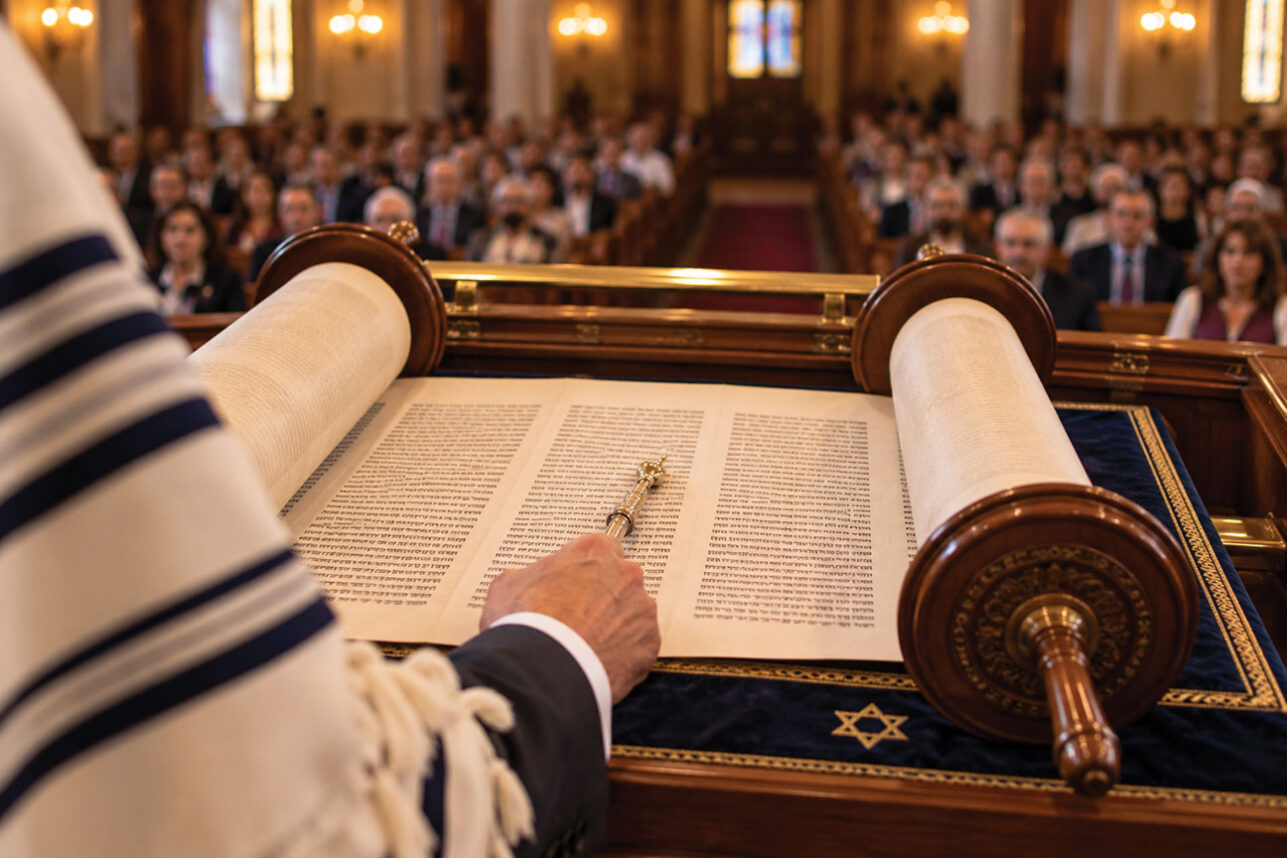
Trust the Jews to begin the holiest moment of the year on Yom Kippur not with a prayer, but with an ambiguous declaration. The Kol Nidre is not a prayer; it is a text that describes various categories of vows and oaths from which, ostensibly, we are attempting to free ourselves.
The text is full of complications: Which vows can be annulled? Does the text annul the vows of the coming year or just those of the past year? And, more philosophically, can I ever live up to a moral ideal where I won’t need to be forgiven for broken promises?
I came across some of these “complications” this year when I glanced at the commentaries in my Sephardi ArtScroll prayer book for Yom Kippur. This got me thinking: Shouldn’t I try to understand the Yom Kippur prayers and texts a little better while I emotionally recite them?
My personal tradition has always been to turn my mind off on Yom Kippur and surrender to the experience. I engage in intense Sephardi chants for the good part of 27 hours, and then go home without a voice and totally drained. But I confess that this year, before the big day, I had some ambivalence. Maybe because I’ve become more consumed over the last few years with understanding Judaism and the Jewish world, I asked myself, with some guilt: Have I outgrown this personal tradition?
I got my answer slowly, as the night and day wore on. It started with the words of Rabbi Yehuda Moses, right before Kol Nidre, when he spoke about Yom Kippur as a day for the soul. The rabbi, who runs a growing Sephardi minyan inside the venerable Congregation Mogen David on Pico Boulevard, spoke of Yom Kippur as a day when Jews ought to put all their differences aside and connect to God through their collective soul.
As he spoke about this collective soul, I thought of my Orthodox friends who were praying in other shuls in Pico-Robertson, as well as my friends who were praying in Reform and Conservative shuls all over town. I also thought of my Jewish friends who might not even be in shul. Yes, I thought, the rabbi is right — every Jew owns a piece of the collective Jewish soul.
But while those words opened my heart, my mind was still unsettled by this pesky “need to understand.” What about connecting intellectually to the thousands of words I was about to read and chant? Was my more visceral and melodic approach to Yom Kippur outdated?
I needed a break from my Sephardi davening to help find my answer.
It so happens that I had promised Rabbi Elazar Muskin of Young Israel of Century City, where I am also a member, that I would join him for the Musaf prayer (I figured this would be the wrong day to break a promise). It hardly surprised me that the Ashkenazi melodies, while beautiful in their own right, were completely different from the Sephardi ones.
When I returned later to my Sephardi minyan, it struck me that all Jews recite pretty much the same prayers on Yom Kippur — but it’s how we sing and express these prayers that really moves us.
In my case, I realized that my tribal-sounding Sephardi melodies connected me not to my Jewish friends in Los Angeles, but to my Berber ancestors from the mountains of Morocco.
This is true for many of us: When we pray on Yom Kippur it is, in many ways, the melodies that connect us to our familial past. We might have “the book” to keep us connected to the collective Jewish family, but we have our melodies to keep us connected to our individual families.
There’s something else about melodies: While words speak to the mind, melodies speak to the soul. Maybe this is why I do very little learning and lots of chanting on Yom Kippur. As Rabbi Moses said, this is a day for the soul.
I have plenty of time during the Days of Awe to search for the meaning of rituals and prayers and do the work of repentance. But when Yom Kippur arrives, with the theme of repentance already in my consciousness, I like to turn off my busy brain and let the soul take over.
I tune out the noise of words and tune in to the intimate power of the holy chant.
As I was chanting the final prayer of Neilah with my son standing next to me, I felt that power. I remembered standing next to my own father in Casablanca while he was chanting the same melody, and I thought of some distant great-great-great-great-grandfather chanting the same melody a few centuries ago somewhere in Morocco, perhaps also with his son standing next to him.
At that moment, there was no need for any intellectual understanding. There was only connection. By chanting these melodies, I was honoring an unspoken vow to my forefathers and connecting to God through their souls.
And that was enough meaning and understanding for one day.