We in the progressive Jewish world are often asked: “What are you doing to combat anti-Semitism?” The simple and unequivocal answer is that we condemn it when we see or hear it.
The views expressed on the KPFK-FM radio show, “La Causa,” on Jan. 7, as reported in The Jewish Journal this month, crossed the line between legitimate political opinion and hate speech. Calling for the State of Israel to be annihilated or exterminated, as one caller did without dissent or interruption, is the kind of statement that must be unhesitatingly rejected.
So, too, should the words of “La Causa” host Augustin Cebeda, who has mocked Los Angeles Mayor Antonio Villaraigosa for “dancing around with a yarmulke on his head” and frequently conflates Jews and Israelis in coarse and unsettling terms.
Unfortunately, Cebeda’s words cast a shadow over Latino-Jewish relations in our city. Much of his wrath is poured out on Israel, an issue of central concern to many in the Jewish community.
Cebeda’s extremist language and conflation of issues are reminiscent of the slogans and chants that led many Jews to abandon demonstrations against the Iraq War, even though a strong majority of American Jews opposed the war.
By allowing extremist opinions to go unchecked, groups spearheading progressive issues weaken their ability to build a broad and powerful coalition to address core issues, such as poverty, health care and immigration. In a similar vein, Cebeda’s anti-Semitic and inflammatory remarks on KPFK are not just an offense to American Jewry but make it more difficult to build the kind of broad coalition needed to address the critical economic and civil rights issues facing the Latino community in Los Angeles.
It is necessary, therefore, to condemn his views without reservation. At the same time, it is essential to understand that the relations between Latinos and Jews do not and should not hinge on one person. Nor, for that matter, must Latino-Jewish relations necessarily hinge on support for issues of principally Jewish communal concern, specifically Israel.
Another KPFK host, Gustavo Arellano, reminded us in the same article in The Journal that “most Latinos care much more about politics in their home countries or in the United States than what happens in the Middle East.”
Some in our community actively court Latinos for instrumental reasons, to bolster support among them for Jewish-specific issues (including Israel). We at the Progressive Jewish Alliance believe that there are other, more local issues that should also stand at the center of our shared agenda.
We are not alone in this belief. The venerable American Jewish Committee (AJC), which was lauded in The Journal for its efforts to build dialogue with Latinos, took a bold stand on a controversial issue of deep concern to Latino Angelenos: immigration. AJC’s leadership in support of the Immigration Oversight and Fairness Act of 2009 exemplifies the type of meaningful and authentic bridge-building that can effect real change in our city.
For our part, PJA has spent the last 10 years standing shoulder-to-shoulder with Los Angeles’ predominantly Latino low-wage workforce to gain fair wages and working conditions, so that they, too, can realize their share of the American dream. In fact, the role played by PJA in the 2005 hotel workers’ campaign prompted our partners in the Latino community to proclaim the dawn of a “new Jewish-Latino alliance.”
The point is not to indulge in self-congratulation. It is to affirm that while our mission is to engage in tikkun olam (repairing the world) in a global sense, it is no less to engage in tikkun ha-ir — that is repair of the city in which we dwell alongside our friends and neighbors.
Our work on behalf of tikkun ha-ir is not instrumental; it is animated by the talmudic principle (BT Shabbat 54b) that one who does not protest against injustice in his city — as against injustice in his family, nation or the world at large — is accountable for the wrong done.
It does not suffice to engage in symbolic acts alone. Table discussions and handshakes are important, but the key challenge is to confront the daily, real-life questions of our city, together.
We do not and will not hesitate to call out Cebeda and those who share his repugnant views. But neither will we hesitate to call out those in our city, including our fellow Jews, who exploit the less fortunate through inhumane labor practices and unlivable wages.
And so, PJA is currently involved in a campaign against exploitive car wash owners in the city, Jews among them, who subject their largely Latino workers to dehumanizing conditions.
It is our belief that work of this sort builds strong and reliable bridges to the Latino community. PJA acts in this way not in hopes of a quid pro quo with our Latino friends but rather on the belief that repair of the city is a quintessentially Jewish concern.
The anti-Semitism of a few, which we must combat without hesitation, will not deter us from seeking the well-being of the many.
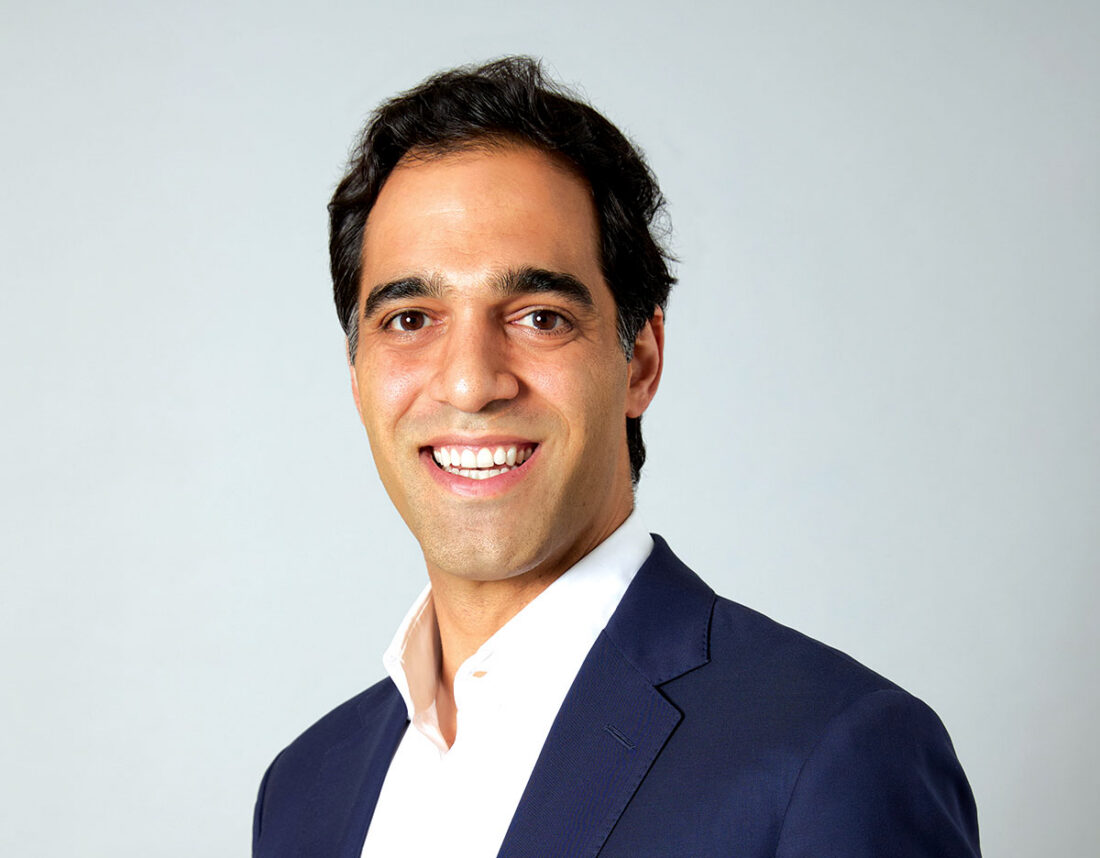
Jaime Rapaport is the Southern California regional director of the Progressive Jewish Alliance, a California-based organization that serves as a vehicle connecting Jews to the critical social justice issues of the day and to the cities in which they live. Professor David N. Myers teaches Jewish history at UCLA and is a member of PJA’s state board.