
As a Conservative Jew, I suppose it was not surprising that I found myself agreeing in part with both Gil Troy in his July 20 Jewish Journal cover story about the book by Jonathan Neumann that he approvingly cites, and with Jonathan Klein. After all, the very essence of the ideal Conservative Jew, as defined by “Emet Ve-Emunah,” the only official statement of the philosophy of Conservative Judaism, is “Nothing human or Jewish is alien to me.”
I thus wrote this in the preface of my 2005 book, “The Way Into Tikkun Olam (Repairing the World)”:
“Surveys show that even Jews who doubt the existence or significance of God, who are not involved much in Judaism’s prayers, rituals, or holiday celebrations, who violate Judaism’s restrictions on diet and work on holy days, and/or who do not know much about their heritage or devote any time as adults to studying it nevertheless feel in their bones that they have a duty as Jews to make this a better world, that this is the essence of what it means to be a Jew. As a religious Jew, I would say that it is sad that so many people, by their own description, are “not very religious,” for such people are missing out on a virtual treasure trove of meaning, joy, intellectual ferment, and communal connections that the Jewish tradition offers us in all these other expressions of the Jewish tradition. Still, such Jews are not wrong in identifying “social action” as a key component of what it means to be Jewish, for much of the tradition is devoted to it.”
So, on one hand, Gil Troy and Jonathan Neumann are correct, in my view, that transforming Judaism into universal humanism seriously truncates its scope and message. Seeing tikkun olam as the sum total of Judaism also leads to the view that specific Jewish identity is not necessary. Therefore, all of the following fall by the wayside: marrying another Jew; continuing your learning about Judaism throughout your adult life; raising your children to become serious Jews; joining a synagogue and becoming involved in its worship and activities; supporting other Jewish communal institutions; and advocating for the State of Israel. Those are very serious losses for the Jewish tradition and the Jewish community, and it is anything but clear that either can survive on the basis of tikkun olam alone. They are also serious losses for individual Jews, for seeing tikkun olam as the sum and substance of being Jewish robs them of a whole treasure house of meaning and growth that a more serious and widespread involvement in our heritage and community would give them.
On the other hand, Jonathan Klein is clearly right when he points out that taking care of the poor, the sick and the needy in other ways is fundamental to the Jewish tradition.
On the other hand, Jonathan Klein is clearly right when he points out that taking care of the poor, the sick and the needy in other ways is fundamental to the Jewish tradition. Contrary to Neumann, this part of Judaism is not tangential or based on misreading of a few texts. Rabbi Klein cites just a few of the many texts that depict God as sustaining the needs of the destitute, and that demand of us as a matter of law that we do so likewise. As I point out in my book, tikkun olam also requires that we be there for our family and friends when they need us, that we fulfill very specific responsibilities to them. Any form of Judaism that ignores this, that focuses exclusively on Jewish rituals and prayer, is also a severely truncated form of Judaism, robbing its followers of much of its message and meaning.
Thus, the Jewish tradition itself includes demands that we engage in acts of tikkun olam for our fellow Jews, for people of other faiths, and for our environment — and if that is liberalism, so be it — but it also requires us to study and practice the tradition and to support synagogues and other Jewish institutions as well as the State of Israel. It is that kind of demanding but rich, textured and meaningful Judaism to which Gil Troy calls us, and with which Conservative Judaism has gifted me.
I hope that all of us can find our way into a Judaism that is not either/or but both … and … and … and …
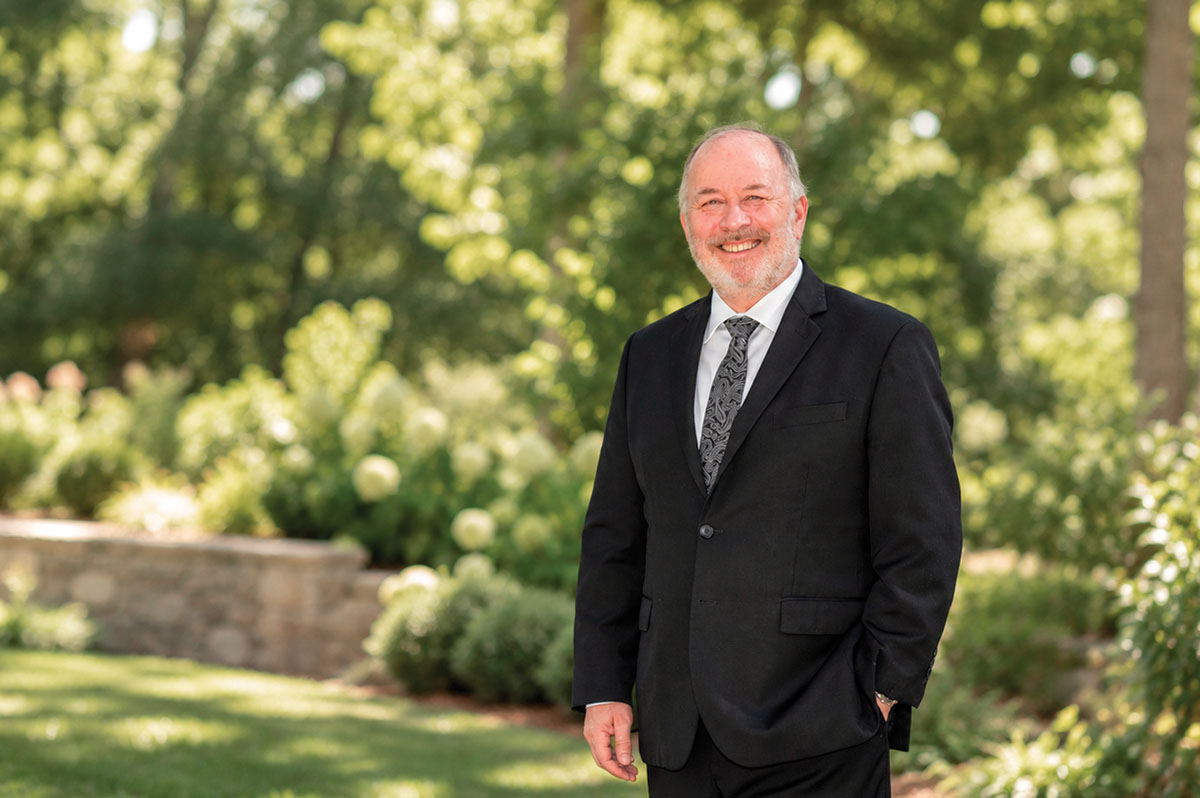
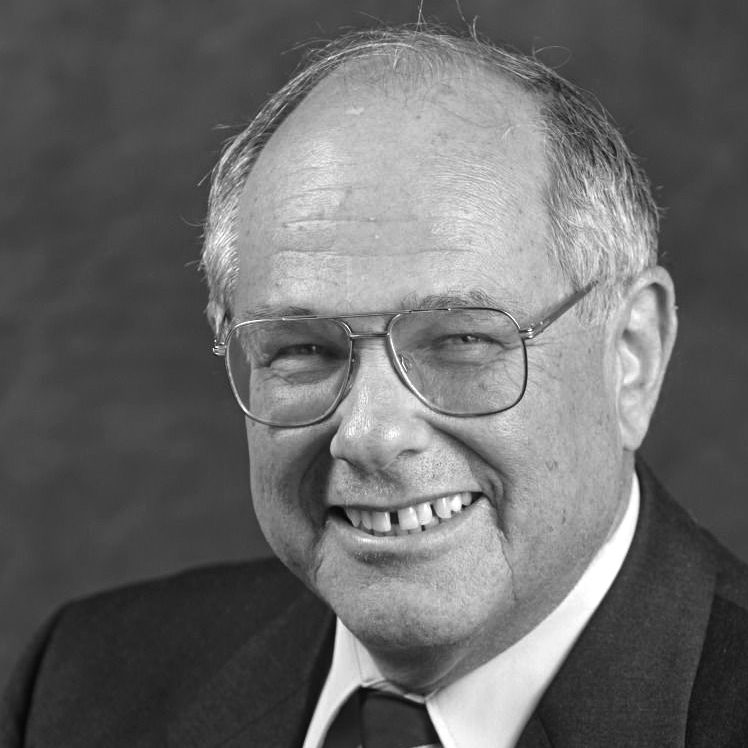
Rabbi Elliot N. Dorff is a rector and distinguished professor of philosophy at American Jewish University.