
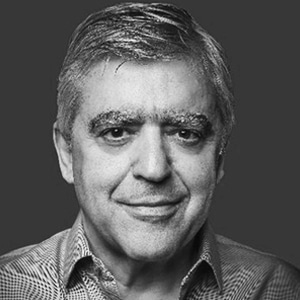
[July 21, 2015] I just heard the sad news that Theodore Bikel passed away. This is a column I wrote about him last year. He was a man in full, like no other.
In theory, I was supposed to meet the great Theodore Bikel because of the tribute concert celebrating his 90th birthday coming up on June 16 at the Saban Theatre. But while I was interested in the concert, which will feature a cast of musical and theatrical stars who have shaped Bikel’s legendary career, I also had another agenda.
I wanted to apologize.
I felt I’d been a little harsh in a column I wrote a few months ago, in which I rebuked Bikel for the way he’d characterized the Israeli government’s plan to resettle Arab Bedouins in the Negev desert. His analogy to czarist Russia may have been overkill, but I didn’t need to play “gotcha.” It was too easy.
Had I done some research, I would have found examples of Bikel fighting heroically for Soviet Jewry or defending Israel in a way that would make any right-wing Zionist proud. But I only saw one part of him — the part that annoyed me. I didn’t see the man in full.
The man who met me for lunch at Pat’s the other day accepted my apology with grace, then jumped right in with a story. Bikel does this very well — he jumps in with stories.
Of course, he has spent 90 years creating and living out these stories. His real talent in life, he said, is to “dive in,” especially when it comes to anything musical or cultural.
In his early years, he immersed himself in Jewish-Austrian culture, until, in the spring of 1938, he stood next to his father as Hitler and his troops marched into Bikel’s beloved native city of Vienna. Within a few days, Theodore and his fellow Jewish students were targeted for bullying, with the explicit endorsement of the school’s headmaster.
Because his father was a staunch Zionist who had seniority in the movement, the Bikels were able to get British papers to immigrate to Palestine, which they did before World War II broke out.
In this new land, Bikel had to dive into a whole other culture, that of kibbutz life.
“I’m not the agricultural type,” he said, “but I really believed in the socialist ideals of the kibbutz movement.”
These socialist ideals long have co-existed with an artistic career that has spanned the kaleidoscope of the performing arts — from theater to opera to music to movies and television. He’s best known for playing Tevye the milkman in more than 2,000 stage performances of “Fiddler on the Roof,” and for his many years as a Jewish folk troubadour singing for peace and justice — but what most intrigued me were Bikel’s offbeat acting choices.
In particular, I wanted to discuss his part as Sheriff Max Muller in the 1958 Stanley Kramer film “The Defiant Ones.” The role, which earned him an Oscar nomination for best supporting actor, is as far from Tevye as Don Corleone is from Cinderella. Bikel plays a sheriff in the Jim Crow South leading a posse to catch two fugitives chained to one another — a white man (Tony Curtis) and a black man (Sidney Poitier).
Bikel wouldn’t have taken the role, he told me, if the tough sheriff didn’t have a redeeming feature, in this case, a sense of fairness at a time when little fairness was shown toward blacks. Once he embraced the role, he dove right in and perfected the persona of the sheriff, southern drawl and all.
Another of his roles we discussed was Zorba in the theatrical production of “Zorba the Greek.” Again, his socialist ideals came into play.
“What I loved about Zorba,” Bikel said, “was that he had the extraordinary freedom that comes from not owning things. He knew that if you own things, they could end up owning you.”
If there’s one thing Bikel owns, it is the legacy of bringing joy and meaning to millions of people.
From the concert halls of Europe to the early cultural life of Tel Aviv to the stages of Broadway to the film and television sets of Hollywood to the folk festivals of the American heartland and the protest sites of social justice, Bikel has spent a lifetime creating moments of human artistry that people are compelled to remember.
These days, what brings him the most joy is his recent marriage to Aimee Ginsburg, a Jewish writer and journalist who previously lived in Israel and India and who joined us for lunch.
After his previous wife passed away in 2012, Bikel feared he’d “live out the rest of my days as half a person.” But, as fate would have it, he met Ginsburg at a Shabbat dinner while she was visiting Los Angeles. Ginsburg knew there was something special when, while they were oceans apart, “We couldn’t wait for the next Skype session.” They’ve been in bliss ever since.
For a man who values human experiences over material belongings, this is bliss that probably comes naturally. Bikel may have been blessed with an oversized talent, but perhaps his biggest blessing is simply an extraordinary love of life — a love that will be on full display at his June 16 concert.
It is this great love of life, with all of its possibilities and complications, that has “owned” Theo Bikel and made him a man in full.
David Suissa is president of TRIBE Media Corp./Jewish Journal and can be reached at davids@jewishjournal.com.
































