








fbpx

How to begin after Prawer-Begin

Now that the Prawer-Begin Plan is dead, it’s time to look at how we got here. Why are there so many unrecognized Bedouin villages? Did they spring up not only carelessly but nefariously, as many supporters of the Prawer-Begin Plan maintained?
[additional-authors]
December 17, 2013

Now that the Prawer-Begin Plan is dead, it’s time to look at how we got here. Why are there so many unrecognized Bedouin villages? Did they spring up not only carelessly but nefariously, as many supporters of the Prawer-Begin Plan maintained?

Some of these unrecognized villages, like Al-Araqib, predate the state of Israel. No one outside of a bureaucrat or ideologue could maintain that these villages deserve to be demolished. Others, like Umm al-Hiran, sprang up in the Negev when the Israel Defense Forces (IDF) moved all the Bedouin tribes living in the southern Negev to territory in the northern Negev in the 1950s, and created a closed military zone out of their ancestral lands. To most people, it would seem that the government of Israel implicitly accepted responsibility for helping the Bedouin create a new home by the very act of moving them. But since the Bedouin were not “our” people, not Jews (even if they were “our Arabs,” serving in the IDF), Israel has never recognized the Bedouin’s right to live in the very places that the IDF had moved them to.

As the government’s Goldberg Commission recognized, these two categories include most of the unrecognized villages. But because the Bedouin in these villages were deemed squatters, they were not given public services, or registered to vote, or protected by zoning laws. That’s over half a century without the institutions of medical care, without running water or electricity. That’s over half a century during which various heavy industries and toxic waste dumps were built in Ramat Hovav, close to the unrecognized village of Wadi el-Naam, because officially, the village wasn’t there, and unofficially, the government wanted to drive the Bedouin from the land and “concentrate” them in government-planned townships where they had no land claims.

The Prawer-Begin Plan was an attempt to make a law that would override any rights these villages might have to use the courts to prevent their demolition. The goal was to implement the government’s long-standing objectives: to turn the desert into an array of Jewish “pioneer” communities that would conquer the desert on behalf of the Jewish people. The complaint that the Bedouins take up too much space in the Negev (even though they only occupy about 5% of the land) is a direct consequence of an ideology that says the land of Israel is for the people Israel.

Why do the Bedouin “take up so much space,” to paraphrase the people who would anathematize and condemn their culture? Think a brief moment of the relationship between ecology and society: the less productive a land is, the more area each family and village must use to get its sustenance. That is the only way one can live within one’s means in the desert. What is not sustainable, and what does harm open space, permanently? The establishment of dozens of small suburban bedroom communities, served by parks with green lawns – the dream of state planners who really don’t care about desert ecology or the environment.

Bedouin sprawl is better than Jewish suburban sprawl for the desert and for human beings. Does that mean Bedouin culture is ecologically pure? Of course not. Bedouin culture is a mashup of ancient ways that once worked, with polluting technologies like diesel generators, and with enormous population growth (created in part by the good and holy impact of modern medicine). The unrecognized Bedouin communities are expanding without the benefit of zoning or planning – which is a direct consequence of the government’s refusal to recognize them.

In fact, the state of Israel, if it were to work with the Bedouin instead of against them, could help Bedouin culture make the full leap into modernity without destroying their way of life, and more importantly, it could learn from Bedouin culture about how to live in the desert. For example, set up the Bedouin villages—whether they are unrecognized or not—with solar panels so they won’t burn petroleum diesel, which actually is an environmental hazard. But as long as the policy of the government continues to be based on the wish that the Bedouin would not take up any space at all, that they simply would not exist, it will never be able to respond to these problems. And that is the worst of all possible worlds, for the Bedouin, for the desert, and for all of us.

RELATED: ” target=”_blank”>NeoHasid.org, also created 

Did you enjoy this article?
You'll love our roundtable.

Editor's Picks

Latest Articles

A Bisl Torah — All Over Again

Repenting includes examining and admitting our mistakes. Seeking forgiveness. Determining to do better. Being better. Every single day.
Hanging Out at the Jewish American Summit

Among the speakers, Adam Milstein, a real estate investor, philanthropist and co-founder of the fast-growing Impact Forum, urged attendees to frame antisemitism as an American issue and not just a Jewish issue.

A Festive French Roast

One of my favorite things to cook for the Jewish holidays is a beautiful French roast. It’s so very festive and is perfect to feed a hungry crowd.

The Genius of the Marx Brothers

Like the greatest satirists, such as Jonathan Swift and Mark Twain, they chose comedy over accusation to mock the folly of society and add levity to dark times. But their aim was not levity alone.
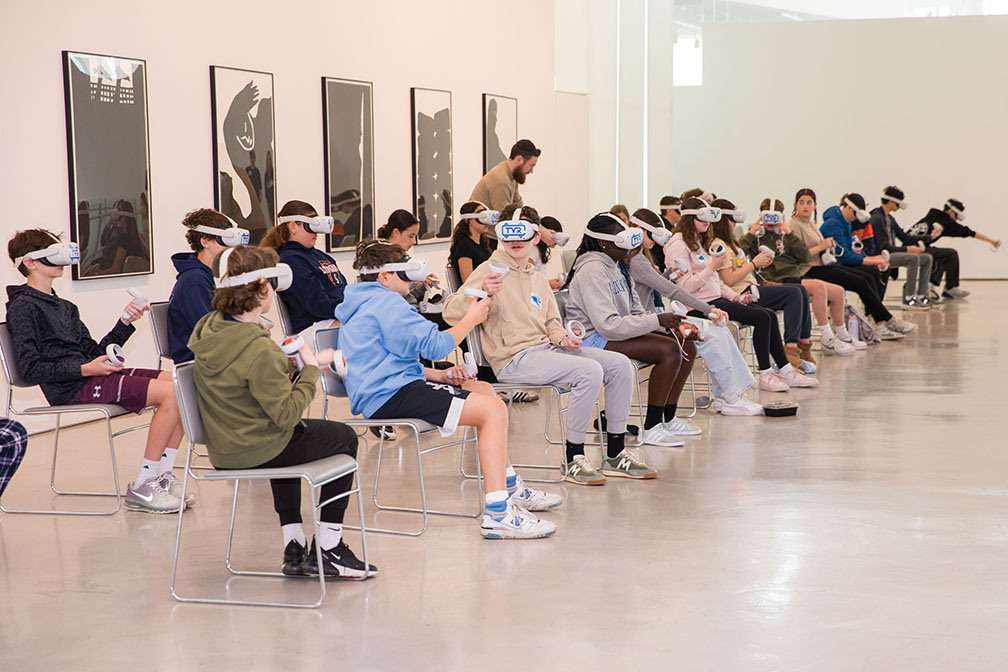
AKLA Rises

From a Local Experiment to a National Program: AKLA Expands Its Vision for Jewish Teens
Better Kisser Than a Cook

Sometimes love arrives ahead of you, in spite of you. Cooking slowly became a way of being there for the people I love. A wordless language that says: I see you. I hear you. You’re worth the onion-chopping.

Israel’s Brain-Drain Debate Is Asking the Wrong Question

If an experienced professional with rare expertise leaves Israel, the impact cannot be understood simply by adding another person to a brain-drain statistic. The more relevant question is how many people with comparable experience remain, how essential that expertise is and how easily it can be rebuilt.

More news and opinions than at a Shabbat dinner, right in your inbox.