I saw two opposite ends of Jewish tolerance last Friday night in Jerusalem’s Old City. As I walked through the Jaffa Gate on my way to a Shabbat dinner, I noticed some black-hatted Charedim kicking a taxicab while yelling, “Shabbos, Shabbos!”
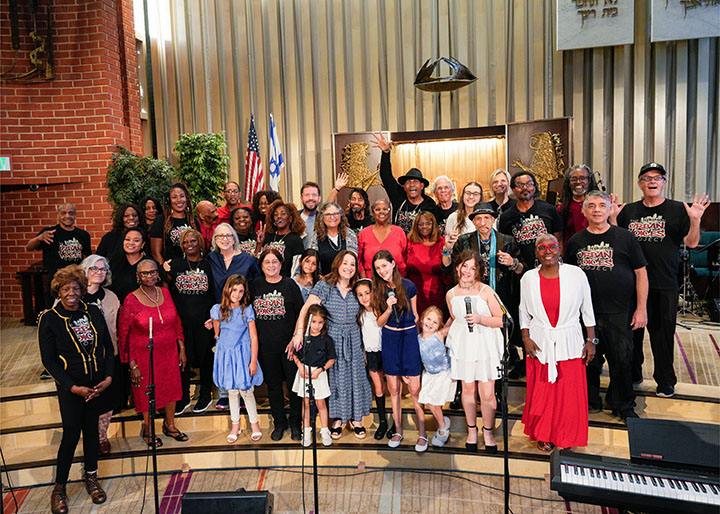
A little while later, at the home of my friends Pamela and Aba Claman, I sat at a joyful Shabbat table with a group of about 40 people — who included secular, religious, Ashkenazic and Sephardic Jews, as well as Israel Defense Forces (IDF) soldiers and even a non-Jew. No one worried whether anyone had to drive to get there.
Of all the contradictory images coming from Israel in recent years — Start Up Nation, Palestinian occupation, gay parades, corrupt politicians, humanitarian rescue efforts, a fierce army, a vibrant arts scene and so on — perhaps the most potent and divisive image has been of Charedi intolerance.
For American Jewry, which takes tolerance and religious pluralism for granted, these images have been especially vexing. It’s inconceivable to imagine, for example, Charedi Jews in Pico-Robertson or Hancock Park kicking the car of another Jew on Shabbat.
On Monday, I was at the Knesset attending a conference for a women’s empowerment group called WePower — where my daughter has been volunteering — and at one point, as I took a break to wander the halls, I heard a man yelling inside another conference room (the Knesset is like a shopping mall, but instead of popping into Banana Republic stores, you pop into arguments).
The yeller, a Charedi man with a gray beard and black velvet yarmulke, was seated at a large oval table with about 20 other politicians and their assistants. I could barely make out his words, but his yelling was what got to me — his tone a mixture of familiarity and contempt.
I thought: Here in the Israeli Parliament, Charedim are fully engaged with secular society, but as soon as they return to their neighborhoods, that same secular society becomes a source of potential contamination that must be avoided at all cost.
Charedim will engage with the secular world, I thought, but only to gain political power and secure government money to strengthen their isolationist way of life.
One of the secrets to Israeli success has been cultural integration. It’s easier to tolerate people who are different from you when you’ve served together in the army or engaged with them in the workplace.
Without this kind of human contact, it’s all too easy to demonize the stranger.
Just as Charedim might see secular society as Sodom and Gomorrah, they, in turn, are seen by others as hypocritical parasites who care only about their way of life. And just as there’s some truth to the accusation of excess hedonism and commercialism inherent to a free society, there’s also plenty of truth to the corrosive nature of Charedi isolation and intolerance.
I wonder sometimes whether Charedim realize how many thousands of Jews they might be turning off from Torah and Judaism when they spit at women wearing prayer shawls at the Western Wall; or when they attack one of their own who decides to join the army; or when they hide instances of sexual abuse in their communities; or when the corrupt Chief Rabbinate they run makes life miserable for people trying to convert to Judaism.
If they don’t realize the extent of this chillul HaShem (desecration of God’s name), then it is precisely their isolation that makes them tone deaf.
Legislation and private efforts are now in the works to compel and encourage integration of Charedim into Israeli society — through school curricula and by requiring that they enter the workforce and join the army. It will be a long, complicated and agonizing process, and no one can say for sure how it will end.
In public, Charedim who are against integration are making most of the noise. But from what I hear, in private many of their leaders are fully aware that the current system of widespread all-day Talmud learning is unsustainable.
“I wish those Charedi leaders who are open to change would speak up more,” my friend Yossi Klein Halevi said to me over Shabbat lunch. “That’s what bothers me the most.”
What bothers me even more is that Charedim believe that they practice the purest and holiest form of Judaism.
They don’t. They practice talmudic Judaism.
But Judaism is a lot broader and bigger than that. Judaism is also Jewish history, Jewish literature and Jewish poetry. It’s also Jewish philosophy from Martin Buber and Maimonides and Jewish mysticism from the kabbalah masters. It’s also the talmudic fiction of Agnon, and the lyricism and social activism of Abraham Joshua Heschel.
And it’s also the Judaism of Chabad, whose thousands of black-hatted emissaries around the world see other Jews not as sources of potential contamination, but as children of God full of holy sparks ready to be ignited.
Hardly any of these defining aspects of Judaism ever enter the study halls of the Charedi world.
It may take a century, but when Charedim finally lose their fear of the outside world and open their doors to different Jews and different views, they might discover a Judaism that’s even richer and more beautiful than they ever imagined.
They might start by inviting IDF soldiers to their Shabbat tables and giving them a blessing.
David Suissa is president of TRIBE Media Corp./Jewish Journal and can be reached at davids@jewishjournal.com.