Compared to feeding the hungry or saving the planet, how important can it be to light Shabbat candles?
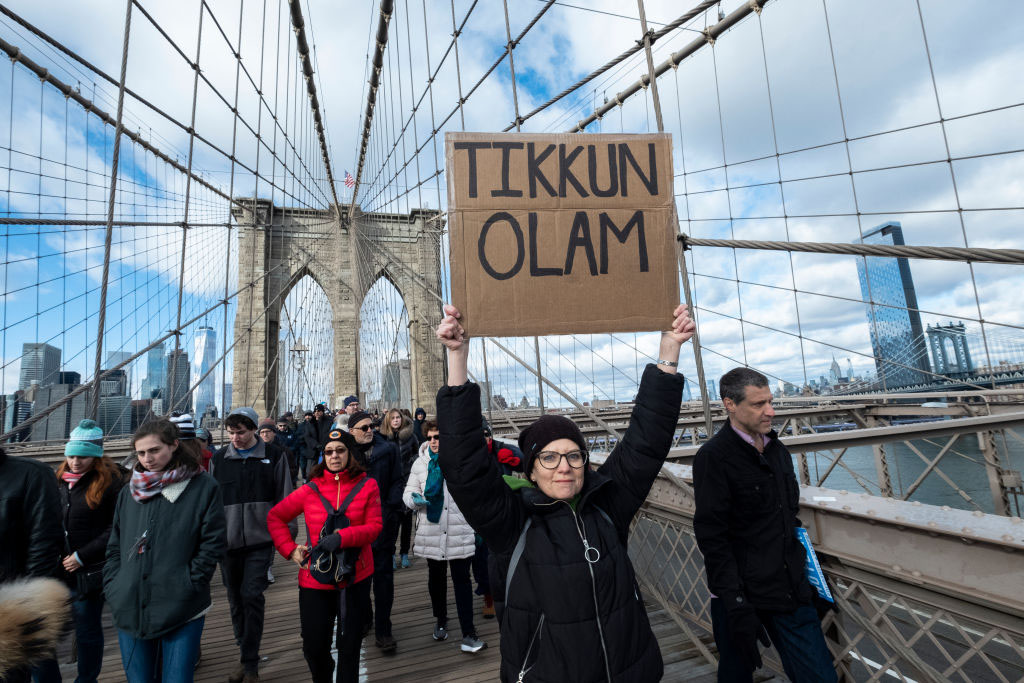
That question has been on my mind as I’ve considered the unique power of tikkun olam, the Jewish movement to “repair the world.” For many years now, this universal ideal has been a driving force throughout the liberal wing of American Jewry. How could it not be? What can be more meaningful than to repair a broken world?
Few people, however, seem to have considered this question: Did the universality of tikkun olam end up overpowering the particularity of Judaism?
The easy rebuttal has always been that there’s no difference between the two: fighting to repair the world is Judaism. In this view, everything socially worthy– helping the marginalized, assisting the homeless, climate change, social justice, defending democracy, etc.—can be put under “Jewish values.”
Thus, tikkun olam offered American Jewry an irresistible proposition: take whatever good you’re doing for the world and call it Jewish.
Why is this irresistible? Because it’s seamless. It fits where you’re already at. You can “live Jewish” without going too far out of your way. Indeed, if the goal was to cast as wide a net as possible to attract Jews, fixing a broken world sounds a lot more attractive than, say, studying Talmud.
Tikkun olam was never intended as a replacement for Jewish tradition. “It’s not either/or” was and remains the classic mantra to convey that the two are interconnected.
But there’s theory and there’s human nature. Humans tend to like the clarity of either/or, especially when one of the choices is so appealing.
And let’s face it– compared to the headiness of changing the world, Jewish tradition can look rather…ordinary. Who needs to observe the restrictions of Shabbat when you could do something that feels so much more meaningful, like, say, volunteering at a soup kitchen?
In other words, when the drama of fixing a broken world becomes more captivating than the routine of traditional Judaism, people do tend to go for either/or.
There are, of course, notable exceptions. Two that come to mind are the IKAR community in Los Angeles and Tevel b’Tzedek in Israel, groups that have successfully married Jewish learning and Jewish tradition with the universal ideals of social justice.
That’s not an easy marriage to pull off.
In too many cases, tikkun olam has become the main course of the Jewish menu. But inevitably, a Jewish menu that downplays Jewish rituals leads to a diluted Judaism. And a diluted Judaism based on universalism doesn’t build a unique Jewish identity– it builds a universal one.
That is the unintended paradox of tikkun olam: In its zeal to make Judaism look big and important, it ended up making it look small and secondary.
We shouldn’t be surprised, then, that in the latest Pew survey, about a quarter of adults who were raised Jewish no longer identify as Jewish.
We’ve already started to see a backlash. More and more Jewish leaders are realizing that being a “universal Jew” is not enough to nurture a strong Jewish identity and sustain a thriving Jewish future. Many in Reform Jewry are bringing back Jewish rituals.
The toughest challenge to this backlash is Israel, which has come under assault in liberal quarters post Oct. 7. Can liberal Jews separate their distaste for Israel’s politics and policies from the moving Jewish ideals of the Zionist movement? Can their reflex to “repair the world” be brought constructively to the Jewish state? In too many cases, the answer has been no.
But that’s no reason to give up. The inherent idea of marrying tikkun olam with the Jewish tradition must prevail if we wish to secure a strong Jewish future.
In that spirit, for spiritual leaders who share my concern, I offer a brief message they might want to share with their flock:
“Judaism, my friends, is more than a universal idea, even one as powerful as repairing the world.
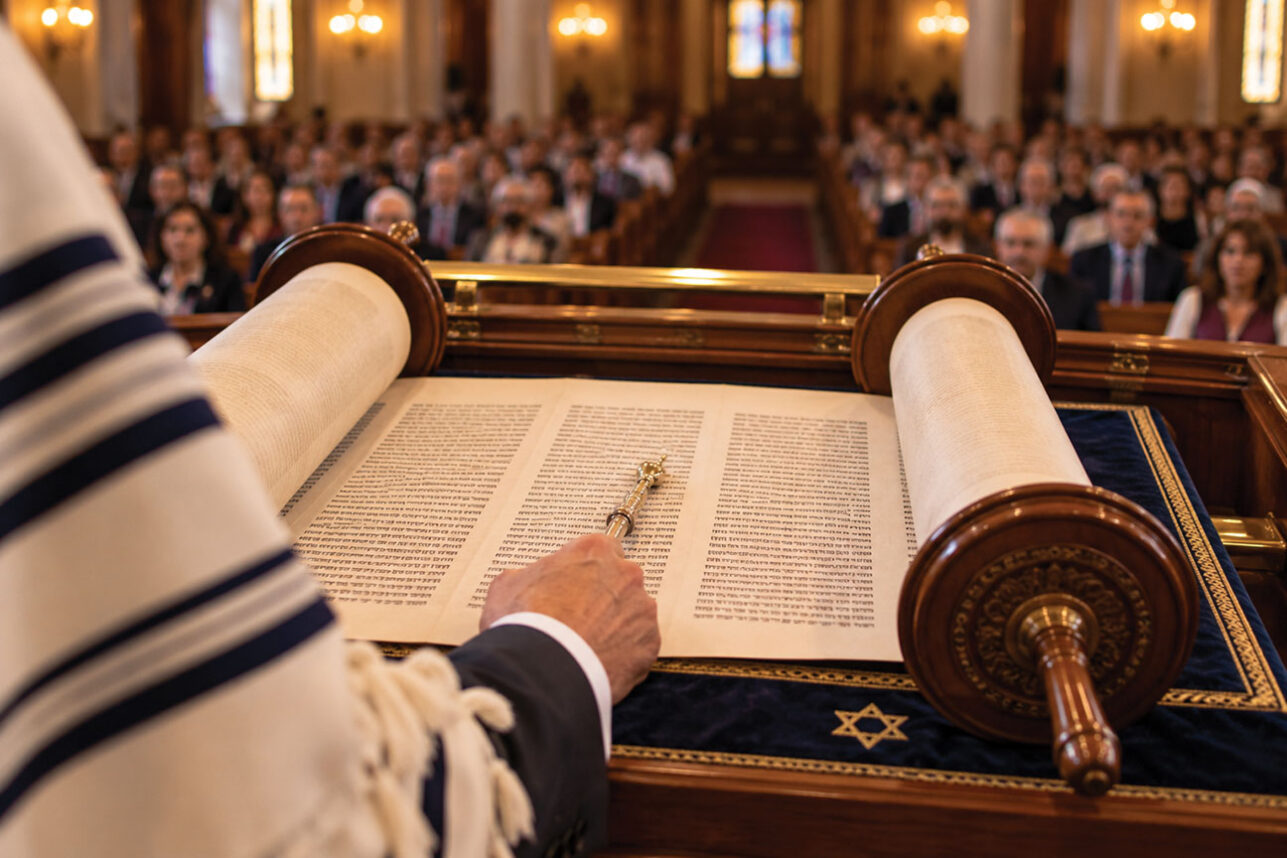
“Judaism is the unique tradition that has sustained us for thousands of years. Judaism is Jewish rituals, the Jewish story, Jewish peoplehood.
“Repairing the world is essential, but that alone won’t instill a Jewish identity.
“If we want to nurture a thriving Jewish future, we must find meaning in what is uniquely ours– our people, our story, our rituals.
“There is no better place to start than the ritual of lighting Shabbat candles this Friday night and sharing a Shabbat meal with your loved ones.
“For our people, repairing the world also means reclaiming our tradition.
“Shabbat shalom.”