The Israeli peaceniks near the Gaza border who got massacred by Hamas on Oct. 7 were dreamers.
The peace negotiators of the 1990s who hoped that PLO leader Yasser Arafat was serious about peace were dreamers.
The Israeli leaders who assumed Hamas would never invade Israel because they were deterred were dreamers.
I’m also an occasional dreamer.
One of my favorite columns is one I wrote in 2009 titled “The Gaza Riviera.”
In my dream, I wrote that “I saw this fabulous strip of hotels and casinos right by a sparkling ocean. I imagined thousands of proud Palestinians working with smiles on their faces to serve the thousands of tourists from around the world who were coming to their little strip of ocean paradise.”
As much as I enjoyed writing that column, I was aware of how naïve it was. Some dreams are good for writing but terrible for policy.
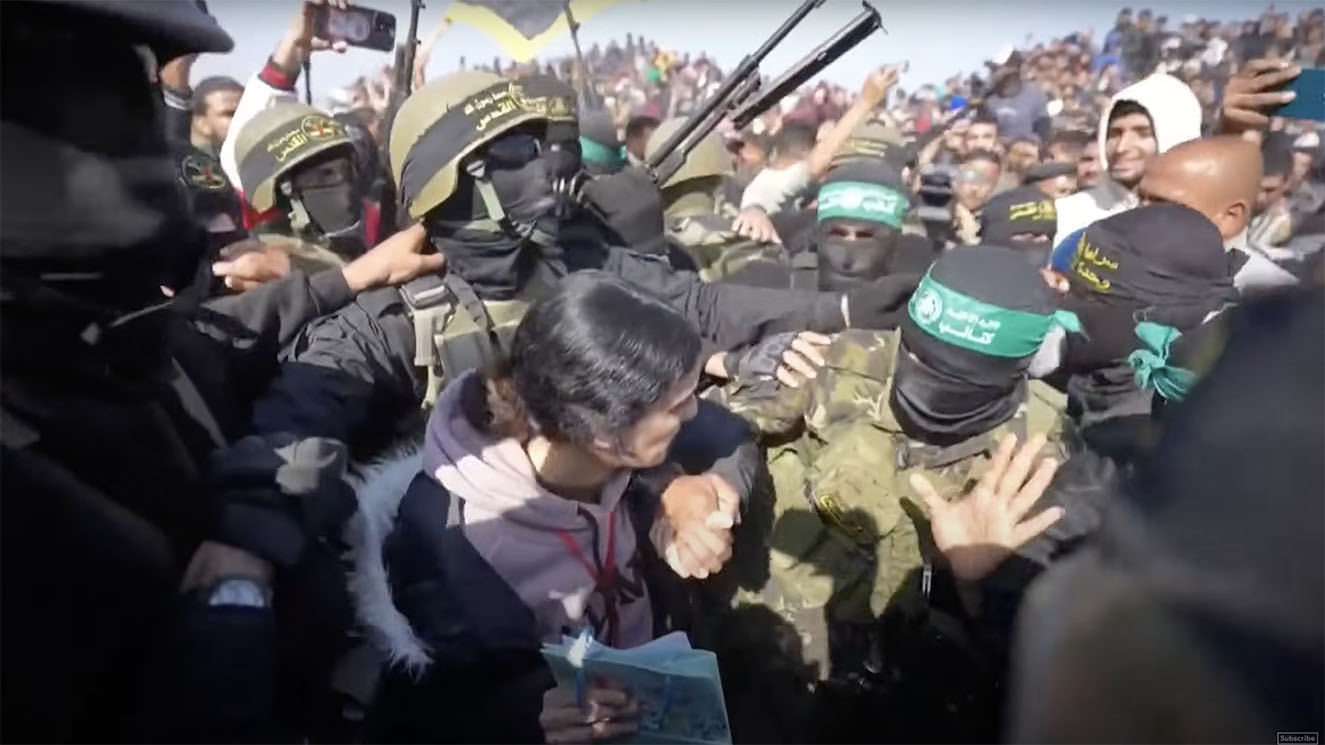
Do you know why most Israelis support continuing the war against Hamas? It’s not just because of the traumatic memories of Oct. 7. It’s also the recent images of Hamas humiliating Israeli hostages in public before releasing them. These grotesque spectacles, surrounded by cheering mobs, reinforce a truth Israelis have learned the hard way since the nation’s birth:
Don’t dream the wrong dreams.
It’s one thing to dream about turning a desert into an oasis; it’s another to dream about turning Jew-haters into peaceniks.
Facing reality head on is not cause for satisfaction. Sometimes we’re forced to confront a reality that changes our personalities or makes our lives miserable. Being forced to run into a bomb shelter while visiting my family in Israel is an ugly reality. But as is the case for millions of Israelis, reality is the oxygen they’ve learned to breathe.
In the wake of President Trump’s bombshell announcement of “taking over” Gaza, some funny memes have been buzzing through social media, with images of “Gaz-a-Lago” and Passover programs at “Trump Towers Gaza Strip.” In their mocking, light-hearted way, they capture the extremes of both dreams and reality.
The images are so beautiful and dreamlike, one can be forgiven for thinking, “Why the hell not?”
Well, those vile images of hostages being paraded through Gaza is why the hell not.
Between these extremes, though, there is a middle ground where dreams are rooted in reality, as with the Abraham Accords, which succeeded because they were based on hard interests, not empty dreams.
The fate of Israelis, and of the Jewish people, has always been to learn to thread the needle between dreams and reality; to not allow the darkest reality stop us from dreaming.
This is harder than it sounds. Dreams carry hidden danger. By definition, they play to our deepest weakness– the weakness of desire. Desire can be blinding. There’s a fine line between a dream and a pipe dream.
But we also know that we can’t live without them. We need that special fuel that only dreams can provide to keep going, to keep striving, to keep hoping.
David Ben Gurion’s famous saying that “In Israel, in order to be a realist you must believe in miracles,” speaks to that eternal tension.
Indeed, in the miraculous land of Israel, where the wrong dream can get you killed, dreams are still alive and well. It’s just that some of those dreams must be put on hold while the people tend to reality.