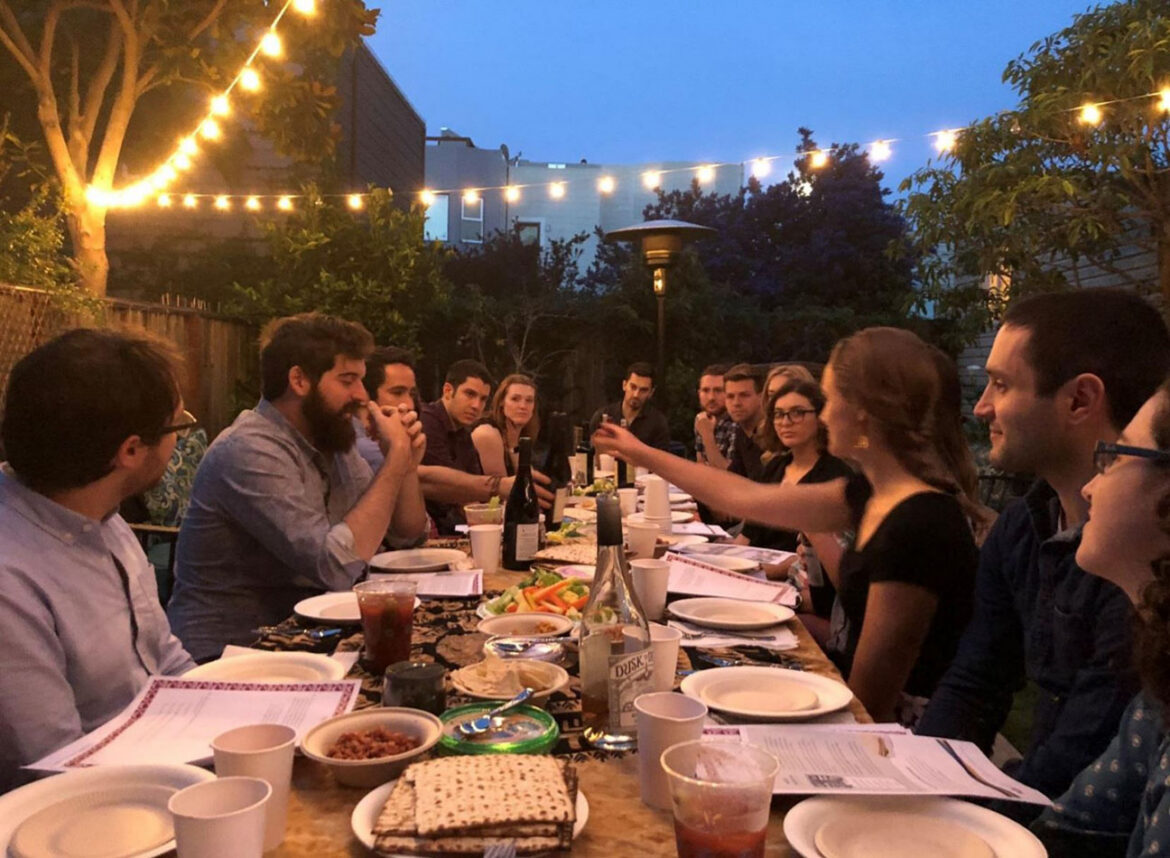
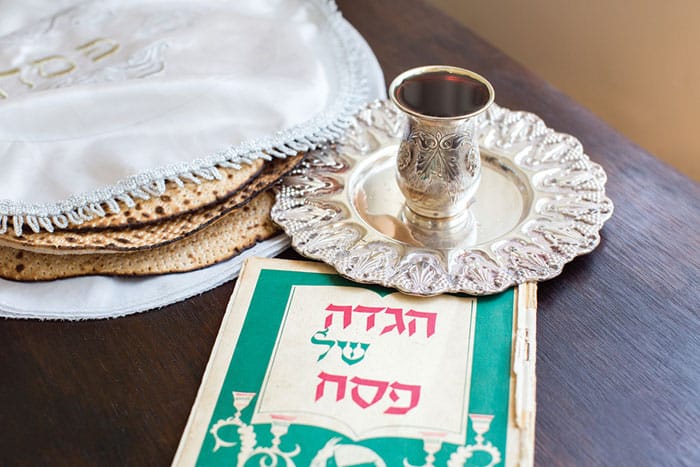
I’ve often wondered about how our ancestors approached a Passover Seder when all hell was breaking loose. How did the Jews of Spain gather around Seder tables during the Inquisition, or the Jews of Europe during the Holocaust?
What did they talk about? Were they able to just read the Haggadah and follow the many rituals of the Seder table, or did they naturally surrender to the events of the day and express their fear and apprehension?
This is the dilemma of the Passover Seder: On one hand, if all we do is follow the tradition, there’s no need to be distracted by external events; but on the other, because we’re human, that’s not very realistic.
This is the dilemma of the Passover Seder: On one hand, if all we do is follow the tradition, there’s no need to be distracted by external events; but on the other, because we’re human, that’s not very realistic. When people get together, they talk about things that are on their minds. Conversation is not something that is easy, or even desirable, to control, especially if something’s bothering us.
As is usually the case, there’s plenty that is bothering us this year. We can be grateful, of course, that we’re very far from the dangers of yesteryear, but that doesn’t mean our minds are not full of anxiety.
For the many of us who are deeply connected to Israel, how will we avoid talking about the biggest civil strife in Israel’s history? For others, there’s more than enough troubling news to occupy our minds—from the epidemic of mass shootings to the indictment of Donald Trump to the alarming rise in crime to the state of the economy to the growing crisis of mental health, and so on.
Our generation is significantly more distracted by external events than previous generations, for the simple reason of technology. When my great-grandparents sat down for their Seders in Casablanca many moons ago, no one was checking their Twitter or Instagram feeds. The word feed, in those days, was taken literally.
If you’ve ever hosted guests for Shabbat, you’re likely already familiar with that wonderful art of not allowing stressful news to diminish a ritual meal. God knows there’s nothing like a political argument to spoil a beautiful Shabbat table.
So, when we gather at our Seder tables this year, how will we keep the negativity of the media ecosystem from disrupting our special night? What subjects of engagement can replace the predictable stress of the news?
There are plenty, but we’d like to offer two. First, take a look at our cover story from author and historian Gil Troy, where he argues for adding another story to the traditional Exodus story: our own family stories.
“Tell your family’s super-heroic origin-story,” Troy suggests. “Recreate, dramatically and memorably, your yitziat mitzrayim, your escape from an Egypt of Old World poverty, oppression, and depression to this New World of prosperity, freedom, and opportunity.”
As Troy reminds us, this applies to pretty much all of us: “No matter where we came from, no matter how far we have – or haven’t – gone economically, it’s mind-blowing how many of us share such similar family tales.”
Our second suggestion to keep downbeat news from hijacking your Seder: Look at our “Seder to Refine Our Characters,” which we first published in 2018. Written by Rabbi Zoë Klein Miles and Tamar Andrews, it’s as relevant this year as ever.
To “conquer whatever enslaves us and move toward our highest ideals,” the authors discuss four character traits (one for each cup), and provide hints for teaching them to kids.
Is there a more elevating subject of engagement than refining character traits such as curiosity, courage, kindness and humility? That last trait is especially noteworthy.
As Andrews writes, “In today’s world of tweeters and Instagrammers who post only the best of themselves, it’s hard not to fall into the trap of ‘Look how awesome I am.’ It has been said that a humble person doesn’t think less of himself, he simply thinks of himself less.”
With humility, she adds, “the other character traits fall into place. To learn humility, we admit our mistakes to our children and to ourselves and raise children to be team players. We also encourage appropriate responses to success that acknowledge accomplishments but never to the point of arrogance.
“Finally, our children will become what we are, and so on this night of asking questions, let’s all ask, ‘Am I the person I want my child to become?’”
We should consider it a blessing to live at a time when we can use our Passover Seders to tell our family stories and refine our characters. All we need to do is forget the news for one night and create our own.
We should consider it a blessing to live at a time when we can use our Passover Seders to tell our family stories and refine our characters. All we need to do is forget the news for one night and create our own.
Happy Passover.