President Joe Biden is acting tough when he lays out his condition for the U.S. returning to the Iran nuclear deal: Iran must first return to full compliance.
That sounds perfectly logical and reasonable, until you see the lethal flaw in the original deal, formally known as the JCPOA.
Under the JCPOA’s “sunset” provisions, once key nuclear restrictions expire in years eight, 10 and 15, the Iranians are legally free to build up their uranium enrichment capability and accelerate a path to produce nuclear weapons. And they would be in strict compliance with the deal.
I can understand why proponents of the JCPOA may want to downplay this reality — it’s downright embarrassing. The JCPOA, despite its many critics, has developed a certain mythical quality over the years. It was championed by a popular president, Barack Obama, who convinced many people that the deal was the best way to contain Iran’s nuclear ambitions.
For proponents, then, the equation is simple: President Trump abandoned a good deal and imposed sanctions; now President Biden will return to the deal and insist on full compliance before lifting sanctions.
The problem is that it’s hardly a “good deal.” It’s fatally flawed, and we know why. Before leaving office, Obama was so eager to conclude what he considered his legacy achievement his negotiators caved on the most fundamental aspect of the deal — its duration.
I can just imagine what was going through the minds of the wily Mullahs as they were negotiating with the eager Westerners: “Hey, we’ve been around for 5,000 years — what’s another 10 years to get what we want?”
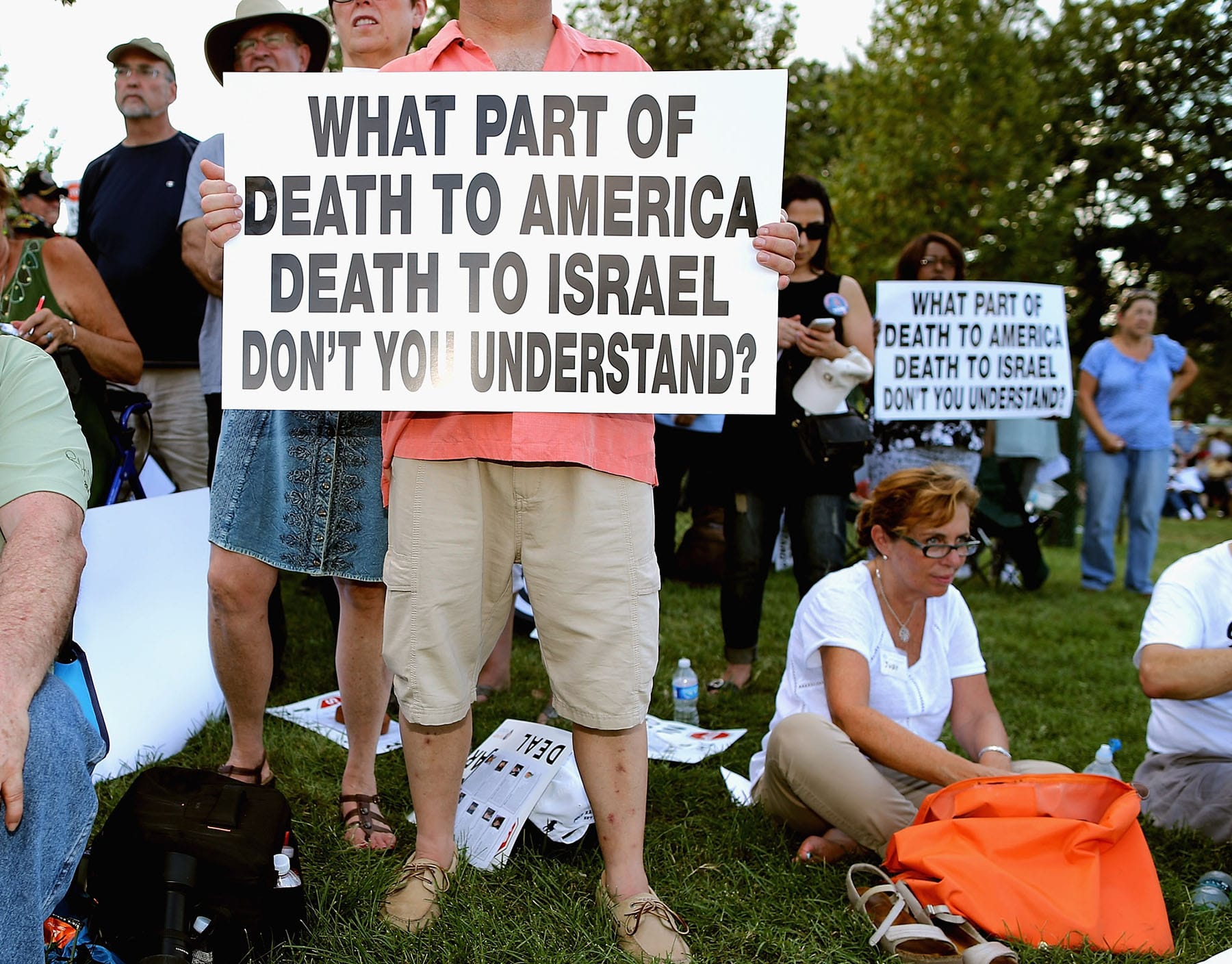
This flaw is so transcendent and inconvenient it gets little press. But when we’re talking about weapons of mass destruction in the hands of a rabidly Israel-hating and America-hating regime that is the world’s #1 sponsor of terror, what is the value of a temporary deal?
When the stakes are so high, permanence is everything.
When the stakes are so high, permanence is everything.
I’m sure the key players know all this, but they must go through the obligatory performance art of public diplomacy.
The one thing the Americans must never forget is that once they lift the sanctions, they will lose all leverage. Of course, even maximum leverage is no guarantee that the “impermanence” problem can be fixed. But having no leverage guarantees that it won’t be.
In any case, no deal with sanctions is better than a bad deal with a ticking clock. It wouldn’t be the first time Israel would have to deal with strategic ambiguity against a committed foe.