fbpx

February 23, 2021

Purim Satire: A Statement from The Papa Vichy Jam Company

Bonne Maman, a popular French preserves company available in most grocery stories and online, is going viral for an unverified but heartwarming story of Nazi resistance” New York Post, Feb. 18, 2021

We realize there is a “feel-good” story going around about a certain rival jam company from our part of the world, in which an elderly woman in a supermarket told another shopper that she always buys Bonne Maman jam because its owners saved Jews in World War II. Some of you may have also heard the “feel-bad” story involving our company, when an elderly woman saw a jar of our product and proceeded to shriek in horror, before nearly passing out in disgust.

We at the Papa Vichy Jam Company would like to set the record straight regarding our own French jams of excellence and some of the controversy surrounding our brand.

While it is part of the historical record that our great-grandfather Jean-Claude (the “Papa” of the title) was an enthusiastic Nazi collaborator, “Jams and Preserves” magazine has noted that our products are organic, minimally processed, use fair trade produce where possible and that we haven’t made any racist utterances in years. Unlike our competitors, our company has no expensive attic remediation costs, since we never hid any Jews from Nazis — so we pass the savings on to you.

The jingles, “Papa Vichy, Hitler’s favorite jam” and “Mmm the Führer Loves Papa” were never official slogans, per se, simply creative brainstorms by Papa and his colleagues that happened to take off. Yes, we were briefly known as Bonne Nazi (from 1943-1948). And the logo from those days, shall we say, could be seen as offensive through a contemporary lens (don’t Google it).

But those days are behind us. It’s our creative, easygoing, collaborative spirit that survives, which you can taste in our two-berry blend jam — truly, the best of both worlds!

Our jams have won many, many blind taste tests — which is good! Because we understand our name could be off-putting to the more sensitive consumers. As they say, don’t judge a fruit preserve by its label. Just put it in a paper bag if you’re embarrassed! We’re just saying, maybe prioritize your health and taste over historical qualms!

After all, everyone knows the Smucker family tortured Viet Cong, but no one makes a big deal out of that. (What, not everyone knows this? You say this is a pernicious rumor Papa Vichy has started to deflect attention from our own sordid history? Nonsense!).

We at Papa Vichy have made many compromises over the years — enthusiastically! But one thing we will never surrender is quality.

Does it really matter that our founders crossed the line? Many, many times? Not when you take a bite of our delicious plum preserves! Plums have no political affiliations. (Although some say the modern apricot was first grown by Stalinists.) The point is, live and let live!

Plums have no political affiliations.

Our organic blackberries are grown without industrial chemicals, just bursting with rich blackberryish flavor. History is complicated, but our blackberry jam is simple and delicious. And, yes, sticky — like our history! But good with butter on a slice of fresh country loaf.

Yes, it is sad that we don’t have a feel-good story about our ancestors, but this only compels us to make up for their historical decisions by making the best spreads. There’s no time for sour grapes. So we’ve turned ours into delicious — and sweet! — grape jam.

When there is no glorious past, we can only focus on the present, the future and our forthcoming collaboration with Goebbels Sourdough Bakers of Distinction.

As part of our efforts to smooth over some misconceptions about the ethics of our jam, we are graciously donating any jars of our prune and cherry jams nearing their expiration dates to any Kosher bakery that needs some to make Hamantaschen for the upcoming Jewish festival of Purim.

To be honest, we’re not exactly sure why “Haman hats” are cool while a certain (long in the past!) “Führer marmalade” is not. But it goes without saying, though we are supporting the making of these cookies, we do not support Haman and his genocidal tendencies — just the jam and merrymakings.

And merrymaking — like tucking into a big pot of our limited edition Himmler’s Choice Huckleberry jam — is something we can all collaborate on. 


Emil Stern is the co-creator of the podcast “King of the Egg Cream,” starring Richard Kind and Michael Stuhlbarg. Sigmund Stern is a contributor to The Onion and McSweeneys. Yoni Weinberg has written for the HBO series “Crashing.”

Purim Satire: A Statement from The Papa Vichy Jam Company Read More »

Protests By Outraged Refugees Close UNRWA Food Distribution Points in Gaza

[Gaza City – The Media Line] Dozens of Palestinian refugees protested outside the headquarters of the United Nations agency for refugees in the southern Gaza governorate of Khan Younis on Sunday, to express their rejection of the ongoing cuts to the agency’s services and of its recent decision to implement a unified food basket system for all beneficiaries in the costal enclave.

The UN Relief and Works Agency for Palestine Refugees, or UNRWA, announced on Saturday that distribution of 2021’s first monthly cycle of food aid parcels “will start on Sunday, February 21, according to a new unified parcel system,” instead of the previous dual yellow/white parcel system.

Several years ago, UNRWA divided the Palestinian refugee families that benefit from food aid into two categories: families in “extreme poverty,” who receive “yellow parcels,” and others in “absolute poverty,” who receive “white parcels.” The white parcels contain fewer items, according to criteria related to the family’s vulnerability and size, the age and gender of the breadwinner, and the presence of chronic diseases or disabilities.

“There will be no [yellow] parcels, just only one unified ‘white’ type for everyone,” Adnan Abu Hasna, spokesperson for UNRWA’s Gaza bureau, said on Sunday, adding that “10 kilograms of flour will be added for each person during this cycle.”

According to UNRWA’s official website, the change aims “to reach the poor refugees who have lost their livelihoods under the economic blockade and the circumstances resulting from the corona pandemic, meaning that smaller food baskets will be distributed to a larger number of refugees.”

The number of beneficiaries will rise from 1.14 million to 1.2 million, or “an increase of about 60,000 refugees,” Abu Hasna said.

However, last month Abu Hasna said that UN employees who benefit from the food parcels, and refugees who have fixed and regular monthly salaries of about $460 or more will be excluded from the aid system.

The end of the yellow food parcels infuriated Palestinian refugees who live under harsh circumstances, especially amid the COVID-19 pandemic. In response, dozens of camp residents, members of national and Islamic forces, and women’s centers attendees demonstrated in Khan Younis om Sunday, raising banners rejecting the UNRWA cuts and the US government’s policies, which they view as trying to eliminate the refugee issue.

As part of the protest effort, the Joint Committee for Palestinian Refugees has, temporarily, shut down a number of UN distribution points in the five governorates of the Gaza Strip.

Baker Abu Safia, a member of the Joint Committee, told The Media Line that Palestinian refugees would not forgive the UNRWA administration for “this major crime.”

UNRWA’s director of operations in Gaza, Matthias Schmale, “has been carrying out grave measures against Palestinian refugees’ interests regarding the services provided, although the main and international goal of UNRWA is to support and employ refugees,” Abu Safia said.

He rejected UNRWA’s claim that it was expanding the number of beneficiaries, saying: “It’s totally the opposite. This [unified system] will exclude nearly 770,000 refugees who are in most need of support during these difficult times. … According to UNRWA regulations, the international value of the food aid basket aid is $35 million, whereas the actual value of the current aid is $25 million; this is $10 million less. You can imagine how many items they removed from it.”

Tamara Alrifai, UNRWA spokesperson, said on Saturday that the agency’s deficit exceeds $200 million according to projections for 2021, “and we will soon face a liquidity crisis if we do not receive donations.”

Yet, Abu Safia claims the crisis is not financial.

“The financial deficit is 100% a political matter and UNRWA cannot be excused for that reason, because the commissioner’s job is to travel the whole world searching for funding. This is a political crisis rather than a financial one, to eliminate UNRWA, the only witness to the Western world’s crime of establishing the Israeli entity, and to put pressure on the Palestinian refugees,” he said.

Whether the crisis is political or financial, the results are devastating for Palestinian refugees struggling to survive.

“The yellow parcel was barely enough for a month; now the unified parcel won’t cover my family’s needs for two weeks!! It’s truly a disaster,” Abu Mohammed Alboji, whose household numbers six people, told The Media Line.

“The yellow parcel was barely enough for a month; now the unified parcel won’t cover my family’s needs for two weeks!! It’s truly a disaster.”

Mohammad Abu Staita, a UNRWA teacher who was laid off in a wave of dismissals after the US cut aid to the agency during the Trump Administration, told The Media Line that “losing a food parcel is hard amid the deteriorated economy, but losing a job after 23 years is destructive.”

“Some of us are suffering health problems because of that decision in 2018,” he said, referring to the dismissal of 950 UNRWA staffers. “We call upon the UNRWA to back out of its unfair measures against the Palestinian workers and refugees who will not be able to feed their families if this continues,” he also said.

Athar al-Yazji, a mother of eight, told the Media Line: “It doesn’t make sense to reduce the amount of food provided in order to add more beneficiaries, because this way you will not be helping any of them. The new amount is not enough to feed my family for a week. I don’t know what to do during the rest of the month.”

Abu Safia affirmed that “there will be concerted efforts and organized coordination to put pressure on the UNRWA administration to reverse the decision.”

It appears that persuading the agency to change its new policy will not be easy.

“People have the right to protest and reject but, in the end, there is UNRWA’s vision, which seeks to make the distribution more equitable in light of the rising poverty rate in the Gaza Strip, [especially since] it has become difficult to differentiate between the poor in society,” Abu Hasna said in a radio interview on Sunday.

The Joint Committee for Refugees in the Gaza Strip and the UNRWA’s Schmale met on Monday to discuss the decision.

Abu Safia told reporters on Tuesday that the meeting “was stormy and we did not reach a result.”

The committee demanded a written response to the request to withdraw the decision within 24 hours, “and we are still waiting for that,  he said. Protests are likely to continue.

Protests By Outraged Refugees Close UNRWA Food Distribution Points in Gaza Read More »

The Threat From China is Real. Will Biden Rise to the Challenge?

After his recent 2-hour Lunar New Year phone call with Chinese President Xi Jinping, U.S. President Joe Biden said that China may “eat our lunch.” His statement contradicts his May, 1, 2019 downplaying of the increasing Chinese threat in which Biden said: “China is going to eat our lunch? Come on, man…I mean, you know, they’re not bad folks, folks. But guess what? They’re not competition for us.”

Already off to a slow start in the face of multiple foreign policy challenges, with noteworthy skepticism about his longstanding record in foreign affairs, and concerning questions about his own family’s business ties to China, Mr. Biden would do well to reverse his long record of appeasement of China to pursue a much firmer approach to the serious strategic challenges that China presents to the moral, military, and material interests of the United States and our allies.

Mr. Biden would do well to reverse his long record of appeasement of China to pursue a much firmer approach to the serious strategic challenges that China presents

Let’s do a quick rundown of the Chinese record:

DOMESTIC REPRESSION

The West has long been repulsed by China’s one-child policy of “gendercide” and systematic human rights abuse against women and girls, including forced sterilizations, birth control surgeries, and the insertion of inter-uterine devices.

The Chinese regime oppresses Tibetans, Turkic Muslims, ethnic Kazakhs and Kyrgyz, Muslims in Ningxia and Xinjiang, the Falun Gong faithful, and Christians in Henan province in an attempt to erase minority cultures through a virtual slave labor market based on “re-education” camps that enforce totalitarian control. Some 1 million Uyghurs are in concentration camps where victims endure food and sleep deprivation and gang rapes with electric batons.

A 13-ton shipment made out of Uyghur prisoners’ human hair was recently seized by US Customs and Border Protection (CBP) officers at the Port of New York/Newark. The shipment originated in internment camps, where political prisoners are reportedly subjected to torture, cruel and inhumane treatment, physical, psychological and sexual abuse, forced labor, forced organ harvesting, and death.

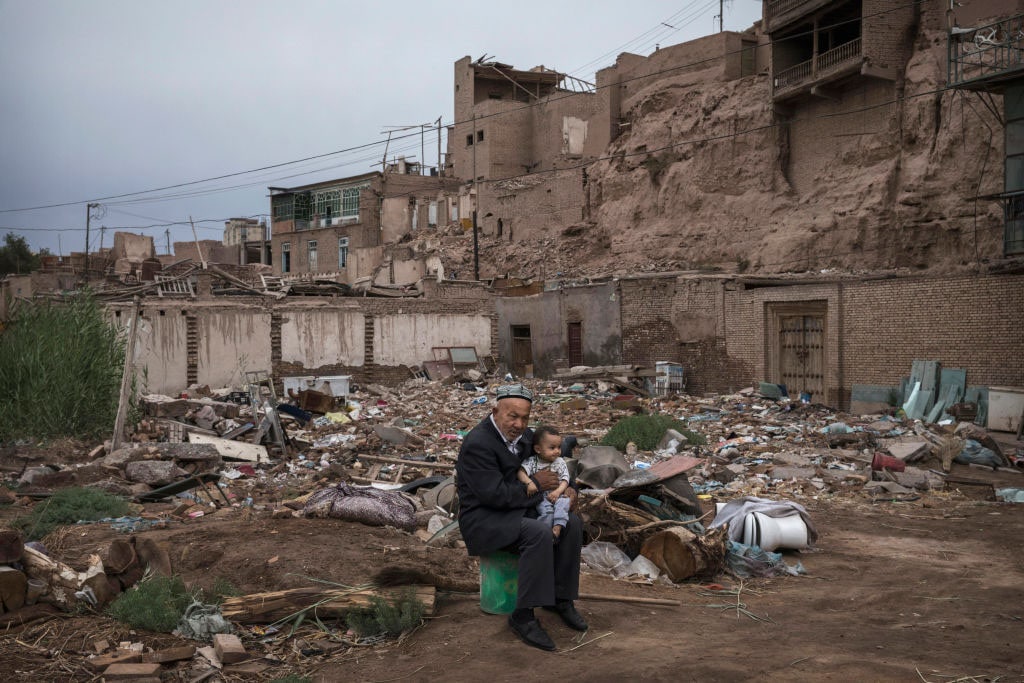
An ethnic Uyghur man holds his grandson as he sits outside his house in an area waiting development by authorities on June 28, 2017 in the old town of Kashgar, in the far western Xinjiang province, China. (Photo by Kevin Frayer/Getty Images)

The Chinese Communist Party (CCP) is a digital dictatorship which uses an Orwellian social credit score system to track and evaluate people and businesses for “trustworthiness and merit.” Human Rights Watch has reported the deployment of mass surveillance systems to collect biometrics including DNA and voice samples as well as real-time monitoring of individuals via cameras. Neighbors report on each other, resulting in punishment such as denial of the right to travel or attend school.

China’s control of all state media includes the denial of internet privacy, censorship of social networks, and the expulsion and arrest of journalists and dissidents like publisher Jimmy Lai and the mother of a Chinese virologist.

REGIONAL AGGRESSION

Images from U.S. naval surveillance reveal that China has a land reclamation project to place military equipment on a chain of artificial islands as it seeks maritime dominance across the South China Sea and the Indo-Pacific.

Repudiating its treaty commitments, on the 23rd anniversary of the 1997 handover of Hong Kong from the United Kingdom, the People’s Republic of China (PRC) completely engulfed the sovereignty of Hong Kong, outlawing its future independence. Reminiscent of the crackdown in 1989 at Tiananmen Square, the CCP has now criminalized dissent in one of the world’s most dynamic financial centers.

Tensions have increased throughout Asia, including across Japan and South Korea. Taiwanese hopes for continued independence now face the threat of invasion and war from the mainland. China’s recent incursion into the Lakath region resulted in a violent skirmish with India.

China has a robust military in the People’s Liberation Army (PLA). It has more ships than the United States Navy and is building its 3rd aircraft carrier. In response, the U.S. Naval 7th Fleet has launched area military exercises led by two U.S. nuclear-powered aircraft carriers, the USS Ronald W. Reagan, CVN ’76, and the USS Nimitz, CVN ’68.

GLOBAL CHALLENGE

China refused to sound the alarm on the coronavirus, colluded with the World Health Organization (WHO) to deny the reality of the virus’ human transmission, and ejected scientists and journalists seeking critical information for global health. The CCP covered up its role and lacked transparency even while secretly buying up protective equipment and masks on the global market. Limiting travel in China but allowing thousands of Chinese workers into Italy was a key factor in turning Covid-19 into a global pandemic and economic crisis.

China is the primary source country for the addictive drug fentanyl, collaborating on production and distribution with the Mexican drug cartel.

The many tainted food and consumer products exported from China now includes ice cream contaminated with coronavirus.

Further, China is the world’s largest emitter (some 30%) of global greenhouse emissions. Rapid industrialization has created severe pollution in Beijing and other large cities as China has failed to cooperate with international hydro-carbon emissions standards.

Smoke and steam billows from a Chinese state owned steel plant on June 2, 2017 in Hebei, China. (Photo by Kevin Frayer/Getty Images)

China has been the longtime protector of North Korea, and has worked against global efforts at non-proliferation. In fact, China’s goal is to replace the United States as the global superpower and key player in the Middle East.

China’s port in Gwadar, Pakistan and its military base in Djibouti are signs of China’s strategic campaign. Gwadar and Djibouti alone will soon give China the ability to guard—or threaten—the two key choke points through which Middle Eastern oil flows.

China has long courted the high-tech industry in Israel and a trade and energy relationship with Turkey. Now, throwing the Iranian regime a lifeline, China has organized a 25-year $400 billion strategic partnership with Tehran. China seeks below-market priced oil and massive regional influence in return for propping up the Iranian tyranny.

ECONOMIC HARDBALL

China’s strong growth over the past 30 years was not accompanied by political reform. Capitalism in a communist form has meant harsh economic warfare.

China’s strong growth over the past 30 years was not accompanied by political reform.

Contentious trade negotiations in recent years resulted in U.S. tariffs, due to a massive U.S. trade deficit with China, which manipulates its currency and engages in widespread money laundering; strictly limits the rights of foreign investors; commits prolific theft of intellectual property, corporate technology, and trade secrets; and dominates the global supply chain through massive government subsidies and the dumping of cheaply manufactured (or often “knock-off”) consumer products built on what many consider to be slave labor.

China is a mercantilist power. The “Polar Silk Road Project” launched in January 2018, seeks to extract natural resources, establish its own transportation infrastructure, and convert its growing economic power into political influence.

The “Belt & Road Initiative” is designed to trap vulnerable developing nations through infrastructure loans, with the grand strategy of controlling the regional and even international marketplace. Pakistan, Sri Lanka, and other South Asian and African countries caught in China’s debt-trap “loan diplomacy” may see their dependency deepen.

Recently, American professors, including the Chair of Harvard University’s Chemistry Department, were arrested for lying about receiving large sums in return for the unlawful theft and smuggling of U.S. taxpayer funded scientific research in fields ranging from biological nanotechnology to robotics.

Confucius Institutes place students on U.S. campuses under Chinese direction to spread communist narratives to unsuspecting American students.

Chinese lobbyists find their way inside Capitol Hill, with Chinese financial contributions and incentives all aimed at political influence. It’s well known that China relentlessly pursues corporate espionage and the acquisition of sensitive nuclear and cyber technology.

The world’s largest manufacturer of telecommunications equipment, Huawei Technologies Inc., as well as ZTE Corporation, both headquartered in Shenzhen, Guangdong, have been singled out by American officials for sanctions and bans over deep concern at their association with the PLA and the risks inherent in surveillance and spying technologies potentially embedded in cell phone and computer products.

The Huawei stand promotes 5G products at the IFA 2020 Special Edition consumer electronics and appliances trade fair on September 03, 2020 in Berlin, Germany. (Photo by Sean Gallup/Getty Images)

The popular Tik Tok application may make American consumers vulnerable to the cyber theft of private information.

China’s bid for world dominance is proceeding as it races to control a virtual technological empire — the Fourth Industrial Revolution. While the U.S has dominated computer technology to date, China is now racing ahead in artificial intelligence, quantum computing, and the 5G internet.

THREAT TO AMERICA 

Chinese hackers are behind the major online breach of the U.S. Office of Personnel Management and the theft of data from twenty-two million current and formal federal employees.

The massive spy ring at the China consulate in Houston ended with employees burning sensitive papers throughout the night.

China has invested heavily to create a range of advocates for its interests by infiltrating into different corners of the U.S. ruling class, including Washington, D.C., Silicon Valley, Hollywood, and even the NBA. The CCP’s growing influence across our economy and culture includes a controlling interest in large corporations.  China’s growing investments in American education, entertainment, and media increasingly influence our consumer lives.

U.S. POLICY OPTIONS

“The Art of War” by Sun Tzu teaches that one should know the enemy.

Unsurprisingly, China has not been gracious to President Biden, and the WHO has not changed its allegiance to China.

Unfortunately, Mr. Biden, who called limiting Chinese travel into the U.S. at the beginning of the Covid-19 pandemic “hysteria” and “xenophobia,” appears reticent in confronting the CCP.  His EPA administrator admitted that China will benefit from U.S. environmental policy that favors solar panels, and, appearing to mimic Canadian Prime Minister Justin Trudeau, Biden is already hinting about overlooking the CCP’s most egregious misbehavior and genocide of the Uyghurs.

If the United States is to be true to our values and interests it must go on offense in our strategic competition with a rising China.

If the United States is to be true to our values and interests it must go on offense in our strategic competition with a rising China.

First, the Administration could strengthen our military alliances and diplomatic partnerships throughout Asia, including with South Korea, Japan, India, the Philippines, Thailand, Vietnam, Indonesia, Malaysia, Singapore, Australia, and Taiwan, as per the recent sale of U.S. fighter aircraft. The American defense posture must improve our cyber-tech defense capability and pivot sharply to the South China Sea, with continuing U.S. Naval exercises in the Pacific.

Next, the State Department should stand by Chinese dissidents and suspend entry to those who are U.S. security risks. The U.S. Treasury could seize the assets of and sanction CCP officials who have abused freedom in Hong Kong. The U.S. Securities & Exchange Commission could enforce registration laws and promote audits, ban Swift Savings Plans from investing in China, and de-list Chinese government related firms that do not meet investor protection standards.

Our universities must resist the temptation to take Chinese money in return for the sharing of American technological assets. The U.S. will surely lose the race for dominance of quantum computing, 5G, signal encryption, artificial intelligence, and chip manufacturing if we don’t start graduating more computer science engineers.

Finally, the American people could rise up and pay a few pennies more for “Made in America” products, rather than “Made in China” (often by slave labor), to improve U.S supply-chain security, particularly in pharmaceuticals.

Perhaps a grassroots movement to support efforts to ask the International Olympic Committee to move the scheduled 2022 Winter Games from Beijing will follow Congressional support calling for a U.S. boycott.

One hopes that President Biden will establish a clear doctrine to join the human rights, domestic manufacturing, and national security communities, which all believe it is long past time for the U.S. to play much tougher with China.


Larry Greenfield is a Fellow of The Claremont Institute for the Study of Statesmanship & Political Philosophy.

The Threat From China is Real. Will Biden Rise to the Challenge? Read More »

YULA Boys Student Participates in National Yachad Disability Training

Nearly 40 teens from across the United States met virtually this month to receive training focused on making Jewish communal life more inclusive for individuals with disabilities. Yachad, the Orthodox Union’s (OU) organization for individuals with disabilities, organized the sessions which coincide with Jewish Disabilities Awareness and Inclusion Month (JDAIM) celebrated annually in February.

After attending two of the virtual training sessions— the first on Feb. 7 and the second on Feb. 21— teen-participants received a certificate as an “inclusion ambassador” to help their schools and communities become more inclusive environments for individuals with disabilities.

Participants from the United States hailed from California, New York, New Jersey, Maryland, Massachusetts, Illinois, Ohio and Texas. Ethan Frankel from YULA High School for Boys represented Los Angeles. Three teens from Vienna, Austria also joined the program.

“This year, as we looked for a meaningful way to celebrate Jewish Disabilities Awareness and Inclusion Month, we focused on training teens to serve as communal inclusion ambassadors to better lead their communities in being more accessible for individuals with disabilities,” Rebecca Schrag Mayer, director of Yachad New York, said. “The future of the Jewish community is one that welcomes and includes everyone, and these teens will help us usher in that stage.”

“The future of the Jewish community is one that welcomes and includes everyone, and these teens will help us usher in that stage.”

After taking on the role of president for the Yachad L.A. chapter, Frankel, 17, told the Journal he attended the virtual awareness training so his education on disability awareness and activism could strengthen. Involved with the organization since the 9th grade, Frankel said the genuine friendships he’s made impact the way he looks at making a difference.

“[One of the speakers at the training said they] didn’t like how people would be friends with her out of chesed (loving-kindness) or pity or just to be nice,” he said. “At Yachad, you form real relationships with kids with disabilities, have inside jokes. I have inside jokes with my friends at Yachad…We both bring happiness out of the relationship. It’s important to form friendships and relationships over just doing chesed (loving-kindness).”

During quarantine Frankel has set up multiple virtual and socially-distant programs for Yachad students so that relationships could continue to flourish during the pandemic. The two day-long training sessions consisting of guest speakers, group discussions and community reflections with peers his age helped equip Frankel and the other students with the necessary tools to advocate for Jews with disabilities in his community.

Since 1983, Yachad has connected thousands of Jews with and without disabilities together through Shabbatons, summer programs and year-round activities. With chapters located in the U.S., Canada and Israel, the org continues to host monthly programs for all age groups, in addition to providing inclusion and disability training.

The organization also offers counseling services, extensive parent support services, sibling services, vocational training and job placement, Israel Birthright trips for people with mobility and special learning needs and lobbies for pro-disability legislation on the local, state and federal levels.

Following the training program, Frankel wants the Jewish community— especially Jewish institutions—to understand that creating an inclusive space involves listening and taking the time to make Jews with disabilities feel welcome.

“It’s important not to get frustrated,” Frankel said. “Something may not be a challenge for you but it may be for someone else and it’s important to recognize [that] and raise them up positively.”

Orthodox Union Executive Vice President Rabbi Moshe Hauer said students like Frankel have the opportunity after their certification to take what they’ve learned at Yachad’s training and make their communities stronger for everyone.

“Our sages teach us that Kol Yisrael Areivim Zeh LaZeh (we are all responsible for each other),” Hauer said. “Throughout a year marked with constant surprise obstacles, Yachad’s team has put together virtual and in-person COVID-19 compliant programs that kept their members feeling connected despite the lockdowns and closures. We are inspired by their commitment to making sure that so many individuals with disabilities feel connected and a sense of belonging within our community.”

To learn more about the training programs and Yachad visit their website.

YULA Boys Student Participates in National Yachad Disability Training Read More »

Purim: A Celebration of Difference and a Call to Action

On Purim, Jews all over the world will hear Megillat Esther, our story of triumph over those who would erase us. The Megillah is a story of diaspora Jews within the ancient Persian empire who were attacked because they preserved their identity and religion — even while being active participants in society.

We read of a demagogue seeking to destroy the Jews using rhetoric about dual loyalty. Haman, the genocidaire, says to the Persian King Ahasuerus, “We have among us a people which is scattered and dispersed among the peoples in every province of your kingdom, and their laws are different from those of all other peoples, and the laws of the king, they do not observe. And it is not wise for the king to bear with them.” (Esther 3:8) Haman is lying; although the Jews do observe their tradition, they are also subject to the laws of the realm. Haman singles out the Jews because Mordechai, a prominent Jew, refuses to bow down to him, citing his tradition. Injured pride turns to hatred, and Haman promises the king a hefty donation to his treasury in exchange for permission to organize a pogrom against all the Jews in the empire.

On Shabbat Zachor, the Shabbat before Purim, we read from the Torah about Amalek, the first force which attacked the Hebrew slaves as they fled from Pharaoh. Our tradition associates Amalek with every would-be destroyer we encounter in each generation, with Cossacks and Nazis — and with Haman.

Haman/Amalek experiences human difference as an unconscionable affront rather than the wonderful manifestation of our Maker’s infinite creativity that we know it to be. Our tradition instructs, “When a person stamps several coins with one seal, they are all similar to each other. But the supreme Sovereign of Sovereigns, the Holy Blessed One, stamped all people with the seal of the Adam the first person…and not one of them is exactly like another.” (Mishnah Sanhedrin 4:5) Amalek despises cultural and religious minorities and seeks to erase them.

American Jews encountered Amalek in the twentieth century when immigration laws were changed to prevent an influx of refugees from cultures other than the “Nordic” — just in time to cut off pathways of escape as the Nazis rose to power. In fact, in 1928, Hitler approved of how the 1924 Immigration Act excluded from the United States “strangers of the blood,” writing that:

The capacity of assimilation for the American Union has given out…with regard to the Chinese…People feel this clearly and know it and for that reason they would most prefer to exclude these foreign bodies from immigration… That the American Union feels itself to be a Nordic-German…is also revealed by the apportionment of immigration quotas among the European [peoples]. Scandinavians, then Englishmen and finally Germans have been accorded the largest contingent. Latins and Slavs receive very little, and the Japanese and Chinese are groups that one would prefer to exclude entirely.

The infamous Breckinridge Long, assistant secretary of state under President Franklin Roosevelt during World War II, wrote, “We can delay and effectively stop for a temporary period of indefinite length the number of immigrants into the United States. We could do this by simply advising our consuls to put every obstacle in the way and to require additional evidence and to resort to various administrative devices which would postpone and postpone and postpone the granting of the visas.” Jews were considered by many to be a force for cultural disruption at best and a disloyal fifth column at worst.

It comes as no surprise, then, that so many American Jews have turned to immigration justice activism, inspired by our Torah and our history. During the previous four years, when families were separated, children were caged and women fleeing domestic abuse were denied asylum, it is no wonder that Jewish organizations like Bend the Arc and HIAS rose up to protect the rights and security of immigrants to the United States. All of us who are not indigenous to this land have family immigration stories, be they of Jews fleeing Spanish Inquisition (only to find that it followed them, even as they allowed themselves to be implicated in colonial projects), or Ashkenazi refugees from pogroms or the Shoah, or African ancestors who were taken here by force or Iranian Jews who fled their country.

It comes as no surprise that so many American Jews have turned to immigration justice activism.

As HIAS, formerly the Hebrew Immigrant Aid Society, founded originally to help Jews immigrate to the United States, declares on its website, “We understand better than anyone that hatred, bigotry, and xenophobia must be expressly prohibited in domestic and international law and that the right of persecuted people to seek and enjoy refugee status must be maintained. And because the right to refuge is a universal human right, HIAS is now dedicated to providing welcome, safety, and freedom to refugees of all faiths and ethnicities from all over the world.” As HIAS explains, “We used to help immigrants because they were Jews. Now we help immigrants because we are Jews.”

This Purim, as a new administration begins to evaluate its immigration policy, we still feel obliged to continue our work, including supporting the Biden administration when it creates paths to citizenship and applying pressure to close the detention centers and stop summary deportations. The Purim story of successful resistance is there to inspire us. As Mordechai says to Esther, the hero of the story who risks her life to defend her people, “And who knows if you have not attained your position for just this moment.”


Rabbi Robin Podolsky serves on the Board of Governors for the Sandra Caplan Community Bet Din, writes at shondaland.com and jewishjournal.com, advises the Jewish Student Union at Occidental College and serves as writing facilitator and dramaturg for Queerwise, a spoken word and writing group. She also serves on the National Ritual Committee for Bend the Arc.

Purim: A Celebration of Difference and a Call to Action Read More »

WATCH: Arab-Israeli Says SNL’s Vaccine Joke Is “Not So Funny”

Christian Arab-Israeli activist Yoseph Haddad released a video on February 21 stating that Michael Che’s joke about Israel’s vaccine distribution on the February 20 episode of “Saturday Night Live” was false and not particularly funny.

Che had said during the “Weekend Update” segment, “Israel is reporting that they’ve vaccinated half of their population. And I’m going to guess it’s the Jewish half.”

Haddad responded that Israel is vaccinating all of its citizens, Jews and Arabs alike, and pointed out that the Israeli government is explicitly encouraging Arabs to get vaccinated. Haddad himself has been vaccinated.

“We can laugh about this joke here in Israel, but when people like [Hamas]… use it as an excuse to do stuff like this,” he said, showing clips of Palestinian stabbing attacks as well as a Palestinian car ramming attack, “suddenly, it’s not so funny.”


Che and “Saturday Night Live” have come under fire for the joke. For instance, Anti-Defamation League (ADL) CEO Jonathan Greenblatt said in a statement that the joke was “deeply offensive” and “crossed the line” because it was based on “factual inaccuracies and playing into an antisemitic trope in the process.” He added that the ADL has documented several instances of “Weekend Update” “jokes this season that use Jews as the punchline. I know they can do better. In that spirit, I have reached out to [producer] Lorne Michaels over the weekend urging Saturday Night Live to take action both to repair the damage that’s been done and ensure this does not happen again.”

WATCH: Arab-Israeli Says SNL’s Vaccine Joke Is “Not So Funny” Read More »

Even With Strict Compliance, the Iran Deal Allows a Path to Nuclear Weapons

President Joe Biden is acting tough when he lays out his condition for the U.S. returning to the Iran nuclear deal: Iran must first return to full compliance.

That sounds perfectly logical and reasonable, until you see the lethal flaw in the original deal, formally known as the JCPOA.

Under the JCPOA’s “sunset” provisions, once key nuclear restrictions expire in years eight, 10 and 15, the Iranians are legally free to build up their uranium enrichment capability and accelerate a path to produce nuclear weapons. And they would be in strict compliance with the deal.

I can understand why proponents of the JCPOA may want to downplay this reality — it’s downright embarrassing. The JCPOA, despite its many critics, has developed a certain mythical quality over the years. It was championed by a popular president, Barack Obama, who convinced many people that the deal was the best way to contain Iran’s nuclear ambitions.

For proponents, then, the equation is simple: President Trump abandoned a good deal and imposed sanctions; now President Biden will return to the deal and insist on full compliance before lifting sanctions.

The problem is that it’s hardly a “good deal.” It’s fatally flawed, and we know why. Before leaving office, Obama was so eager to conclude what he considered his legacy achievement his negotiators caved on the most fundamental aspect of the deal — its duration.

I can just imagine what was going through the minds of the wily Mullahs as they were negotiating with the eager Westerners: “Hey, we’ve been around for 5,000 years — what’s another 10 years to get what we want?”

This flaw is so transcendent and inconvenient it gets little press. But when we’re talking about weapons of mass destruction in the hands of a rabidly Israel-hating and America-hating regime that is the world’s #1 sponsor of terror, what is the value of a temporary deal?

When the stakes are so high, permanence is everything.

When the stakes are so high, permanence is everything.

I’m sure the key players know all this, but they must go through the obligatory performance art of public diplomacy.

The one thing the Americans must never forget is that once they lift the sanctions, they will lose all leverage. Of course, even maximum leverage is no guarantee that the “impermanence” problem can be fixed. But having no leverage guarantees that it won’t be.

In any case, no deal with sanctions is better than a bad deal with a ticking clock. It wouldn’t be the first time Israel would have to deal with strategic ambiguity against a committed foe.

Even With Strict Compliance, the Iran Deal Allows a Path to Nuclear Weapons Read More »

Sephardic Spice Girls Take on Savory Hamantashen

Have you ever eaten something so good that the memory of it lingers in your mouth and your mind for years later?

It was in Israel, at the bar mitzvah celebration of one of my younger cousins, Aron. It was in the Ma’erat HaMach’pela, the Cave of the Patriarchs, the second most holy site in Judaism.

The buses from Jerusalem dropped us in the heart of the old city of Hebron. Once upon a time, the Hebron Casbah bustled with Jews and Arabs, but it has been shut down for many years and the city is eerily quiet. King Herod built the large, imposing, rectangular structure from the same creamy white Jerusalem stone blocks as the Kotel, the Western Wall of the Holy Temple, and it is truly awe-inspiring. The bare stones of the plaza are nobly shaded by giant green trees. They frame the giant Tomb and add to it’s ancient grandeur. The air is cool and sweetly perfumed, the scene feels palpably serene and holy.

I stand there and remember that over the years, the Tomb has been under the dominion of the Byzantine Christians, the Moslem conquest, the Crusaders, Saladin and the Ottoman Empire.

Until 1967, Jews were only allowed up to the 7th step.

In 2007, our large group joyfully climbed the grand staircase into the building. Unable to climb the many stairs, my beloved grandmother, Nana Aziza, was happily carried up the stairs by cheering, laughing men, adding to the happy, celebratory mood.

We prayed by the cenotaphs of Abraham Avinu and Sarah Imenu, Yaakov Avinu and Leah Imenu. (We wished we could visit Isaac and Rebecca, but that part of the complex is dedicated to Moslem worshippers).

After the prayers and wrapping of Tefillin, we came to the large study hall to be served the most divine lunch. Homemade breads, creamy dips, fresh salads and an array of olives. A smooth chopped liver. And the dish that still makes my mouth water.

Last year, Rachel and I were in my kitchen, busy making baklava for an article in the Jewish Journal. “Rachel,” I said to her “What is that Moroccan dish? Chicken and almonds and caramelized onions, wrapped in phyllo pastry and sprinkled in cinnamon and powdered sugar! It’s so good!”

“Moroccan Chicken Bastilla,” she laughed.

We were inspired to make some, then and there. We used the leftover Phyllo dough and some leftover roast chicken that I had in my fridge. We patiently waited for our onion to caramelize into a sweet jam. We added turmeric and cilantro and crispy slivered almonds. We seasoned the outside of the phyllo pastry with a sprinkling of cinnamon. Then after they came out of the oven, we dusted them with powdered sugar.

They were just as delicious as I remembered.

Last week, we were in my kitchen again, figuring out what to make for our Sephardic Educational Center Purim Zoom Cooking Event.

We were inspired to do a riff on Hamantashen. They would be big. They would be savory. And they would be made with puff pastry because it is such an easy dough to work with and it just elevates every dish made with it!

We thought it would be fun to make different vegetable purées for the fillings.

We made stuffings of Chicken Bastilla, sautéed ground beef and mushroom potato for the triangle part of the “Hamantashen.” While we made three separate fillings with sweet potato, beets and spinach, you could also just as easily fill yours with caramelized onions and that would be equally delicious.

We hope you are inspired to make these Hamantashen for your Purim Seudah or just as simple puff pastry rolls any time you want to make something truly wonderful.


Chicken Bastilla Hamantashen

3 tablespoons extra virgin olive oil
One large onion, diced
1 teaspoon turmeric
1/2 teaspoon cinnamon
1/2 teaspoon cumin
1/2 teaspoon coriander
2 Rotisserie chicken breasts, shredded
1/2 cup chopped cilantro
1/3 cup slivered almonds
2 eggs
Salt and pepper to taste
2 10 inch puff pastry sheets, thawed
1 egg, beaten for egg wash
Cinnamon & powdered sugar for sprinkling

Preheat oven to 425°F.

Heat olive oil over medium heat.

Add onions and sauté for 10 minutes, until golden brown.

Add turmeric, cinnamon, cumin and coriander and continue sautéing for two more minutes.

Add caramelized onions to the shredded chicken breasts.

Add cilantro, slivered almonds, eggs and salt and pepper and mix well.

Line a baking dish with parchment paper.

Gently roll out dough and cut into a 10 inch circle.

Place chicken filling to create a triangle in the middle of the circle.

Roll dough over the filling, creating a large triangle with a center hole.

Fill center with vegetable filling of your choice.

Brush the top of the pastry with egg wash.

Bake for 10-12 minutes, until pastry is puffed and golden brown.

Sprinkle with cinnamon and powdered sugar before serving.


Mushroom and Potato Hamantashen

4 medium potatoes
4 tablespoons extra virgin olive oil, divided
One large onion, diced
1/2 teaspoon turmeric
1/2 teaspoon paprika
1/2 teaspoon garlic powder
1 pint mushrooms, washed and sliced
1/2 baby spinach, chopped
1 egg
Salt and pepper to taste
2 10 inch puff pastry sheets, thawed
1 egg, beaten for egg wash
Everything but the Bagel Seasoning for sprinkling

Preheat oven to 425°F.

Fill a medium pot with cold water.

Rinse potatoes and place in the pot.

Cover and boil over medium heat until fork tender, about 15 minutes.

Remove skins and place in a large bowl, then roughly mash potatoes.

Heat 2 tablespoons olive oil over medium heat.

Add onions and sauté for 10 minutes, until golden brown.

Add turmeric, paprika and garlic powder and continue sautéing for two more minutes.

Add caramelized onions to the potato.

Heat 2 tablespoons olive oil over medium heat and sauté mushrooms.

Add mushrooms, spinach, egg and salt and pepper to the potato and onions and mix well.

Line a baking dish with parchment paper.

Gently roll out dough and cut into a 10 inch circle.

Place chicken filling to create a triangle in the middle of the circle.

Roll dough over the filling, creating a large triangle with a center hole.

Fill center with vegetable filling of your choice.

Brush the top of the pastry with egg wash.

Sprinkle with Everything but the Bagel Seasoning before serving.

Bake for 10-12 minutes, until pastry is puffed and golden brown.


Ground Beef Hamantashen

3 tablespoons extra virgin olive oil
One large onion, diced
1 teaspoon turmeric
1/2 teaspoon cinnamon
1/2 teaspoon paprika
1/2 teaspoon allspice
1 pound ground beef
1 large egg
1/2 cup chopped Italian parsley
1/4 cup pine nuts
Salt and pepper to taste
2 10 inch puff pastry sheets, thawed
1 egg, beaten for egg wash
Sesame seeds, for sprinkling

Preheat oven to 425°F.

In a large frying pan, heat olive oil over medium flame.

Add onions and sauté for 10 minutes, until golden brown.

Add turmeric, cinnamon, paprika and allspice and continue sautéing for two more minutes.

Add ground beef and sauté for 3-5 minutes, until meat has browned.

Place beef mixture in a large bowl.

Add egg, parsley, pine nuts and salt and pepper and mix well.

Line a baking dish with parchment paper.

Gently roll out dough and cut into a 10 inch circle.

Place beef filling to create a triangle in the middle of the circle.

Roll dough over the filling, creating a large triangle with a center hole.

Fill center with vegetable filling of your choice.

Brush the top of the pastry with egg wash.

Sprinkle with sesame seeds.

Bake for 10-12 minutes, until pastry is puffed and golden brown.


Hamantaschen Center Triangle Fillings

You can choose any of these fillings to fill the center of your Hamantashen. Or simply fill with caramelized onions.

Beet Purée

1 beet
1 parsnip
1 egg
Salt and pepper

Boil beets and parsnip over medium heat for about 15 minutes or until fork tender.

Remove skin and mash.

Add egg and salt and pepper and mix well.

Sweet Potato Purée

1 large sweet potato
1 egg
Salt and pepper

Boil sweet potato over medium heat for about 15 minutes or until fork tender.

Remove skin and mash.

Add egg and salt and pepper and mix well.

Spinach Purée

1 potato
4 cups baby spinach, chopped
1 egg
Salt and pepper

Boil potato over medium heat for about 15 minutes or until fork tender.

Remove skin and mash.

Add spinach, egg and salt and pepper and mix well.


Rachel Sheff and Sharon Gomperts have been friends since high school. They love cooking and sharing recipes. They have collaborated on Sephardic Educational Center projects and community cooking classes. Follow them on Instagram @sephardicspicegirls and on Facebook at Sephardic Spice SEC Food.

Sephardic Spice Girls Take on Savory Hamantashen Read More »

Merrick Garland: ‘Senator, I’m a Pretty Good Judge of What an Anti-Semite Is’

(JTA) — Merrick Garland turned emotional when asked Monday during his Senate confirmation hearing why he wanted to be the U.S. attorney general.

Sen. Cory Booker, D-N.J., wanted Garland to explain why he chose his career path, using his family history leaving Russia’s Pale of Settlement, “in confronting hate and discrimination.” Booker noted that Garland had been asked and answered the question when they met privately.

“I come from a family where my grandparents fled anti-Semitism and persecution,” the erudite and soft-spoken judge said before pausing for several seconds to gather himself. “The country took us in and protected us, and I feel an obligation to the country to pay back — this is the highest, best use of my own set of skills to pay back. I want very much to be the kind of an attorney general that you are saying I could become.”

Garland, 68, also said that combating white supremacists would be a priority should he lead the Justice Department, particularly in the wake of the deadly Jan. 6 insurrection at the U.S. Capitol, which included far-right extremists along with visible displays of racism and anti-Semitism.

He called the attack “heinous” and “sought to disrupt a cornerstone of our democracy: the peaceful transfer of power to a newly elected government.”

Garland would be the fifth Jewish official in President Joe Biden’s Cabinet. When Sen. Mike Lee, R-Utah, pressed him on whether he would work with anti-Semites, alluding to conservative media attacks on Kristen Clarke, whom Biden has nominated to head the Justice Department’s civil rights division, Garland defended Clarke and said in a rare show of annoyance: “Senator, I’m a pretty good judge of what an anti-Semite is.”

Garland has said a critical point of his career was in 1995, when he directed the prosecution of the white supremacists who bombed a federal building in Oklahoma City, killing at least 168 people.

In 2016, then-President Barack Obama had nominated Garland to the U.S. Supreme Court, but the Republican-led Senate at the time would not allow his nomination to advance.

Merrick Garland: ‘Senator, I’m a Pretty Good Judge of What an Anti-Semite Is’ Read More »

Facing Denial of War Crimes in California

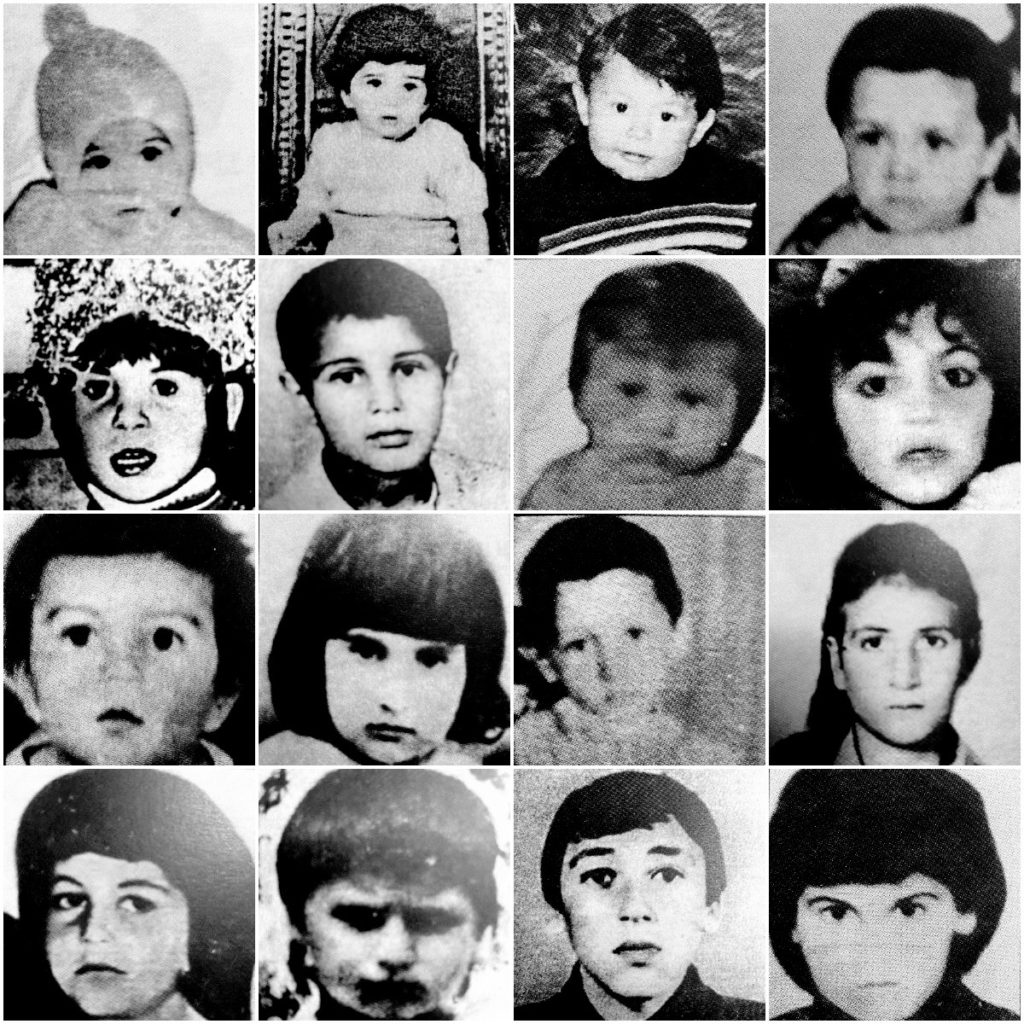
It is difficult for me to describe how I felt when I read the letter distributed to members of the California State Legislature by a group of CA legislators (Sen. Anthony Portantino, Sen. Scott Wilk, Assemblymember Laura Friedman and Assemblymember Adrin Nazarian) referring to the Khojaly Massacre of 1992 as fabricated, and urging their colleagues to ignore community efforts to commemorate the victims and survivors of Khojaly. 

It is difficult because I am a survivor of the Khojaly Massacre. I was only 20, when I was captured by Armenian troops. I had just finished high school and started my first job as a telephone operator. When my hometown of Khojaly was invaded by Armenia on that freezing night of Feb. 25/26, 1992, my relatives, friends and everyone we all knew ran for our lives into the dark of night, as bullets flew around us and screams penetrated our ears. I was captured, and because I worked for our town’s telephone company, it was assumed that I held classified information about Azerbaijan’s communication systems. I was one of hundreds of Azerbaijani civilians, alongside children and women, that were held captive in the Armenian torture camp, where I was subjected to unspeakable violations and cruelty, and I have required multiple spinal surgeries during the last three decades to address the damage I endured.  

I feel a tremendous sadness, in witnessing this appeal from California’s elected officials to deny that what happened to me happened at all, as if to deny that I ever existed. If I had not made it through, if I had not been traded by my Armenian captors on the side of the road for cigarettes and gasoline, I would not even be able to write this letter today, to make sure that the voices of the 613 civilians of Khojaly who were murdered that night by Armenian troops, including 106 women, 70 elderly and 63 children, are heard. To suggest that Khojaly didn’t happen is tantamount to saying the 613 Azerbaijanis murdered that day never existed. A peaceful world has no room for revisionism and denial, and I have survived and recovered so that I could write this letter and make that point clear. 

It’s painful to see this letter in California, a state known for its diversity and inclusion, with a high standard for the legislative commemoration of the great tragedies in history, such as the Holocaust, and the Rwanda Genocide. Throughout California, leaders in community and houses of faith have embraced the history and the survivors of the Khojaly Massacre, and have held yearly memorials, where members of the Jewish, Christian and Muslim communities have joined together to share space to grieve and to mourn.  

These memorials have been quite powerful, and they are so important. A massive 2020 survey conducted by the Conference on Jewish Material Claims found that a large number of Californians know little about the Holocaust, with 59 percent having no idea that 6 million Jews were murdered in Shoah. Without more education, our world risks a much greater knowledge gap on the Holocaust. With that in mind, the effort to deny the Khojaly Massacre could very well be successful, which is why it is so very urgent and important that leaders across California stand up against this attempt to erase what happened to me and hundreds of others. If an event as monstrous as the Holocaust could become vague or unknown to a new generation, it only follows that something like Khojaly, which was at that level of brutality on a scale much smaller, could be forgotten too. As a survivor, I feel a responsibility to assure that doesn’t happen. 

Israel’s President Reuven Rivlin warned of this in addressing the United Nations General Assembly. Speaking of genocides the U.N. was unable to prevent after the Holocaust, President Rivlin asked: “On this day we must ask ourselves honestly, is our struggle, the struggle of this Assembly, against genocide, effective enough? Was it effective enough then in Bosnia? Was it effective in preventing the killing of Azerbaijanis in Khojaly

The denialism by CA legislators is wrong; the very worst sort of wrong. One can review the Human Rights Watch reports that called Khojaly the “largest massacre in the conflict” and blamed Armenian forces for this crime. One can look at the extensive documentation, of bodies decapitated in the forest, of women and children brutally murdered, lying in the field next to each other, with their bodies mutilated, or of elderly men, with their eyes gouged out by a force of incalculable hatred. Photographer Costa Sakellariou told the Washington Post: “Many of those we found, including women and children, had their hands raised above their heads as if shot after having surrendered. Several were scalped.” One can also visit the nearly 1 million forcibly displaced Azerbaijanis, from Khojaly and other parts of Karabakh, which were invaded and ethnically cleansed by Armenia, against international law and U.N. resolutions, and held under occupation for nearly 30 years. One can review the words of Serzh Sargsyan, ex-President of Armenia, who oversaw the Khojaly Massacre, as he bragged about the brutality of Khojaly, which was meant to terrify the rest of Azerbaijan.

There may be less Azerbaijanis in California, but that doesn’t change the value of our lives, as individuals, or the value of the lives of those that did not make it out of the field on that night of February 26, 1992. 

In this vein, Sen. Anthony Portantino, Sen. Scott Wilk, Assemblymember Laura Friedman and Assemblymember Adrin Nazarian should apologize to all the victims and survivors of Khojaly and properly honor them. This is the least they can do.

Facing Denial of War Crimes in California Read More »